Good morning.
Good evening.
Good afternoon.
Wherever you may be.
.
Whatever you may be doing.
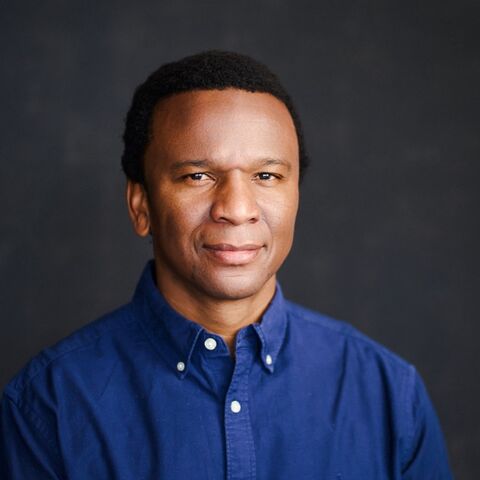
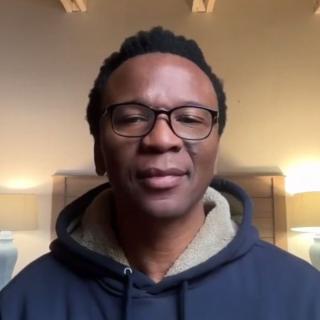
My name is Thiru Mundawarra.
And I am a teacher here inside Time Alive.
And what I try and do is help.
Rebuild a trusting relationship with self.
That for me has been.
.
.
What has been completely revolutionary for me.
And as,
To be blunt,
Something that saved my marriage,
Saved my relationships with my family,
Friends.
Work.
And That's what I really want to talk about.
And I don't know,
Educate,
I don't know if that's the right word.
Keep learning.
Whilst I relay what I've learned.
So.
.
.
Bit of admin before we start.
What I sometimes do is I like to.
.
.
Just get a connection.
And so on a scale of one to 10,
One being,
I'm in the doldrums,
10 being.
I'm on cloud nine,
Where would you put your mood right now?
1 to 10,
Just drop a number in the comment section.
So we can see.
And I'll get us started.
As I said at the beginning,
I didn't really know.
What to kind of call today's practice.
Um.
.
.
So I didn't.
I really wanted to talk today about the things that our family never taught us to say.
And you know,
There are words.
The words that you never learned to say.
And that's not because.
.
.
You're inarticulate,
Not because you don't know the language,
But because.
.
.
Your family,
My family,
Our families never.
.
.
Taught you,
Me,
Us.
They never taught us those words.
And.
.
.
Those words.
Have subsequently shaped every relationship that we've had.
Because.
.
.
The things we don't learn to say.
Become the things that we can't receive from others.
You know,
Think about.
.
.
Your family for a moment.
The family that you grew up with,
Not.
.
.
You know,
If you've got family,
A partner,
Children.
The family that you grew up with.
Now ask yourself.
Growing up.
Did anyone ever say?
I was wrong.
I'm sorry.
I need help.
Did anyone ever say,
I'm proud of you?
I see you.
You matter.
Are those words that you heard.
I can say from my side then.
I didn't.
I didn't hear those words.
I guess it was just silence.
Because in a lot of families,
These words were never spoken.
And they weren't spoken not because.
.
.
Your family didn't love you.
But because they themselves probably never heard them.
They never learned to say them either.
And the things that we don't learn we can't teach.
So,
That's what.
I'm wanting us to talk about today.
The words that we're missing from.
Your family.
My family.
Our families.
And how the absence of those words is still affecting.
You today.
Ring any bells,
This?
And the first.
.
.
Words are,
I'm sorry.
And in a lot of families.
No one apologized.
Parents didn't apologize to children because to apologize would mean admitting they were wrong.
And they can't be wrong,
Because they're parents.
They're the adult.
So when they hurt you inadvertently,
If they would yell,
If they'd dismiss you.
I said something that.
.
.
You felt was cruel,
There was no repair.
Just moving on.
It happened.
It's not acknowledged.
And you move on.
And you learn that when you hurt someone,
You don't apologize,
You just move on.
And now,
As adults.
When we hurt someone.
It's not natural.
Times to say,
I'm sorry,
I was wrong,
I hurt you.
And I want to repair this.
Because you never learned how.
And the second is,
I need help.
Because again in a lot of families needing help was a sign of weakness.
Something they didn't do.
You know,
Your mom might ask your dad to give her a hand or help her do something.
Or your father may ask for some.
Help in the garden.
Very role-based.
But personally them needing help?
Not often.
You're supposed to figure it out.
You're supposed to be strong.
You're supposed to handle on your own.
So when you were struggling,
When you were scared,
Overwhelmed,
Or didn't know what to do,
You didn't ask for help because you didn't know what to do.
Know it,
Didn't understand it,
Because asking for that help meant potentially that you were failing.
And you learn that needing something is potentially shameful.
I have a feeling that in many families children are taught to regret their deeds and say sorry,
But the parents themselves rarely apologize to the kids.
That was my experience,
100%.
One hundred percent.
And so now.
You know,
And especially.
.
.
Those of a certain age.
I mean I'd never done no Millennial,
Gen X,
Gen Z,
Whatever,
I mean.
I'm 47.
So I guess maybe 35 and older.
Maybe 30 and older.
When you're drowning.
And you're overwhelmed.
Asking for help isn't natural.
You could just keep drowning.
And Burn out.
Depression.
Anxiety.
Flows in.
And the third one,
And this one for me,
Is.
.
.
I'm proud of you.
I'm proud of you.
And a lot of families.
Praise was rare,
If not rare.
Even never done.
I don't know if.
.
.
Myself or my siblings have heard.
Those words from our Father.
Praise was often conditional.
You have to earn it,
It was a reward.
A reward for being perfect,
A reward for achieving something.
And even then.
.
.
Even if it did happen,
If it did occur,
If you did hear it,
It was never quite enough.
So you might have gotten a well done.
Next time,
Why not get an A+.
So again,
You learn that your worth is tied to your performance,
That you're only valuable when you're achieving.
When you're acing tests,
Winning races,
Being.
.
.
So now in adult life you can't celebrate yourself,
You don't celebrate yourself,
You won't celebrate yourself.
You rarely,
If at all,
Acknowledge to yourself.
Your wins,
The things that you have done.
You can't be proud of it.
Because you never learned.
That you were and are worthy.
Just for being you.
Just for being you.
And the fourth one.
I was wrong.
And if you're comfortable.
Sharing.
Hearing those words.
How do they make you feel?
When you heard them for the first time.
When you heard them at last.
You know,
I got a mix of paws and that's not good enough.
Totally confusing.
Like,
You got an A?
A-minus?
That's good,
But why didn't you get an A-plus exactly?
Got a mix of praise,
Okay,
I see.
Well done,
Butt.
That word,
But,
I tell you.
My brother-in-law.
Told me something a few years ago,
He's like.
.
.
Especially in the professional space,
You hear people say.
ABC,
But.
We're doing this,
But,
And more.
I'll talk about this at another occasion,
Another juncture.
You know,
In America,
You call it period.
The UK.
English world,
Anglo world.
Might call it a full stop.
Whatever it is,
I've just learned to.
To put a full stop on things.
Well done.
Full stop.
And as I said,
The fourth one is I was wrong.
Those words are.
.
.
Very rare in a lot of families.
No one admits they were wrong.
There's always an excuse,
A reason,
There's always a justification,
There's always someone else to blame.
So you learn that being wrong is dangerous.
You're in trouble if you're wrong.
Admitting fault means that you're bad.
And now,
In your adult relationships,
When you make a mistake,
You can't just say,
I was wrong.
You defend.
Justify.
Deflect.
Explain.
I'm not gonna lie.
I do it probably more than I think I do,
To be honest.
And that's because I never learned that being wrong doesn't make me bad.
For me,
Wrong equals bad.
And it does take courage,
Michelle.
You're right.
Takes a lot of courage.
Takes a great deal of courage to admit that you're wrong.
So what's the cost?
What's the cost of never?
Learning,
Hearing.
These words.
You can't receive them either.
Because the words we don't learn to say become the words we can't hear,
The words we can't take on board.
So if someone says,
I'm proud of you,
And you deflect,
Oh,
It was nothing.
You'd have done the same thing.
Someone says,
I'm sorry,
And you minimize.
It's fine,
Don't worry.
It's okay.
Someone offers you help and you refuse.
I'm fine,
I've got it.
I can handle this.
Because you never learned.
How to receive.
Never learned how to receive.
We are so lucky.
But what I know.
.
.
And what I hope everybody takes away from today.
Is that we can learn these words.
I'm living testament.
Everything that I talk about,
I have lived and continue to live.
It's not an abstract concept,
It's very deep.
Very near and dear to me.
I'm living proof of it.
You can learn it.
Helps.
Not necessarily going to be easy.
It may not feel natural.
But it is a choice.
Life is a choice,
This is a choice,
The choice that you have to break the pattern.
You can choose to say the words your family never taught you.
And in doing so,
You can heal the relationships they couldn't.
You can give your children,
Your grandchildren.
What you never received.
You can give your partner what you never received.
You can give your friends what you never received.
You can give your colleagues what you never received.
And most importantly,
Most importantly.
And you all know what I'm going to say now.
You can give yourself what you never received.
You can give yourself what you never receive.
And you can become the person who breaks that cycle and it doesn't get handed on from generation to generation.
And I remember.
2020,
2021 was my kind of breakout year.
And the one thing,
The main thing for me is that I didn't want to pass on to my children.
The things,
The burdens.
That I had learned and that I was carrying.
I may have said this before at another time,
But My mom died very young.
She died in 2018.
She was 58.
End.
I'll never forget my mother saying,
Always being so sad that she was saying that.
She can never leave me.
Material goods,
A house.
Bunch of money,
Stocks,
Shares,
Whatever.
And my younger,
More immature self was like,
Yeah,
What's that all about?
Of my more mature self.
Didn't mind,
Didn't worry about that.
After she died.
I realized it a little just before she died,
Actually.
She died quite suddenly.
And it was the.
Accentuated,
Maybe that's not the right word,
But I'll use it nonetheless.
I remember thinking,
You know,
Her legacy.
What she has.
Bestowed on me and her grandchildren.
Our inheritance from her was being authentic.
My mother was the most authentic person I've ever come across.
And that authenticity was very difficult for her,
For my grandmother,
Her mother.
That authenticity.
That's what I took.
And strive for every day.
That's why I do this.
Is to help me.
So being the person who breaks the cycle.
Person who says.
To their husband,
Wife,
Boyfriend,
Girlfriend,
Partner.
I'm sorry,
I see you.
I hear what you're saying.
I hear you.
I see you.
You know I had a long,
For a very long time I had a.
.
.
Struggle with that phrase.
Not being seen.
And my coach at the time.
As you probably know,
Lou Redmond is an Inside teacher here on Inside Timer.
We were having a session and it was like.
.
.
Do you see yourself?
And that's what I'm talking about.
Saying these words to yourself.
Learning to say,
I'm sorry,
I need help,
I'm proud of you,
I was wrong.
I'm proud of me.
I'm proud of what I did.
I'm proud of the fact that I say that a lot more now.
If I accomplish something that I.
.
.
Feel like it was an accomplishment,
I will say to myself,
I'm really proud of myself,
And I'll speak that same language to other people.
I'm proud of how I responded.
I'm proud of how I didn't respond.
And hopefully.
Plan the aim for today is.
To help you to learn how to say these words.
So let's talk about that.
First thing is to start with yourself.
Before you can say these words to other people,
You need to say them to yourself.
I need to be able to say I'm sorry.
Speak to that part and say,
I'm sorry I abandoned you.
I'm sorry I rejected you.
I'm sorry I ignored you when you were telling me that.
That decision was wrong,
That relationship wasn't right.
To saying I need help.
I can't do this alone.
Practicing,
I'm proud.
I'm proud of me.
Proud of how I showed up.
Proud of being vulnerable.
Proud of typing a comment.
On an inside time alive.
So I was wrong.
I was wrong for what I did and I'm going to apologize to that person.
Not like us all to say that right now.
Wherever you are,
Just say it to yourself right now.
Whatever it is.
Proud of something that you've done.
Proud of something that you did this last week,
Whatever it is.
Just say that.
I am proud of.
I'm proud of taking the time this weekend.
To really look at what it is that I'm doing on inside timer.
Proud of them.
So say it out loud to yourself.
Get used to saying.
These words of encouragement to yourself.
Say them to the parts of you that may never have heard them.
Say it to self,
Because you can't give to others what you can't and won't give to yourself.
Not genuinely at least.
You know,
I was.
Accused of not apologizing enough.
And one of the things.
.
.
Quite early on in this journey,
And it might sound a bit contradictory to what we're saying here.
Was I read somewhere about how.
.
.
Sorry.
Is most often the most overused word.
And a lot of times it lacks sincerity and genuineness behind it.
I learnt and I've learned.
Decided to myself that.
I wasn't going to say I'm sorry unless I truly believed it.
And if people.
Felt uncomfortable.
Yeah.
Responded when I didn't say I'm sorry.
I was going to hold.
.
.
My authenticity.
In that moment.
Because much like saying yes when you mean no.
Saying sorry when you don't mean it?
Is also abandoning a part in you.
It's going the easy way.
Not being able to.
Hold your truth.
Be authentic in that moment.
And then the second thing is to practice in low stake moments.
You're not going to start by having the big conversation with your parent or.
.
.
Your partner,
Your spouse,
You're going to start small.
If you bump into someone,
Say I'm sorry and genuinely mean it.
Not as a courtesy,
But because you mean it.
If you're struggling to carry something and someone says,
Can you help me?
Sorry,
If you're struggling with something.
Ask for help.
Ask somebody.
If they can help you.
That example seems so simple,
And yet.
.
.
All too often.
We find it so difficult.
Or just push on.
If someone accomplishes something,
Say,
I'm proud of you.
You make a mistake,
No matter what it is.
No matter how small you think it is,
Say.
I was wrong.
I was wrong.
These small moments,
This is where you build that muscle memory.
The Trust.
This is where you prove to yourself that saying these words won't kill you.
You won't get swallowed up by a sinkhole.
And vulnerability is survivable.
Is it with that last question?
And I encourage you to take out a piece of paper,
A journal,
And write.
Write about it for the next seven days.
That simple question.
Where is my energy?
And do I want my energy to be there?
I'm working very hard on that one.
My children are helping.
And that's why I say start small.
Start small.
If you're carrying something that's heavy and someone is walking past you.
Ask them for help.
Do you need directions?
Ask for help.
And then the third thing is to notice the resistance.
Because when you try to say these words,
Especially the first instances,
Something inside you will resist.
A part of you will say,
Woo-hoo-hoo.
Don't apologize,
You look weak.
Don't ask for help.
You'll be a burden onto someone.
Don't celebrate yourself,
You'll look arrogant.
Don't admit you're wrong.
You'll lose respect.
That one I know well.
I see it all the time.
And that voice,
That voice is a part.
It's a part that learned at a very young age the rules of the family.
It's trying to protect you.
It's trying to keep you safe from the rejection,
The shame,
The judgment.
Being ostracized,
You experienced when you were young.
So when you notice this resistance,
Don't fight it.
Simply acknowledge it.
Say I see you.
Place a hand on wherever you feel it,
In your gut,
In your chest,
On the bottom of your throat.
Just say,
I see you.
I know you're scared,
But we're safe now.
We can say those words.
You know,
I didn't used to say that.
What I used to say.
I see you.
I hear you.
I understand you.
I feel you.
Whenever something showed up,
That's what I would say.
That became my mantra.
I see you,
I hear you,
I feel you,
I understand you.
Or like I said in the last session,
Go for a walk.
Turn on the voice node.
And ask yourself that question.
And then just talk.
It depends on if you're a talker or a writer.
More talk,
I think.
And the last thing.
Fourth and last and final thing is learn to receive when others say them to you.
When someone says,
I'm proud of you,
Don't deflect,
Just say,
Thank you.
When someone says,
I'm sorry,
Don't minimize,
Say.
I appreciate that.
When someone offers you help,
Don't refuse.
Say thank you.
I need it.
Because learning to receive these words is just as important as learning to say them.
When you can do both,
When we can say them and receive them,
Everything changes.
And as I said before,
We can learn these words.
Even if we never learned them in our families.
Even if it feels awkward now.
You feel vulnerable,
You feel like you sound silly.
You can learn them.
And when you do,
Relationships completely transform.
Because you're no longer repeating patterns.
You're no longer avoiding the words that create connection.
He's saying,
I'm sorry.
And repairing what's broken.
Is saying I need help.
Letting people in.
You're saying,
I'm proud of you and celebrating the people you love,
Celebrating what you've done.
Saying I was wrong.
And taking accountability.
And in doing that.
You say the words.
In your spaces and your family.
That they get accustomed to hearing.
And they get accustomed to receiving.
And you become that person who breaks the cycle.
Don't let it carry on.
And this is where.
.
.
Listening to your parts.
Comes into play as well.
It's about your gut.
You know,
We spoke about this before about.
.
.
Training yourself to learn.
Don't listen to your gut.
You're right,
Yes.
Saying these words.
You don't just shoot them off and fire them off,
You say them to the people who deserve to hear them.
I'll say that again,
You say them to the people who deserve to hear them.
And you know who they are.
First of all.
.
.
I want you all.
To become your own cheerleader.
Really good friend of mine.
Sarah Coons.
Said this to me once and it just hit home.
We all need to become our own care leader.
Acknowledge the things that you do.
Tell yourself that you're proud of yourself.
Speak to yourself.
Have an engagement,
Have a connection.
This is what I talk about in terms of becoming your best friend,
Because I am my best friend.
In her mind.
Son and daughter ask me all this all the time,
They're like,
Dad,
Who's your best friend?
And now my son knows.
But I ask him then,
Because I say it's myself.
That's myself.
And it's mommy and it's you guys.
Become your own cheerleader.
If you take nothing away from this whole.
50 or 40 odd minutes.
Please just take that.
Acknowledge the things that you do,
No matter how small or how insignificant you think they are.
Start there.
Tell yourself that you're proud.
And tell people that you're proud of the things that you've done.
So if you recognize yourself in anything that we've spoken about today.
Realize these are words that you never learned to say.
I want you to hear this from someone who has walked this journey.
It's not too late to start.
You can learn how to do it now,
You can practice,
You can say,
You can receive,
And when you do.
.
.
You heal,
We heal,
We all heal.
Not just in yourself.
But in all those who are around you and all those who follow you.
You'll be the one who learned to say what your family never could.
And that's the work.
And I'm always here walking with you.