Once upon a time,
In temple lore,
Rooted in Hindu philosophy,
Specially within Shaiva tradition,
There is a story told not as history but as a reminder.
A reminder of what happens when the mind loses its stillness.
Hi,
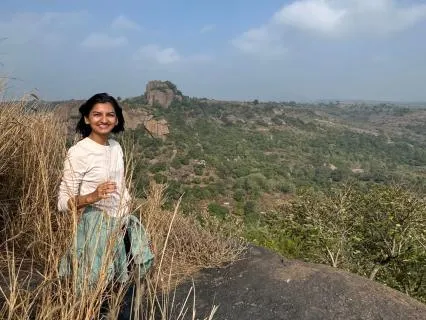
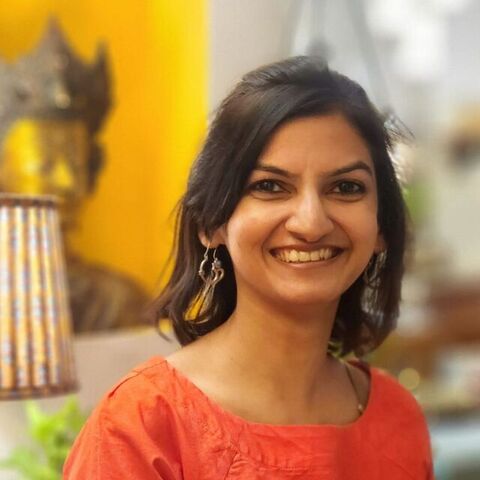
I'm Suvarna,
A psychologist from India and let's dive deeper into the story.
It is said that even sages,
After a point of time,
Struggled to meditate.
Their thoughts wandered,
Memories slipped,
Inner calm felt impossible.
This disturbance was caused by someone named Apasmara.
Now,
Who was Apasmara?
Apasmara was small,
Often shown as a dwarf with the body of an infant and the face of a demon.
So,
Was he scary to look at?
Though a restless force,
Apasmara was not a fierce warrior demon of destruction.
He represented avidya.
In English,
It is also called as ignorance,
Forgetfulness,
Confusion or loss of awareness.
Wherever Apasmara appeared amongst sages,
Thoughts became noisy,
Clarity faded,
Worries repeated themselves.
The body stayed tense,
Even at rest.
Whenever Apasmara moved or appeared,
The mind became busy.
He whispered,
What if something goes wrong?
Don't rest yet,
Think again just to be safe.
He believed that constantly hovering around the sages and disturbing them during meditation was a form of protection.
For a long time,
Apasmara believed he was helping.
Today,
We might recognize Apasmara differently in our own body and mind as anxiety,
Overthinking,
Mental restlessness or even burnout.
Our mind is always doing or thinking about something,
Always alert,
Always trying to protect.
Coming back,
Apasmara did not shout at the sages,
Just like our mind doesn't shout at us.
And the more Apasmara spoke to the sages,
Just like our mind does with us,
The tighter the body became.
The breath shortened,
The shoulders lifted,
The mind jumped from one thought to the next.
And that is how anxiety also works.
It does not arrive as fear first,
It arrives as responsibility.
As Apasmara lingered,
Even after trying very hard,
The sages found it difficult to sustain meditation.
Not because they lacked discipline,
But because the mind itself had become very unsettled.
So,
They prayed to Shiva for help.
Before we move ahead,
Who is Shiva?
In Hindu philosophy,
Shiva is not only a god to be worshipped,
He is pure awareness,
The silent witness behind all experience.
He is called Adiyogi,
I.
E.
The first yogi,
The stillness beneath movement,
The consciousness in which all thoughts arrive and dissolve.
Shiva does not control the world by force,
He holds it through awareness.
He is not seen just as a god,
But as the symbol of awareness itself.
When Shiva heard the prayers of sages,
He responded,
But he did not arrive as a warrior.
In Shiva philosophy,
Ignorance is not considered as enemy and cannot be destroyed by force.
It must be met with awareness.
So,
Shiva chose a different form.
He became Nataraj,
The lord of dance.
This dance is called the Ananda Tandava,
The dance of bliss.
Nataraj danced within a circle of fire.
The universe moved with him.
In this dance,
Creation and destruction happened together.
Change unfolded,
Nothing stayed still.
Yet,
Shiva's face remained calm.
This dance was not about control.
It was about rhythm.
In the dance,
It is the dance of balance.
This is not stillness without movement.
Just as thoughts keep flowing in the mind and the mind is never empty,
This is stillness within movement.
Because anxiety is not the opposite of calm.
It is movement of thoughts when the mind is left unanchored.
As Shiva danced the Ananda Tandava,
Apasmara appeared beneath him.
Shiva placed one foot gently,
Firmly upon Apasmara,
Not to crush him,
Not to silence him,
Just to ground him.
This is the heart of the story.
The moment Apasmara was held in place,
Something changed.
If ignorance or anxiety were destroyed completely,
There would be no learning,
No seeking,
No protection,
No growth.
So,
Shiva restrained Apasmara instead of eliminating him.
For the first time,
Apasmara was no longer dancing alone and pulling the sages completely away from meditation.
The moment Apasmara,
Also called as ignorance or in psychological terms,
Anxiety,
Was grounded and awareness that Shiva took charge,
The mind was still allowed to think but it was no longer in charge.
The thoughts did not vanish but they slowed.
The body softened,
The breath deepened.
Now,
The mind notices I am worrying,
The body notices I am tense,
The breath notices I am shallow.
This noticing creates space.
For the first time,
The thought is not the whole story.
It is just a moment passing through awareness.
Apasmara is still busy but he is no longer leading the dance.
Even now,
While being held under Shiva's foot,
Apasmara is shown smiling because ignorance does not know it is ignorance.
An anxious mind often believes if I stay alert,
I'll be safe.
If I think enough,
I'll fix this.
The mind feels productive while exhausting itself.
The smile reflects the belief that constant thinking is necessary.
While one foot grounds Apasmara,
You will notice in the picture that Shiva's other foot lifts.
This raised foot is called the Kunchitapad.
It symbolizes Moksha i.
E.
Liberation or release,
Freedom or grace.
Psychologically,
This is rest,
Not collapse,
Not shutdown but regulated letting go.
Burnout happens when the foot never lifts,
When the mind is always pressing,
Holding or managing.
Shiva here shows us that grounding and release must coexist.
Awareness without rest becomes exhaustion.
Here,
The raised leg is the moment of relief.
Not because the problem is solved but because the system no longer feels alone and this is freedom without escaping something the body perceives as danger.
Even as the dance continues,
Shiva's face remains serene.
Awareness is not telling Apasmara to stop.
It is not arguing with thoughts.
It is not forcing calm.
Shiva never said be quiet.
He simply noticed this story is not only a temple lore.
The dance is not only cosmic.
It happens inside us every night when the mind won't sleep.
Every time the body feels tired but alert.
Every time thoughts loop without end.
Apasmara shows up as anxiety or overthinking and then Shiva appears as awareness.
Imagine this from our everyday life.
Your mind says,
Did I reply to that message?
What if tomorrow goes badly?
I should be sleeping.
Why am I not sleeping?
Here Apasmara is active.
That is ignorance.
Awareness enters not by fixing or arguing with the thoughts but by noticing.
That is Shiva.
Examples,
I am worrying.
My chest feels tight.
My breath is shallow.
Then attention gently shifts.
You feel the weight of the blanket.
You notice the breath moving in and out.
Nothing dramatic happens but the body softens a little.
This noticing is Shiva's grounding foot.
The thought is still there but it is no longer the whole world.
Anxiety lives in the future.
Awareness lives in the present.
When awareness returns,
The nervous system downshifts.
The alarm system quiets.
The body feels grounded again.
The mind still thinks but it no longer feels urgent.
As Apasmara is grounded,
Shiva's other foot lifts.
This is the moment of relief.
Not because the problem is solved but because the system no longer feels alone and rest becomes possible.
Before we end,
The story does not promise a mind without Apasmara.
It promises a mind where Apasmara is no longer dancing alone.
A mind where awareness arrives,
It promises the Ananda dance within.
The dance of blissful balance where awareness leads and the restless mind follows.
So when your thought feels noisy,
Remember this.
Pause.
Notice one thought.
Notice one sensation in the body.
Notice one breath.
This is awareness entering the story of our lives.
Life will continue to move.
Thoughts will arise but you will no longer feel lost inside them.
And the dance will find its balance again.
Anxiety is not failure.
Overthinking is not weakness.
Burnout is not laziness.
They are signs that the mind has been trying to do everything by itself.
So when your thoughts feel noisy,
Remember this story.
You don't need to fight them.
You don't need to silence them.
You only need to return to the dance.
Let your breath be the drum.
Let your body be the grounding foot.
Let awareness lead.
Balance,
Not battle,
Is the way home.
Namaste.