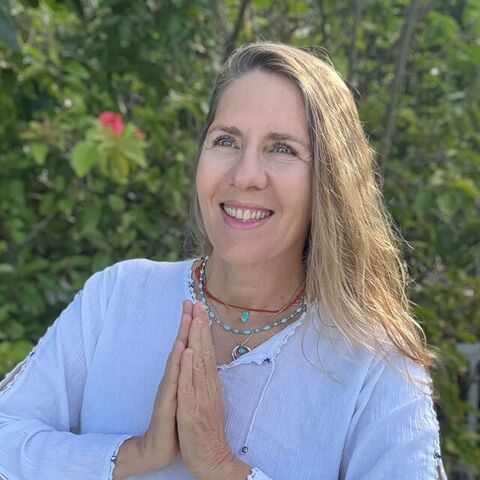
Hello my beautiful friends,
Beautiful sangha,
So happy to have you here.
Welcome welcome,
Good morning and welcome.
I'm very happy to be here with you today for our weekly sangha,
Our weekly community and time together and this is exactly what today's dharma talk is about.
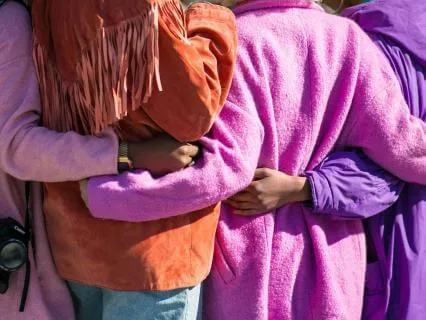
The talk is why we need each other,
Why we need each other.
So let's take a few moments to just land and ground,
Get yourself comfy and settle in,
Settle down,
Settle here,
Just here.
Just with our one breath meditation,
We land right here.
I'm very grateful that you're here and I'm grateful that I'm here and just take a moment to check in with yourself,
Just how are you,
How are you in this moment?
What's here,
What's going on here,
Within?
Just take a moment to check in,
When we connect with ourselves we can then move into the next moment with a bit more clarity.
When we are with this busy mind that is running around all the time,
We don't show up with as much clarity and we don't show up from as much clarity.
So just taking a moment for that one deep inhale,
A little cough,
Maybe a yawn and then just deep inhale,
That's it,
That's all it takes,
It doesn't have to be a complicated one hour on the cushion,
Just one conscious breath can regulate your nervous system when done with intention and of course the more we practice,
The quicker we can just drop in,
Drop into the now,
Drop into ourselves,
Drop into reality and just meet what's here right now.
This Dharma talk of why we need each other is very timely given the chaos of our world,
Which if you think about it,
Has always been chaotic.
You know,
I think each generation thinks that we've got it the hardest,
We've got it the worst,
But in essence,
This is this life,
It's not special,
It's not unique,
It's not extra chaos,
It's just the way it is and that's called facing reality.
Yes,
There is chaos and there is calm as well in the storm.
Needing each other reminds us that we don't need to do this life alone and in my life,
I began the deep dive into the spiritual journey of self-discovery almost 20 years ago,
Just around the time that I gave birth to my teenage son,
Who was my youngest and this journey showed me and taught me through my own direct lived experience,
How doing it with others adds so much to the practice.
Before entering this journey 20 years ago,
I was on my own,
I was superwoman flying with my little cape in the breeze and I was doing this life alone.
I was married,
I was raising my five kids,
I was building my surgical practice as a plastic and reconstructive surgeon and microsurgeon,
I was very much responsible for my patients,
For my staff,
Managing my entire life,
My household and yet I was really doing it alone and I've learned so much from those years of doing it alone to then the dramatic shift of over time learning that we need each other.
We need each other.
So the beauty of the journey of self-discovery is that we get to look at ourselves with radical honesty and then ask ourselves,
Is the way I'm living my life creating well-being or is the way I'm living my life creating more suffering?
At the end of the day,
Those are the only questions we need to be honest about.
So living alone,
Was it creating wellness for myself and those around me or was it creating more suffering?
Well,
I can tell you that in retrospect,
Of course it was creating more suffering,
Stress and anxiety and frustration and loneliness and overwhelmed and overburdened and yes,
Our culture in a way demands and pushes us to be hyper-independent and I got the memo when I was very young and this is what I nourished.
I nourished the seeds of independence rather than the seeds of community and then when I couldn't take anymore and I was in the depth of my pain and suffering,
That was the doorway.
That was the doorway that opened me up to seeking another way.
So don't resist your suffering my friends,
There's plenty to go around.
Take your specific flavor of suffering,
Whatever that is for you,
Suffering in relationships,
Suffering in your body,
Physical suffering,
Emotional suffering,
Whatever your form of suffering is,
Use it as a doorway.
Use it as a doorway to freedom.
So I love the phrase,
Don't waste your suffering.
Let it serve your awakening and that's certainly what I did and it takes time,
It takes time.
It takes time to commit to living another way.
Okay,
So let's jump into our talk.
Let's jump into why we need each other,
Why we need the sangha.
Sangha is our like-minded community.
We're here from different countries,
Speaking different languages,
From different cultures,
Very individual,
Unique life experiences that each of you have had,
That I've had and yet here we are,
Speaking a common language,
The language of transformation,
The language of awakening,
The language of supporting each other through hardships in this life.
Some of you may be familiar with the three jewels in Buddhism,
So my path has been through the Buddhist lens and the Dharma talks that I give are rooted in the Buddhist teachings and the Buddhist lens and the three jewels in Buddhism are,
I take refuge in the Buddha,
I take refuge in the Dharma and I take refuge in the Sangha.
So what does this mean?
It means that when we are in overwhelm,
When our lives are just feeling messy and out of control,
As it tends to be for many of us humans,
We need a place to go to,
To take refuge from the storm,
To calm,
To ground,
To come back to clarity,
Clarity of mind,
Clarity of emotions,
Clarity in our bodies,
So that we can take the next step,
Make the next decisions from a space of clarity,
Not from a space of chaos.
And so I ask you,
Where do you take refuge?
If we take refuge in our thoughts,
Our thoughts are not reliable.
If we take refuge in our emotions,
Our emotions are like a roller coaster,
They're constantly changing.
Our emotions are not a space of refuge.
If we take refuge in the body,
The body is constantly changing.
So again,
It's not a safe refuge from the storm.
And so the Buddha offered us these three jewels to take refuge in the Buddha.
The Buddha means the teacher.
The teacher can be someone like myself,
Could be somebody that you have in your life that is a monk,
Or a Buddhist teacher,
Or a spiritual teacher,
There are so many beautiful teachers here on Insight Timer,
And also in in-person communities.
So we take refuge in these teachers.
We trust their path,
And we trust our path.
We then take refuge in the Dharma.
The Dharma is a word for truth,
Or teachings,
That's the Sanskrit word,
Dharma.
So we also take refuge in the Dharma,
The teachings that have survived and been passed down for nearly 2600 years.
So when we are in a space of overwhelm,
We return to the teachings that we study on a regular basis,
That's where the practice comes in,
So that when we are in a moment of just ahhh,
Anxiety,
Overwhelm,
We can come back to a teaching,
Maybe one teaching,
Maybe simply our breath,
Anchoring us back into calm,
Regulating the nervous system,
Calming the mind.
And then the third jewel is the one we're going to speak of today,
Which is taking refuge in the Sangha.
The Sangha is this,
My friends.
The Sangha is the group of like-minded community where we support each other.
And in this time of chaos and difficulty in this world,
At large,
And in many of our individual lives,
There are challenges,
The Sangha is extremely important.
And that's why I'm bringing the Dharma Talk on this topic today.
I want to offer some really meaningful points on why being in Sangha,
Creating Sangha and community for ourselves is so important and so supportive in life in general,
And then specifically on our spiritual journey of self-discovery.
Okay,
My friends,
Let's jump into the Dharma Talk.
Why we need Sangha.
Here's the first powerful,
Powerful reason.
It might be the most important one.
That's why I'm opening with this one.
Just going to give it to you straight right away.
One of the key reasons why we need to congregate,
To be in community,
Is because we cannot see ourselves clearly alone.
We have blind spots.
We have deep conditioned habits of mind,
Habitual patterns that are often completely invisible to us.
We don't even notice our own way of being because we're just in it.
It's like the little joke where the one fish asks the other fish,
How's the water?
And the fish says,
What water?
That's how it is for us.
We are so deeply conditioned that our way of being has blinders on,
Blind spots.
Like the horses in Central Park,
I like to say,
You know,
The ones that are just walking that same loop with the blinders on,
They don't see themselves and they don't see anything else.
There's no perspective.
So what Sangha offers us is a compassionate mirror,
A reflecting back to ourselves in those spaces where we're stuck,
In those spaces where we're growing and we want to grow,
And also in the spaces where we are maybe unconsciously kind of drifting off the path.
So being in community,
We get to call each other out lovingly,
Compassionately,
To say hmm,
What do you really think about this thing?
Or do you notice how every time you speak,
You answer with resistance,
Or you answer negatively first,
Or you answer defensively.
We often don't notice those patterns in ourselves.
I used to work with a woman privately because I do one-on-one mentoring and guidance,
And no matter what I said to her,
She would answer with no,
The word no first.
Even if she agreed.
When I called her out on it,
I said,
Hey I'm wondering,
Do you realize that you answer with no first,
Even when you're agreeing,
Your answer is no,
Yes,
Because,
So it's like no,
Yes.
She did not notice it.
She didn't notice.
So this is where having a compassionate mirror that reflects back to us is such a huge benefit of community.
Another benefit is that community interrupts our feelings of isolation.
And isolation is a breeding ground for suffering.
When we isolate ourselves,
Like what was happening during the COVID years,
Right?
And it's still happening.
We do have this pandemic of loneliness and isolation where many people are very,
Very much feeling alone.
And when we isolate,
Our mind starts to tighten around the stories that we keep telling ourselves.
Stories of shame,
Stories of fear,
Unworthiness,
Not enoughness.
So when we come into community,
This joined community,
Like all the little hearts on the screen here,
And like the loving messages from one to the other,
Messages of support,
We come out of isolation and the sangha gently disrupts the stories in our mind.
And it reminds us,
You're not alone.
You're not alone in your suffering.
And this shared humanity softens the suffering and creates some space for healing.
If you remember from a prior love stream I gave on self-compassion,
Which is a big challenge for many of us,
Many of us say,
Oh,
I'm very compassionate towards everyone else,
But I have difficulty being compassionate towards myself.
Well,
The Dalai Lama said that if you don't know self-compassion,
You don't truly know compassion for the other.
So when we speak of compassion,
We need to include ourselves.
So if you go back to my recordings,
You can find my talk on self-compassion.
And one of the three components of self-compassion is shared humanity,
Is reminding us,
Reminding ourselves that we're not alone in this,
That everyone has experienced fear.
Everyone has experienced shame and feelings of unworthiness.
This is simply part of the human experience.
It's not unique to any one individual.
And when we remind ourselves that lovingly and kindly,
We bring some self-compassion and we soften our suffering.
So that's how community helps to interrupt that isolation,
That feeling of desolate aloneness.
Another important factor of being in community is that there's a collective energy that strengthens our individual practice.
When we are here together and we talk on the chat or we message each other,
There's this collective energy that's created.
That's why I call this a love stream.
It's a live love stream.
We're all alive and in love.
We are flowing in the love stream.
This is this collective energy that supports us when we come together.
And that's another reason why we need each other.
So when we practice alone,
It requires tremendous discipline.
And it's wonderful to practice alone.
I practice alone as well.
And I also go on retreats.
I go to silent retreats with my community.
Because practicing in community creates a momentum.
There's an energy of the group.
Whether we're here on a love stream or whether we're in person.
When I go sit in my silent retreats,
There's a group sitting,
There's a group reflecting,
And there's an awakening together that helps to carry us even,
Even,
And especially when our own motivation wavers.
So if this is important to you,
To stay on the path,
To continue diving more deeply into the journey of self-discovery,
Into the spiritual journey of who am I?
What is this life about?
Then you can set the intention to show up at these love streams.
For example,
Here with me whenever I come on.
Or you can go and listen to some of the recordings.
Or you can find other teachers that you feel connected with and set the intention to show up so that you can garner and absorb some of this collective energy that will strengthen your individual practice.
So here we have a collective practice through the Dharma talk,
And then we can go into our lives and offer ourselves the individual practice as well.
Another way that Sangha is so supportive is that it provides us a sacred form of accountability.
I can't create this love stream by myself.
You guys show up,
And I show up,
We're each accountable for showing up,
And we bring the energy together here.
So there's an accountability without judgment,
Because there may be days when you can't show up,
Or I can't show up.
There's a common bond and a common intention to co-create this space.
So there is accountability there,
But there's no judgment,
There's no criticism.
There's just the intention to be present.
The intention to witness each other,
To help each other stay aligned with our values,
With our actions,
Our words,
Our thoughts,
And then to help us return back a little more quickly when we stray,
Whereas when we don't have community,
We can forget our spiritual journey for a long time,
For a really long time.
Throughout the year,
In between silent retreats that I attend,
I'm always involved in online communities,
Online classes that I take to deepen my journey with the Dharma,
And to have that Sangha,
To have that community that's supporting me,
Because otherwise I can easily just go off the beaten path.
Because remember my friends,
This Dharma is a lived teaching.
It's not something to sit and highlight in a book and just leave it there.
It's not about just leaving it in the book.
It's about embodying the teachings,
And if you're not sure what the teachings are,
If you're new to this Buddhist lens,
Then you can just follow me,
Follow my page,
And hop into my recordings,
And you can see these love streams are recorded.
I edit them down so that you just have the teaching there.
They are recorded so that you can go in and take a look and say,
What is this Dharma that she's talking about?
Is it something that could be supportive in my life?
So take a look through the talks and see what resonates for you.
Our Sangha,
Our community,
Is living Dharma,
Because they help us be in relationship with each other.
So the teachings,
The teachings are no longer just abstract.
When we're in relationship,
We actually get to practice the teachings.
We get to practice patience and compassion,
Joy,
Non-attachment.
The teachings come alive when we're speaking to each other,
When we're deeply listening to each other,
When we show up for each other.
So you see how the community itself becomes the practice.
The Sangha is living Dharma.
So you get to ask yourself in your life,
How do you engage with embodying the teachings?
Not just thinking about them,
Not just learning them or understanding them intellectually and cognitively,
But living them.
The best way to live them is in relationship,
Because this life is lived in relationship.
We're always in relationship to something or someone.
And the other thing that the Dharma supports us in is that it helps us to borrow faith from each other.
So when we have our moments,
And we all do,
When our own trust in the path weakens and we feel like,
I'm just not doing this anymore,
I'm not interested,
I'm not doing it,
It's too difficult,
I don't want to sit and meditate,
I don't want to look and get to know my mind,
Look into my deep belief systems and conditioned habits of mind,
This is just too much work.
You know,
Our trust in ourselves can weaken,
But when we lean into Sangha,
Into our community of like-minded practitioners,
We lean into the lived experience of others,
Into their insight,
Into their steadiness,
Into their breakthroughs,
And then that helps to rekindle our own faith.
So we borrow faith and trust and insight from each other,
And this is a huge support on the journey,
The journey being this life.
Let's take a deep breath,
As a little pause,
Take it with me.
Yes,
Just coming back,
Right here,
Right now.
Another way that Sangha supports us is that when we are seen by one another,
When we speak openly and honestly about our challenges,
About our difficulties,
It helps to dissolve any shame that we might have around it.
A lot of our suffering is tied to the belief that we have to hide parts of ourselves,
But in a safe like-minded community,
Like this one,
Or other spaces that you might join,
We risk being seen,
Because we write something in the chat,
We share of ourselves,
But when we feel seen,
We discover that what we feared was actually separating us,
Rather than connecting us.
So when we feel seen by one another,
By sharing our challenges,
It dissolves that shame,
Dissolves that sense of separateness,
And brings us back together,
Not only through each other,
But back to our own selves,
Because it fosters compassion,
And it fosters self-compassion,
Which is extremely supportive.
And remember,
My friends,
That this journey is a journey of remembering and forgetting,
And remembering and forgetting.
So the Sangha community helps us to remember again and again and again,
Because forgetting,
That's just part of our human condition.
We forget the teachings,
We forget the main teaching from the Buddha of impermanence.
We forget that everything changes all the time,
And we start grasping.
We don't want our children to grow up and leave.
We don't want a wonderful evening to end,
Right?
But we forget,
In permanence,
Everything changes all the time.
We forget to be present,
And we start living in our minds,
Ruminating,
Worrying about what I said,
I shouldn't have said it that way,
And what if that person gets angry,
And what if they'll never talk to me again.
We forget to be present.
We forget who we truly are.
We forget to return to the silence beneath the noise,
The silence that holds the entirety of our experience,
The silence from which this life is born,
And into which we return.
So it's a dance,
My friends,
It's a dance of forgetting and remembering and forgetting and remembering.
And the Sangha,
You,
Me,
Each other,
We gently call each other back through this shared language,
Through a shared practice,
Through a shared intention of waking up,
Of staying awake,
Of living in presence.
So it's not a problem to forget,
Because inevitably we will all forget over and over again.
But it's how quickly do we remember.
The Sangha helps us to do just that.
Two more points on why we need each other and how beneficial it is to create Sangha in your life,
Whether on a platform like this or in person.
In community,
There is inevitably friction.
Not all aspects of community are easy.
There's irritation,
Somebody says something that you don't like or feel sensitive about or take it personally.
There's comparison,
Oh,
She's much more spiritual than I am,
Oh,
He's much farther along than I am.
Or there's judgment,
Hmm,
She's telling me how it should be,
I don't think she knows.
But remember that this kind of friction in community is not an obstacle.
It's actually the opposite.
It's an invitation.
It's an invitation to reveal to you exactly where you need the practice the most.
So for example,
If you're someone who very easily takes things personally,
You get offended,
You feel like this person was trying to hurt you or said the wrong thing to you and now you're upset.
That's the doorway.
That's the entrance point.
And if you haven't read The Four Agreements,
The little book by Don Miguel Ruiz,
I invite you to read it.
And if you'd like,
You can go on my page and take a look.
I did a bunch of love streams on The Four Agreements.
And you can listen to them while you're reading the book.
It's a small little book,
Very quick read,
But it is extremely powerful and life-changing when you begin to incorporate those teachings into your life.
Again,
Embodied teachings.
Not just words on a page.
Not just highlighted words on a page.
So one of The Four Agreements is do not take things personally.
So if you feel hurt when you take things personally,
You know that is your doorway.
And those are the things that you'll uncover in the friction that comes up in community.
So the other people in the community are simply mirrors that are here to help you see yourself and to help you see where you're stuck,
Where you're suffering,
Where you're upset.
So don't run away from the friction.
Just turn it around and look back at yourself.
Wow,
I really got upset when that person made that comment.
Where did that upset come from?
It has nothing to do with the person.
It's all living inside of me.
Nobody can make you feel any sort of way.
Whatever emotions come up for you are yours.
They come up because of your lived causes and conditions that have created a little trigger there.
A sensitive sore spot.
And when somebody shows up that touches that sore spot,
You react.
So when we use the language very loosely,
We say,
Oh,
You make me so angry.
You make me angry.
Can anybody truly make you angry?
Think about it.
The answer is no.
No one can make you anything.
The only thing the other person is doing is showing up as themselves,
Saying whatever they're saying,
And then you don't like it.
And then you become angry.
Anger is here.
Angry emotions are arising.
So one of the other agreements of the four agreements,
The first agreement is to be impeccable with your words.
So even when we start shifting the words,
The energy around them changes.
Our words are so powerful.
So instead of saying,
You make me angry.
Or I am angry.
Instead of identifying with that anger and blaming someone out there for creating it,
What if you were just to say,
Hmm.
Anger is here.
Anger is arising.
But we don't talk like that,
Right?
But when we do start making those little shifts,
You notice that they are big shifts.
Anger is here.
Sadness is here.
Impatience is here.
Jealousy is here.
Not I am jealous,
But jealousy is arising.
Jealousy is here.
And then you get to come into the body and notice,
What are the physical sensations that are here when anger is here?
Heart rate speeds up.
Maybe some sweat beads on the forehead,
On the upper lip.
And you start noticing,
Ah,
This is what anger feels like in me.
And then you remember that shared humanity that everybody has felt anger in their lives.
And you can apply your practice in those moments of strong emotions.
If you've been practicing it,
Then that practice will be available to you very easily.
And the practice I like to offer is the ABCs of Soul Surgery.
And my next talk next week is going to be just on that.
So if you'd like,
You can join.
Just look on my page and you can find the talk for next week,
Which will be the ABCs of Soul Surgery.
Awareness,
Breath,
And Compassionate Contemplation.
We'll dive much more deeply into that practice next week.
So my friends,
Let's go to the last offering of why Sangha community is so important and why we need each other on this path.
On this path called life.
And this last point is that walking together makes this path sustainable.
Because awakening is not a one-time deal.
It's not,
Oh,
I got it.
I'm awake.
Done.
I don't need you guys anymore.
It's not a one-time insight.
It's a lifelong unfolding.
And Sangha offers the continuity.
It offers the nourishment.
It offers the resiliency.
To be able to walk the long walk,
The long walk home.
As Ram Dass said,
We are just walking each other home.
It makes it much more likely for us to stay engaged,
To stay committed and to stay open over time.
Because remember what I said just moments ago,
Which is that this journey is a forgetting and a remembering and a forgetting and a remembering.
The more we practice,
The more support we have,
The more we lean into the Buddha,
The Dharma and the Sangha,
The more it makes this path sustainable.
So my friends,
Let's pause here for a moment before going into our guided meditation where we drop the words and allow all of this to land within us.
So,
I invite you to close your eyes if that's comfortable for you.
Return to the breath.
Bring the light of your attention to your breath.
Breathing in,
I know I am breathing in.
Breathing out,
I know I am alive.
Breathing in,
I am breathing in.
Breathing out,
I am in a body.
Meet yourself in your body,
Through the breath,
Landing,
Here and now.
Because the only place we ever are is right here.
And the only time it ever is,
Is now.
Slow down the cadence of your breath,
Mindfully noticing what is here.
Remembering that peace is this moment without judgment.
Peace is this moment without judgment.
Feel into the energy of our community.
Feel into the energy of togetherness.
Scan your body to identify what is here.
Physical sensations.
Emotions.
Where do you feel this energy of togetherness?
And if you're not feeling it,
That's okay.
Just notice what it is that you are feeling,
In this moment.
We come together to drink from the watering well,
To nourish our souls,
Nourish our body,
Heart,
Mind.
We come together because we so often forget.
And together,
We remember.
We remember our true nature.
We return to our true home.
We come back to the truth of our being,
That which was never born and never dies.
Through the stillness of the body,
We invite stillness in the mind.
Through outer silence,
We return to inner silence.
Through stillness and silence,
We create spaciousness.
Spaciousness that has always been here so in essence,
We're not creating it,
We're returning to it.
One love.
One consciousness.
In community.
Through each other.
With each other.
This is the path.
I invite you to bring some movement into your body.
Perhaps some shoulder rolls.
A stretch.
Wiggling your fingers and toes.
And when you're ready,
Open your eyes.
Coming back into the space.
Notice how you're feeling in this moment.
Notice what is here for you.
I will read our closing poem from Rumi,
The 13th century spiritual poet who's reaching out to support us on our path.
We even have community and sangha from the 13th century and all the way back.
These are the teachers.
The poem is called The Breeze at Dawn.
The Breeze at Dawn has secrets to tell you.
Don't go back to sleep.
You must ask for what you really want.
Don't go back to sleep.
People are going back and forth across the door sill where the two worlds meet.
The two worlds touch.
The door is round and open.
Don't go back to sleep.
And let me share the merit that whatever benefit might have come to us today from our listening,
May it be of benefit not only to ourselves but to everyone we encounter and may it aid in the healing and transformation of our world.
Om Shanti Shanti.
Peace in our hearts.
Peace in our minds.
Peace in our bodies.
Peace in our world.
May you be happy.
May you be free.
May you be healthy.
And may you live with ease.
Thank you,
My friends,
For sharing your time,
Your energy,
Your presence,
Your loving hearts across the screen.
I appreciate you and feel deeply grateful for our community and our Sangha and hopefully our Dharma talk today inspired you,
Reminded you,
Brought you invigorated energy to show up for yourself and to show up for others in community because we need each other.
We truly do.
And I will see you here again.
Be well.
Take care of yourselves and each other.
And remember what Rumi said.
Don't go back to sleep.
Bye for now.