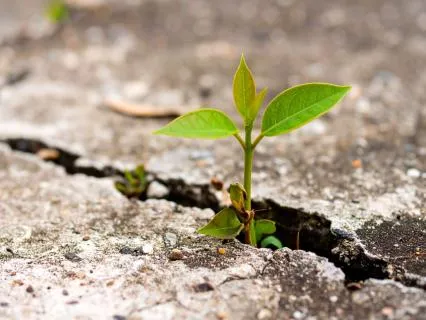
Now we're jumping into talking about the concept of growth mindset and this is the foundation for all of the work that we are doing in terms of resilience,
Of navigating challenge,
And it's the core belief that change is possible.
So let's look at the definition of what growth mindset actually is so we have a clear understanding.
And it's the belief that our abilities,
Our intelligence,
And our talents are something that can be developed and improved upon,
Particularly when we bring a dedication and hard work,
When we use effective strategies,
And when we really persevere challenges because everything new has challenges,
When we bring that dedication to navigating that,
We are able to improve rather than being stuck in one particular set of skills.
So this is the foundation concept of all perseverance.
We can grow these skills to get better at being with challenge,
To be more resilient with stress,
To learn how to manage and experience our emotions in a healthier way.
This work,
In this particular term of growth mindset,
Was coined by Dr.
Carol Dweck and we'll talk about her a little bit more later,
But think about this as a key trait of understanding challenge to be an opportunity.
And it's really like a reframe.
We talk a lot about reframing our thoughts.
Instead of the mind going into that,
Oh this is terrible,
This is such a problem,
It is this reframe of saying,
What new skill can I develop as I navigate this challenge?
What am I supposed to practice or learn that is really going to be supportive to me?
Why is this challenge in my life?
Okay,
So that's the reframe that we are trying to work with.
And we can look a little bit because comparison can really help us grasp the concept here.
So Dr.
Dweck created these two different types of thinking,
These two mindsets of saying,
You know,
A fixed mindset will tend to avoid challenge and are not very open to feedback because they see that as a personal attack.
Whereas when we have a growth mindset,
We are more likely to move toward challenge because it's opportunity,
Because it's growth.
And even if we don't get it right,
That's okay.
There's a lot of wiggle room there for like navigating those challenges and learning as you go.
There's an openness to feedback,
Especially when it's provided in a genuinely constructive way because we see that feedback as something that's going to help us to grow.
So it's quite a different reframe there.
It's a very particular way of looking at mistakes and failure.
So if you have a very strong emotional reaction,
Nervous system reaction,
When you make a mistake,
Even a small mistake,
This is really common,
You have this strong reaction to a mistake or a problem,
You're very quick to jump toward the label of failure.
I did that wrong.
I failed.
Right?
Really heavy emotional weight that comes with that thought and that pattern.
So Dr.
Dweck has this lovely talk where she looks at the between labeling something as failure versus labeling something as not yet.
I didn't get it yet and that's okay.
Right?
Isn't that lovely?
Like I just feel this layer of stress peeling away when I think about that.
And so often we're working on unrealistic expectations or unrealistic timelines that we put on ourselves so it's so easy to end up in that mind space of saying I failed.
And instead creating that space for growth by telling yourself I didn't figure it out yet.
That's not in my life yet but it can be.
Right?
Much more spacious.
There's a totally different energetic feeling to that choice of words.
So pay really close attention to that because the way that we think has this ripple effect to everything else in our body,
In our energetic system,
In the way that our breath is moving.
So in yoga practice,
When we're on our mat,
When we're on our cushion,
Whether it's a vinyasa or a kundalini practice,
How does growth mindset translate into our relationship to the practice?
And I think it's really about this understanding that the mat is not this place where you have to be perfect and perform,
Like execute your yoga posture,
Your kriya like perfectly.
That's so much pressure and constriction.
Instead it is this shift toward time on your mat,
Time on your cushion as a laboratory,
As a place for playing and experimenting and observing.
Like how do I relate to challenge?
When a pose comes up that my body doesn't want to do today,
How do I navigate that?
What emotions and thoughts come up in reference to that change and that challenge?
How interesting.
Self-criticism popped up.
These are the kinds of things that we can really learn more about our patterns and how open we are to growth and change within our mat,
Within our practice.
Now in this series we're going to be working a lot with the kundalini practice,
Which is so perfect because when we think about the most basic definition of kundalini energy,
It is simply our own potential.
It is the dormant potential energy that exists in every single human being and we're going through this process of trying to tap into our potential and use it,
Bring it into our life,
Make it something actionable that really helps us to live more effectively and to reach our potential.
So kundalini yoga,
You know,
Growth mindset did not exist when kundalini was created and practiced because this is such a new concept,
But it is absolutely connected to this idea of growth mindset.
It means that when we practice,
We have the ability to create change.
It is the foundation of why we practice yoga because we can facilitate change,
Healthy change,
Change in a good direction.
That's the key.
Okay,
So there's a lot of different ways that this will show up in your yoga practice,
But there's a couple that I want to kind of have you look out for.
One of them is your willingness to adapt to your needs.
So if you need something different from the person next to you or,
You know,
In our case when we're practicing virtually,
If I am suggesting an option that doesn't work for you physically,
Are you able to say,
Hey,
That's not going to work for my body today.
I'm going to do it a little bit differently.
Are you able to let that space for growth exist in your practice or do you force yourself to do it anyway because you think that's what the teacher said I have to do it that way.
Please don't ever do that,
Especially not when you're practicing with me.
I hope I've conveyed that enough,
But these patterns within ourselves can be so strong and I have absolutely had that experience of overriding my own needs.
I think we all have that experience on the mat at different points and it's one of the key things we're supposed to learn.
So I'll give you a very specific example with injury and I'll use myself as an example.
You know,
You might do a yoga practice the next day your back hurts and one particular response to that could be,
Oh,
That practice was bad.
I hurt my back.
I'm never doing that practice again,
Right?
Kind of throw the baby out with the bathwater and it's a very one-dimensional way of thinking and it doesn't leave a lot of room for growth or adaptation.
So the shift that we're trying to make is I wake up the next day and I'm like,
Oh,
My back hurts.
Let's walk it back.
What did I do?
Did I push a little bit too hard in some of those back bends?
Could I have taken a break a couple more times?
What am I going to change next time to make sure that I don't push my back farther than it wants to go?
So there's a completely different trajectory to the same experience and one keeps you engaged and,
You know,
Keeps you in your practice as a vehicle for growth and the other one creates a brick wall that makes you stop.
Okay,
So pay attention to those different trajectories.
It's staying present with appropriate discomfort.
That's the key,
Appropriate discomfort.
Not pushing into strain,
But can I kind of work those edges of intensity,
Whether that's with emotion,
Whether that's with physical sensation,
To widen that window of what I can tolerate and be with.
It is how you navigate setbacks.
You know,
We all have an ebb and flow to our practice where sometimes we're more consistent than other times and can you allow that to be a natural part of your growth and the evolving relationship that you have with practice?
Very often we might set particular expectations and you know I love to talk about that word expectation because it creates pressure.
So we bring expectation into our yoga practice.
We think this is going to fix my back or this is going to make me never feel stressed ever again.
No to all of those things,
But it is that expectation that we bring for immediate results.
We think magic wand is going to wave over us and things are all going to be okay,
But it is a lot more of this shift toward process instead of immediate result.
What is the journey of learning as you navigate change?
How is your relationship with that?
And this is what I put in bold at the bottom.
It's very relational.
Not end focused,
Not I have to achieve the perfect downward facing dog and then I have mastered yoga,
Right?
That's not the way that we approach the practice.
It's not helpful.
The more helpful,
More constructive way of thinking about it is how does my practice help me to form a better relationship with myself?
A healthier set of thought patterns,
A more supportive inner environment.
That's the kind of growth that we're really working on in terms of relationship.
So that's what we're looking at for growth mindset on our mat.
And then we look at how this is kind of reflected in the yoga philosophy and we have a concept that's been coming up a lot lately and that's the Sutra 1.
12 which talks about two key concepts in yoga practice and in life.
Abhyasa and Viragya.
So don't get stuck on the Sanskrit.
The concepts are the most important thing.
So it's saying that these two concepts together are essential for us to move forward in any situation.
It is always described as two wings of a bird because if you have one wing or the other wing,
Birds not going anywhere.
But when you have both,
Forward movement will happen.
And these two things that we need are sustained practice over time or you can think of it as like effort,
Directed effort,
Sustained over time.
And I like to think about this like always trying your best.
We can think about the four agreements and we know that whatever your best is is a moving target.
Like day to day,
Your best effort is going to be different.
Hour to hour,
It is going to be different.
So let that be an evolving thing.
But it's this combination of always doing your best and then non-attachment to the outcome.
So instead of stepping on your mat and saying I have to nail downward-facing dog,
Like I have to perfect my downward dog,
It is what is my relationship to my body?
What is this journey I'm about to go on for 30 or 45 minutes as I move and breathe?
Can I observe that journey unfolding and what can I learn from that?
It's very process-focused instead of end-focused.
When you put these two things together,
Sustained effort and non-attachment to outcomes,
Very like go with the flow and see where this brings me,
That's when forward movement really gets momentum.
That's when the bird is able to take flight and go.
Okay so really key concept from Sutra 1.
12 and you know I like to talk about the elements as really a language for self-regulation.
When we have balance or imbalance and the two elements that I think of here are the fire element,
The heat of transformation and effort,
And the ether element which is potential,
Which is spaciousness.
When we put fire of effort and space of potential together,
That is the vector for change.
That is the vector for growth.
Okay so you kind of see that reflected in these two different ideas here.
And then the last concept that I want to touch on in terms of growth mindset in yoga philosophy is tapas.
The third niyama in the observances that we bring to life,
Tapas is the effort or very often it's the fire of transformation,
Discipline,
Strongly connected to avyasa,
Sustained practice,
Sustained effort that transforms.
But it is an appropriate effort.
It is not just an unbridled enthusiasm that can burn us out.
It is an aligned level of effort moving in a direction,
Keeping your hands on the steering wheel of saying this is where I'm going.
This is where I'm pushing myself to grow and expand into those challenges that life is giving me whether I want them or not.
So then we'll look at this through psychology and here's Dr.
Carol Weck again.
She really coined this term in her book that she published in 2006 and talked about growth mindset versus fixed mindset.
And it's this concept that has gotten a lot of recognition when we think about the term neuroplasticity.
Back when I went to school over 15 years ago there was a very false understanding that the brain kind of heals or changes when you're young and immediately after an injury like six months or a year and then it kind of stops,
Gets static again.
But with more research we found that that's actually false.
Neuroplasticity and our ability for our brain to change,
Learn and grow is maintained for the entire duration of our life.
You have it now and tomorrow and right until that last breath our nervous system is able to learn and grow and create new patterns.
So that is the good news.
Does it take effort?
Does it take consistency?
Is it going to be hard?
Yes,
Absolutely.
It's not easy to rewire the brain.
It will take effort and you know we just talked about how in yoga philosophy that's kind of the deal.
Like your practice is not going to be rainbows and sunshine because it is the effort that creates the transformation.
Okay so we see that with the brain and the nervous system over and over again but it is worth it.
When you see yourself respond differently to something that used to be really overwhelming,
Really triggering and you're able to handle that with more grace,
That is such a shining moment in your life where you get to see what the result of that change and effort is.
So that's what we're working toward.
It is you know seeing something that you used to feel completely overwhelmed by or maybe you make a mistake and that used to be something that would put you into a shame spiral.
Lots of self-criticism,
Lots of heavy you know critical thinking,
Negative self-assessment that might follow even a minor mistake and you get to this point in your life where you can make a mistake and you don't fall into that shame spiral.
You go I made a mistake.
Let me figure out a different way because that one didn't work.
Completely different shift and that is the trajectory of growth mindset.
You can learn a new way to respond and you can strengthen that pathway.
So one of the things that you want to look out for is something we've talked about way back quite a while ago.
What we call cognitive distortions.
These are thought patterns that are not helpful and they're actually quite destructive.
So in meditation we love to say that the brain can be like a wild elephant.
Incredibly destructive.
If you're doing a lot of all-or-nothing thinking this is a little flag to wave at yourself.
If you're like I always mess that up.
I never get it right.
Stuff like that.
That's all-or-nothing thinking and it's a very heavy self-assessment.
Those are thought patterns that you want to call out and pull the energy away to shift towards something more supportive.
Those thought patterns are destructive.
Okay so this is not about forcing yourself to be positive.
I'm never the person who's like all rainbows and sunshine.
That's just not how life is.
But it is about believing that no matter what you're navigating change and growth is possible and when you let that understanding inform your actions it can really create a completely different direction in your life.
That's really powerful.
Okay so when we take this with us out into the world this is where it's the most important.
We practice in the laboratory of our mat,
Of our cushion,
And then we go out into the world and we see in day-to-day life how does this show up.
And the big thing I really want you to pay attention to is monitoring your self-talk.
The patterns in our brain are incredibly strongly rooted.
Think samskara.
It is a deep groove that has been worn in our brain since early childhood of how we talk to ourselves.
When we say something like I failed I always mess it up.
Right?
Samskara.
You learned that phrase a long time ago and it has deep roots in your brain.
We're going to shift in a different direction and say hmm did I fail or is this a not yet.
I haven't figured it out yet but if I keep working at this I'm going to learn how to do it.
Completely different energy.
When we're talking about relationship with emotions it's oh I'm so sad I hate feeling sad and then our response is going to be I have to get away from this I have to fix this versus right now I'm feeling sad and I'm working on being with my feelings instead of running away from them.
That's my space of growth right now.
That's a really big one.
Okay so watching your response to mistakes.
This is a place where old nervous system patterns can be really strong and we're trying to see if we can learn how to round the edges to sit with mistakes or errors in our life and really look at them as learning opportunities and creating this inner sense of safety that I'm not going to berate myself I'm not going to you know jump into that shame spiral of self-criticism because we know from the research that when we have really harsh inner criticism it squishes our potential for growth.
That's when we really avoid uncertainty or new opportunities because the fear is so strong and it's coming from inside of us isn't that crazy like it's our own thought patterns that are squishing that potential.
So be very vigilant of that.
Now on the flip side of this when you see yourself exercising some sort of growth praise that.
Recognize yourself for it when you respond differently to a mistake and you're actually kind to yourself or you allow that shift from I failed to I haven't figured it out yet.
Praise yourself to reinforce the pattern.
Look at that.
I am strengthening that growth mindset.
I just shifted my thought pattern toward a greater growth mindset.
That is amazing.
Praise yourself for that because this is one of the ways that we reinforce it and it has to be an internal process because nobody else is going to recognize that except for you.
So this continuity that we start to see with yoga,
With psychology,
With the way that we approach our life is this understanding that we are able to work on these skills of resilience when we are curious.
We love that word in meditation and yoga.
Be curious.
When we stay committed,
Consistent effort in a particular direction and when we bring compassion.
Compassion is how we navigate the bumps,
The mistakes,
How we don't fall into that pit of failure and we stay in that arena of not yet but I will.
Alright so to conclude resilience isn't something that we either have or don't have.
It is something we practice just like yoga.
It is something that we practice over and over consistently and when we have this growth mindset it is the attitude that allows that practice to work.
It is the foundation.
So packing up that growth mindset,
Bringing it with you onto your mat,
Into your day and really seeing how that shifts your relationship to difficulty that comes up.