There is something strange about breathing.
It is the most ordinary thing that we do.
And at the same time one of the most powerful tools we have.
You're breathing right now.
Probably without thinking about it.
Your body has been doing it since the moment you were born.
And yet,
With a little awareness,
This automatic process becomes something you can influence.
You can use your breath.
To calm yourself down.
To wake yourself up.
To steady your mind.
To feel your body again.
To move from stress.
Into.
Recovery.
And humans have known this for thousands of years.
Long before modern science started studying the nervous system.
Ancient traditions across the world.
At very different places already understood that the breath was not just air moving in and out of the lungs.
It was connected to energy.
Emotion,
Health.
Attention.
And human connection.
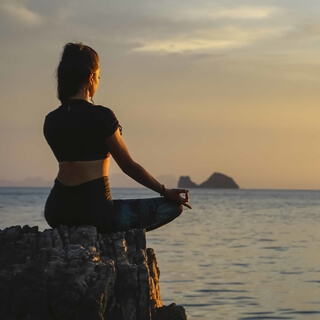
In yoga,
Breath work is called pranayama.
Prana means breath,
Life,
Vitality,
Or energy.
Ayama means length.
Expansion.
So pranayama is often understood as the practice of extending or guiding the breath.
In Buddhism,
Mindfulness of breathing became one of the central meditation practices.
And in Chinese traditions,
Breath was connected to qi.
Life force.
And in many ancient medical texts,
There was already this understanding that breathing through the nose,
Slowly and steadily,
Was essential for health.
So when I first learned breathing practices in yoga,
I mostly copied what my teachers told me.
Breathing through the nose.
Using Ujjayi breathing,
Lengthening the exhale.
I did it,
But I didn't really understand why that mattered.
Until years later,
After finishing my PhD,
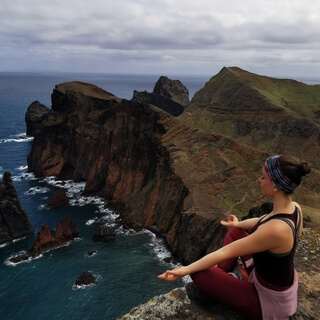
I went tracking in the Himalayas.
At high altitude,
Where there's very little oxygen,
One of my Nepalese guides told me something I still remember.
Keep breathing through your nose.
Slow.
Light and steady.
To control your breath is to control your mind.
At the time,
I didn't know the science behind it yet.
But I trusted him.
And throughout that track,
I used a breathing I had learned in yoga.
Slow,
Steady nasal breathing.
It took me further than I had ever ventured.
A six kilometer elevation and faster than any of my male teammates.
Only years later,
When I started studying the science of breathwork,
Did I understand how much wisdom was hidden in that super simple instruction?
And probably how much my breathing had influenced my recovery rates,
And subsequently the reserves I had left when climbing a high peak after just four hours of sleep.
Because your breath is one of the few places where body and mind meet directly.
When you are stressed,
Your breathing changes.
It becomes faster,
Higher,
Shallower,
More irregular.
But the opposite is also true.
When you change your breathing.
You can influence your stress response and you can trigger your body to recover.
This is why I often call breath the bridge between body and mind and the lever of your stress response.
Breathing fast can move you towards activation.
Breathing slowly and steadily.
Especially through your nose.
And with longer exhales.
Can move you towards relaxation.
So breathwork.
Does not have to be complicated.
You don't have to start with advanced techniques.
With long breath holds or intense practices.
You can start.
With something incredibly simple.
Notice your breath.
Is it fast?
Or slow.
Is it high in the chest?
Low in the belly.
Or expanding into your side ribs.
Is it loud or silent?
Forced.
Or easy.
Before you change anything.
First,
Become aware.
Because awareness is the beginning of breathwork.
And from there.
Little by little.
You can learn to use your breath not as another thing to perfect but as a way to listen to your body.
Support your nervous system and come back to yourself.
If you are curious about breathwork.
Try out some of my guided practices on Insight Timer.
You can find them on my profile.
Or,
If you want to learn more,
You can start my course,
The Science and Practice of Breathwork.
This course will help you to understand everything you need to know about how breathwork affects your body and mind.
And also which practices are specifically useful for your personal needs.
And for now.
Maybe just take one slow breath through the nose.
Gently hold it at the top.
And then let go and a long sigh.
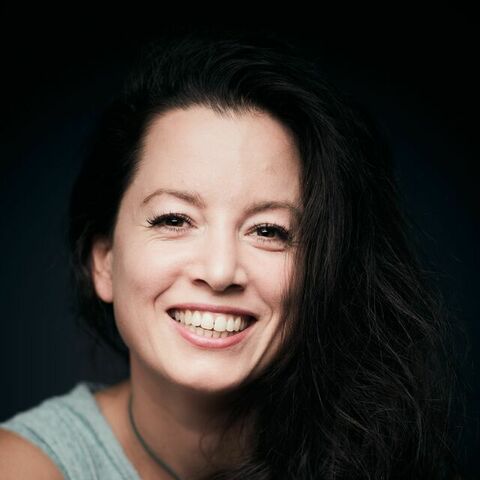
My name is Inge.
And I'm looking forward to practicing with you.
Have a lovely rest of your day.