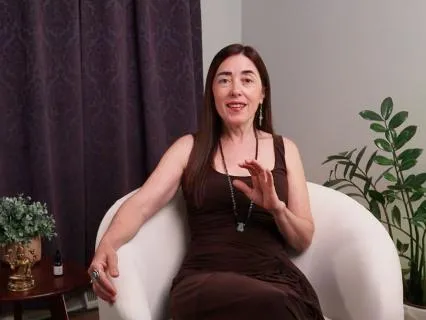
Hi,
I'm Diana Pereira.
Felling grace practitioner and somatic teacher.
Welcome.
Let's begin.
Today I want to talk about something that doesn't get enough air time.
Trauma not as a psychological experience.
But as a physical experience.
What trauma does to the body.
Because once you understand this everything else we do together will make a lot more sense.
We tend to think of trauma as a memory.
Something that happened.
Perhaps a story that we carry.
But the body doesn't store trauma that way.
It stores it as a state.
Pattern of tension.
A way of breathing.
A breath that never quite finishes.
A nervous system that got stuck mid-response and never fully came back.
Peter Levine,
A pioneer in somatic trauma work,
Defined it this way.
Trauma is not in the event.
Is in the nervous system's incomplete response to the event.
Think about a deer being chased by a predator.
It escapes.
It shapes.
Literally trembling throughout its whole body.
That shaking is normal,
Is not weakness.
It's the nervous system's response completing the cycle,
Discharging the survival energy that it mobilized to escape danger.
Humans do this too,
Or we are supposed to.
But we've been taught to stop it.
Calm down.
Don't shake.
Hold it together.
And so we do.
We hold it.
And holding it has a cost.
Your autonomic nervous system,
The one that is running beneath your conscious awareness all the time,
Has basically three main gears.
The first is safety and connection.
This is where digestion works,
Sleep comes easily,
You can think clearly,
Laugh,
Feel close to people.
This is the state our bodies are returning to or want to return to all the time.
The second state is activation.
Sometimes you hear this named fight or flight.
Your heart rate increases,
Your muscles tense up,
Attention narrows,
Your body is mobilizing a lot of energy to escape just like this year.
Now this is brilliant when we need it.
And it's very expensive when it doesn't turn off.
The third is shutdown,
The freeze or collapse response.
When activation has gone on for too long,
When the threat feels inescapable,
The nervous system hits the brake hard.
Numbness,
Disconnection,
Exhaustion that no amount of rest can fix.
Sometimes.
Feeling like you're living your life from behind the glass.
Most people living with unresolved trauma are cycling between these two states,
Second and third,
Over and over again,
Without spending much time on the first state.
And this is important for you to know,
This is not a character flaw.
It's your body doing exactly what bodies are designed to do.
You may recognize some of these.
A startled response that feels oversized.
Somebody drops something and your heart is pounding for 10 minutes.
Chronic tension in places that you can't shake off no matter how much you stretch your jaw,
Your shoulders,
Your hips.
A breath that lives up here in the top of your chest.
Where you can't really fully take a deep breath no matter how much you try.
Difficulty feeling pleasure or rest all the way.
Like there's always a low hum of vigilance or anxiety running.
Perhaps the opposite,
Difficulty feeling much at all,
A numbness,
A flatness,
A going through the motions quality to your daily life.
These are not personal failures.
These are physiological adaptations.
Your body learned to protect you,
And it did.
And now we're going to,
Gently and slowly,
Teach it something new.
This is where somatic work comes in.
And specifically why I work the way I do.
The Falling Grace Method isn't exercise.
Isn't stretching.
It's a conversation with your nervous system through movement,
And attention.
Very slow.
Very small,
Very curious movement that asks your body What do you actually know?
What have you forgotten?
What's possible that you haven't tried yet?
The reason this works so well for trauma and there's good neuroscience behind this point is that the body changes through felt experience.
Not through understanding alone.
You can tell yourself that you're safe.
And yet your nervous system has to feel it.
And it learns that through movement.
Through breath,
Through touch,
Through gently being in a body that is slowly and gently show.
That this is okay.
You can put the guard down,
That it is safe to rest.
That's what we're doing together in these videos.
Not fixing,
Not healing you in some dramatic way.
We're just creating the conditions for the nervous system to find its way back.
Home to that first state of safety and connection.
More often,
More reliably,
More easily.
Thank you for being here with me today.
Take a moment before you move on to the next thing.
Allow this information to settle.
And if something in you responded to it,
Something landed,
Maybe you felt a recognition.
Curiosity,
Even resistance.
That is information.
That's your nervous system paying attention.
I look forward to seeing you in the next video.
Much Love!