Hey there,
I know you're busy.
So I put the practice at the front of the video.
If you want to learn more about what we're doing,
The benefits,
Et cetera,
That is at the back of the video if you have time to catch it.
For now,
We need to get you reset,
Right?
This practice,
You can either close your eyes or soften your gaze.
But before we get started,
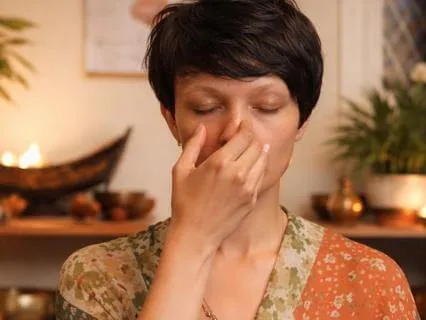
I want to do a very quick demo.
You will need your thumb,
Ring finger and middle finger.
In this video,
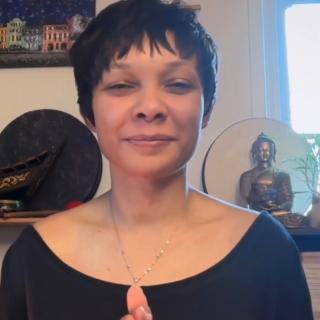
You can see I am closing my right,
Breathing in through my left,
Then closing my left,
Breathing out through my right.
Then I breathe back in through my right and out my left.
Let's begin.
We will continue like this for the next four minutes,
Followed by a one minute silent sit.
So whatever brought you to this moment?
Set it to the side for now.
And allow yourself to reset.
It has been four minutes.
Go ahead and sit with your eyes closed for one more minute.
It has been five minutes.
Go ahead and gently open your eyes.
Namaste.
And you've got this.
This particular breathing practice is called Sukh Pranayama,
And it's a Sanskrit term.
That means comfortable breathing.
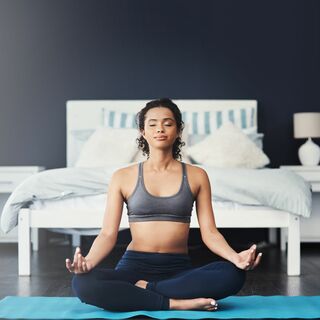
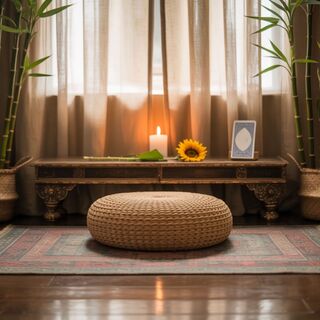
The recommended position for this practice is to be seated upright and comfortable.
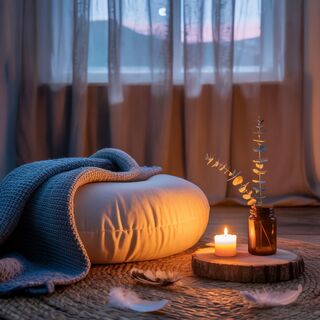
That can be in a chair or a cushion on the floor,
Whichever is your preference.
Your head,
Neck,
And spine are aligned in a neutral vertical position.
The hand that is not doing the alternate nasal.
Is relaxed either on your lap or your knee gently.
Your face,
Jaw,
And belly are relaxed.
So there's no straining in the breath,
No straining in the body.
Eyes can be either closed or softly downcasted so that you are not bringing in stimulation from external sources.
And this helps you to be able to bring your attention inward.
So the key is comfortable,
Stable,
Upright,
And relaxed.
Your breathing is natural and unforced.
Alternate nasal breathing is traditionally used to prepare the mind and body for meditation by creating calm,
Balanced mental clarity.
Those are really good things when you're in the midst of chaos,
Right?
So I have also found this to be a very good quick practice to reset.
It also helps reduce anxiety.
It purifies the blood,
Supports the nervous system to help it settle down.
It purifies energetic channels and it balances the hemispheres of the brain on an energetic level.
It also conserves energy.
So whatever brought you here,
My hope is that this practice helped you.
Reset so that you can move forward with more clarity and figure out whatever's going on.
As with anything else,
There are contraindications or cautions.
So if you have lung throat or sinus issues,
You should avoid doing a strong pranayama and just instead breathe naturally and slowly.
If you have high blood pressure,
It's advised to avoid this pranayama altogether and just breathe naturally and slowly,
Which can also still be beneficial.
Just a quick personal story,
If I may,
Really quick.
I remember the first time I tried this breathing method and it felt awkward.
And I thought to myself,
This is not working.
The recommended time frame for this is four to five minutes when you just need a quick reset.
So one minute,
Not working.
Two minutes,
Still not working.
Three minutes,
Still doesn't feel like it's working.
But I promised myself I would go at least four minutes.
At the fourth minute,
I felt a very positive.
Very notable shift.
So from that point forward,
I became an advocate for this form of breathing to reset and calm the body.
All that said,
I do hope that this practice has been beneficial for you and was able to help reset in the moment that you needed it.
And if you tried it and it felt awkward and you were kind of curious and you came to this part of the audio video to learn a little bit more,
I hope that my personal story helps inspire you to try it again.
At least four minutes.
That's when I felt the shift.
If you have any questions about anything that I covered here,
Feel free to reach out.
My inbox is open.
I am here to support you so that you can be the best version of you and do what you do.
Ciao for now.