Welcome to the Reality Check Podcast.
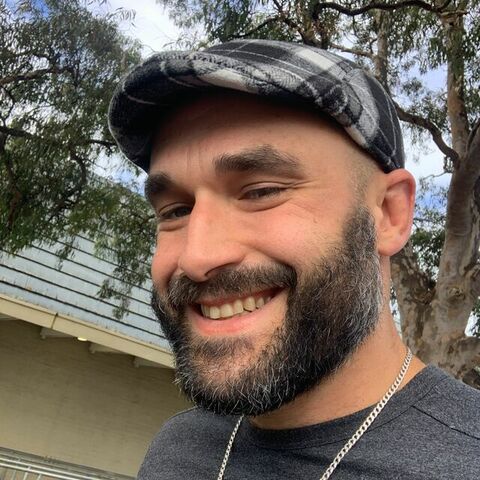
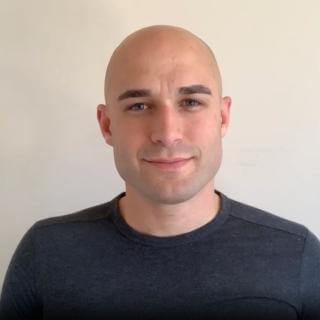
I'm Zachary Phillips.
If I could only recommend one single intervention,
One thing that's done every day,
One form or one activity that you could do for self-improvement,
I would always recommend mindfulness meditation.
Now obviously things aren't in a vacuum.
I would obviously suggest that to be healthy,
You exercise daily and you eat well and you see the therapists,
You do your journaling,
You do other forms of self-care,
You socialize,
You take your medication if you need to have medication,
All of that sort of stuff.
But if you can only do one thing,
In my mind,
For yourself,
The first thing at least I should say should be mindfulness meditation.
What mindfulness meditation does is that it gives you the skills to detach.
It allows you to see reality as it is for what it is.
It gives you the power to notice your thoughts as they are arising and not get trapped by them.
A lot of the time we're sort of going through life asleep for lack of a better expression.
We're going through life jumping from one task to the next to the next.
A thought,
An emotion,
A mood pops up and we're trapped by it and then we just act.
We get angry so we yell.
We get jealous so we send an angry text.
We feel lustful or attraction so we say or do something we may later regret.
We are afraid.
We're depressed.
We're fearful of the future.
A lot of the times we're in this sort of reactive mindset and we're reacting based on the thoughts that we've been trapped by.
Now by thoughts here I mean sort of all mental phenomena.
But we're sort of trapped by those thoughts.
But there is an antidote and the antidote is mindfulness.
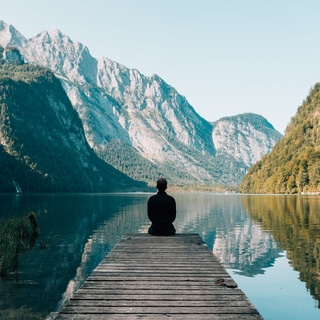
The basic practice of mindfulness involves you turning your focus back to the sensations of the breath entering and leaving the nose.
So you'll sit down,
Get comfortable,
Set a timer and then draw your attention to the breath.
Then your mind will wander.
And when you acknowledge that wandering,
When you notice that wandering,
You gently and calmly turn your focus back to the breath.
That's the practice.
Now there's a lot more nuance to be discussed about what exactly mindfulness is and how to practice it and a variety of different things.
But that's the crux.
Your mind wanders,
You bring it back to a point of focus.
Most traditionally the breath.
But any point of focus will do.
And you do that every day.
That's your daily practice.
What I do is it's one of the first things I do every day.
I mindfully meditate.
And what I'm doing is I'm training my mind or I'm training a part of my mind to recognize what the rest of my mind is doing.
I'm training myself to notice when a thought pops up and to be able to not fall into it.
To return my focus back to the breath.
And just like with exercise,
We don't exercise to get strong to be able to exercise better.
We exercise so we're strong and healthy in our daily lives.
We train in the gym to get fitter so that we're healthier.
We study so that we get better at our craft or our profession.
Not to get better at studying.
And in the same way,
We meditate.
Not to get better at meditating,
But to impact our lives in a positive way.
There's that long-term esoteric conceptual goal of awakening,
Of nirvana,
Of enlightenment.
And I tend to view that as a sort of a distant mountain that you can sort of head towards.
And it's there and there's a lot of literature on it,
But I prefer to ground things in reality.
What's the benefit to me,
To my life right now?
And if further benefits come,
Great.
So what are the benefits of meditation in everyday life,
Of that practice?
Well,
You start to detach in a good way.
It's not dissociative like moving away from things,
But it's actually just giving you a bit of a chance to step back.
It's like you're over here and your thoughts are over there.
You start to realize that you are not your thoughts.
You are not trapped by them.
You're the thing having the thoughts.
Thoughts become a little bit more like sound.
You start noticing them appear.
Then you start noticing them grow.
And then you start noticing them disappear.
You see that they come from nowhere and disappear back into that nowhere.
And you see the pull that they have on your mental state.
And from this detached perspective,
You're more and more able to make different choices.
So in the moment,
In everyday life,
Something happens that makes you angry.
And rather than just instantly responding,
You have a chance,
A little breath,
A mindful moment to make a different decision.
And this benefit is applied across every aspect of your life.
With your diet,
With your drug or alcohol consumption,
With your relationships,
With your friends,
Your family,
Your kids,
With your work ethic,
With your side hustle,
With your exercise regime,
With every aspect of your life,
You become less attached to the thoughts that pop up.
You might feel a moment of low motivation or boredom or sort of can't be bothered feelings just before you go to exercise.
But rather than falling into those,
You realize you're the thing having those thoughts.
You realize that rather than just sort of accepting those thoughts as your new reality,
You realize that your reality is that you're observing those thoughts and those thoughts aren't you.
So rather than just acquiescing,
You instead push through and you do the exercise.
You push through and clean the house.
You push through and do the social gathering you weren't quite sure about.
You push through and study or start the business or try.
You are better able to have deeper and potentially more awkward conversations with your loved ones and your close friends,
Enabling you to better understand each other on a really deep level.
And the better you understand yourself and the better you understand the people around you,
The better choices you can make.
And the better choices you can make will result in a life that is far more geared to what you want it to be.
Not a responsive reactionary lifestyle,
But an abundant lifestyle,
One that you're sort of initiating what you want.
And not what you want in the sense of like,
I want a new car,
But what you want deeply and truly.
You'll see when marketing for a new car,
For example,
Or a TV show or social media or something pops up and starts grabbing your attention.
You'll see what's you and what's being sort of put upon you.
And once again,
You'll be able to make better choices.
And it all comes back to a dedicated mindfulness practice.
It all comes back to returning our focus back to the breath repeatedly because you're training yourself to be able to return that focus back to the breath and therefore gain control of your mental state.
Like I've said,
Mindfulness meditation is part of my morning routine and it is the first thing that I would recommend people do for themselves.
Obviously do everything.
See the doctors have the medication,
Journal,
Exercise,
Diet,
Socialize,
All that good stuff.
But the one thing you can do right now,
Right in this exact moment is embrace mindfulness.
Turn your attention back to the breath is to realize that you've been trapped in thought and to make a different decision.
So there's a couple of things that I've been doing to help boost my mindfulness practice.
The first one is establishing the daily practice.
Every day I get up and do it.
I started with just one minute and now I'm moving up to 20 minutes of mindfulness meditation.
I do 10 minutes of silence as well as 10 minutes guided.
But I've also started a new project.
I call it mindfulness mornings.
And this is,
If you've listened this far,
Something that you're probably interested in.
I'm trying to do this every morning at about 6.
40am Australian Eastern Standard Time on Instagram.
I go live.
I will do a little bit of a talk about a mindfulness meditation based topic.
Then a five minute mindfulness silent session focusing on the breath or something else that we decide.
Followed by five minutes of Q&A and then a little bit of closing gratitude.
So the whole session takes around 20 minutes.
We just meet and greet at 6.
40,
6.
45 little talk,
6.
50 a five minute guided meditation or sorry,
Silent meditation and 6.
55 a Q&A followed by a closing gratitude.
And like I said,
That's on Instagram.
Instagram live at Zach P Phillips and everyone's welcome.
It's free.
The reason I'm doing this is because I want to get more practice in.
I want to get better at explaining mindfulness meditation.
But more importantly,
I want to demonstrate visually to you that it's possible to sit in silence every day for five minutes.
Because I know when I started,
I tried a couple of different in-person meditation places and I didn't quite connect.
I didn't quite gel with them.
And like anything,
If you don't see someone doing it,
It's very hard to do it yourself.
And it took me a good long while to be consistent with my practice,
Do it every single day.
But I've been doing it every single day for I think two to three years now.
And the changes have been out of this world.
So what I want to do is get some more meditation time in,
Of course,
But also bring the benefits to other people.
I look at it as a form of social good,
A form of altruism in a sense.
Imagine what the world would be like if everyone could take a breath,
Could calm down and just detach just a little bit from their innate biases,
From their innate moods and stresses and anxiety and anger and all of that sort of stuff going on.
And rather than reflectively post or say or do something in the wake of a heightened emotionality,
Imagine how good the world would be if we could all be just a little bit more detached,
A little bit more aware of how our mental states impact our words and actions.
So to encourage that,
To help you,
To help myself,
To do all of those things,
I'm doing live mindfulness mornings,
Hopefully every morning,
On my Instagram at Zach P Phillips at 6.
40 Australian Eastern Standard Time.
And I'm also putting the replays up on Instagram as a story,
Sorry,
A post,
As well as up on YouTube so you can play it back.
And I hope that that as a resource will be quite beneficial to all of us.
I've done,
I think about five sessions and had a bunch of good feedback.
People are loving it and I really,
Really hope that you do too.
And if you have a question for me,
If you're unsure about meditation,
If you want something clarified,
That's a great place to do it because if you're wondering about meditation or mindfulness or how it can help or how to do this thing or what do I do if I'm tired or how do I get my kids involved,
All of these sort of things that you might be wondering about a meditation practice.
Can I do it if I'm religious?
All of these questions,
Any of these questions,
It's a great place to connect with me.
So shoot me a message,
Join in and let's get mindful.
So I want to leave you with a little bit of a practice here.
I want you to try and bring some mindfulness into your day.
For the rest of the day,
If you notice yourself getting lost in thought,
If you notice yourself getting unreasonably angry or jealous or resentful or fearful or even on the positive side,
Super happy,
Elated,
If you notice these heightened moods,
Heightened emotionality or strong thoughts,
If you notice that happening,
Use that as a cue to take a small step back.
I mean literally take a step back and take one deep and slow breath in through the nose and out through the mouth.
And then consider making a different decision.
Yeah,
That's it.
Just one mindful breath.
Have a great one.