Okay,
Well,
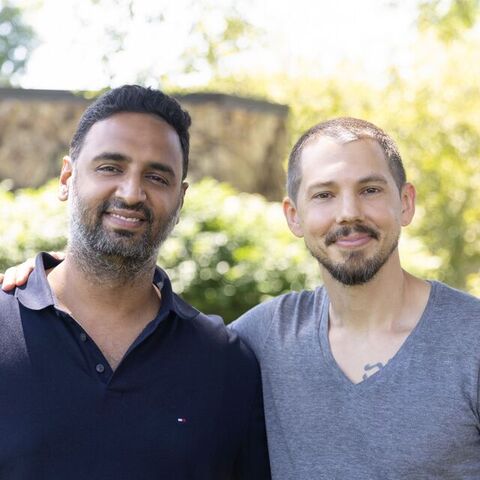
Welcome to What Is Now with me,
Charles,
And my good friend,
Sakib.
Hello,
Let's go.
Hi.
So the way that we begin each of these discussions is to spend a minute together in silence.
And so we ask you to,
As the listener,
To take a moment to join us in just sitting in silence for one minute.
No instruction other than to just return to this present moment experience.
I think we can build up so much habitual momentum from the very beginning of our day.
And even this little interaction,
We've spent just a few seconds together,
But there's habitual energy that starts to build up automatically.
So we can use this minute together to really just reset and return to an openness and an interest in what this present moment experience has to offer us.
And so you'll hear a bell to start and end this one minute.
No instruction,
Just however you are able to return to what's happening right now.
Hello.
Okay,
That's one minute.
Great.
So how are you doing Charles?
It's an interesting question always because I think even that can elicit an automatic response of I'm doing well.
And I can share with you my present moment experience.
I was noticing about that recording,
The bell that played and I noticed that it had a background noise.
And the initial thought in my mind was,
Well,
I wonder if it's better to have it quiet or with some background noise playing.
And then,
Which is a perfect example of my mind beginning to automatically run to judgments about this present moment experience.
And then I noticed I was kind of caught on that for a little bit of time and then get to a place of resolve.
But that to me is a great,
That's another opportunity to notice my mind habitually judging and wondering about this experience and maybe what other people are perceiving about me or thinking about me and then return.
But right now I'm feeling a lot of energy or sensation in my knees.
And I think that's the most present felt experience in this moment for me.
Wunno,
How about for you?
No,
That's wonderful.
I think it's a very interesting perspective to this question,
How are you doing?
And we always,
I think a lot of us,
What we do is that we start looking at our past maybe past one week or past one month,
Depending upon after how long we are meeting a person.
And we would evaluate that and we will see,
Oh yes,
Maybe I'm doing really well because maybe I'm earning a lot of money or maybe I'm in this new beautiful relationship.
But what I just realized by you answering this question is that it's important to know how am I doing right now in this particular moment and how am I feeling right now?
And I realized how disconnected we are when we answer this question.
We are not actually in the,
Usually not in the present moment.
We are either in the past or maybe we are looking into the future,
But answering this question with presence,
I think it is something really beautiful.
To add to that,
How am I feeling right now and how am I doing right now is I'm really excited to see what will unfold today and what we want to talk about today.
And I'm really,
I really like this pattern of just having discussions as they,
With our intuition as they just come out from our heart rather than having this notion of a topic and then talking about that topic.
So I really like this format and I'm really looking forward to it.
And it takes some,
I'm thinking,
I guess,
A challenge there both with answering how you're really doing in this moment and with the approach we're taking to this podcast,
It takes maybe some level of vulnerability that I'm proud of both of us for attempting to do in a body and share because to really go inward and ask yourself the question,
How am I doing?
And how do I really express that to this other person?
Take some level of like being open to whatever is there and you don't know what it's going to look like,
Which is the same thing for us just kind of talking about whatever arises.
But then it also,
It's really exciting and it's alive and it's not limited to these prescriptions of what things should be or the way that we should talk about them or have something in mind that gives us some sense of security and control.
It's making me think of something that's been on my mind recently.
I read an Eckhart Tolle book recently,
A New Earth.
I was resistant to his writings for whatever reason before that.
I think just because of his major notoriety,
For whatever reason,
Something was pushing me away from him,
But I ended up reading a book of his and I really liked it.
And he talked about this notion of a primary purpose and a secondary purpose for everything that we do.
And the secondary is the reason,
The instrumental reason for what you're doing right now.
So we're recording a podcast to present to a listening community for some purpose,
Instrumentally.
I mean,
You can think of it as to get people to listen to it or to support our careers as whatever it is that we do.
And that's a secondary purpose,
But then the primary purpose is always just this present moment experience and just what it is that you're doing right now.
And that's always the most important thing.
So what is the,
Maybe I'm missing out on something,
But what is the clear differentiation between the primary and the secondary purpose?
So is it that both involve the present moment or is it different?
I think both are playing out.
I'm thinking maybe the secondary purpose is maybe what brings you to this experience.
Like we are brought to this experience for some secondary purpose of making a podcast and creating it and sharing it.
But then when we're here,
All there is is right now,
And all there is is this moment.
There is no podcast.
There is no other time when someone is going to be listening to this.
There is actually only this experience.
Now as I'm in this moment,
I can either be attached to that idea of what I want this to be the outcome,
Or I could be as open as I possibly can be to this experience here with you Sakib,
Or even you beyond your name,
Like just you this experience,
You're filling up my sense of consciousness right now with your being.
And I can lose myself in relation to all those outcome secondary purpose things and fill myself up in this moment with all that really is in my experience.
I don't know.
What do you think about that?
No,
I think yeah,
That's a that's a wonderful idea.
And initially my,
I think I had this preconceived notion about primary and secondary purpose and it might be coming from my conditioning,
That we always have the primary purpose is being having some goal in life and having some,
You know,
Purpose to be here on this planet,
And the secondary purpose being the present moment.
So I was in that notion,
But I think it's a beautiful thing to look at the primary purpose is the present moment.
And I think it is something I really will contemplate on and it sounds interesting this concept.
Yeah,
It's interesting to hear your perspective of them sort of being flipped.
Yeah.
Yeah,
So no,
But that is a very interesting perspective.
And yeah,
I think this is something we can contemplate on and think about.
Even as you said,
You know,
Even I resisted a lot of teachings of Eckhart Tolle initially.
Because I think the first time I read the books and the power of now I was maybe not ready for it.
I was not in that.
I was more in that stage of life when I was looking for internal power in terms of self development.
But I was not in that state of being present and just,
You know,
Just working on myself on my internal self,
It was more external for me to have,
Like to make money to have external roles to get this to get that.
So that's when I.
.
.
To build the self.
Yes.
So that's when I,
You know,
Read this book.
And I thought that why is this person only talking about the moment of now and the,
You know,
The presence and the power of now,
We also have a future.
And we also have,
We have to build that future.
So I was in that mindset.
But eventually when I did my studies,
And you can call it any kind of studies,
Maybe spiritual studies,
I realized that the only thing that there is,
Is the now.
I realized that the future,
And this was something that Osho said,
And I think it was beautiful that someone asked that I keep worrying about the future.
So Osho said that the future never comes.
What arrives is the present moment.
You think it is the future,
But it is what it is the present moment that is arriving.
So I thought that that was powerful.
And that actually kept my perspective at that time.
Yeah,
I'm thinking of all that,
That feels maybe really vulnerable to,
It feels like exposed this notion of there being only now.
Because you have a sense of the past and to have a sense of the future is to kind of color in your experience and to have,
I'm almost feeling like it's building a house kind of around you.
And it gives you some sense of structure and stability.
And then to potentially lose that is a really maybe scary and vulnerable and like naked notion while it may be real,
And it could be really,
I mean,
I see it as incredibly liberating because I mean,
This house might also turn into a prison.
But if it's the only house that you ever had,
You don't know what it's like outside of the prison,
Then there's inherently I guess a lot of fear in stepping outside because I don't,
I'm choosing I would prefer to have this structure even though maybe I'm becoming more aware that it is a prison,
Because I don't know what it's going to be like out there.
There's this quote,
We often prefer the control of guaranteed unhappiness over the uncertainty of possible happiness.
So it's like we are prioritizing a sense of control,
Even if we're aware that we're out of control,
Over the happiness that could lie in being open to all we have is now.
Yeah,
Exactly.
Exactly.
And that also reminds me of the other thing that Osho said in that same video.
And he said that the happiness,
If you if you make your present moment happy,
So the person who was he was telling this to the person who was worrying about the future,
And he said that if you make your present moment happy,
Your future will be automatically happy.
Because what arises the now there is no future.
And this made me contemplate and realize that it's actually true,
We keep worrying about the future.
We spend our lives worrying about the future.
But if we can just stay happy in the present moment,
Then we can actually carry on take that happiness to the future as well as the so called future.
So yeah,
I can totally resonate with what he said.
I guess I'm thinking of so recently reading that Eckhart Tolle book,
To do that is maybe to let go of a lot of our sense of who we are,
And a lot of maybe the things that give us our identity.
So what do we,
How do we deal with that?
I don't know the,
My profession,
Or my relationships,
Or my skin color,
Or my all of those things that represent who I am.
I think what I realized was that all these things that you're mentioning is,
These things are given to us by the external world.
And if you think of it,
As soon as we are born,
We are given a name.
And that is given by our parents.
Then if we talk about nationality,
Then that is given by the government,
Or the constitution.
And if we talk about the religion that is given by the priest,
If we talk about our degree that is given by the university,
If we talk about the job position,
It is given by the company.
So everything is like given to us,
It is like a label that is given to us by the society.
But the question is that what truly am I,
What is my true self?
And once we,
If we can somehow let go of those labels one by one,
You know,
I think that that is also called deconditioning the mind.
If we let go of those labels one by one,
Then we have to see that what remains once we let go of those labels.
Yeah,
It's really interesting to think about that as all those things somehow being external from who I really am.
I'm just trying to kind of like feel into myself now,
Like,
Who I am.
It's thinking of it,
Even my body,
Like the way you were describing that was making me think of that too,
Like,
This is this thing that happened and was given to me by my parents.
And maybe there is something that is even sort of behind that,
That I am,
And that that's like a really close representation.
And then you can get further out,
Like my conceptual label of a name,
And then maybe a religion that I was raised under or a part of the world that I grew up in,
Or all these kind of things,
Maybe they're further and further away.
But the way you said that made me think of even my physical body as something that is outside of this,
Like me identity,
The core.
Yeah,
And that makes me wonder that,
Where does this I or me that we feel,
You know,
The sense of me,
The sense of I,
Where does it exist?
Like,
Does it exist in the body,
As you mentioned the body?
So if yes,
Then where does it exist in the body?
And I think once I tried to meditate on this,
And I could not find myself this feeling of I or me in the body,
I started with my legs.
And you know,
There was this awareness,
Which was definitely not in the legs,
Then I started with,
Then I moved on to my abdomen,
My chest,
My head.
Even this idea of like,
Some people can,
Some people think that this presence of I and me is behind the eyes,
Because this is from where we are looking.
And is this,
This sense of perception of looking is so strong,
You know,
That we start thinking that this,
My awareness is behind the eyes,
Or we have this idea,
Which comes from science,
From mainstream science is that this I or me is in the brain,
But we're exactly in the brain,
You know,
In the left side of the brain,
Or is it on the right side of the brain?
And where's the division between that and the nerve cells throughout the rest of the body?
Yeah,
Yeah,
Exactly.
So I really couldn't find this I and me in the body.
So as you said,
You know,
Even this body,
This idea of this body being given to us,
I totally understand what you are saying,
Because then there is also an awareness which is observing the body.
It is an awareness,
Which is even observing our thoughts,
You know,
The thoughts that are running in our mind.
And we,
You,
You might,
You know,
That we can do that in meditation,
We can observe our own thoughts,
We can observe our own body.
So if there is an observer,
And if there is an object,
The object being,
You know,
Our thoughts are or the body,
Then definitely the observer is,
This is what I think not I should,
I should not say definitely,
But this is what I feel is that the observer is separate from this object,
Which is the body or the thoughts.
Yeah,
I think this is what I think.
What do you think about?
I feel very similarly.
And I think it's one of those core issues that I think people can get it intellectually,
And in an abstract kind of way,
But then to really feel that is something different.
And my kind of belief is that you really feel that is to provide one of the most liberating experiences that we can find as human beings.
And that to me,
I'm guessing is like the core benefit of a meditation practice,
Or what you would call mindfulness practice to have this felt sense of an identity that is beyond even the physical body.
But I do think there's something very core in this,
Like based on that conditioning that we receive,
That builds from the very moment we're born.
That keeps us from a willingness to move further into that,
Like there's something that's holding on tightly for its survival.
I think we might call that the ego or call that like,
My,
I like to refer to it as the I me.
Because even ego,
You know,
There's like cultural connotation attached to that.
And I don't know,
It's really challenging to,
I think that can be kind of a scary place to dip into like what you're talking about,
This experience of like,
Well,
I'm not this,
I'm not this,
I'm not even my brain and even my vision.
And so what am I really?
It takes again,
Some kind of vulnerability and courage to keep like moving further and further into that.
I want to hear what you think about that.
I also just wanted to before I lose the thought,
When you mentioned about vision,
We can become so maybe attached to our sense of self existing behind the eyes.
And it was just making me curious about the sense of identity in someone who is vision impaired.
And what that experience might be like differently from someone who's their whole world is created by what they see?
Yeah,
That's a great question.
Actually.
Yeah.
True.
And yeah,
Maybe I in fact,
I asked this question in one of my sessions on insight time where I asked this question that where do you see this I and I realized that a lot of women mentioned that they felt this presence of I in their heart.
Now,
I'm not sure about this,
But we have seen in especially in my culture,
That a lot of men have their awareness present behind their eyes,
Or maybe the brain.
Because in my culture,
Especially from the country from where I come,
It's mostly men who are working in women who are in their homes.
The men who are working because they are into rationalizing because they are into logic.
They find that awareness mainly in their face,
Or in the brain or in the eyes.
From the neck up.
Yes,
There's a disconnection with the lower chakras of the body,
There's a disconnection with the lower part of the body.
Because then they are told not to feel emotions,
A lot of them not to cry,
You know,
Be a macho man.
And a man who is crying,
Is considered to be very feminine.
But when we come to women,
We see that they are more connected.
And I'm talking about this cultural context from my country,
More connected to their emotions in that sense.
Because they,
It is okay,
In my culture for them to cry,
And you know,
To feel their emotions and to express their emotions.
I think that is why they felt that sense of I and me,
That sense of their pure awareness in their heart.
What's that like?
What's what's that like for you?
Having grown up in that culture?
Yeah,
For me,
Initially,
It was very,
I tried to be a macho man.
I tried to be someone who doesn't cry,
Who doesn't,
You know,
It's very emotional about things,
Or sentimental.
But I couldn't do that.
And I found myself crying,
I found myself expressing my emotions and being sentimental about things.
So usually in the male groups,
In,
You know,
In the friend,
Where there are all male friends,
The people who are crying,
The people who are feeling their emotions,
They are considered,
They are bullied usually.
So they are having this feminine energy,
You know,
Because they are crying,
They're not supposed to cry.
So I found myself very different from that group.
And eventually,
I realized that all the men in that group,
They would cry when they are at home and presence,
Because eventually they,
They opened up with me and they told that how they would cry and not cry in front of others.
So my,
I started feeling initially,
Again,
My awareness was more towards my face,
My head,
But eventually,
I could also feel that sense of awareness in my heart.
I think going deeper and deeper into this,
I realized that there might not be a specific point in space,
Where we can locate this particular eye,
Because it can be anywhere,
It can be everywhere.
Eventually,
I couldn't find the sense of I in my body.
I in fact,
There was a sense of feeling that this,
This thought of this,
This belief of I,
Me and myself,
It might just be a thought in my awareness.
And It kind of,
Just as you're describing it,
I had the reaction of,
It must be,
It inevitably is because it's turning into language.
Like,
Oh,
That is me.
Well,
That is some,
That is an expression of words,
Which are just these conceptual tools to describe something that is experience.
So even to say that is,
Is kind of inherently just,
It's a thought.
Yeah,
Exactly.
And it never ends.
Exactly.
As long as it's spoken in words,
It's a conceptual abstraction from something that is an experience.
And I was kind of thinking of what you were describing as like,
The head felt experience or the heart felt experience.
And maybe the heart felt one is a little bit closer to whatever that basic raw thing is.
I mean,
I can just,
In my culture too,
Certainly that has been my experience of being conditioned to not cry or express emotion or that that is a sign of weakness or inferiority in some way or that maybe that you're feminine,
Quote unquote,
Or,
Or whatever it is.
And that's a big part of the conditioning layer.
I can say over the past several years of my life,
There's been such an opening into tears,
Such this like raw powerful expression,
Maybe of whatever that thing is that like core identity that can't be pointed to.
It's like that's speaking and expressing itself and my conditioned self might be saying,
Hey,
Go away,
Like no one wants you here because other people are,
We've learned other people are going to make fun of us or judge us if you come up.
And then the possible transcending of that and be like,
You don't even exist.
Like you're just this collection of thoughts that I've gathered.
I,
And then just to allow the feeling to come up and express itself in the way that I have no control over,
It's just happening.
And it's just this like beautiful thing.
And I've become a vessel for this like expression of tears.
And even if it's sad,
Or if it's joy,
Like that to me is such this beautiful gift to receive and express.
I can say like during,
I recently was married and a little while ago,
And we had a small gathering and it was,
I was just filled with tears the whole day.
Not even necessarily related to anything in particular.
It just felt like this kind of celebration of how I feel presently in my life.
And I was surrounded by people that I really deeply care about.
And I felt just totally open to showing them all of me.
And it's just like tears streaming.
And it felt so nice.
Kind of maybe a celebration of transcending that conditioning.
And one more thought I have on that.
I've been thinking about this recently and in some individual work with clients,
I think we can learn so much that we shouldn't cry,
That crying is something we need to fix.
And I was thinking to me,
It's really crying and laughing are two very similar things to me.
And the difference for me is that one is socially acceptable that we've learned that that's something that is good.
And so we should express that thing.
And that socially we've learned that tears are bad and that we should try to fix them.
So we should push them down.
But that maybe those are two sort of sides of the same continuum of this really raw feeling that just occurs.
You can't,
I mean,
You could fake laughing,
But that's different from really having this explosion of what is genuine laughter.
And then it just comes bursting to the surface and you're a vessel for laughing.
And so maybe those are two things that are operating the same way.
And they don't,
You don't need to do anything else about them.
You just let them happen.
Right.
So that's,
That's a lot that I've just thrown against the wall.
Yeah,
No.
And this also reminds me of the concept and it is not only a concept,
But,
But my experience as well.
And I've seen that we all wear masks,
You know,
So there is this outer mask.
And as I said,
When I was trying to hide those emotions,
There was this outer mask that I would present to the world of a very pleasing personality of always smiling.
And you know,
Having this,
Sometimes having this stern look on my face,
Which might show success,
Which might show achievement,
Which might show being satisfied with life and really happy.
And then it also came in my tone of voice,
You know,
Maybe the sternness in my voice,
Which would show that,
Oh,
I'm,
I'm strong and powerful.
So that way I would make my voice really stern.
So I realized that there is this outer mask that we create in front of people,
Which,
Which is pleasing to others,
You know,
Which we,
There's a personality which we carry,
Which we want to show to the world that yes,
Everything is fine with me.
But then there is another layer inside it where all our sadness,
Fears,
Pain,
Emotions,
Suffering and everything lies there.
And I think this is something which we are when we are at home,
You know,
We are sitting with ourselves and if nobody is around us,
Then usually we do express that usually we either cry,
You know,
We have that sadness,
We will feel that sadness.
Or if we have anger,
That anger would come out.
The anger also comes out in front of people who are very close to us who are vulnerable to and we can show that side of ours.
And also,
We might displace that anger onto them because they it's okay for us to show underneath that,
That mask layer a little bit with them.
Yeah,
Yeah.
And there might be a lot of judgments there as well,
You know,
Regret,
Remorse,
Resentment.
And that is something which I think that comes from the idea that we always,
As you said,
Need to show this happy self of ours and you know,
Laughter to the external world,
But when it comes to crime,
This is something we hide and this pain we hide,
The sadness we hide.
And I was reading this interesting concept by Carl Jung of individuation.
And he said that we can truly become whole when we accept both our aspects of the feminine and the masculine.
And we all of us have those both aspects equally in us,
You know,
The feminine part,
The masculine part,
But the problem occurs when either we suppress the masculine energy or we suppress the feminine energy,
But we can truly become whole when we can embrace both those aspects of ours.
What do you think about?
It just makes me think of like the yin and yang of Taoism,
And that we might become particularly attached to,
Like one of those sides,
Which would inevitably lead us to live a really like divided existence.
But we become conditioned to maybe fear that side of ourselves,
Like for a man,
For example,
That is feminine,
And to want to disavow it or try to eliminate it from us when maybe there's a way of re embodying it and living in a way that is harmonious and open to all of the parts of you.
But then I think,
Again,
It takes that vulnerability to express that in a society where you're unsure of what the response will be to it.
And maybe especially if you've had experiences in the past that have shown you to hide those parts of yourself.
Yeah,
That's true.
Yeah.
And that also reminds me,
As you mentioned,
Vulnerability.
That also reminds me that how much less vulnerable we are becoming as a society today.
If you see social media today,
And you know,
Instagram and Facebook and all these platforms,
People just want to present their happy self to the world.
This idea of being successful,
You know,
Taking selfies,
Showing women,
Women going a lot of females going through surgeries,
Instagram surgeries,
To another cell.
And people traveling to different places and posting the pictures,
And this whole idea of being successful.
And what is that doing is that people are becoming more and more depressed,
Because they are not able to show their weaknesses or show their true self to the world.
They are vulnerable because they feel that they have to achieve something and become something and be like that Instagrammer,
Or have those many followers or travel to such places or have those Instagram looks to be worthy enough,
You know,
So there is a problem of self esteem there.
Which is sort of inherently to guarantee that you cannot be receiving the thing that you ultimately want,
Because you're attempting to create some version of yourself that is not actually a representation of who you are.
So you're making sure that you can never actually be fulfilled.
But maybe it might keep you from ever really looking internally as you might be afraid of what you might find in there.
Yeah,
Yeah.
Yeah.
I think there's a sense of lack there.
We are born in a certain way.
And when we don't accept ourselves as we are,
That I think that is when the problem arises when we run up to this idea of becoming something wanting to become something rather than just being in the present moment and having that acceptability of what we are.
And I feel you and me are really connected in the pushback against that,
And that that's really a drive for both of us in terms of what we're doing and maybe is a natural manifestation or expression of what an inner attempt to go inside and say,
Hey,
I am totally enough as I am completely regardless of the conditioning that I have learned,
Whether it was intended or not,
From whatever sources it came from that I can actually go in all the way down and see,
Oh,
Wow,
I at my very core am more than enough.
And then from there,
A pushback and an attempt from both of us to share that with anyone that we can touch.
And that that is like,
Really purposeful way of being every day.
So I feel that really here with you,
Like,
I feel totally embraced by you.
And I feel like you're interested in learning about me completely.
And I hope you feel the same thing for me.
I think that creates just like this really awesome place.
Yeah,
Interact.
Where there's there's no concern about what it is that I look like,
Or say or prove to you,
But we can both operate from the space of just like really exploring together with no threat or fear.
So I think that's really awesome.
Yeah,
Yeah,
It's totally awesome.
And I think that is a wonderful place to be in.
And the idea,
As we were discussing today,
The idea of self,
The idea of the ego that you were talking about,
I think it arises from this idea of being someone else than what we truly are.
We being the core and as we talked about that in the previous session,
Being a hollow bamboo,
You know,
In which we are just channeling the message of the universe rather than being the messenger and focusing on the messenger itself.
So I think it's a wonderful space to be in with you because that's pure channeling for me.
If I'm not my terms,
It's pure channeling,
It's pure connection at a very raw level rather than having any idea of the messenger that we both can be and you know,
We can develop this sense of ego of being a messenger,
But that is something we are trying to let go of totally and just connect at the very core.
Yeah,
It's a fun experiment to really try to do.
And I have felt there in that space with you today,
It's almost like our identities dissolved in a way and we're both just sort of living in this message that's beneath the messenger,
Which is a really cool kind of shared meditative place to be.
And I hope the listener gets some sense of that too,
And that you are also very much so a part of this,
Whatever it is that we're describing here.
Absolutely.
Yeah,
We all are connected on that very core level,
You know,
The all the listeners and I feel the energy,
I feel the energy of even the listeners,
Being connected to the listener at that very core level,
Not only you,
And it's your sharing of this universal message,
This love amongst ourselves.
Well,
With that,
I don't know if you,
It feels to me like a good place to because I noticed that I could just continually go on and keep exploring deeper with you.
And I feel really lucky to have the chance to do that as we move forward.
But this to me feels like kind of a good spot to come to a close for today.
I know in the past,
You have guided been very willing and generous to give a gift of guiding a short meditation to finish these.
How do you feel about that today?
Yeah,
Sure.
Let's do it.
And let's see what comes up in the meditation.
Sounds good.
Great.
So you can now sit in a comfortable posture with your back straight.
You can gradually close your eyes.
And as you close your eyes,
You can bring your awareness to your breath.
And this time when you breathe in,
Imagine and feel that your breath is going through your heart center,
And the center of your chest.
And it is cleansing your heart and coming out of your heart.
And as you do so,
Let your awareness be at the center of your chest.
Now you can ask yourself,
Who is observing the breath?
Feel this awareness which is observing the breath.
And as you're doing that,
Just check what are the thoughts in your mind right now?
You can watch these thoughts on a screen in front of you.
The image is changing on the screen as your thoughts change.
And ask yourself,
Who is watching the thoughts?
Be aware of this awareness,
Which is watching the thoughts.
And as you do so,
Let your awareness be at the center of your chest.
And as you do so,
Let your awareness be at the center of your chest.
Now gradually bring your awareness back to your body in your surroundings.
And gradually in your own time,
You can open your eyes,
Come out of the meditation.
Thank you for that.
It's my pleasure.
What was that like for you?
For me,
Being aware of the awareness,
Which is watching the thoughts,
It's like a very expansive feeling.
It's like something expanded.
It's like there was this limitation of my mind before in which I was thinking that I'm in this body.
But as soon as I'm becoming aware of that awareness,
There is an expansion of my presence,
You know,
As it comes out of the body and there is no limitation of that expansion,
You know,
That awareness.
What was your experience?
Well,
It's bringing me back to that thing I was thinking of earlier with the body being that like closest sense of who I am.
And then the way you described that,
I was relating to the what you were describing there in terms of experiences that I've had and had within that.
And I was thinking of almost like a funnel that extends somehow between me and like all of space,
If I can dip into it,
And it's sort of just like almost this inner thing that you drop low enough and tap into the funnel.
It's like,
Oh,
Wow.
That kind of came up for me.
I was also just really enjoying feeling myself as the center of the heart area,
My awareness there because it is I can become so conditioned to have my idea of who I am be placed locally in my head.
But to feel it there,
There's something that kind of breaks down all of the sense of who I am.
And there's just a lot of sensation there,
Too.
So it's always nice to tap into that.
Yeah,
It's so wonderful to feel that sensation.
I believe that the energy there is more intense.
Once I started placing my awareness there on the heart center,
The energy that I felt was more intense than I felt in my head or face.
Something which is beautiful.
Okay.
Great conversation today.
Very nice time meditating and lovely experience.
Yeah,
Same for me.
It's always cool to just see how things unfold and how they connect to each other.
I'm looking forward to next time.
And I'm also proud of us both for being having the vulnerability and the courage to try this.
Yeah,
Yeah.
Love that.
I love this very raw connection and I truly appreciate it and value it.
Thank you everyone for joining us.
Thank you,
Saku.
See you next time.
See you.
Take care,
Bye.