To really experience your awake ground of being is not that hard.
It does not take that much time,
But it takes what anything else takes.
Welcome to The One You Feed.
Throughout time,
Great thinkers have recognized the importance of the thoughts we have.
Quotes like,
Garbage in,
Garbage out,
Or you are what you think ring true.
And yet,
For many of us,
Our thoughts don't strengthen or empower us.
We tend toward negativity,
Self-pity,
Jealousy,
Or fear.
We see what we don't have instead of what we do.
We think things that hold us back and dampen our spirit.
But it's not just about thinking.
Our actions matter.
It takes conscious,
Consistent,
And creative effort to make a life worth living.
This podcast is about how other people keep themselves moving in the right direction.
How they feed their good wolf.
Thanks for joining us.
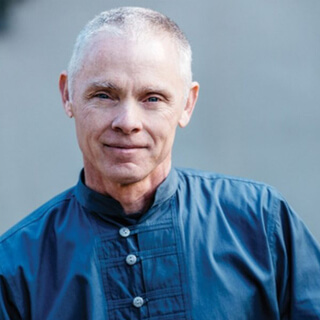
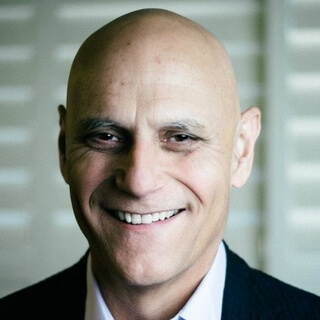
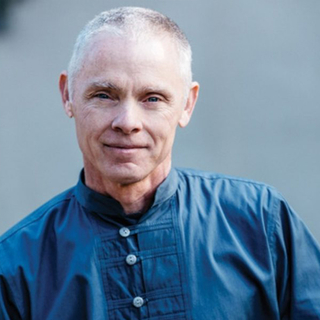
Our guest on this episode is Loc Kelly,
A meditation teacher,
Psychotherapist,
Author,
And founder of the Open Hearted Awareness Institute.
As a licensed psychotherapist,
Loc has been teaching seminars,
Supervising clinicians,
And practicing awareness psychotherapy in New York City for 25 years.
Loc's book is Shift Into Freedom,
The Science and Practice of Open-Hearted Awareness.
I also wanted to mention that we've heard from some of you who had trouble with the survey last week.
So we've tweaked a few things and it should be more streamlined now.
So we would really appreciate it if you try to complete it one more time.
Thanks so much for being willing to participate.
It means a lot to us.
Our sponsor on this episode is Wisdom Publications,
A nonprofit publisher for 30-plus years of classic and contemporary Buddhist books and practical wisdom works on mindfulness.
Wisdom Publications aims to connect people with the teachers,
Tools,
And practices to develop greater peace,
Happiness,
And freedom.
Go to wisdompubs.
Org.
And here's the interview with Loc Kelly.
Hi,
Loc.
Welcome to the show.
Thank you,
Eric.
Great to be here.
I'm really excited for this conversation because I don't remember where I came across your work,
But I was immediately very intrigued by the way that you are presenting awareness,
The way that you're presenting.
I'll use the word mindfulness.
That's not exactly what you're doing,
But it's in the neighborhood.
But the way you're going about it is very different than most things I've read today.
And I was very intrigued by it and have really enjoyed reading the book and doing some of the exercises that you have.
And we're going to do a couple of these in the show.
But before we get to that,
Let's start like we always do with the parable of the two wolves.
There is a grandfather who's talking with his grandson and he says,
In life,
There are two wolves inside of us that are always at battle.
One is a good wolf,
Which represents things like kindness and bravery and love.
And the other is a bad wolf,
Which represents things like greed and hatred and fear.
And the grandson stops and he thinks about it for a second and he looks up at his grandfather and he says,
Well,
Grandfather,
Which one wins?
And the grandfather says,
The one you feed.
So I'd like to start off by asking you what that parable means to you in your life and in the work that you do.
Thank you,
Eric.
That's great.
As I looked at this parable,
I thought of the way that traditionally in theology,
Parables have always had four interpretations.
So I would say first one would be a literal level.
Second would be,
We'll call it a mental level or a psychological level,
And then maybe a moral level.
And then the fourth would be a spiritual level.
So the one that I'm going to focus on is the spiritual level.
And by spiritual,
I don't mean transcendent.
I don't mean something bypassing the other levels.
It's actually that which includes the other levels.
So from here,
I would say that the two wolves and the one who feeds them is actually of the psychological,
Mental,
Moral levels.
And it is part of what I would call the small self or the ego identification.
And that's so anytime we're in a kind of dualistic mind,
We tend to divide things into good and bad.
And we tend to feel like there's someone here who is the one who needs to choose or needs to feed.
And it is that system that continually keeps us at a level of a small self.
On one level,
Certainly there are things,
You know,
Positive thinking is better to feed than negative thinking,
Etc.
,
Etc.
But what I'm proposing is the possibility that if we drop out of those three parts of ourselves and into a larger,
More embodied,
Spacious dimension of consciousness,
That we'll see that there aren't actually good and bad parts,
That often what's called the bad or evil part is a scared part,
A hurt part,
A protective part,
And that they're all energies.
And when they return to their natural condition,
They all will serve your true nature or true self or open-hearted awareness.
That's a great way to transition into your work,
Because I would say the main thing that your book is about is the idea of awareness.
You say that we've been searching for an amazing life source,
Although this essential nature is beyond our ability to accurately describe in words.
We've given it many names,
Truth,
God,
Peace,
Source,
Love,
True nature,
Enlightenment,
Unity,
Or spirit.
But the simplest name is awareness.
Help us understand that a little bit more.
Yes.
So in some ways,
We tend to think of awareness as something between us and the world.
So I am aware of the lamp or I'm aware of another person.
And therefore,
The way of knowing our identity is actually tied up in conceptual thinking.
You know,
You might think of,
I think,
Therefore I am.
So it's almost as if we create a thinker,
Or a thinker is created by looping patterns of thought,
Emotion,
And ego function.
And it's kind of a type of identity that's almost like there's a mini me or a little entity.
It feels like there's an entity in our head behind our eyes that isn't even our personality or our,
You know,
Ego functioning.
It's actually a little looping constellation that when it relaxes,
Instead of having a thought-based identity and a thought-based way of knowing,
We can discover an awareness-based way of knowing.
And this awareness has been called source of mind or spirit.
And it's a,
It requires that we step beyond belief,
That we discover directly a kind of spacious,
Alert,
Non-thought-based awareness that's not sleepy and it's not dissociated.
It's actually inherent within us,
But it's learning how to tune into this awareness.
And when we step out of the little mini me and into an awareness-based knowing,
And then include our thoughts,
Feelings,
And sensations from within,
There seems to be a kind of freedom from a suffering and anxiety,
Continual searching,
A perpetual dissatisfaction.
And so this awareness,
Because it's not a thing,
We've missed it.
We pass it by because it's empty and yet awake.
And yet,
So my whole book is really how can we actually palpably,
Directly,
And intentionally learn how to feel this,
Know this,
Be this,
And then live from this.
Yeah,
There's a lot of things you just said there.
I mean,
At one point in the book you had a line that I really liked when you said that awakening is not about simply believing that it's all as well.
It's about shifting into the level of mind that knows and feels all as well.
And I think that's,
You know,
On the show a lot we talk about positive thinking and how in a lot of cases it just doesn't.
It's not really effective.
You know,
You're trying to believe that all is well,
But there's another part of you that feels and knows that's not necessarily the case.
So I like that.
And the other thing that I like about what you're doing here,
If I understand it correctly,
Is that traditionally in practices that talk about this idea of a fixed self,
That we've got this concept of ourselves as a separate thing and that's the source of a lot of suffering,
It tends to be presented as you're going to go on this long journey and you're going to do all this work and all this meditation and all these practices,
And if you're really lucky,
Someday you might get to feel that.
And what you are proposing and doing in the book is saying,
No,
This feeling,
That awakening from that limited feeling of being a self,
Is available right here,
Right now,
And that if you get the proper,
You call them,
And I think the tradition in which you learn this calls them pointing out instructions,
I point out how to see this thing,
Your contention is that we can start to experience some of that stuff now,
Not after 500 hours of meditation.
That's right.
Yes,
The premise,
I almost presented like it's a scientific approach,
Which is to say the hypothesis is awake awareness or your true nature is,
As many of these traditions say,
Is already here,
Equally available to each of us as each of us,
And it doesn't need to be created or developed.
Therefore,
If that's so,
Then do we have a set of experiments to give you that you can directly see whether you can,
For yourself,
Shift out of the current mode of perception,
Knowing,
And identity,
Directly into this which is already here,
And then see and be from awareness.
And my experience has been that 80% of people in an hour and a half,
You know,
Walking off the street in New York City,
Coming into a room,
Can have a glimpse of this.
So glimpses doesn't mean,
You know,
Instant awakening,
But it means that Buddha nature,
That true nature,
That consciousness is revealed to be who you are,
And people report this as experienced,
And then the practice becomes small glimpses many times.
That was going to be one of the things I was going to bring up,
Is the small glimpses many times.
Let's do this.
Instead of just continuing to talk about this,
I'd like to have you lead us through one of these glimpse practices,
So that people get a sense of,
In general,
What we're talking about.
And then I got a bunch of questions about how and practical things,
And different things from there,
But let's go ahead and start with one,
And we'll pick up from there.
So if you want to lead us through this,
That would be great.
Sure.
So let's do one that picks up where I started,
Which is describing what's in the way,
Or what obscures the awakeness that's naturally here.
So we might call this the mini-me,
Or this little pattern of looping thought,
This constellation of consciousness that creates this feeling of an entity in ourselves,
As if this thought has co-opted the boundary survival program of our body,
So much so that it takes itself to be a physical entity in our mind.
And when it does that,
As if it had a body,
It craves satisfaction.
It wants to protect itself as if it's a physical creature,
And it wants to go and get satisfaction like food.
And because it's not,
This little tiny self is perpetually dissatisfied.
It's always trying to solve a problem.
It's looking for a problem,
It's trying to solve a problem.
What's the problem of why I'm dissatisfied?
How do I solve that problem?
What's the problem of my feeling that I'm being threatened?
Where's the threat?
There's no threat,
Because there's no me that can be hurt,
But I've got to continually feel there's a problem to solve.
And even when there's not a problem for a moment,
It feels,
Oh my God,
That's definitely a problem.
So that problem-solving identity is kind of the root of the whole picture here.
So it's what is running,
It's a program running that keeps this false sense of mistaken identity looping and in charge.
And when that relaxes,
Let's see what is here,
What people report,
What you feel.
So if we simply inquire in this short glimpse,
Just allow your awareness to look back to yourself as you ask yourself this simple question.
What is here when there's no problem to solve on the level of identity?
So just nowhere to go,
Nothing to understand or do,
Just relaxing that job of solving a problem,
And then feeling or letting awareness discover what is here.
Who is aware?
What's this awareness like now when there's no problem to solve?
And just not looking up to thought and not going down to sleep.
Let awareness just include everything.
What's here when there's no problem to solve?
What's the feeling of what's absent?
What's the quality of dimensionality and what are the qualities that show up for the sense of being?
So most people report some kind of spaciousness because the little point of view has relaxed.
So there's some kind of openness,
Spaciousness,
Boundlessness.
There's some kind of sense of relief from the exhaustion of that problem solving to see if that's true for you.
Some people report sense of peace,
A peace that passes understanding.
Others,
Joy,
A kind of bliss or aliveness within your body,
Dancing effervescent quality of knowing your body from within rather than from your head.
Maybe a sense of presence or interconnection with everything,
A unity or a sense of love.
But for you,
You may discover each person will have a different experience of less thoughts,
More space,
More grounded in some ways,
More fluid flowing.
As I mentioned earlier,
Our sponsor on this episode is Wisdom Publications.
They are a leading publisher of classic and contemporary Buddhist books and practical wisdom works on mindfulness.
They've been around for 30 plus years.
It's a nonprofit publisher and they aim to connect people with teachers,
Tools and practices to develop greater peace,
Happiness and freedom.
Yeah,
I'm very excited about this sponsor because they've published some of my favorite books.
They published a book called Going on Being,
Life at the Crossroads of Buddhism and Psychotherapy by Mark Epstein,
Which is an absolute classic.
They also have published really what's widely recognized as one of the very best books on mindfulness called Mindfulness in Plain English.
Last week's author,
Deborah David's new book is available there,
Living Mindfully at Home,
At Work and in the World.
And for you,
Chris,
I think I might know what I'm going to get you for Christmas.
What you got?
The Dharma of Star Wars.
Yes.
Is Yoda a Zen Master?
Yep.
Do Jedi's practice mindfulness?
They do.
Did attachment cause Darth Vader's turn to the dark side?
It did.
And another book.
I want that book.
And another one that I think you would love.
It's an I love this book.
It's called Hardcore Zen,
Punk Rock,
Monster Movies and the Truth about Reality by an Ohio.
Are these people writing these books for me personally?
They might be.
The guy's Brad Warner.
He's from Ohio.
Yeah.
And as I was browsing their site,
It made me,
You know,
Jordan is my son is 17.
So I'm not reading him children's books.
But the fact that they've got a book called Moody Cow Meditates,
Which is a story about a cow named Peter who is having a very bad day and people start teasing him and calling him a moody cow.
And then there's also Mindful Monkey Happy Panda,
Which is another great title.
I would be snapping those up to read to him in a heartbeat if he was younger.
I think if I brought him home now,
Though,
I might get the askance glance.
He might wonder if you need help in some way,
Otherwise.
But any book about monkeys,
I think should be purchased any person.
Exactly.
So this is like I said,
I'm really excited to have these guys as a sponsor.
They are,
As you mentioned before,
They are a nonprofit.
They publish some of the best books out there on spirituality.
And they are definitely,
Definitely worth taking a look at.
And they've got free shipping right now for anything over $35.
So you could grab a few of these books and be very happy with them.
Yep.
And it's a great deal for the holidays.
So if you're already looking for gifts,
Which we all should be because everybody waits to the last minute,
Go to wisdompubs.
Org slash one and that's spelled out O-N-E and get free shipping over $35.
And here's the rest of the interview with Locke Kelly.
The first time that I heard you do this practice,
I had a relatively profound experience.
That's when I first was like,
All right,
I got to talk to this guy because I had a moment where it kind of like that problem solver did go away.
And I was outdoors and it was in sort of like wide open farm country.
And I definitely had the experience.
My question for you,
And so I've gone through a bunch of the other glimpse practices.
And sometimes when I do them,
I get a little of it.
Yeah.
And other times,
You know,
The thinker is still right there.
Sure.
Kind of the whole time.
Are these practices in the sense of you practice them and you get better at them?
Yes,
In the sense and just to say something about your experience,
It's a glimpse.
And the reason I use glimpse is because it's not a meditation state that you're having,
But it actually is a glimpse or a falling away so that what's revealed or who is here is the peaceful,
Spacious you,
The loving,
Open hearted you are the one that's seeing whether you're in the country or whether as I am many times on the subway in New York City,
It doesn't matter to me at all.
It's exactly the same sense of interconnection,
Freedom,
Profound peace.
And then what I call system one or the system of the two wolves and the feeder take over.
And then you intentionally learn through different glimpse practices.
I've kind of designed them for different types of learners.
I also kind of stack them so they build on each other.
If you do them in a series,
Particularly if you get the audio,
Which is not an audio book,
It's actually just the audio of the practices in the book.
Yep,
Which is what I have and I've been enjoying using for sure.
So you can go through that.
Once you start to get a feel for it,
It is a learning.
So it's you're practicing like you're learning to balance on a bicycle.
So at first it's hard.
It seems like new.
It's a little difficult.
But eventually as you practice,
You start to discover for yourself how to get there and what what shifts out of your mind and what shifts into which is just as important the awareness so you don't get caught in kind of a gap of not knowing.
You want to actually find immediately the not knowing that knows.
So it's there's a kind of new intelligence available to function from immediately.
So that in that way there is kind of a practice like becoming the Tibetan word for meditation is familiarize.
So you're familiarizing yourself with yourself.
One of the main concepts you use in the book is you call it the foundation of both,
You know,
How we know and who we are,
Which is awake awareness.
So help me understand what awake awareness means.
So what it means is this is the great question.
And this is the question of what I spend most of my time both trying to get at by bringing in neuroscience,
By bringing in psychology,
By bringing in academic psychology like what's called the flow state,
Which some people know as,
You know,
Being in the zone.
Can you say that guy's last name?
Chik Santmahai.
I'm impressed.
All right.
It's always that's my litmus test for any guest who's on the show because I can never do it.
So so he's a Chicago academic psychologist who discovered that people functioning at optimal levels from musicians to people,
You know,
Sports figures to people in business or all sorts of professions shift out of the mental thinking about thinking and they shift into a what they call flow.
And the flow has a sense of being in the now.
It has a sense of not being in your ego centeredness.
You feel interconnected.
You feel like you have mastery over your subject without without micromanaging.
And you actually feel at peace and you feel a sense of joy and bliss in doing it.
And this is the way this is the sense of what awakening is like.
It then extends not just to the task that you do well or the job you do well,
But can extend through your life.
So wake awareness is not on the map.
So even in the flow state,
It's not really on the map.
The effects are described on the map.
But awake awareness is a type of or dimension of consciousness that is called sometimes the source of mind or thought free awareness or wisdom mind or simultaneous mind,
Which means that it's that the awareness is foundational prior to thought and also post thought meaning that there's a sense of you being able to function almost like continuous intuition or the way that you can stand on top of a mountain or in a field and feel alert and clear and bright and free of worry and free of striving.
And then imagine if you then could add functioning and relating to that feeling,
Then awareness,
Awake awareness would be the foundation of your new way of knowing and identity.
And so one of the things that we talk,
You know,
Comes up on the show a lot is this idea of being able to get some distance between you,
Your thoughts and your emotions.
And you say in the book that one of the most important things is to learn to separate awareness,
Which we were just talking about from thinking.
And then we can see that thoughts and emotions are not the center of who we are.
So are these these glimpse practices are ways of learning to separate that awareness from thinking?
Is that a good way to put it?
The interesting thing about this type of practice is that's kind of the first step.
So in that way,
It's similar to mindfulness.
The mindfulness move is to step back and observe and realize that thoughts are coming and going and that you're not your thoughts.
Even if the thought begins with I,
I don't think I'm understanding what he's saying.
Can go through your mind like it's a train going by and you realize,
Oh,
Well,
I'm aware of my thoughts,
But I'm not my thoughts because my thought just arose and it just passed.
So that's kind of the first move.
Then the second move is to become then to make the awareness the subject and the object.
So you actually begin instead of being aware of the contents of your thought,
You turn awareness back or rest back.
So you feel a kind of pure awareness that is alert and awake and primary.
And then you actually come back and include your thoughts and emotions.
So that's kind of the radical move is once you are grounded in awake awareness,
You come back that awareness is now both spacious and pervasive inherent within your motions and thought.
And yet you have this huge support of identity and awareness that's not based on a small ego.
And you can then people report,
Oh,
Well,
I'm having the same feeling,
But I'm have such a different relationship to it.
I'm actually closer to it.
I'm feeling the sadness,
But I'm not worried about the sadness.
It's not overwhelming me because I'm bigger than it,
But I'm within it.
I'm welcoming it.
I'm,
You know,
With it.
Yeah,
You have a great practice on the audio of sort of doing that,
Starting with an emotion,
A difficult emotion and taking progressive steps with it of how to relate to it differently.
And I really like it because we talk a lot about,
You know,
It comes up on this show.
It's a lot of places like,
Well,
You should get some distance between your thoughts and your minds.
But that is that's one of those things that's incredibly easy to say and incredibly hard to do when you are in the midst of a really strong emotion.
And I really like how you how you laid that out.
So you talk about the idea of local awareness.
And a lot of the practices,
At least the early ones that I went through,
Is a lot of directing this local awareness.
So what is local awareness?
So local awareness is kind of the unique thing that I've defined.
Now,
Wake awareness is,
You know,
Called there is appears in many traditions as pure awareness and come by many names in Hinduism is called Turiya and Tibetan Buddhism is called Rigpa.
But it's basically means true nature,
Awareness mind,
Natural mind,
Source of mind,
Non-conceptual thought.
But local awareness is the focusing aspect from from natural mind.
So from non-conceptual awareness,
You have intentionality and focus.
And the unique thing is in this method,
Which is rather than a kind of a sitting method or what I call a resting method of just letting yourself sit in meditation,
It's more of an inquiry method in which you can do this in three to eight minutes.
These practices in the with your eyes open or closed can do them on the subway at work at a break because you can unhook awareness,
Which is identified with thought and have it drop and then open to the field of awareness.
And then once you are looking from the field of awareness,
You can come back and include your thoughts,
Feelings and emotions from a new a new ground.
It takes a little a little time to learn,
But not it's you know,
This this method,
You know,
Though it's kind of a you know,
What's called an advanced or the final method,
But it's often taught as direct recognition with gradual unfolding.
I found it's not any harder than learning anything else for from most people.
It's I've taught mindfulness,
I've taught basic mindfulness,
I've taught other sports,
I've taught I've taught other things and as a skill that takes habit and practice and certain number of days,
It's to really experience your awake ground of being is not that hard.
It does not take that much time,
But it takes what anything else takes.
Well,
Why don't we do a short practice,
You know,
You talk about unhooking local awareness,
You know,
And so moving local awareness through a couple of the different senses is a good way to get the idea of what you're talking about about what it means to be directing that awareness.
So maybe if we could spend,
You know,
Three or four minutes.
Sure.
Yeah,
We'll do we'll do a couple short practice in some ways.
I do the short practices because you kind of can't understand how you're unhooking it any more than you can understand how you're balancing on a bicycle.
You have to say,
OK,
You ready?
Go.
Right.
So I kind of do it what seems like it's quickly,
But I'm kind of doing it.
What I call the Colombo approach of passing.
Oh,
And by the way,
Just unhook awareness and move it to your ears and now you have space and and just kind of follow it as if,
OK,
Well,
I don't know,
But I'll just try and,
You know,
Have kind of beginner's mind and trust that you can try it.
And then if it if you don't get it now,
You can,
You know,
Download the audio,
Read the book,
And you'll after a couple tries,
You'll you'll probably get it.
So I'll do it in a way that we're just kind of playfully feeling what it's like when it works.
It's it's dramatic and profound.
You'll you'll feel like,
Whoa,
That is amazing.
And you'll realize how close it is,
How simple it is,
How intentionally it's possible to shift your entire experience of your consciousness.
And these methods don't take you into like a gap that's scary and they don't take you into unconscious unloading of deep unconscious.
It's it's pretty fascinating because we're we're going to a supportive consciousness that's more supportive than your ego consciousness.
So let's let's try this.
So just feel as as you're listening to me talking and as you're hearing words that you are aware of understanding them and thinking about them in your mind and feel as if you can feel awareness is identified or attached to thought in your head.
So as you think your attention,
Your awareness is identified and attached and just see if you can unhook awareness from thought and just have it move a little bit to have awareness move to another of the senses with it,
Which is seeing.
So just instead of just thinking just seeing the awareness and seeing not focused on what you're seeing or thinking about seeing just seeing.
And just feel that shift that awareness has moved and intentionally changed your perception and just as awareness can move from thinking to hearing see what a big difference it is.
If you unhook awareness from seeing and have awareness come to one of your ears and as awareness unhooks and moves through your face,
It can come to focus on the sensation vibration of hearing at one ear.
So neither hear nor heard,
Just hearing and notice how thinking fades in the background and even seeing fades in the background when awareness is identified and focused in the small area of hearing.
And that in itself can be a great relief,
But just as awareness can unhook and focus in a small area of sensation vibration at one ear drum.
Notice what it's like if awareness unhooks from hearing at the ear and opens to the space in which sound is coming going.
So let awareness become big and notice the sound but then become interested and merge with the space in the room.
Open to that space,
Aware of open space,
Open the awareness to space until you feel that you come to the walls and turn around or until you feel like awareness merges with spacious awareness and now see what it's like if you're aware from space back to your thoughts,
Feelings and sensations.
So just feel the difference if you were to inquire,
Am I aware of spacious awareness or am I the spacious awareness aware of thoughts,
Feelings and sensations within my body and mind?
So you feel the spacious and pervasive,
Feel like the awareness includes everything below your neck and you feel as if you've moved from head to heart.
You're both open and embodied.
You can breathe in and smile and feel as if you're operating from kind of heart mind where you're knowing non-conceptually without looking up to thought,
Without looking down from thought,
Without going to sleep.
Feel the open and embodied,
Interconnected field of being.
And that was another glimpse practice that you can see how you feel after you've shifted this sense of center and allow yourself just to include all of your feelings,
Sensations and thoughts as you open your eyes if they're not open and allow yourself to remain in this open-hearted way of being and seeing.
Excellent.
Well,
That was a really nice practice and I like,
You know,
We talked about a little bit earlier that sometimes these glimpse practices take the very first time you do it.
You do it and you have an experience and sometimes you might need to do them a couple different times for you to get the experience.
And there's lots of what I like about your audio courses.
There's lots of different glimpse practices.
So if this one doesn't really work,
There is one that,
You know,
I find others that do so I've enjoyed working my way through them.
Great.
Yes.
Yeah,
They're each short and some of them build on each other and they're just ways of navigating your own consciousness so that you begin to inhabit another dimension of your own being and kind of move that subtler,
More spacious and loving dimension of consciousness from the background into the foreground.
And there's a number of doorways that you can do that with that I provide for different learning types like emotional types,
Kinesthetic types,
Visual types,
Even intellectual types so that you can shift out and then into the through these doorways into this open-hearted awareness.
Excellent.
Well,
Locke,
Thanks so much for taking the time to come on the show.
I really enjoyed talking to you.
Like I said,
I've ever since I heard you on another show,
I've kind of been captivated by your work and been spending a lot of time on it.
So it was great to get you on and I'll have links in the show notes to where people can get to your website,
See your books,
Your audio courses,
Etc.
Great.
Thank you so much,
Eric.
I really enjoyed meeting you and talking to you.
Excellent.
Well,
Take care.
Bye now.
All right.
Bye.
Music You can learn more about this podcast and Locke Kelly at OneUFeed.
Net slash Kelly.