The world’s largest free audio library for everyday wellbeing
Contemplative & Reflective
Dadirri is an Aboriginal Australian practice of deep, still, inner listening and quiet awareness, sitting in relationship with the natural environment and the land (Woodland et al., 2022), (Anthony et al., 2021).
Last Updated
3 Jul 2026
We are still reviewing this page. Our research team checks every technique page for accuracy and evidence quality before final release. Details may change as that review completes. The evidence badge shows our current reading of the published research.
RECOMMENDED DOSE
No direct dose-response evidence exists for the session length or frequency of Dadirri (Deep Listening). This is a conservative starting point drawn from general contemplative-practice conventions, chosen to be achievable and sustainable for newcomers. No direct dose evidence; editorial synthesis.
Once stillness and deep listening feel familiar, a modest step up in duration and frequency supports a more established rhythm. The available references do not report a specific effective dose for Dadirri, so these figures reflect editorial synthesis rather than trial data. No direct dose evidence; editorial synthesis.
A maintenance level for experienced practitioners who want Dadirri woven into daily life. No cited source specifies a long-term or maintenance dose for this practice, so this range is an editorial estimate based on common contemplative-practice patterns. No direct dose evidence; editorial synthesis.
Session length
Session length: 5–10 minutes
5
MIN
How long each individual practice session should last from start to finish.
Frequency
Frequency: 3–4 days
3
DAYS
The number of days per week to fit a session into your routine.
Session length
Session length: 15–20 minutes
15
MIN
How long each individual practice session should last from start to finish.
Frequency
Frequency: 4–5 days
4
DAYS
The number of days per week to fit a session into your routine.
Session length
Session length: 20–30 minutes
20
MIN
How long each individual practice session should last from start to finish.
Frequency
Frequency: 5–7 days
5
DAYS
The number of days per week to fit a session into your routine.
About this card. No direct dose-response literature exists for the session length or frequency of Dadirri (Deep Listening); these recommendations are based on general practice conventions for contemplative meditation and should be treated as starting points only. These recommendations are not a substitute for personalised guidance from a qualified practitioner.
Quick answers to what people most often ask. Each card links to the deeper section below.
evidence
Direct research on Dadirri is limited and mostly descriptive, with no randomised trials or physiological studies. Community wellbeing work with First Nations women in prison valued deep listening as a source of calm and connection, and a large mindfulness program of 830 adults reported lower perceived stress. The clearest signal is settling and presence.
Read moregood for
Dadirri suits adults who feel scattered, stressed, or disconnected and are drawn to a quiet, nature-based way of settling. It holds particular meaning for Aboriginal and Torres Strait Islander people, for whom connection to culture, Country, and community supports wellbeing. It is not a substitute for care when trauma, grief, or distress is severe.
Read moresafety
Most healthy adults can practise Dadirri safely; sitting in stillness with the natural environment asks nothing strenuous of body or mind. People living with trauma should approach with care, because quiet inward attention can surface distressing memories or strong emotion. Move slowly, keep silence optional, and practise alongside a trusted support person. No documented harms exist.
Read morehow it works
Dadirri works by turning attention outward to the sensory world, exercising exteroceptive awareness, the sensing of sound, sight, and touch from the environment rather than from inside the body. Birdsong, moving water, and shifting light grow clearer and more vivid, while attention widens from a narrow, effortful focus into an open, panoramic field. Formal study of its mechanisms remains limited.
Read moreExplore guided sessions to deepen your Dadirri (Deep Listening) technique.
Dadirri is an Aboriginal Australian practice of deep, still, inner listening and quiet awareness, sitting in relationship with the natural environment and the land.
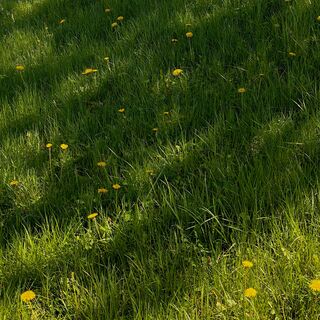
Dadirri is receptive rather than stepwise. The practitioner sits in stillness with the natural environment, resting attention on a blade of grass, birdsong, moving water, wind, or silence, and feeling the body's contact with the earth. Rather than working through a fixed sequence, deep listening is held as an open, unforced posture in relationship with Country, the land, and the living landscape.
Dadirri is a sacred Aboriginal Australian tradition from the Ngan'gikurunggurr and Ngen'giwumirri languages of the Daly River region, not a generic relaxation or nature-sound exercise. It is not guided visualisation, not breathwork, and not a clinical intervention; it is a culturally grounded contemplative practice shared by Elder Dr Miriam-Rose Ungunmerr-Baumann. It is also used as a respectful, relational research and listening methodology in First Nations scholarship.
Not to be confused with
Deep Listening (Pauline Oliveros' sound practice)
This shares the English phrase 'deep listening' but is a distinct Western practice of attentive listening developed by composer Pauline Oliveros for sound art and music. Dadirri is an Aboriginal Australian sacred contemplative tradition, unrelated in origin despite the overlapping label.
Active listening
Active listening is an interpersonal communication skill for attending to and reflecting back what another person says. Dadirri is an inward, contemplative stillness attending to the surrounding world and one's own quiet awareness, though First Nations scholars also draw on it as a respectful, relational way of hearing others' stories.
Earthing (grounding)
Earthing refers to physical contact with the earth's surface pursued for proposed physiological effects. Dadirri may involve sitting on the ground and feeling the body's contact with the land, but its grounding is a felt sense of settledness and belonging within a contemplative practice, not a claim about electrical earth contact.
Dadirri appears to work by turning attention outward to the sensory world, exercising what researchers call exteroceptive awareness, the sensing of sound, sight, and touch from the environment rather than from inside the body (Woodland et al., 2022). In practice this feels like birdsong, moving water, and the shift of light and air becoming clearer and more vivid, with a stronger sense of being present where you are. Sitting still with the land is also thought to widen attention from a narrow, effortful focus into an open, panoramic field, a spacious quality of mind in which peripheral details stand out on their own. These explanations draw on open-monitoring meditation and attention-restoration research broadly, not on Dadirri specifically, where formal study of the practice's mechanisms remains very limited (Anthony et al., 2021).
When your mind feels scattered or stuck in your head, resting attention on birdsong, moving water, and the shift of light and air can draw you back into the present through exteroceptive awareness, the sensing of the outside world through sight, sound, and touch (Woodland et al., 2022). Sustained deep listening is thought to refine this outward attention, which practitioners describe as the surrounding world becoming clearer and more vivid, though formal study of this mechanism in Dadirri is still very limited (Anthony et al., 2021).
Sitting still with the natural world, many people feel their attention open out into a spacious, unforced awareness in which surrounding sounds, light, and peripheral details grow vivid on their own. This widening from narrow, effortful focus to open-field awareness is what researchers call attentional broadening, and it is offered as an explanation of how the practice may work, drawn from open-monitoring meditation research rather than measured in Dadirri itself.
No study has yet measured what Dadirri does inside the body, so its physical effects remain proposed rather than demonstrated. Practitioners commonly describe the body growing heavier and more settled through contact with the earth, a felt grounding thought to draw on proprioception, the body's sense of its own weight and position, though this has not been recorded during the practice. Whether Dadirri produces measurable shifts in stress physiology such as heart rate or cortisol is not yet known, so any such change is inferred from related contemplative practices rather than observed here.
Limited–Emerging evidence to date supports Dadirri, and it is indirect rather than drawn from direct trials. Community wellbeing work with incarcerated First Nations women has valued it as a source of calm and connection (Woodland et al., 2022); mindfulness practices broadly, of which deep listening is one form, have been associated with lower perceived stress in a large program of 830 adults (Timm et al., 2024); and connection to culture, Country, and community is described as supporting wellbeing and healing in First Nations settings (Vance et al., 2024), (Reid et al., 2021). The clearest signal is for a sense of calm, presence, and cultural connection. What is not yet supported: any randomized trial of Dadirri, physiological measurement of its effects, or any claim that it treats or replaces care for a diagnosed condition.
Research directly on Dadirri is still small and mostly descriptive, so most findings come from related deep-listening and mindfulness work rather than tests of the practice itself. Dadirri principles have been drawn on in community wellbeing work with First Nations women in prison (Woodland et al., 2022); a large online mindfulness program of 830 adults reported lower perceived stress and stronger present-moment awareness (Timm et al., 2024); and connection to culture, Country, and community is linked with wellbeing in First Nations settings (Vance et al., 2024). For a practitioner, this means the calm and settling many people feel in deep listening is real to them, even though study samples are specific and no randomized trials or physiological studies of Dadirri exist yet.
0
Meta-analyses
0
RCTs
0
Systematic reviews
0
Observational
6
Pilot
Studied populations
Outcomes measured
The research is useful for setting expectations, but study methods and participant groups vary. Treat the findings as general guidance rather than a promise about any single session, and not a replacement for clinical care.
Listening to Country: Immersive Audio Production and Deep Listening with First Nations Women in Prison
2022
Finding: This arts-led pilot project brought deep listening into Brisbane Women's Correctional Centre, where incarcerated Aboriginal and Torres Strait Islander women, many separated from family, culture and Country, took part in creating an immersive audio work built from recordings of natural places. Dadirri, the practice of deep, still, inner listening, was woven through the program as a way to support wellbeing and to hear participants on their own terms. This is an early, descriptive account rather than a measured trial, so it does not put numbers on how much wellbeing changed; what it offers is a picture of how deep listening can be held within a cultural and community setting. If you are drawn to Dadirri, it may resonate most as a relational, culturally grounded practice, not as a clinically tested treatment.
See full citation in references“We’re Not Being Treated Like Mothers”: Listening to the Stories of First Nations Mothers in Prison
2021
Finding: In this study, researchers used Dadirri itself as the method: working alongside more than 160 First Nations women in New South Wales prisons, they listened to each woman's story on her own terms rather than through a standard interview format. What this shows is Dadirri in its relational form, a respectful, attentive way of being present to another person, not only a solitary silent practice. For someone exploring Dadirri, it is a reminder that deep listening can be shared between people as much as held inwardly. This was descriptive, community-guided research rather than a clinical trial, so it tells us about how the practice is lived and applied, not about measurable health effects.
See full citation in referencesActivity-based mindfulness: large-scale assessment of an online program on perceived stress and mindfulness
n = 830
Finding: In an 8-week online mindfulness program followed by 830 adults, participants reported lower perceived stress and higher mindfulness by the end of the course, suggesting that a structured stretch of regular practice can leave people feeling calmer and more present in daily life. It's worth knowing this study looked at a general mindfulness program rather than Dadirri specifically, so it speaks to the broader family of deep-listening and mindfulness practices, not to Dadirri on its own. Because everyone practised the program with no comparison group and only about half completed multiple check-ins, the results point to a promising pattern rather than proof that the practice alone caused the change.
reported narratively
Culture, Health and Wellbeing: Yarning with the Victorian Indigenous community
2024
Finding: In conversations with 45 Aboriginal young people in south east Australia, researchers found that connection to culture, to Country, and to family and community came through as powerful supports for wellbeing and healing. These accounts place deep-listening practices within a wider web of cultural life rather than treating them as a standalone technique you can lift out and use on its own. Because this was a qualitative study built on people's own stories rather than before-and-after measurements, it describes what supports wellbeing in these communities rather than proving a specific effect, and its findings speak to Aboriginal and Torres Strait Islander contexts in particular.
See full citation in referencesUsing participatory action research to co-design perinatal support strategies for Aboriginal and Torres Strait Islander parents experiencing complex trauma
2021
Finding: This Indigenous-led study worked alongside Aboriginal and Torres Strait Islander parents in Australia to co-design perinatal support for those carrying complex trauma, and the parents and community members involved described culture, connection to Country, kinship, and culturally safe care as things that protect wellbeing and help healing. For someone drawn to deep-listening practices, it's a reminder that they belong within this wider web of cultural connection rather than standing alone as a single technique. Because the work gathered community themes and stories rather than measured before-and-after outcomes, it points to what supports healing in these communities rather than proving a specific effect, and its insights are grounded in a First Nations context rather than the general population.
See full citation in references“Don't let anybody ever put you down culturally…. it's not good…”: Creating spaces for Blak women's healing
2022
Finding: This qualitative study, led from within Aboriginal communities in Australia, gathered people's stories about healing through cultural practice and found that connection to culture, to Country, and to kinship consistently came through as things that protect and restore social and emotional wellbeing. For someone drawn to deep listening, the takeaway is that these practices work as part of a wider web of cultural connection rather than as a standalone technique you can lift out and apply on its own. Because the research describes shared themes from people's experiences rather than measuring specific outcomes, it speaks to the value of the cultural context as a whole, and its findings shouldn't be read as measured effects of deep listening by itself.
See full citation in referencesDadirri comes from Aboriginal Australian tradition, originating in the Ngan'gikurunggurr and Ngen'giwumirri languages of the Daly River region in the Northern Territory, and has been shared widely with the world by Elder Dr Miriam-Rose Ungunmerr-Baumann AM. In this worldview, deep listening connects the practitioner to Country, ancestors, and the living landscape, and silence is honoured as a sacred inner spring rather than mere absence of noise. These roots help explain the practice's form, its stillness, its outward listening, and its relationship with the land, not its clinical effects.
For most healthy adults, Dadirri is a gentle, low-risk practice: sitting in stillness with the natural world and listening asks nothing strenuous of the body or mind. The one situation that warrants care is trauma. Turning attention inward in silence can bring difficult memories or strong feelings closer to the surface, so if you are carrying trauma, move slowly and hold on to a sense of choice about how far you go. This is a practice-informed caution drawn from trauma-focused research co-designed with First Nations parents, not a documented harm from Dadirri itself (Reid et al., 2021).
People living with trauma, including complex trauma, are the group most likely to need a gentler, self-paced approach, because quiet inward attention can surface distressing memories or emotion that rises unexpectedly in the stillness. It can help to practise alongside a trusted person or practitioner and to treat silence as optional rather than something to endure. This is a practice-informed precaution, not an evidence-based contraindication: the supporting research identified safety, choice, control, and timing as essential to culturally safe practice, but did not test Dadirri or measure any specific harm from it (Reid et al., 2021).
Turning attention inward in silence can bring difficult memories or strong feelings closer to the surface, so if you are carrying trauma, including complex trauma, move slowly and keep a clear sense of choice about how far you go. Treat silence as optional rather than something to endure, keep sessions short, and practise alongside a trusted person or a practitioner experienced in trauma-informed care. This is a practice-informed caution drawn from trauma-focused research co-designed with First Nations parents, which identified safety, choice, control, and timing as essential to culturally safe practice; it is not a documented harm from Dadirri itself. It is not a substitute for professional care when distress is severe.
Dadirri is best approached gently, in a quiet spot in or near the natural world where you feel safe and can leave freely whenever you wish. For most people it asks nothing strenuous, but if you are carrying trauma, treat the stillness as something you shape rather than endure, keeping a sense of choice about how deep and how long you go. A sensible starting point is a short, unhurried session with someone you trust nearby, letting the surrounding sounds and light anchor you.
Settle somewhere quiet and unhurried, ideally in or near the natural world, where you will not be interrupted and can leave freely whenever you wish.
Before you begin, decide that you can pause, open your eyes, or stop at any point. Feeling in control of how deep and how long the session goes matters more than staying still for any set length of time.
Rest your awareness on the sounds, light, and air around you, and let the surrounding world become the anchor rather than forcing your focus inward straight away.
Let thoughts, memories, or feelings come and go without chasing or suppressing them, keeping a light, receptive attention rather than effortful concentration.
If difficult emotion or restlessness rises and feels like too much, return your attention to the sounds around you, feel your weight settled on the ground, or gently open your eyes and reorient to the room or landscape.
If quiet reflection consistently stirs up overwhelming feelings, share this with a trusted person or a practitioner experienced in trauma-informed care before continuing.
This information is educational and is not medical advice. This practice is not a substitute for professional care and should not replace prescribed medication or treatment for any medical or mental-health condition. If you are managing a health condition or taking medication, talk with a qualified health professional before changing your practice. If you are in distress or crisis, seek professional support.
| Technique | Best for | Use with care | Evidence strength | Distinction |
|---|---|---|---|---|
| Mindfulness meditation | Everyday stress reduction using a structured, secular, widely taught format with abundant guided resources. | Adopting it as a substitute can strip away the cultural and relational meaning that gives Dadirri its coherence. | moderate EVIDENCE | Mindfulness meditation is the broad, largely secular family of present-moment attention practices that Dadirri is often grouped under. Dadirri is a specific sacred Aboriginal Australian tradition of receptive deep listening held in relationship with Country, ancestors, and the living landscape, not a technique you simply apply. Mainstream mindfulness carries a far larger research base, though the studies supporting it examine meditation broadly, not Dadirri specifically. |
| Nature-based mindfulness (forest bathing) | People drawn to unhurried time outdoors who want restoration through sensory contact with natural settings. | EVIDENCE | Forest bathing and other nature-based mindfulness practices share Dadirri's outdoor setting and its turn toward the sensory world of birdsong, moving water, light, and air. They differ in framing: nature-based approaches are generally presented as restoration through time in natural settings, while Dadirri is a sacred contemplative and relational tradition connecting the practitioner to Country and ancestors rather than treating nature as a pleasant backdrop. | |
| Open monitoring meditation | Those wanting to train wide, non-selective awareness in a portable form that does not depend on a natural setting. | moderate EVIDENCE | Open monitoring meditation cultivates the same wide, choiceless awareness that Dadirri is thought to exercise, attention broadened from a single focus to the whole field of experience. The shared mechanism is attentional broadening; the vehicle differs. Open monitoring is usually a portable, often indoor and secular practice, whereas Dadirri holds that open awareness in stillness with the land and within an Aboriginal Australian worldview. |
Dadirri is an Aboriginal Australian practice of deep, still, inner listening and quiet awareness, sitting in relationship with the natural environment and the land (Woodland et al., 2022). In First Nations scholarship it also names a respectful, relational way of listening deeply to others' stories (Anthony et al., 2021).
+
Dadirri means deep, still, inner listening: sitting quietly with the natural world, birdsong, moving water, the earth beneath you, and letting unforced awareness arise (Woodland et al., 2022). It comes from Aboriginal Australian tradition, rooted in the Ngan'gikurunggurr and Ngen'giwumirri languages of the Daly River region and shared widely by Elder Dr Miriam-Rose Ungunmerr-Baumann. The word also carries a relational meaning in First Nations scholarship, describing a respectful way of listening deeply to other people's stories (Anthony et al., 2021). This is a description of the tradition, not a clinical claim about what it treats.
Yes, respectfully. Dadirri is a sacred Aboriginal Australian tradition that Elder Dr Miriam-Rose Ungunmerr-Baumann has chosen to share widely, so non-Aboriginal people can engage with it if they acknowledge its Indigenous origins and treat it as cultural wisdom rather than a decontextualised technique.
+
Yes, respectfully. Dadirri comes from the Ngan'gikurunggurr and Ngen'giwumirri languages of the Daly River region and has been shared with the wider world by Elder Dr Miriam-Rose Ungunmerr-Baumann AM, which opens a path for respectful engagement. Respecting it means honouring those Aboriginal roots and the practice's connection to Country and ancestors, rather than stripping it down to a generic relaxation exercise. This is a cultural-respect boundary about origins and honouring lineage, not a claim about clinical benefit.
Not directly. No randomised trials, physiological studies, or direct outcome tests of Dadirri exist yet, so formal study is very limited. The support that does exist is emerging and indirect, drawn from related deep-listening and mindfulness work (Woodland et al., 2022), (Timm et al., 2024).
+
Not directly. Formal science on Dadirri itself is still very limited, with no randomised trials or physiological measurement of the practice (Woodland et al., 2022), (Anthony et al., 2021). The available evidence is indirect: Dadirri principles were valued in community wellbeing work with First Nations women (Woodland et al., 2022), a large online mindfulness program of 830 adults reported lower perceived stress (Timm et al., 2024), and connection to culture and Country is linked with wellbeing in First Nations settings (Vance et al., 2024), (Balla et al., 2022). The calm many people feel is real to them, but this is suggestive, not proof of clinical efficacy.
Possibly, though the evidence is early rather than proven. Dadirri may settle a racing mind by turning attention outward to sound, light, and surroundings, giving a felt sense of calm and presence. Broad mindfulness research links such practices to lower perceived stress (Timm et al., 2024), but no trial has tested Dadirri directly for stress.
+
Possibly. Turning attention outward to birdsong, moving water, and the feel of the ground is what many people describe as easing mental spinning and bringing a sense of calm and presence. In community wellbeing work with First Nations women, deep listening was valued as a source of calm and connection (Woodland et al., 2022), and mindfulness practices broadly have been associated with lower perceived stress in a program of 830 adults (Timm et al., 2024). This support is indirect: no randomised trial or physiological study of Dadirri for stress exists yet, so it should not be treated as a treatment for stress or any diagnosed condition (Woodland et al., 2022).
Not that anyone has measured yet. No study has recorded what Dadirri does to cortisol, the body's main stress hormone, or to heart rate and other stress physiology, so any such change is inferred from related contemplative practices rather than observed here (Woodland et al., 2022).
+
Not that anyone has measured yet. Formal study of Dadirri specifically is still very limited, and no research has recorded markers such as cortisol, the body's main stress hormone, alongside heart rate or brain activity during the practice (Woodland et al., 2022), (Anthony et al., 2021). The heavier, settled feeling many people describe is genuine subjective experience, but for now it is practitioner-reported rather than a demonstrated physiological shift; any claim about lowered cortisol or heart rate is borrowed from broader contemplative research, not shown for Dadirri itself (Timm et al., 2024).
Likely because outward sensing fills attention that would otherwise feed mental spinning. Resting attention on sound, light, and air is thought to occupy the mind's capacity for rumination, giving a felt sense of settling. This is a proposed mechanism drawn from meditation research, not something measured in Dadirri itself (Timm et al., 2024).
+
Likely because turning attention to the outside world engages exteroceptive awareness, the sensing of sound, sight, and touch from the environment, and widens attention into an open, panoramic field, which is thought to leave less room for the inward loops of worry and rumination. Researchers describe this open-monitoring, wide-field quality of attention as calming, and connect time in natural settings with reduced mental spinning. This explanation is inferred from open-monitoring meditation and attention-restoration research broadly, not from direct study of Dadirri, where formal evidence remains very limited (Timm et al., 2024). It is not established that outward attention is objectively more settling than inward attention, only that many people experience it that way.
Use care. Dadirri is gentle and low-risk for most adults, but if you carry trauma, quiet stillness can bring difficult memories or strong feelings closer to the surface. Move slowly with a sense of safety, choice, and control over how far you go, and lean on trusted support if distress builds (Reid et al., 2021).
+
Use care. For most healthy adults Dadirri asks nothing strenuous, but turning attention inward in silence can surface distressing memories or unexpected emotion when trauma is present. This is a practice-informed caution, not a documented harm from Dadirri itself: it draws on trauma-focused research co-designed with First Nations parents, which identified safety, choice, control, and timing as essential to culturally safe practice but did not test Dadirri or measure any specific harm (Reid et al., 2021). Treat silence as optional, keep sessions short, and seek a trauma-experienced practitioner if quiet reflection consistently feels overwhelming; it is not a substitute for professional care when distress is severe.
Not strictly, but nature is central to the practice. Dadirri is traditionally a stillness held in relationship with the natural world and Country, so direct contact with the outdoors is core rather than optional (Woodland et al., 2022). If you cannot get outside, a window, a plant, or recorded nature sound can stand in.
+
Not strictly, though a natural setting is central to how Dadirri is practised. The tradition centres on sitting in stillness with the living landscape and one's relationship to Country, observing a blade of grass, listening to birdsong or moving water, so nature contact is part of the practice rather than a nice extra (Woodland et al., 2022). When getting outdoors is not possible, you can adapt gently, sitting by an open window, near a plant, or with recorded nature sound, while keeping the same receptive, unhurried listening. This is practice-informed guidance drawn from the tradition's form; no study has tested whether an indoor setting produces the same effect as being outside.
Start simply: find a safe, quiet spot in or near nature, settle comfortably, and rest your attention outward on the sounds, light, and air around you, letting thoughts come and go. There is no script to follow, so keep the pace and depth your own and stop whenever you wish (Woodland et al., 2022).
+
Begin by choosing a setting where you feel safe and unhurried, ideally outdoors, then let awareness widen to birdsong, moving water, or the feel of the earth rather than forcing focus inward. Dadirri is receptive, unscripted deep listening, not a fixed technique, so allow thoughts and feelings to pass without chasing them and let the depth grow with return visits (Woodland et al., 2022). One practice-informed caution: if you are carrying trauma, keep silence optional and move slowly, since quiet inward attention can surface difficult feelings; ease back to the sounds around you or reach out to a trusted support person if distress builds (Reid et al., 2021).
The main difference is meaning and origin. Dadirri is a sacred Aboriginal Australian tradition of deep listening held in relationship with Country and ancestors, while mindfulness is the broad, largely secular family of present-moment practices it is often grouped under (Woodland et al., 2022).
+
The main difference is meaning and origin, not just technique. Dadirri is a sacred Aboriginal Australian practice of still, inner listening tied to Country, ancestors, and the living landscape, whereas mindfulness is the broad, secular present-moment family Dadirri is commonly grouped under (Woodland et al., 2022), (Anthony et al., 2021). They can share an open, receptive quality of awareness, but mainstream mindfulness carries a far larger research base, and those studies examine meditation broadly, associating it with lower perceived stress, rather than testing Dadirri, whose direct study remains very limited (Timm et al., 2024). Treating Dadirri as a plain technique risks stripping the cultural meaning that gives it coherence.
An Aboriginal Australian practice of deep, still, inner listening and quiet awareness, sitting in relationship with the natural world and the land.
A contemplative deep-listening tradition originating in the Ngan'gikurunggurr and Ngen'giwumirri languages of the Daly River region, shared widely by Elder Dr Miriam-Rose Ungunmerr-Baumann, and also used as a relational research and listening methodology in First Nations scholarship.
The receptive, unhurried attention at the heart of Dadirri: listening not only to sounds but to silence, place, and one's own inner stillness.
In First Nations scholarship, a respectful, relational way of hearing others' stories that also functions as a listening-based research methodology.
In Aboriginal Australian usage, Country (capitalised) means the living landscape a person belongs to, including land, waters, ancestors, and the web of relationships within it, rather than simply territory or scenery.
Sensing and attending to the outside world through the senses, sound, sight, and touch, rather than to internal body signals. In practice it feels like the surrounding environment becoming clearer and more vivid.
Exteroception, or environmental perception: conscious attention directed to external sensory stimuli, proposed but not directly measured as a mechanism in Dadirri.
Deliberately widening attention from a single object to a broad, open awareness that takes in the whole sensory field at once, often felt as a spacious, unforced quality of mind where peripheral details stand out on their own.
Open monitoring or diffuse attention; inferred from meditation research rather than measured during Dadirri itself.
Directing attention to the body's weight and contact with the ground, which tends to feel like becoming heavier, more settled, and more present, with less mental spinning.
An approach that preserves a person's sense of safety, choice, control, and timing and respects their cultural context, treated as essential when practices like Dadirri are offered, especially with people carrying trauma.
Attention resting in what is happening right now rather than in memories or plans, experienced as feeling more present and less caught in mental chatter.
Sarah Woodland, Leah Barclay, Vicki Saunders, Bianca Beetson (2022). Listening to Country: Immersive Audio Production and Deep Listening with First Nations Women in Prison. https://doi.org/10.7202/1089679ar
Cited in: Benefits, How it works, Research, What it is
Thalia Anthony, Gemma Sentance, Larissa Behrendt (2021). “We’re Not Being Treated Like Mothers”: Listening to the Stories of First Nations Mothers in Prison. https://doi.org/10.3390/laws10030074
Cited in: How it works, Research, What it is
Eliane Timm, Yobina Melanie Ko, Theodor Hundhammer, Ilana Berlowitz, Ursula Wolf (2024). Activity-based mindfulness: large-scale assessment of an online program on perceived stress and mindfulness. https://doi.org/10.3389/fpsyg.2024.1469316
Alasdair Vance, Janet McGaw, Di O’Rorke, Selena White, Sandra Eades (2024). Culture, Health and Wellbeing: Yarning with the Victorian Indigenous community. https://doi.org/10.32799/ijih.v19i1.41307
Carol Reid, Graham Gee, Shannon K. Bennetts, Yvonne Clark, Caroline Atkinson, Danielle Dyall (2021). Using participatory action research to co-design perinatal support strategies for Aboriginal and Torres Strait Islander parents experiencing complex trauma. https://doi.org/10.1016/j.wombi.2021.12.005
Cited in: Benefits, How to practice safely, Use with care, Who should use care
Paola Balla, Karen Jackson, Amy F. Quayle, Christopher C. Sonn, Rowena K Price (2022). “Don't let anybody ever put you down culturally…. it's not good…”: Creating spaces for Blak women's healing. https://doi.org/10.1002/ajcp.12607
Cited in: Benefits
Editorially curated. Tracks are not themselves clinically studied; evidence on the page applies to Dadirri (Deep Listening) as a technique.
Beginner content for Dadirri (Deep Listening)

★ 4.8
·
Guided
·
7 min
Epiphany Mason
How hard is Dadirri (Deep Listening)?
Dadirri is the receptive exception in this packet, so it drops to base 2 and uses low/background-passive/20-minute duration behavior.
2
Mental Effort
2 / 4
▾Emotional Depth
1 / 4
▾Physical Intensity
1 / 4
▾Prior Knowledge
2 / 4
▾