The world’s largest free audio library for everyday wellbeing
Sound-Based
Kirtan is a devotional call-and-response singing practice that combines melody, rhythm, sacred words, and focused attention within the Bhakti traditions of Hinduism and Sikhism (Siṅgh, 2011).
Last Updated
4 Jul 2026
We are still reviewing this page. Our research team checks every technique page for accuracy and evidence quality before final release. Details may change as that review completes. The evidence badge shows our current reading of the published research.
RECOMMENDED DOSE
Published Kirtan Kriya programs use a short 11-12 minute practice (an 8-week program in and 12-minute sessions in). We suggest starting with a single daily session as an achievable entry point; this once-daily frequency is an editorial simplification of the twice-daily protocols used in the studies.
The standard Kirtan Kriya protocol used in the most-cited studies asked participants to meditate for about 11-12 minutes twice daily over roughly 8 weeks.
Longer 12-week Kirtan Kriya programs maintained the same twice-daily, ~11-12 minute practice, and a feasibility trial reported strong adherence (about 93% of sessions completed over the first 12 weeks), supporting sustaining this dose over three months or more.
Session length
Session length: 11-12 minutes
11
MIN
How long each individual practice session should last from start to finish.
Frequency
Frequency: 5–7 days
5
DAYS
The number of days per week to fit a session into your routine.
Session length
Session length: 11-12 minutes
11
MIN
How long each individual practice session should last from start to finish.
Frequency
Frequency: 10–14 days
10
DAYS
The number of days per week to fit a session into your routine.
Session length
Session length: 11-12 minutes
11
MIN
How long each individual practice session should last from start to finish.
Frequency
Frequency: 10–14 days
10
DAYS
The number of days per week to fit a session into your routine.
About this card. These recommendations are drawn from published Kirtan Kriya meditation programs and adapted conservatively for new practitioners. They are not a substitute for personalised guidance from a qualified practitioner.
Quick answers to what people most often ask. Each card links to the deeper section below.
evidence
Most research studies Kirtan Kriya, a short seated chanting meditation, not communal Kirtan singing. Small pilot trials in older adults with memory concerns linked that related practice to better memory, mood, stress, and sleep, and brain scans recorded shifts in blood flow. No trial has directly tested group Kirtan itself.
Read moregood for
Kirtan suits people drawn to communal, uplifting practice, and those within or curious about the Bhakti devotional traditions of Hinduism and Sikhism where shared singing carries meaning. It reliably offers engagement and a sense of belonging, but clinical benefits remain unproven for group singing, and its rising intensity energizes rather than calms.
Read moresafety
Most healthy adults can practise Kirtan safely, though it lifts energy rather than settling you. People navigating recent trauma, fresh grief, or acute anxiety may find the escalating peak surfaces strong feelings faster than expected, and sustained loud singing can strain the voice. These cautions are practice-informed; group Kirtan's tolerability remains largely unstudied.
Read morehow it works
Kirtan works through rhythmic entrainment, as body, breath, and attention fall into step with an accelerating beat until singing feels effortless. Sustained singing and long out-breaths may engage the vagus nerve, part of the body's rest-and-recovery system, while the climbing tempo drives sympathetic arousal, the alert, energized state that quickens the pulse and lifts energy.
Read moreKirtan is a participatory devotional singing practice in which a leader sings a sacred phrase and the group sings it back, weaving melody, rhythm, and sacred words with focused attention (Siṅgh, 2011).
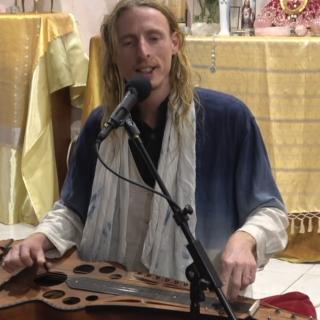
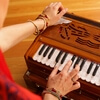
A session centers on call-and-response: a leader (kirtankar) sings a line and the group answers, cycling through mantras and divine names in Sanskrit, Hindi, or Gurmukhi, set to a melodic framework called rāga and a rhythmic cycle called tāla. A single chant usually builds from a slow, contemplative opening toward a fast, ecstatic peak over roughly 10–30 minutes, often carried by harmonium and drum. Everyone sings rather than watches, and the practice is passed on live through teachers and communities rather than fixed in a script.
Kirtan is communal call-and-response devotional singing. Do not confuse it with Kirtan Kriya, a short seated meditation that pairs a silent or spoken mantra with repetitive finger movements and is practiced alone. This distinction matters for reading the evidence: most clinical trials study Kirtan Kriya, not communal Kirtan. Kirtan is also distinct from silent mantra meditation and from concert performance, since every participant sings and the intent is devotional.
Not to be confused with
Kirtan Kriya
Kirtan Kriya is a seated solo meditation of about twelve minutes, chanting Sa Ta Na Ma with sequential fingertip movements, from Kundalini yoga. Communal Kirtan is group call-and-response devotional singing. Most of the clinical research names Kirtan but actually studies Kirtan Kriya.
Bhajan
Bhajans are Hindu devotional songs that can be sung alone or together, but they lack Kirtan's defining structure of a leader calling a phrase, the group answering, and the tempo escalating toward a peak.
Silent mantra meditation
Silent mantra meditation repeats a sacred word or phrase internally, alone and without sound. Kirtan sings mantras and divine names aloud, in a group, as participatory call-and-response music.
Kirtan is thought to work through several pathways at once. The most visible is rhythmic entrainment, the way body, breath, and attention fall into step with an accelerating beat until singing feels effortless and carried along. Sustained singing and long out-breaths may also engage the vagus nerve, the main channel of the body's rest-and-recovery system, which practitioners often notice as a grounded, settling feeling in the throat and chest. And because the tempo and volume keep climbing, the practice drives sympathetic arousal, the alert, energized state behind a quickening pulse, so Kirtan tends to lift energy rather than lower it. These remain mechanism-level explanations; direct measurement during Kirtan is limited, and most physiological study looks at a related seated chant rather than group singing (Khalsa et al., 2009).
A long, steady out-breath and the vibration of sustained singing travel through the throat, a pathway thought to tone the vagus nerve, the main nerve of the body's rest-and-recovery system. Many people feel this as a grounded, settling sensation that builds across a chant, though direct measurement of vagal tone during kirtan is still limited, so treat it as an early, mechanism-level explanation rather than a confirmed effect.
The clearest measured change comes from brain imaging. During chanting-based meditation, blood flow rises in regions tied to attention and focus and shifts in others, a pattern practitioners may feel as sharper, more absorbed attention alongside a settling mind (Khalsa et al., 2009), (Newberg et al., 2010). These findings come from small studies of seated chanting meditation rather than communal call-and-response Kirtan, so they suggest what may be happening in the body rather than confirming it for group singing. Beyond the brain, the rising tempo and vigorous singing would be expected to raise heart rate and energy, though this has not been directly measured in Kirtan.
During chanting-based meditation your attention may feel sharper and more absorbed while the mind quietly settles, and brain imaging has traced that experience to shifts in regional blood flow, how much blood reaches specific brain regions and how active they are, rising in areas tied to attention and dropping in others (Khalsa et al., 2009), (Newberg et al., 2010). This early signal comes from seated chanting meditation rather than communal Kirtan singing, so it points to what may be happening rather than confirming it for group practice.
Limited, indirect evidence to date supports the benefits linked to Kirtan, because most trials study Kirtan Kriya, a related seated chanting meditation, rather than communal singing. In small pilot studies of older adults with memory concerns, that related practice was associated with better memory and cognition (Innes et al., 2017) and with improvements in perceived stress, mood, and sleep (Innes et al., 2016); narrative reviews describe a wider range of possible benefits that remain preliminary (Khalsa, 2015). What is not yet supported: any large randomized trial, long-term follow-up, or direct evidence that communal Kirtan singing itself produces these outcomes.
Most published research on Kirtan actually studies Kirtan Kriya, a short structured chanting meditation, not the communal call-and-response singing you would join in a group. In small pilot trials with older adults, that related practice was linked to better memory, mood, stress, and sleep (Innes et al., 2017), (Innes et al., 2016), and early brain-imaging work recorded shifts in regional blood flow during chanting (Khalsa et al., 2009). Some improvements reached statistical significance but were reported mainly as p-values rather than full effect-size estimates, and the samples were small and clinical. It is an encouraging but early base that does not yet directly measure group Kirtan itself.
0
Meta-analyses
1
RCTs
0
Systematic reviews
0
Observational
10
Pilot
Studied populations
Outcomes measured
| Outcome | Effect size | 95% CI | N | Comparator | Source |
|---|---|---|---|---|---|
| memory and cognitive performance (MFQ, DSST, TMT-A/B) | reported significant; p's≤0.04 at 3 months; p's≤0.006 at 6 months | — | — | — | Innes et al., 2017 |
| psychological well-being, mood, sleep quality | reported significant; p's≤0.05 | — | — | — | Innes et al., 2016 |
| cognitive performance, stress, QOL, mood vs enhanced usual care | reported significant; subjective memory ps≤0.025; other outcomes ps≤0.08 (nonsignificant) | — | — | — | Innes et al., 2021 |
| baseline cerebral blood flow (prefrontal, superior frontal, superior parietal) | reported significant; p<0.05 | — | — | — | Newberg et al., 2010 |
The central gap is scope, since nearly all clinical research studies Kirtan Kriya, a solo seated meditation, rather than communal Kirtan singing, and samples are small, clinical, and often lack strong active comparators. Many reported improvements are significance-only, given as p-values rather than full effect-size estimates, and no trial has directly tested group Kirtan for benefit or safety (Innes et al., 2017), (Khalsa, 2015), (Siṅgh, 2011).
Meditation and Music Improve Memory and Cognitive Function in Adults with Subjective Cognitive Decline: A Pilot Randomized Controlled Trial
n = 60
Finding: In this pilot trial, 60 older adults who had begun to notice their own memory slipping were assigned either to Kirtan Kriya, a 12-minute daily seated mantra-chanting meditation, or to a music-listening routine. After three months the meditation group scored better on both how they rated their own memory and on objective tests of recall and mental processing, and those gains held steady or grew further by six months, with effects ranging from moderate to large. For someone drawn to a short daily chanting practice, this suggests it may help keep the mind sharp during early cognitive changes, though the study was small and preliminary. One important caveat: this research tested Kirtan Kriya specifically, a distinct seated meditation, not communal call-and-response Kirtan singing, so the results should not be assumed to carry over to group devotional chanting.
reported narratively
Incorporating a Usual Care Comparator into a Study of Meditation and Music Listening for Older Adults with Subjective Cognitive Decline: A Randomized Feasibility Trial
2021
Finding: In this trial with older adults who were noticing their own memory slipping, both Kirtan Kriya chanting and simple music listening improved how people rated their own memory, and this gain held up as a reliable difference compared with an enhanced usual-care group. Improvements in broader measures like thinking ability, stress, mood, and quality of life pointed in a positive direction but were too small to be confident about. For someone considering the practice, this suggests that setting aside regular time for the chanting may help you feel sharper about your memory, though a comparable music-listening routine produced much the same benefit, so the effect may come from the calm, focused ritual rather than the chant itself. It was a small early study built mainly to test whether this kind of comparison group was workable, so treat the results as encouraging rather than settled.
reported significant; subjective memory ps≤0.025; other outcomes ps≤0.08 (nonsignificant)
Stress, Meditation, and Alzheimer’s Disease Prevention: Where The Evidence Stands
2015
Finding: This narrative review, written by an advocate of the practice, gathers earlier findings on Kirtan Kriya, a 12-minute seated mantra-chanting meditation, and reports improvements in memory and sleep, lower depression and anxiety, and biological changes such as increased telomerase activity (an enzyme linked to cellular aging) among people with early memory concerns and stressed caregivers. Because it summarizes other people's results rather than testing anything new, and pools no combined numbers, treat these as promising leads rather than settled outcomes, especially the biomarker claims. It is also worth knowing that this evidence concerns the seated Kirtan Kriya meditation, not communal call-and-response Kirtan singing, so the two should not be assumed to deliver the same effects.
See full citation in referencesEffects of Meditation versus Music Listening on Perceived Stress, Mood, Sleep, and Quality of Life in Adults with Early Memory Loss: A Pilot Randomized Controlled Trial
2016
Finding: In this 12-week trial with older adults experiencing early memory loss, both a chanting meditation called Kirtan Kriya and simple music listening improved mood, sleep quality, and overall psychological well-being, and those gains were still present six months later. The meditation group tended to show slightly larger improvements in perceived stress, mood, and mental well-being, though the edge over music listening was small, so the takeaway is that both calming practices helped rather than one clearly winning. Keep in mind this was an early-stage pilot study in a specific group, and the meditation studied here is a structured solo practice, not the communal call-and-response chanting most people mean by Kirtan.
reported significant; p's≤0.05
WHAT IS <i>KĪRTAN</i>?
2011
Finding: This scholarly analysis sets out to define what kirtan actually is, and identifies four elements essential to the practice: rāga (melodic system), tāla (rhythmic pattern), shabad (the sacred word being sung), and surat or avadhanu (attuned, focused attention). It describes kirtan as a devotional singing tradition passed down mainly by ear and example rather than by fixed written scores, so what you learn depends heavily on a living teacher and lineage. This is a conceptual paper about the structure and meaning of the practice, not a health study, so it tells you what genuine kirtan involves rather than what it does for wellbeing. It also underscores that communal devotional kirtan singing is a different practice from the seated Kirtan Kriya meditation used in most clinical trials, so health claims should not be carried over between the two.
See full citation in referencesA randomized controlled trial of two simple mind-body programs, Kirtan Kriya meditation and music listening, for adults with subjective cognitive decline: Feasibility and acceptability
2016
Finding: In this randomised trial, older adults with early memory concerns took up a beginner Kirtan Kriya chanting practice easily and kept it going: participants completed about 93% of their sessions over the first 12 weeks, and 88% saw the study through to the end, reporting high satisfaction along the way. For anyone worried that a daily chanting routine might be hard to stick with, this suggests it can fit comfortably into everyday life even in later years. Keep in mind, though, that this study was designed to test whether the practice is doable and welcome, not whether it improves memory or thinking, so strong adherence here is not evidence of a clinical benefit.
reported narratively
<i>GURBANI KIRTAN</i>RENAISSANCE: REVIVING MUSICAL MEMORY, REFORMING SIKH IDENTITY
2012
Finding: This scholarly study traces how traditional Gurbani Kirtan, the devotional music of the Sikh tradition, has been passed down since the time of the Sikh Gurus as living knowledge carried teacher to student through practice and listening rather than through written scores. It draws a clear line between that oral, embodied lineage and more recent efforts to standardize kirtan into a single codified genre, arguing that orality and lived experience are central to what the practice actually is. For anyone approaching kirtan today, this is a reminder that it belongs to a living tradition shaped by teachers and communities, not simply a fixed set of rules on a page. As a work of cultural and historical analysis rather than a measured trial, it speaks to kirtan's meaning and transmission, not to any specific health or wellbeing effects.
See full citation in referencesSIKH/MUSLIM BHAI-BHAI? Towards a social history of the <i>rabābī</i> tradition of <i>shabad kīrtan</i>
2011
Finding: This social history traces the sung recitation of Sikh sacred hymns, known as shabad kirtan, back to the fifteenth century, when Gurū Nānak appointed his companion Bhai Mardana as his musician. It places the practice within the early Sikh devotional (Bhakti) tradition, where singing scripture was a central way of expressing and deepening faith. For anyone drawn to kirtan today, this offers a sense of the practice's deep roots: what you sing connects to a devotional lineage stretching back more than five centuries. As a work of history rather than a fixed dating exercise, it points to origins in this era rather than pinning down a single exact founding date.
See full citation in referencesMeditation Effects on Cognitive Function and Cerebral Blood Flow In Subjects with Memory Loss: A Preliminary Study
2010
Finding: In this small 8-week program with 14 adults experiencing memory problems, brain scans taken before and after showed increased blood flow to areas at the front and top of the brain that handle focus, planning, and recall, and participants also scored higher on tests of word-finding, mental flexibility, and memory. For someone drawn to chanting-based practice, that hints the routine may support the brain regions we lean on for everyday thinking. Keep the scope in mind, though: this was a preliminary study with only 14 people, no comparison group, and the chanting was one part of a wider meditation program, so it points to a possibility worth exploring rather than proof that the practice improves brain health.
reported significant; p<0.05
MUSICAL AESTHETIC IN THE GURŪ GRANTH AND IMPLICATIONS FOR THE PERFORMANCE PRACTICE OF SIKH<i>SHABAD KĪRTAN</i>*
2011
Finding: This analysis of the musical tradition behind shabad kīrtan lays out the experiential states its composers intended the chanting to evoke, including shānt (peace), sahaj (tranquility), ānand (spiritual bliss), and dhyān (meditative absorption). For someone drawn to the practice, it explains what the tradition itself is aiming for: devotional singing used as a path into calm, contemplative states of mind. This is a study of meaning and aesthetics within the tradition, not a clinical trial, so it describes what the practice is meant to cultivate rather than measuring outcomes in practitioners.
See full citation in referencesCerebral blood flow changes during chanting meditation
n = 11
Finding: Using brain scans that map blood flow, this study followed 11 healthy adults through a chanting meditation practice and found that certain regions became more active while others quieted, with increases in parts of the right temporal lobe and the posterior cingulate and decreases in areas on the left side of the brain, compared with simply resting. In everyday terms, chanting appears to shift the brain into a measurably different pattern of activity, echoing changes seen in other meditative practices. This was a very small study that looked only at brain physiology, not at mood, health, or wellbeing, so it shows that something changes in the brain during chanting rather than proving any specific benefit. It also examined a specific chanting meditation rather than communal Kirtan, so treat it as an early clue about mechanism, not a promise of results.
reported narratively
Kirtan grows out of the Bhakti, or devotional, currents of Hinduism and Sikhism, where singing sacred names and mantras is itself an act of worship; Sikh shabad kirtan traces to the time of Gurū Nānak and his companion Bhai Mardana in the fifteenth century (Purewal, 2011). It has been carried forward as a living oral and embodied tradition, passed from teacher to community rather than fixed in a script (Khalsa, 2012). These roots help explain the practice's form, its communal call-and-response and rising intensity, not its clinical effects.
For most healthy adults, Kirtan is a low-risk practice, with one thing worth knowing up front: it tends to lift energy rather than settle you. A single chant builds from quiet singing into loud, fast, emotionally charged repetition, which shifts the body toward alertness and arousal rather than rest. A few situations call for care. These cautions are practice-informed and drawn from that rising-intensity quality, not from safety studies: people moving through recent trauma, fresh grief, or acute anxiety may find the escalating peak surfaces strong feelings faster than expected (moderate, practice-informed), and sustained loud singing can tire or strain the voice (mild, practice-informed). Most clinical research to date studied a short seated chanting meditation, Kirtan Kriya, rather than communal Kirtan singing, so how well the group form itself is tolerated remains largely unstudied (Innes et al., 2017).
People managing trauma, panic, acute grief, or strong emotional overwhelm should approach the escalating peak with care. The practice leans on sympathetic activation, the body's fight-or-flight branch that quickens heart rate and heightens alertness, so the rising tempo and volume can feel activating rather than soothing (moderate, mechanism-inferred). People who find loud, high-energy group settings destabilising may do better starting at the edges of the room and at a lower volume (moderate, practice-informed). Anyone prone to vocal strain, or recovering from a throat or voice problem, should ease off how loudly and how long they sing (mild, practice-informed).
Kirtan builds from quiet singing into a loud, fast, emotionally charged peak that shifts the body toward alertness and arousal rather than rest. For people moving through recent trauma, fresh grief, or acute anxiety, that escalating climax can surface strong feelings faster than expected. If you attend, sit near an easy exit, consider going with someone you trust, and give yourself permission to drop to humming, listen instead of singing, or leave. Kirtan is not a substitute for care, and if you are in active trauma treatment, check with your clinician first. This caution is practice-informed, drawn from the practice's rising-intensity quality rather than safety studies, since clinical research to date studied a related seated meditation rather than communal Kirtan singing (Innes et al., 2017).
Because the practice leans on sympathetic activation, the body's fight-or-flight branch that quickens heart rate and heightens alertness, the rising tempo and volume can feel activating rather than soothing. People who find loud, high-energy group settings destabilising may do better starting at the edges of the room and at a lower volume, treating the group's rising energy as something to lean into rather than match.
A single chant escalates into loud, fast, sustained repetition, and prolonged loud singing can tire or strain the voice. Warm up gently, keep water nearby, sing at a volume you can sustain, and do not push through hoarseness or throat pain. Anyone recovering from a throat or voice problem should ease off how loudly and how long they sing. This is a sensible precaution drawn from the practice's escalating quality, not a risk established in vocal-safety trials.
Kirtan is best approached knowing it tends to lift and energise rather than settle you, so let the group's rising tempo and volume be something you lean into on your own terms rather than a peak you have to match. A gentle starting point for beginners is a spot near the edge of the room at a lower volume, singing only as loudly and as long as your voice can comfortably sustain. On tender days, or if you are managing strong feelings, a calmer setting close to an easy exit will serve you better than a high-energy chant.
Kirtan builds toward a loud, fast peak, but you do not have to match it. Sing at a volume you can sustain, and treat the group's rising energy as something you can lean into rather than a requirement.
As the tempo climbs, your heart may beat faster and a wave of emotion or excitement may build, the natural signs of rising arousal. Let this be information. If it tips from stirring into overwhelming, that is your cue to ease back.
If strong or raw emotion rises faster than you can stay with, drop to humming, listen instead of singing, or move to the side of the room. Rejoin when you feel steady.
Warm up gently, keep water nearby, and do not push through hoarseness or throat pain. Shorten your singing or soften your volume if your voice tires.
If you are moving through trauma, grief, or acute anxiety, sit near an easy exit, consider attending with someone you trust, and give yourself permission to leave. A calmer, quieter practice may suit some days better than a high-energy group chant.
If you are working with a mental health condition or are in active trauma treatment, check with your clinician about whether intense, cathartic group practices fit your current care.
This information is educational and is not medical advice. This practice is not a substitute for professional care and should not replace prescribed medication or treatment for any medical or mental-health condition. If you are managing a health condition or taking medication, talk with a qualified health professional before changing your practice. If you are in distress or crisis, seek professional support.
| Technique | Best for | Use with care | Evidence strength | Distinction |
|---|---|---|---|---|
| Kirtan Kriya meditation | A short, repeatable solo daily routine aimed at memory, mood, and stress, studied mainly in older adults with early memory concerns. | Its trial results come from a seated solo meditation and do not automatically transfer to communal Kirtan singing. | moderate EVIDENCE | Kirtan Kriya is a short, structured solo meditation, roughly twelve minutes of seated chanting the syllables Sa Ta Na Ma while touching the fingertips in sequence, drawn from Kundalini yoga. Communal Kirtan is participatory group singing in which a leader calls a phrase and the group responds, building in tempo and intensity. They share a chanting root but differ in form, setting, and intent, and nearly all of the clinical research to date studies Kirtan Kriya rather than communal Kirtan singing. |
| Music listening | Passive, low-effort relaxation when singing aloud or joining a group feels like too much. | It is receptive rather than participatory, so it offers less of the vocal engagement and communal bonding Kirtan provides. | moderate EVIDENCE | Music listening is receptive: you rest and take in recorded music rather than producing sound. In the pilot trials that anchor this research base, simple music listening served as the active comparator to seated chanting meditation, and both practices were linked to improvement in mood, sleep, and well-being. Kirtan, by contrast, is participatory and vocal, asking you to sing aloud within a group rather than listen quietly. |
| Secular group singing (choir or community singing) | The connection and mood lift of singing with others when a devotional or religious frame is not wanted. | EVIDENCE | Secular group singing gathers people to sing together for the shared lift and connection of music, without a devotional or religious framing. Kirtan overlaps in its communal, vocal, us-and-them call-and-response form, but its sung content is sacred names and mantras set within Bhakti devotional traditions of Hinduism and Sikhism, and a single chant is designed to accelerate toward an ecstatic peak. The felt community may rhyme; the meaning system and intent differ. |

No. Kirtan's content is devotional, drawing sacred names and mantras from the Bhakti traditions of Hinduism and Sikhism, but you don't have to be religious to take part (Siṅgh, 2011). Many people join simply for the communal singing and connection.
+
No. Kirtan is a call-and-response singing practice rooted in the Bhakti, or devotional, currents of Hinduism and Sikhism, where singing divine names is itself an act of worship, so its words carry sacred meaning (Siṅgh, 2011). Within its tradition it is described as cultivating states of peace, tranquility, and meditative absorption, and a belief-aligned frame can deepen engagement (Kaur, 2011). But participation is open: it is a living oral tradition passed down through communities (Khalsa, 2012), and many people join for the shared song and connection rather than a religious commitment. If a devotional frame is not for you, secular group singing offers a similar communal lift.
No. Kirtan is call-and-response, so the leader sings each phrase first and the group echoes it back. You learn the words in the moment by repetition, with no prior Sanskrit, Hindi, or Gurmukhi knowledge needed (Siṅgh, 2011).
+
No. Kirtan is built around repetition: a leader sings a sacred phrase and everyone answers it back, cycling through mantras and divine names, so newcomers pick up the words as they go rather than memorizing them beforehand (Siṅgh, 2011). It has long been passed on as a living oral practice, learned by ear within a community rather than read from a script, which is exactly why prior language knowledge isn't required to take part (Khalsa, 2012). Many people simply listen for the first round or two and join in once the phrase feels familiar.
Somewhat, but mostly indirectly. Nearly all published research studies Kirtan Kriya, a short seated solo chanting meditation, rather than communal call-and-response Kirtan singing, so no trial has yet directly tested group Kirtan itself (Innes et al., 2017).
+
Somewhat. Small pilot trials in older adults link the related seated practice, Kirtan Kriya, a brief solo chanting meditation, to better memory and cognition (Innes et al., 2017) and to improved stress, mood, and sleep (Innes et al., 2016), while early brain imaging recorded blood-flow shifts during chanting (Khalsa et al., 2009); short daily practice has also proven easy to adopt and sustain (Innes et al., 2016). These findings are promising but preliminary: samples are small and clinical, and results are often reported as statistical significance alone, with reviews noting the evidence remains early (Khalsa, 2015). No trial has directly tested communal Kirtan singing for benefit or safety.
Not directly. The memory and stress findings come from small pilot trials of Kirtan Kriya, a related solo seated chant studied in older adults, not communal group Kirtan (Innes et al., 2017), (Innes et al., 2016). Treat them as early, indirect signals not yet tested in group singing.
+
Not directly. In small pilot studies of older adults with memory concerns, Kirtan Kriya, a short seated finger-tapping chant, was linked to better memory and cognition (Innes et al., 2017) and to improvements in stress, mood, and sleep (Innes et al., 2016), and reviews describe a wider range of possible benefits that stay preliminary (Khalsa, 2015). The caveat is naming: most research labelled Kirtan actually studies this solo seated meditation, which differs from communal call-and-response singing (Siṅgh, 2011). So the evidence points in an encouraging direction without confirming it, and whether group Kirtan itself produces these effects is still untested.
Mostly winds you up. Kirtan's rising tempo and volume are thought to drive sympathetic arousal, the body's alert, energized state, so it tends to lift energy rather than settle it, though sustained singing and long exhalations may also engage calming vagal pathways. This is a mechanism-level explanation, not directly measured during group Kirtan (Khalsa et al., 2009).
+
Mostly winds you up. A chant builds from a quiet opening into loud, fast, emotionally charged repetition, and this escalation is thought to drive sympathetic arousal, the fight-or-flight branch that quickens the pulse and heightens alertness, while the group's accelerating beat pulls body and breath into sync, a process called rhythmic entrainment. Sustained singing and long out-breaths may also tone the vagus nerve, the main channel of the body's rest-and-recovery system, adding a grounded undertone. These remain mechanism-level inferences rather than confirmed facts; the closest measurement comes from a small study of seated chanting meditation, not communal Kirtan itself (Khalsa et al., 2009).
Plausibly, but not proven. Sustained singing and long out-breaths are a credible route to engaging the vagus nerve, the main nerve of the body's rest-and-recovery system, which may be why Kirtan can feel grounding. This vagal effect has not been directly measured during Kirtan, so treat it as a proposed mechanism.
+
Plausibly, but not proven. The throat vibration and extended exhalations of chanting are a credible way to engage vagal, parasympathetic pathways that govern rest and recovery, and this is how Kirtan is theorized to produce its settling feeling in the throat and chest. But no study has directly measured vagal tone, such as heart-rate variability, during communal Kirtan, and the closest related research on seated Kirtan Kriya looked at brain blood flow rather than the vagus nerve. So the link is a proposed mechanism that still awaits direct testing, not an established finding.
Use care. Kirtan is low-risk for most people, but its rising tempo and volume can surface strong feelings faster than expected when trauma or fresh grief is present. This is a practice-informed caution, not a safety-study finding, and Kirtan is not a substitute for care.
+
Use care. No trial has tested communal Kirtan singing in people navigating trauma or grief, so tolerability here is inferred from the practice's escalating, activating quality rather than measured; the clinical research to date studied a related seated meditation, not group singing (Innes et al., 2017), (Khalsa, 2015), (Siṅgh, 2011). If you choose to attend, sit near an easy exit, consider going with someone you trust, give yourself permission to drop to humming, listen, or leave, and check with your clinician if you are in active trauma treatment.
Possibly. Kirtan builds toward loud, fast, sustained singing, and that rising vocal intensity can tire or strain the voice. Warm up gently, sip water, moderate your volume, and don't push through hoarseness or throat pain. This is a practice-informed caution, not something tested in studies.
+
Possibly. Because a Kirtan chant escalates from quiet singing into a loud, high-energy peak, sustained vocalising can fatigue or strain the voice for some people. The practical steps are simple: warm up, keep water nearby, sing at a sustainable volume rather than matching the room, and shorten or soften your singing if your voice tires. Anyone recovering from a throat or voice problem should sing more quietly and briefly. This caution comes from the practice's loud, escalating quality rather than from vocal-safety trials, so treat it as a sensible precaution rather than a proven risk.
Start by listening. You don't have to sing aloud or match the group's volume, hum quietly, sit near the edge of the room, and let the repetition draw you in. Feeling self-conscious in a first session is common and usually eases as the chant builds.
+
Start by listening and let the practice come to you. Kirtan's call-and-response format means you can listen at first, then hum along, then add your voice at whatever volume feels sustainable; the group's rising energy is something to lean into, not a requirement. Sitting near the edge of the room or by an easy exit can make a first visit feel lower-pressure, and many people find the self-consciousness fades once the repeating chant takes over. This is comfort guidance for beginners, not a claim that Kirtan treats any condition.
They are two different practices. Kirtan is communal call-and-response devotional singing that builds in tempo, while Kirtan Kriya is a short seated solo meditation chanting Sa Ta Na Ma with fingertip movements. Most clinical research names Kirtan but actually studies Kirtan Kriya, so those findings do not automatically transfer to group singing (Siṅgh, 2011), (Innes et al., 2017).
+
They are two different practices that share only a chanting root. Kirtan is participatory group singing where a leader calls a sacred phrase and the group responds, cycling through mantras that accelerate toward a joyful peak (Siṅgh, 2011). Kirtan Kriya is a roughly twelve-minute seated solo Kundalini meditation, chanting the syllables Sa Ta Na Ma with sequential fingertip movements. The distinction matters because the clinical evidence, mostly small pilot studies in older adults linking better memory, cognition, stress, mood, and sleep, comes from Kirtan Kriya, not communal Kirtan (Innes et al., 2017), (Innes et al., 2016).
A short, structured seated meditation from Kundalini yoga in which you chant the syllables Sa Ta Na Ma while touching the fingertips in sequence. It shares a chanting root with communal Kirtan but is a distinct solo practice, and it is the version studied in most of the clinical research.
The devotional current within Hinduism and Sikhism in which singing, chanting, and loving attention to the divine are themselves the spiritual path. Kirtan lives inside this tradition, which gives the practice its purpose and emotional charge.
The leader who begins each phrase in Kirtan, singing the call that the group then answers. The kirtankar sets the melody, pace, and rising intensity of the chant.
A melodic framework in Indian music, a set of notes and moods that shapes how a chant rises and falls. In Kirtan the rāga carries the emotional colour of the sung phrase.
The rhythmic cycle in Indian music, the repeating beat pattern that the group locks into. In Kirtan the tāla is what the drum and clapping keep, and what the whole room synchronises to as the tempo climbs.
The back-and-forth form at the heart of Kirtan: a leader sings a phrase and the group sings it back, cycling between listening and voicing. This oscillation keeps attention moving between receiving and joining in.
The way body rhythms such as breath, heartbeat, and movement settle into step with an outside beat. In Kirtan it feels like being carried by the accelerating rhythm, the pattern doing the work so the mind can let go.
The synchronisation of physiological rhythms (neural oscillations, heart rate, respiration, motor patterns) to an external rhythmic stimulus such as chanting, drumming, or repetitive movement.
The idea that sustained singing, with its throat vibration and long, steady out-breath, can tone the vagus nerve, the main nerve of the body's rest-and-recovery system. It often shows up as a grounded, settled feeling, though this pathway has not yet been directly measured during Kirtan.
The use of vocalisation (chanting, singing, toning) to stimulate the vagus nerve via laryngeal and vocal-fold activity, proposed to enhance parasympathetic regulatory capacity.
A rise in the body's alertness-and-arousal branch, felt as a quicker heartbeat, more energy, and a sense of being switched on. Kirtan's escalating tempo and volume tend to raise arousal rather than settle it.
Increased activity in the sympathetic branch of the autonomic nervous system (the fight-or-flight response), shifting physiology toward heightened alertness, energy mobilisation, and readiness for action.
The shift from being swept up in thoughts and feelings to watching them pass as temporary mental events. In Kirtan the constant move between listening and singing can loosen the grip of self-focused thinking.
A cognitive shift, also termed cognitive defusion, from immersion in mental content to observing thoughts and emotions as transient events, reducing automatic reactivity and identification with passing states.
The Sikh form of Kirtan, the sung recitation of sacred hymns from the Sikh scriptures, traced to the time of Gurū Nānak and his companion Bhai Mardana. It is one of the living lineages the practice draws on.
Kim E. Innes, Terry Selfe, Dharma Singh Khalsa, Sahiti Kandati (2017). Meditation and Music Improve Memory and Cognitive Function in Adults with Subjective Cognitive Decline: A Pilot Randomized Controlled Trial. https://doi.org/10.3233/jad-160867
Cited in: Benefits, Faq, How it works, Research, Use with care, What it is
Kim E. Innes, Caitlin Montgomery, Terry Selfe, Sijin Wen, Dharma Singh Khalsa, Madison Flick (2021). Incorporating a Usual Care Comparator into a Study of Meditation and Music Listening for Older Adults with Subjective Cognitive Decline: A Randomized Feasibility Trial. https://doi.org/10.3233/adr-200249
Cited in: Comparison, Research
Dharma Singh Khalsa (2015). Stress, Meditation, and Alzheimer’s Disease Prevention: Where The Evidence Stands. https://doi.org/10.3233/jad-142766
Kim E. Innes, Terry Selfe, Dharma Singh Khalsa, Sahiti Kandati (2016). Effects of Meditation versus Music Listening on Perceived Stress, Mood, Sleep, and Quality of Life in Adults with Early Memory Loss: A Pilot Randomized Controlled Trial. https://doi.org/10.3233/jad-151106
Cited in: Benefits, Comparison, Faq, Research
Bhāī Baldeep Siṅgh (2011). WHAT IS <i>KĪRTAN</i>?. https://doi.org/10.1080/17448727.2011.637382
Cited in: Faq, How it works, Research, What it is
Kim E. Innes, Terry Selfe, Dharma Singh Khalsa, Sahiti Kandati (2016). A randomized controlled trial of two simple mind-body programs, Kirtan Kriya meditation and music listening, for adults with subjective cognitive decline: Feasibility and acceptability. https://doi.org/10.1016/j.ctim.2016.03.002
Nirinjan Kaur Khalsa (2012). <i>GURBANI KIRTAN</i>RENAISSANCE: REVIVING MUSICAL MEMORY, REFORMING SIKH IDENTITY. https://doi.org/10.1080/17448727.2012.720751
Cited in: Faq, Roots and tradition
Navtej K. Purewal (2011). SIKH/MUSLIM BHAI-BHAI? Towards a social history of the <i>rabābī</i> tradition of <i>shabad kīrtan</i>. https://doi.org/10.1080/17448727.2011.637363
Cited in: Roots and tradition
Andrew B. Newberg, Nancy Wintering, Dharma Singh Khalsa, Hannah Roggenkamp, Mark R. Waldman (2010). Meditation Effects on Cognitive Function and Cerebral Blood Flow In Subjects with Memory Loss: A Preliminary Study. https://doi.org/10.3233/jad-2010-1391
Cited in: Research, What happens in the body
Inderjit Kaur (2011). MUSICAL AESTHETIC IN THE GURŪ GRANTH AND IMPLICATIONS FOR THE PERFORMANCE PRACTICE OF SIKH<i>SHABAD KĪRTAN</i>*. https://doi.org/10.1080/17448727.2011.637359
Cited in: Faq, What it is
Dharma Singh Khalsa, Daniel Amen, Chris Hanks, Nisha Money, Andrew B. Newberg (2009). Cerebral blood flow changes during chanting meditation. https://doi.org/10.1097/mnm.0b013e32832fa26c
Cited in: Faq, How it works, Research, What happens in the body
Editorially curated. Tracks are not themselves clinically studied; evidence on the page applies to Kirtan as a technique.
Beginner content for Kirtan

★ 4.8
·
Music
·
8 min
Ambika Chant
How hard is Kirtan?
Kirtan sits above the simpler chant rows because the repeated call-and-response often intensifies emotionally and collectively as it continues.
3
Mental Effort
2 / 4
▾Emotional Depth
3 / 4
▾Physical Intensity
2 / 4
▾Prior Knowledge
2 / 4
▾Explore guided sessions to deepen your Kirtan technique.