The world’s largest free audio library for everyday wellbeing
Breathwork
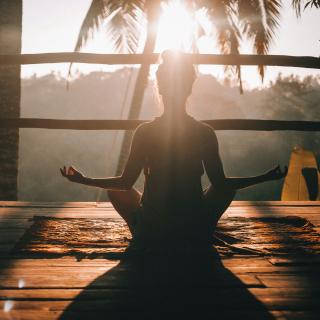
Chant-Breath Synchronization is a breathwork practice in which a chant, mantra, or vocal prayer is repeated on a slow, voiced exhalation, so the voice paces the breath into a steady rhythm.
Last Updated
3 Jul 2026
We are still reviewing this page. Our research team checks every technique page for accuracy and evidence quality before final release. Details may change as that review completes. The evidence badge shows our current reading of the published research.
RECOMMENDED DOSE
No direct dose-response literature exists for chant-breath synchronization. This short, low-frequency starting point follows general breath-and-chant practice conventions and is intended to build comfort with pacing your voice to your breath. No direct dose evidence; editorial synthesis.
No study reports a specific dose for this technique. A moderate 15–20 minute session most days of the week reflects common practice consensus for establishing a steady contemplative breathing routine. No direct dose evidence; editorial synthesis.
No long-term dose-response data is available for chant-breath synchronization. A daily 25–30 minute maintenance practice is offered as an aspirational upper range based on general contemplative-practice conventions, not on trial evidence. No direct dose evidence; editorial synthesis.
Session length
Session length: 5–10 minutes
5
MIN
How long each individual practice session should last from start to finish.
Frequency
Frequency: 3–4 days
3
DAYS
The number of days per week to fit a session into your routine.
Session length
Session length: 15–20 minutes
15
MIN
How long each individual practice session should last from start to finish.
Frequency
Frequency: 5 days
5
DAYS
The number of days per week to fit a session into your routine.
Session length
Session length: 25–30 minutes
25
MIN
How long each individual practice session should last from start to finish.
Frequency
Frequency: 7 days
7
DAYS
The number of days per week to fit a session into your routine.
About this card. No direct dose-response literature exists for chant-breath synchronization; these figures are editorial starting points based on general contemplative breathing practice and should be treated as flexible, not prescriptive. These recommendations are not a substitute for personalised guidance from a qualified practitioner.
Quick answers to what people most often ask. Each card links to the deeper section below.
evidence
Research on Chant-Breath Synchronization is emerging and indirect: no completed trials measure its effect on stress, anxiety, or focus. Supporting studies in healthy adults show breath and heartbeat lock together more strongly as the body relaxes, but this coupling was measured during rest and sleep, not chanting itself.
Read moregood for
Adults who feel wound up, restless, or unable to settle may find Chant-Breath Synchronization a self-paced way to slow the breath, especially those drawn to chanting, mantra, or prayer. It is a plausible aid for settling and stress recovery, not a substitute for care when anxiety, mood, or a medical condition is significant.
Read moresafety
Most healthy adults can practise Chant-Breath Synchronization safely, since the slow pace is voluntary and you can return to natural breath anytime. Deliberate breath pacing can occasionally cause mild lightheadedness or a sense of not getting enough air. Anyone with a cardiac, respiratory, or seizure condition, or who is pregnant, should check with a clinician first.
Read morehow it works
Chant-Breath Synchronization works by pacing the breath with a slow, voiced out-breath, a pattern thought to strengthen the vagus nerve, which helps the body shift from alert to calm. Lengthening the exhale and adding the vibration of the vocal cords is proposed to layer a second calming pathway on top of the slow rhythm itself.
Read moreA breathwork practice that pairs the breath with rhythmic chanting, mantra, or vocal prayer, letting a sustained voice draw out each exhalation and set a slow, steady breathing rhythm.
You choose a chant, mantra, or vocal prayer and repeat it aloud on the out-breath, so the sound stretches a long, voiced exhalation while the return to silence sets the pause before the next breath. The voice keeps the tempo slow and unhurried, and traditional chant tempos tend to settle near roughly six vocal cycles a minute. Sessions work seated or still, alone or in a group, and the same underlying form runs through Vedic mantra, Buddhist recitation, Gregorian chant, Sufi dhikr, and the Catholic rosary.
Chant-Breath Synchronization differs from silent mantra meditation and from breathwork that relies on counting or forced pacing: here the voiced sound itself shapes and lengthens the exhale. It is not singing as performance, and it is not a treatment for any diagnosed condition. Although it appears across many devotional traditions, the practice described here refers to the shared breathing-and-sound form rather than any single religious ritual.
Not to be confused with
Fast or cathartic breathwork (holotropic, rebirthing, Wim Hof style)
Those methods use rapid, forceful, or breath-hold cycles to provoke intense states, the opposite of chant-breath synchronization's slow, gentle, comfortable pacing. Do not treat the two as interchangeable; the intensity, aims, and cautions differ sharply.
Singing or vocal performance training
Vocal training shapes pitch, projection, and technique for performance, while chant-breath synchronization uses the voice only to structure and lengthen a slow exhale. The goal here is settling the nervous system, not sound quality or musical skill.
A specific religious rite (rosary, dhikr, or liturgical chant)
These traditions are the carriers in which the technique appears, not the technique itself. Chant-breath synchronization names the shared breathing-and-voice pattern across them; practicing it does not require adopting any one faith's ritual.
Chant-Breath Synchronization works mainly by pacing the breath with a slow, voiced out-breath, a pattern thought to strengthen the influence of the vagus nerve, the nerve that helps the body shift from alert to calm. Practitioners tend to feel this as recovering from stress a little faster and settling into a steadier baseline (Schäfer et al., 1999), (Bartsch et al., 2007). Lengthening the exhale and adding the vibration of the vocal cords is proposed to layer a second calming pathway on top of the slow rhythm itself. In healthy adults, the same line of research shows that breathing and heartbeat can fall into step with one another as breathing slows, a coupling that tracks whether the nervous system leans toward rest or alertness. Because no trial has yet measured these effects during chanting itself, this is best read as a plausible pathway rather than a proven one.
Chanting on a slow out-breath can help the body settle and recover from stress a little faster. Lengthening the exhale and adding the vibration of the vocal cords are thought to strengthen the vagus nerve, which helps the body shift from alert to calm (Schäfer et al., 1999), (Bartsch et al., 2007). Direct measurement during chanting is still missing, so this is best read as a plausible pathway rather than a proven effect.
As a slow chant carries each out-breath, the body often begins to settle and mental urgency loosens. Studies of healthy adults show breath and heartbeat can fall into step as breathing slows, a coupling that reflects whether the nervous system leans toward rest or alertness (Schäfer et al., 1999), (Bartsch et al., 2007).
As the voice carries each long exhale, the body often begins to settle and breathing turns slower and steadier, a shift toward the parasympathetic nervous system, the rest-and-recovery branch that slows heart rate. The rhythm of a slow, paced breath can shape the rhythm of the heartbeat, a coupling studied in healthy adults (Bartsch et al., 2007).
Paced chanting stretches the exhale into a steady, repeating rhythm, and research on breathing and the heartbeat shows the two rhythms can fall into step with one another (Schäfer et al., 1999), (Schäfer et al., 1998). Practitioners often feel this as the body finding a slower, more predictable pace that attention can rest on.
The clearest measurable change is in how tightly breath and heartbeat lock into a shared rhythm, a coupling researchers call cardiorespiratory phase synchronization that grows stronger as the nervous system shifts toward rest. In healthy adults this coupling rose roughly fourfold as sleep deepened from waking into light and deep sleep, and was about 40% lower in older adults, showing how closely it tracks the balance between the body's calming and activating branches (Bartsch et al., 2012). During a slow chant this is expected to feel like breathing that becomes smoother and a body that settles into its own even tempo, though the coupling has so far been measured during rest and sleep rather than during chanting itself (Bartsch et al., 2007).
When breath and heartbeat fall into a shared, even rhythm, breathing can feel smoother and the body seems to settle into its own steady tempo, one of the quiet signs of the nervous system shifting toward rest. Studies of this coupling, which researchers call cardiorespiratory phase synchronization, find it strengthens as the body settles and weakens with age (Bartsch et al., 2012).
Many practitioners feel the body settle and notice stress easing a little more readily. That sense of recovery reflects vagal tone, the strength of the vagus nerve's calming influence on the heart. It hasn't been measured directly during Chant-Breath Synchronization; related studies instead show that breath and heartbeat couple more strongly when vagal influence is higher (Bartsch et al., 2012).
In a slow, voiced chant, many people feel the body settle on each out-breath, as if the heart eases down as they exhale and releases as they breathe in. That easing is the vagal brake, the vagus nerve's moment-to-moment control of heart rate; studies of how breath and heartbeat couple together show this influence grows stronger as the body shifts toward rest, though it has not yet been measured during chanting itself (Bartsch et al., 2012).
Limited–Emerging evidence to date supports specific benefits only indirectly: no completed trial of Chant-Breath Synchronization has measured stress, anxiety, focus, or any clinical outcome. What can be said rests on the cardiorespiratory coupling research behind its rationale, which shows that slow, paced breathing lets breath and heartbeat lock together more strongly and that this coupling shifts toward rest in healthy adults (Bartsch et al., 2012), (Bartsch et al., 2007). On that basis, the practice is a reasonable aid for settling and stress recovery (Schäfer et al., 1999). What is not yet supported: it has not been shown to treat any diagnosed condition, no controlled trials of the practice itself exist, there is no long-term follow-up, and no effect sizes describe chanting's impact on health outcomes.
Breath and heartbeat can fall into step with one another, and studies of this coupling in healthy adults show it strengthens as the body relaxes and weakens with age (Bartsch et al., 2012), (Bartsch et al., 2007). This is the main body of research behind Chant-Breath Synchronization, and it helps explain why slow, voiced breathing might steady the nervous system (Schäfer et al., 1999). The limit that matters: these studies measured a physical rhythm during rest and sleep, not chanting, and none tested a health outcome, so the evidence for the practice itself is suggestive rather than confirmed.
0
Meta-analyses
0
RCTs
0
Systematic reviews
0
Observational
4
Pilot
Studied populations
Outcomes measured
Heartbeat synchronized with ventilation
1998
Finding: In healthy adults breathing freely, this study tracked how the heartbeat and the breath can fall into step with each other, settling into steady, repeating patterns where a set number of heartbeats lines up with each breath. That natural coupling is the reason pacing your breath, as chant-breath synchronization asks you to do, can ripple through to the body's other rhythms. Keep in mind, though, that the research measured spontaneous, unguided breathing rather than chanting itself, so it explains the underlying mechanism rather than testing whether the technique delivers a specific health benefit.
See full citation in referencesPhase transitions in physiologic coupling
2012
Finding: In healthy adults, this study tracked how closely the breath and heartbeat fall into rhythm together and found that this coupling shifted dramatically with the state of the nervous system, rising roughly fourfold from wakefulness and dream sleep into light and deep sleep, and running about 40% lower in older adults. In plain terms, the link between breath and heart tightens as the body settles into calm, restful states, which is one reason slow, paced breathing is thought to influence how relaxed the nervous system feels. This was a measurement of natural breath-heart coupling during rest and sleep, not a test of chanting or of the chant-breath technique itself, so it points to a plausible pathway rather than proving that chanting delivers these effects.
percent change = 400.0
Chant-Breath Synchronization draws on a form found across many contemplative traditions: Vedic mantra recitation, Buddhist chanting, Gregorian chant, Sufi dhikr, and the Catholic rosary all pair repeated sacred sound with the breath. A recurring observation is that these traditional chant tempos tend to settle near roughly six vocal cycles a minute, a slow and unhurried pace. These roots help explain the form of the practice, the way voiced sound structures a long exhale and repetition sets the tempo, not its clinical effects.
For most healthy adults, chant-breath synchronization is a low-risk practice. The pace is slow and entirely voluntary, and you can drop back to your natural breath at any moment. A few situations still call for care. Slow, deliberate pacing or sustained chanting can occasionally bring on mild lightheadedness or a sense of not quite getting enough air; this is a practice-informed caution rather than a documented risk, so if it happens, let the pacing go and breathe normally until it passes. Anyone living with a cardiac, respiratory, or seizure condition, or who is pregnant, should check with a clinician before longer sessions. That precaution is carried over from breathwork generally, since no study has tested the safety of this specific practice.
Some people should approach the practice with clinician input rather than starting long sessions on their own. Anyone with a cardiovascular or respiratory condition, a seizure disorder, or who is pregnant should confirm with their clinician first. Deliberate pacing and sustained vocal exhalation change breathing effort in ways that feel manageable to most people but have not been studied in these groups. These are practice-informed precautions drawn from breathwork broadly, not risks measured for chant-breath synchronization itself.
Slow, deliberate pacing or a sustained voiced exhale can occasionally bring on mild dizziness, tingling, or a sense of not quite getting enough air. If this happens, let the pacing go and return to your natural breath until it passes. This is a practice-informed caution carried over from breathwork generally, not a risk documented for chant-breath synchronization itself.
Deliberate pacing and sustained vocal exhalation change breathing effort in ways that feel manageable to most people but have not been studied in these groups. Anyone living with a cardiovascular, respiratory, or seizure condition should check with a clinician before longer sessions and keep them shorter and gentler until they know how their body responds.
| Technique | Best for | Use with care | Evidence strength | Distinction |
|---|---|---|---|---|
| Resonance (Coherent) Breathing | Readers who want the slow-pacing, breath-and-heartbeat effect without vocalizing or a religious frame. | moderate EVIDENCE | Resonance breathing paces the breath silently toward roughly six cycles per minute to bring breath and heartbeat rhythms into step, the same cardiorespiratory coupling that chant-breath practice leans on. The difference is the voice: chant-breath synchronization adds sustained vocal-cord vibration on the exhale and, usually, a devotional phrase, where resonance breathing keeps the mouth quiet and the frame secular. | |
| Silent Mantra Meditation | Settling mental chatter with a repeated word in settings where chanting aloud is not possible. | EVIDENCE | Silent mantra meditation repeats a chosen word or phrase in the mind to steady wandering attention, but it does not pace or lengthen the breath and adds no vocalization. Chant-breath synchronization voices the phrase aloud on a slow out-breath, so it recruits the exhale, the vocal cords, and the breath rhythm rather than working through mental repetition alone. |
No. Chant-breath synchronization works through the slow, voiced exhale and steady attention on the sound, which function whether or not the phrase is sacred. The devotional traditions carry the pattern; they are not requirements.
+
No. The working parts of the practice are the slow, voiced out-breath and the way a repeated sound gives attention something to rest on, and neither depends on any faith. Devotional forms like mantra, dhikr, or the rosary are where the pattern turns up rather than requirements, and a fully secular version such as resonance breathing uses the same slow pacing. That said, a phrase that matches your own beliefs can make the practice feel meaningful rather than mechanical, which may help you keep returning to it; the meaning supports engagement, not a separate clinical effect.
Any one you find comfortable. A neutral sound, a single word, or a short phrase all work, because the active ingredient is the slow, voiced out-breath at around six breaths a minute, not the specific words. Pick something easy to repeat and sustainable to voice.
+
Any comfortable, neutral choice works; you do not need a lineage phrase to practise. What settles the body is the slow, lengthened exhale the sound carries, so a simple hum, a word like "one" or "calm," or a short neutral phrase does the same job as a traditional mantra. No chant has been shown to be clinically better than another, so the choice comes down to comfort, personal meaning, and how easily you can keep repeating it on a slow out-breath. Pick whatever feels natural to voice and easy to return to, and treat it as a gentle aid to settling rather than a treatment.
The tendency of the breathing rhythm and the heartbeat rhythm to fall into step with one another, so their timing lines up. Researchers use how tightly they lock together as a window into the state of the nervous system.
Transient phase-locking between the respiratory cycle and heartbeat intervals, measured via synchrograms; coupling strength varies with sympatho-vagal state.
The natural rise and fall of heart rate with the breath, speeding slightly on the in-breath and slowing on the out-breath. A more pronounced pattern is generally read as a sign of a well-regulated, calm nervous system.
How strongly the vagus nerve applies its calming influence over the heart and breathing. Stronger vagal tone tends to feel like settling faster after stress and returning to a steadier baseline.
Cardiac vagal control, the parasympathetic influence on heart rate, often indexed through heart rate variability or respiratory sinus arrhythmia.
The slow breathing pace, close to six breaths a minute, at which breath and heartbeat rhythms couple most strongly. Many traditional chant tempos land near this rate.
The moment-to-moment balance between the body's activating branch and its calming, rest-and-recovery branch. A shift toward the calming side is what the body settling into ease feels like.
The sense of the body's internal signals, such as breath movement, heartbeat, tension, or the vibration of the voice. Building it often shows up as feeling more embodied and catching early stress cues sooner.
A word, sound, or phrase repeated during practice, often carrying spiritual meaning. In chant-breath work it rides the exhale and sets the tempo of the breath.
Carsten Schäfer, Michael G. Rosenblum, Jürgen Kurths, Hans-Henning Abel (1998). Heartbeat synchronized with ventilation. https://doi.org/10.1038/32567
Cited in: How it works
Ronny P. Bartsch, Aicko Y. Schumann, Jan W. Kantelhardt, Thomas Penzel, Plamen Ch. Ivanov (2012). Phase transitions in physiologic coupling. https://doi.org/10.1073/pnas.1204568109
Cited in: Benefits
Explore guided sessions to deepen your Chant-Breath Synchronization technique.
The research is useful for setting expectations, but study methods and participant groups vary, and the evidence is indirect. Treat the findings as general guidance rather than a promise about any single session, and not a replacement for clinical care.
Experimental Evidence for Phase Synchronization Transitions in the Human Cardiorespiratory System
n = 112
Finding: Tracking the heart and breathing rhythms of 112 healthy adults across a night of sleep, this study found that the two rhythms locked into step much more strongly during deep and light (non-REM) sleep and drifted apart during dreaming (REM) sleep, with the timing of the breath appearing to lead the timing of the heartbeat. For someone practising chant-breath synchronization, this offers a plausible reason why steadying the breath might in turn steady the heart, since the breath's pace seems to shape the heart's. It is worth being clear about the limits, though: this study measured resting sleep physiology in healthy people, not chanting or paced breathing, so it shows how breath and heart rhythms can couple rather than proving any benefit of the technique itself.
reported narratively
Synchronization in the human cardiorespiratory system
1999
Finding: Studying healthy people breathing naturally, this research showed that heartbeat and breathing rhythms can fall into step with each other, settling into steady patterns where a set number of heartbeats lines up with each breath. For anyone drawn to chant-breath practice, this helps explain why slowing and pacing the breath can ripple through to the heart's rhythm: the two systems are physically linked. It's worth being clear about the limits, though. This work observed that coupling happening on its own, not during chanting or any paced breathing, so it supports the idea behind the technique rather than testing the technique itself.
See full citation in referencesBecause the safety of this specific practice has not been tested, anyone who is pregnant should confirm with their clinician before practising at length and favour shorter, gentler sessions. This precaution is drawn from breathwork broadly rather than from risks measured for chant-breath synchronization.
Chant-breath synchronization is best approached gently, in a comfortable seated spot where you can make sound without straining and always return to your natural breath whenever you like. A sensible starting format is just a few quiet minutes rather than a long session, letting the voiced exhale stay easy and sustainable while you learn how your body responds. If any lightheadedness shows up, that is your cue to ease off, and it helps to check with a clinician first if you are pregnant or living with a cardiac, respiratory, or seizure condition.
Sit upright but relaxed, somewhere you can make sound comfortably, and take a few natural breaths first so you have an easy, unforced rhythm to return to throughout the practice.
Chant on a slow, comfortable out-breath so the sound gently stretches the exhale rather than straining it. If the pace ever feels like effort or breath-holding, shorten the phrase or slow down; the practice should feel sustainable, not like a challenge.
If you notice dizziness, tingling, or a sense of not getting enough air, stop pacing and return to your natural breath. This mild lightheadedness is the most common cue to ease off, and it settles quickly once you breathe normally.
Begin with just a few minutes and extend over time rather than opening with a long session, so you can learn how your body responds to slow, voiced breathing.
If you have a cardiac, respiratory, or seizure condition, or you are pregnant, speak with your clinician before practising at length, and keep sessions shorter and gentler until you know how it feels for you.
After a longer session, return to ordinary breathing and pause before standing, especially if you tend toward low blood pressure, so any brief unsteadiness has time to pass.
This information is educational and is not medical advice. This practice is not a substitute for professional care and should not replace prescribed medication or treatment for any medical or mental-health condition. If you are managing a health condition or taking medication, talk with a qualified health professional before changing your practice. If you are in distress or crisis, seek professional support.
| Bhramari and Om Chanting (single-sound pranayama) | Those wanting the vibration and long voiced exhale of chanting without a specific tradition or phrase. | emerging EVIDENCE | Bhramari (humming bee breath) and simple Om chanting also draw the vocalized sound across a long exhale, emphasizing the felt vibration in the throat and chest. They typically use a single sound rather than a devotional text or lineage phrase, so the meaning-system layer that chant-breath synchronization carries across traditions is lighter or absent. |
| Kirtan and Devotional Group Singing | Uplift, belonging, and shared devotion through communal singing. | EVIDENCE | Kirtan and communal chant-singing share the sacred-sound and repetition elements, but their organizing feature is melody, call-and-response, and shared connection rather than deliberately pacing the breath. Chant-breath synchronization narrows the focus to the coordination of voice and breath in one practitioner, whereas group singing centers the collective and the tune. |
Not proven. No controlled trials have measured whether chant-breath synchronization reduces stress or anxiety, so a direct benefit can't be claimed. Its rationale is indirect: research in healthy adults shows breath and heartbeat can settle into a shared rhythm as the body relaxes (Bartsch et al., 2012).
+
Not proven. No study has tested this specific practice for stress or anxiety, so any settling effect is suggested rather than established (Bartsch et al., 2012). What exists is indirect: breathing and heartbeat rhythms can fall into step, and this coupling shifts toward rest as the nervous system calms (Schäfer et al., 1999), (Bartsch et al., 2012). On that basis, chant-breath synchronization is best read as a plausible, low-risk aid to settling, not a treatment for stress or anxiety (Bartsch et al., 2007).
Not directly. No completed trials have tested chant-breath synchronization itself; its rationale comes from research on how breath and heartbeat fall into step in healthy adults, measured during rest and sleep rather than chanting (Bartsch et al., 2012), (Bartsch et al., 2007). Treat the evidence as emerging and indirect, not proof it treats any condition.
+
Not directly. The supporting studies looked at cardiorespiratory phase synchronization, the tendency of breathing and heartbeat rhythms to lock together, in healthy adults during rest and sleep, and they show this coupling shifts with the balance of the nervous system (Bartsch et al., 2012), (Bartsch et al., 2007). That line of work makes slow, voiced breathing a plausible way to steady the body, but no trial has measured chanting itself and none tested a health outcome (Schäfer et al., 1999). So the evidence is best read as suggestive rather than established, and the practice has not been shown to treat any diagnosed condition.
Likely because slowing the breath with a voiced exhale is thought to strengthen the influence of the vagus nerve, the nerve that helps the body shift from alert to calm, letting breath and heartbeat fall into step in a pattern linked with rest (Bartsch et al., 2012), (Schäfer et al., 1999). This is a plausible pathway, not a proven one.
+
A slow, voiced out-breath is thought to pace the breath toward a rhythm where the vagus nerve, which helps the body shift from alert to calm, exerts a stronger influence and where breath and heartbeat couple more tightly (Bartsch et al., 2007), (Schäfer et al., 1999). Research in healthy adults shows this coupling grows stronger as the nervous system leans toward rest (Bartsch et al., 2012). Because these effects were measured during rest and sleep rather than during chanting, this is best read as an inferred pathway that is suggestive rather than confirmed, not evidence that chanting treats any condition.
Probably, but it hasn't been measured during chanting itself. Breath and heartbeat do fall into step in healthy adults, and this coupling grows stronger as the body relaxes (Bartsch et al., 2012). A slow, voiced chant paces breathing toward the range where coupling peaks, so the effect is expected rather than proven for chant.
+
Probably. Studies of healthy adults show that breathing and heartbeat rhythms can genuinely lock into step, a coupling researchers call cardiorespiratory phase synchronization, and that it strengthens as the body settles toward rest (Bartsch et al., 2012), (Bartsch et al., 2007). Because a slow, voiced chant paces the breath toward roughly six cycles a minute, near where this coupling is strongest, it is reasonable to expect the same effect during practice (Schäfer et al., 1999). The honest limit is that this coupling was measured during rest and sleep, not during chanting, so for chant specifically it remains inferred rather than demonstrated (Bartsch et al., 2007).
Usually harmless. Mild lightheadedness can occasionally accompany slow, voiced breathing on long exhales; if it happens, let the pacing go and breathe naturally until it passes. This is a practice-informed caution, not a documented risk for this specific technique.
+
Usually harmless. Deliberately pacing or lengthening a voiced exhale can sometimes bring on mild dizziness or a sense of not quite getting enough air; the simplest response is to stop pacing, return to your natural breath, and wait for it to settle. Treat this as a practice-informed caution carried over from breathwork generally rather than a measured risk of chanting itself, since no study has tested the safety of this practice. If you live with a cardiac, respiratory, or seizure condition, or you are pregnant, check with a clinician before longer sessions and keep them shorter and gentler until you know how your body responds.
Start with just a few minutes. Begin short and extend gradually as you learn how your body responds to slow, voiced breathing, keeping the pace comfortable. If you notice lightheadedness, ease off and return to your natural breath.
+
Start with just a few minutes. This is general beginner guidance drawn from breathwork broadly rather than an established dose, since no trial has set an optimal session length for chant-breath synchronization specifically. Let the voice lengthen the exhale without strain, build duration over time as the practice feels sustainable, and treat any lightheadedness or sense of not getting enough air as a cue to stop pacing and breathe normally until it passes.
Mainly the voice. Both slow the breath toward roughly six cycles a minute to strengthen the same breath-heartbeat coupling, but chant-breath synchronization adds a voiced exhale, vocal-cord vibration, and usually a devotional phrase, while resonance breathing stays silent and secular (Bartsch et al., 2007).
+
The difference is the vehicle, not the effectiveness. Both practices pace the breath toward about six cycles a minute, the pace at which breath and heartbeat rhythms most readily fall into step, so they lean on the same underlying coupling (Schäfer et al., 1999), (Bartsch et al., 2007). Chant-breath synchronization adds a voiced out-breath, throat and chest vibration, and often a mantra or prayer, while resonance breathing keeps the mouth quiet and the frame non-religious. No head-to-head trial has compared them, and the shared evidence is emerging and indirect, drawn from rest and sleep in healthy adults, so neither is established as a treatment for any condition (Bartsch et al., 2012).
A Sufi practice of rhythmically repeating names or phrases of remembrance, one of the devotional traditions in which breath and voice naturally coordinate.
The yogic practice of regulating the breath through deliberate pacing and patterning. Chant-breath synchronization is a vocalized form within this broader family.
Ronny P. Bartsch, Jan W. Kantelhardt, Thomas Penzel, Shlomo Havlin (2007). Experimental Evidence for Phase Synchronization Transitions in the Human Cardiorespiratory System. https://doi.org/10.1103/physrevlett.98.054102
Cited in: Benefits, How it works, Research, What happens in the body
Carsten Schäfer, Michael G. Rosenblum, Hans-Henning Abel, Jürgen Kurths (1999). Synchronization in the human cardiorespiratory system. https://doi.org/10.1103/physreve.60.857
Cited in: Benefits, How it works, Research
Beginner content for Chant-Breath Synchronization

★ 4.8
·
Guided
·
13 min
Alyssa Snow
How hard is Chant-Breath Synchronization?
Chant-Breath Synchronization is a light-to-structured pranayama row because the breath is actively paced by the chant, but the overall load stays gentle once the rhythm is established.
2
Mental Effort
2 / 4
▾Emotional Depth
1 / 4
▾Physical Intensity
2 / 4
▾Prior Knowledge
2 / 4
▾Editorially curated. Tracks are not themselves clinically studied; evidence on the page applies to Chant-Breath Synchronization as a technique.