Hey there everybody,
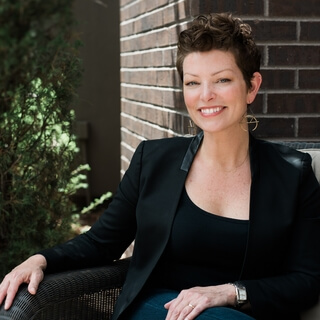
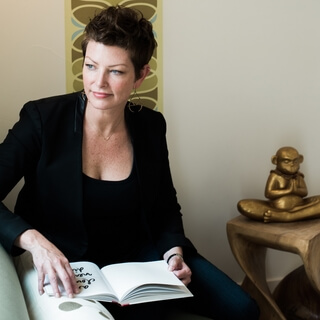
This is Kristen from Teaching Balance and I am here with you with this week's mindfulness meditation practice.
And we are now in the month focused on self-compassion.
I know that in all of the various Teaching Balance themes we have a tendency to really kind of circle around some of the major ones that are one of,
You know,
Essentially the pillars of mindfulness and certainly the four pillars of what I describe as being a balance teacher which are self-awareness,
Self-compassion,
Self-advocacy and self-embodiment.
And so it felt really appropriate for us to focus on self-compassion particularly because it is September and I feel like this is now either if you've,
You know,
Started school and you're a couple weeks in,
You're hopefully starting to find your groove and with that finding of one's groove sometimes we can be a little hard on ourselves,
Hence the idea of being self-compassionate.
And because of course there are other people in parts of the country and the world who go back to school a little bit later,
Even though they probably were part of that be gentle with yourself,
I feel like extending this self-compassion theme really makes a lot of sense for them as well because of course as you've heard me talk about in writing as well as in these practices,
The transitions are hard and that we need to be gentle with ourselves or in other words be compassionate with ourselves.
So that's the monthly theme and then for our focus today it was actually inspired,
It's really interesting how these ideas come up,
But I was at the movies last night and as I was leaving the theater walking out the exit,
You know how you look around and you see all the movie posters and sometimes those big cardboard things that are promoting the movies that are coming soon and apparently there is a sequel to the Maleficent movie coming out.
And so you might be thinking,
And?
But here's why that is connected to what I'm suggesting as our theme for this week and that is when I talk about self-compassion,
When I do workshops or presentations and I talk about our inner critic and by that I mean this voice in our head which sometimes we don't even know like where these little snippets come from.
Are they from our childhood?
Are they from our parents?
Are they from culture?
All those things that unfortunately our inner critic can say to us in our minds which are in most cases very,
Very unproductive and not helpful and not constructive in any way.
I've always found that it's helpful to identify that sort of inner voice and to give it a name.
And so,
Maybe you're making the connection at this point now,
I name my inner critic Maleficent.
Now I know if you've seen the movies she's actually not an evil character.
It's just a fun name.
And when I came up with it I didn't really even know what name I was going to choose but I knew I didn't want to choose a name that would be the name of anybody in one of my workshops and I feel pretty confident that Maleficent is a pretty unlikely possibility.
So it just works for me.
And so my invitation for you this week is to first and foremost if you haven't gotten a sense of your inner critic and that inner voice where it's the kind of things that are just negative self talk like I'm not blank enough or I'm too blank or even the things that we hear all the time coming out of other people's mouths like I'm so stupid or whatever.
No one rushes in when someone says that out loud and says you are not stupid,
You are amazing,
Stop beating yourself up.
We instead are like yeah I know what that feels like.
Which it is what it is but nonetheless we're not disrupting this cycle of negative self talk and we're not disempowering our inner critic.
And so the more you get to know your inner critic and I believe the more you I think allow it to not be as powerful by naming it I think that there is something that can be rather freeing about that.
So for example if I really like mess something up or I was feeling bad about disappointing myself in some way I might immediately get this voice in my head like oh who do you think you are to even try such a thing or that sort of inner critic kind of deal.
And it probably sounds familiar for you as well.
And so what I can do is I can catch it now.
I'm much more aware of that inner critic and that soundtrack that's going through my head intermittently and I can say to myself oh Maleficent I see you.
I see what you're doing.
And if you really want to even take it to the next level instead of just being dismissive of your inner critic you can also befriend your inner critic and you can say I know you're trying to keep me safe.
I know you're trying to keep me from stretching.
I know you're trying to make me not take risks and get embarrassed or whatever it might be but you're not actually helping.
You're not actually doing what you are attempting to set out to do.
And so I'm not going to listen to you and I'm not going to listen to whatever it is that you're choosing to say that in some way is unkind and uncompassionate to me.
So that's the theme for this week.
The idea being that if you name it you can tame it.
You've probably heard that before too.
So name your inner critic.
See if you can come up with something creative and something that also just I don't know.
I like the Maleficent thing because it's a little bit wicked and it also there's something playful about it too which also disempowers it in some way.
So play with that.
See what comes up and if that works for you.
And one of the things I'm going to encourage you to do for this 10 minute practice is if at any point you're practicing,
You're sitting,
You're meditating and you notice maybe things aren't how you want them to be or you feel like you're not as calm as you should be or that you aren't doing as well as you want to or whatever it might be.
Those are all shades of that same idea of being critical to yourself like I suck at this or whatever it might be.
So just like with any other thought I want you to notice it,
See it for what it is,
It's just another thought and then let it go.
So let's go ahead and get started.
I'm going to set my timer for 10 minutes.
If you're in a chair,
Making sure both feet are flat on the ground.
If you're on a cushion,
Just sitting upright.
In any other position,
The idea is that you're sitting in a posture of a relaxed alertness.
If you find yourself hunching,
It's sometimes helpful to roll your shoulders back,
Down your back and just open up that heart center.
It allows for some of that deeper breathing,
Which I'm going to encourage you to try if you haven't started already.
Nose,
Mouth,
Whatever works for you.
If you're feeling tight and deep breathing is hard for you right now,
That's okay.
Just doing the best you can in this moment.
Not putting any pressure on yourself and not listening to your inner critic,
Giving you a hard time because you can't take deep breaths.
Dropping into your body,
Feeling what it feels like to be in your body,
Resting your awareness on your breath or perhaps other physical sensations like in your hands or your feet or your face.
Anywhere is fine.
And of course,
You can also rest your awareness on sounds in the room or outside the room.
I'm also going to encourage you to let go of any expectations about this practice.
Letting go of any expectations of how you want it to be or how it will be in comparison to some other time or some imagined ideal.
There is nothing to aspire to really.
It is actually much more about just being deeply present to what is.
So if today you feel a sense of restlessness or fidgetiness,
Then you're just going to be deeply aware of that restlessness and that fidgetiness.
You're going to be curious about it.
Not that you're trying to figure it out or tell yourself the story of why,
But where do you feel restless in your body?
Is it your hands or your legs?
Where do you feel fidgety without trying to change it?
And there also might be a quality of feeling sleepy or tired.
And of course you can do this with any mood or quality that you're bringing to your practice right now.
But if it is that sleepiness,
Where do you feel it?
Is it in the eyes,
The jaw,
The neck?
Just like a scientist with a little clipboard,
Being very curious and interested,
Noticing that there's a lot of sensation in the shoulders,
But that you don't have to change it or fix it.
You just notice it.
You can if you want to,
But this isn't about achieving some ideal state,
As I mentioned.
And if your inner critic hasn't kicked in at this point in your practice,
That's great.
And if it has,
Just noticing what's the sound bite on repeat for you right now.
Is it about your skill as a meditator?
Is it about your value or worth?
Is it about how you act or look?
Knowing whatever you decide to name your inner critic,
Remember that even if it might be trying to protect you in some sort of odd,
Bizarre way,
You know that it's not helping.
It just keeps you playing small.
It keeps you in fear.
You don't have to believe everything that you think.
And you certainly don't have to believe anything that this inner critic is trying to convince you of.
So let's go ahead and just continue to settle into our meditation.
Like for us to try to just sit together in silence for the last few minutes.
And if you can,
When you hear that inner critic or any other thoughts arising,
Just notice,
See it for what it is.
If you'd like,
You can label it as a thought or criticism or fear.
And then just turn your attention back to either your breath or your body or sounds.
That is 10 minutes.
So name it to tame it.
You can name your inner critic or not.
It's really up to you.
But it's just something that I find helps me to interact with my internal world in a way that makes it feel,
First of all,
Less heavy and less intense.
And also,
You know,
Just disempowering the elements of my psyche that are not helpful.
The best example,
Of course,
Being the inner critic.
So thank you as always for taking this time for yourself.
And thank you so much for allowing me to accompany you on this journey.
And I will see you next time.
See ya.
Bye.