Cry.
Welcome to this short heart-focused breathing practice.
This one's designed to help you build a baseline of calm.
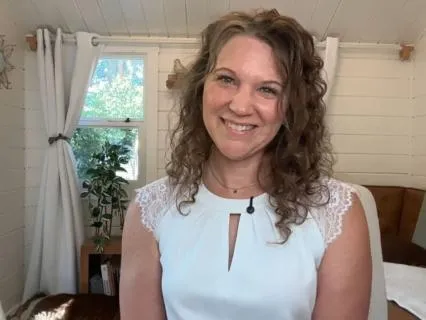
I'm Susan,
And I'm very glad you're here today.
I wonder if you've ever noticed that when you're feeling anxious or overwhelmed,
Your breathing becomes very rapid and shallow,
Or you might even find that you're holding your breath.
And conversely,
When you're feeling relaxed,
It naturally slows and deepens.
Even though many of us might not pay much attention to how we breathe throughout the day,
Our breathing holds a direction.
Biological relationship to how we feel.
So bringing conscious awareness to our breathing more often is one of the most efficient ways to reduce stress and anchor ourselves out of overwhelm.
Heart-focused breathing is one technique that we can use to take charge of an emotional reaction and start the process of shifting the mind and body into a more balanced state.
Give it a go with me now.
Just start by getting comfortable.
And I invite you to bring your attention to the center of your chest.
That space around your heart.
If it helps to deepen connection to your heart or to better let your attention rest there,
You might consider placing a hand over your heart.
And just imagine that your breath is flowing directly in and out of your heart or your chest area.
See if you can let your breath guide you into a smooth rhythm.
It's just a little bit deeper.
And a little bit slower than your usual pace.
If it feels right for you,
You might choose to breathe into a count of five.
And out to a count of five.
Or just find a cadence that feels natural for you.
Just imagining your breath flowing in and out of your heart.
Arriving at a rhythm that signals to your nervous system that it's okay.
It's safe right here to settle.
As you breathe in this heart focused way,
Some Pretty incredible changes are occurring inside your body.
For example,
The two primary branches of your autonomic nervous system,
The activating sympathetic branch and the regenerative parasympathetic branch,
Are starting to synchronize.
Because your autonomic nervous system impacts about 90% of your body's daily functions,
Creating this internal synchronization provides a very needed wave of health to your organs.
It optimizes the ongoing communication taking place between your heart and your brain.
Which helps open up those higher brain centers that can go offline during moments of emotional overwhelm.
And with them back online,
You can experience a more authentic sense of alert composure,
Of calm and even capacity.
Consider returning to this practice as often as you need throughout your day until it becomes an automatic habit in your life.
We tend to integrate these self-regulation techniques only to the extent with which we practice them.
And Once heart-focused breathing has become a habit for you,
Please use it as often as you need in your day.
You might use it to start your workday or to end it or perhaps right before you're going into a situation that you might be feeling a little bit nervous about.
It only takes a couple of minutes.
And what I like about this practice is that you can do it with your eyes open or closed.
And so you can do it whenever you need it.
And nobody will even know that you're taking a moment to self-regulate.
So anytime you need to.
Just draw your attention away from your thoughts.
Allowing it to come to rest on your heart.
And imagining your breath flowing in and out of your heart area.
Allowing your breath to become a little deeper and a little slower than usual.
As you practice,
Just notice what starts to shift and settle in your emotions.
In your perceptions and in the felt sense.
In your body.
Thank you so much for being here today.
Be well.