Welcome to Sue Quiet Sleep.
I'm so glad you are here.
Before we begin our tonight's story,
Find a comfortable position.
Let your body settle into the surface beneath you.
Your shoulders can soften now.
If there is any tension in your jaw,
Let it release.
Soften the small muscles around your eyes and brow.
Let your hands rest gently and easily.
If your eyes are not already closed,
Allow them to close now.
Take a slow breath in through your nose,
Filling your lungs and breathe out through your mouth.
And again,
Breathe in and breathe out.
Let your shoulders drop a little more.
Tonight we begin in the year 750 during the Tang dynasty.
Wan Chang'an is the Tang capital and one of the great planned cities of the world.
Before the sky brightens on an early spring morning,
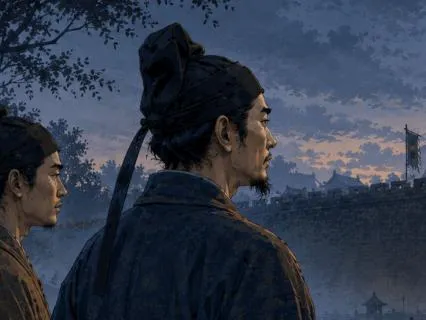
A senior clerk from the palace buildings directory arrives at an eastern canal landing near the city wall.
His robe is plain and clean.
His sleeve tied narrow at the wrist so they stay clear of ink.
And his steps are measured in the unhurried way of someone who has spent a lifetime walking the same routes at the same hour.
He has come to meet a newly appointed junior aide.
This walk is not casual.
In his office,
It is the first duty for every newly appointed official.
Before touching a register,
Before copying one line,
Before stamping one document,
The new staff must walk the city with a senior staff and land where roads,
Wards,
Canals,
City gates and offices meet.
A register,
The clerk often says,
Is not just a book of entries.
It is a memory of place written in brush and ink.
If a young clerk writes before he understands the ground and the wards,
He records shapes but not their meaning.
So they begin here in cold pre-dawn air beside quiet water and a shut gate.
The junior aide is already waiting beside a mooring post,
Satchel in both hands,
Trying to stand still while mist moves around him in slow silver ribbons.
A green birch is tied nearby.
Bandol sack sits under oil cloth.
Both men speak softly so their words do not travel far.
When the senior clerk comes within a few steps,
The younger man bows.
The elder returns the bow and gives a small nod toward the wall.
Good,
We begin here.
Above them rise the eastern gate tower,
Still dark along its beamed walk,
With only a faint blue line beginning together on the roof tiles.
Below the tower,
The gate doors remain closed for now,
Held by bars and iron fittings that have known many mornings like this one.
Beside the road,
Canoe water slips around the embankment with a patient sound.
In town Chong'an,
Several artificial canoes feed the city from larger river systems,
And this eastern branch is one of the practical lifelines that support transport,
Water supply,
And daily labor around the outer wards.
The clerk lets the aide look for a moment before speaking again.
You asked yesterday,
Why we start at water?
The answer is because the city breathes through roads and canals together.
Then he turns and together they walk towards the gate as attendants inside begin the first quiet movements of opening.
The first boards are lifted.
Wood answers iron in a deep,
Steady sound.
Attendants pull crossbars free.
Then is one door inward.
Then the other without haste.
The opening widens slowly enough that pale morning light seems to enter before people do.
The clerk and his aide pass beneath the gate arch into the outer city.
Inside,
Roads stretch long and straight through the thinning mist.
The younger man glanced left,
Then right,
Trying to hold the scale of it.
The elder noticed.
This is a city of enclosed wards,
He said.
Residential wards,
Each with walls and time gates.
In records,
We call them ward blocks.
He does not see more yet.
Their footsteps continue.
Quiet on packed earth where repairs are fresh.
Then softer on worn stone at a turning.
At one side ward gate,
A caretaker opens just enough space for a broom and begins the first sweep.
At another corner,
A tea seller carries out a stove but has not lit it yet.
A porter checks the knot on the shoulder pole and waits for full light.
Nothing here is loud.
Everything here is tight.
The aide seems about to ask a question,
But the clerk blips one hand slightly not to silence him but to ask for one more minute of listening.
They walk on.
As they follow the ward wall north for a short distance,
The clerk's gaze drips above the roof line and for a few breaths his attention turns inward to his own first morning many years ago.
He remembers standing where the younger man stands now.
Confused by skill,
Then slowly remembering why this city rests where it does.
Guanzhong plain in the westlands of the empire.
Mountain lines and guarded passes.
The Qinglin range to the south.
Higher ground rising again to the north and west.
The Wei river beyond,
Moving quietly along the northern edge of the basin and theta canals drawn inward like quiet veins.
Fertile soil,
Careful water,
And a naturally sheltered hollow made this place fit for a capital.
Older clerks had called it a golden basin.
Held high enough to avoid the war's floods,
Yet still open to the long roads that lead westward to silk road routes.
Then he remembers learning the city's shape by walking.
He has been told too that this city was firstly out under an earlier Sui dynasty.
Then carefully continued and expanded under the Tang empires.
Refined over time into the ordered capital Hinan walk.
Pale zones to the north.
The imperial city below.
Wei ministries keep their records.
The outer city around them with wards,
Workshop,
Temples,
And two great markets.
Open broad roads,
Yet many enclosed ward walls.
A chessboard more than a tangle.
He was taught the numbers before they settled into his bone.
11 north-south avenues and 14 east-west avenue.
Ward gates governed by time.
Roads named and measured.
Distances learned by feet before brush.
He was also taught the route used for orientation walks.
East gate for water,
Cargo,
And fast bearings.
South gate of the Chang'an city for scale and ceremonial line.
West gate for exchange and long roads beyond the walls to the silk road route.
The military-sensitive northern gates are left for later years.
All this returns to him in a single calm drift of memory while mist crosses the road in front of them.
Then he hears the young men search a buckle.
Tap lightly against his rope and he comes back to the recent morning.
They turn toward a narrower canal branch where stone edges hold the night's coolness.
The clock crouches once and touches the embarkment.
Then rises and points to the faint waterline marks and a small control point where flow can be adjusted.
What I told you at the gate,
He says,
Now you see.
Road records and water records belong together.
He reminds the aid gently of the larger pattern.
Mountain basin,
Way river to the north,
Water channels feeding city life,
Wards arranged in measured order.
No new lesson is added here.
He only traces the same map again in smaller strokes.
Two porters cross a bridge with empty baskets before morning traffic thickens.
A checkpoint assistant taps teleblocks together at a low table.
A woman opens a side shutter and set out carver jar for sale later in the day.
The aid watch and repeats quietly.
Road and water are one pattern.
The clock notes they continue toward the market quarter.
They arrive at the east market perimeter.
While dawn is still cool,
The sun has not yet climbed high.
The younger aid expects a crowd.
But the market gates remain closed to the general public.
The clerk keeps his voice low.
In Chang'an,
Both east market and west market keep official hours.
Public trade begins at midday.
When the drums call the opening,
Before dusk,
Closing is signaled again.
He gestures towards the gate.
What we see now is preparation.
Inside,
Quiet preparation continues.
Permitted shopkeepers and clerks check balls of silk,
Balance skills,
Arrange jars,
Sort teleslips,
And review permits.
Goods move in advance.
But trade waits for the drum.
Even the skills remain still.
The aid looks relieved,
As if something in the wall has clicked into place.
So,
It is not late,
He said softly.
It is simply not noon.
The clerk gives a brief smile.
Correct.
They walk along the outer edge and observe without intruding.
Drain channels are cleared.
Fire jars are checked.
A scribe compares sealed marks on shipment tags.
A team from a caravan yard adjusts harness lines and stands aside.
Later,
At the west market perimeter,
The air carries broader scents.
Wool,
Resin,
Dry fruits,
And oil,
And more foreign accents in short exchange between handlers.
But here,
Too,
Before noon,
Activity remains quiet preparation rather than open public bustle.
The city is already awake,
Yet holding itself close,
Waiting for the drum.
From the market roads,
The clerk guides the aid toward a temple lane,
Where monastic compounds stand behind low walls and cypress shade.
In town Chang'an,
Monastery and temple precincts are part of ordinary city life,
And several lie within walking distance of market roads.
At this hour,
They offer a quieter lyre of sound.
They do not enter.
They stop and listen.
A hollow wooden temple signal sounds from the inside one compound struck at measured intervals.
The clerk explains in a whisper that some call this instrument a wooden fish,
Though for this walk,
The aid can simply remember it as wooden temple block that keeps rhythm for chanting.
The younger man nods,
Grateful for plain language.
A broom moves across courtyard stone.
Sweep,
Gather,
Pause,
And sweep again.
From farther off comes the muted ring of metal checked before a workshop opens fully.
A cartwheel rolls through the fine dust,
Then rests.
A bell sounds once and fades.
The clerk turns his head slightly,
As if reading the sounds like map marks.
A city can be learned by ear,
He says.
Each district has an hour.
Each hour has its walk.
This time,
The aid asks his first question since the gate.
How do you remember all of it?
The old man answers with a small smile.
I walked it slowly,
Many times.
Then they begin again.
They reach the grand central north-south avenue,
The broad axial road that ties major districts through the center of Chang'an.
Even in sparse morning movement,
Its width feels immense.
Two document runners pass with wrapped tube under one arm each.
A gardener walks with empty watering jars that touch lightly.
Together,
Emounted couriers move at measured pace.
Not fast,
Not slow.
The clerk leads the aid towards the north-facing line,
Where official compounds become clearer.
He repeats,
In simple form,
What was held in the memory section of the walk.
Palisades to the north.
Government district below.
Outer city beyond.
Then he adds one reminder.
The government district south of the main palace zone is the imperial city,
Where ministries and offices keep administrative order day by day.
He points toward distant roof lines and names Ta Ming Palace once,
Then returns to silence.
The aid follows his gaze and finally sees what the alderman has been building all morning.
North separate roads.
North separate walls.
But one ordered hall.
They continue along the avenue edge,
While the last of the low-mids thins over side water channels.
At an avenue marker post,
They pause.
The clerk rests one hand on the wound-top surface and speaks more personally now.
When I first came,
He said,
Chang'an city felt too large for memory.
Too many roads.
Too many walls.
Too many names.
He looks down the long line of the avenue.
Then I learned that order is not held by grand speeches.
It is held by repeated small duties.
Gate attendants lifting bars.
Clerks checking slips.
Sweepers clearing corners.
Carriers choosing the same paving edge each day.
The aid listens in stillness.
A breeze lifts the hem of his robe.
Far away,
One official market signals hounds for a later stage of preparation.
Sunlight touches high-roofed tiles then brightens.
The clerk removes his hand from the post.
One more stretch,
He says,
Then we begin desk work.
They walk on,
Almost in step now.
Near the administrative quarter,
They enter the Palace Buildings Directory Annex.
A modest compound where copy plans,
Gate logs,
Repair notices,
And survey roads are kept in cedar cabinets.
Inside the courtyard,
One attendant sets a kettle over a small brassiere.
Another unrolls map sheets and places weights at the corner.
The room smells faintly of paper,
Soot,
And warm wood.
The senior clerk brushes shower dust from his sleeve and writes the day line for the morning orientation walk.
Then he tends to the egg.
Before any copy walk tomorrow,
Walk this route again at the same hour.
Feet first,
Brush second.
The younger man nods and warms both hands around a fresh cup.
No one hurries.
Outside,
Traffic will rise with the day.
Inside,
Ink,
Drawers,
And tables wait in practice sequence.
The walk day has begun,
But this small courtyard still feels suspended between night and full morning.
The clerk stands near the doorway and watch a narrow water channel where pure mist lingers above the surface.
Mist over water,
Soft and enforced.
A moment later,
The same thin ribbon drifts near the stone basin rim,
Culls once and thins.
Mist over stone.
From the lane beyond,
Footsteps pass and fade.
A gate closes once gently.
Silence returns.
In that silence,
Mist keep its patient rhythm.
It gathers where shade is deepest.
It leaves once sunlight reach.
It gathers once more.
One water meets one stone.
The clerk's breathing slows to match that movement.
He has seen this in many seasons,
Through years of service,
In busy months and quiet months.
And always at this hour,
The city reveals the same calm truth.
Before records,
Before reports,
Before orders,
There is water,
Stone.
And morning air.
Behind him,
The aide sits with empty cup in hand,
Watching the same channel without needing further instruction.
Soon,
The senior clerk takes his seat and the junior aide opens his first day of office learning.
After walking the roads,
Gates,
Wards,
Canals,
Market perimeters,
Temple lanes,
And central avenue that hold Chang'an together.
By now,
The sky is bright above the eve.
Yet,
In the shaded edge of the courtyard,
One last thread of mist still drifts above water in a patient and hurried light.
And the ordered city moves gently into day.
The world we visited tonight is quiet now.
And you are here again,
In the comfort of your room.
Your mind can rest.
Your body can relax.
If you are already drifting into sleep,
Allow yourself to sink deeper.
If you are still awake,
Simply listen to the quiet.
Thank you for joining me at Su Quiet Sleep.
I'll be here again soon to share another peaceful moment in time.
But for now,
Sleep well.
Good night.