Okay.
I titled tonight's talk,
Preparing for Spring,
What We Plant Will Surely Grow.
And I know some of our friends here who are not in the south are not probably feeling early spring yet.
So thank you for indulging in the memory that spring will come your way very soon too.
Okay,
Maybe not very soon,
But soon enough.
But we are having signs of early spring here in Georgia and in Atlanta.
The browns and not really the whites,
But if there have been whites of winter,
Are starting to shift to the more vibrant colors of spring.
One of the lovely benefits of being mindful is to watch this transition.
And here in Atlanta,
The daffodils are everywhere.
The redbud trees are starting to bloom and there's a few Bradford pears turning white right now.
It's just lovely.
This transition,
This transformation that happens each year.
And many weekends,
I do a bike ride with friends out in the country outside of Atlanta,
A little far,
A little ways.
And there's lots of little farms in this area.
You know,
There's an acre of fresh earth being toiled here and a few acres every so often.
And I imagine the small farms are getting ready to plant cabbage and carrots and collards and kale and lettuce and onions and many more delicious vegetables.
And I've always admired farmers,
The way that they tend the land and the risky nature of their business.
And I'm not really talking about big ag,
I'm talking about these small little farms.
There's so many aspects of farming that can't be controlled,
Especially the weather,
Right?
Will it be too cold this year?
Will it be too dry?
Will there be a late frost that ruins the crop?
Will there be enough rain for the crops to thrive?
And I'll just hit a pause right here and say,
If you haven't seen the biggest little farm,
It's on Netflix,
I highly recommend it.
It's a beautiful meditation on really living very close to the land.
But in farming,
I think,
And I don't speak with a lot of authority or I only speak from admiration,
But I think there's one thing that farmers can be pretty sure about.
And that's that what seeds they plant will grow into what they intended.
I don't think a farmer has ever walked down a row of cabbage seeds and been shocked to see an eggplant growing,
For example.
You know,
The one aspect of farming that is in their control is what they plant will manifest as their crop if all the conditions are supportive.
And you know,
I think a lot that life is like farming.
There's so much more out of our control than is in our control.
And that's difficult for a lot of people to really learn to not only come to accept,
But to learn to relax into that.
You know,
We certainly can't control other people,
Even though we often try.
We can't control the weather.
Really most any confluence of factors that make up a moment,
We're not in control of.
And you know,
If we are born,
We can be certain,
We can be absolutely certain that we will experience not just pleasure,
But pain in this lifetime.
Not just gains,
But also losses.
Not just fame,
But sometimes a bad reputation.
And not just praise,
But sometimes we'll get blamed.
That's just the natural aspects of being human.
We also know that the nature of reality is that everything is impermanent.
Whatever arises will pass away.
This means that if we're so lucky to be born in this human body,
I don't know why I was born a human,
Not an ant,
I don't know.
But either way,
We will eventually die.
And along the way,
We'll experience aging,
We'll experience illness,
We'll experience injury,
And we'll experience death.
That's just the way it is for us humans.
This is also true for our loved ones.
And this is also true for any material possessions we may own,
Homes,
Cars,
Computers,
Whatever's constructed is going to fall apart.
That's a lot to learn to accept.
No wonder we're all suffering so much.
That's a lot to manage.
So what can we learn to work with to make these aspects of life a little more tolerable,
Maybe even acceptable?
The only thing I know is this right here,
Our minds.
This is what we can learn to work with.
The world and life is actually only experienced through this mind-body complex.
Everything that's out here goes through the mind and body to be experienced internally.
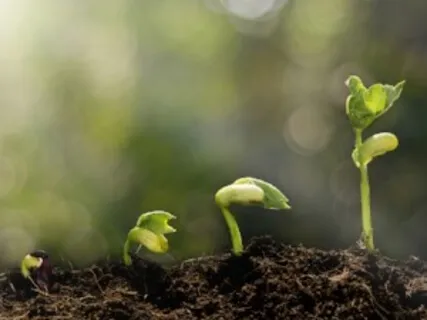
And I tend to think of the mind much like a garden.
There are many seeds that are already planted,
That have been planted over the years that we've been alive.
So however many years you've been alive,
Your garden's been growing.
What are the seeds in our gardens?
They're made up of the views that we took in from the people that raised us,
The opinions and beliefs.
We don't necessarily choose to plant those seeds,
But all of us grow up with views about what it means to be a good human,
What it means to be how we deal with difference.
We grow up internalizing stereotypes.
Instead of open and curious,
We develop stories about the way life is.
All of this is already planted.
And some of these contain our suffering.
And I feel a little bit bad about what I'm going to say next because I think weeds get a bad rap.
Weeds are just flowers that are only natural.
Some of them are very pretty,
But I'm going to go ahead and indulge this analogy anyway.
Those seeds that have already been planted,
The ones that contain our suffering,
We can actually think of these as weeds.
And when the weeds sprout,
When we can see them manifest in plants,
We can tend to them.
We can weed eat,
So to speak.
An example would be if we hold a judgmental self view.
If there's this view that often arises when we're trying something new and the view is you don't ever get it right,
That's a seed that's been planted.
And when it manifests in that moment because the conditions are right,
We're trying something new,
There it is.
If we can be mindful to see it for what it is,
A seed of suffering,
Instead of be caught up in the content of it,
We can actually respond differently.
We can weed eat it.
We can place our hand on our heart.
We can offer ourselves some care.
We can say it's simply not true.
Thank you,
But no thank you.
Whatever is right for us.
But we're also always capable of planting new seeds.
And this is,
And you know,
Just to exit the analogy for a moment,
This is neuroplasticity.
We are constantly creating new neural connections.
And that's what we're talking about here.
Every time we are mindful,
We plant the seed of mindfulness.
That's why it's so important to sit down and meditate.
We don't meditate to become better meditators.
We meditate so that we can be more mindful,
Remember to be more mindful in our lives.
And every time we come back to the present moment,
We're planting the seed of presence.
And with mindfulness and presence,
As we tend to them,
Water them each time we sit in meditation,
And we take seriously the endeavor of coming back to the breath,
For example,
We're growing these seeds.
You know,
We can plant seeds of loving kindness,
Compassion,
Gratitude,
Generosity,
Equanimity,
Appreciative joy,
The joy for someone else's success and happiness,
As opposed to growing the seeds of envy.
Whatever value or quality that you hold dear can be planted,
Nurtured,
And will grow over time.
That's the way the human brain is.
Whatever we pay attention to grows.
You know,
In our commitment to be kind in thought,
Speech,
And behavior,
We're planting that seed of loving kindness.
From here,
We stay conscious to it.
We tend to it's soil,
We water it,
We nurture it.
How do we do this?
You know,
We've talked in here before about street loving kindness,
That practice that I am so in love with that Sharon Salzberg so beautifully describes in the morning,
Instead of letting the judgmental monster out and ravage your morning before you even get to where you're going,
Start saying loving kindness.
May I be safe?
May I be peaceful?
May I be healthy?
May I live with ease?
Each person we see silently offer them that hope as well,
That wish.
Driving loving kindness.
Driving is a great place where we are watering the heck out of some seeds.
You know,
If you are in Atlanta and you drive on 285 and you get irritated at every driver you pass forgetting that you're a driver too,
Watering the seeds of irritation.
Driving loving kindness,
Watering very different seeds.
Watering before going into the grocery store and remembering to take with us an attitude of kindness,
Watering the seeds.
Same with compassion,
Not to turn away when we encounter suffering.
For example,
Even if you don't have a dollar or however much to hand someone who's asking for some money,
Can we have eye contact with the person?
Can we see them?
Can we open our heart to their struggle?
Tending the seed of compassion so that the heart quality grows and blooms.
It's not rocket science,
But it does require effort.
Growing the seeds of these positive mind states born out of this ethic of care honestly doesn't,
Just doesn't happen without some conscious effort,
Some conscious intention.
The thing that we are constantly,
I'm trying to find a word other than battling,
But is that negativity bias that we're all imbued with?
You know,
That when if there's 10 things that are positive and one that's negative,
The mind is going to go to the negative,
Go to the negative.
And it's important for us to understand this.
That's why we often end up with views and opinions and thoughts that are rather negative.
So this effort to cultivate the positive is really life enriching.
We're not going to do away with that negative bias that we are inherently given in the brain,
But we certainly can massage it and work with it.
We can certainly reduce its intensity,
Which is one of the main reasons that most of us will make some time each day to sit still and quiet in meditation.
So that we can see the garden of the mind,
So that we can actually see what is arising.
We can see the thought activity and hopefully without judgment,
We can take note of it.
Where is it that the mind spends time?
And then we can take the appropriate action based on whatever seed has bloomed at that moment.
This is the way we start to connect intention with what's arising.
And we can be responsive instead of reactive,
Just responsive.
And we can take it upon ourselves to be proactive.
In the morning,
Take stock.
What do you want to manifest that day?
It's worth your minute or two paying attention to and setting some intention.
Watering the seeds.
So let's just,
Let's close with a contemplation just to give you a minute or so just to think about this in your own life.
So if you want to just close your eyes for a moment just to access your own interiority.
I'm just using the metaphor of the mind as a garden,
You as the farmer.
What's important to you to grow?
What's important for you to plant?
And maybe the mind goes to one thing that feels very important right now.
Or maybe there's five seeds that feel important.
There's no right or wrong answer here.
This is how do you want to craft your life with an ethic of care?
Thank you.