So what we've been doing in these monthly events sharing the Dharma Day is focusing on the topic of anger.
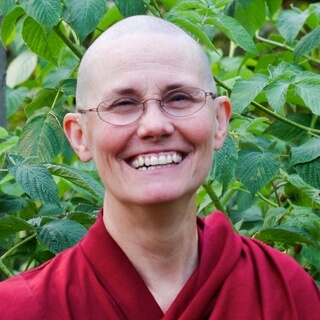
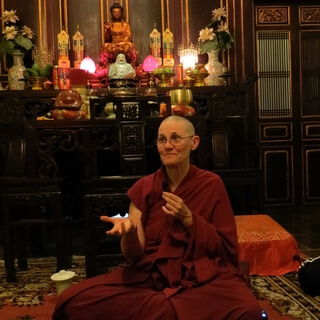
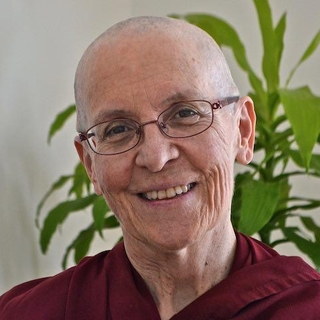
Venerable Chodron is reading through a book that she wrote called Working With Anger.
And so I think we all feel angry sometimes.
It's understandable that we feel at least a moment of anger about things happening in our country or around the world.
And also in the recent situation in Spokane of the fire.
And one of the fires,
I think it was the most destructive one,
Was started deliberately by somebody.
That's quite understandable that anger would come up.
Like,
How could somebody do such a thing?
But so anger is kind of a normal.
Human emotion and probably animals get angry too.
But then we need to investigate,
Is it helpful?
Does it help to get angry?
Does it bring any benefit,
Any good results to ourselves,
To others,
To the world?
Or does it make things worse?
So this is something we need to explore.
And in Buddhism,
And I'm sure other traditions as well,
There are alternatives to reacting with anger.
We don't have to be angry.
And even if it does come up in our mind,
Like a spark of anger coming up in our mind,
Which is the case even if we're seriously following the path,
The spiritual path that leads to awakening.
It takes a long time before we can really overcome anger so that it doesn't come up anymore.
So it's going to be there for a while.
But even if it does come up,
We can do something about it,
We can work on our mind,
Just like a spark,
You know,
If a spark flies into a place where there's dry grass,
We don't have to just say,
Oh well,
Too bad,
We do something about that.
And so we can work on our mind and change our way of thinking and our way of seeing things,
Our perspectives on things.
And so that instead of having an agitated,
Angry mind,
We can have a more calm,
Peaceful,
Clear state of mind.
So it does take time and effort to learn how to do this,
But it can be done.
And one important step in the beginning is to want to do it.
We have to want to work on our anger.
You might say,
Oh,
I don't want to be angry anymore.
I want to get rid of my anger.
But you have to really want that deep down inside with and based on.
Your own investigation,
Your own exploration,
Investigating the results of anger versus the results of other states of mind like patience,
Love,
Compassion.
And so to get to that point of wanting to work on anger,
Then it's helpful to see clearly the results of anger versus the results of patience and compare those two.
So that's what we're going to meditate on today.
Another important thing is to realize that we do have choices.
It's like when we come,
If you're driving and you come to a roundabout,
A traffic circle,
You know,
These different roads going off in different directions.
So you have choices there where you go.
You can just follow the car in front of you,
Wherever that ends up.
Or you can follow the road that you normally take.
But that may not lead you where you want to go.
So you do have a choice there.
You can choose the road that will take you where you do want to go,
Lead you in the right direction.
So it's similar with our mind.
Even if something comes up in our mind like anger,
We have a choice about what we do with that.
It's important to understand as well.
Okay,
So what we're going to do here is we'll start with some prayers and then we'll do some silent meditation for five or ten minutes.
Then I'll give some instructions in case anyone isn't familiar with meditation.
And then we'll do a guided reflective meditation,
What we call analytical meditation,
On this topic of patience.
So I'll be talking,
Giving you things to think about,
And then you have time to contemplate those.
And then see if you can have the wish,
The aspiration that what we're doing here today,
This meditation and the other events later,
That these things will help us to be more helpful to others and be able to relieve their suffering and bring them peace and happiness.
Okay so let's do a little bit of silent meditation to get ourselves settled down in the present.
So when meditating it's good if you can sit straight with your back straight.
Your legs either crossed in a comfortable position if you're sitting on the floor or if you're sitting on a chair just have your feet flat on the floor.
And you can have your hands resting in your lap or on your knees as you wish.
And see if you notice any tension there may be in your body anywhere,
Like in your back,
Your shoulders,
Neck.
Abdomen.
And if you do notice any tension,
See if you can let it go.
You can imagine it melting.
And flowing out of you,
Sinking into the earth below.
Are just dissolving,
Disappearing into space.
Even if you're not able to let go of all tension,
Just do the best you can.
Let's try to have your body feeling relaxed and light like a cloud.
And also relax your mind.
That means putting aside any thoughts that aren't related to what we're doing here right now.
Thoughts of the past,
Including what you were doing this morning.
Thoughts of the future,
What you're going to do later today,
Next week.
And just let your mind be right here.
In the present moment,
In the present place.
And focus your mind,
Your awareness,
On your breathing.
Feel the sensations in your body as your breath is coming in and going out.
And make that the focal object for your attention.
It can be a bit like an anchor keeping a ship in one place so it doesn't float away.
How focusing on our breathing helps us stay in the present.
Our breathing is happening right here,
Right now,
So when we're paying attention to it,
Our mind,
Our awareness is in the here and now.
Just with your mind,
Be aware of the breath as it's coming in and going out.
One breath after another.
And of course other thoughts will pop up in your mind or you'll hear sounds,
Your attention may get distracted away from the breath.
But as soon as you notice that,
Just let go of that other object and return your attention,
Your awareness,
To your breathing.
And even if you have to do that again and again,
It's okay.
It's fine.
That's part of the practice.
So now I'll transition to the second part of the meditation,
Analytical meditation.
So start by thinking of a time when you felt angry.
Irritated,
Frustrated,
Impatient.
It could have been very strong or very mild,
But some form of anger happening in your mind.
And see if you can remember how it felt.
To be angry.
How it felt physically?
What kind of physical sensations did you have?
And how did it affect your mind?
What was your state of mind at that time?
And if there were any other people around at the time you were angry,
How do you think it affected them?
And now think of a time when you were able to avoid getting angry.
So maybe it was a child.
Maybe one of your own kids.
Or a neighborhood kid.
Or one of your students.
And the kid did something they weren't supposed to do.
Or they didn't do something they were supposed to do.
But you didn't get angry at them.
Maybe you thought,
He's just a kid,
He's still learning.
Or if it was your own child.
Who you've been loving and caring for since they first appeared in this world.
Your love can overpower anger at them.
So see if you can remember what it felt like to not be angry when you could be angry.
And instead have patience,
Fortitude.
So patience or fortitude is the ability to remain calm internally and undisturbed in the face of harm or difficulties.
Or any situations where we could get angry.
So see if you can remember what it felt like when you had that ability to be patient.
How did it feel physically in your body?
And mentally.
What was your question?
Mental state at that time.
And on the emotional level,
What was that like?
And if there were any other people around at that time,
How do you think it affected them?
You being able to remain calm,
Not get angry.
So how does that compare with the results of anger?
You want to put those two situations side by side and compare them.
What conclusions do you have?
And if you were able to remain patient with that child.
And do you think this is something you could learn to do with other people in other situations?
And is that something you want to do?
Patience is sometimes misunderstood.
People sometimes think it means being passive and doing nothing when there's a wrongdoing.
That's not true.
If a child or anyone does something wrong.
We can correct them.
We should correct them if we can,
If it's appropriate.
But we can do it without anger,
Hatred,
Impatience.
You can do it with a calm and caring state of mind.
And whatever we do with that kind of mind will probably be more effective.
Anger makes our mind disturbed,
Unclear.
Unable to assess the situation intelligently and figure out the best way to respond.
Patience,
On the other hand,
Enables our mind to be more calm and clear so we can make good choices and decisions that will probably lead to better results.
And so now to conclude the meditation,
Based on whatever you understood during this meditation,
You can draw your own conclusion.
For example,
You might think,
Yes,
I really want to learn how to be more patient and how to manage my anger.
Or you might think,
I'm not sure,
I want to think about this more and decide to do more exploration of this topic.
So whatever conclusion makes sense to you,
Then bring that into your mind.
Let's just mentally dedicate the meditation we just did with a good motivation so let's dedicate that it will help ourselves and others in the world bring more peace and happiness and relieve suffering