
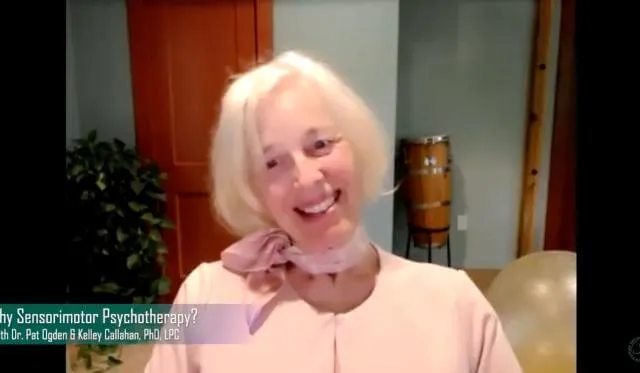
Dr. Kelley Callahan & Dr. Pat Ogden: Sensorimotor Therapy
by Sensorimotor Psychotherapy Institute Founded in 1981 by Pat Ogden
Dr. Kelley Callahan, and SP Pioneer, Dr. Pat Ogden discuss their Sensorimotor Psychotherapy journey and how it compares to other modalities. Listen in as they explore how SP's comprehensive approach with embedded relational mindfulness deepened and transformed their approach to psychotherapy.
Transcript
It's good to see you again.
Good to see you,
Kelly,
As always.
I thought we maybe could take a few minutes to talk about why SP,
You know,
Why when there's so many different approaches and modalities of how to be with clients,
Why should folks be interested in what sensory motor psychotherapy has to bring to their practice?
Yeah,
Good.
That's a good topic.
I get that question a lot,
You know,
Like,
Yeah,
Yeah.
Can you speak about it from your perspective?
Because you came to SP after already a therapist,
And you had different modalities you were working with.
Like,
What drew you to SP?
No,
I think that I had a foundation,
My primary foundation was relational psychodynamic approaches,
Though I had done an internship at the National Center for PTSD and so had some CBT training there as well.
But I felt like what sensory motor brought to the table was kind of a map that everything else could be integrated into.
And my specialty,
I had always been working with complex trauma.
And of course,
We know,
Right,
That lives in the body,
Trauma memories,
Our body memories.
And in the case of complex trauma,
It's procedurally learned repeated patterns over and over and over again.
So I guess like,
Two things.
One was nowhere else had I gotten the foundation in phase one work,
You know,
Being able to establish safety,
First and foremost,
Is a body based experience,
Right?
So sensory motor taught me how to track for that and work in the present moment,
And help to shift patterns of dysregulation,
Hyper,
Hyper arousal,
Right?
Like,
So there were specific skills around phase one work with,
You know,
With complex clients that can be,
You know,
A year or two of therapy,
Right?
So that felt incredibly useful that no,
None of the other approaches really gave that to me.
And then I think,
Yeah,
I mean,
I think the piece around being able to change procedural patterns that it's one thing to process a memory and,
And have relief around that,
Which is huge.
And a lot of modalities have approaches to do that.
But it's another to rewire kind of change how some how you move through the world or how you respond to the next opioid overwhelming experience.
Right.
And I think that's,
I think what you're naming is what does make sensory motor psychotherapy unique is that we,
We want to help clients kind of shift how they inhabit their bodies.
So if they're pulled in and constrained,
Which was really going to limit your experience in the world,
They learn about the part of them that's pulled in and they process the memories associated with that part.
So it can expand and be more open to experience.
Yep.
Yeah.
I mean,
I would say early on when I,
Before I became faculty for sensory motor,
I taught and would do,
You know,
Be asked to come and do a grand rounds or do things to talk with different people who are coming from totally different modalities.
And I would say,
You know,
In my humble opinion,
Right,
Like there are a lot of different approaches to phase two work,
Like trauma processing work,
But it feels to me like the,
The,
The,
The,
What would we say,
The,
Like the pledge that we take to do no harm,
Right.
That what SP brings to phase one work,
My,
My opinion was like,
Everyone should have that as a foundation to their practice,
Even if their therapeutic home is a different modality.
You know,
If they tend toward,
You know,
EMDR or CBT or psychodynamic approaches to address phase two work that,
You know,
That everybody needs the skill set of being able to track the nervous system and intervene and regulate.
And then even when you do your other approach to trauma processing,
You have the sensory motor skills to integrate that into the body.
Right.
Yeah.
I think that's basic.
I mean,
In my,
In my opinion,
Working with the right is essential with,
With trauma,
Especially because trauma first and foremost affects the body.
So the regulatory skills that you're talking about are really how to develop somatic resources so that you can down-regulate or up-regulate as needed.
And that that's basic and you're right,
That goes through all,
All phases of treatment.
Right.
But because trauma does so powerfully affect the body,
I,
I feel like the,
The work with the body is so important in phase two as well,
Because it has to do with those instinctive defenses that are subcortical body-based and help,
You know,
The,
The cry for help,
Fight,
Flight,
Freeze and,
And pain,
Death responses.
And it helps,
It helps clients develop more flexibility among those responses when they're faced with future trauma.
Cause instead of developing this default instincts,
You know,
Like always going to freeze,
No matter what the threat is,
You get,
You get flexibility.
Right.
You're accessible again.
Right.
Right.
Or always going to fight and,
And,
And like this,
It feels funny to say it this way,
But always having to,
Having to fight against that fight urge,
Right.
Like to be able to kind of process it through to conclusion and have your system reset feels like something that's different in this model.
But the other thing I sometimes I'm tickled by is,
You know,
In teaching sensory motor psychotherapy to therapists,
Right.
Most of the time,
These therapists have done a lot of their own work.
Right.
And of course we all know,
You know,
Those of us who choose to become therapists,
We have our own histories that bring us here.
Right.
And I'm always kind of moved by the experiential part of the training and how folks get to experience from bottom up,
Like from their practicing with one another.
Wow.
I've done a lot of work on this already.
I know everything about it.
Right.
Like I used to say I could write it.
I could have written my dissertation on me.
That's how much insight I had,
But it's a working at a different level when you're working in the body.
And I think to your point,
Like what SP brings to phase two trauma processing is it's different,
You know,
It's different.
And even when you've done other types of work that have been meaningful and life changing,
There's something additional and more and deeper in a way that can come from working it through in the body.
Yeah.
And I think what you're saying,
What comes through is really the intelligence of the body.
Like the body really does know how to resolve trauma,
How to embody those different instinctive defenses so they're effective and can be called upon when needed.
So I think often what we do is just evoke that intelligence.
And when you talk about complex trauma,
To evoke that intelligence of the body to help parts of the self integrate as well.
Yes.
Yeah.
I feel like,
You know,
I mean,
You obviously know this,
So I'm not telling you anything right,
But SP is really,
It's grounded in these principles,
Right,
Of how we practice and how we understand being embodied human beings,
Right.
And I feel like that is also another piece that is why I call SP home,
Which is in working with complex trauma.
Something shifted it for me in the work when I could,
When I could not just understand,
But like feel that trust in the body.
Right.
And my own body.
And so sometimes,
You know,
When I'm doing consultation or something,
People will comment,
You know,
Actually someone said this to me the other day about their SP therapist that,
You know,
It just seemed like whatever comes up,
There's this calm centered sense of like,
Okay.
Right.
And that's,
That's what SP fosters through the principles,
Right.
That it's like,
Whatever's here is coming from an adaptive origin.
We can be curious about it.
We can help regulate it.
We can shift patterns,
But it's,
There's,
You know,
Whatever part is up.
Yeah.
You can meet it with that sense of like,
Right.
Okay.
Right.
And I think clients feel that they feel that the therapist trust the intelligence of their system and any symptom they have or any,
What they might judge as a liability or something really dysfunctional,
There's intelligence there.
Yes.
We want to uncover the root of that intelligence.
Yes.
Yeah.
Yeah.
And I feel like the,
The principle of organicity,
You know,
Of recognizing that the healing is actually in the client,
Right.
Or the heat,
My healing is in me.
Right.
And,
And it's a deeply relational model at the same time.
Right.
That I feel like being able to rest into that is,
Is what makes it possible to hang in,
To do complex trauma work,
You know,
Where enactments and pulls for this or that,
And,
And,
And,
You know,
Responses in the therapist to all of that is playing out in the work.
Right.
Right.
Always.
Yeah.
That's that being able to rest into organicity and like,
I'm,
I'm not here to save anybody.
I don't have the answers.
Right.
They're in,
They're actually in the client,
Right.
And our relationship can help be the container for that discovery of internal healing,
You know,
Between parts.
Yeah.
That is,
It,
It's probably bought an extra 20 years in my career.
I've heard a lot of sense you want to cycle every student say that.
Yeah.
Yeah.
It's more like with the relationship,
You're right.
This is,
That's really grounded in the therapeutic relationship.
And the task is together to really just create this context,
This container where healing can come forth.
So there's not that pushing or that forcefulness that I learned before.
Yeah.
Before it's actually,
Yeah.
Yeah.
So tell me a little bit about,
You know,
How SP developed for you from your history.
Cause sometimes I get the question about,
You know,
There are different somatic methods,
Methods out there.
Why SP,
What makes SP different?
Do you.
Yeah.
Well,
You know,
When I met Ron,
Who's the pioneer of the brains behind the Hikomi method,
It was in the early seventies.
I was teaching yoga and dance and in psychiatric hospital.
Cause I was,
I was very interested in the body.
The body was always my own personal resource.
And I was really curious about why patients seem to get better when they did both the yoga and the dance classes that I taught.
And maybe they were going to get better anyway,
But that really piqued my interest.
And then I met Ron who was the first person who was a body psychotherapist that I've had contact with.
So I really wanted to learn from him.
So I moved to Boulder and we co-founded the Hikomi Institute with others in 1980.
And I taught at very first Hikomi training.
Ron's method also is very relational.
He was not trauma focused.
So this was in the seventies.
And at that time I became an adjunct therapist for women at Wardenburg clinic,
Which is the clinic for the university of Colorado here.
And they sent me all the students that had gone to the clinic because of sexual dysfunction,
Basically what was called back then pre-orgasmic.
They have orgasms.
And I was doing everything I'd been taught in social work school,
Everything I'd learned from Ron and they were not getting better.
And some were getting worse cause we were going into powerful emotions and all of that.
I remember saying to some colleagues,
I'm not going to do that emotional work.
I'm just going to try to keep them in their bodies.
That's all I'm going to do.
And they were like,
Oh,
You know,
How are you going to get anywhere if you don't do emotional work?
They started to stabilize.
So that was really my first interest in,
In trauma work.
You know,
Then I studied partial integration in the seventies and later on rolfing,
Which is all about integration in the body,
Like how the body itself can find its balance,
Its peace with gravity.
You know,
We're not slumped,
Our shoulders aren't forward.
We're not like this.
So that rolfing was about,
You know,
Physical integration,
But it was separate from psychological integration and I really wanted to bring them together.
You know,
So that's,
That's,
And I,
I had a lot of other influences,
A lot of other kinds of body therapy that I studied and you know,
The,
The work of the people on our advisory board,
I really studied and worked with them and it evolved,
But that,
Those were the roots of it.
That's so cool.
It's funny as I hear you say that because in all truth,
I kind of came to sensory motor as a left brain,
You know,
Like you said,
You had talked about like your,
Your body had a resource for you,
You know,
As a person moving through the world.
And for me,
I had like,
I kind of really,
Part of what drew me to it as,
As I was a postdoc,
When I took my first training was the sense of like,
Oh my gosh,
All these other people are,
Are reporting experiences through the,
You know,
Experientials and the training.
And I'm like,
Well,
I know I'm in a body and I can,
I can feel my hands touching my body.
Right.
And yet I'm so,
I'm not,
I'm not getting that data.
And over the course of my becoming a certified practitioner,
You know,
I was learning the skills,
But also what I was charting and reporting to my colleagues on was like,
Okay,
I'm,
I'm,
I'm inhabiting my body awareness down to like about here now,
You know,
And then now I'm down to about here now.
And it really was this gradual reconnection of,
You know,
My own,
My own embodiment that has been huge.
Yeah.
Yeah.
Yeah.
It's a gigantic step.
And then that changes and shifts totally how I am in the work with,
With clients.
Yeah.
Yeah.
Well,
You're really,
You're really naming something also that I think is a homework of our trainings is that because students practice with each other,
The,
The interventions and the embodiment of the principles,
They kind of learn from the inside out.
It's not a top down.
You don't just listen to lecture,
You know,
You practice,
You have peer support,
You watch,
Watch videos of the work.
And so you,
You get it from the inside,
Just like you're describing.
Yeah.
Yeah.
That's really important because you can't,
If you don't get it from the inside,
How are you going to help your clients Right.
Right.
And it's,
You know,
I think we're actually in a way coming back full circle to kind of where we started,
Which we were speaking about the quality of presence that,
That,
You know,
That SP fosters in how we are in the work.
And that really also starts kind of with our own embodied presence,
Right.
And the capacity to regulate and track and be aware,
You know,
On that level of not just our thoughts,
Emotions,
But also kind of what's happening in our bodies.
Yeah.
Yeah.
So while you're also alluding to how our work is just not conversation,
Like it's not talk therapy.
We do work with what I like to call embedded relational mindfulness because it's a relational mindfulness where the client is,
Is assisted to really be aware of what's going on internally body first and foremost,
But also the thoughts and emotions and images and,
You know,
Smells and everything that comes up.
And I do want to acknowledge Ron for that because in the,
When I was learning to be a therapist in the seventies,
All I was learning was talk therapy.
And then I met Ron and,
And he said,
You know,
We,
We need to get beneath talk therapy to what's really driving that conversation.
What's driving the content of people's lives.
So,
I mean,
He really taught me in the seventies is the beginning of how to use mindfulness to,
To work with the organ,
How people organize the organization of experience instead of talking.
Yeah.
Yeah.
And,
And you know,
What I appreciate us again,
Coming to this work through the pathway of working with complex traumas is that I feel like what SP is for really grounded in,
In terms of a phase oriented treatment,
Which is like old standard for working with complex trauma is like,
You know,
I can hear a supervisor I had in graduate school saying to me,
Well,
You know,
Kelly,
Sometimes it has to get worse before it gets better.
And this concept of like,
Well,
You know,
We have to,
We have to process it.
So if someone starts to have an increase in symptoms or they aren't able to work for a while or have to go inpatient,
Or we need to increase to three to five days a week treatment,
That's what we have to do.
And that is just really not the approach to working with complex trauma.
It just doesn't sit right with me,
You know,
Like that do no harm.
Yeah.
And I think that so it,
To me,
Sensory motor affords us to combine sort of what you were just speaking to,
But in a,
In a,
In an intentional measured paced way,
So that it's always about what can be integrated,
Rather than kind of,
You know,
Overwhelming and going in diving in a deep dive.
And well,
It might get,
It might get worse before it gets better.
Right.
Yeah,
I've heard that a lot too.
I do think that because we work so much with tracking the body,
We can often catch those signs,
You know,
Of dysregulation or overwhelmed start starting to happen before it gets extreme.
We can bring in those,
Those resources to bring arousal back into that window.
Right.
And when we're tracking the body and the nervous system,
We can also see how different parts of self,
Right,
Attempt to regulate or create safety in different ways,
Totally,
That are sometimes in conflict with one another.
So,
You know,
You're trying to do an intervention,
Really,
You think you're working with the whole client,
But you're really just working with a part.
Absolutely.
Absolutely.
I know I one example that I often use of that is that if a client's exploring,
Like reaching out,
Like that seeking action to reach out to others,
If that if interactions with others have been unsafe,
Their body's going to pull back or hunch up or tighten up or they're going to not reach fully.
Right.
The body's really reflective of those two parts.
Right.
And when we learn to track the body,
We start to see those parts in the body.
Yes.
Yeah.
And when we're working with mindfulness and in and tracking across all those organizers and helping our clients to do that as well.
Right.
Like I'm just thinking of a session the other day where someone,
You know,
Kind of resourced and went into a new way of being that felt good for like 10 seconds.
Right.
Before another part of her had a thought.
Right.
That was very different and felt afraid.
Yeah.
Right.
So that we can kind of then track and work with that in the body and.
Right.
Right.
Figure out how to negotiate and and work with all the parts.
We're not asking parts to step back or.
Right.
Right.
Like,
Let me step aside.
No.
Right.
We're asking them to communicate with each other.
Yeah.
Different.
Yeah.
Yeah.
Yeah.
I say because you said core organizers just so to clarify for people who are listening,
The core organizers.
So what we also call the building blocks of present experience,
Their body sensation,
The feelings in the body,
Their movements,
The sensory perceptions like images that we have,
You know,
Smells from the past and so forth and their emotions and then their thoughts.
So there are five building blocks for core organizers that are really the that's what we become aware of when we're mindful is how they're operating inside of us.
Right.
Yeah.
Absolutely.
Absolutely.
And I think that,
You know,
I know I've sensory motor is like home for me and then I integrate kind of other modalities or practices or interventions,
Techniques come into that map.
And I realize not everyone who comes to our trainings is going to,
You know,
Have that experience.
Right.
It's more like they're going to be integrating SP into kind of whatever their home modality is,
Which I always feel great about.
And the reason why it's coming up for me is you're talking about the,
You know,
The organization of experience and helping like the skills that I've learned from SP,
Whatever just happened,
Whether it was a relational intervention,
It was a cognitive restructuring,
Or it was a integration of through EMDR or something like that.
The integration of that through all of the four organizers,
Including the body,
Which is where those procedural patterns are held.
Right.
To me,
There's something that the skills of SP are applicable at like all three phases of treatment,
Kind of regardless,
Whatever your modality is that you call home.
Yeah,
I think that's true.
And I hear from people that they can,
That SP is very easily integrated into other modalities.
I mean,
For me,
SP is basically what I do.
It literally is,
But you did and now we call it SP.
But it still has other elements of other approaches.
Of course.
When like a cognitive behavioral therapist watches my work,
They say,
Well,
There's a lot of cognitive behavioral therapy in here too.
I'm not aware of that,
But I'm not surprised,
But it is very easily integrated into other modalities.
So I think that's a plus.
It's not a rigid system.
No.
Yeah.
It's not a formulaic system.
Right.
Even though when we're learning it,
We're learning kind of like the pieces of it.
Right.
And how to kind of weave that together.
All of those pieces can be woven and integrated in other ways of doing the work.
Yeah.
They're integrated in a way that is suitable for that particular client.
So we're not,
As Philip Promberg said about sensory motor psychotherapy,
He said the sensory motor psychotherapist is not a handmaiden to the technique.
And I think that's,
That was just such a nice way of saying it because yeah,
The technique looks very different with different clients.
Interesting.
Yeah.
It's sort of making me think about,
This is a bit of a tangent,
I guess,
But it makes sense inside here.
The principle of nonviolence and the kind of how we're,
Where I often go with that is,
Is that it's not that we don't take action,
You know,
Or that we,
You know,
We,
It's,
I think it's really about trying like to getting a sense of where the client is at.
And,
And then not that we don't take action or that we specifically always take this particular action that we were trained to take.
Right.
But we're there tracking in the moment and adapting,
You know,
Trusting in the organicity that if there's regulation and there's like the right containment in the,
In the moment,
Like what needs to come and evolve can be integrated.
Yeah.
Yeah.
Yeah.
Right.
It's more a matter of trusting that organicity,
Like you say,
Because we are living systems,
We are evolving with nonviolence.
We just step into what already wants to happen,
What already,
But what is the next step for that person,
For that client?
Yeah.
So there's no need to push or use force or no.
Yeah.
Well,
Thanks for taking some time to chat with me today.
Yeah.
No,
That was fun.
I always love the chat about the work.
So thanks.
Loved hearing your perspective too.
It's really my pleasure.
Trusted by 35 million people. It's free.

Get the app