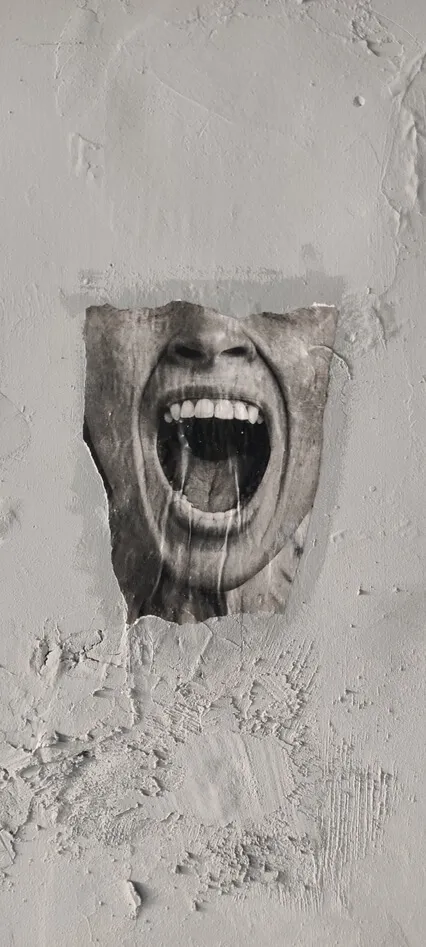
Did you know Shelly Duvall had to scream and cry 12 hours a day all day long while making The Shining?
You are listening to sound thoughts from Sound Science Soul.
A few days after I received some difficult news,
I pulled into the farthest back part of a large parking lot and screamed as hard,
Loud,
And as long as my breath could handle.
I needed a release from the stress,
From carrying the weight,
Being alone with this news,
And feeling like I have to take care of everyone and everything.
And that this was just another thing weighing me down and making life feel pretty miserable.
The back of a parking lot was the only place I could find where I didn't fear someone would call the police once I started screaming.
Don't think my fears and desire are justified?
A quick Reddit search says otherwise,
With a good amount of users posting,
Where can I scream and not be noticed?
Or best places to scream in and then insert the city name here.
And where can I scream into the void?
With most users commenting that they realize screaming most anywhere in their city,
Whether at home or in public,
Might raise serious concern and alert the authorities.
Just a few months after my initial parking lot screaming experience,
I found myself at a spiritual retreat in Sedona where a shaman encouraged vocal releasing,
Including screaming.
It wasn't long after the exercise that I found myself in tears sobbing.
The screaming definitely opened up something deep inside of me.
Apparently I'm not alone in the realization that screaming can be a potentially needed,
Maybe even healthy release when everything is just boiling underneath the surface.
My search history and results tell me so.
The history of screaming as a therapy is quite interesting.
But first,
Why we scream in the first place.
According to Psychology Today,
There are actually six distinct screams and they are classified into alarm or non-alarm screams.
They are anger and rage,
Which is an alarm scream,
Fear,
Which is an alarm scream,
Pain,
Also an alarm scream,
And the non-alarm positive screams are extreme joy and intense pleasure.
The last scream is grief and sadness and while also a non-alarm scream,
It is not a positive scream but a desperate one.
I suppose my scream in both the parking lot and with the shaman would be a grief slash sadness scream.
Simply put,
We develop the ability to scream as a survival mechanism.
But screaming in pain and wanting to express that outside of actually alerting anyone plays a whole different role.
Humans are unique in that they scream to signal extreme joy and pleasure.
Research from the University of Zurich suggests humans evolved with this unique use of screaming for positive purposes in order to signal to others the significance of an event.
Like the screams you hear when a band appears on stage at a concert or the excited reactions from fans at a sporting event.
So there is a social aspect here.
A person screams due to a certain emotional state due to a trigger in their environment.
By screaming they are letting others know how they feel.
It's a method of communication.
When another person hears a scream they may experience the same kind of excitement and scream along.
It is really a function of creating social bonds between people.
Humans are an interesting bunch.
In studies about screaming,
Brain imaging shows people respond more quickly and accurately to non-alarm screams.
They are able to process these types of screams more efficiently in their brains.
And this is still unclear and surprising because researchers have assumed the scream is meant to communicate danger and threats in the environment as a means of survival.
In primates and other animals this seems to remain true,
But scream communication is actually more complex and diversified in humans.
How we process screams is also different than how we process other sounds according to David Popol,
A professor of psychology and neuroscience at New York University.
Who along with his team at New York University are interested in researching scream science which is actually an emerging field of study.
So usually your brain takes the sound you hear and dissects it to make sense of it.
Who is making the sound,
What is their gender,
Their age,
Etc.
But screams are actually sent directly from the ear to the amygdala,
The part of your brain that processes fear and kickstarts the body's flight or fight response.
The sound is a jolt to our brain and makes us more alert,
Heightens our awareness and forces us to analyze more quickly.
Maybe this is why we use less defining factors,
It is a quick analysis it seems.
What characterizes a scream is called roughness or an acoustic definition of how fast a sound changes in loudness.
So normal speech ranges between 4 to 5 hertz while screams are between 30 and 150 hertz.
The actual higher the number or how fast the sound modulates the more terrifying the scream actually sounds.
So what happens to your body when you scream and maybe why you don't want to use screaming as an outlet?
In mechanical terms when you speak a stream of air passes through the vocal forwards and vibrates them in a controlled way.
Yet when you scream the air rushes out and the folds vibrate in a chaotic pattern.
But here's what's interesting too,
The effect a scream has on your body apparently doesn't vary whether the scream is real or simulated.
So in either case your body automatically sets off the fight or flight response.
While this reaction in your body is useful to help you survive in stressful or life threatening situations.
During this process your heart rate and blood pressure increase,
Adrenaline floods your body,
Respiration increases,
Your pupils dilate so they can take in more light and improve vision.
Your cortisol levels go up which is otherwise known as a stress hormone.
And all of these reactions are happening while you're screaming all at the same time.
Primal therapy,
A form of screaming therapy was created by author Janov,
An American psychologist.
It's a trauma based psychotherapy that helps repress pain,
Often occurring in early life,
Be brought to conscious awareness where it can be resolved through re-experiencing the events and fully expressing the pain.
Janov believed it provided a different benefit than talking therapy which deals with the cerebral cortex or otherwise the reasoning areas of the brain.
Because it accesses the source of pain within the central nervous system.
This form of therapy became popular around the 1970s.
It was during this time that John Lennon used the therapy everyday for six months by entering a dark sound proof room in Janov's West Hollywood office where he would scream loudly and violently.
And it was through this work that many songs were inspired for Lennon's debut solo record,
John Lennon slash Plastic Ono Band.
The actress Shelley Duvall,
Otherwise known as Wendy in The Shining,
Told Robert Ebert in a 1980 interview that,
Quote,
In my character,
I had to cry 12 hours a day all day long.
There must be something to primal scream therapy because after the day was over and I had cried for 12 hours,
I went home very contented.
The effects of her screams were potentially cathartic to her but now maybe not so much for the people watching the movie.
Psychotherapist Dr.
Sherry Jacobson says the benefit of scream therapy is exploring and releasing our emotions in a safer way.
She explains that many mental health conditions stem from unexpressed emotions.
If we don't give enough space to these emotions,
Then we'll come up against psychological difficulty.
Yelling is even encouraged by some who practice traditional Chinese medicine as it is good exercise for the liver and lungs.
Because traditional Chinese medicine focuses on the energy of the body and its impact on the various organs,
Practitioners believe frustration can cause stuck energy and impact the well-being of the liver.
Master herbalist Dr.
Nan Lu even suggests an exercise called the tree shake to improve your liver function.
You simply stand tall,
Bend your body towards the floor,
Move your body upwards swinging like a tree in the wind and scream releasing all of your frustration.
That's an interesting exercise.
Try that at home.
Studies have shown screaming can even increase physical strength,
Particularly when used during activity and can even be used as a weapon.
So researchers at Iowa State University measured the hand grip strength of martial artists when they were both performing silently and when using a breathing technique where they sharply exhale and produce a short loud yell.
When they produce this yell,
Their hand rail strength increased by about 7%.
This performance enhancement technique is similar to when tennis players grunt before hitting a ball.
Studies have shown the release helps them stabilize their core and put more force into the hit.
This also raises confidence and you may be gaining power over someone by screaming.
Psychiatrist Dr.
Peter Colafura says screaming can release endorphins and result in a bit of a natural high similar to what is termed the runner's high.
So screaming may make you a little high.
Yet,
Scream therapy does come with some warnings.
Psychotherapist Dr.
Sherry Jacobson says rage is often violent and uncontrollable.
Screaming won't necessarily address the underlying problems or help you understand why you are angry and it may even perpetuate negative feelings.
So a healthy balance of strategies to deal with negative feelings is in order.
The fact that screaming sets our system into fight or flight mode might be a deterrent considering those with trauma already have a nervous system that is essentially stuck in fight or flight mode.
Even if your system is not stuck in fight or flight,
That state is most useful when you really need to respond in life threatening situations for example.
But too often being in fight or flight mode produces constant anxiety and overreaction to stimulation.
It can lead to digestive issues,
It raises cortisol,
Leads to an increased risk of heart disease and other health issues due to chronic stress.
Still convinced some screaming release might be a benefit to you?
Well,
There are some suggestions of where you can do so openly.
Many suggested by random people all over the internet who feel the need to scream.
Ride a roller coaster as many times as needed,
Screaming your head off the entire time,
Go anywhere a train passes by and scream,
Scream into your pillow.
I've since discovered this trick and use it at a moment's notice.
Use a scream silencer.
Yes,
This exists and you can find several options on Amazon often named scream jars.
You scream into it and it reduces the scream to a normal speaking voice level.
Join a metal band is another suggestion.
Scream underwater,
I'd be a little concerned about drowning or ingesting too much water.
Get a job at a restaurant and use the walk-in cooler to scream in.
Find a music room or soundproof a room in your house and scream there.
Or venture very far out in the woods away from all the houses and any sign of human life if you can find such a place near you and scream away.
There's also options specifically intended for screaming.
There's the emergence of scream clubs.
These are actually websites where you can scream with others.
So not only can you hear yourself scream,
But you can hear the collective screams of other participants.
It's a community built on the need slash desire to scream.
You may still need a soundproof area in your house,
So if you really want to scream it out.
Scream rooms.
So there are a few actual public scream rooms that seem to exist except for the scream room at a book shopping cafe in Egypt.
Here you can enter the dark sound room,
Soundproofed private room for 10 minutes and scream away.
A drum set is also provided if you want to beat on it while screaming.
That would be fun.
Rage rooms.
While most cities don't have a scream room,
Several cities now have rage rooms where you can pay a fee to break stuff in a room and you can feel free to scream while doing it.
Some offer stuff to break or allow you to bring your own stuff and some even offer special options like the pissed off package.
Pissed off in all capital letters.
Package at the exit Canada anger room where you can smash TVs,
Computers,
And other larger items and electronics.
Or at the break bar in New York City where they not only have a rage room,
But in their bar you can throw your glass and break it after you finish your drink.
And I imagine letting out a guttural scream while doing so would be totally acceptable in an establishment like this.
Looks like you need Iceland is another idea.
Inspired by Janov's scream therapy and created during the height of COVID in 2020,
This website by Promote Iceland encourages you to let it out by recording your scream on the website and then they will release the scream into Iceland's wide open land.
Listening to some of the already recorded screams on the website will also bring some laughter,
Another good form of sound medicine.
The Primal Scream line,
So this was also influenced by Primal Therapy.
The New York Times created a hotline where you can call and scream it out or even if you just want to vent and cry for up to a minute.
You call 212-556-3800.
Clearly there are more options to scream than I ever realized.
After finishing a recent Estatic Dance class,
Another way that I really stuck energy in the body,
The instructor shared with me his own experience with screaming women.
He explained that he's facilitated workshops where women are encouraged to scream at men all of their harshest feelings,
Whatever comes up,
Often related to trauma related to male figures.
He said it almost always results in the women falling into his arms and crying.
It is a release of their trauma.
And that sounds really beautiful.
A way these women can release pent up emotions around what has been suppressed,
Yet know these men,
Such as this instructor,
Are there to hold space and accept whatever is released,
Ensuring these women they are in a safe place to do so.
Hearing his story and imagining what these women experienced and opening up their wounds and sharing made me want to experience that kind of release,
That level of safety and vulnerability too.
I imagine when most people are screaming,
Their intent is also this kind of deep release.
From listening to Iron Maiden on a Care Bear Radio with my best friend to becoming a music promoter slash journalist slash podcast host,
And then to discovering the importance of sound and how to use sound to heal and sharing it with you to help you,
Thank you for listening.
I appreciate each and every person who listens and receives something out of this knowledge.