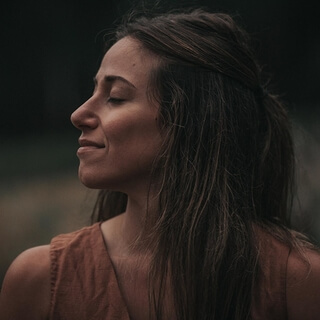
Hello and welcome.
Welcome to Shiva Shastri Night.
I'm Arshad.
I'll be guiding you through a practice and we'll start with pranayama and then we'll sit for a little while in meditation with the option to incorporate mantra into our meditation practice.
It will be an internal mantra repetition.
So as you arrive,
I welcome you to close down the eyes or at least soften your gaze.
And before we begin any further,
I would like to pause and acknowledge the land which I'm currently practicing and teaching upon.
The traditional custodians of this land are the Wurundjeri people of common nation.
I recognize their continued connection to land,
To sky,
To waterways.
And I pay my respects to all Aboriginal,
Torres Strait Islander and global First Nations people around the world,
Recognizing and respecting all elders,
Past,
Present and emerging.
You may wish to also acknowledge or after this session even research who the traditional owners are on the land where you live upon.
I thank you again for joining.
And today we will be working with Rana Shakti in all her forms.
And we'll be working with a particular breathing practice.
And this is one that I was introduced to by my teacher Sally Kempton.
So I thank and recognize her for sharing so much wisdom.
And all my generous teachers,
All of their teachers.
Let's begin by just preparing ourselves in our seat.
Now if you have any props nearby,
I'm just sitting on a little cushion here.
You might have a bolster,
You might have a blanket,
A yoga mat,
Anything that you could either fold or roll to just place underneath your hips.
And don't worry if you open the eyes for a couple moments here to situate yourself or even to pause this recording and get yourself sorted for your seat.
That is fine.
There's no rush.
And I like to elevate the hips a fraction higher than the knees to allow the natural curves of the spine to begin to take shape while also prompting an upright spine.
And we'll go through that step by step.
So I'm sitting in cross legged,
Quite a narrow tight cross legged.
You might sit in a wider cross legged like so.
You might sit in a variation of Virasana.
And either way,
We arrive.
We start to notice the parts of our body that are connected to ground,
To earth.
Perhaps the sides of the feet or the tops of the feet,
Depending how you're seated.
Perhaps areas of your low legs,
Maybe even towards the knees.
Maybe parts of the upper leg.
Depending where your seat also connects to your prop.
From here I'll direct you towards noticing your pubic bone.
Sometimes it helps if we touch this region.
So don't worry if that feels something that would be helpful for you.
You can try that.
And then we notice the two sitz bones on the backside.
And the pubic bone and the two sitz bones,
They make a lovely triangle within the body.
Three points.
You can imagine them meeting.
You can even superimpose that triangle down in the pelvic region.
And as we start to play with this space,
We can then bring our attention to the spine.
And we want to sit the spine perfectly perpendicular to this triangle.
Nice and upright.
But also with a level of softness.
I know that might sound a little contradictory.
We want the crown of the head to be upright.
The spine to be long.
Then the body to relax into its natural shape in the seat.
You might hear some background noises on my end since I'm outside today for our session together.
You might hear some background noises on your own end.
Maybe practicing with housemates or family members or pets around.
And as we arrive with our eyes closed or soft,
As much as the external world around us is present and exists,
We start to enliven the internal gaze.
We start to familiarize ourselves with our internal landscape.
With all its ups and downs,
With all its inconsistencies,
The joys,
The grief,
All is welcome here.
All is integral to our journey of exploration.
So now we'll begin with our pranayama practice today.
It's a little bit different.
So being gentle with yourself if it's unfamiliar.
And even if it is familiar,
Some days we just need a little extra empathy towards ourselves,
Towards our mind and our body.
So taking that if you need it.
The pattern,
The rhythm of this pranayama is as you inhale,
The breath will enter through the crown of your head,
The very top.
It will travel flowing downward,
Arriving to the pelvis.
And as you exhale,
The breath will travel upwards in the reverse direction to the crown of your head where it exits.
We will do that a fair few more times together.
Inhale,
Breath enters through crown.
It travels just in front of your spinal column,
Going all the way down,
Imagining the pelvis as a bowl and it arrives to the center of your pelvic bowl.
Exhale,
The breath moves upward,
Traveling,
Journeying to the crown of your head where it exits.
Inhale breath flows in and it's traveling to muladhara chakra,
The root chakra where the earth element resides.
And on the exhale,
It's traveling your breath,
Your awareness to the crown of your head,
Sahasadhara chakra,
All the way to extend outwards.
We'll continue like so.
Inhale,
As the breath moves down,
It's grounding,
Stabilizing us to our seat,
To the earth.
And on the exhalation,
It's energizing,
Uplifting us as it journeys to the crown.
We continue with this pathway in sushumna nadi,
The central channel.
And as always,
If my pace is too fast,
Too slow with the rhythm of your breath,
Then you can always stay with the inhalation,
Exhalation pace that you're currently working with.
With each inhale,
Can you even allow yourself to sink with the lower body towards your seat,
Resting into the earth element?
And with each exhale,
Can you lengthen the spine and crown of the head a fraction more while keeping the chin parallel to the earth?
Sahasrara chakra is actually transcending above the elements.
But if we chose to associate it with an element that it's closest to,
It would be a kashatatva,
The ether or space element.
So this spiritual center of the crown chakra is a little less tangible.
It might feel a little airy or spacey.
But that is motivating us to energize and uplift a fraction with this breath.
And the reason we practice this breath when we're working with shakti and prana shakti is the inhalation is traveling to the root chakra where it is said that kundalini sleeps dormant coiled around herself.
And so we're sending the activating inhale to that space.
And our exhale is energizing,
Uplifting to the crown where one day kundalini might awaken and arise and reunite with Shiva.
These two inexplicably connected interwoven poles aspects of reality.
We have shakti which is how our manifest universe exists all around us,
How we exist in form,
The creative dynamic power that is pulsating in all things,
All beings,
All aspects.
And then we have Shiva,
Awareness,
Consciousness,
All that aids the ground behind nature.
These two shiva shakti are one,
They're eternally connected in a divine dance and rhythm.
One cannot exist without the other.
And so we practice on this path where potentially our aim,
Our focus is to one day bring them to reunite within us.
And we can make little steps along that path through our journey.
For most of us it doesn't happen overnight,
Even after years and decades of practice.
This might still be our goal,
Even at the end of this lifetime.
So we can arrive again and again to our seat.
And so still working with the inhalation flowing down to the base of the spine,
Even below the base of the spine to the center of your pelvic region and the exhale traveling up the central channel to the crown of your head,
Maybe even exiting above the crown of your head where it is said that sahasvara chakra actually resides about six to eight finger widths above the top of your head.
Then as we travel towards our meditation practice together,
We're going to continue working with this pattern of breath.
And you might wish to stay with the breath rhythm.
You might even notice that as your mind's eye focuses on this pranayama that a gentle visualization comes in,
It could be a light,
It could be a pixelated vision,
Could be a spiral that you see and feel as the eyes are closed.
You might move as the breath travels between these two energetic centers or it might remain as a stable center point in your eyes closed vision.
We all have slightly different ways that we might perceive meditation and experience our prana,
The life force,
The vitality that runs through our being through all of our bodies.
And it's Shakti who's responsible for the breath,
The thoughts,
Movement.
She is within us,
Breathing us into existence.
The optional mantra that we will repeat,
We've got some outdoor friends that he'd probably hear.
The mantra that we'll repeat today is three short bija mantras.
Sometimes they're translated to mean seed syllables.
And each of these contain a particular type of energy.
So we'll be repeating om,
Rim,
Shrim.
And I'll give you more instructions in a moment.
But just to translate each of those for you,
Om,
Which you probably know,
Is the primordial sound,
The sound that was at the beginning of the universe coming into existence.
Rim is the creative manifestation of Shakti and shrim is abundance in form that relates to Mahalakshmi.
Rim,
Shrim,
Very common in goddess Shakta practice and worship.
There are other little bits that we can add to the end of this mantra to make it an indication for Durga or for Lakshmi as two examples.
But today we'll work with these simple three syllables.
The pattern of breath is still the same.
Inhalation enters through the topmost crown of your head,
Traveling to your pelvis.
Then exhalation moves from muladhara chakra to sahasvara chakra in the reverse direction.
Option to add on silently as you inhale om,
Rim,
Shrim,
Breath still traveling down to pelvis.
Exhale,
Traveling to the crown without any mantra,
Just allowing that to flow.
Inhale om,
Rim,
Shrim to your pelvis.
Exhale,
Breath moving in the reverse to your crown.
We continue like so.
Inhale,
The mantra is welcomed into the crown of your head,
Traveling through Subshukhna Nadi to where the Goddess,
Where Kundalini resides in the body.
And the exhale is our attempt to send Kundalini upwards.
It doesn't have to happen today.
We can have this intention,
This guide in our practice,
This hope,
This desire,
And we may eventually have the outcome that we wish.
I'll leave you for a little while here together as we enter om,
Rim,
Shrim to Subshukhna Nadi.
And as we exhale,
Finding energy as the breath moves up.
Traveling like so.
You might notice a gentle sway,
A gentle rhythm that just comes into the body without you necessarily consciously bringing that in.
And that's fine.
Allow it to take those gentle rhythms in the body.
At any point,
The mind begins to wander without any frustration or judgment or doubt.
Or disapproval.
Can you return your attention either to the pattern of breath or to the mantra on the inhale,
Moving with that same pranayama?
It is the nature of all of our minds,
Myself as well,
Quite often to be distracted.
But we try again and again to guide it to our intention,
To the essence of our practice,
To the nature of our being.
If you're working with the mantra,
One final time allowing the shakti that's within these syllables to infiltrate your body.
Om,
Rim,
Shrim.
And as you exhale,
Sending the awareness up the central channel,
Out the fontanel,
The crown of the head.
From here,
We'll let the mantra go.
We'll trust that it's beginning to work its grace in your being.
And we'll just allow the pranayama to travel in a couple more rhythms.
And the next time that you inhale,
The breath will still travel to the center of your pelvic region.
But as you exhale,
We'll allow the breath to land in the heart center now.
So imagining where your anatomical heart organ is on the left-hand side,
But coming right to the center of your sternum.
This is the energetic heart in the yogic texts it's commonly referred to.
And now the inhale and exhale will travel between root chakra,
Muladhara,
And anahata chakra where my hand is resting,
So if you need a little visual cue,
Feel free to open your eyes for a moment.
Just a couple more rounds.
Inhale to pelvis,
Exhale to the heart center.
Noticing that breath feels a little different when it moves between these two spiritual centers.
For me at least,
It's quite different than when we're going to the crown or just above it.
It feels a bit more embodied and a little bit more tangible and solid.
When you're ready,
The hands can come to meet prayer at the heart,
Anjali-mucchara,
Just in front of where we were working.
And we're going to end our practice together today with a repetition externally of the mantra that we worked with.
You're welcome to join in from wherever you are in unison together,
Or you're welcome to just sit quietly and observe.
We take a slow steady breath in,
Slow steady breath out.
From here we bow the head in deep honor and gratitude for the teachings and practices of yoga.
Remembering and acknowledging the lineage of these practices.
Sending our greatest,
Deepest love to all of our teachers,
To all of their teachers for sharing these gifts.
And for me,
I always thank Shiva for riding the way on my path of tantra and to Shakti for holding me again and again in her loving embrace.
I thank you so much for joining when I bow to you.
When you're ready,
You can gently open your eyes.
And just depending how much time you have today,
You might like to lie down and take Shavasana for a little while.
You might like to practice legs up the wall pose,
Where you can go close to a wall and set your legs up the wall.
It's also called the Parvati Karani.
You may like to journal or move a little,
Maybe a couple sun salutations.
Whatever feels that it will be beneficial to you.
Perhaps later again in your day or in your week,
Trying this practice and noticing if we can come again and again to the presence,
To the energy that's within us.
How we can live a more embodied,
Free life.
It's hard,
But we can practice again and again.
Thank you very,
Very much for being here with so much love.
I look forward to seeing you soon.