Hi there,
Welcome to Serenity Wellness Podcast,
Episode 100.
I'm surprised we're at Episode 100.
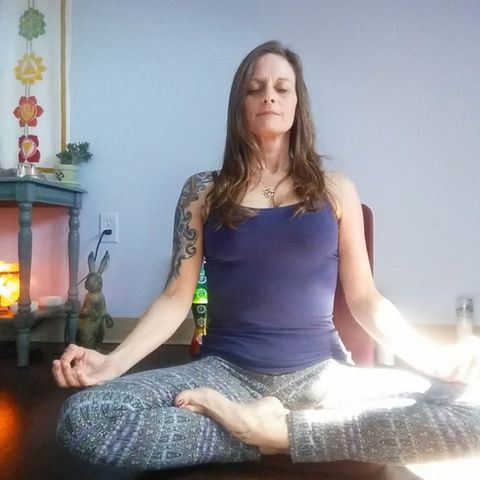
And I wanted to make this a meditation.
But I also want to wrap up the therapy notes series.
So I will put a meditation out the next episode many listeners listening to old meditations that I have.
So I figured I'd give you a fresh one.
So let's move into part four of therapy notes.
I know so often it can really be a challenge when it comes to medical planning,
Understanding mental health treatment,
The planning of such and talking to or advocating for self is such a huge part of that,
That people struggle with,
They feel kind of like their words can't come out almost like they get in an anxious cycle in the body,
Or they just get into an autopilot cycle,
They might even go in with a plan of questions to ask and things that they know are important.
And then it gets just lost.
It's almost like test anxiety,
Right?
You'll study and you'll go down and take the test and you know the information is there.
And then it's not.
It's kind of like that.
So let's talk about that today.
I want to cover some information here examples for you and give you some key questions that you want to be asking.
I gave this example was definitely in episode one when I shared a little bit about myself and probably maybe in the episode about grief.
If you haven't heard and you're new here,
I lost my mom,
September 11 situation that went down here in the US in 2001.
Interestingly,
Here's a little side note of how the brain goes as I'm talking through this here,
When I've had to share the story for one reason or another about my mother,
I have always had and even said that I was 25 when I lost my mom.
It was not that many years ago that I was having a conversation with my daughter and it clicked in my brain that I was actually 26 when I lost my mom.
But for so many years,
It was such a tragic situation that happened.
She was not in the buildings or anything like that.
But she ended up having a brain aneurysm while watching it on the television.
And I was in crisis working in crisis at the time I went to her when she called me.
But when I got there,
She was already in a coma.
And I had to resuscitate her while I was waiting for the ambulance,
But she just never came back to us.
And it was such a tragic moment in my life that I literally forgot how old I was and what does that have to do with what I'm talking about here,
I'm going to get back to that now.
So when I was experiencing that I was working as I said,
I was working in crisis,
But I was working in a mental health hospital had to get like their yearly physical or whatever that you had to do for employment when I went in to my primary care doctor,
Which I respect and I like her,
But she was pushing for me to get on Prozac.
Even calling me on the phone after my appointment with her when I explained I'm okay that I am feeling depressed.
I just lost my mom tragically,
Unexpectedly,
A few months after,
You know,
At that time I was married,
It was a few months after my wedding.
And so it was just like a big kind of burst open of obviously some emotions for me some trauma for me,
But I was not willing to numb myself out with a medication as a solution to my grief.
Depression is a part of grief,
Anger,
Bargaining,
You know,
It's all a part of the grief process.
Well,
Fast forward to now in my life,
I've taken a month off in February from recording.
And there was a couple different reasons when I just had to think about like how I want to get some of this information out that I really feel like I need to talk about here with everybody.
But the other part was I was kind of going through just grief.
Because you know,
Molly and King I shared a little bit about our dogs a couple episodes ago.
Well,
They've both been laid to rest and my daughter and I are at peace with that.
I mean,
It was it was time,
You know,
For them to be out of their pain as they were,
You know,
Quite elderly,
Kind of almost in a bit of hospice care with us over the past year,
But I just needed to step back for a little bit.
And that's okay.
Well,
When it happened,
Though,
I was working with a homeopath for the dogs.
Alright,
So real quick,
I had to pop back in here because I record re recorded the part where I said I was seeing the homeopath because I wanted to specify if you're only listening on one of the podcast platforms versus YouTube,
That I was seeing the homeopath for dogs.
On YouTube,
I have it on the video like for the dogs.
So I wanted to record that to specify and when I just went to put in that recorded part,
I just played a second ago,
Like I went to see the homeopath for the dogs.
I heard that there's a dog that barks when I say the word dogs.
There are no dogs here.
As I just mentioned,
The dogs passed.
So if you hear that,
I don't know,
Let me know that just,
You know,
Kind of got my brain a little twisted there for a moment and felt so much so that I needed to record this part now to add in and let's get back to the rest of it.
And they email me so kindly about,
You know,
Sorry for the loss.
But they also recommended a remedy that would help take away kind of the edgy feeling of the grief.
Again,
Me thinking this is so interesting,
And I'm not cool with taking anything for my grief.
It's a part of the process.
And so for me,
I spent time in nature,
I spent time with my daughter,
I spent time in reflection,
Went dancing with some friends just like did things that were important for me to get rebalanced,
And to also give respect and compassion towards the emotion I was feeling.
And for me personally,
I'm just someone who doesn't really have a problem advocating for myself.
If you do have a hard time advocating for yourself,
Not everyone feels as comfortable doing that.
Especially when they are meeting with a doctor.
And that's why what I'm sharing here is really important for you to have awareness around so that you can be an advocate,
You can ask the right questions,
And you can get the right team of professionals to help you work through things.
Because many times when people go to a doctor,
And they might talk about symptoms they have with their mental health,
They will oftentimes suggest a medication,
But there's not any additional information that is given with it.
This is not 100%.
I will tell you there are many doctors,
For example,
Here where I live,
That they do still give a list of therapists for individuals to reach out to to get into therapy.
But I will also tell you that there are some places here,
Mental health outpatient practices,
That they will not let you see a therapist,
Unless you meet with a psychiatrist and get on some medication.
And I will 100% say I 100% disagree with that type of formula.
I really can't conceptualize ethically from all the things I know as a therapist,
All the places I've worked,
How that could be a sound business plan,
When you are a mental health establishment,
That you're not going to let somebody see a therapist unless they get on meds,
Meds that they might not even need,
But also medication that's going to change their brain structure,
That oftentimes when it is prescribed,
They don't tell you about side effects.
They don't tell you about the danger even skipping one dose,
Some of those SSRIs,
The antidepressants,
You skip a dose,
You're suicidal.
That is how extreme it is.
Or they don't explain to you what the titration plan could be,
Or what a short term plan of using a medication which can be a tool for some people that is helpful,
It is not supposed to be the only thing though for your mental health adjustment,
And it is not supposed to be a long term thing.
It's like melatonin.
Melatonin,
For example,
Can be really helpful to help people to get into sleep.
Did you know though,
It's supposed to only be for seven days.
And if you take it too long,
It causes pretty significant depression,
Or how that inpatient hospital that I worked at,
Their answer for children,
Like four years old,
Five years old,
Who are in some strange place,
Often there because the extreme family dysfunction in their home at that age.
And their answer was to give them Benadryl at night to make them fall asleep.
Or I heard on the radio not that long ago,
Some commercial for some gummies for children to get them to go to sleep at night.
These are not the go to first tool maybe to look at here guys,
These things have long term effects.
I gave that example about it can lead brain situations where you could get like feeling like you're being struck by lightning in your brain for a year.
And that's even with slow titration,
You're on medication,
Do not stop the medication.
And if you want to stop it,
Get support to stop it.
So you're doing it the right way.
Because if not,
It can cause some real significant stuff.
So please do not just stop taking a medication despite all that I'm covering here,
You can begin to build these things as you're still on the medication.
And then as they get built,
Then you can work with someone when the time is right to switch that as you're supplementing with something else.
As I said,
I'm a mental health medicine provider.
And what that looks at too is supplementation with herbs and different food,
And different things that you can take as medicine,
You want to be having these discussions.
So when you're prescribed a medication,
You want to be having the discussions,
What's the plan?
What are side effects to be aware of?
What happens if I miss a dose here?
And you know,
When are we checking in again to see about titration of this plan?
How will we know?
So have those discussions,
Because a lot of times I'll also hear from people how they'll go in,
And they have to unfortunately have this conversation with their doctor,
And they'll have to have this conversation with their family and using the broken record technique with just repeating the same thing,
Because they'll go in and then they find that the psychiatrist is talking them into well,
Let me just increase that dose.
Or let's just try this other medication.
Or when they are,
You know,
Getting answers to these questions,
And they're like,
Well,
I don't know.
I mean,
That was a really long list of side effects that you know,
We've got,
We got a medication for those side effects.
And then you look at those,
And you're like,
Oh,
I don't know.
I mean,
I'm feeling kind of anxious here.
When I look at this,
I mean,
Look at these side effects.
One of the side effects is potential.
You're like,
Oh,
Don't worry,
We got a medication for that,
Too.
We'll give you something for the anxiety around the fear of dying from the side effects of the medication we just gave you.
So be clear,
Have the information to have the discussions so that you can be the biggest advocate for yourself and your health.
And I do just want to add real quick here to that I'm giving you a perspective from the United States,
Right?
I know I have people who listen all over the place.
And so I do want to share that I'm also very aware that this is not the case in some places.
You know,
I know,
For example,
There's not even like commercials about medication.
We're here we bombard,
Bombard,
Bombard.
I heard from someone over in England,
How their program is very different how you have to see a therapist in order to get on medication.
And when you're on medication,
It's a pretty very stringent plan of what that looks like.
And part of that plan is the plan to actually get off the medication as well short term plan as a tool to help in the therapeutic process as needed.
And do not even get me started about Canada,
Because I feel like I need to do a whole episode about that.
I've been gathering information from therapists in Canada,
Because I'm absolutely appalled about this whole idea of let's just like help people themselves if they're having a mental health distress.
But I'm not going to digress just take me a whole long time to talk about.
So I know that I'm only giving you a lot of information from what's going on and what's going down in the United States.
And I know it's different other places.
And sometimes it's real different and not in a good way.
I want to also give a quick thank you to that call out I did to ask you to please subscribe and like to share the information more.
Thanks so much for all of you who have done that and set donations.
I really appreciate all of you.
It just continues to go to support this and get more information out there.
You can also hop over to my other YouTube channel mental health therapy tools and I put a new episode out there.
It's a motion regulation technique,
Percentage of change.
I look forward to sharing the next bit of information with you and I'll see you back here real soon for meditation.
Have a good one.