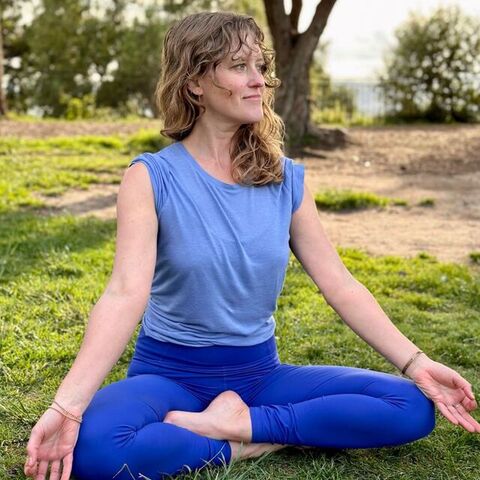
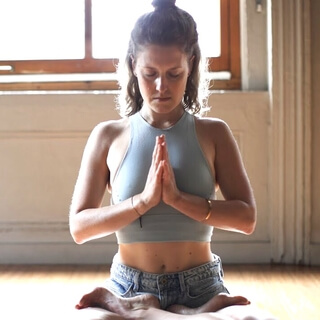
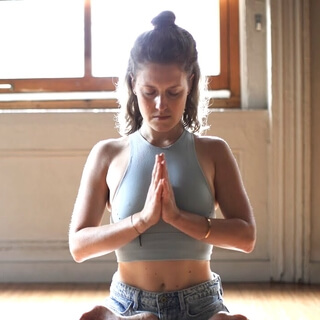
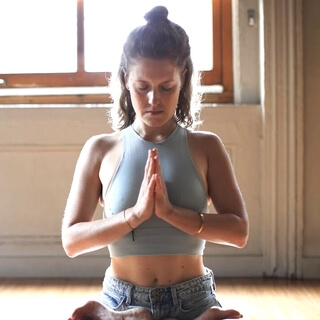
Today I thought we would do a meditation on compassion and have a brief chat about it.
And this is something I've been thinking about a lot,
Especially right now.
And it goes both ways for ourselves and for each other.
So how do we do this and what is this even?
I really enjoyed this quote from Ram Dass.
He says,
Until you can allow your own beauty,
Your own dignity,
Your own being,
You cannot free another.
So if I were giving one instruction,
I would say work on yourself,
Have compassion for yourself,
Allow yourself to be beautiful,
And all the rest will follow.
Maybe easier said than done.
But it's especially poignant right now when we have no choice but to be at home with ourselves and our challenges.
And this is whether or not we are alone or quarantined with someone else.
And when we're all facing really similar fears,
When so many of us are friends,
Loved ones,
Even people we don't know,
Are suffering around the world.
So compassion is how I understand it essentially,
Where benevolence or wishing someone well meets suffering.
They come together.
For example,
We know that we have suffered.
We've been there.
And so we are able to act compassionately towards another who is also suffering because we can relate to some degree.
And even if we don't agree with that person who is suffering or like we may not like them very much,
We may not get along with them per se,
We can still have compassion for the circumstances because we too have suffered.
We can touch that.
We can access that suffering.
And perhaps we can even forgive them to some degree for their actions,
Of course,
Without breaking our own boundaries of safety and wellbeing because we know that what they're doing comes from a place of pain.
So that to me is kind of like what compassion is.
Tara Brach says that self-compassion begins to naturally arise in the moment that we recognize we are suffering.
It comes into fullness as we intentionally nourish our inner life with self-care.
So it's kind of like looking at our suffering and saying,
Oh,
I care about this.
I care about you.
I care about this suffering,
This unease,
This challenge for you.
And when we can do that for ourselves,
We can maybe more easily extend that to someone else.
And as I mentioned before,
Now if ever is the time to look inward and recognize that we are all in a similar experience,
We can all relate to the waves of these emotions.
Another quote I love from Tara Brach.
She says,
If we are drowning in grief or sorrow,
Arousing compassion helps us remember the love and connection in our life.
Rather than pushing them away,
We free ourselves by holding our hurting places with the unconditional tenderness of compassion.
Compassion means to be with,
Feel with,
Suffer with.
Classical Buddhist texts describe compassion as the quivering of the heart,
A visceral tenderness in the face of suffering.
In the Buddhist tradition,
One who has realized the fullness of compassion and lives from compassion is a bodhisattva.
The bodhisattva's path and teaching is that when we allow our hearts to be touched by suffering,
Our own or another's,
Our natural compassion flowers.
The bodhisattva's aspiration is simple and powerful.
May all circumstances serve to awaken compassion.
So yes,
We all long to be heard and understood and seen.
And practicing metta,
Something that I've done also on Instagram before,
Or this act of loving kindness,
Is a really sweet and simple way to begin a compassion practice by acknowledging ourselves and each other exactly as we are,
And then extending a feeling of friendliness toward all beings,
Toward ourselves included,
Without expectation or conditions.
And then compassion comes into play when we are not only offering well wishes,
But when we can witness and touch the suffering of ourselves and one another,
And we can care for that suffering.
So we do this without trying to fix anything,
Without anything being different than it already is,
Without us being different than we already are.
We're just being aware of our suffering and not beating ourselves up about feeling painful feelings,
Per se.
We're just,
Again,
Caring for this suffering that we're experiencing.
And it's really easy to find ourselves in this trance of comparison,
Of trying to be something better,
Trying to do better,
And especially with time on the interwebs,
Comparing to other people,
Especially if they're in your industry,
For example.
And this can be also a source of suffering for ourselves.
It can be a source of suffering for other people,
And maybe that's why they're acting the way that they are.
So when we can recognize this in ourselves,
We're able to touch that suffering,
For example,
Care for it,
And hopefully extend that sense of compassion towards someone else.
So we're all just trying our best,
Essentially.
This is not like something,
It's not a one and done.
You get it right and you move on and everything's cool.
This is why I love meditation and yoga,
Because it's a practice.
You can return to it over and over again and practice this idea in the act of meditation,
And then when you go out into the world and something happens to you or someone else,
Or you are suffering or someone else is suffering,
You can remember,
It's like an imprint,
The practice of this compassion meditation,
And hopefully land in that place without so much force,
Like a little bit more naturally.
It becomes more of an autopilot.
And compassion can look different for everyone,
Especially self-compassion.
Perhaps it's the form of taking a nap when you feel tired,
Honoring that you need that in some way.
Maybe it's championing yourself to push forward if you need extra boosts and you feel like you can't go any further.
Maybe it's cooking yourself a nourishing meal,
Taking yourself out.
Could be as simple as placing a hand on your body and saying,
I love you,
Thank you,
You are a miracle.
I care about your suffering.
It's up to you.
It can be an act of rest or conscious action so long as you are holding yourself with loving,
Unconditional awareness.
When we can connect to that same love that we want to give to someone else,
Like someone who is really easy to love,
We might be able to more naturally turn that love to ourselves just by being aware.
So I encourage us all to consider at this moment,
You don't have to have an answer right now,
But just consider what is it you long for most?
You can close your eyes if that helps you get connected.
Like really,
What is it in this moment?
It might just be in this moment.
It might not be in general.
It could be in general.
What is it that you long for most?
And so noticing this longing and these desires without judgment or conditions and being able to experiment with creative ways of offering self-compassion is this ongoing act,
Practice,
Experiment.
It's an ongoing journey of playful curiosity and unconditional love with room for road bumps and detours along the way.
So let's try it.
We'll revisit the metta loving kindness meditation and let that evolve into compassion.
Find a comfortable seat.
You can stand if you like.
And either close your eyes or fix a gazing point in front of you that feels comfortable and alert,
Aware,
Attentive in an easeful way.
Just letting each incoming breath guide your attention further and further back into yourself or rather deeper and deeper inward,
Allowing you to become more and more at ease with each exhalation.
Just settling into your body here.
As the eyes relax into the head,
Allow the attention to flow throughout the body as you scan from the floor upward.
Grounded in the seats and the legs.
And then slowly,
As you relax into your body,
Allow the attention to flow through your body and allow the attention to flow through your body.
Grounded in the seats and the legs.
Ungripped there.
Long and spacious in the spine and the collarbone.
Just releasing any tension in the shoulders,
The neck,
The jaw.
You can let those places move if you need to.
Softening the skin of the eyebrows and the forehead.
And finally arriving at the top of the head,
Connecting the center line from the bottom up.
Breathe into that space.
Notice the inhale and the exhale as they move in and out with ease.
Just being aware of yourself here,
Your breath,
Your experience.
And then slowly,
As you relax into your body,
Allow the attention to flow through your body.
If it's helpful,
You might notice where in the body you feel the breath.
Might be the chest,
The ribs,
The belly.
Just letting it be natural.
Guiding the attention to the breath can be a really simple yet powerful tool to help centralize and return to the present moment if and when you need to.
Begin by envisioning the space around you,
The one that you're currently in or somewhere where you feel safe and comfortable.
In this space,
Begin to envision or think of someone you love where the love is easy,
Not complicated.
It could be a family member or a teacher,
Being a pet,
Whether they are with us or have passed on.
Let's start where it's easy for you to open your heart.
You can picture what they're wearing or how it might feel in general just to be seated across from them here.
You might begin now to open your awareness to receive all parts of this person.
Their joy and sorrow,
Their triumphs and challenges.
And if it feels comfortable to do so,
Allowing it to touch somewhere inside of you that can relate to these shared human experiences.
You can imagine the moment you're in your heart to relate to these shared human experiences.
Just recognizing that you both have joy and sorrow,
Triumphs and challenges.
This part of your entire person.
Now as you recognize this person's hardships,
This person sitting in front of you that you love easily,
Fully.
Gently recite inwardly the following traditional metta phrases directed toward their wellbeing.
May you be filled with loving kindness.
May you be safe from inner and outer dangers.
May you be well in body and mind.
May you be at ease and happy and free from suffering.
May you be at ease and happy and free from suffering.
Breathing here,
Hold this loved one with a compassionate heart with genuine care for their suffering alongside their wellbeing.
You can of course adjust the words and images in a way that best suits you today,
That opens your own heart.
Allow these feelings to permeate your body and mind.
Allow the sensations to flow just like the waves of the breath.
Nothing is stuck.
Can you imagine how it might be for this person to be able to be in this space?
How do you feel about this?
How do you feel about this?
How do you feel about this?
Can you imagine how it might be for this person to experience your blessing,
Care for their struggles,
Love without expectations or conditions,
Self-acceptance,
Peace,
Joy and freedom.
Guide the attention back to your breath.
Inhale,
Exhale.
I'm loving this image of this person in front of you.
Release,
Again envisioning the space that you're in or something that makes you feel comfortable and safe.
Now bringing yourself in front of you,
This reflection of you as you are today.
Breathing in and out.
And looking now at yourself with the same well-wishing you offered to the one you love.
Recognizing your joys and suffering,
Your triumphs and challenges with genuine care for all of them.
Holding all of this in kindness.
And if this is enough for you here,
You might just gaze gently,
Sweetly at yourself,
Caring for your hardships and your well-being,
All aspects of yourself.
Or you can re-repeat the phrases of loving kindness toward yourself.
May I be filled with loving kindness.
May I be safe from inner and outer dangers.
May I be well in body and mind.
May I be at ease and happy and free from suffering.
If it's helpful,
You might envision or imagine your loved one sitting in front of you who you began this meditation with,
Gazing back at you with the same well-wishing,
The same compassion and care for your suffering and your joys alike.
They also want you to be held in this kindness to be safe and well and happy and free from suffering.
You might even notice or sense where and how that luminescent love feels in your body in this moment.
Guide the attention back to the breath.
Inhale,
Exhale.
And if it feels natural for you to do so,
You might now gradually include and extend these well-wishes step by step to picture community members or neighbors.
It might expand to people everywhere,
All beings,
Animals,
The whole earth.
Imagining that you can hold the earth in your lap,
In your heart,
And include all life everywhere,
Caring for suffering of all beings,
Or however far you'd like to extend your compassion today.
May you be filled with loving kindness.
May you know great and natural peace.
May there be peace everywhere.
May you awaken and be held in compassion and free from suffering.
May you be free from suffering.
Bring the attention back to your breath.
Inhale,
Exhale.
And exhale,
Exhale.
And exhale,
Exhale.
And exhale,
Exhale.
Inhale,
Exhale.
Pema Chodron says that compassion is not a relationship between the healer and the wounded.
It's a relationship between equals.
Only when we know our own darkness well can we be present with the darkness of others.
Compassion becomes real when we recognize our shared humanity.
If it feels natural for you to do so,
I invite you to place the hands either on your body somewhere,
Your chest or your belly,
Or together,
The center of the chest.
As a symbol of connection and also of gratitude for yourself for being willing to explore this concept of compassion today.
So that it might infuse itself into your daily life with ease moving forward.
Namaste.