Hello friends.
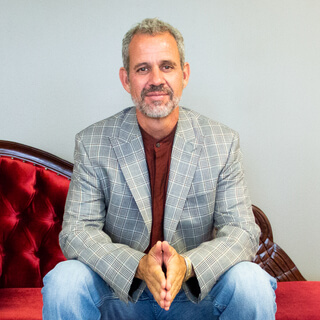
Continuing our conversations with John P.
Milton in his home in Crestone,
Colorado.
I'm looking out the window right now at a recently fallen pristine white snow.
There's probably maybe five to ten inches different places.
And as the clouds parted late in the evening,
It's just a beautiful crystal clear blue day in southern Colorado.
So,
We began this exploration with one question.
And I was asking John to go into some detail around what he describes as the fundamental truth.
Which he has spoken about many,
Many times and is certainly expounded upon in two of his books,
The Sky Above,
Earth Below,
And Principles of Natural Liberation.
Cultivating Natural Liberation.
Cultivating Natural Liberation.
Thank you John.
And the second work is just,
Is incredibly useful because John calls the pages of this work leaves.
And they're individual lightly laminated pages that you probably wouldn't want to have them in a monsoon.
But if there's a sprinkling of water or anything like that,
You can just easily wipe them off.
I've had this experience numerous times as I work with them.
And it's nice because they're individual pages that cover many,
Many topics.
One of them,
One of the topics are this called the 12 Guiding Principles.
And the first one is where we started what I thought would be maybe a ten minute conversation.
Which is now probably five podcasts.
And we've made it about to the fifth or sixth word in the sentence which all perceived form is interconnected.
Continually changing or constantly changing,
Continually arising from,
Manifesting within,
And returning to primordial source.
That is a mouthful and a lifeful for sure.
So probably the first few podcasts really focused in on the idea of what is perceived form.
And really what are the benefits of going deeply into the perceptual fields.
Any of them which John goes into pretty significant detail.
But how can we work with these perceptual fields because ultimately they're what we have to work with as humans.
To really work our way through the struggles we have,
The suffering we have of being disconnected.
Disconnected from nature.
Disconnected from our true nature,
Our deepest nature.
Disconnected from outer nature.
And to a large extent really confused and disconnected from our own inner nature.
So the interplay,
The interconnectivity of those three natures.
Big part of what not only does John teach but also provides very accessible and practical ways to work.
Not only within these twelve foundational core principles but also with the perceptual fields and everything associated with them.
And I assure you from personal experience and from the many many people I've talked to that know John.
Some probably more than fifty years or getting close to that anyway.
That working with these principles and these teachings with every single person I've met including myself.
Has had a profound impact on their lives.
I really feel that it's sort of the degree you commit to this process.
The rewards seem to come forward accordingly.
And so there's these,
At least in my own experience,
These sort of aha moments.
These visceral experiential because this is all experiential.
There may be a concept that introduces you to a principle.
But from there one quickly moves into the experiential realm.
And ideally in pristine wild nature.
And the experience that I really see as gifts,
Gifts of nature you might say.
There are moments of profound stillness,
Peace,
Relief from fear.
All of the things that I think we all struggle with.
And when these sort of epiphanies occur.
I don't know what it's like for everybody but for me.
There's a profound reality that there is something here.
There is something that's really good.
That's really healing.
And then that creates a real natural desire to go deeper.
And a natural commitment to progress.
And that's really been how this experience has unfolded for me.
So as we're exploring this first fundamental truth or the fundamental truth.
We ended our last podcast,
John.
With you mentioning it would be really important to talk about intent.
And the role of intent in the way of nature process and the process that you've refined.
Can you share some of that with us?
Sure.
And I think as a precursor to that I did want to mention one little aspect about this part of the first principle that we didn't touch on last time.
Which was why being able to move completely into the now in a totally relaxed way.
It's so important to help relieve suffering and many of the anxieties and problems and issues of the time that we all face.
It's interesting that most of the issues if you look at some of the great traditions.
That was in the blues for example.
And also in Christianity.
I think it's emphasized quite a bit that the attachment to self,
To material things,
To relationships,
To having things that we believe will bring us happiness.
Becomes a kind of a major focal point for life.
And then when those things don't come through.
We go into a state of feeling a loss and some level of suffering.
So when you really go deep into this first principle one of the great things about it is that you immediately embrace the truth of the fact that everything is transforming and changing.
You in the sense that the very beginning of the experience of life you begin to see that actually foundationally everything about it is in a state of transformation and change.
No matter what your expectations may be.
No matter how good something may be.
It is subject to change and transformation too.
So the key here is becoming really comfortable and surrendering into this experience of change and transformation as a foundational thing about life.
And also seeing that the attachment to trying to keep things as they are is the doorway to suffering.
And we're trying to set up a continuous life insurance policy for everything.
Of course I always get a kick out of getting,
Especially when I'm 81 now,
We're going on 81.
And I occasionally get these little notices in the mail about taking out a life insurance policy and it always makes me laugh in the post office before I heave it into the recycling bin.
Because obviously there is no such a thing as true life insurance to ensure that your life continues.
We never know when we come and go.
So at every level having this process of being present with and relaxing into the truth of change,
Everything changing in terms of these experiential perceptual fields for sure.
But in the way we normally concretize it into a relationship,
A property,
A nice car.
Many things that we formalize these things around.
All of that is subject to a process of transformation.
If we at the very beginning start to dissolve the root of attachment,
Then we are free to actually enjoy in the moment these things that are arising as a great gift of life.
And we can be completely with those things as they arise in a full way without the fear that they might go away tomorrow.
Or we might need to have what we had in the past.
If we went to a nice restaurant and then suddenly it's closed and we get to find a new restaurant.
We did that this morning.
It was a nice new restaurant.
So in that same way,
The fact that we are not attached to any particular outcome is absolutely critical.
And the key to being able to do that is being able to really relax and be present with the now.
Because in the now,
The truth of all those experiential,
Non-experiential and perceptual fields come together in the field of life itself.
So that kind of mastery is critical.
Because it frees us from either being held by the past and then constantly thinking about something horrible happened in the past that might come again in the now.
Or what we got to get in the future in order to be happy in the future.
And that of course tends to destroy the now because we are thinking about the future instead of really enjoying the now.
The same thing is true about worrying about the past.
It's not to say you don't worry or take a look at the past and learn from it.
Or look into the future and take creative steps to have a good life.
But you do those things without attachment to the outcome.
So,
Since it's so important to be present,
Relaxed in the now.
Something I've discovered in working with being a psychotherapist and working in the behavioral sciences for 30 years is that I find that people who are more fixated or attached to the past tend to primarily struggle with depressive disorders.
And the people who are more concerned about things future tend to have anxiety disorders.
Interesting findings.
So,
I think it's important,
Like where would you even start?
I mean there's so much out there now about.
.
.
It's interesting because you hear about presence just about daily.
If you go to a newsstand,
That has exploded,
This concept of presence.
I think if I asked 10 different people what presence was,
I'd have 10 distinct answers.
And being in the now,
I think Eckhart Tolle did a great job in The Power of Now,
Sort of really exploding that into the market.
And now I don't even know how many books there are on being in the now.
It's interesting to me how few things I find about the value of relaxation or how do you do it?
Where do you even start?
Like how do I even get around the concept?
Yeah,
It seems kind of self-evident that we would,
When we're first saying,
Okay,
I really would like to be more present in the now.
I think anybody would say it.