Welcome,
Welcome to Awakening Torah,
Musar Mindfulness.
And welcome to the year.
You're hearing another video right now.
Allow yourselves to settle and arrive.
We will begin in less than one minute.
Okay,
I think we are ready to begin.
Again,
Welcome,
Delighted to have you here to learn and practice Musar Mindfulness while looking at the weekly Torah portion,
The Hebrew Bible,
To see what we can learn from what God wants us to learn,
What our ancestors want us to learn from the Torah portion.
As we look at it from the lens of two ancient traditions of Musar in Judaism and from mindfulness and Theravada Buddhism,
Learning from the Dharma and gaining what we can to gain more insights,
Knowledge,
And to be able to practice on this path towards holiness.
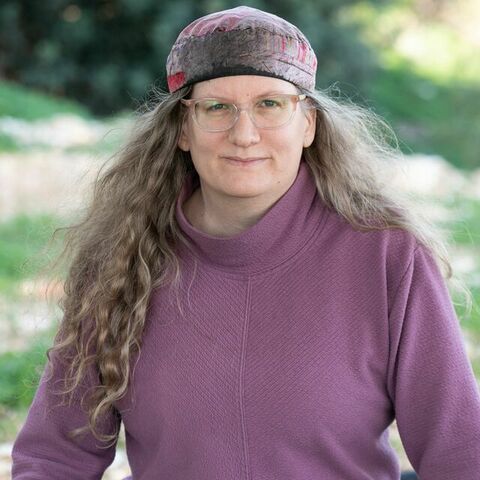
I am Rabbi Chassia Uriel Steinbauer,
The founder and director of the Institute for Holiness,
HaMachon DeKadusha,
Kehilat Musar Mindfulness.
Welcome.
Today is Sunday,
March 5,
2023.
And we will cover the Torah portion that happened yesterday on Shabbat,
On the Jewish Sabbath,
Which was Yud Aleph of Adar,
The Hebrew month of Adar,
And Tafshin Pei Gimel 5783.
And yesterday's date was the 4th of March.
Delighted to have you.
We will begin with what we always do,
Which are our Kavanot,
Our intention for today's practice.
If you are watching by video,
Then you see before you,
If you're watching by live stream on our YouTube channel or on Facebook,
Or later on at our website of Kehilat Musar.
If you're watching by audio or podcast,
Then you will hear me read these.
But essentially our Kavanot for this practice is the same every week.
It's threefold.
It's that strong triangle of caring for the self,
That we're doing this practice together,
The next 45 minutes together.
That we're also doing this as an act to benefit others,
And we're doing it to strengthen our relationship with God,
With the divine.
So we say this is something I'm doing to strengthen my own soul,
And to strengthen my relationship to others,
To strengthen my relationship to the Creator.
So that I can be a benefit to others in the future.
I can be a better conduit of God's good to others when they need me to be here serving.
Welcome.
Delighted to have you.
So those are our Kavanot.
May we merit fulfilling those intentions for today's practice,
Where we jump into,
I believe we're on our 20th sit together.
Let me think about this.
12,
13,
14,
15,
16,
17,
18,
19,
20.
Yes!
We are in the Torah portion called Tetzaveh.
It comes from the Shoresh of Sadi Vavheiav,
To command.
So we are in Tetzaveh and the book of Exodus,
The book of Shemot.
And first I always give a brief summary of the Torah portion.
And then we'll actually jump into a specific topic or lens or area that applies to our life personally,
That we can integrate as part of our daily practice of Musar mindfulness.
So what happens in this portion this week is it's very much a continuation of last week,
Which was Trumah.
And in Trumah,
The whole community came together to offer free will offering from the heart,
Gifts of value to help build the Mishkan.
Hashem says,
Make me a sanctuary as we covered last week.
And they bring all sorts of things to build the sanctuary so that God can dwell betocham,
Among them.
Not in the sanctuary,
But among them in the whole camp.
So that's why it's so important their behavior of how they treat one another,
Because God is dwelling among them,
And also within.
So as you'll recall last week,
I said,
When God says make me a sanctuary,
That means what we do in Musar mindfulness,
Where we build an interior world.
For Rav Shlomo Walby and other teachers to say,
What are we doing here in this practice,
We're building an interior world,
One in which we are balancing our middot,
Our soul traits,
Our personality traits.
And so that's us building our sanctuary,
Making it so that we are a place and a person in service and in value to how is Hashem,
How is God to be in relationship so God can dwell among us and within us as we all are created in the image and the likeness of the divine.
We all have that spark within.
So,
What happens in this week is a continuation of this.
So,
All the rules more I should say all more rules are introduced for the Mishka the sanctuary.
And there has to be some important things that are commanded here first is there has to be what's called a mayor Tommy,
Basically,
A continuous flame of fire continuous or daily or always there ongoing.
And in particular,
There,
There was part of the the menorah,
That was in the Mishka.
So,
We're gonna we're going to touch on this near Tommy,
But I want you to recall that when Hashem is God is taking our ancestors the children of Israel,
But they Israel out of Egypt out of the institution of slavery.
And they become a moon high ish a pillar of fire that God sends to guide them on their way,
Especially at night in the darkness.
And what ends up replacing that our mood ish which is basically a gift from God and sustains them and it's all offered and what ends up replacing that God is now humans through their action and activity are creating this near Tommy are making sure that this internal flame is always lit always available.
And that that that's that's that's done with cover now that's done with intention to move from the mood high age to narrow Tommy and tie into our own internal flame,
Which will touch upon.
So,
Our own,
Who is now going to be the cocaine,
Though the high priest,
And his sons will serve as a cohen name the priests in the Mishka and every cocaine has the same uniform to wear same clothing.
A,
But the cocaine God the high priest has more clothing that only he wears.
And for seven days.
They are supposed to prepare special rituals and sacrifices.
They're given instructions for the core bond Tommy.
So now we are we have the near Tommy and and now we have a core bond Tommy,
Which means every morning and every evening,
A lamb is offered.
Every day.
Okay.
Now God gives instructions for building the means bear a cut or head on the means back a cut or in this case it has me quotes it's a word pair.
The altar for insights by incense spices,
Which we made a pure gold and place inside the mission.
So this is a brief summary of what you witness here.
So,
Let's look into,
There's some key things I want to touch upon here for us.
The first is,
As I said last week we're told make me a sanctuary and I talked about how we today on a daily basis are always working in creation with God.
We're building partners co creators of building this internal world building this inner sanctuary.
And today in this partial that we're covering,
There is the importance of clothing,
Clothing of the co name and of the high priest.
And what is really behind this is,
Is we're seeing as we're building this internal world that we're also building external deeds and behaviors and customs that are going to support this inner sanctuary that are going to support our practice and most our path toward holiness.
So the clothing has a function.
And one of his primary functions is that of dignity to allow yourself to feel within that healthy self esteem that healthy balance on the VA humility that you know you are a servant that you are taking care of others to serve God,
And you are someone that knows that you are created in the image of the likeness of the divine that you are a child of God.
And that allows dignity and that is reflected in our clothing that we wear what the cocaine wears.
And the high priests also in this example and then the coheny.
And this is going to tie through humility and about throughout this Torah portion which is going to be our media our soul trade that we will focus on it will use as our lens today,
And that will practice during the week.
And the second very important thing that happens in this parsha is a discussion essentially that comes from the hack them I lay in Yakov midrash that comes to kind of address the question of if there had been one pursuit one verse through the whole Torah that encapsulates and captures the essence and meaning of the Torah,
What would it be and so Ben Zoma offers his perspective that it's about the Shema and then non us offers that it's about a half to the right hack or more I love your neighbor as yourself.
And she moaned Ben Pazzi comes along,
And he says no it's the pursuit that's in this Torah portion.
And it's the one that says it's a kid it's hard to say but have a book air the book air that the kid was a shame need to say being hard by him.
So,
You shall offer one lamb in the morning and one lamb in the afternoon.
So you might be thinking,
This is the,
This is the,
The verse that he thinks covers all the Torah.
What is it,
What is he saying what does this mean so just allow yourself to pause for a minute and think what what could be really behind Shimon Ben Pazzi statements right.
What is the offering to God,
Every day morning and evening.
Okay,
What's behind the behavior.
What is it,
What does it require of us,
What's going on so what he seems to be suggesting or what we could gather from what he says sharing with us is the idea that the Torah this idea contains every unit Torah is that we are to serve God,
And that we're to serve God always daily.
Every single day.
No breaks.
No missing it done with intention with mindfulness.
And even if we're sick,
Even if there's a catastrophe God forbid like an earthquake,
Whatever it might be.
We're going to be there for everything.
Right.
So,
Um,
This might inspire you,
It also might terrify you depending on who you are this idea that Torah and the meats both the commandments are part of our lives every day,
No vacation no break,
You know,
Have a break.
And that what we want to really think behind that and this is our practice also and most our mindfulness is that we is part of the Torah,
And how we live is we don't take breaks when we practice every single day,
Obviously when we're on,
On vacation.
And when we're sick,
Whenever.
And for some of us,
It may become less intensive of a practice.
There's always a shift and modification of it but what's behind it is when something is so important to you,
You make sure that it happens every day of our life,
So we do things every day of our life we brush our teeth.
We shower or bathe maybe not every day depending on the community and where you live.
We generally clothe every day we generally feed ourselves every day there are key things that we do.
And what Ben Shimon Ben Pazzi is teaching is that our service our relationship with God is something that happens daily.
And it turns into that beautiful and First Nation Native American teaching I believe it's the Cherokees but I've heard it come from other people where essentially is a story where this young man as as his grandfather about it,
Or the grandfather shares about two wolves living inside him essentially and one is,
You know,
Full of evil and greed and all the things that we consider negative or unpleasant,
And maybe even evil.
And then there's this other wolf.
There's a full of a generosity and patience and love and all the qualities that we value and want to internalize and consider life affirming and pleasant.
And he feels this battle going inside between these wolves and he doesn't know what to do with it and,
And the advice essentially given by the grandfather and the end is the story is where the wolf that the voice terrified and says which book is going to win the bad evil wolf is going to win.
And the grandfather says the wolf that will win is the one that you feed.
And so what I learned from this beautiful story passed down to us,
Thank you to the people that did is the deeds that we do daily.
The core bond that was offered daily morning and evening and serving God us practicing was her mindfulness and doing our morning affirmation,
Doing our couple of doing our fishbone her naffish journal,
Observing the meats of all being the best person that we can be in service of others,
Right,
Bearing the burden with others.
This is the wolf we feed.
This is our life.
This is what will feed us and strengthen us and strengthen that wolf within,
Which is what we want,
Right,
This is the path,
This is where we are.
And I bring that pursuit,
But I also bring it because it's so important this idea of you,
You know what you feed is what you become,
Because not only is the chemists the the lamb brought morning and evening,
But then they are telling me that we had touched upon this right this eternal lamb is that is being lit every single day is also tied to what we feed so think about a lamb,
Think about a fire in particular,
And this ties to the meat of humility of an event.
A fire burns brightly,
Yes,
And and when you have it in contained in a lamp,
And are held like in a menorah,
When you take some of that fire from that lamp when you share it when you give it when you take it.
And that doesn't diminish that fire doesn't diminish that menorah.
The lamp.
It gives fire to the new carrier lamp,
And it maintains its own strength and fire.
Right,
And this is so important,
Because it teaches us that the fire within,
For instance,
Us,
Our soul as souls we live as souls.
It doesn't diminish or get diminish right doesn't diminish itself,
Or get diminished when we share when we give right that we as our fire within just like the near time meet continues to burn to shine to give light to receive light.
And it's so important right there's something quite beautiful that we learned from fire and this lamp that it supplies light to others without diminishing its own light in any way.
And that is our task.
That is balance on a balance humility.
It's beautiful that concept and that idea that's feeding that balance fire that balance humility.
There's so many references in our tradition about light and fire.
The Torah signifies the soul light to a constitutes the first of our shams creations of let there be light,
Right,
The or right to which all living creatures are drawn and the only way that we live is through that light,
And the Torah is compared to that light and we have this in Mishle and also Proverbs chapter 623 for the commandments,
Or the commandment is a lamp and the Torah is a light.
The Torah light,
Israel,
Our people our ancestors are destined to be a light of the world coming from the Navy the prophet Yeshia who he says nations to walk by your light.
He is the light of the individual person we say this in Psalms and to heal him 27 one.
The Lord is my light,
And my salvation,
Who shall I fear,
And the light of Israel right coming from again from Yeshia who from Isaiah chapter 60 verse one arise and be a light for you come and the glory of the Lord to shine upon you.
Beautiful,
Beautiful images beautiful strength,
Given to us to learn and take from this week's parasha of this continuous life is continuously offering,
Knowing that we're not diminished in the process.
And also that we don't have to diminish ourselves we don't have to pull back and become smaller or less than the media vanavar is all about in taking up your proper amount of place and space while making room for others.
And it's a light that is given to you at that particular moment.
And so a fire does that right,
You take from the flame.
It goes like this a little has that life force and energy it modifies a bit.
It stands tall and still again.
And it's at that stillness where we gain the gift of insight,
Which really leads us to this light of the Neshama,
The soul right is insight is consciousness right.
So,
The final thing I will close with that we get from this parasha which is so important is.
We learn about Amalek.
Okay.
And in particular,
What do we learn about Amalek.
And so Amalek for those of you who don't know,
We're a people.
When we,
When our ancestors,
The Hebrews,
The children of Israel,
Brought out of the institution of slavery of Egypt into the desert by Hashem.
And they're at a certain place in the desert,
And this tribe known as Amalek,
A people,
Come down from the mountain and attack our ancestors from behind.
Where the weakest are,
Where the slowest are,
Perhaps for those of you could think about who's going to be there I would be there in the back,
Because I walk slowly I also live with a hidden disability,
A long term disease.
So those of us who are either elderly or disabled or too young to walk fast who are small or tiny,
And the elderly and the sick,
The tired reminds me of the poem by Emma on the Statue of Liberty give me your,
Your sick and you're tired and so I,
Those are who gets attacked by Amalek.
Amalek comes and attacks the most vulnerable and weak,
An act that is absolutely abhorred by Hashem,
By God.
And so too we.
So,
In the Torah portion we're told two special things,
Very important.
We are commanded to do two things regarding Amalek which is kind of amazing.
If you haven't studied this,
The forces,
Zohor at us share a salad,
Ha,
I'm a lay the Derek,
The state him he meets wine remember what I did to you on your journey out of Egypt remember,
Remember,
Remember,
Zohar.
Okay,
This this this past week's Torah portion and the and the Shabbat is known as Shabbat Zohar,
It's a one of remembrance,
Why because we're reading this.
We're told simultaneously.
Quite amazing that you must erase the memory of Amalek from under heaven.
Right.
It says right here team.
Hey,
It's there here.
Don't you forget to do that.
Don't you forget to erase the memory.
Don't you forget to forget about it.
It's amazing.
Okay,
And and and my brilliant nine year old at our at our Shabbat table I said what.
I don't have the I always try,
What,
What is humility what is on the bar,
One of the definitions and moves are is that you learn from everyone.
So I turned to my nine year old son and said,
What does this mean,
What can teach me what this means I don't I can't get my head around it right.
And remember this a horror of Amalek is that so that you will not do what Amalek did that you will not behave this way that you will remember that.
And you'll feel it you'll know it inside you know that memory,
You will remember the trauma.
You'll remember what's done you remember how abhorrent that behavior is,
And you will not come to do it yourself.
And the erasing of the memory of what Amalek did is so that you don't get stuck in that memory that you don't get stuck in this a whore,
You don't get stuck in the trauma and the storytelling of your suffering of what happened that you move on and serve.
And it's very profound,
Because we're all.
This is like one of the most key things the human being needs to learn how to do in life in particular and with our mindfulness is the simultaneously.
Remember,
Remember what Hashem expects and wants from you and how to behave and that you don't behave certain ways,
Because you also remember the suffering that happened to you,
And you also race it and forget it that you don't get stuck in that trauma that you move on and serve.
And so,
Remember that.
And that's why we're so important to remember that.
And that's why we're so important to remember that.
And that's why we're so important to remember that.
So,
With that,
We're going to move into our practice.
We're going to move into our mindfulness meditation.
I welcome you to come to the edge of your seat if you're sitting in a chair.
You can use a zafu or meditation cushion.
You can also stand if you need to,
Especially if you have any chronic pain or low back issues,
You can also do walking meditation or lie down.
If you're going to lie down,
Please keep your eyes open so you remain awake and alert.
For the rest of us,
If you have vision,
I recommend that you close your eyes so that you can block out any stimuli that might come in through the field of vision,
And you want to sit up dignified,
Because you are created in the image and likeness of the divine.
So we're going to begin with three deep cleansing breaths.
Inhalation,
Inviting the gift from Hashem of oxygen.
Inhalation and exhalation.
Letting go of any tension in the shoulders and the body,
Allowing to smile to emerge if it feels natural to you.
Inhalation,
Inviting awareness and ease.
Exhalation.
So good to be alive.
Thank you for this moment.
Inhalation and exhalation.
Letting go of any tension in the shoulders and the body.
Exhalation and exhalation.
Thank you for this moment.
Inhalation and exhalation.
In the moment of inhalation you can trust that my voice will return to guide you,
That your anchor of what you keep your attention on is my voice,
And when it's silent,
Your own breath,
Or the sounds around you,
Always bringing your attention to the present moment if you find that you have drifted,
Which you will.
The gift of this practice is to wake up that we have drifted and to return.
That is the gift of teshuva,
Of returning,
That we practice with every breath,
With every thought,
That really prepares us on the cushion so that off the cushion,
We can engage in even the gift of taking responsibility when we've done wrong to others,
To return to Hashem.
Today we enter a meditation on Menuchat HaNefesh,
Equanimity,
That only comes with balance anava,
Balance humility,
Taking up our proper amount of space,
Making room for others,
Learning from everyone.
That equanimity that comes from balance anava is a quality,
A spacious balance of heart.
It grows with our practice,
And we feel this balance in our hearts when we are balanced and how much space we take up and how we treat others,
Making room for all the souls in our life,
Recognizing that when we are not in control,
So much of equanimity and anava,
Humility,
Is really part of this building the inner world,
So that we have spiritual dexterity,
The ability to be able to pivot.
This is the heart of a great dance.
It is knowing what we can affect and what we cannot,
Being able to accept it all.
We are reminded of the well known serenity prayer in the AA movement of,
May I have the serenity to accept things I cannot change,
The courage to accept things I can,
And the wisdom to know the difference.
Wisdom recognizes that we are heir to our deeds,
To our own karma,
That our deeds reflect the fruit of our actions,
That we all act within our power,
That we use our flame to assist others,
But to also know that our flame is a flame,
That it has its limitations,
That we cannot always help others,
And that we definitely cannot be the source of their own inner life liberation.
We bring a soft attention to our breath until your body and mind are calm.
And we begin by repeating after me.
May I be balanced and at peace.
May I be balanced and at peace.
There's something beautiful about God knowing and honoring the human desire for that which doesn't change that attachment to something permanent,
While acknowledging that we are a flame that we are to keep burning.
We also recognize that all things arise and pass.
Joys,
Sorrows,
People,
Buildings,
Nations,
Even whole civilizations.
Repeat after me.
May I learn to see the arising and passing of all with equanimity and humility.
May I learn to see the arising and passing of all with equanimity and balance.
Recognizing that we all must be the one that builds our own internal world that does the practice that no one can do it for us,
Nor can their well wishes do that work for us.
We must offer that lamb twice a day.
We must light that fire and keep it burning,
Knowing that our practice and our suffering depend on our own thoughts and actions,
Just like the Amud HaEsh eventually passes,
Appears has a certain shelf life and then passes,
Passes that flame and then passes.
We too learn to accept the rising and passing of all.
Repeat after me.
May I learn from everyone.
May I make room for others.
May I learn from everyone.
May I make room for others.
May I continue to take up my proper amount of space.
May I allow my fire to burn.
This balance humility leads to deep,
True,
Menuchat HaNefesh,
Equanimity,
Living with a peaceful heart.
And as much as Hashem carried us out of slavery,
Freed us with a strong and outstretched arm,
Sustained us with the pillar of fire,
With the pillar of the cloud,
By day,
Hashem too knew that we alone would have to learn to be responsible for our own deeds and lack of them.
So all this beautiful manual,
The Torah,
That we learned in our Torah portion,
Teaches us deeds to do day in and day out to practice,
To build that sanctuary and to practice in that inner world.
We will move into two minutes of silence.
You will hear the bells.
When we are ready to come out of our meditation.
If you have your eyes closed,
Gently and slowly open them again,
Allowing the light to enter slowly,
Coming back into the screen if you're watching on video,
Or if you're watching through the sacred zoom space or live streaming on our YouTube channel.
Thank you for your practice.
Thank you for joining today.
We welcome your donations and sponsorships to support this offering that we give each week on Sundays,
And we hope that you join us next Sunday.
Again at 1230 Eastern Standard Time where we will enter after Tetzaveh,
I should have known that off the top of my head was Ki Tisa.
We will enter Ki Tisa.
So please take some time to read through it this week,
Prepare yourself,
Perhaps even hear it chanted or read on Shabbat morning,
In whatever community or online that you can,
And come on Sunday to explore together.
Again,
I'm Rabbi Chassi Oriel Steinbauer,
Founder and director of the Institute for Holiness,
Heilat Musa,
Or mindfulness.
Such an honor to learn and practice Musa,
Or mindfulness with you today.
I wish you well to take on the practice of Anava,
Of humility this week.
First thing is awareness,
Sensitivity practice,
Just noticing how much space you take up,
Whether in words,
Thoughts,
And deeds.
Do you make room for others?
Do you become too small in response to the space of others?
Do you take up too much space?
Just notice whatever is happening for you and record it in your Cheshbon Hanafesh journal,
Your accounting of the full journal,
Five minutes each day.
What do you notice?
Do study what you can on Anava,
Of humility.
I recommend beginning with my colleague and dear teacher,
Ellen Moranis's Everyday Holiness,
There's a chapter on Anava,
Of humility.
You can also find sources from other Musa texts and online,
And begin with that awareness.
I wish you all the best and strength,
And I look forward to learning together next Sunday and practicing.
I wish you a happy Purim,
Purim Sameach for those of you who are observing,
Who will celebrate coming on Tuesday,
Monday night to Tuesday night.
And that may you have an easy fast.
If you are fasting on Tanit Esther coming up on Monday.
And for those of you in walled city,
May you enjoy Shushan Purim on Wednesday.
Take care.