Welcome.
Allow this next minute as a sacred time and space for you to settle and arrive.
We will begin shortly.
Welcome.
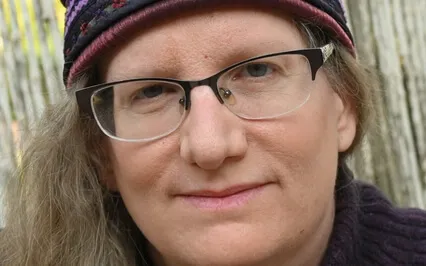
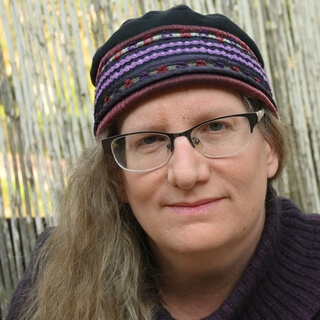
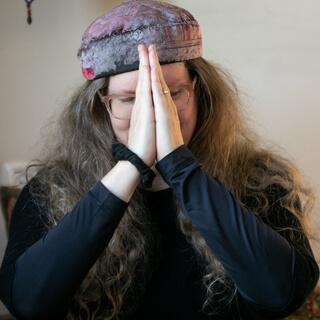
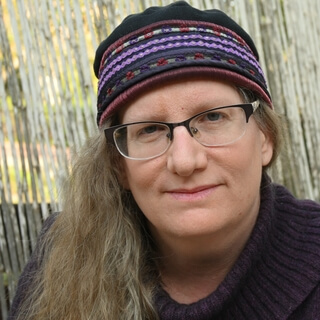
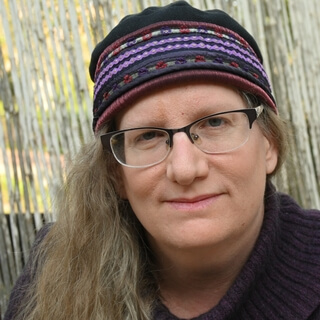
I am Rabbi Hasya Uriah Steinbauer,
The founder and director of the Institute for Holiness,
Muhon L'Kadushah Kehilat Musar,
The Musar community.
I'm delighted that you have taken time out of your day to commit to your practice,
To take refuge in community and in the Dharma and in God.
Delighted to have you here.
This is our weekly series.
We meet every Sunday at 1230 Eastern Standard Time,
730 p.
M.
Here in Haaretz in Israel.
And for wherever you may be logging in,
You're welcome to let us know in the chat or in the chat on live stream,
Which we are doing on our YouTube channel or on our Facebook page.
As you all know,
And for those of you who are new to this,
Every week we jump in into an active interpretation and encounter with the weekly Torah portion,
The Hebrew Bible,
As we Jews study it weekly.
And this week we are jumping into Shalach,
Sometimes known as Shalach L'cha.
And for here in Israel and Haaretz,
We already chanted and learned and listened to the Torah portion this past Shabbat.
And everyone,
Everyone outside of Israel,
You're going to be studying and hearing this chanted in synagogues throughout your countries and homes this coming Shabbat.
So today on Sunday,
June 19th,
2022,
We are here on the 20th of Sivan,
The Hebrew month of Sivan,
5782,
Tof Shen Pei Bet.
And we will jump into this Torah portion and take a look at it from the lens and practice of Musar mindfulness,
Seeing what we can extract lessons for our own practice and lives as we are on this path,
On the Noble Eightfold Path and on the Holy Path of Musar towards holiness.
So you are welcome and anyone is welcome Jew,
Non-Jew,
Into this amazing practice of Musar mindfulness where we take this wonderful synergy from the Dharma and from Musar and strengthen both and learn from both ancient wisdoms.
So you're welcome to find out more information about our institute at our website and following us on any of the mediums and social media.
So let's jump in.
I'm going to start off with the summary of what kind of the main thing that I'm going to discuss from the Torah portion.
And then I'll begin to do a little bit of an analysis and then we'll move into actually a guided seated meditation together.
And sometimes we have Q&A,
Question and answer afterwards.
It really depends who's showing up,
Who's here.
So before we begin all of this,
We always begin with our kavanot,
Our intentions for today's practice.
Why do we do this?
Because we know from spiritual discipline and practice that when you come in,
When you have an intention for your day,
For what you're doing,
You're more likely to not only follow through and do it,
But it's like more fulfilling on a spiritual level and more effective,
Both in brain science research.
So we have three kavanot in front of us.
And normally I do the first two,
The first and the last.
But what we're going to realize is we've been practicing this.
We're now in our 38th sitting together.
Mazal Tov,
Congratulations.
I feel jazzed tonight,
Excited.
As in our 38th sitting,
We have come to learn,
As I've learned from my own teacher,
Joseph Goldstein,
That this practice is not only a radical act of self-care,
It is a radical act of social justice.
It is taking care of the self.
It is doing acts on behalf of the other and strengthening our relationship with the divine.
It is that holy triangle that we're constantly in relationship with God,
With others,
Meaning community and ourselves.
So that's what we're jumping in with our kavanot.
So we want to say before doing acts of care for the self,
And before doing this practice now together for others,
And doing this practice now to strengthen our relationship with the divine,
We want to say to ourselves and have this intention.
This is what I'm doing right now with the Institute of Holiness.
I'm committing to this half hour,
45 minutes practice together where I'm doing this to strengthen my own soul and to strengthen my relationship to others and to strengthen my relationship with the Creator so that I can be a benefit to others in the future,
So I can be a better conduit of God's good to others when they need me.
So this is our intention.
This is our kavanah for today.
Maybe merit,
Bringing peace and wisdom to the world,
Cause less suffering and harm.
So what do we witness today in shalom?
We witness God Moshe,
And I word it this way,
Our ancestor Moshe,
We witness Moshe,
I will say,
But it could be debated,
Sending 12 of our ancestors,
Known as scouts or spies,
Perhaps it's a military exposition,
Not 100% clear out.
They're called Mevraglim,
They're sent out to check out the land of Canaan.
They're right now our ancestors are still in the desert.
I think it's actually in Midbar Parran,
They are outside the land of Canaan and they are sending out the scouts to check out the land.
They are gone for 40 days,
Immediately you should have little bells go off,
If you've been following along and also follow the Torah and Hebrew Bible.
40 days,
Who else was gone for 40 days?
Moshe Rabbeinu.
Does B'nai Israel like it when somebody is gone for 40 days?
No.
Okay,
So this should already,
If we're going to have associative thinking,
And if we're not going to meet something directly in the present moment as if it's a clean new slate,
We're going to instead come with our old ideas and associations,
Which is so classic in our Torah learning,
Right?
40 days,
They are out,
These spies,
These scouts,
Scouting the land,
They return,
And they start off giving a review of their experience.
They share first what I would label as a neutral assessment saying the land indeed is flowing with milk and honey,
This is the fruit of the land.
And then they give another report that the people are very large,
That they saw and encountered,
The cities are well fortified and the Amalkites,
Wrong group,
Are dwelling in the land.
Okay,
Still could be interpreted as neutral,
Especially if this is a military expedition,
They're coming and just reporting what they're seeing.
Okay.
But even that second part when you communicate as a leader,
And these are leaders that were sent out,
When you communicate this as a leader in front of all the people,
So it's not sure,
Are they reporting this to just Moshe,
The people are overhearing,
There begins to begin a little bit of a murmur,
Like,
Hmm,
People are big and the cities are fortified.
Okay,
So that starts.
And then all sudden,
Wise speech goes out the door.
If there's one thing that we're going to learn from this week's Parsha,
It is a Torah portion and a lesson of self restraint,
And of wise speech,
And the lack thereof.
Okay,
And how quickly unwise speech leads to panic and leads to violence or even the threat of violence.
And so what happens next is they first start off saying,
The land you sent us to.
You have to be very careful.
Torah is very precise on its speech and it teaches us that we need to be very precise because there's always somebody listening,
Particularly if we're a leader.
Always someone listening and we'll take it very concretely.
And it's meant to be there,
It's meant to signify something.
So here we are,
The land you Moshe sent us to,
Not the land which God,
The Lord Hashem promised,
Which is always how it's been worded.
So already we're noticing something with the speech.
Okay,
We are in chapter 13 and we're looking at the verses 25 through 33.
And next we move to,
Which pessuk is this?
This is 32.
Okay,
32 to 33.
These are very important because this is when the shift takes place.
We move from speech,
You know,
As we learn in our Dharma practice and the mindfulness practice that we can label something as unpleasant,
As neutral and as pleasant.
So we can see the speech starting off as neutral and it's moving towards the unpleasant and then it gets really ugly.
What I mean by that is Israel had hesitated up until now,
Its leaders.
And all of a sudden what we get here is in this pessuk here,
They say that the country that we transversed and scouted,
Here I'm looking at 32.
Let's see here.
Okay.
Whoa.
Okay,
What does that mean?
The country that we scouted and transversed is one that eats,
That devours its settlers,
The people who dwell and settle in that land.
What?
That's really,
Where did we get that?
Like,
All sudden we are told the land is indeed flowing with milk and honey,
And this is the fruit from the land.
And yes,
The people are large and the cities are fortified.
Obviously,
There's the city,
The cities are packed with people,
Many people are dwelling,
And many people are dwelling just fine.
So where is this statement coming from?
So all of a sudden you're realizing with these scouts is their experience of it,
At least nine of the 10 scouts which we'll get to,
Is one in which they're reacting,
They're reacting,
First of all.
And it's fear based,
Which leads to a bit of delusion.
It leads to using a metaphor to discuss the land,
The land devours its settlers.
Could you imagine as a leader saying this in front of your people and your populace?
Not that you're solely responsible for their reactions,
But this is just,
It's not called for and it's not wise speech.
So they say this,
And you can imagine former slaves who actually haven't learned a new way of being,
Who are actually having major post-traumatic stress disorder from the institution of slavery,
Don't know any other way to behave except for this cycle of reaction.
And so they hear this,
And they freak out.
Right.
Okay,
So obviously you could say,
A healthy person who doesn't have post-traumatic stress disorder,
Obviously is responsible for their own reaction.
So we could,
You know,
Pray and hope that Bena Yisrael on some of them would be more responsible with their reaction to hearing this,
That they would be able to assess and go,
Is this really true and maybe it was just your experience and how can that be based on what you shared with us earlier.
But even a bravo,
One of our wonderful rabbinic commentators comments on this,
He's like,
You know,
This metaphor is usually described to describe the land's infertility.
And if so,
The scouts would have been guilty of self-contradiction since they unequivocally affirm the land's fertility and abundant population.
So,
So we're holding on to that.
Okay,
We're holding on to this like delusion that's beginning out of fear.
And then they go on to say,
They go on to say that they see these giants there,
Right.
And in particular,
They say this language,
Right?
We look like grasshoppers,
We look like grasshoppers to ourselves in our own eyes,
We appear like grasshoppers.
Okay.
And so we must have looked that way to them.
So fear,
Low self-esteem,
Low self-worth with a lack of courage based on fear.
They don't see themselves as worthy.
Almost they don't even see themselves as children of God being guide and held by Hashem,
Meaning they can feel strong,
They can feel able.
That's not there yet.
That has not been internalized.
And so coming from this from a moose or mindfulness perspective,
You would feel compassion for these people,
Feel compassion for many Israel's reaction,
Knowing that they probably could not react any differently.
Compassion for the nine scouts who have gotten caught up in their own delusion and fear.
And you would want that from Moshe and you would want that from God.
We don't get that.
This is going to be one of the more difficult parshiot because there's no compassion here.
So let's delve in.
Okay.
And there's actually a beautiful midrash that I'll mention before we move into our meditation practice about how God sees the statement where they say that we appear like grasshoppers to ourselves and we must have been that way towards them.
It's a beautiful,
We'll move into it.
Okay.
So what I want to say is that they chose,
The people chose to listen to the negative report and they react with screaming and crying and even threatening Moshe and Aharon and perhaps Yeshua and Kalev.
So let me introduce you to Kalev if you haven't read this portion yet.
Kalev is one of our ancestors.
He's actually not an Israelite.
He is a non-Israeli,
A non-Jew who chose to become a part of the Jewish people on this journey through the desert.
He is one of the scouts,
The spies that heads off.
He is separate because he does not react.
He uses wise speech.
He actually honors their first analysis and even second that the people are large and the cities are fortified.
He never denies what they've said as truth.
What he instead,
It's not even a denial,
What he does is he speaks with positive speech that we can go ahead.
We have God with us.
We can go and do this.
We can colonize,
Conquer the land.
And he's someone who has unbelievable faith and trust and he models it.
And so it's quite beautiful that he is there and he is trying to model for us and be this example of wise speech of equanimity,
Meaning he's aware of all the craziness that's going around him,
But he stays centered and he speaks and he tries to address it with either neutral or even pleasant speech.
So,
You know,
To kind of contain what has kind of been released like fire in the forest.
So God reacts and almost reacts in a way that you would say if God were a human character that God was taking this personally.
That's how it's encountered and how it feels.
And so God immediately wants to wipe this people out.
Now,
Who knows if this is really true?
Who knows if this was a response in order to see how Moshe would respond?
We can't we can't know,
But it's not the reaction that at least when I'm studying this that I want.
Okay,
So Moshe responds very intelligently and you should recall you're going to have one of those moments again.
Okay.
He has very high emotional intelligence.
He knows that Hashem,
God has this desire and plan to be seen and recognized as the one right,
The all powerful mover,
All powerful guide.
And since the people were brought up out of slavery with the signs and wonders and the miracles and the plagues,
The whole thing has been set to display the use of Bnei Yisrael,
The Israelites to make God appear as this all powerful mover.
And so he immediately knows that he says to Hashem,
If you go ahead and destroy these people,
You will appear weak.
You will not appear as the all powerful God that can move these people from slavery to the land of milk and honey.
So that's the first argument.
He has three.
So who else prepared three ways of behaving to try to cause the best qualities to come out in someone?
You might recall Yaakov,
Our ancestor Yaakov,
When his brother Esauv is coming with 400 men to greet him after 20 years after he stole Esauv's blessing and they haven't spoken to one another or seen one another.
He approaches his brother with like 550 animals gift.
He approaches him and he splits up the camps in case they go to war.
So only one camp will end up being murdered.
And then,
Of course,
He beseeches God.
And then he prays to God.
So here we have Moshe,
He does three things.
So first he appeals to this all powerful God that they will appear weak and won't have finished the task that they set out to do.
Second is the oath,
The oath that God had made between and the breed,
The covenant between Avraham,
Avinu,
Our ancestor Avraham,
And of course,
Yitzhak and Yaakov,
Promising them that our people will be taken to the land of Canaan.
And the last,
Of course,
Is mercy,
Calls out God's mercy.
Of course,
Mercy doesn't mean complete forgiveness as if the slate is wiped clean and there's no consequences for one's behavior.
And this is the type of mercy where they will not be destroyed,
Calling on God's mercy.
So this works in the sense that these three reminders and arguments from Moshe to God work enough to not destroy the people immediately.
What I mean by that is we now witness,
And this started last week in our last week Torah portion,
This kind of emergence of the new form of justice,
Of din,
Of what we call middah,
K'negedidah,
A measure for measure.
This sense,
It's almost like Jewish karma in the sense that what God perceives,
B'nai Israel is doing wrong,
It is met with that type of equal punishment,
So shall be done.
The problem with this obviously is they,
The spies were out for 40 days and for every day God punishes them for with a year.
So it turns into 40 years.
So this is really not middah,
K'negedidah,
This is like middah,
K'negedid,
Tenfold.
So we have to keep that in mind,
But we have to ask ourselves,
Is this justice?
Is this din?
Maybe.
Is this righteousness?
No.
Is this rachamim?
Because righteousness is really this beautiful,
You know,
Sadaqah,
Is this beautiful mixture of din and rachamim.
We're not witnessing this necessarily.
So something important happens though at the end of our parshah that's I think trying to,
We always get this when there's been so much judgment and then violence in the sense of,
So what happens with the people,
Is some of them end up being killed because they decide to go off,
They decide,
Oh,
We'll go to the land of Canaan and they go to enter and they end up being killed by some of the other people because God's not with them.
And then you also have the,
You know,
The the punishment in the sense that the people will spend the rest of the time 40 years in the desert so that they will essentially die out.
What I will say to this is,
It's this generation with the post-traumatic stress disorder who just come out of the institution of slavery who really don't know better,
Maybe even don't have the skills to behave or do any better that will need to in a way.
They will be the ones who will die out in the desert,
Their children,
Anyone under the age of 20 will enter the land of Canaan.
So,
But we always see when we have this great kind of consequence,
Violence,
Karma,
That is meted out and visited upon B'nai Israel,
Excuse me,
We always see kind of a tikkun,
A repair,
Come afterwards that in all honesty should be there before,
Because had it been there before,
Maybe this harm and suffering wouldn't have happened.
So what do I mean by that?
Something very important comes at the end of our parasha towards the end where it is commanded,
So you could either say like,
It is commanded that the people wear sitzit,
These ritual fringes on the four corners of their garment on their clothing.
And generally the way we think that works is they wore really long gowns,
Dresses,
Robes that they would have them in the corner.
And the point of these sitzits are to remind the people.
So first of all,
To become awake and alert,
Become mindful and to be remember the commandments,
Remember their path towards holiness,
Remember their relationship.
So let's just start off by saying whether it is God that commands this way of being or the actual cultural phenomenon of the ancient Near East,
Of what we witnessed just go on with the people and this kind of midda kenegid midda,
Meaning like a measure for measure justice.
We witness,
As I said at the end of this parasha,
It's almost like an acknowledgement of a mistake.
It's not worded this way.
It's just the subtle experience of it.
If you hone in on it,
This acknowledgement that the people,
B'nai Israel,
Our ancestors,
Like all people,
Not only need a rule of law,
Hence what they were brought out of slavery for,
But they will also need cultural and spiritual practices,
Signs and reminders to help pull them out of their habitual mindlessness,
Out of their trauma,
Out of their reactions,
Out of their delusion,
To choose mindfulness,
Wise discernment,
To do what is right and just.
That is the mitzvah of tzitzit.
The tzitzit are a mindfulness tool.
You are to see them.
It is an embodied practice.
It is a sensual experience like meditation,
Experiential.
It is there to help you stop reacting,
Creating the space between the match and the fuse,
To be able to remember how we are to behave,
Remember the mitzvot,
The commandments on this path towards holiness.
Just as in our Dharma practice,
When we sit in mindfulness meditation,
Coming to mindfulness to remember the sila,
The Pali word meaning virtue,
Morality and ethics,
This non-harming and the five precepts,
Which are not stealing,
Not committing sexual misconduct,
Not speaking wrong or unwise speech,
Not killing,
Not consuming intoxicants that could and would cloud the mind.
So our ancestors,
Our rabbis love to say that sight leads to memory.
Memory leads to action.
So the sight,
The sight of the tzitzit,
The sight,
The embodied practice of the sitting meditation,
The mindfulness,
These all lead to memory.
All lead to action,
Proper action.
So these precepts,
Just like the mitzvot in Judaism in our commandments are the indispensable foundation for our whole spiritual path.
The ethics,
The morality,
The mussar.
So in closing,
We begin to see this constant erosion of trust in the relationship between the people and Moshe,
Between Moshe and the people,
Between the people and God.
And this has consequences.
This has karma.
And we're witnessing it.
We are going to witness it.
We witnessed it last week.
We're going to witness it.
Inshallah l'cha,
Inshallah.
We're going to witness it next week also.
And korach.
Okay.
So we come full circle.
The people are starting to wear their gowns,
Their dresses with the tzitzit as a reminder.
This tzitzit,
This is a clothing that the kohanim only had worn before.
Again,
We're this tikkun,
This recognizing by God that perhaps the people need to be a little bit more involved and not be denied access to that which is only privileged to the kohanim and levi'im.
That they too be involved in holiness.
So this is the parasha closes even saying like last year we had the last week we had the nazir who was contained and allowed to behave in a sense who wanted to be like the kohaynagadol,
Right?
The high priest.
So here we have that the people can become holy to God through the practice and observance of tzitzit,
Which is what the kohanim had worn.
Okay?
The kohanim,
The priests.
So this is the first,
The full circle.
We're having a tikkun that of course we wish in hindsight had been there before that maybe had been Israel been wearing these tzitzit and even the scouts,
The leaders,
Had they been wearing them,
Maybe they would have paused.
In their speech and thought,
Is this helpful?
Is this helpful to speak this way right now in front of everyone?
What would be the consequences of such behavior?
Okay?
So we all practice,
Live the precepts and the mitzvot,
The commandments to merit ruach acherit,
Which technically translates into a different spirit,
Another spirit.
And that is what callev,
The one scout who spoke with wise speech,
With that neutrality,
That equanimity,
He is called someone who has a ruach acherit.
May we all merit through our practice to be mindful,
To act with wisdom,
To stay on the path.
May our essentially,
How do I want to word this to you?
May our scouting in our lives,
Right?
Our checking out something not lead us to a stray.
May we learn from our ancestors in this Torah portion.
So I will close with the imagination exercise that we move into our meditation.
So we have a midrash coming from members of the Rabbah,
Chapter 16,
P'sukh 11,
Where the scouts have clearly panicked back at our old scene and the panic infects the people and God's reaction is conjured up in this midrash.
So it says,
God says,
I take no objection to your saying that we look like grasshoppers,
Meaning God's having compassion towards them.
Well,
They have low self-esteem.
They're not feeling courageous.
They're not trusting.
So God's saying,
I have no objection to you saying we look like grasshoppers to ourselves.
But I do take offense when you say so we must have looked so to them.
Interesting.
So how do you know how I made you look to them?
God is asking the needs.
How do you know how I made you look to them?
We can't know that we can't know how someone else is going to experience us.
So we have to remain open to that experience.
Right.
And so God says finally at the end,
Perhaps you appeared to them as angels.
Isn't that just beautiful?
Imagine if the scouts had said perhaps we appeared like angels to them.
I might feel small.
I might feel like I'm a shrimp grasshopper.
So this is part of the meditation practice is to engage sometimes in that imaginary practice,
Imagining what would have been like if our ancestors instead had said we might appeared as angels to them.
Maybe it wouldn't even have led to necessarily this conquest or colonization.
Maybe it would have been a sharing or a different response.
So with that,
We move into our guided mindfulness meditation practice that I will lead you.
So for any of you coming to this session with any trauma,
Meaning you're aware that you have post-traumatic stress disorder or that it's been coming up lately and you're sitting meditation practice may be an old trauma.
I want you to sit with your eyes open.
And if you feel comfortable closing them,
Go ahead.
But the minute you feel that something that is not helpful,
Healthy,
Life affirming to you that you open your eyes and come back to the reality that you are in this room with me in this zoom space,
The sacred space together,
And that you are here,
That you're not in the trauma.
Okay,
For the rest of us,
If you're able to sit,
You're not having any chronic pain or issues with the low back,
Come to a seated upright position dignified,
Created in the likeness and image of the divine.
If you need to lie down,
Go ahead and do so with your eyes open,
Really,
I say when you're lying down,
So you remain awake and alert.
If you need to stand,
Go ahead and do so or do a walking meditation.
So today's sitting is actually going to be in honor of my teacher Joseph Goldstein,
Who teaches that we can come to neutrality and seeing things more as neutral and even eventually into the practice where I take it of giving the benefit of the doubt,
Like angels.
Okay,
So we're going to move into a practice on judgments and how judgment comes up in our practice,
Which is very common.
So let me just pull up my notes here.
Thank you for your patience to come to an upright seated position and we'll begin with three deep cleansing breath each in breath,
Bringing in mindfulness with each exhalation,
Subtle and arrive.
Notice how your shoulders begin to relax.
With each exhalation they will begin to fall.
You may say to yourself as a form of mental noting.
I am awake,
I am alert.
I am here.
Allowing the breath to come to its own natural rhythm.
Noticing if you have any thoughts that are carrying you off to the past,
Reminiscing about something.
Becoming awake to that,
Not with judgments,
But with compassion and kindness.
Simply recognizing that alone wakes you up and brings you back to the present moment.
For others of us,
It'll be planning for the future,
Thoughts will be occupied and caught up in something that we are thinking about after this session.
For others of us,
It might be strong emotions or even sensations in the body that are carrying our attention away from the present moment from your anchor,
Which is usually your breath,
It can be my voice,
The sounds around you.
If you feel safe and ready,
You may close your eyes or just simply lower your gaze.
As so much judgment passes in this parasha,
In this weekly Torah portion,
We may look to this as how can we be less judgmental and more compassionate,
Both with ourselves and towards others.
Often in this practice,
As we become more aware of our thoughts,
Seeing how they come,
They might have a certain shelf life and they pass,
As we become more aware of how ephemeral and how many there are,
We also can be astonished at how many judging thoughts that may even be unkind occur.
So first,
I will say that that negative critical seeking and thoughts,
They are a part of all of us.
First,
We just want to acknowledge these thoughts,
These emotions,
Recognizing them.
It is so common.
So we're not attempting to hope that they will dissipate or go away.
This is a form of aversion,
Pushing them away.
The same thing if we become attached to them and begin to identify with them thinking,
Oh,
I'm so judgmental telling ourselves a story.
We are not our thoughts.
So rather the path is simply first recognizing that we're having them watching them in our mind,
Recognizing that they really are fed in these two ways,
Either attaching them ourselves to them,
Or a version of attempting to push them away be in denial of them,
Whether it be self judgment or judgment about others.
As we have them it's so common as I said earlier to believe them.
And that's a way of feeding them.
It's a way of identifying with them.
So it's very interesting to learn that this is just the workings of the mind we all have judgmental thoughts.
So the question is how do we find that golden mean that middle way between believing them and identifying with them or judging the judging.
One of the techniques that is found useful and helpful in this practice is that over in your practice right even right now in these next moments of meditation is to start counting the judgments,
Whether it be self judgment or judgment towards others.
One judgment to judgment 598 judgments 3037 judgments.
It's really seen how high the number goes.
When what happens almost invariably is at a certain point,
You will begin to smile.
We'll begin to see the ridiculousness of it.
We will see that they will come these judgmental thoughts,
And they will pass.
And as soon as we can begin to offer a bit of relief of smiling at the ridiculousness of it right at the judging mind we smile.
We are no longer taking them so seriously.
And we're no longer having an aversion to them were simply seen them.
We are simply witnesses to them.
Imagine for ancestors had said,
Instead they had heard the report of the spies,
Only to be met with a smile of self compassion and compassion knowing,
Oh you're having judgmental mind you're having fear delusion.
So we're understanding these this judgmental minus simply being empty thoughts,
Passing through the mind.
We're not holding on to them being lost in them and caught by them.
And we're not strengthening them.
When we practice a version to try to run away from something to try to be in denial.
We're strengthening that thing.
So if this is a pattern that you find in your practice or in life,
Especially right now together.
I would say just making this experiment,
Whether it be right now later in the day or even throughout your whole day as a mindfulness practice.
Just one sitting or a few sittings you start counting and see how high you can go.
And if you're so inclined.
Please send me your top number at our email,
And Rabbi Hasia Kehillat Mussar.
Com.
We will enter silent meditation.
Thank you.
.
.
.
.
.
.
.
.
.
.
.