Hello,
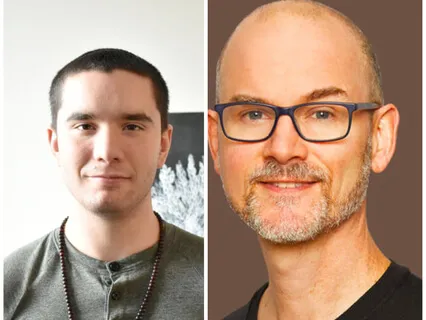
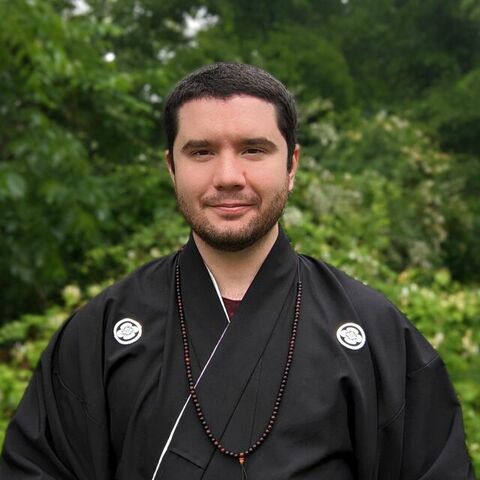
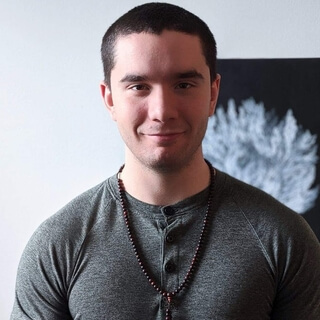
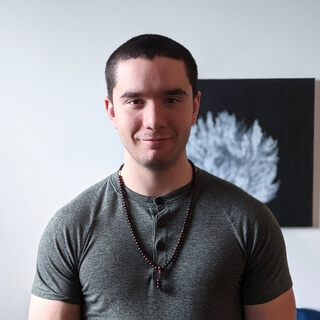
Today I had the pleasure of speaking with someone by the name of Sonic Yogi,
Or Jonathan Adams,
Who discovered the healing benefits of sound therapy after experiencing extreme anxiety.
He began to create and explore the potential of sound and frequency as an aid in relaxation and meditation.
He has led talks and workshops on sound therapy at TEDx,
MindBody Software's National Conference,
And many more.
His audio tracks are available on YouTube,
Spotify,
SoundCloud,
And Insight Timer.
All the links will be found below,
And if you're listening on Insight Timer,
You'll see a link or a connection to his page in the description.
Alright,
Let's get into it.
Well,
Hello Jonathan.
Hi there.
How are you doing today?
I'm doing great,
Thanks for having me.
Hey,
Thank you for coming on here,
It's a real pleasure.
So,
I asked you to come on here and get a chance to talk to you because we're both Insight Timer teachers,
And I've seen your work on there for a long time,
And you're always one of the names that pops up whenever I'm on there doing things for my own teacher thing,
Which is just really cool.
So,
Thank you for coming and letting me talk to you.
I've been enjoying your music for a long time and this is a real joy.
Thank you,
It's my pleasure.
Yeah.
Yeah,
Insight Timer is such a great platform,
It's a wonderful place to share,
And thank you for your work.
Hey,
Well thank you for yours.
So,
In all of this,
When I listen to your music and I listen to your content,
How did you get started in all of this?
Like,
Where did it come from?
What sparked the interest in creating this kind of like,
Really amazing music,
In my opinion,
And like,
Get into the meditative journey,
The meditative space,
And like,
The tradition that you come from?
Well,
That's,
I guess,
A few parts to that question.
I wouldn't say I actually come from any tradition,
So to speak.
My own journey came through really experiencing anxiety for myself and stress,
And that led me to yoga,
Ultimately.
And that was really just through the Gold Gym Yoga at my local gym,
And it looked really relaxing.
And so I started trying that,
You know,
After my workouts.
That gradually,
Over the course of a couple years,
Led to another sort of experience that was more profound and sort of altered my view of music,
Of sound and frequency,
And really my worldview in a big way.
But it was through that experience that I understood more of the source of that anxiety and stress and suffering that I had experienced,
And also,
Through my training as a musician,
How I might be able to offer something to help.
And so the journey as Sonic Yogi,
My artist moniker,
So to speak,
Began at that point,
And I just began producing music because it was something I already knew how to do.
I was a musician previously.
I was a professional touring musician with a classical duo.
For many years,
I had recorded music as a classical guitarist as well.
So I knew how to record music,
And so I wanted to kind of take that knowledge base and record sound and frequency and things that could help people relax,
Help people to begin to de-stress,
And ultimately to know themselves in a deeper way.
So I had sort of,
You know,
A multi-tiered hope of effecting change in that way.
And I just started creating that music and really giving it away.
So what about the yoga experience?
And I find it really cool that it was at the Gold's Gym.
That's such a,
I don't know,
That's such a humbling place to start.
You know,
You see the yoga going on at the Gold's Gym or whatever someone goes to,
And you're like,
Wow,
That looks really neat.
And it acts as this like spark towards a whole journey.
What about yoga in particular were you drawn to in the practice?
It seemed relaxing.
I was experiencing anxiety,
Like I would have panic attacks fairly regularly.
And for me,
That was,
You know,
My body would get really tense.
I would have trouble breathing and it would just feel like the world was sort of imploding on me at that moment.
So I also had digestive issues and I'd even gone to the ER a few times with panic attacks,
Thinking it was something worse.
And so ultimately I went to the general practitioner and,
You know,
He said,
I think,
You know,
This is what your issue is.
And so I started to seek ways of just wellbeing and wellness.
Yoga looked very relaxing.
And it was,
It really helped me to begin to loosen up my body in ways and sort of release some of that tension and stress.
And so that was my really initial attraction to yoga.
At the Gold's Gym,
It was actually called Synergy,
Which was kind of a yoga Pilates combo.
And then later I began to go to a local private studio at a woman's home.
She was a little more yogic,
I guess you could say.
She was,
You know,
Talking more about how to direct the energy in your body and really kind of getting into some of those energy centers and things.
So it was a bit of a progression in that way.
Did anything surprise you when you got into yoga?
Were there,
Were there any kind of things that came up or came out through the experience of your body or mental realizations while doing that practice that you were like,
Wow,
This is really cool?
Yeah,
Yeah,
Definitely.
I,
When I began,
It felt good and then it gradually sort of progressed into even,
I would almost feel kind of high after a practice and I would,
You know,
Call it the yoga high.
And,
And,
And so that,
You know,
Felt good.
So it,
It definitely encouraged me to keep doing it.
I was like,
This definitely seems to be going in the direction of letting go of stress.
As I progressed in the practice,
I also began to have some times after a practice where more intense emotions would come up like anger or sadness.
And so I would say I,
I was practicing yoga for around two years and there was kind of an arc to it of,
You know,
Feeling good,
Then having those yoga highs and then towards the latter part of those two years,
Really having some more difficult emotions arise out of that thought and things.
And that culminated into this experience that I've referred to as deeper anxiety.
But that experience was actually an awakening of sorts.
And,
And so that all of that energy of,
I think those suppressed thoughts,
Feelings,
And emotions bubbled to the surface and were asking to be dealt with.
And it was in that process that,
That I had some deeper realizations about the entire process.
And that was kind of the beginning of my musical journey as well.
That's really interesting.
I always think and say,
And I've heard,
You know,
This isn't my thought,
But the body is one of the most profound teachers that we have.
Like,
As the body,
It will show you things,
Aspects,
Characters,
Energies,
Thoughts,
Whatever it is that it's going through subconsciously.
And then given enough time and patience and trust in whatever we're doing,
Be it meditation,
Be it yoga,
I find that you do break through to those deeper emotions and those deeper realizations.
Now I could be very fancy and say that,
Well,
In Buddhism,
We call that the Dukkha Jnanas or knowledges of suffering.
But even if you aren't working within that framework or any framework whatsoever,
That seems to be the case again.
Did you find that leaning into that understanding,
Leaning into those deeper realizations,
Working on that deeper level helped you to connect with them and understand them?
And I don't want to say forgive them,
But kind of work with them less as an enemy and more as a friend?
Yeah,
I think so.
For me,
That deeper experience was so intense.
It was a lesson in and of itself.
And what I mean by that is,
The best way to phrase this,
As those things kind of bubbled up in my psyche,
So to speak,
They were sort of the teacher and I just allowed them to guide me.
But in that deeper experience,
It was really kind of psychedelic,
To be honest.
And so I was really holding on for dear life,
So to speak.
And I think I should probably explain this a little better for the listeners.
But as I practiced the yoga,
It sort of opened,
I would say,
The energy centers in my body.
And I'm not sure that my psyche was actually prepared for that.
However,
As those energy centers opened,
I had to adjust with my psyche.
And so the psyche was sort of playing catch up.
And by just surrendering to the energy of the self within me,
I allowed myself to sort of be taught.
Right.
The unconscious mind was like,
Let's rock and roll.
But the conscious mind was like,
No,
Wait a second.
Basically,
Yes.
So you're going through these experiences and you had training as a musician.
How did you approach,
I guess,
The union of the two or the want or desire to share these kind of experiences,
This healing,
This overall joy that comes from music?
We as humans are very like musical beings.
How did that begin?
What was that journey like starting that out?
Well,
As I was coming through this process,
I had reached out to various people.
I reached out to psychologists,
Counselors,
Psychiatrists.
And I also reached out to a woman that did energy healing because I knew there was something sort of energetic about this,
Even though I wasn't actually very steeped in spiritual things at that point.
She said,
Well,
I don't do any of that practice anymore,
But check out this music and this might relax you.
And so I checked out some sound healing music and I believe it was Stephen Halpern who I first checked out.
And it was very impactful in that it really helped me to begin to calm and still my mind and also my body to begin to relax and sort of come into those more relaxed places.
So at that point,
I was experiencing music and sound in a different way than I ever had as a musician.
And so that just made me curious,
Like,
How does this work?
And I was also immediately aware that music,
Sound and frequency were a part of this whole spectrum of experience that our human body is reacting to frequently.
Yeah,
The technology of the sound waves and the electricity and everything are part of everything.
Something strange that one can experience while on meditation retreat,
Particularly ones where things get very,
Very quiet,
Or if you ever find yourself in a natural setting like the desert,
Where there's not a lot of wind or noise,
Is you can hear a slight buzzing sometimes.
And I've heard a lot of people ask,
Well,
What's the buzzing?
And it's like,
Well,
That's just the electricity of your body.
It strains just how there's always a low hum that's going on within us.
And I think through music that you create and others create,
You can kind of tune to that frequency and it can affect your mood,
It can affect your mind state,
It can affect your being.
What is the kind of purpose behind the music that you create?
Like,
What is the themes,
The goals,
The orientation that you're putting it towards?
What inspires you to create a certain piece versus another?
My original intention was simply to help people to,
A,
Relax and sort of release stress,
And B,
To experience that union that I had experienced.
And so ultimately,
My goal is,
I think,
To help people experience their self,
Their inner self,
Which is peace and joy.
And so that's really the intention that I create with and continue to create with.
What was the,
I guess,
Transition like going from professional musician to someone creating music with that kind of intention?
It was,
Well,
That's kind of a story in and of itself,
But I had been pursuing this career as a classical slash classical fusion musician.
Myself and my partner were in a duo and we toured around,
We played in art centers and things like that.
And so that was the career.
And in that career,
We were ambitious.
We were trying to quote unquote,
Make it in the world and do our thing.
When I experienced the anxiety,
The panic attacks,
And then ultimately this sort of transitional experience,
I had really such a deep empathy for people's suffering that I wanted to just create something that would be helpful.
And so when I started creating the music with the singing bowls,
That was really the purpose.
At that point,
There was no ambition with Sonic Yogi,
With Sonic Yogi.
And I didn't want to have any because I felt burnt out from the ambition of the previous career.
And I was pretty aware of that investing in it like that with my ego would only lead to suffering.
And I really didn't want to go down that road.
So I just made the songs and the pieces out of pure joy.
And I posted them on SoundCloud for free.
And just did that for a few years.
Really?
What was the initial reception like?
Were there any reviews that stick out that you remember any conversations that you had around the initial music that helped to inspire you to continue?
I think I just posted them and I really just thought if it reaches one person that it's helpful for,
Then I was going to be thrilled with that.
So the plays on SoundCloud were pretty meager in the beginning.
And I just kept making the recordings from that place of wanting to like them myself.
But the plays increased and they seemed to catch a little bit of traction eventually.
So I don't remember any reviews particularly in the beginning other than just the comments on SoundCloud of,
Hey,
Thanks for making this music.
And that was enough for me to kind of just keep going.
So where does the name Sonic Yogi come from?
So that just came to my mind as I was beginning this process of creating.
I thought,
I need sort of a quote unquote band name or an artist name.
And I thought,
Well,
I've been doing yoga and I'm working with sound.
And at that point,
I could see how frequency and sound were part of this whole spectrum of life that we're experiencing.
So it just,
Sonic Yogi popped in my mind and I Googled that and there was no Sonic Yogi out there.
So I was like,
I will take that.
There you go.
I will become the Sonic Yogi.
There you go.
Do people call you Jonathan more or Sonic Yogi more,
You think?
Well,
I guess it depends on where they see that.
On Insight Timer,
A lot of people just call me Sonic because that's all that shows up in the little name tab there.
But yeah,
I don't know.
Obviously in my real life,
People call me Jonathan.
That would be a little weird.
Friends calling you Sonic Yogi.
I mean,
It's a cool name.
I'd be fine with it.
So what are some discoveries that you made in this journey?
Is it OK if I call you a healer,
A sound healer,
A sound bath person through the music in your own personal journey with it as you've done it over these years and with the way people have experienced it?
Let's see.
Could you rephrase that?
Yeah,
Absolutely.
So how long have you been making this kind of like meditative,
Healing,
Relaxing music?
Probably for about 10 years or so.
10 years.
And in that journey,
I think you've seen some really cool success like with TEDx and MindBody and everything like that.
And so I guess what is the reception been like and what are some discoveries you've made in those receptions or just through the own process of making the music?
The reception has been incredible.
It's a bit ironic to me because I put so much energy in in the previous artistic career and then in this one,
It was more like,
As I said,
A slightly different intention.
But it it seemed to blossom well.
So I've been really happy about that just in the chance to continue making this music.
So that's that's been a wonderful blessing in that way.
With because you've gotten to do the you do a lot of live events,
Right?
And I just find that to be so joyous that you get to connect people on that one to one level in person,
Just from them walking in the room and then walking out the room.
How would you say that the energy changes within them or within the room itself?
It's typically just much more relaxed and mellow.
I do feel that the sound waves affect our brain waves and that we are all kind of unconsciously affecting each other's brain wave.
And I know there have been many studies done in the meditation world about this,
But I feel that this the sound healing experience helps everyone to sort of get into that meditative space and typically leaving a session.
It's pretty palpable for me of just feeling in that different vibe.
And it's it's usually seems apparent to me that that others are also in that same space.
And so for me,
That is part of I think the hope is that we can learn as society,
Culture,
Community,
That when we do our own practice,
When we help ourselves move into this brainwave state that we actually help others too.
So in a way,
We are all sonic yogis,
We're all sound healers,
You know,
We're all working with frequency and vibration.
And,
And,
You know,
Just by doing our own practice,
We're helping others to also access that.
You know,
The that's really interesting to think of sound in that way.
Do you think of sound as a tool or something that you can use for particular activities?
I know for me,
Like if I'm going to go do a really hard workout or,
You know,
Lift really heavy weights,
I'll want some metal on or Viking music or whatever it's like to put me in that headspace.
But then to come down from that or to exist within a different kind of space,
Do you think that music can help to kind of set the set the tone and change the energy towards that?
Yeah,
And I sort of think of sound and sound therapy,
If you will,
And music as two cousins,
But they're slightly different.
And so I,
In my own work,
I sort of employ them both,
But I'm thinking of their effect differently.
With music,
I think about how it affects our emotions,
And things like that.
And so part of that is based on memory.
So just the way our brain works with music,
We have associated that with certain things or,
You know,
There's a memory there.
With sound itself,
I'm thinking of more just the pure visceral quality of the vibration.
So,
You know,
A certain hurt is going to feel a certain way.
But there's not as much of an emotional response,
Because it's not based on a memory.
Do you find that particular frequencies,
Hertz,
Sound waves can change the way music sounds overall or change the theme or message depending on what you're trying to do?
Um,
That's interesting.
I think,
I think it can have an effect.
I mean,
In a similar way that choosing a key could have an effect.
I choose frequencies based on how they affect me.
And so for example,
You know,
I have a certain singing bowl that roughly a B flat that seems to work well for the third eye.
And so I feel these energies within myself,
You know,
I'm only one person,
And I only have my own sensations to draw from.
But I use that as a guide.
And my assumption is,
Well,
If it's working on me,
Then it has the potential to work similarly on others.
And so I've chosen the tones that I work with,
And the singing bowls that I work with,
Based on based on that sort of feedback within myself.
And I,
And so I've collected the sounds,
You know,
According to that sensation,
Or sort of biofeedback.
How would you say that people should use and utilize your music?
Like in what settings?
I think a few different ways.
I think just for relaxation,
You know,
If a person doesn't even have a meditation practice,
That they might also just enjoy relaxing with the sounds.
I've gotten a lot of positive feedback that way.
For meditation practice,
I feel like the sounds and the frequencies themselves are very helpful for getting into that meditative state.
And so I think they can be a great prelude to a meditation session.
I like to start my meditation session with breath work.
And I usually listen to the sounds as well.
And then I'll listen to sound during meditation.
And then eventually I'll go into a silent meditation.
But it can be very conducive to getting into those meditative brainwave states.
And for anybody that might not be aware,
Which I assume many of your listeners might be,
But we have different brainwave states.
And when we're in those states,
We typically experience,
You know,
Different states of consciousness.
So based basic brainwave states are beta,
Alpha,
Theta,
And delta.
And so alpha,
Theta are those more meditative states.
And normally we're just in a beta state in our everyday sort of waking experience.
And so the sounds can help to bring us down into that alpha and theta state a little more quickly.
You know,
That's really interesting in that,
You know,
You can be walking through a forest,
Right?
And be listening to one kind of music versus listening to music versus no music at all.
And that can inherently change your experience of the forest of scenery.
I have one particular track that I listen to sometimes that I call the make people beautiful track,
Where if you just walk around listening to it and just looking at people for some reason,
It's just like,
Everyone looks so beautiful when you listen to this track.
It's wonderful to me.
That's a really neat aspect.
Do you have any advice for someone like where to start with this or how to start utilizing sound in their practice or in their life in this way?
Yeah.
And I actually have many recordings,
As you know,
So they can certainly start just listening to some of my singing bowl recording.
Maybe even just playing them in the background during the day and sort of getting a feel for how does this feel different than regular music?
And I think it's a fairly subtle effect at first,
But sometimes just having those random sounds helps put the mind in a different space.
I should also say that I look at the sound therapy as really a mimicking in a way of nature.
And so in nature,
We hear sounds like birds,
Water,
Crickets,
Bugs,
And these types of things.
And these are all sort of musical sounds that are random,
But they unconsciously put our nervous system in a different place.
And typically those sounds occur at a specific time of day.
So for example,
At dusk,
We're going to hear more of those bugs and songs like that.
And the birds sing a different song at dusk.
And also at that time,
The sun is dropping.
So our brain waves are actually changing.
So there's a natural cycle to our experience all the time.
And in a way,
The creation of the sound therapy is to help mimic that experience or reinforce it.
And so it's helping people,
I hope,
Come back to balance with nature.
Nature is really designed,
I think,
In a way to help people and our consciousness flow in a natural way in that we move through these different brainwave states throughout the day naturally with the cycles of the sun and so on and so forth.
That's,
You know,
I'm right there with you with that.
That is something that I find and that if you know who he is,
Dr.
Andrew Huberman,
Who is a professor at the University of Michigan,
If you know who he is,
Dr.
Andrew Huberman talks about a lot is getting sunlight in the morning and waking up and really getting sunlight.
We as hunter gatherers and apes for tens of thousands,
Hundreds of thousands of years,
The first experience we had when we woke up generally was sunlight and getting that vitamin D and getting that photons in our eyes and our brain experiencing that and kind of getting that visual information.
But in the modern world,
You know,
We might not get that so much.
And it's the same with sound where we might wake up in the modern world and kind of live in not like a dead zone of sound and experience,
But kind of a much more muted experience.
Yeah,
I totally agree.
Another intention that I had in the beginning of creating this music was to simply bring sort of nature back to it.
And,
You know,
The initial recordings have nature sounds in it.
I knew that my the anxiety I experienced too was partly from just being too connected into the modern world and almost disconnected from myself.
You know,
Always looking at a screen,
Being up late hours at night,
You know,
Long past the sun being set.
And so one of my sort of healing practices was to,
You know,
Turn things off at 6 p.
M.
And give myself that time in the evening,
You know,
As I would if I was,
You know,
Living out there in a tent somewhere.
You know,
I wouldn't have artificial light.
I would allow my body to sort of go through that natural cycle of winding down.
And so I began to become more conscious about that and also realized that,
You know,
The way we've created our human world now is that we're always sort of connected to a screen or connected into this system.
And that can create a lot of unconscious anxiety.
Yeah,
Absolutely.
Do you think that a appreciation or a union with those kind of base traits,
Whether it's nature,
Whether it's establishing a routine,
Whether it's connecting just with this moment through music or practice,
Whatever it is,
Is a big part of the practice in general or experiencing your kind of music where it's like this is something that you can have on in the background and it affects and it helps,
But using it as a focus,
How do you think that?
Using it as a focus in terms of like,
Say,
In your in a specific practice or.
Yeah,
Whether you're listening to it while you're doing yoga and integrating it through your movements or using it as a listening focus through meditation or whatever.
I think it's I think it can sort of reinforce that movement into the more meditative state,
Which in a larger sense is what we're talking about in terms of cycles of nature is just moving ourselves back into a frequency of harmony with nature.
And sort of another way to look at what I was just describing with,
You know,
In our modern world,
Always looking at screens,
We're sort of we're disharmonizing with nature and the most important nature we're disharmonizing with is our body.
Yeah,
Absolutely.
And so that was the result of the anxiety and the stress is that the mind has decided that its agenda,
Its expectations are more important than caring for the body.
And and so the body experiences anxiety and stress.
But our body is also part of a larger system of nature.
So so I think using the music intentionally in a way to really modulate the cycles and the frequencies of our body.
Is the sort of a more primary way of practicing or using the music practice.
And I know frequency has taken on a bit of a woo woo connotation in today's world.
So if it's OK,
I just wanted to sort of outline what I mean by that when I'm referring to frequencies in our body.
So on a just a very basic common sense level,
We have the frequency of our breath.
We have our heartbeat,
Which is beating,
And we have our brainwaves.
And frequency simply means how frequently something happens.
So that word could be substituted with cycles,
Like cycles of nature,
Oscillations,
Which is just another sort of rhythm.
The frequency is really a description of rhythm and our body is fundamentally a rhythmic machine.
And so our breath,
Our heart and our brainwaves are all connected rhythmically in our nervous system.
And so as we affect one,
We affect the others.
The sound and the sound waves,
You know,
Of course,
Come in through our ears,
But they're going to affect our brainwave.
And as our brainwaves are affected,
It's going to affect our heartbeat and our breath.
Now,
If somebody is experiencing really deep imbalance and stress and anxiety,
Their whole physiological system is going to sort of be out of balance.
So the subtle sort of waves of the sound are going to have maybe not a profound impact in the beginning,
You know,
But balanced with other mind-body practices like breathwork or yoga,
You know,
All of these things are moving towards the same goal,
Which is to help the body change that state of the nervous system,
Which ultimately is the function of frequency.
Right.
And,
You know,
I don't think anyone sits down and their first,
You know,
Meditation session that they've ever done and expects to attain awakening.
And in that same way,
Yeah,
You're not going to the very first time you sit down and listening to something,
You know,
Get the most profound,
Incredible thing.
No,
You might.
I'm not saying you won't.
And I wanted to speak on rhythm in the mind real quick from things that you mentioned.
Do you have any pets?
Not at the moment.
Well,
We have cats and my partner said,
Well,
They know it's dinner time.
And I'm like,
Well,
They don't know it's dinner time.
They just have the rhythm that I generally get fed around this rhythmic frequency of the day.
Right.
It's they don't have a concept of time.
They have the concept of the rhythm of what's going on,
What's going about,
How things are doing.
And you were talking about the mind and the body and the way in which it interacts.
Something that has been said for a long time is that the mind is a lovely service.
It does incredible things if we ask it to,
But it's a dreadful master if we let it read,
You know,
Lead,
Lead the reins.
It's really interesting that you got started with yoga.
Do you know the history of that word and where it connects in English?
It's really cool.
So yoga means to yoke that that would kind of be and it's the yoking of the mind with the body.
And that's really interesting to me that you are using music in a way to yoke the mind,
To show the mind,
To teach the mind how to be in better harmony with the body.
Yeah,
That's exactly it.
And so much of that resonates for me as well.
And it sort of resonates through all different traditions.
I'd be curious to get your take on the sort of more broad,
More broad,
Your take on the sort of more Buddhist view on that.
But I sort of see it also,
I was raised,
You know,
Christian and just a normal,
Average,
Western American household.
But now I see those teachings as really very parallel to the teachings of yoga and understanding them really in a different light.
So in a way,
I see the interpretation completely differently,
But also it feels like it has more clarity because it was something lived through my experience.
So yeah,
I see that yoking and allowing us to sort of bring that mind back into harmony with what in yoga would be called the true self and,
You know,
Just,
You know,
Christianity,
We would call it God or any other religion,
Maybe.
But in really coming into that harmony,
And I can see that echo through all of the world religions of surrendering our egoic self,
Which tends to draw us into stress,
Anxiety,
Because of its need for,
You know,
Control and allowing us to surrender back to just the flow of what is and what's always occurring out there in nature.
So two thoughts on that.
One is,
It's kind of a joke,
But I think it's a teaching that I like to tell is,
So there's a line from Christ where he says,
You know,
My yoke is easy and my burden is light.
And so I always kind of like to do the play on words there where the yoga of Guru Christ is easy and light.
But the kind of the Buddhist perspective in and around sound is really interesting.
There's a reason we do mantras.
There's a reason you chant,
Because it kind of generates a experience,
It generates a mood,
It generates almost like a force field of presence,
Where you're doing it with a big group of people.
Or you're doing with yourself that sets an intention,
Sets a goal,
Sets an object and sets an overall energy throughout the room.
One of my most profound experiences in meditation was a chant of just Om Mani Padme Hum,
Which can seem cliche,
But I had a fellow retreat attendant who was actually a monk who during it shot me with a love beam.
I had been really high frequency,
High RPM meditation the whole day.
And this was the closing chant of the day.
And I'm smiling and I'm looking around while we're doing this chant and I just lock eyes with him.
And I just feel this like beam come forth from him and hit me in the chest.
And I was running at such a high RPM and my energies were already so high,
It was too much.
And so I had this like six,
Nine hippie that was standing next to me doing the chant standing up.
So I just reflected it into him.
And I was like,
You can have this,
You want it,
You can take it.
It's too much for me right now.
But it was really interesting,
Just the experience,
Whether you want to call it spiritual,
Mystical,
Magical,
However you want to describe it,
Of that union of sound and practice and body,
Which I find really intriguing and interesting.
And I also find that just sound in general can connect with certain people,
But in others,
There's a whole Buddhist tradition called pure land or Shingon,
I believe,
Where their whole tradition is to chant the name of Amitabha in a way.
Right.
And I think for some people that can be an absolute best practice that you can do because it's like,
Well,
If you can establish a basis,
Establish an intention,
Establish productive practice through the repetition of that same kind of noise and sound that you're doing over and over again.
I mean,
All the better to you.
It doesn't work for me very well,
But for other people,
I know it works phenomenally.
Yeah,
That's so interesting.
I attended a Buddhist temple in my town.
It was based in Vietnamese Buddhism.
But I remember one particular,
After one particular meeting,
This woman invited me to go to another temple with her.
We were temple hopping that day.
That's a great thing.
Temple hopping?
I love that phrase.
So we went to another temple and it was this particular place.
It was all Asian.
I don't think they were speaking any English there,
But she sort of led me into the practice.
And it was a big room filled with men and women all sitting on cushions.
And there was one person in the front of the room sort of leading it,
But they basically were chanting,
But a person was hitting this percussion instrument,
But basically in a metronomic rhythm.
And so as the chanting would go,
It would start somewhat slower and would gradually sort of increase over the course of say 30 minutes.
And it would sort of reach this sort of fervor or excitement to it,
And then they would bring it back down.
And so that kind of kept occurring.
But that whole practice and that continued for maybe a couple of hours.
But it sort of showed me too that how important rhythm is and sort of getting into that flow of entrainment that we can sort of put ourselves into that space.
So that's just a random story.
No,
It's great.
Do you find that people.
.
.
Something I find,
And I think others experience this too,
Is that I kind of have to get out of my own way in those situations where I might feel some resistance to doing the practice.
I might have that my analytical Western mind being like,
Oh,
What is this doing?
It's not really doing anything,
Yada,
Yada,
Yada.
And once I'm able to kind of take that off,
Get out of my own way in those experiences and really experience the present moment through them,
I'm able to more fully engage with them and use them to their fullest.
Do you find that people often kind of need to do that?
Yeah,
I think so.
I think we bring so much of our own imprint or we're looking through our own lens that we sort of have to pull that off to experience the magic and wonder of practice.
And as most people in the West probably did not grow up necessarily practicing Buddhism or any other sort of mind-body-based practice.
Save for the Quakers,
I guess.
Yeah,
Well,
That's true.
I guess I should speak for myself.
That definitely was not my experience.
So being sort of introduced to these practices,
I think allowing me to view it through that sense of wonder and sort of allowing it to be something totally different.
And in some cases,
Of course,
These practices are super simple,
But they can also lead us to very profound places that are confounding for our intellect.
Oh,
Absolutely.
That's something I've always been so astounded by about the breath itself.
It's like really this thing that I do every day all the time,
Both consciously and unconsciously,
Is the thing that can lead me to profound spiritual experiences.
It's like,
Yeah,
It's literally the simplest thing in the world.
It's weird.
Yeah,
Yeah,
Totally.
And so,
Yeah,
And I think that's interesting.
I think as a person who is wanting to share that with more people and sort of invite people into that.
And I hope that also the music,
Just the,
We all have a sort of a natural relationship of wonder with music and music and sound.
And so hopefully that can also be something that sort of is inviting.
So what kind of advice would you give someone that is wanting to create this kind of music or kind of get into this space of creation?
I would say,
You know,
Having some,
Obviously,
Musical background is helpful.
But beyond that,
I would say meditate and really focus on meditating and understanding what a deep practice is like and what it feels like to move into different states of experience,
Consciousness,
And practice.
Because ultimately,
I would say the things that I've learned and incorporated in sound healing were things that I learned in an intuitive way through being in more awareness of subtle state of frequency.
And fundamentally,
I know this is going to sound a little bit woo-woo,
But I'm going to go ahead and say it,
That everything,
Of course,
Is vibrating.
We've all heard that.
But as we bring our awareness into different states of experiencing that,
It's possible to actually pick up on different perceptions of that vibration.
Like,
For example,
Being out in nature,
We might actually,
Like you had mentioned,
Hearing that buzz at the beginning of our talk.
And so that's maybe an example of tuning into a different awareness of vibration.
And so as a sound healer,
Someone who's producing sounds to help others,
Those are ultimately sourced from that space of experiencing that vibration.
And then the goal is to really reproduce that.
So when I began collecting the singing bowls,
I collected the singing bowls that I felt helped me reproduce that vibration that I experienced in meditation.
I don't think that's woo-woo-y.
The first teaching the Buddha ever gave is that the impermanence is the thing.
Everything is impermanent.
Everything is shifting and changing moment by moment in an ever-flowing moment.
I mean,
You and I are not the same biological,
Mental,
Material,
Spiritual creatures that we were when we started this talk because of that change.
When you walk through a doorway,
When you do things,
Everything that you experience is an aspect of that change,
Whether it's the food that you eat,
The music that you listen to,
Or just the things that you do,
Or the thoughts that you have,
The things you say.
All of these are part of that play of ever-changing experience.
And I mean,
If we want to get scientific with it,
We could say,
Well,
The electron fields and the trillions and trillions of atoms and electrons and quarks that make up our being are warping in and out of space and time and where they're at and what they're doing in every instance.
And if we can do things that affect them in one way versus another,
That's not woo-woo-y at all.
That's just a greater understanding of our life,
Our world,
Our being,
And our place in all of this.
Yeah.
Well,
I totally agree.
I like that perspective.
Yeah.
So yeah,
I totally agree.
And I'm curious,
For you,
Do you practice a certain style of meditation like Vipassana?
I say I'm a Buddhist kind of Buddhist or a Buddha kind of Buddhist.
I pull from all traditions.
I do practices that I find to be very helpful to me.
I do noting.
I do Zogchen style meditations.
I'll do fire casino practice.
And that is something I think is really important for people to hear,
Whether it's working with sound therapy,
Working with music in our practice,
Working with chanting,
Or we can go the really hard line other way and say,
OK,
I'm just doing zazen.
And I think walls are the coolest thing in the world to look at for two,
Three hours at a time with no other experience than the breath or whatever we're using as our concentration object.
But no,
I pick and choose.
And through that,
I think one can gain a lot of insight into what helps them most.
So if the zen thing is your thing,
Then absolutely that.
But if you want to have emotions engaged,
You want to do tantric things,
You want to do yoga,
You want to experience sound baths,
And you're more pulled towards that,
Then go do that.
I don't think that one should isolate their experience of practice to the first thing they run across or what everyone says works for them.
Yeah,
I agree.
I'm I'm like to explore the smorgasbord myself.
Yeah,
There's a lot of things out there.
It's a neat technology.
Yeah,
That's the old British way of saying technique is technique.
And so,
Yeah,
It's a technique of sorts.
So do you have anything that you would want people to understand about you or your music or the way in which you express yourself or that in general,
Just in closing,
I guess your your message to people?
I think the the lesson I think from that initial deep experience was that this character of Jonathan that I was seeking to,
I think,
Create in my life or achieve,
I was,
I was ultimately seeking to become something in sort of the ambition of my earlier career.
And in in relationships,
Etc.
I was seeking to become in order to get love,
Which I think is all of our primary sort of driver in that deep sort of profound experience.
I realized that character of Jonathan didn't exist.
And actually,
A lot of the angst and suffering was caused by trying to be a thing that could get love.
And I realized that that that didn't actually even exist.
It was just a figment of my imagination.
It's a great message to have.
And so it was a bit of a paradox.
And I think the simple message I think I took away from that whole thing was just to choose love and not fear in each moment.
And that in each moment,
We just have to keep making that choice moment by moment by moment.
So that's a very simple message.
But I would encourage anybody that's kind of experiencing stress or,
Or anxiety or anything like that to consider that.
And then consider how these practices might help us strengthen that.
And in every moment.
That's amazing.
Well,
Thank you for letting me talk to you today,
Jonathan.
It's been a real pleasure.
It's my pleasure.
Thank you for having me.
All right.