Hello my friends,
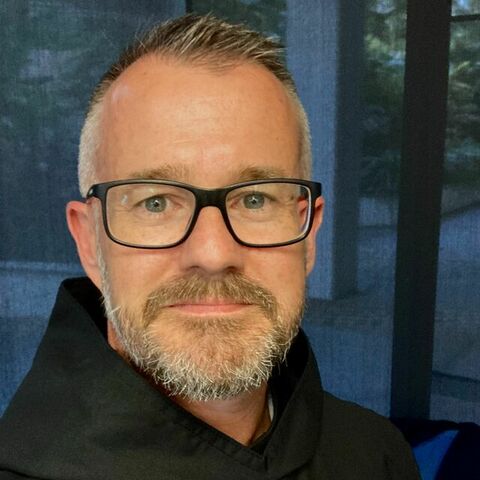
This is Mark Gladman,
Also known as Brother Frederick James,
Your friendly neighborhood monk in-dox,
Welcoming you to another session in our series,
Abiding in Colossians,
As we consider what it means to abide in Christ through the lens of Paul's letter to the church in Colossae.
So over the past several days we've been learning to slow down,
To notice what's already growing,
To value steadiness over pressure,
To see reality held together from within,
To trust that reconciliation runs deeper than fragmentation,
To recognize that presence is not distant but within.
And yesterday we learnt to trust the slow work of rootedness rather than the pace of urgency.
So today as we continue into the next part of this letter to the Colossians,
We encounter a new kind of warning.
Not a warning about danger in the physical sense,
But a warning about what Paul calls captivity.
So as we begin today I invite you just to still yourself,
To take a deep breath in and then out,
To allow all the things that you might have carried into this moment just to fall away as you bring yourself fully into this moment,
Mind,
Body and heart.
A space and time just for you to listen carefully with the ears of your heart to the whispers of that Christ within,
The hope of glory.
As we hear Paul's words in Colossians chapter 2 verses 8 through 15.
So Paul continues to write,
For in him the whole fullness of deity dwells bodily and you have come to fullness in him who is the head of every ruler and authority.
In him also you were circumcised with a spiritual circumcision by putting off the body of the flesh in the circumcision of Christ.
When you were buried with him in baptism you were also raised with him through faith in the power of God who raised him from the dead and when you were dead in trespasses and the uncircumcision of your flesh God made you alive together with him when he forgave us all our trespasses erasing the record that stood against us with its legal demands he set this aside nailing it to the cross he disarmed the rulers and authorities and made a public example of them triumphing over them in it.
So we see here Paul writing about being taken captive not like prisoners in chains but by ideas and pressures and ways of thinking that pull us away from what's true and doesn't that feel profoundly relevant in the days in which we're living because many of us live in environments that are just filled with urgency notifications and messages and voices insisting that something must be done now immediately yesterday respond attend the world around us is filled with signals each one claiming importance each one suggesting that if we don't respond we're going to lose something and over time this creates a very subtle but very real form of captivity the sense that we have to attend to everything that every demand deserves a response and every signal requires us to give it some attention but here in Colossians Paul is inviting us to reconsider that assumption not everything that demands attention deserves it he's saying here that not every voice carries wisdom and not every idea leads to life and not every urgency is genuine some urgencies are just illusions false alarms that pull us away from what matters most Paul speaks of philosophies and empty patterns ways of thinking that sound persuasive but lack depth ways of seeing that fragment reality rather than holding it together and maybe we recognize this more easily than we think I mean if I said to you have you ever heard the voice of comparison yeah that pressure to measure ourself against others that quiet fear as we're flipping through our social media profiles that we're falling behind everybody else we recognize that in a voice that says you have to act now you have to decide now you must respond now before it's too late and every time those voices create attention and when they do they generate anxiety and in generating anxiety they fragment our attention and then slowly without noticing it over time they pull us away from that rootedness that steadiness from that presence this is the kind of captivity that Paul's warning against those subtle distractions the noise that fills the mind interrupts the stillness and creates urgency when no urgency actually exists and this is where discernment becomes essential now be careful because in the modern world sometimes discernment becomes suspicion or withdrawal or cynicism but when I'm talking about discernment here I'm talking about that that ability to recognize what deserves our attention and what doesn't to be able to distinguish signal from noise to recognize what leads us towards life and what's going to lead us towards fragmentation and this ability can only be developed through awareness by returning again and again and again to what's steady and rooted and remains present when all that noise fades away Paul reminds this community and Colossae that fullness isn't found in chasing every idea but by remaining connected to what's already present we don't find fullness by adding more voices and multiplying our efforts but by listening more deeply and clarifying our attention and maybe that's where freedom truly begins not eliminating the noises entirely because that's not going to be possible but by learning to recognize them for what they are that they're temporary passing not always meaningful I mean think about thoughts themselves they come quickly they shift constantly they demand a response but both you and I know that not every thought deserves engagement not every inner voice carries truth some thoughts are just echoes some reactions some is just noise that are passing through our awareness and when we learn to recognize that we can learn to feel less pressured and less reactive and less captive to urgency because we begin to understand that our attention is a choice not everything deserves our focus and not everything requires our response and this recognition creates beautiful space space for clarity space for steadiness space for presence capital P presence to be noticed again so today I'm going to invite you not to try and eliminate the thoughts or silence the world because that's not possible but rather invite you into a posture of noticing to observe the movement of thought without immediately following it and to allow the inner noise to pass without treating it as instruction you might imagine thoughts like clouds moving through the sky or my personal favorite is to picture a river or a creek and the thoughts are like leaves floating on the top of that as they go along with the current and as they come along they're visible for a moment and then they're gone they're not fixed they're not permanent they're just passing through and as you notice that movement whether in moments of quiet or in the middle of activity ask yourself this question what in my life feels urgent but may not actually be essential subtle difference there what in life feels urgent but may not actually be essential now this is not to dismiss responsibility or ignore what matters but it's learning to recognize false urgencies learning to pause before we react to take a moment to return to what's steady and rooted and is real because freedom from false urgency means seeing more clearly recognizing what matters and letting all the other things just pass on by and when we learn to live this way being less captive to noise and less reactive to pressure we begin to rediscover something we may not have realized that we lost freedom of attention freedom to remain steady to listen deeply and to return again and again to presence not everything demanding attention deserves it my friend but what truly matters what's rooted what's life-giving that remains it stays patiently abiding waiting to be noticed again and my grace peace and love be with you in your noticing today and every day amen until tomorrow may grace and peace be with you