Welcome to the Mindfulness for Writers podcast.
This is episode one and my name is Heather Demetrius.
I am a young adult author and writing coach and certified meditation instructor.
I feel like the term podcast is a little bit misleading because this is very DIY.
I hope that you all appreciate how hard it is for all of us to get time in for our writing.
I chose not to include bells and whistles and a theme song and editing.
I'm literally recording this and putting it on SoundCloud and that's what I'm doing.
That's kind of how I operate as a coach in terms of telling people to simplify their lives so that there is more time for the writing.
So forgive any ruggedness of this podcast.
So today I'm just going to talk for a couple minutes and I basically just wanted to introduce myself to you,
To tell you my meditation story and how it helped me as a writer and just to get into sort of six basic things that can be really helpful for you to know about meditation.
And then I recommend if you have time afterwards or perhaps later today to go through the first mindfulness for writers meditation,
The intro to meditation.
It's a 20 minute guided mindfulness based meditation.
There's a tiny bit of talking at the beginning and a little bit of talking at the end,
But I tell you where you can fast forward if all you want to do is just the meditation part for 20 minutes.
So as I always tell people,
I am completely available to answer questions and to support you in your practice as a meditator,
As a writer.
And so you can reach out to me whenever you'd like.
My website,
Well my blog mindfulnessforwriters.
Com is where kind of all the mindfulness and meditation stuff lives.
All right,
So getting into it.
So my story is,
Like I mentioned,
I'm a young adult author.
I write in all genres,
Fantasy,
Contemporary,
I have an anthology coming out soon and that I edited and I'm writing historical fiction and nonfiction,
Kind of all across the board.
And I tend to publish one to two books a year.
And so that's a pretty rigorous publishing schedule.
And basically what happened is I kind of lost my ever loving mind and I was so overwhelmed by my deadlines,
By the pressure of being a published author and having an online presence and,
You know,
Social media was just like sucking out my life force.
And I've been a lifelong sufferer of depression,
Like many of my fellow artists.
And so it was just really,
Really hard to navigate the publishing world and the writing world and the art part of all of it.
And I feel like I kind of lost myself there for a little while.
So a friend of mine,
I was visiting her at the Cape.
I live in Brooklyn,
But we were at the Cape.
And she had a guided meditation and said,
Hey,
Lay on the couch,
I'll put it on,
See what you think.
And first of all,
I had no idea that meditation could be guided.
I thought that you really just had to go sit by yourself and like,
Try to clear your mind.
That's what I thought meditation was.
And it just completely blew my mind that I could be supported in this way.
And so I immediately when I got back to Brooklyn,
Searched out meditation studios.
And of course,
We're really lucky here.
There's,
You know,
A lot of meditation studios and well,
Not a lot,
But there are a few and there's,
You know,
Just so there are so many meditation teachers here.
And so I had a lot of help basically.
And I started going to classes weekly and several times a week actually.
And then I started kind of deep diving into the meditation world and searching out online meditations and teachers and podcasts and read books and went to lectures and the whole nine yards.
And what I found was that after only like four or five months of,
Well,
Let's say six months max of really meditating pretty regularly,
Starting with like 10 minutes a day and moving up,
I was able to actually get off my antidepressants.
So that was the hugest thing.
My migraine headaches that I suffer from were greatly reduced.
And the best thing as a writer is that I was able to access more creative flow.
And when I was really blocked on a project,
I went on a meditation retreat.
It was intense.
It was a seven day silent meditation retreat.
And by the end of it,
I was unblocked and I wasn't working on my writing.
All I was doing was meditating.
And that just kind of created space and added bandwidth.
And so I was able to get back to it.
So it's been a bit of an experiment for me as a writer because,
You know,
Obviously you only have so many hours in a day.
And I was a little bit resistant at first to devoting too much time to meditation because I was like,
Well,
That's not efficient.
I could be writing.
And I realized that when I made the effort to meditate daily and especially meditating before I wrote,
I had a lot more focus and I was able to kind of access the flow state a lot sooner than if I hadn't been meditating.
And it's not a cure all obviously.
And I still have bad writing days.
It's not like a magical potion,
But it has greatly helped my writing itself and it has definitely acted as a major support system in the wildly world of being a writer.
You know,
We have a lot of uncertainty in terms of,
You know,
Will this book get published?
Will I make any money?
Will anyone buy the book?
You know,
And there's a lot of emotional things that we have to work through.
One thing that I really struggled with and still do to some extent is like professional jealousy and just feeling like frustrated when my books don't get the attention I had hoped they'd get or I don't feel as supportive as I like to feel in,
You know,
With my publishers or whatever.
And so meditation became sort of this like harbor,
This safe harbor that I could go to.
And it also helped me to just understand how my mind works more and to be more mindful.
So a lot of people aren't really clear on the difference between the term mindfulness and the term meditation.
And mindfulness is the practice of being in the present moment all the time and aware of what's going on both internally and externally.
So for example,
You can be mindful while you're cooking a meal.
So instead of working on a book in your head or talking on the phone or listening to a podcast,
All you're doing is focusing on chopping the vegetables and frying the food and making the salad,
Whatever it is that you're doing,
You're doing it mindfully.
So you're completely inhabiting that present moment.
And you can see,
Especially for those of you that are fiction writers such as myself,
That having that attention to detail is going to pay enormous dividends in your actual work.
And there's going to be that kind of zest to the prose because you are able to really inhabit a moment and to really get all the juicy details that are happening in the moment internally and externally.
So that's mindfulness.
Meditation is when you're actually sitting and you're meditating.
So what I practice is called shamada.
It's calm,
Abiding meditation,
Basically known as mindfulness meditation,
Where the object of the meditation is your breath.
And so that's what I guide people in.
I also do loving kindness meditation.
So you'll see I'll have meditations for that,
Which is very useful,
Just working on having more compassion for yourself,
Not being so hard on yourself.
And I know we writers can be major perfectionists and beat ourselves up.
So that's a great practice as well.
So just to get into a couple of quick things,
I just wanted this to be a space where you could kind of get some nice tidbits about meditation and kind of quick and dirty tips,
And then you can jump into your practice.
So for seating and posture,
When you listen to the intro to meditation recording,
I guide you through how to sit.
But really quick,
I recommend starting in a chair.
If you have a meditation cushion,
That's great.
But it it's a bit of a learning curve in terms of finding that posture that is comfortable for you,
Especially if you have back issues,
Which I know many of us writers do because we're sitting a lot.
So if you are sitting in a chair,
Just make sure that it's one that's not so comfortable that you're sinking into it.
And if you're on a cushion,
You want to make sure that your knees are lower than your hips.
And so that means you're going to be sitting kind of on your sits bones at the edge of the cushion.
And there's all different kinds of,
You know,
Cushions and stuff like that.
So I'll probably do a little talk about that at another time.
But for now,
If you're just starting out,
Just grab a chair.
And in terms of posture,
We say,
You know,
Upright but not uptight,
Kind of a regal dignified posture.
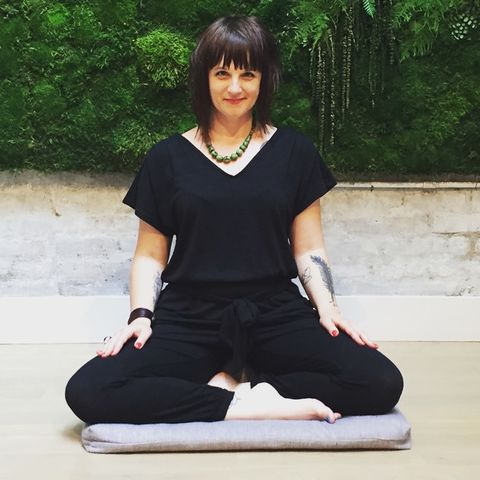
So that nice straight,
Elongated spine,
Chin gently tucked in hands on your lap,
So the palms on your thighs,
Just making sure that you're comfortable.
Laying down is also an option.
I don't ever meditate that way because I fall asleep immediately.
But if you don't fall asleep,
And especially if you have back issues,
That might be a great place for you to start.
So in terms of when to meditate,
By and large,
I tell people,
You know,
Well,
First of all,
Meditate when it the time that works for you,
But just be consistent.
So for some people,
That might be first thing in the morning,
Other people,
It might be their lunch break,
Other people,
It might be later in the evening.
I will say that if you meditate later in the evening,
You run the risk of getting pretty sleepy.
And you run the risk of not doing it,
I have found even as a serious meditation teacher and meditator that if I don't do my meditation pretty much first thing in the morning after I have a cup of coffee,
Then I will forget to do it.
Like I genuinely will forget to do it.
And for those of you that,
You know,
Like to have a glass of wine at night,
You want to do your meditation before that.
Because if you have any alcohol or any kind of substance,
Like it's,
It's not going to be supportive for your meditation practice.
So I recommend first thing in the morning.
Some people just jump right out of bed and do it.
I like to have a cup of coffee and read up for a couple minutes and then eat maybe a little something.
And then I go sit and I meditate for 20 minutes a day.
Sometimes I do 30,
But 20 is like my sweet spot.
And I have a space in my home where I do that.
I have a very tiny closet like apartment in Brooklyn.
So I don't have some like fabulous meditation set up,
But there is a space in the house where the meditation cushion always is.
And I have like little things around it that are inspiring to me.
And that is my meditation space.
And my husband is a meditator as well.
And so that's just kind of our space and it's in our living room.
And we don't have children.
So it's very quiet and we can just sit and meditate,
You know,
When we want to.
So I recommend having a space with like your setup so that there are no deterrents to getting on the cushion or on the chair.
You don't want to have to like go grab something and put it somewhere and set yourself up because that's going to take five minutes.
And then,
But you know,
By the end of it all,
It's like 30 minutes later and then you start feeling like,
Oh my God,
This is too much time and you don't meditate.
So best to have a space that's set up.
It also serves as kind of a reminder that,
Hey,
I do this.
This is a part of my life now.
And that's really helpful as well just to keep seeing that cushion.
It kind of keeps you on track.
To that end,
Especially if you live with someone or you have children,
Pets,
Whatever,
Make your family,
The people that live with you,
Your roommates,
Whatever,
Make sure they know that you're doing this and that it's important to you and that you can't be interrupted while you're doing it.
People just don't get it.
If you say that you're meditating and they'll be like,
Oh,
I just have a quick question,
You know,
They come in.
So go to a space where you can shut a door,
Where it's quiet,
Where you can say,
Hey,
I'm going to go do my,
You know,
Meditation thing.
Just I'll be out in 20 minutes,
You know,
And then have at it.
And then that way,
You know,
You bring other people into your practice into that process and you let them know this is important to you.
If you don't take it seriously,
They won't take it seriously.
So that's my little spiel on that.
So in terms of how long to meditate,
If you're just starting out and you're not using any guides or anything like that,
I would say,
You know,
Start with five minutes for the first week and then the next week,
10 minutes and then the next week,
15 minutes.
And by the end of the month,
You're at the 20 minute mark,
Which is like the general time people meditate is 20 minutes.
So in terms of neuroscience,
The 12 to 20 minute mark is when they were able to neuroscientists were able to tell on brain scans that there were positive effects on the actual brain itself between that 12 to 20 minute mark.
So you do want to hit at least 12 minutes to get the full benefit of the practice,
But don't set yourself up for failure.
So you don't want to start with 20 minutes on your own because you're going to get bored and frustrated and you're not going to have this practice.
So if you're doing a guided meditation,
Like the one that I have for the intro to meditation,
You could do that guided meditation just like every day until you're ready to kind of venture out on your own and then you have a nice 20 minutes.
So totally up to you.
There are tons of meditation apps.
I really like Headspace.
I really like the Calm app.
I use an app called Zenso,
Which has a Gong timer,
Which is really lovely.
It'll kind of go off after the time that you've set.
So you don't have to keep looking at your clock or anything like that.
So these are all things that can support your practice.
The most important thing is do it every day and do it at the same time every day.
And before you sit down,
Decide how long you're going to sit and stick to that.
So no,
You know,
Oh,
I'm kind of bored.
I think I'm just going to stop now.
Like anything,
This is a practice,
Right?
As a writer,
You were not amazing with your first sentences.
And it's the same thing with meditation.
Like it's going to be difficult at first.
And it might be difficult for years.
You know,
Meditation is something that is tricky because our minds are so active all the time right now.
And we're so overstimulated and we don't know how to just be quiet and hang out.
We don't know how to do that.
You know,
So it's like we're relearning this this skill.
So routine wise,
You know,
Do those things,
Set yourself up well.
In terms of what's going to happen during meditation,
I think the biggest thing that people that keeps people from meditating is that they think that their mind is supposed to go quiet and that they're supposed to achieve this like completely monk on a mountaintop,
Like totally just like I don't want to use the word Zen because Zen meditation is actually very hard.
People think Zen means relaxing and it's like quite the opposite.
But just a very,
You know,
Clear mind.
And while you might experience that sometimes in meditation,
Especially if you're on like a long term retreat,
For the most part,
Your mind's going to be racing and people think they're doing it wrong.
And that is not the case.
Your mind is going to race.
I always say the mind's job is to think.
That's what it does.
You can't turn your mind off.
You can't tell your heart not to beat,
Right?
It's the same thing.
Your mind is going to think.
So the point of meditation is that moment where you realize,
Oh,
Wait,
I'm off the breath.
I'm not focused on my breath right now.
I'm thinking about my to do list or I'm doing my taxes or I'm writing a story or I'm figuring out this plot problem.
Okay,
I need to go back to the breath.
And so that is the sweet spot.
That moment when you realize that you aren't mindful of your breath is building that muscle,
That skill to be focused and to be present.
And that's where you see the dividends in your daily life where you're able to focus more when you write,
Where you're able to listen better during a conversation,
Where you're able to truly enjoy the sandwich that you're eating instead of like doing five other things at once.
So it's really important that if you don't take anything else away,
Take home this,
That your mind is going to race.
You are going to have a lot of thoughts.
That is totally normal even if you have been meditating for 20 years and are a teacher and master of meditation,
That is going to happen.
So number one,
That too,
Knowing that that means that you can be very gentle with yourself.
So don't sit there and think,
Oh my God,
I messed up.
I'm not focused on the breath and oh my gosh,
This entire meditation session is ruined.
That's not the case.
So just enjoy the meditation,
Be present,
Thoughts happen,
Go back to the breath when you realize that you are off the breath.
And that's all it really is.
That is basically a muscle that you are working and you will notice in your life in countless ways that meditation is helping you a lot.
So a couple things that you might want to keep in mind when you start meditating,
I really recommend having a little journal where you kind of very casually track various aspects of your life from the day you first start meditating through the weeks and early months of meditation so that you can really see in an experiment kind of like how meditation is helping you.
So what you might want to note is create a flow,
Focus,
Memory,
Sleep.
If you get migraine headaches,
Note if your migraines are decreased.
If you have depression or anxiety,
You know,
Notice if anything is shifting there.
Reactivity,
So anger,
Irritability,
Kind of basically everything,
But those are the main big ones.
So you're really looking to see if you meditate 20 minutes a day every day of the week or let's say at least five days a week,
How does that change your life as a writer,
As a human being?
Because it's when you realize that it is changing your life that is the motivation that gets you back on the cushion.
I'll be completely real with you,
Meditation is boring as hell.
You know,
It's not,
I don't,
Would never say that I have fun meditating.
I have had moments that are really relaxing or healing or peaceful,
Emotional,
You know,
I've had all kinds of things that have been positive,
But I wouldn't say that I am having fun on the cushion.
So it's just one of those things that it's worth doing even if it's not super entertaining.
And I'm hoping that this podcast and that the guided meditations that I upload are helpful to you.
And the blogs that I write,
You know,
I've been going on this journey and seeing all these interesting connections and I think it's really helpful.
And the writers that I've worked with teaching meditation,
Coaching,
They by and large have said that this practice is really helpful to them.
So a couple like quick and dirty tips before I close out here on meditation and writing.
So I recommend meditating before you write.
So if you do your 20 minutes and you write in the morning,
Do your 20 minutes before you meditate or before you write,
And then immediately go from meditation to writing.
And I would be very surprised if you did not see some shift in terms of having increased focus and more ready access to your flow state.
And if you are creatively blocked,
Note if the meditation is kind of breaking that up a bit so that you can see a little bit more clarity in your project that you're working on.
If you don't have time to do the full 20 minutes before you write and you prefer to meditate at another time during the day that's more convenient for you,
Or if you just find that you're just too excited to get to the to the laptop and having to write,
Having to meditate for 20 minutes beforehand is a super major drag.
Totally get it.
Give yourself five minutes before you write.
So set the timer on your phone or whatever,
And just focus on the breath.
Live at the space that you're writing.
Be there.
Be present.
Get centered and clear.
When the timer goes off,
Get to your writing.
So I write a lot of blogs about how to support your writing from a mindfulness perspective.
One thing,
Of course,
Would be not to have a phone near you when you're writing,
To turn the Wi-Fi off.
Just those like little hacks about just really allowing you to be present with the work and not so scattered.
But we can get into that at a later date.
So hopefully what you're taking away from this is that you can totally meditate even if you thought it was impossible.
And meditation is not about relaxing or clearing your mind.
It's about being in the present moment and recognizing when you're not in the present moment.
I hope that you can see that you don't need a lot of bells and whistles to do it.
You don't need a fancy cushion.
You don't need to go to a retreat in Bali to start this practice.
You can totally do this right here,
Right now.
And there are so many places of support for you in terms of apps and websites and the work that I do that you should feel pretty ready to get going.
And then hopefully you are also taking away that it's helpful to kind of track how meditation is benefiting your life so that you have kind of like the proof in the pudding.
You can see that,
Oh,
I meditated for six weeks and I'm way less anxious.
Boom.
Win.
Right?
So that's all for today in my very DIY podcast.
So if you have any questions or you just need support,
Tips,
Or resources,
Go to the mindfulness for writers site.
You're going to see lots of great blogs and stuff and book recommendations and all kinds of stuff.
But you can also reach out to me,
Send me an email and we can chat a little bit.
So I hope that you have a fabulous day night whenever you're listening to this and that you'll give meditation a go.
And I hope that it will support you not just as a writer but as a person.
And I would love to hear what your journey is like,
What is shifting for you.
Please,
Please reach out to me,
Send me an email or on social media,
Let me know what's going on because that just super warms my heart and it makes me really happy to know that this practice is changing lives.
All right,
Go meditate.
Bye.