Hi,
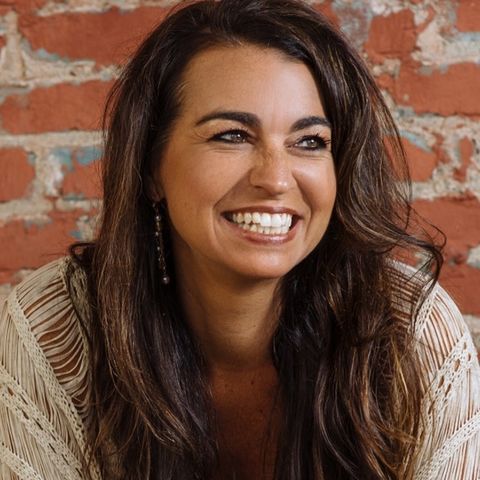
I'm Michelle Chalfant,
Psychotherapist,
Holistic life coach,
And human just like you,
Learning to navigate life's challenges.
With over 25 years experience,
I teach people how to get healthy using the adult chair model.
The adult chair model is where simple psychology meets grounded spirituality,
And it teaches us how to become healthy adults.
From anxiety and depression to codependency and relationship issues,
You can use the adult chair for just about anything.
Each week,
I share practical tips,
Tools,
And advice from myself and a wide range of experts on how to get unstuck,
How to live authentically,
And how to truly love yourself,
All while sitting in your adult chair.
Welcome to the adult chair podcast.
Hello,
Everybody,
And welcome to the adult chair podcast.
I am Michelle Chalfant,
Happy to be here with you today.
And the delightful Leah Guy.
Yes,
My friends,
I'm very excited about today's show.
I have a really great guest on the show.
And we got into a lot of really,
Really juicy topics.
We talked a lot about emotions,
Toxic emotions,
Staying in the flow state.
What does that mean?
Aligning with the higher self.
How do you do that?
She breaks it down for us and really helps us understand what that means and how to do it.
So it's a good show.
Oh,
Talked also about relationships and the green flags,
Green flags of relationships,
Not red,
Green,
Things you want to look for in healthy relationships.
So it was a big show.
We covered a lot.
I think you're going to really enjoy the show.
So let me tell you just a little bit about Leah Guy.
Leah Guy is a spiritual teacher,
Speaker,
And intuitive healing artist.
She's the author of three books,
Including Overcoming Toxic Emotions,
The One Woman Show,
And The Light Knight of the Soul.
She uses her personal triumphs over sexual abuse,
Addiction,
Anxiety,
And eating disorders,
Along with more than two decades of experience in private practice,
Working with clients and organizations,
Helping people to transform their lives.
I'm excited for you to hear the show.
Here we go with Leah Guy.
So welcome Leah Guy to the show.
It's so great to see you.
Thank you.
Thanks for having me,
Michelle.
Yeah.
I'm really excited to dive into really a few different topics here,
But where I wanted to begin with you was around,
You said this,
When we're out of alignment with our higher self,
We're chasing relationships,
Money,
Validation,
Or happiness.
I love that quote of yours.
So I want to ask you something.
How would someone know if they're out of alignment with their higher self?
I think probably one of the first ways a person would know is it feels like we're pushing or efforting regularly.
And I'm not a proponent of the flow.
When we're in the flow,
Everything's easy breezy and it just comes to us and all that.
I don't think that's accurate either.
There's a fine line,
And this is a big piece about us learning ourselves,
Learning how to discern for ourselves and really our energy state,
Our mind state,
What's happening around us.
Because when we're efforting and pushing,
It's draining,
It's exhausting.
And usually it's kind of a sign that our energy is not really aligned with the thing that we're going toward.
Because think of two magnets.
We definitely know opposite is attractive in a certain capacity,
That's the opposite in polarity.
But energy that lines up together,
It wants to find each other.
And when we're efforting and pushing,
It's like that one magnet and the other one's like,
It's kind of trying to get there and can't.
And that's usually a sign that we're not in our center.
We're not in our higher self,
Our integrity,
Our truth.
We're in a version of ourselves that we've probably known many times before.
Oh,
I love that.
Okay.
So how do we get there?
If someone is listening right now and they go,
Gosh,
I don't think I'm efforting all over the place.
Something feels off,
It's so hard and something does not feel right.
How do you guide someone into alignment into their higher self?
Yeah.
The how questions,
They're the hardest questions,
Aren't they?
Because that's what everybody wants to know.
How do I become more self-confident?
How do I do this?
How do I do that?
And as we know,
Things are always a process and everyone's a little bit individual.
I mean,
To be honest,
The reason I wrote my books is not because I'm a writer.
It's because there's so much alikeness and familiarity between us.
Everyone's story is different,
But we're all the same.
So although I say it's a process and it can be individualized,
I think that how-to question is,
It kind of comes down to the base foundational pieces of,
Do I trust myself?
And that's a key foundational piece for me.
And I wrote a course about that and I talk about it in almost every conversation that I have,
Because we can talk about all kinds of things going on in our lives and things that have happened and our belief systems and our boundaries and they all deserve conversations.
But at the root of it,
What are we really trusting?
And this notion of trusting ourselves and trusting the divine or the universe or your angels or your guides,
There's a lot of talk about it all,
But there's not a lot of real relationship with it all that has us feeling safe and comforted and knowing.
And so when we work on that piece of trusting ourselves and trusting the divine,
Then we can kind of relax a little bit,
Surrender,
Accept whatever you want to call it,
But we can be in our lives without having to escape,
Without dissociating,
Without abstracting,
Without efforting,
Without pushing,
Without blaming,
Without anything,
Because we're just here.
But we can only be here when I trust myself that no matter what someone does or what happens outside of me,
I'm going to be okay.
And when I'm in relationship with spirit that I trust that I am divinely guided and orchestrated,
It does require me to listen and participate in that kind of thing.
But if I have those two trusts activated,
It really relieves a lot of efforting,
Stress,
Tension,
Fear,
All that stuff,
Right?
So I think that would be kind of a foundational piece.
How do you,
What do you say to somebody that would say to you,
Oh,
But I don't trust,
Or how do you build trust when there are bad,
Quote unquote,
Bad things happening in the world?
Yeah,
I know.
Well,
It's an internal job first.
We have to trust ourselves.
That piece,
It sounds so simple in a way.
It's like,
You know,
I trust myself.
Like I'm going to pay my bills.
But at what level do we kind of abandon ourselves?
And sometimes that happens on the daily for people.
It's like,
Oh,
I'm going to eat better tomorrow.
And then I abandoned myself.
I'm going to go to bed on time.
And then I abandoned myself.
I'm going to whatever,
Some kind of a positive or self-care practice.
And then we kind of abandoned it.
These little messages,
Even those,
Those aren't huge ordeals,
But when we collect them all,
Or when they,
We sustain that kind of operation for ourselves,
We're just sending messages to our internal self,
To our inner child,
However you want to think about it,
That we don't really matter.
That it doesn't really matter.
It's like,
I want it to matter,
But it doesn't really matter.
So most people,
Because we're not comfortable having intimate,
Loving,
Nurturing relationships with ourselves and with the divine,
Then we distract ourselves with everything that's going on outside of us.
And yes,
There are terrible things happening.
There's chaos happening.
There's divisiveness happening.
There's wars and famines and hurricanes.
We know these things are happening.
We feel powerless,
But we engage ourselves in a certain kind of way,
Almost as a distraction to our own safety,
Stability,
Health,
Happiness,
And presence.
And now we've lost our center.
We're not embodied.
We're somewhere else most of the time.
And not only are we not present,
But now we're not trusting ourselves.
We're not in a relationship with the divine.
We're trying to insert ourselves somewhere else to get external validation and safety.
So that's why it kind of all starts circulating around those two tenants if we break it down.
Yeah.
So again,
I go back to building it.
So then and I hear what you're saying.
We just actually last weekend just did a whole inner child course.
So yeah.
Yeah.
Such powerful work,
Powerful work.
And I do get that when we are not showing up for ourselves in a certain way or a way that we promise ourselves,
And then we don't live up to it.
Or like you said,
We say we're going to go to bed at a certain time and then we don't.
So inner child work is one way to absolutely begin nurturing,
Cultivating trust within.
How do we turn it around?
How do we really build that trust for that,
For the divine,
For God,
For source,
For universe?
Yeah,
I think a couple of things come to mind right away.
And one of the things I'm talking about a lot with individuals in my practice and groups and teachings,
It's this message from spirit that's all about victimization.
And I think in the collective conscious right now and what's happening,
The shift that is happening,
This is acceleration that's happening.
We must learn to put away the story that we've been victimized by.
Now I'm not saying to ignore it at all.
In fact,
All of my books are about emotional processing and emotional health.
But I'm saying to show up,
To do that work so that we stop victimizing ourselves.
It's amazing how frequently throughout the day in the tiniest ways,
And sometimes the big ways we play victim.
We play victim to our circumstance.
We play victim to our story,
To our past,
To the world.
And then the second thing is taking things personally.
So the trust in ourselves,
Yes,
We can show up for ourselves and we can do the task that we say we're going to do.
We can keep our healthy boundaries.
We can attend to and reparent our inner child.
All of these things are really wonderful things to do.
We can enter a relationship,
An active relationship with spirit.
But if we're still holding on to that grudge and being the victim and taking everything personally,
As if this all revolves around us,
Then we're going to suffer.
And we're not going to trust ourselves because even that portion,
If it's a small portion or a big portion,
That portion is energetically connected to the perpetrator.
To be a victim,
We have to have a perpetrator.
And so if I'm giving that my attention,
I'm gone again.
I've separated from self.
I've rejected self in a way.
So I think that is a key component to learning to trust ourselves.
And we go through the day and recognize how we internalize the story that whatever's happening,
You know,
You're driving a car and someone cuts you off and it flares us up.
And believe me,
I live in New Jersey.
Everyone here is an asshole,
You know,
But we're an asshole like publicly.
And then we love each other again in like five seconds,
You know?
So it's very easy to get inflamed driving on the road and someone cuts you off and maybe they do it again.
And we take it personally,
Even though it's such a benign,
Like it has nothing to do with us.
And we can see that very clearly in a car.
But now look at a relationship where a person that you care about or the person that you want to be with,
Or you had expectations or plans with someone and they make other plans or they choose something else.
And maybe they don't choose you at all.
And we take that so personally,
Of course,
We're going to be hurt or upset or have the grief about it or confusion or all these difficult emotions.
But that's different than taking it personally,
That their actions or behaviors or thoughts are actually about me.
It's actually not giving any credit or trust in the other person.
So when we learn those things,
Which are big things,
You know,
They're lifelong lesson things,
Right?
But we have the opportunity to stay not isolated and sheltered in this little cubbyhole of a world where we're like,
Oh,
My life is fine.
I don't care about anything else.
It's not that it's actually to release our reserve so that we have more of ourselves available to people and to the world and to life because we're not attached and sticky to all these other storylines and narratives and,
And victimizations and that kind of thing.
Mm hmm.
Oh,
That's great.
Tell me about when it comes to like trust and surrender,
You know,
So many of us talk about surrender,
It's not giving up.
So how do you define surrender?
When I think of surrender,
It's this beautiful kind of feminine,
Laying it down,
Kind of just putting it down,
Putting down the swords,
Putting down the effort,
Putting down the attachments,
The expectations,
And just kind of an open armed,
Like on your knees,
Open arm,
Gesture of I am available,
And I am willing to serve and willing to be and open and available to being guided and to full acceptance of what is here for me.
Again,
In that spiritual talk,
A lot of us,
You know,
There's these famous sayings about,
And I love,
I say it this way,
And I love it this way is what is meant for me will not miss me.
But that requires an availability.
If we're closed,
If we're restricted,
If we're only moving towards the expectation that we have in the timing that we have,
And you know,
The visualization that we have,
We're very limited,
We're constricted.
But surrender to me is being available and saying,
Okay,
And it's still an available energy,
It's actually more available.
And that is,
To me,
What spirit is asking of us,
Let us help you,
Let us actually guide you.
Let's not just talk about it.
Because if you believe what is meant for me will not miss me,
Or we just saying what is what is meant for me will not miss me,
You know,
Those are two very different things.
And if we're believing it,
We can relax in that,
Okay,
It's not that I don't have to do anything in my life,
I'm going to show up and be a participant,
Because I've been given all the resources I need in order to manifest and create the life that I'm here to live,
Right.
But in that it's not just me,
You know,
I've got a team of people,
And you do too,
And all of us do.
And when we surrender,
It's like,
Okay,
It's kind of like,
You know,
We think of ourselves as self employed,
Or an employee of this company,
Or what have you,
But we always have support with us.
And so it's welcoming that support.
So true.
So true.
Something you talk about is where to find the inspiration and not give up on the life that you really want.
Talk a little bit about that.
Yeah,
This is a big one.
Also,
I think many people kind of abandon their dreams.
And yeah,
It's sad,
Isn't it?
It is sad.
Yeah,
It is sad.
And I agree with you.
I agree.
Yeah,
Yeah.
And we make a lot of rationalizations for why we give up our dreams.
And we again,
Those cliches,
Like don't die with the dance inside of you or the dream inside of you.
But actually claiming that for ourselves,
And seeing the reality of that and whatever version that it expresses itself is probably the one of the most rewarding things a person can do.
And I think the reason that we don't do it oftentimes is the same reason we get in all these other negative patterns in our lives and in relationships is because we're attached to the emotional core wounds that we have.
And this is exactly what I talked about in my last book,
We vibrate and manifest from that state,
Because it's familiar and comfortable.
And we've convinced ourselves by how we take in the world and taking it in personally,
And all the beliefs that go along with that,
That we're somehow not worthy or valued enough,
Or we're responsible,
Or we don't belong here or something along those lines.
And so when people are on a spiritual journey,
Or on a self healing journey,
It's not just to feel better,
You know,
It's not just to have better relationships.
It's so that we actually fulfill our destiny.
And our destiny and fate are very different things.
And the fate that I think a lot of people go,
That's just me,
That's just my family,
I was born into this,
You know,
No one ever finishes X,
Y,
Or Z.
That's not the fullness of what we're here for,
You know,
Our destiny shows up in opportunities,
And we have to say yes to that.
Right?
Yeah.
So this is why for me,
We work on healing our core wounds,
Our traumas,
Our patterns,
Our behaviors,
So that we can say yes,
It doesn't matter if you're 18 or 88,
It does not matter.
We see those special people,
You know,
It's like,
They lost the weight and they're a bodybuilder now at 78 years old,
Or they,
You know,
Do the Paralympics,
And you know,
They're crushing it in their life,
And they are married and happy,
Or all these things.
And yet,
We think it doesn't apply to us.
The difference between it applying to them and applying to us is because they simply said yes,
To the dreams and the belief that they have about themselves.
That's it.
I agree with you.
I so agree with you.
And I and I hear from a lot of people that say,
It's like earlier in life,
They didn't have time,
Or it wasn't the right time.
And then finally,
If they have children,
And the kids are gone,
Or they're older,
And I mean,
Older,
Like in our 40s or 50s,
Let's say,
Then it's too late.
It's like we wait,
And then I hear people say,
Well,
Now it's too late.
You know,
I'm almost 50,
Or I'm in my 50s,
Or I'm 60,
Or I'm,
I'm like,
I don't care.
I do not care.
I don't,
I don't,
Like you said,
I don't care if you're 80.
Like,
If you have the ability to get up,
Get out,
Then go do your thing,
Girl,
Like guy,
It doesn't matter.
Go do it.
You still have that energy for us running through you.
You're still full of life.
Go after your dreams.
I don't care how old you are.
Exactly.
I'm 52,
And I just created a one-woman show and debuted this summer,
And about to go again.
I just wrote a movie script.
I've moved 49 times in my life.
Whoa.
Yeah,
Because I love new spaces.
I love new environments.
I love it representing a part of my process and growth in my life.
And that's not like,
I'm not some hero or something,
But actually I'm leading a retreat this weekend about this very thing,
How to become the hero in your own life.
And not by chance,
I'm sure the energy right now in the world is about this.
It's about how to really show up and shine and move forward in a new way for ourselves and not just for us,
But for everyone.
It's benefits everyone.
I say,
We all have a unique energetic signature that we came in with,
And we need to amplify it,
Tune into it,
Tap into it,
And let your light shine and do your thing.
And it could be multiple things like you,
Like what you're saying.
I thought I had moved a lot.
That's a lot.
But I have to say to me,
I lived in Nashville,
Tennessee for 13 years.
We moved five times and people were like,
Five times?
I'm like,
Yes.
And it was an adventure every time.
It was so fun,
From the new house to the neighbors,
To the area of town,
All of it was so fun and exciting.
I'm like,
Yeah.
And I'm already looking at houses again.
I'm like,
Okay,
It's time for me to move again.
So yeah,
I love it.
Life is an adventure and it's like,
What's in front of me now?
I'm not stuck,
Like keep going.
So I love that.
Yeah.
I think we're really missing the plot.
I think we're missing the plot.
It's like,
What are we doing here?
And who can really answer that question?
But the best that I can come up with is we're here to learn how to open our heart and to really love from that space.
And there's all these things in the way,
Not just from our past,
But just like life,
It's hard.
Life can be hard.
And yet it's so,
As you know,
I mean,
It's amazing and it is an adventure and we stop ourselves because of some other person's story or some other person's expectation.
I mean,
Who cares?
It doesn't matter.
It doesn't matter if it brings you joy and you're not hurting anyone and you're responsible and you trust yourself.
Do it,
Just do it.
I opened a healing center with a storefront because I was one of those women is like,
I've always wanted a storefront and I signed a three-year lease and I knew going in,
I was like,
I just want to do it for the three years.
You know,
I'm not trying to make it be this thing.
I want to have the experience of doing it.
And as long as I don't lose everything,
Do I trust myself of that?
Yeah.
I'm not going to lose everything.
Then do it.
And it was a beautiful,
Amazing experience.
So I'm all with you there.
Yeah.
You know,
I just said to my husband the other day,
I'm like,
I am just going to be a yes girl to everything.
Anyone,
Anyone,
Anyone asks me anything,
I'm a,
I'm going to be a full on.
Yes.
I don't care.
And he's like,
Okay,
Let's go.
Cause I always had this cautiousness to myself.
I mean,
Of course not a hundred percent.
It's not that black and white,
But I said,
I want to say yes,
Even more because I want to say more yeses in life.
Like that's the kind of person I want to be.
So even if it scares me a little bit,
I'm going to still say yes.
So good.
Well,
Now that I know that I'll be sending you an email asking you if you want,
Hey,
You want to do this?
And I will say yes to you,
Lee.
I promise.
So let's,
I want to talk about this book behind you.
Oh,
The overcoming toxic emotions.
Yeah.
Yeah.
Let's talk about that because you know,
Something that you were saying,
And again,
When we talk about this,
Yes,
So much of the reason why or reasons why people don't say yes and don't start their new life at age 50,
60,
70,
40,
Whatever old you are.
It doesn't matter.
Some people are 30 going,
No,
I can't do it.
That limiting belief,
Whatever we call it,
The programming from childhood,
Whatever the heck we call it,
It's all the same darn thing.
Talk about how that blends even with toxic emotions.
I mean,
So much happens when we're growing up that then creates what I call that roadmap that then we live off of as adults.
What I say is we have to update that roadmap.
We have to update the roadmap.
We've got to learn how to feel our emotions.
We've got to learn how to process and metabolize all of our emotions so we can move to the next step.
So where do you want to begin?
You want to talk about the programming or toxic emotions?
Because we've got to go both.
We've got to go to both places.
We need to visit both.
Yeah.
So I think of it like this.
I call,
First of all,
On the book,
I call them emotional or energetic imprints that we are imprinted with this feeling state.
And as I said,
I see kind of everything energetically,
But you don't have to,
But follow along that way if you don't mind.
So when we are young and we get imprinted before the age of seven,
Maybe eight,
We are absorbing every single thing as truth to us.
And we are sussing out how it makes us feel and who we are in the relationship to that.
Whether it is correct or incorrect,
That's what happens.
I mean,
From the taste of broccoli to men act like this,
To this is what love feels like,
To that look means disgust,
Whatever it is.
And so we're imprinted with that.
And along with those imprints,
Most all of us,
Unless you had a very,
Very fortunate childhood,
We probably had some incident of some sort.
And I will define trauma this way,
That any experience or incident that is too overwhelming for you to process in the moment,
In the moment.
Okay.
So if you can process it fully emotionally process it,
Your body,
Your mind,
Everything pretty much clears it.
For a lot of us,
We did not have the support in place or the emotionally mature parents,
Not because they're bad parents,
But first of all,
A lot of them,
At least for my age and up,
They weren't educated in this.
It wasn't talked about,
Right?
So we all probably had overwhelming experiences that we couldn't process in the moment.
And then according to whatever that wound was,
Whatever it left in us,
Unworthiness,
Something's wrong with me.
I've done something wrong.
I don't belong here.
I'm not safe here.
I'm not lovable,
Whatever the wound is,
We carry that with us like a,
Well,
It is an imprint,
But it's a vibrational frequency that is connected to that feeling state.
And this is why in my estimation,
I love therapy.
And I think most people need therapy after a certain period,
Though,
Therapy starts to not be as effective after we've learned and understood things and had the cognitive awareness,
All that's wonderful and necessary for a lot of us.
But the difference is,
Is that our feeling state isn't our mind state,
Although they are connected.
Every thought has a feeling.
Every feeling has a thought it's not one and the other together.
And so we're cognitively understanding,
But yet our energy system,
Our emotional body is still vibrating with the core wound.
And that feeling,
Whether we like it or not,
Most of us don't like it.
We crave it.
It becomes so comfortable and familiar.
Like my core,
One of them was loneliness.
And you could look at my life when I was young person and go,
Well,
She had two parents and a sister and a dog,
And she was the homecoming queen.
And she was the president of this and that.
And she had all these friends and like,
Lonely,
Are you kidding?
She's crazy.
It's not about any of that.
It's about a feeling state with your most intimate,
Vulnerable self,
Your precious soul self,
And being able to connect and share that,
At least in my circumstance with a person that can support and hold space for that.
And if you don't have it,
You're by yourself.
Right.
And so that's,
Hold on.
That's I'm letting that land.
Okay.
Yeah.
Because mine is also loneliness.
I'm like,
Oh,
I'm going to listen intently to this.
So yeah,
That just hit me.
Go ahead.
Sorry.
Okay.
Yeah.
To let that land.
That was really good.
What you just said.
Okay.
Keep going.
So in the book,
I do a very simple scale,
Like to give ourselves kind of a baseline of what our imprint frequency felt like,
You know,
One to 10 kind of thing.
And so let's say mine was a four.
And so the rest of my life,
Until I become conscious enough to do something about it,
I am seeking manifesting and calling up into my life,
Situations,
People,
Circumstances that will leave me feeling like a four.
Yeah.
It doesn't mean therefore,
It doesn't mean they're trying to be my mommy,
Or I'm trying,
I have mother issues,
And they're trying to be that,
Or they're,
They're like my daddy,
And I'm trying to heal that.
No,
It's a feeling state.
I could be with anyone as long as whatever they carried and them and energetic match with me,
They're probably a four to will,
The circumstance will allow me to feel like a four.
And I say,
Allow me because even though I don't want that,
It's my reality.
It's my imprint.
It's what I know.
It's comfortable.
It's like comfort food.
And we all know comfort food is like the worst stuff for us,
Right?
It's the same thing.
And so we have to recognize where we are vibrating and where we are feeling and how that is kind of spreading into our lives.
And stop that process with what I created a three step plan,
But it's nothing like earth shattering.
It's just real intentional awareness and acceptance and action to reparent ourselves to,
You know,
Make a different micro step in the moment to become conscious where we're normally unconscious and or subconscious and our actions and behaviors and our feelings so that we can actually do something different.
And that's it.
And then all of a sudden you do that and you string those things together.
It's like,
Oh,
Okay,
I'm not vibrating a four.
Now I kind of feel like a five.
Something has changed.
I can't quite put my finger on it,
But,
You know,
The quality of my friends are a little different.
I'm getting better job offers.
My place looks a little more beautiful,
You know,
It's like,
And then we start creeping up the scale.
One of the problems in our world is because we have that,
You know,
Instant fix mentality or instant get is we want to go from zero to a hundred and we think a hundred is best.
And I'm going to tell you on this scale,
A 10 is like,
You know,
I am Jesus.
I am Buddha and my life can't be better.
We're probably never going to get to a 10.
You know,
I've had some people like they tell me all this stuff and I go,
Okay,
What's your number from the book?
And they go an eight.
And I'm like,
What?
No,
No,
No.
We want,
We want to,
You know,
Make it better somehow.
And what we need to focus on is being able to sustain a higher frequency and feeling state little bits at a time.
And I know there's a lot of people out there,
A lot of healers,
A lot of therapists,
A lot of people you've had them on your show.
I've had them on my show.
It's like instant fix.
Yeah.
Okay.
You know,
We can attend to some of those layers,
But we have to get to the core.
Yeah.
I love that.
I like your steps too.
Thank you for sharing those.
So that's how we overcome toxic emotions or that's how that's the programming that you're talking about.
Yeah.
Can we talk about then the toxic emotions?
Like what is a toxic emotion?
Where do they come from?
How do we process them?
All the things,
How do we overcome them?
Yeah.
Well,
The first thing to know is there is no bad emotion.
There's not,
There's just not any emotion that we leave unresolved will likely turn into a toxic emotion.
When we are unwilling to accept the reality that pain and love coexist,
We are likely to develop toxic emotions.
When we are seeking this high and not recognizing the reality of the undercurrent or our core wounds or how we've been trailing that belief system with us,
We'll likely experience toxic emotions.
So some toxic emotions may be like anger can be one.
It's one of the few that crosses over from,
Uh,
You know,
Anger to anger because it's the same emotion.
Sometimes it turns into resentment,
But anger on its own.
There's nothing wrong with it.
As we know,
The difference here though,
Is if I'm angry in the moment because of something that's happening in the moment,
Not a toxic emotion.
If I'm angry six months later for something that happened six months ago,
Likely a toxic emotion.
And that's the big difference.
When we learn how to process our emotions,
We're able to do so in real time or in very close to real time.
We give ourselves the grace to do that.
We don't deny those things.
We don't hide them.
We're not embarrassed by it.
We,
You know,
We're not shameful of it.
We are honest with ourselves and we give ourselves the time and the tools.
And that's why we have all these tools so that we can really process it.
It may take a couple of days or maybe even a week or so.
Yeah.
But if we're really with the emotion,
It usually clears because that's what emotions want to do.
It wants to move.
It wants to flow.
When we captivate them,
That's the problem.
To go back to like the programming and the pattern,
Because I just wrote a movie,
I'll give it,
This is my analogy.
What happens for a lot of people,
It's like,
We have this storyline when we're young,
We have all the characters,
We have the setup,
Then we have the inciting incident.
And it's like,
We're watching a movie.
And then we come to this point where in the movie,
Every single movie that you watch has an arc.
And then eventually we start to see a potential resolve.
And then we start rooting for the person.
It's like,
Yes,
Let's resolve or let get them together.
You know,
And then it happens at the last five minutes of the movie.
That's the,
That's the framework of every movie.
What happens in our life is the movie starts and then it gets to a certain point.
And then guess what happens?
It's like we hit rewind and we go,
Oh,
I'm going to do that again.
I'm going to do that again.
And can you imagine watching that movie?
I mean,
We'd be bored to tears.
I wouldn't want to watch that movie,
Especially mine.
It's like,
No,
Thank you.
But that's what happens,
You know?
So the toxic emotions are relatively easy when we get out of victim,
When we stop taking things personally,
When we get grounded and trust ourselves and when we,
You know,
Just allow or work on and allow the process of how to actually feel the way that we feel and knowing there is nothing wrong with us because we feel that way.
That's such a good point right there because so,
So many times when we feel an emotion,
We judge ourselves.
Why do we feel this way?
What's wrong with me?
So-and-so doesn't feel this emotion.
What's,
You know,
Again,
Blah,
Blah,
Blah.
So yes,
I love what you're saying because this is all,
These are similar things that I talk about.
We've got to feel and metabolize these emotions.
Like that is what keeps us so stuck in life.
And it's so scary for us to feel things like the anger,
The grief,
The fear,
The loneliness,
All of those things.
But once we do it,
We move through and it changes everything,
Changes everything.
And it's okay to feel them again.
You know,
It's not like a one and done,
You know,
Oftentimes,
Right?
We get triggered.
We smell something that reminds us of something else.
It's like,
Okay,
Here it is.
We do need to be aware that when we get caught in that pattern,
When we're kind of just looking for the thing to,
Like I said,
Make us feel that way.
Right,
Right,
Right.
So something I want to talk to you about is staying in relationship with friends and family who have different beliefs.
Yeah,
It's hard,
Isn't it?
This is a,
Yeah,
This is,
And this,
I remember,
Gosh,
I mean,
Politics has always been one like forever,
But now it's so intense,
Like with politics.
Like I just don't,
I don't go there with anybody.
But even like COVID,
Did you get the shot?
Did you not get the shot?
You're going to wear a mask or you're not going to,
I mean,
It was like this whole,
But different beliefs,
Like everything has become so divided now.
How do you navigate that?
What do you say to people,
Especially coming upon,
You know,
Here we are elections and,
You know,
All the things.
It's really important.
And it's actually great that we've already talked about what we have talked about because it's kind of the same principles.
If we can learn to trust ourselves and stay in our bodies,
You know,
Stay in body.
And I guess one of the values would be to respect,
You know,
To respect all sentient beings,
Then whatever they say or think or do or whatever,
It's okay that they feel that.
And that they think that it's okay.
We,
It's up to us.
If we're getting triggered because of it,
Then that's our stuff.
You know,
There's no reason we can't be in dialogue or proximity or relationship with people who believe differently.
If we allow people to have their boundary and their beliefs and space,
Because we,
We need and require for ourselves,
Our boundary and beliefs and so forth,
There's no problem.
It's like,
It's like,
You see,
This is white and someone else sees it gray.
It doesn't bother me.
Why,
Why would that bother me?
I may see it as brown,
You know?
Okay.
We have three colors here.
I can still love you.
And we can disagree that the discomfort for people disagreeing is intense because most of the time we haven't learned to,
To feel safe in discomfort,
You know?
And if we can learn that because we trust ourselves and we're saying,
You know,
True to ourselves,
We can be uncomfortable.
It's okay.
What's wrong with that?
There's nothing wrong with being uncomfortable.
I mean,
You know,
My legs are uncomfortable right now.
There's a cool breeze and they're going to sleep,
You know?
Okay.
It's,
We take it personally.
And we think that the,
The discomfort somehow means something about us,
Or you're trying to say something about me without actually saying it and you're doing it in this roundabout way.
That's on them and that's their beliefs and,
You know,
Okay.
Now,
If we can get to that state and the other person can't get to that state,
That's where we have a choice.
And sometimes it's a very difficult choice.
You know,
If we're being bombarded by a person,
If we're being attacked,
If we're,
Why would we want to be around that anyway?
Right.
There's no,
What's the nurturing there?
We're only in relationship to relate to each other and it's fine to relate in a disagreeing way,
But if it starts to become abusive or attacking or anything,
Why would we relate to that?
So we can respectively say,
You know,
Create a boundary for ourselves.
I don't want to talk politics over Christmas dinner,
You know,
And if,
And if you do,
I'm going to remove myself from the table.
Now that might create a situation for yourself where you're outside by yourself at Christmas,
You know,
Is that better for you than being embroiled and engaged and attacked with someone else?
For me,
It is,
You know,
So no problem.
You know,
I'll go,
I'll go take a walk.
You guys do whatever.
It's that victim energy that I mentioned earlier.
It's very easy in those circumstances to go,
He or she did this,
Or they started doing that,
Or they were this and they were that.
No,
We cut that off because I'm not going to allow myself to even feel victimized because there's nothing wrong because I'm not taking it personally.
And I have a healthy boundary,
You know,
Think whatever you want,
You know,
Have a good day doing that,
You know,
And I respect that.
I'm going to respect myself as well.
And I'm going to take care of myself.
I still love you.
You know,
If you want to get together when we're not talking that fine.
I lost friends over the COVID thing.
I get that.
It's hard.
Most of them we've repaired,
But you know,
It,
It put kind of a wedge between us,
Um,
Even still in some regards and it's unfortunate,
But guess what?
I can be sad and it's okay.
Yes.
You know,
It's either that,
Or I abandoned myself for the sake of someone else's comfort so that they're okay.
Or I lie to myself.
So,
You know,
To stay connected because I fear what disconnection,
Rejection,
What have you.
It's okay to be sad.
It's different.
Have you heard of the book oneness?
Yes.
I haven't read it though.
Oh my God.
It's phenomenal by Rasha.
I just,
I,
I,
I played,
I keep playing the same little part.
I can't remember what chapter it's in,
But I wrote it down because I knew we're going to talk about trust and some things like this today.
But she says,
When we reach such trust in ourselves,
Much like you're saying,
When we know ourselves,
When we know what our boundaries are,
When we know we have to process our emotions,
When we feel the worth,
Our self-worth inside.
So when we reach such trust in ourselves,
We find we can have detached indifference.
I was like,
I love that word,
That phrase detached indifference.
It's like you can do whatever you want.
I'm so connected to myself.
You can say,
Do whatever you want.
It doesn't matter to me.
Now,
Someone attacking me is a whole different story,
But if you want to go on and on about this or that,
The other thing,
I just don't care.
And it's not because I don't love you.
I just,
It falls off me like someone throwing water on me.
So detached indifference is my new phrase I'm going to start using.
Yeah.
Okay.
So I just want to finish off with this.
You talk about the top 10 green flags for any relationship,
Which I really,
Really liked.
Can we go through some of these?
I really like these a lot.
You want me to recite them for you?
Yeah.
I've got them all right here.
Kindness at their core.
So this is for any relationship,
Or is this primary relationships?
Tell me anyone.
I think it's,
Well,
I think it's for most personal relationships because those are the ones we're normally choosing,
You know,
A lot of the other relationships we're not choosing.
And so it's hard,
But I mean,
It could be a friend or,
You know,
A lover,
Yeah.
A lover,
A partnership,
Or even just a friend or a family member.
Correct.
Like that's,
That's,
That's what I felt.
So I really liked these.
So green flags,
Meaning go forward.
Green means go,
Go toward this kind of person that has kindness at their core when they practice healthy boundaries for themselves.
Yes.
They act from desire and not need talk about that for a minute.
What's that mean?
So,
Especially in relationship and we'll talk intimate relationships here.
There's,
I think still in our society,
A very large misunderstanding of that.
We come to relationship to get our emotional needs met.
And we do not,
That will set up an unhealthy relationship every time.
If you need your partner to make you feel safe,
To make you feel pretty,
To make you feel valued,
To make you feel worthy,
To make you feel seen,
To make you feel heard,
To make you whatever you are in a codependent relationship and you have unhealed wounds within,
Because we need to show up to relationship feeling seen and worthy and safe and healed and loved and valuable and beautiful and smart and all that.
We show up with that.
That's our gift to the relationship.
So when another person is saying yes to you or you're saying yes to them,
Now it's coming from a desire place.
I just want to be around you.
I just want to experience the world with you.
I just want to talk to you about this book.
I just want to lay and watch a movie with you.
And that's a very different energy than I need this from you.
Yeah.
Right.
Every time we're in that need state where usually,
Unless it's of course medical or something like that,
You know,
But when we're in that emotional need state,
There's no problem being supported by our partner or our friend or whomever,
But that's very different than a need.
It's like,
I'm not okay.
And I need you to somehow make me better.
And to make me feel okay.
And all those,
Right.
Yes.
I always say we have to be our own Sunday.
And when someone gives us that validation,
They're like the little cherry on top,
Right.
Versus they can't be our whole Sunday.
Like we've got to do that for ourselves.
So that I really liked that one too.
They show themselves and others respect.
That's a good one.
Be a good listener.
They're a good listener.
So they can actually sit with us and listen to everything we have to say.
This is important too.
I taught a whole relationship course.
So this really hit home too.
They give you good eye contact.
They can look at you and gaze in your eyes.
Anything you want to add or is that it?
No,
I think that's enough.
I mean,
It's hard when we're talking,
You know,
To just stare at someone in their eyes,
But that connection that happens when we're really looking into someone else,
It's like,
There's no hurry.
There's no discomfort.
And that's what they're telling,
Telling you about them is like,
I'm comfortable here to receive you and to see you.
Yeah.
That's beautiful.
Well,
A lot,
You know,
Now we have these things.
So it's like,
Oh,
Let me just,
You know,
It's no,
Yeah.
Have the eye contact on you.
That person in front of you smiles with ease.
What does that,
I mean,
I know what that means,
But tell me what that means to you.
I think it means like,
You know,
I don't know if you've ever done any of the meditations,
Like the Buddhist meditations about smiling in your liver or smiling and organs or so forth or whatever.
It's that sense of like,
It doesn't have to be a,
A big thing to make you laugh or to make you smile,
But there's just this lightness and ease that kind of comes from the inside out.
And I think that that's really special.
Some people are so,
Um,
You know,
We all have,
I don't know,
Different faces.
I certainly have,
You know,
The menopause kind of resting bitch face sometimes.
So I'm not smiling all the time,
But you know,
I think it through my eyes or through my face,
A person can say,
Oh,
You know,
There's a,
There's light here.
You know,
It's not this bird and shut down doorway.
Right.
Right.
Right.
I like that.
Has a self-care routine or spiritual practice.
To me,
That's a must.
Yeah.
Yeah.
Yeah.
Responds with thought and not reaching or excuse me,
Reacting from fear.
So,
And the last one is stays even when the conversation or situation is uncomfortable.
I talked at nauseum about this in my course.
Yes.
Stays even when the conversation or situation is uncomfortable.
What can you say a little bit more about that?
Well,
I think staying is one of the most high spiritual practices.
Um,
And,
And saying this from a person who's moved 49 times,
You know,
But I'm saying this,
Like stay with yourself,
Stay with the other,
Just stay.
It's okay to take a break,
But you're still staying,
You know,
It's okay.
But the whole,
The ghosting,
The running,
The avoiding the,
Um,
Distracting oneself or what have you,
All that stuff just takes us away in every direction.
And there's something really profound and that builds the trust and the safety and the foundation of staying.
And we know this with our friends probably,
Or hopefully we all have a friend.
It's like that person that,
You know,
They are there even when they're not there,
Even if it's been years,
They,
They stay,
They stay right.
Powerful.
Okay.
Well,
Thank you.
Anything else that you want to share today?
Oh,
Gosh.
I don't know.
We could talk for hours.
I'm sure.
I know.
Right.
I think we covered a lot.