Hello,
Everybody,
And welcome to the adult chair on RashPixel FM.
I am Michelle Shelfant.
And this topic of the day is going to speak to so many people out there.
There was a lot of this writing in on the closed group about love addiction and even my sessions,
Especially in February,
Being that it's the month of love,
But a lot about love addiction and love avoidance.
So today we have a very special guest that is going to talk to us and take our talking about this topic deeper.
So I'm very excited to have her here.
But before we get started,
If you'd like to learn more about the show,
Go to theadultchair.
Com.
You can subscribe for free by signing up for the mailing list or find us anywhere the finest podcasters serve with a quick search of the adult chair.
You can also join the conversation on Facebook or Instagram and make sure to request and to join the adult chair private Facebook group.
It is an amazing group.
The people in there blow me away every single day with the vulnerability and the support.
So if you're looking for emotional support,
This is the place to be.
And if you have some questions,
These people know this work because they all listened to the adult chair.
So it's our people.
It's the adult chair peeps.
So come join us there.
And the last announcement that I have is that you guys asked for it.
I was not going to do this,
But I've put another adult chair level one weekend class on the calendar.
Yes,
I did.
It's going to be in Nashville,
April 28th and 29th.
It's in two months.
Actually,
No.
Oh my gosh,
We're in March already.
It is next month.
Last weekend of April,
Nine to four on Saturday and Sunday.
The details are on my website.
Come join us.
We'd love to have you guys.
So today I have a very special guest,
Someone that I personally know actually that's going to be talking to us about love addiction and love avoidance.
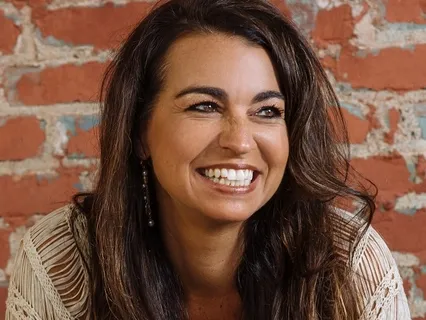
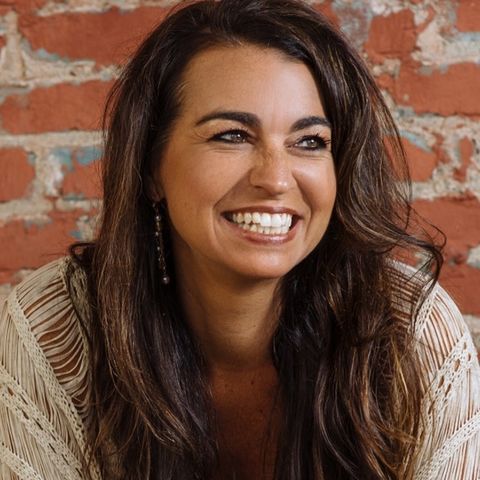
This person today is Karen Gelstein.
She's a therapist in private practice in New York City.
So a lot of you in New York have asked me,
Where's a great therapist?
Well,
Here she is.
She's right here in New York City.
She has trained with leading authorities in the areas of trauma and addiction.
She's amazing,
Just saying.
She's also studied with Pia Melody out at the Meadows,
Which is where I met her years and years ago when we were doing our codependency training.
She's also trained in EMDR and also getting her training right now with sensory motor training.
She's got a lot of training.
She's got tons of experience and she's a phenomenal therapist.
So here she is,
Karen Gelstein.
Thank you and welcome.
Thank you,
Michelle.
Thank you for having me.
So excited to have you here.
I'm so excited to be here with you.
Yeah.
This is a really,
Really big topic and I know you know a lot about love addiction and love avoidance.
This is actually the second show that we've done on this topic.
We did,
Gosh,
I was looking back,
Show number 12 we did on love avoidance and love addiction.
So this is our second show and we're diving deep again with this information.
So Karen,
We would love for you to just kick off with what is love addiction and love avoidance.
Let's just start there with the very basics.
Because I know a lot of people are probably hearing this saying,
Gosh,
That's a new one.
What does that even mean?
What is love addiction?
What does love avoidance mean?
Maybe that's me.
I don't know.
So would you just mind giving us a breakdown of maybe what that even is?
Sure.
I would be happy to.
And I just want to start out saying what I can tell you what it's not is it's not about love.
So it's an interesting name,
Right?
Love addiction and love avoidance.
And it really is,
It's not about love,
But it's about a very dysfunctional way of relating to one in a close intimate relationship.
That's really interesting.
So it's not even about love,
But yet it's called love addiction.
Exactly,
Right?
It can be confusing.
Well,
When I think about love addiction,
It's really the fantasy of love when we think about someone that would be a love addict.
So is that true?
Would you agree?
Yeah,
That is correct.
So much of it is about fantasy.
What does that look like?
So if someone is a love addict,
What might that look like in relationships?
Sure.
And so if you are a love addict,
It can take on a lot of different forms.
One of the first things for people who have love addiction is they confuse love with neediness and they confuse love with that need to rescue someone or to be rescued.
So those kinds of concepts are associated with love.
They feel empty and incomplete when they're alone.
And believe it or not,
There's actually a fear of intimacy,
Even though it's what they long for.
But underneath that,
There's a fear of intimacy and a commitment.
And love addicts are continually searching for relationships and sexual contacts.
The root of it is really a fear of intimacy.
So are you including love avoidance in love addiction?
Or are we going to separate those out?
You know what?
It might be easier if we separate them out.
And if you think it would be helpful for the viewers,
I can talk about a few more examples of the love addict side.
Yeah.
If you think that would be helpful.
I think that we should because I know that we could be either love addicts or love avoidance or we flip back and forth.
So let's talk about both.
So are the examples that you just gave us for love addiction?
Or love addiction,
And I can just give a few more if that would be helpful to the viewers.
And I know that you,
Like everyone else,
Thinks that a podcast is a viewing.
It's a listening thing.
Thank you for playing up on that.
A lot of people think they're watching it and you can go watch it on YouTube if you want,
But it's just a static picture.
Thank you.
So yeah,
So go ahead.
And I would like even more,
Give us some really good concrete examples as far as what would I do,
Let's just say,
If I was a love addict,
What would that look like?
Keep going with some of those good examples.
And so for love addicts,
When they feel really stressed or they're feeling guilty or lonely,
They tend to sexualize the stress,
The guilt,
And the loneliness or anger and shame.
And so they're going to really use their sexuality to medicate those feelings.
So when they're stressed or lonely,
They tend to become flirtatious and they're sexualizing things that shouldn't be sexualized.
But what they're really looking is to get that validation or that need to feel desired as a way to medicate what might be some uncomfortable feelings underneath it,
Like loneliness or anger or shame.
And so love addicts tend to use sex or emotional dependence as a substitute for nurturing and caring and support.
And so they could really also be very manipulative,
Like their sexuality becomes a way to try and hold on to someone or hold on to a man or a woman.
And so sex also becomes a manipulation,
Although it's not always conscious.
Okay.
Those are great examples.
Thank you.
And a lot of times,
Too,
People with love addiction,
They become immobilized and or seriously distracted by romantic or sexual obsessions and fantasies.
And so how that would show up is they spend a disproportionate amount of time in fantasy or obsessing.
And it could be at the detriment of self-care.
So sometimes people might forgo going to the gym or taking care of themselves or,
You know,
Those day-to-day errands and they get consumed with either spending too much time searching for this person on social media and it can become hours.
So there's an obsessional quality that this takes on.
That is what I commonly see is the obsession,
Is the obsession,
The fantasy,
You know,
Going into again,
Like I have clients,
I have even girlfriends that say,
Oh my God,
You know,
I've met the one,
This is it.
And it's been like,
You know,
A weekend of dates or two weekends or even two or three weekends or a month of dates,
Let's say.
And they're suddenly going to marry this one and he's so different and da,
Da,
Da,
Da,
And it's this all,
I can tell they get all consuming.
And I,
Again,
Some clients that I've had,
They've come in,
They're like,
I can't stop stalking so-and-so,
You know,
On Facebook.
I'm watching and he hasn't called,
But I know he's home and I saw him post on Instagram and where is he and oh my God,
I know he's the one and it's this whole like just,
They are all consumed.
So when I think of a love addict,
That's definitely what comes to my mind,
Is this all consuming.
It's like an obsession of the fantasy of that person.
That's exactly right.
And usually the fantasy is primary and the person is secondary.
And another thing,
There's a sense that this person is going to magically change their life like somehow they're going to be rescued and this is going to give them the feeling that they're whole or they feel worthy.
And so all of their self-worth is also put in the hands of the person that they're idealizing.
Yeah,
That makes so much sense.
Yes,
I have seen that quite a bit.
Let's contrast that now to the love avoidant.
Right.
And so the love avoidant shows up very differently where,
You know,
So much of the love addict,
There's so much neediness,
Right,
That they put on to the person that they're either intrigued by or their romantic object.
But with the love avoidant,
They first come on very charming,
Right?
They also want to get that validation and they want to be liked and they can come on with this,
You know,
Very charming and a lot of that is calculating,
Again,
Even if it's not conscious,
But they want to come in like they're going to be the hero,
Right?
And they're going to give this person everything that they need.
And then as they move into a relationship,
The love avoidant usually has a lot of trouble being vulnerable.
They are very standoffish.
The more that the partner comes to them with needs,
They might then get irritable.
They might need them to be distracted themselves from the relationship and then they get involved.
They can become workaholics or do a lot of things outside because they're looking to create distance.
And a lot of times too,
They cannot be vulnerable.
So we call it,
They kind of come in with that one up position,
Like which is the opposite of vulnerability.
I've got this all together.
I'm going to take care of you.
And it's a very non-vulnerable position.
So when you say one up,
It's also that they feel like they're better than us,
Right?
To a degree at times,
Yeah.
Or somehow they're the fixer or the hero of this relationship.
They really put themselves on a pedestal.
Right.
Like I've got this.
Don't worry.
I'll take care of you.
Okay.
So what I heard is that the core issue of the love addict or the feeling,
The core feeling,
Is there just one core feeling or numerous core feelings and one thing that kept coming up was loneliness with that love addict.
Is there anything else?
I mean,
I think you hit the nail on the head.
I think loneliness is a big one underneath this all.
We really say that love addiction is,
It's really a disease of not mattering,
A feeling that you don't matter.
And that certainly drives feelings of loneliness and it's really a disease of disconnection.
And all of that involves feelings of loneliness.
When I think about love addiction or love addicts,
They also have a great fear of abandonment,
Correct?
Correct.
Versus the love avoidant who grew up perhaps,
And is it always the case where they grew up more enmeshed or codependent?
Is that true with a love avoidant?
You're correct in that they definitely grew up being enmeshed.
Would it be helpful if we explain that for some of the listeners,
What enmeshed means?
Yeah,
I think so.
And also to say that I really want to touch on codependency a little bit too,
But yeah,
Let's talk about enmeshment.
When a child is enmeshed,
A lot of times a parent is boundaryless and they are using the child to get,
The parent is using the child to get their needs met.
And so they're boundaryless,
They're guilting the child.
If the child isn't acting away that the parent wants,
Right,
They'll guilt the child,
You're not pleasing me.
And the child is made to adapt up to meet the parent's needs.
And healthy functional bonding really stems from a parent bending down and adapting to what the child needs.
And so with love avoidant,
A child has either been made to be a little parent or a little partner or the child is guilted a lot.
Sometimes it could look like from the most loving place.
So if a child tries to individuate or express their own needs,
That's different from the parent.
A mother can say,
Oh,
We just love you so much.
That's all.
A child feels so guilty about having any of his own identity.
And so he's not a child who's being enmeshed is not learning from the beginning how to have healthy boundaries and to negotiate needs and wants.
And the only way that they learn to protect their sense of self is through a wall.
And then that's how they present in relationships as adults.
That's so interesting to me,
Karen.
Thank you for that description.
And I've used that term enmeshment before on other shows and anyone that knows about codependency,
Which we've talked about many times in the show,
That really happens with codependency.
But I also hear,
I'm wondering,
Would someone that grew up not only with codependency in the family,
But what about like a narcissistic parent?
Would that then create a love avoidance?
Absolutely.
Okay.
I just heard that when you said the kid couldn't have their own opinions and they had to please the parents.
So that could also result in love avoidance.
A hundred percent because a narcissistic person can't really see the other and respond in healthy ways.
They can't see their child and what the child needs.
They see them as an extension of themselves.
That's really what the narcissism is.
And therefore underneath that,
The child is really,
Really neglected.
I'm imagining all of the people listening going,
Oh my God,
This is me.
Then they're stressing out.
So I'm wondering,
I was just going to say how this happens,
What happens in childhood,
But we already just covered that.
So is there anything else we need to say about that?
What do you think?
Is there anything else we should add?
No,
I think we covered some good ground initially.
Okay.
So let's help everyone that's freaking out.
They're going,
Oh shit,
This is me.
What do I do?
Don't worry.
We have some ideas,
Right?
Karen,
Please enlighten us.
So what do we do?
Again,
If someone that's listening is going,
Oh my God,
I'm a love addict or I'm a love avoidant.
And again,
We can be both.
We flip.
So let's start out with a love addict.
What do I do if I'm identifying being a love addict?
What are some things that I can do for myself?
So that's a great question.
And the very first thing that I would say is that someone who wants to heal from this has to detach from all addicted relationships and to be very careful because what some people tend to do is when they start to go through withdrawal or when their idealization of somebody doesn't work out and the person doesn't live up to it,
They go seeking the next relationship and they go from one to another.
And so they never let themselves fully go through withdrawal.
So the very first thing is detach from all addictive relationships.
Now I have a question because I'm thinking of this again.
I'm thinking of people listening going,
What do I do if I'm married and I'm in a relationship with somebody and I'm realizing I'm a love addict and I'm married,
I can't detach?
What do you say to these people?
That's true.
And then that person really needs to a couple of things.
They need to start building their own boundaries,
Right?
Working on their own self care.
If they are,
You know,
When you're married,
Sometimes it's very hard for the love addict to handle,
You know,
If their spouse is nasty or doesn't always have unconditional positive regard,
They go back if they feel injured and hurt and they keep trying to change the other person,
Right?
They stay in this looping of trying to change the other.
And so if there's any of that pattern going on,
Which creates a lot of fighting,
You have to detach from that and really learning to sit with your own pain and finding other ways to start to nurture yourself.
So number one,
It would be really identifying what are my boundaries in my relationship where I'm not boundaryless with my partner.
I would love a few examples or at least one good example on that.
What does that look like?
So again,
If we just use that example,
If somebody who's a love addict and their partner is not always kind or not always nice,
Sometimes love addicts will be boundaryless.
They'll keep trying to change them,
Telling them what they need to do.
We call it where they start to become the abuser from the victim position.
So they're feeling victimized by say their husband.
And so they're then trying to control them,
Change them,
Talk at them,
Telling them what they need to do,
Right?
They're trying to get this validation or just to get a reaction from them.
And all of that dynamic needs to stop.
You need to have your own boundaries.
Like I can't change him.
It's codependency for me to keep telling this person what they need to do and start to focus on how do I turn to more constructive things to help me feel better.
Another example,
If they're always trying to fix the other person's problems,
Always coming in and this is how this is what you need to do.
This is how we're going to fix that.
And that's what I mean by boundaryless.
That would be another example.
Stop fixing other people and bring more of the focus on what are you feeling.
Because a lot of that focus on the other is to sort of fill underneath that.
You had mentioned a word earlier,
Loneliness.
Out of these behaviors are ways of medicating the loneliness rather than sort of falling into it.
And now how do I learn to self-regulate through more constructive ways,
Not by trying to change the other.
So it's about dropping inside of ourselves and realizing what's going on within me and stop looking outside of myself and putting any focus outside of myself on anything,
Anybody,
Food,
Shopping,
Just going back inside.
What about,
I'm hearing a lot of codependency.
So is a love addict or love avoidant codependent as well?
They are because at the root of all this is codependency.
The root of all addictions is codependency.
And the root of codependency is really not being able to esteem yourself from within.
It's really a crisis of your self-worth.
And that's what drives codependency.
And then that codependency can lead into actual addictive patterns and behavior.
So they're definitely connected and related.
You said now if I'm codependent,
There is a good chance that I could be love avoidant or love addicted.
However,
Is it also the reverse?
I guess it would be the reverse too.
So right?
Am I correct in that?
If one then the other or not?
Because what about narcissism?
If I'm a narcissist,
Does that mean that I could be also a love avoidant?
Absolutely.
And even underneath narcissism is a crisis of self-worth.
And again,
That's what fuels codependency.
And all of that can lead to narcissism as well.
Okay.
Here's a question that came in on the closed group the other day.
Can a narcissist be codependent?
They absolutely can.
And I'll give some examples.
It looks different from the outside than the love addict.
So with a narcissist,
So for some narcissists,
They're dependent on people either idolizing them or loving them.
They love being in that one up and having that control,
Right?
Because they see that person that they're in control over as sort of an extension,
Right,
Of themselves.
And so that is codependency as well because they're equally dependent on that person being codependent to them.
And when they don't have that control,
Right,
They go into feelings that are toxic for them and they'll just find,
They'll reject that person and just find someone else,
Right,
To sort of manipulate.
So their codependency is in manipulating others,
But that's part of that negative control that they use that kind of behavior,
Right,
For them to feel okay about themselves.
If I'm dealing with or realizing,
Oh God,
I do have this,
Give us some more ideas on what we can do.
We're talking about really feeling our emotions going in there.
And I know some clients,
I even know some people in the closed group that were just flooded with so much emotion from the love addiction when they were in their withdrawal and not reaching for or making up that fantasy or when that person broke up with them.
They get so lonely and they go into so much heavy,
Fast emotion.
What do we do?
Because this is what a lot of people are afraid of,
They don't want to go inside,
Of course.
So what do you tell your clients if they're in that place?
Yeah,
So withdrawal can be extremely excruciating and you really do need a whole boot camp plan to survive it.
And so what we're telling people is sort of stay in this pain,
Don't go to food,
Don't go to another romantic relationship,
Try not to go to any kind of other addiction,
Whether it's shopping,
Seeking on the Internet.
But we have to replace that with something.
And so when they're in this kind of pain,
You know,
Any kind of support group,
Right?
So we really need a community of support.
And so,
You know,
Your Facebook group would be a good way just to reach out and share with others and have other people respond.
So you have a community that you can be yourself and feel safe.
Just say,
Wow,
I'm in so much pain.
Other ways to sort of nurture that pain that are healthier is to journal.
You know,
There's such evidence-based practice about journaling and that becomes a container,
Right,
To move through feelings.
For sure.
Journaling for me is like sitting in therapy.
So good because we really,
There's so much processing that can happen.
That's a great one.
I love the idea of whether it be the closed group,
But I also feel like,
Yes,
The closed group can offer a lot of support,
But having some people in person with you while you're going through this pain,
Boy,
That's powerful.
Absolutely.
You're so right.
It's really a community of support.
So maybe 12-step meetings.
Another great tool is exercise.
So movement,
Right?
Movement helps working and using your body can help you support the ability to tolerate the pain.
How long do people sit?
How,
I mean,
Is there an average timeframe for people that,
And I don't know if there is such a thing,
But if someone really is in this love addiction,
You know,
And they're going to withdraw or excuse me,
They're going to,
Well,
They're going to pull back and not look at Facebook and cut themselves off from this person and not do the fantasy,
That pain's going to come up.
Is there like an average time that you find for people that they have to go through the withdrawal before they start feeling better?
You know,
It really does depend person to person.
It depends on,
You know,
Your history,
You know,
What your developmental years were like.
But this could take a bit of time,
Right?
I mean,
This is because it's such a young wounding withdrawal is extremely painful.
But the good news is that the longer you you stay standing in it,
Here's the analogy that I love to use with my clients.
Think about when you're running a hot bath and did you ever go and dip your toe into the water and it's like,
Oh,
That feels really hot and you pull out and then like,
Let me go dip it back in.
And so again,
You dip it in and you kind of feel a little of that burn.
But this time you just keep it there.
And before you know it,
Your body adjusts to the heat.
And so I equate the pain is kind of like the hot water in the tub.
And the more you're sort of saying,
I can tolerate this,
I can stand this,
The more you're starting to digest the pain and think of it that the more you're consciously connected to the pain,
You're emptying out the pain bucket.
Oh,
That's good.
I like that analogy.
You know,
The other thing that can help and I love your work because this sort of leads right.
It's it's so prime for helping people through withdrawal is doing the inner the inner child work and just that this pain,
What's being evoked,
You think it's because either this romance didn't work out.
You know,
And some of it is your healthy adult self being disappointed.
But the intensity of the pain,
If you can tell yourself the intensity comes from a much younger wounding.
And so this really is nothing to do with this guy or this gal,
Right,
Where a relationship didn't work out.
This is time for let me take that little one out and let me think about,
You know,
What was she or he hungry for that she didn't receive as a child or what's,
You know,
What's lacking in my life that needs to change?
Where have I felt this pain before?
Or maybe using this as an opportunity to do some inner child work and you start nurturing that loneliness,
That emptiness.
Yeah,
I love that.
That inner child work,
I find,
I mean,
It's one of my greatest gifts or resources in my tool bag for myself and clients.
It's something I pull out for everything from codependency to love addiction to any kind of to anything.
That inner child is such a key to our own healing journey.
You brought up another great point,
Which we didn't touch on and I'd like you to touch on it if you could,
Which is when are these wounds formed within us that would form again later on in our adult life,
This love addiction or love avoidance?
When does this negative programming or the wounding happen?
The love addiction wounding,
It really starts young.
It's really pre-verbal,
Zero to three years old.
There's already some sense where that attachment has gone awry to some degree.
So it's very,
Very young and pre-verbal.
That's what makes it so painful when that pain gets evoked.
And you said that was for love addict or love avoidant or both?
Both.
It's a young wounding.
But I think with the love avoidance,
It could happen a little bit later.
It doesn't always have to be pre-verbal.
But for the love addiction,
It is very young.
See,
That's fascinating.
And this is what I've always said.
All of our wounding,
It happens zero to six.
Zero to six.
Yes.
That is a good range to include both in.
Yeah.
It's crazy that as adults,
We're functioning on roadmaps in the mind or the brain from age zero to six.
As I say on one of the earliest shows,
I think it was,
I don't remember,
One of the first four,
It's like,
Can you imagine driving around today with a map that's like 40 years old?
Like,
We'd get lost,
Right?
How do we navigate?
We're navigating off of these really old programs.
It is so true.
That's why we call the formative years because think about it.
Your primary caregivers,
That's your first experience with close,
Intimate relationships.
And if your caregivers were emotionally responsive,
The child learns to trust others and welcome homelessness.
But if the caregivers were non-responsive or abusive,
The child's going to adapt in a way that promotes survival,
But it interferes with healthy intimacy because at the end of the day,
You don't trust connection.
It's not safe.
I'm trying to think back to even when I met you years ago in that training with Fia Melody and it was like,
What?
I remember asking her,
I said,
How many of us are functional?
Like how many of us make it out of childhood as healthy kids and that turn into these healthy adults?
And she looks at me,
She goes,
Hardly anybody makes it out,
You know,
Healthy.
I remember that.
I was like,
Are you kidding me?
Like,
I hear this and I'm like,
God dang it.
Like,
How do we make it out?
Because our parents,
I mean,
They don't know what they're doing.
You know,
I mean,
Again,
It's all a scale,
Of course,
But gosh.
She looked at you and she gave it to you straight.
So,
Okay.
So this is great for love addiction.
Would you say that in order to also work with and heal our love avoidance,
It would be the same or what are some ways that we would also heal that?
For the love avoidance,
It's trying to get real,
Right?
Take off that facade.
Take a chance.
Be vulnerable,
Right?
Let somebody know you actually need something from them.
Try that on for size.
Yeah.
I yell at my husband about that all the time.
I heard you guys on your podcast arguing once.
I throw him under the bus all the time because I just said to him the other day,
He was walking down into the basement and he had his hands full of all this like a suitcase and recycling and all this crap and he's struggling to open the door and I'm standing probably four feet away and I looked at him and I said,
Do you want to ask me for help?
No,
No,
I got you struggling.
And I said,
You never ask me for help.
I just want you to be aware of that even when you're struggling.
So just a little side note,
I had to throw him under the bus.
So typical.
No,
I got it.
Yeah,
I got it.
You don't have it.
Right.
But yeah,
I know that that's hard because that word vulnerable,
Okay,
There are a few clients that come to mind right off the top of my head and even myself,
I have to say.
I grew up thinking that vulnerability was weakness.
So to share my needs,
It was not safe for me to do that growing up,
My needs and my emotions.
So when I remember learning how to be vulnerable,
It was terrifying.
And for me,
I grew up,
Of course,
People that have listened to the show know all of my issues because I talk about them.
I'm one of the lucky ones that was love-avoidant and love-addicted.
I can laugh about it.
I remember third grade,
Writing my boyfriend's name down,
Third grade.
I remember Bobby Erland.
And I said,
I'm going to marry Bobby Erland.
And I'd write it with a heart,
You know,
And I'd fantasize.
I remember then third grade.
How old are we in third grade?
Nine.
So young.
Fantasizing about I'm going to get married.
And I remember thinking these thoughts at this age.
My life is going to be so much better when I find my husband.
And then,
Of course,
I didn't marry Bobby Erland.
As I got older,
I remember dating like very seriously.
I would lure the boys in,
Date them,
And then push them away and pull them back.
It was like,
Break up,
Get back together.
And I'm like,
What's wrong with me?
And then learning about love addiction,
Love avoidance.
I'm like,
Oh my God,
Add that to my list.
So yeah,
But if we're codependent,
Obviously this is going to happen.
So it makes so much sense.
And that's why underneath this all,
We categorize love addiction and love avoidance as intimacy disorders.
Yes,
For sure.
And that's what you're talking about,
Right?
For sure.
Yeah.
The other thing I'd say about the love avoidance is my gosh,
Because they've been usually guilted from childhood,
They're motivated by guilt and they don't know how to ask for their own needs or to advocate.
And so really working with them to speak up for their own needs,
Right?
And learning to be more relational.
Where they're just behind a wall,
Actually learning to be relational.
Explain what that means to people that aren't therapists.
What does that mean to be more relational?
Just give me an example.
Yeah,
No,
That's a great question.
Where you're not just behind a wall,
Like you're also sharing to be known as well,
Being relational.
You tell me about you and your needs.
You're letting me know who you are.
If we can't let people know who we are and be seen and understood for that,
There's sometimes there's a real deadness underneath that.
And that's what a lot of love avoidance,
They have that deadness inside.
And so being relational is starting to share what are their fears?
What are their dreams,
Right?
What do they need?
And sometimes they're afraid to ask for what they need because if it gets rejected,
They don't know how to sort of negotiate.
And so it's really taking themselves off the pedestal and really getting real.
And they have to find a way to manage their own guilt or the sense that they're doing something wrong if they speak up.
I have a lot of guys who feel like if they speak up for their needs,
They feel guilty.
It's a constant feeling.
It's like they know right because they've been enmeshed from a young age.
They don't know that they have the right to their needs.
And by the way,
We don't know what our needs are.
We don't even know.
You know,
It's not only not knowing what our emotions are.
What I have found is when I'll ask somebody,
So what do you think you need right now?
And they'll say,
I don't,
I have no idea.
Like,
Absolutely.
The brain goes blank.
We don't know.
And I remember when I was working on myself,
I was like,
I don't know what I need.
I take care of everybody else.
I have no idea what I need.
So really going in there.
And by the way,
Like I was saying,
Vulnerability feels weak.
Having needs,
That's how I was raised.
That's what I didn't,
I don't know that I was raised like I wasn't taught that.
But that was what I pulled out of my childhood is don't be vulnerable because that's weak.
And that's very scary to be weak.
You got to be strong and don't have needs.
Right.
And here's another one.
But however,
However,
Everybody can need me.
I can't have needs.
Right.
Right.
So,
So part of the work is not just dipping inside of yourself and finding out what your emotions are,
But what the heck are your needs?
And so much of the time and what I get,
Where I go with my clients is more the toward the emotional needs.
And again,
It might be physical needs like my husband,
You know,
Opening up,
But even he can't even do that with me opening up and whispering as if it's going to hear.
I'm whispering even though it's going out to tens of thousands of people,
But he may hear.
Yeah,
Asking for needs.
So I'm honestly working with him on that,
But yeah,
It's hard.
And I know with myself,
It was hard.
You know,
And then you'll get people who might know what their needs are,
But they're going to be hell bent if they're going to ask for it because what they learned was someone took advantage of their needs.
You know,
Maybe a narcissistic mother would take advantage of that and use it to then help the child.
But it's then you see what a great mother I am.
Okay.
So if that's true,
What would you say to a client like that?
Like I'm too afraid to put my needs out there.
What do you say to somebody like that?
Helping them realize today that they're not helpless.
They can,
They can protect themselves.
That's key.
You just said it.
That is my opinion too.
Go ahead.
I like what you're saying.
Right.
They can protect themselves and listen,
As you get healthier and healthier,
You learn to take calculated risks.
So hopefully you can send somebody that they are,
You've done your work and you're not chasing down,
You know,
Some narcissistic person and you learn to take measured risk and that if somebody doesn't respond in a healthy way,
You have a right to protect yourself now as an adult and take care of yourself,
Which you didn't have when you were a kid.
You're not that helpless little kid anymore.
So moving into action.
Yes.
And having our healthy adult voice in that adult chair that says,
You know what?
They aren't receiving this well or my needs well,
Not because the needs are bad,
But because they are unhealthy.
They can't do it.
They don't know how to,
How to take care of my needs.
So in other words,
It's not my fault.
It's not about me.
I have done nothing wrong.
Exactly.
You are 100% right.
That is where it's at.
Yeah.
And I tell my clients,
You know,
Let's just take,
Like you said,
A tiny risk,
You know,
Like put your big toe in the pool.
You don't have to jump all the way in.
Can you ask for something very,
Very small and ask for somebody or ask for that need from somebody that you can trust,
You know,
And that's what we didn't have as little kids.
We had very few people,
You know,
For growing up in a narcissistic household or codependent or whatever kind of household and our needs were not taken care of.
We just had a handful of people to ask.
Now that we're older,
Is there anyone in your whole life that feels somewhat safe?
Right.
And,
And,
You know,
This is the codependency work is one of them is being able to own your reality,
Being able to name what your feelings are and,
And what your thoughts are and,
And physical sensations.
And so that's right.
If somebody responded in a way that was hurtful where you took a chance,
You can own your reality and say,
You know what,
That was painful the way you reacted.
And then you can make a vulnerable request.
I would appreciate if you wouldn't respond that way again,
You know,
That that's hurtful.
And so,
Right,
Your feelings are healthy and real.
And it's the other person,
If they can't respond in a healthy way,
They're in their codependency.
Oh,
So good.
Okay.
What else Karen?
Anything else that you would like to share that you feel like would be important for our listeners and our viewers?
Yes,
No,
No viewers,
But to the listeners,
Hysterical,
Just,
Just that there's hope and that just going through the pain is transforming in and of itself because when the pain comes up,
This is a feeling or this,
This pain has been compartmentalized.
And so it's been in you,
Right?
It's just been in your subconscious.
And so in some ways withdrawal,
Which might seem just horrific,
It's really an opportunity for you to heal.
And so change your relationship with pain,
See pain as your friend in a way,
Right?
And that the more I connect with you and have the right support around it and,
And all the things we were talking about journaling,
Exercising,
Turning to a community of support,
You know,
Be optimistic.
The pain gets better and it does.
And as you get better,
You are a new and stronger person and you're developing your agency within yourself to be able to handle your emotions and to know that you can survive them.
And so there's,
There's hope and really it's about changing your lens and understanding what's really happening when you're in it and going through withdrawal.
Yeah.
And becoming the observer of all of it.
I think about living in our adult chair,
We could become the observer of what's happening.
We find our inner strength there.
We find our power there.
And honestly,
I mean,
I've,
I think that we're always,
I know with my own co-dependency and love addiction,
Love avoidance,
It's just becoming aware and then we can move away from it.
We become aware of when we're in it.
Right.
And you know,
You just hit such an important topic about observing it.
And what we're really talking about,
Right,
Is mindfulness.
And mindfulness is so healing because when you're in your adult chair and you're being mindful,
Right,
You're helping to heal that early childhood wounding is sort of deeper in the brain stem.
And when we move to mindfulness,
We're connecting with that part where the wounding is and you're helping to integrate it.
And so what you just touched upon is also so very key for healing.
Okay.
So Karen,
Again,
She is our New York City therapist people.
I know people are going to say,
I want to have a session with her.
Where do I find Karen?
And Karen,
I don't know if you have any,
I know sometimes you do groups.
Do you have anything coming up?
And also if you could let everybody know,
How can they find you if they might want a session with you?
And also please let people know if you do phone or Skype international sessions,
Please let us know how do we find you?
Sure.
Thanks,
Michelle.
Listeners,
If they want,
They can find my profile on Psychology Today.
So if you Google Psychology Today and then put in my name,
It should pull up my profile and my contact information.
Go ahead and spell your name.
But you guys,
I'm also going to put Karen's information in the show notes.
So Karen,
If you could spell your name for people that are jotting down some notes right now,
That'd be great.
Sure.
My name is Karen,
K-A-R-E-N,
And my last name is spelled G-E-L-S-T-E-I-N.
And I do do Skype calls as well.
And in fact,
I'm going to be starting another group.
I run some codependency groups and love addiction,
And I'm going to be starting another group on Monday evenings.
When does that start?
You know,
I'm hoping to start it in the next month.
I would say the next 30 to 60 days.
I have a few people who are confirmed,
And there's room for two more folks.
And so that will be on working and addressing codependency.
Oh,
You may have to have another group after this podcast comes out because there's a lot of people,
There are a lot of people in New York City that are going to want to come,
I have a feeling.
And I send all my group members to your site because if they can download,
I love your short book on the inner child work.
And I use it as a supplement to all of the inner child work that I do because you wrote it in such a succinct way.
And it's short,
It's 40 pages.
And it just helps to reinforce the work that,
You know,
Some of this we might do in the group,
But I encourage them to do this in between group and session.
So your book that you can get on your website is really a big help.
That's awesome.
I'm glad you do that.
A lot of other therapists I know are using it in their groups too.
So thanks for sharing.
That's great.
Yeah.
Okay.
So go to psychologytoday.
Com,
Type in Karen,
G-E-L-S-T-E-I-N,
And she will pop right up and all of her information is there,
Your email address,
Phone,
All of it's right there.
And you have a group starting on Mondays,
Which is going to be fabulous.
I wish I could come.
I wish I could come too.
And oh my gosh,
Karen,
We could talk for hours and I really will have you back.
I'm not sure.
I'm sure I'll get some good comments.
So I'll see what people want to hear more about from you and with you.
And we'll have you back hopefully in a few months if that's okay with you.
Well thank you so much for having me.
I'd love to come back and I hope some of this information was helpful.
Well Karen,
Thanks again for being with us today.
You have enlightened us a great deal on love addiction,
Love avoidance,
And co-dependency and narcissism.
I'm definitely going to have you back.
So the term attachment came up quite a bit today with Karen.
We are looking at the age of 0 to 6 with the average age of 3,
Which is where the love addict and the love avoidant are,
Where the roots are formed.
So for today,
I really want to recommend to you guys this book that I love and the author is Diane Poole Heller.
The name of her book is called Healing Your Attachment Wounds.
This is someone I've been following for quite a while now.
And remember,
For listeners of the adult chair,
Audible is offering a free audiobook download of your choice with a free 30 day trial that gives you the opportunity to check out the service.
So you can go with this recommendation or something else,
But give it a shot because it is so awesome.
I love Audible.
I listen to so many audiobooks all the time when I'm in the car.
I listen to it right on my phone.
It's free.
So get this book,
Healing Your Attachment Wounds by Diane Poole Heller.
Just go to audibletrial.
Com forward slash the adult chair and you get this book for free.
Thank you to everyone who has subscribed to this show.
We do not pay to advertise the adult chair,
So our growth is directly thanks to your excitement in sharing what we do from here.
I love your comments on iTunes.
Please keep them coming and it helps people on iTunes help to find us,
Find the show so they can also learn how to live in their adult chair.
Until next week,
I am Michelle Schelfant and I will see you next time seated right here firmly in the adult chair.