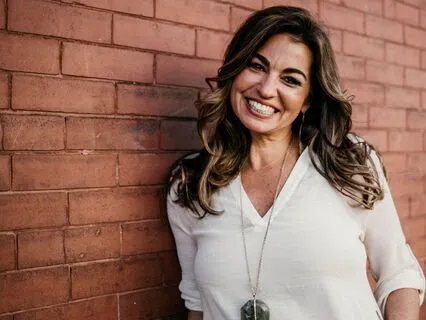
Welcome to the Michelle Chalfant Show,
The next evolution of the Adult Share Podcast.
I am Michelle Chalfant and my goal is to help you to awaken to your true self.
Together we will break through your barriers so you can find your purpose and live a soul aligned life.
Each week I'll bring you powerful conversations with thought leaders,
Spiritual teachers,
Healers,
And change makers along with actionable insights to help you to transform your life from the inside out.
Welcome to the Michelle Chalfant Show.
Hello,
Hello my friends.
It is wonderful to be here with you.
This is Michelle Chalfant.
Another good show for you today,
Gotta tell you.
A lot of people have been emailing in wondering like,
How do I use this?
How do I use the adult share for this?
How do I grow my own adult share?
How do I get there when I'm triggered?
So I really wanted to have on someone that does this so incredibly beautifully.
She has used it for years and she's actually one of my coaches.
Her name is LaShonda Walker.
She's going to talk to you today about how you use the adult share raising your children with your own parents at work and so much more.
What do you do when you're triggered?
She talks about a few things today that will absolutely help you if you're triggered.
She's got some just little steps that she's going to share with you to really,
Really,
Really help you find more peace.
That was something that she really drove home today is how do we live with more peace?
She's going to talk about that today.
So welcome to the Michelle Chalfant show.
I feel like I need a drum roll.
LaShonda Walker,
LaShonda Walker in the house,
Everybody.
I'm excited on the Michelle Chalfant show.
Woo.
Yes,
Ma'am.
Talk about evolving.
I love it.
I'm here for it.
I love it.
So this is the Michelle Chalfant show life from the adult share.
And because you do that so well,
I'm like,
We're going to have you on the show.
Let's hear about it.
I'm,
I'm,
You know,
I'm always happy to be here and support your work,
Michelle.
It's,
It's,
It is truly a life-changing model for sure.
Well,
You have taken this model and you have woven it throughout your whole entire life.
And that,
You know,
Listening to you speak about how you use the adult chair in your home life,
Which you have some phenomenal stories,
You know,
At home with children,
With family,
And then even at work with yourself,
How do you use that?
You know,
People obviously have known about the adult chair for many years.
And now that the book is out,
People are really talking about it more than ever.
But I wanted to have you on and talk about like,
How do you apply this into your life?
And yes,
You did go on to become a coach a few years ago,
But I just love hearing you talk about how you live this model.
And so many people talk about this.
It's not just something you learn and you move on from,
It's the type of thing where you learn it and then you apply it and you live this model and you don't retire from it.
You integrate it into your life.
So yeah,
It definitely evolves.
It is,
It's a model that is designed for it.
I say it goes in steps.
So it's the introductory of it.
For me,
That was the podcast I spent,
I want to say about a good year,
Just really being saturated in the episodes.
I've talked about it before.
I was in a small little office at the time and just,
It was very stressful.
And so I'd usually would have it on like at work on my breaks.
And so I'm just diving into it that way.
And then when I really began,
Became curious about the coaching thing,
I didn't even know that coaching was a thing.
I wasn't even trying to be a coach.
I was like,
Oh no,
No,
I need to figure out how she does this for real,
For real.
And then becoming a coach and going through the training,
It became a thing where it was embodied in my life because growing up,
I was never,
I was always a very sensitive child.
It's so funny to be on this side of my life.
When we talk about,
You talk a lot about intuition.
There were things that I intuitively knew as a child,
Like I just knew these things,
Right?
And a lot of things I was talked out of.
I was denied.
I was told one of the biggest things I always heard was when I got emotional was to get thicker skin.
That's very much like a cultural protection mechanism,
Stop being so sensitive.
So I had to spend most of my life denying this very true and authentic part of myself.
So to be introduced to the adult chair model,
The inner child,
The adolescent and the adult,
It truly changed the way I show up to where now,
It was funny.
I was having a conversation with my husband the other day and I was like,
Because the work never stops.
It's like these layers to it.
It really is.
It's like these layers to it.
And I was telling him the other day,
I was like,
He's always known these things.
He's known these things about me and he's just looking at me like,
Girl,
What are you going through?
And I'm like,
You remember,
I would see certain things or I would just feel certain things or I'd know certain things.
At the time I didn't have language for it.
Right.
But I just knew things.
And when I got introduced to the model and introduced to emotions and feeling and I was like,
I've always known this.
And so when you reconnect to that part of yourself and you heal that part,
It just naturally becomes a part of how you flow.
Like,
It's not a,
It's funny because I've introduced the model to my family,
My immediate family.
My children are familiar with it.
My husband is familiar with,
We use the language at home.
And so I've also introduced it to my family.
And so we're still working.
They're still working on it.
But just to have the language for our feelings and our emotions.
And when we show up in relationship with each other,
I was telling the group,
Our tech coaches earlier today,
That it's down to like in the group chats and family conversations,
If somebody shows up kind of funky,
You know,
Somebody in the family will say,
Well,
We see you woke up and chose your adolescent chair today.
You strapped in,
Didn't you?
You're like,
I'm a buckle in and I'm going to ride this out today.
And so now it's to the point where everybody in the family knows what you're saying.
So it's kind of like how we even check each other.
Like,
Wait a minute,
Who are you talking to?
What's happening?
Like,
Who's here?
Who's present right now?
Let's find our adult.
Let's find our adult chair.
And so it is,
It's a part of our life now.
And it was a new thing to be able to have understanding for your emotions,
Things that were happening in your body,
Triggers,
And to be able to now put language to what you're experiencing.
It just becomes a natural part of your life.
And so that's what it has been for me and my family with my children.
I have two teenagers.
And so we are deep,
Deep,
Deep,
Deep,
Deep,
Deep,
Deep,
Deep adolescent.
Like,
Yes,
You are.
My,
But it's helped me parent,
Like parent them through the adolescent,
Even,
Even serve as a,
As a,
As a mentor for their friends.
I,
Last year I spent time going to my daughter's school.
My daughter's a theater kid.
And so it's all the drama.
It is just plus age.
And one day,
One of the girls,
It was the night of,
It was the day of a show.
And when the girls just had a panic attack in the middle of the cafeteria,
Like just started crying,
Like,
Like one minute,
We were all just talking like normal next minute.
She's just like crying.
So her friends surrounded her and I just sat with her,
Right.
And,
You know,
Let her take a couple of deep breaths and just started asking her like,
Okay,
What's going on.
And she's like panicking about this song.
She has this thing totally in story,
Like completely in story.
So I was able to just walk her through,
Okay,
Well,
What is true for what you know about going into this show?
Like,
Have you rehearsed?
Do you know your lines?
Do you know the words to the song?
And so that's what it looks like.
Just incorporating it every day.
It's not always a session with a client.
It's,
It is a real life moment by moment situation by situation application.
You know,
It's what you just said that you were,
When you were working with your daughter's friend,
I mean,
The power of just asking,
Hey,
Hold on.
I mean,
In a nutshell,
You're asking her what's fact and truth.
Like,
Let's go through all the things that are factual.
It really does pop us out of those things like anxiety or even panic.
It,
It regrounds us,
Doesn't it?
Like it changes everything.
Yes.
And it's especially very helpful in,
Even in adolescent situations,
Working with teens,
Cause teens love a story.
Oh,
She doesn't like me.
They don't like me.
And so when you start asking them,
Okay,
Well,
Oh,
Well,
She doesn't like your girl.
She has,
What did she say?
Well,
I just know that she doesn't like me.
Oh,
Okay.
And they don't like me.
Well,
Who is they?
Them.
Okay.
Give me a name.
Like,
So when you start,
Even teenagers,
You start walking them through like this,
Then they're like,
Oh,
Oh,
It's not a problem at all.
Like,
No,
You just,
You made up that whole thing in your head.
And so I love this model,
Even especially for young people,
Because if you can teach somebody early on how to begin to challenge those adolescent behaviors,
They're,
They're light years ahead of their peers when they truly do become adults,
Because then they,
They already have the tools,
But you know,
For most of us,
We're just now getting the tools.
So that's why I'm really big on,
Even with my kids.
I'm like,
Oh no,
No,
No.
Oh no,
No.
Let's figure out what's really happening here.
What's fact and truth.
Yes.
Yes.
It's true.
It takes that,
It takes the power from our ego self.
And it's so boring though.
Sometimes,
Right.
It's like that ego can build,
Like you said,
The drama.
It's like so great when we're in that adolescent chair and it's like,
Wait,
It's so boring when I'm just in fact and truth,
But it,
It brings us peace.
Right.
Let me tell you,
When you talk about peace,
Michelle.
I.
If you don't get anything else out of this model,
The peace is next level.
It's a different kind of,
And I,
We've talked about this before,
Michelle.
No,
Knowing my background,
I grew up in a very religious,
Spiritual background.
So we hear these things,
Right.
We wrote scriptures about him.
We said,
But I never really knew we were told to walk in peace.
We were told to forgive.
We were told to do all these things growing up.
But nobody ever really gave us step-by-step instructions on how to do that and what that looks like and how you get to peace.
So when you can use this model.
And learn things like boundaries,
Like what,
What is that like boundaries?
Like speaking of when I said that I've always known certain things,
It's funny.
A couple of years ago,
I had a friend of mine from high school.
We had reconnected and he had shared with me.
He was like,
You know what?
You taught me boundaries in high school.
I knew boundaries.
I was like,
Bro,
What?
I knew boundaries in high school.
And it was like,
It's these things that you knew as a kid,
Right.
As you knew as a,
But you,
You push that intuition down.
You say,
Let me fit in.
What character do I need to be?
How do I need to show up for people to like me?
And then you,
You have these things that start coming back to you.
Like,
Oh,
I did.
I didn't know how to set boundaries.
I may not have had the word boundaries or the language,
But the behavior I knew.
And that,
Even that reconnecting to those parts of yourself,
My gosh,
The peace that comes with it,
That you can just be like,
You,
You,
Your relationships are totally different.
People start acting out around you.
And you're like,
Oh,
You want to work that out?
Or as my family says,
Whoo,
Somebody,
Somebody chose their adolescent today,
But that has nothing to do with me.
Whereas before we were kids that felt like it was our responsibility to manage our parents' emotions or manage each other's emotions.
Now use this.
And we're like,
Oh,
Somebody's got some work to do.
That's not my job.
Like somebody has got some work to do.
So it is very freeing.
It is very peaceful in it.
And it creates an environment where even in your home,
Everybody gets to show up as who they are,
Even when they're having their emotions,
Good,
Bad,
Or indifferent.
Right.
And it's just different.
It's a very different model.
It is.
You mentioned before about your intuition that you had,
And then you realized you turned it off.
Yeah.
You felt,
Did you say that you felt your emotions or that you were told you were too sensitive?
I hear this all the time.
So when we're growing up,
If we are quote unquote sensitive,
Which actually to me is a superpower because that's our intuition,
Right?
Yeah.
It's our intuition.
And when we're told these things or shamed for these things,
Then we turn it down or turn it off.
Like a dimmer switch is what I think about.
It's like,
Let me just dim that light because that's not okay.
I'm getting made fun of.
I'm getting even yelled at sometimes when we're told,
You know,
Stop doing that.
You're so annoying.
You're so sensitive.
So that was,
Again,
You didn't,
I don't know if you had shame or what your childhood experience was like around emotions and things of that nature.
But how did you turn that around?
What would you say to someone that's listening?
Because I hear this,
I'm not kidding you on a regular basis.
Yeah,
It's a real thing.
It's a real thing.
In the work that I've been doing,
We kind of talked about this a little earlier is I really,
I really had to get curious about the why.
A lot of my turn it down was very much from childhood,
My parents,
Very much my parents.
And as I started doing this work and I started getting curious and I started,
I call it like pecking away at the egg.
I would just peck,
Peck,
Peck.
I would just tap it just a little bit to test the waters with everybody.
And then I went full on to being a coach and introducing my family to it.
It became a ask questions and get curious and hard conversations.
For some,
It will look like hard conversations of why,
Why wasn't I allowed to?
And only to learn from family,
We were living in fear.
My mother came to the United States as an immigrant.
So her mindset was assimilation and do what you have to do to survive.
My father being from the South,
It was a survival.
So a lot of that,
And they knew I was sensitive.
They won't say it out loud,
But I'll,
I'll tell the public,
Both of them are,
Both of them are sensitive.
They both are.
So they had to turn it off for survival.
And so their whole thing was let's teach her how to survive by turning it off too.
And so as I really began to understand that and it's baby steps with it,
Like at first you're like,
I know,
I know this,
But let me see if I really know,
Even becoming a coach.
Like I,
I I'm telling you,
Michelle,
I had no intentions whatsoever of even in talking to you about becoming a coach.
I was like,
It,
It was going over my head.
I was like,
Great.
I just need these tools.
I'm just like,
I'd hit a wall.
I was like,
I'm just trying to survive.
So to get into the program and then all that comes with the program,
I didn't even know it until we were in South Carolina and I saw the work being done on the stage where all those emotions.
And I was like,
Oh,
Do you remember me coughing?
Like all the time?
Like I just started coughing and I was like,
What did I get myself into?
Like,
What is this?
It was your fifth chakra,
Right?
It was like speaking up and you were releasing.
I totally remember that.
It was just so embarrassing because of course,
You know,
Growing up in church,
You're like,
Why is this girl coughing in the middle of prayer?
Like we try to have a moment,
But it was in those watching it,
Seeing people connect to those parts of themselves.
And in seeing those connections happen,
Witnessing that freedom come and seeing people physically change to go up on the stage,
Looking one way and coming off the stage,
Looking totally different.
I was like,
What is this?
And so for me,
That's how it was like,
Okay,
I'm in this.
And for me,
It was a safe space to be able to do it because everybody in there was in the same boat learning and being vulnerable.
And so it was a safe space to begin to say,
Okay,
I do have these feelings.
I do have these emotions.
How do I get language?
And then one of the fellow coaches introduced me to the emotions wheels because she would ask me,
She would ask me,
How are you feeling?
And I would say,
Good.
And she was like,
Good is not a feeling.
I was like,
What are you talking to?
What do you mean it's not a feeling?
Of course it is.
Good is not a feeling.
And so she was like,
Here,
Put these cards in your wallet.
So then I'm walking around with these emotions cards.
So now I have words,
Like I have these,
At least starter words to say,
Oh my God,
Oh,
This is what this comfortable feeling is.
And this is what this uncomfortable feeling is.
And then the process of understanding the feeling.
And then what do I need?
Oh,
I need understanding.
Oh,
I need space.
Oh,
I need respect.
Oh,
I need,
What are your needs?
And that was just revolutionary to me because again,
Growing up,
Like my aunt always says,
You take what you take and you don't,
You know,
You get what you get and you don't throw a fit.
So you grow up believing that.
And then you get to this place,
This adult space in your life where you're like,
No,
I'm just going to settle for that anymore.
Let's challenge that.
So it is,
It is definitely opened up my world to experiencing myself as an adult woman in my adult body,
In my adult chair,
Not that there's not triggers and things that happen,
But being able to even just slow myself down and say,
Wait a minute.
Yeah.
What year is it?
Right?
We work those triggers.
Talk,
Talk a little bit about how you were,
How you work triggers now compared to in the past.
Yeah.
So triggers now are so different.
One of the things that I've learned is just embodying is,
Is trusting your body when you feel immediately when you feel.
And so I,
One of the most.
Profound is situations where I found myself having a trigger was years ago at work.
And I was in the middle of a annual evaluation.
I recently talked about it at a conference.
Then the supervisor was like going through all the things that I did great.
And then there was that one point where it's like,
Now let's talk about the things you need to improve on.
And I just had a breakdown.
Like I just literally like started crying and I was like,
What is going on?
And so that example is one of the things that using the model helped me work through why that happened.
And so now the biggest thing I pay attention to is my body.
Like when I feel.
That that's something in your chest or that's something in your stomach where you just,
You feel like this,
Like shake.
For me,
It's like a physical reaction.
I don't ignore my body anymore.
I do listen to my body and I,
You know,
Slow down.
I ask,
Okay,
What are you trying to tell me?
What's going on?
Is this about right now?
Or is something else coming up?
That's reminding me of.
Another situation.
So I always am way more aware of my body and what my body is doing.
Whereas before I was told don't pay attention to that.
We're not worried about that.
You know?
Yes,
We are.
Yes,
We are.
Yes.
We lift chin up most humans,
Right?
We're not,
We're not connected to that body part at all.
No,
No.
And the,
And the more you can teach me by,
You know,
I've recently started teaching more about the nervous system in,
In some of the communities that I speak in emotions is very,
Very new,
Very new.
Can also feel a little bit woo woo,
Like girl,
Stop.
But when you bring people back to fact,
Like,
Let's start with your body.
Let's start with your nervous system.
Let's start with that autonomic part of your nervous system that is automatically going into fight flight freeze.
What is that telling you?
And so when you bring people even down to that foundational level,
You may,
They may not be able to have words for their emotions,
But when you can bring that science into it,
I'm not making this up.
There's all this research that you can go and see,
And even just introducing people to their body parts through this process.
I got introduced to my Vegas nerve.
Somebody told me I had a Vegas nerve growing up.
A whole system in your body that's designed to teach you and to speak to you.
And so being able to even bring it down to that level for people is it opens up the door for people to be open,
Especially if they've never been open to emotions before or feeling like,
Oh,
Okay.
Okay.
That's,
That's what that is.
Okay.
Oh,
That's what,
So it's,
It's such a beautiful thing to watch.
People have these little moments that build on,
On bigger moments for them.
How would you say that your parenting has changed?
How do you show up differently with your children?
Yeah.
You want me to cry on this show,
Michelle?
Yes,
I do.
You know,
I love tears.
You know,
I encourage tears.
My babies have space and permission to feel unlike any generation before them.
Wow.
My kids have a voice.
Even for my,
Even my son,
I have a,
I have a boy and a girl.
And my daughter experienced some challenges this past school year medical,
And she was pushing herself way too much.
She was,
She was following a pattern of pushing herself and her body started talking to her and being able to give her permission and allowing her space to say,
No,
I've had enough.
I'm going to take a break.
I'm not going to push myself at 14.
It's life-changing because some of us didn't get that till our late forties and fifties and sixties when we were just at a breaking point.
My son having awareness of his own emotions,
His own feelings,
And being able to have language for it.
And just me as a person,
I think that from when I started,
You know,
Started from how I came to know the chair was in parenting.
My son,
He was little and introduced to the child chair and just even the family as a whole,
Not just our family,
But our extended family,
Our church family,
Everybody now challenging these old traditional dynamics of how to raise children.
Is it triggering for the generations ahead of us?
Yes,
It is triggering,
But it's also,
It's been an opportunity to learn and to grow.
I was,
I was talking to a friend of mine and telling her about it and she's a grandmother and she was like,
Oh my God,
Girl,
I feel like,
I feel like we just need to get everybody on the phone and say,
Stop having babies.
Everybody stop,
Whatever it is you're doing,
Stop what you're doing.
We need to have like a conference,
We need to have a meeting so we can like do better for the ones that are coming forward.
And I just busted out laughing and said,
Well,
I don't,
Well,
That's an idea girl,
But you know,
We can start here.
She said,
Because nobody told us this.
We didn't know.
These are things that we didn't know.
We had our own,
Our grandparents and our parents had their own systems and ways of regulating.
I learned my grandmother had her own nervous regulation system where she would just sit on the porch and cross her and rock.
Like that was how she regulated her nervous system,
But she didn't have words.
She didn't have language.
So for my children to have it,
It is,
It is definitely standing on the shoulders of generations before them to be able to say,
You get to live differently than the rest of us did.
So it's,
It's very different dynamic with,
With my kids versus how it was for me growing up.
And it's changed not just my parenting,
But it's changed my relationships with my parents as well.
We have a completely different relationship than we did before.
And just openly talking about it and their openness to understanding the emotional and mental aspect of wellness.
So it is,
It has been a truly,
Truly life-changing all the way around for me.
Wow.
Speak a little bit more about your,
Your own parents.
How has that changed?
I'd love to hear that.
Oh gosh,
The language that it is.
So,
Again,
I'm not going to cry.
Two different,
Two completely different people,
Two completely different journeys,
But still,
I think it was just opening the energy of being okay with emotions and understanding your emotions.
On my mom,
For my mom,
She has,
I was sharing with the TAC coaches earlier that when I started I have a podcast that I started and I started off talking about the chairs and my family didn't know what I was getting into.
They were like,
What is this girl doing?
But they know I'm that kid that's going to,
I'm just going to be gone.
Like,
Is she just out there somewhere?
It's fine.
She'll be okay.
And so I,
I launched the episode and it was the introduction with the chairs.
My mom called me and I was like,
I saw the phone ring and I was like,
Don't answer it.
Don't answer it.
Don't pick up,
Pick up this phone.
She gonna text you.
And then she's going to call the police if you don't answer.
Cause that's just my mom.
And she was like,
Girl,
I listened to your little podcast.
And I was like,
Okay,
Here we go.
I was like,
Here we go.
And she,
You know,
She was very skeptical.
She said,
I was not going to listen.
I just knew this,
This was about me and you know,
How I parented.
And she said,
Oh my God,
Girl,
Was I in for a shock?
And I said,
Okay.
She said,
I didn't even get through the whole show.
I said,
What are you talking about?
The show's not that long.
She said,
I didn't make it through that inner child that you was talking about.
I said,
Oh,
The inner child.
I said,
Well,
What happened?
She said,
You started explaining the inner child.
She said,
Baby,
I went all the way back to kindergarten.
Wow.
I said,
You did what?
She said,
She said,
Literally,
She was like,
It was like a flashback.
She said,
I went to kindergarten.
Then I went to second grade.
Then I went to fourth grade.
Then I went to sixth grade.
And like,
She was like naming off all these teachers that were in those different grades.
And she realized where her passion for advocating for the people that she felt were being mistreated came from.
She's been like this her whole life.
No clue.
And she said,
Take a break.
I can't listen to any more of that show.
I know you're about to get into another chair,
But I'm going to have to deal with that other chair later because I'm still trying to deal with my kindergartner.
Wow.
Okay.
So yes,
Introducing them to that.
My dad,
He has also had to take a different approach.
He's prior military.
He's retired army.
So it's,
You know,
It's rough and tough and it's straight no chaser,
Right?
All the time.
And there's been space,
Excuse me,
For him as well to really understand what,
Why connecting to your emotions is so important,
Particularly when it comes to your physical health and how unprocessed emotions have an effect on your bodily organs,
The way your body moves as you get older.
And so it has just been an introduction for the whole family.
And so I'm just happy that everybody has the language and they're understanding the chairs a little bit more.
But everybody loves the adolescent.
Everybody just,
Yes,
Everybody loves the adolescent.
Everybody's like,
Because they're realizing,
Oh my God,
People don't realize how powerful that seven to 24 ish timeframe is before that prefrontal cortex comes online.
And nobody's taught us this before.
We've just been unconsciously moving through life and survival and repeating patterns and just doing what we thought was the right thing to do.
But when you have language,
My God,
Language change,
Language and understanding what definitions totally changes everything and how you see things.
Changes everything.
I remember with my own mom learning all this work.
And I remember she was out visiting me in Nashville a few years ago before we moved back here to Charlotte.
And I snapped at her and I said,
Oh my God,
I'm so sorry that I did that.
She's like,
It's fine.
I said,
No,
No,
No,
No,
No.
Let's talk about setting boundaries.
And I really went through the chairs and I talked about how we set boundaries and you don't let people talk to you.
I'm telling her to set a boundary with me.
Not that I raged on her.
I just like snapped at her.
She's like,
Well,
You're tired.
I said,
You don't know what's going on with me.
In fact,
It was this whole education and I went into the chairs and I went into a whole thing around boundaries.
She's like,
Oh my God.
I mean,
Self-worth,
The whole thing.
And it was so enlightening.
It was so,
And she still brings it up to this day.
You helped me so much that day.
And then they build on it.
Our parents.
And you know what too,
I don't know if your mom experiences,
But they also begin to pull on things that they knew,
But they told,
They were told that's not,
You shouldn't pay attention to that.
And they're like,
No,
No,
No,
No,
No.
Yeah.
So it is this,
This generational healing that it brings this new awareness,
Even like down to when I was doing some generational work and I discovered the,
My grandmother and the rocking with her feet cross flashback growing up.
I watched my dad do that every day when he came home from work,
He would lay on the couch and he will,
He still does it to this day.
And I was like,
Do you know what that is?
And he's like,
I was like,
After being at work all day and stress,
That's how my father regulated his nervous system.
Get out of here.
And didn't.
And when we talked about it,
He was like,
Oh,
He said,
Cause that's what,
That's what helps them to calm down.
Yeah.
You're seeing the left and right.
All that stuff out of your body.
Cause he's not a big talker.
Like he's,
That's just not my dad,
But he will,
When you see him in that chair with that foot going,
Give him a moment.
That's so beautiful though.
Yeah.
And he learned what he,
I said,
Where did you get that from?
He said,
I don't know.
I watched,
I watched my mama do it all the time.
And he's just,
He just does it.
Yeah.
There you go.
So we absorb everything around us.
We don't even know what we're absorbing.
And then we're doing ourselves.
You don't even know it.
It wasn't until I gave him language.
I said,
You know,
That's how you regulate your nervous system.
And he was like,
What?
I say,
Yeah.
I say,
Yeah.
Welcome.
Welcome to the club.
So something that you do so beautifully that is so needed in the world is,
Is working with generational trauma and patterns.
Talk a little bit about that.
Cause that is something that we as humans need to have a better understanding about.
And then what might we do?
How do we know that we might be even in it?
Cause I realized most people don't even know that they're in it.
Yeah.
Most of us don't cause we are moving through unconsciously.
For me,
It became an awareness when I started parenting.
And then even as I got older,
Just doing certain things that,
You know,
You say,
You know,
You see your parents do certain things or,
You know,
You say,
I'm not going to do that when I grow up.
And then when you grow up,
You're like,
Oh,
I just did.
And so in working with my clients,
Usually they'll come in for something that has nothing to do,
Nothing to do with their parent or anything.
And then it's not until you start peeling back those layers and just asking questions.
I just tell people get curious.
Where did you learn this?
Where did you first see this?
Where did you first experience?
I worked with a client one time that she had that situation of overproducing and over giving and just running herself into the ground.
And I said,
Well,
Who did you,
Who did this?
Who did you see do this?
And she,
You know,
She was in a moment where she was slowed down and she was in her body.
And she said,
My grandmother.
And I said,
Okay.
I said,
Well,
Maybe that worked for her.
She said,
No,
It didn't.
She didn't like it either.
So why are we doing it?
You know,
And it is,
It is getting,
I think the big piece is getting people to slow down.
Yeah.
I can't tell you how much comes up when people just slow down.
And sometimes you need somebody to guide you through slowing down because most of us don't know how to slow down.
I had to,
I had to spend a lot of time with some of our tech coaches.
I spent many,
Many,
Many sessions with tech coaches,
You know,
Going back and forth to sessions and in learning what it is to slow down.
Right.
And what it is to talk to your body and ask it what it's asking for it,
Asking it what it needs.
And so when we're looking at that through a generational lens,
I often,
When we're doing what I call our soul work is we'll go through the session.
I pay attention to certain keywords,
Certain key things that come up.
And then we go into that soul work of where did I learn this?
Let's just get curious.
Who else does this?
Why did they do this?
And when you start to look at it through that lens,
I think one of the biggest things that has come out of it with several clients that I've worked with who came into session with deep,
Deep,
Deep,
Big mother wounds,
The mother wounds to transition from this mother womb and just resentment and just hatred and anger towards their mother to such a profound grace for these women,
Despite everything that happened to them,
It's a different kind of,
It's a different type of freedom seeing that.
Seriously,
Michelle,
It is using the model.
It is helping them get back to their inner child,
Helping them work through their adolescent.
Okay.
What do you think it was like for your mother when she was a child?
What do you think it was like for her when she was an adolescent?
And it brings this humanity to their experience.
It brings this sense of,
It wasn't personal to me.
Yes.
Yes.
It wasn't personal to me because that's what we walk away with.
We walk away thinking that it was personal to me,
That I was the problem.
I was the one that was wrong.
But when you can slow down and really do your own healing work,
And I truly believe in generational healing,
That you heal seven behind you and seven ahead of you.
And I see it.
I see it with my own family.
I see it with my own children.
I see it with my extended family because I think that that's important.
We love to talk about generational curses and generational patterns.
Being in the culture that I grew up in are generational curses,
Especially.
I don't typically care for the term generational curses,
Even though I grew up in religious environments that did,
Because sometimes what happens with that,
And I've seen it in my experience,
Is that when we use the term curses,
It gives this sense of it's something outside of us that we can't control,
That we don't have any power over,
That we just have to take whatever it happens and go with the flow.
But I think when you shift language to generational patterns,
There is a sense of ownership and empowerment that if this is a pattern that's been started,
It's a power that I can change.
It's a pattern that I can change.
It's not some outside thing.
And a lot of it is emotional.
It is how can we better regulate emotionally.
I was at a conference recently,
And after the conference,
One of the ladies came up to me and she was just like,
How is this even happening?
And I was like,
What are you talking about?
And she said,
I'm the one in the family that I'm always doing it.
And if I don't do it,
Nobody else is going to do it.
Blah,
Blah,
Blah.
So where'd you learn that from?
And I just slowed her down for a second.
Where'd you learn that from?
I said,
Who'd you see do that?
She said,
My mother did it.
I said,
And how's that working for you?
And she started crying and she said,
You know what's crazy?
This is why I'm talking to you.
She said,
Right before I,
I wasn't even going to come to this conference,
But right before I came to this conference,
My daughter has been going to therapy.
She told me,
Mom,
We can't keep doing this.
This is not working.
And she's like,
What are you talking about?
She said,
We can't keep projecting our emotions on each other and calling it love and relationship.
That's not what this is.
And I was like,
Dang,
Your daughter said that?
She was like,
I know we need,
I know we need something different.
I said,
Yeah.
I said,
It's just an invitation.
I said,
It's not a shame thing.
And I think for people who are,
Who are concerned about shame,
Because sometimes when it comes to looking at patterns of behavior that are often unhealthy,
Dysfunctional,
Toxic,
Whatever word you want to use.
One thing I love about this model is it really does free you of the shame language and get you into,
You were just protecting yourself.
It was,
It was the only way you knew to protect yourself.
But my mom,
She always says,
I taught you things and I taught you ways.
She said,
But when I learned a better way of doing it,
It is my responsibility then come back and teach the new lesson.
Right.
And that's what generational healing is about.
Sometimes it's going to come for your kids saying,
This isn't,
What are you doing?
And this is a generation that is empowered to say,
We're not doing that.
We're not,
No,
Like that's not going to happen.
And so when you can,
When you can sit with yourself first and foremost and slow down and really find compassion and grace for yourself,
It just opens up the door for you to find the same for everybody else in your family who was also just surviving like you were.
So well said.
I think about all the patterns that are passed down,
You know,
Healthy ones and unhealthy.
I think about your father that's doing what his mother did to regulate his nervous system.
But then I think about in my own life growing up in the summer,
We lived in our,
With my grandmother and my uncle,
And there was a ton of drinking.
And I remember I can still,
LaShonda,
I can see looking at my dad and he had a bourbon in his hand and it was four o'clock because that was what,
During the summer,
That's what you did on Friday nights at the lake.
Everyone,
They had parties all the time.
More of my grandmother and uncle were huge drinkers.
My dad drank,
But not like them.
But anyway,
And I remember I said,
Let me try that.
I was 12 and he gave me a little sip.
My father was not giving me alcohol,
But he let me have a sip of wine and whatever.
I went,
Oh,
It's bourbon.
It tastes so bad.
But my next thought was,
I know I need to learn to like that because that's what I need to start drinking when I'm an adult at four or five o'clock every day.
I looked around.
My grandmother,
All my uncles,
The neighbors would come over.
Everyone was drinking their mixed drink.
And I thought,
Well,
I know I'm supposed to do that.
And it's funny because as I grew up and I went through college and drank a ton,
But I didn't like it.
I just don't like it.
I don't like alcohol.
I don't like how I feel.
So then I stopped altogether.
And it's so interesting because I remember thinking,
But I'm supposed to,
Aren't I?
And it was just a program,
Right?
It's a programming,
Yeah.
It's a system.
So many of us grow up in systems,
Right?
And the systems have been operating the way they've been operating.
And just like you,
Everybody else who is probably,
There's probably other people at the party,
Like,
I don't even like this stuff,
But this is the family expectation.
This is how we're supposed to show up,
Right?
And so that's where the patterns are.
And as you use them,
But this is why I love the model.
And I apply it every area of my life.
When I would go back and I would start seeing certain things and seeing certain patterns,
I was like,
Oh my God,
That's so deep in the adolescent.
Like y'all are even conscious of what you're doing.
Because when you bring it up to people,
They're like,
What are you talking about?
Yeah,
Just completely disassociated.
But they don't slow down enough to check in.
And what I hear you saying over and over again,
Which of course we preach in the program is slow down.
And when we slow down as humans,
You then start becoming more in touch with what you're feeling.
And hopefully using this model,
People become aware of,
Especially in the book,
I break it down how you feel emotions.
Then you have some idea of how,
Oh,
Wait,
This is what I need to do.
This is how I do it.
This is how I do it.
That is what is the book.
I have it.
I've been listening to it on Audible.
And of course,
I always have to get the hard copy because I'm a writer.
But the thing about this model,
Michelle,
It is literally an introduction to emotions.
People don't feel.
You ask people how you feel.
I don't know.
My favorite statement that I hear oftentimes,
I just feel some type of way.
Well,
What is that way?
I don't know.
Because we're not taught to feel.
Most of us have been so projected out of our bodies through childhood experiences,
Through traumas,
Big traumas,
Little traumas that were not present.
So to even tell somebody to slow down,
That can be,
That in and of itself can be triggering because most people are on autonomic,
Right?
Auto fight or flight,
Whatever their thing is.
But when you get a chance to sit with,
I was at a,
I spoke at a women's event a couple of weeks ago.
And one of the questions closing out,
The young lady asked me,
How do you slow down and not feel guilty?
How do I slow down and not produce and not feel like I'm being lazy?
So I slowed the whole room down.
And they were like,
Everybody was like,
Yes,
How do you do this?
Because we were talking about being unapologetic about disconnecting.
It's like,
But how do you do this without feeling like you're lazy or feeling like,
Yes,
So let's slow this down.
I was like,
Okay,
Let's slow this down.
Because it seemed like everybody had a similar question.
I said,
So ask me your question again.
So she asked her the question again.
I said,
Now I'm going to counter your question with a question.
I said,
Who told you you were lazy for slowing down?
She just was like,
I'm going to turn this microphone off now because I said,
You don't have to.
I said,
Then I slowed her down.
I said,
Who told you that?
I said,
Not just who told you that.
I said,
But when you feel lazy,
When you feel like if I don't produce,
I'm lazy.
How old do you feel?
She said 10.
I said,
What happened then?
I said,
You don't have to tell me.
You don't have to tell us,
But it's something you might want to sit with.
Right.
And so even just little ways of introducing people to it's there.
People know every one of us has intuition.
Every single one of us,
As long as you are breathing,
That intuition is there.
It is reteaching that child how to do what it automatically knew to do when it got here.
I started getting into breath work.
And one of my coaches was explaining to me why babies sleep so well.
She's like,
You know,
Let's sort of sleep like a baby.
It's because they belly breathe.
They breathe from their belly.
Right.
But as they get older,
The systems around them force them out of that belly breathing.
And then we start breathing shallow breathing,
Which is part of why we're disconnected from ourselves.
So to even be able to just slow somebody down in a question like that,
To get them to then go back.
I'm going to counter your question with a question,
Right?
It opens up a door that says there's something else there.
And I think as coaches,
That's part of our job is to open up that door is to crack open that door a little bit to say there's something else here.
There's something else in me.
I'm not this all that I'm seeing that they told me all these boxes to check and do this and don't.
Something's off.
And I think we're just at a beautiful time where we're in an energy where people are being reintroduced to themselves and reintroduced to their bodies in a new way.
And I would just encourage anybody to ride the wave.
And if you're new to it,
This is a beautiful place to start is using this model.
And from the inner child to the adolescent and to the adult,
It's very simple.
And a lot of aha moments using it.
Gosh,
Thank you so much.
This was so good.
I love hearing how people are using this in their lives.
And that's why I wanted to have you on so you could share to hopefully inspire others and give them ideas on,
Oh my gosh,
I can use this in my life in this way.
Thank you so much for being here.
You're doing such beautiful work in the world.
We're lucky to have you.
Thank you for doing this.
I appreciate it.
All righty.
I hope you guys enjoyed that show.
LaShonda is an incredible human.
I love her so much.
And I hope that you learned how to become more peaceful or bring more peace into your life.
She has it down.
She lives this model.
So many people tell me this is more than a model that you learn and then move on from.
She lives it.