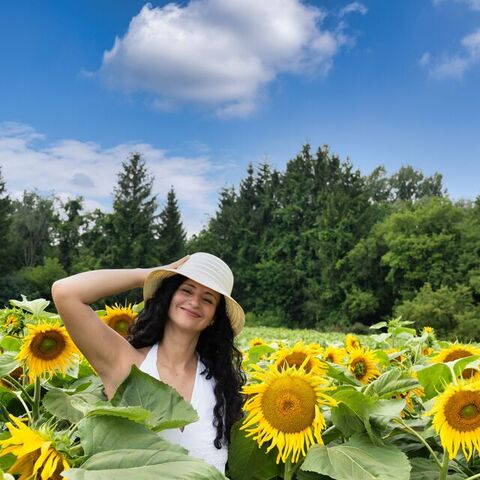
Hello and welcome to the Love and Compassion podcast with Giselle.
We believe that love and compassion have the power to heal our lives and our world.
Don't forget to like and subscribe for more amazing content.
Today I have my most beloved sister Jessica Campbell talking about weight loss and compassion.
Jessica Campbell started her journey when she was 45 weighing 270 pounds.
She's lost over 100 pounds and decided to create a YouTube channel where she could engage in dialogue about weight loss,
Weight-related disease education,
And how to achieve weight loss in an affordable way that honors a person's way of living.
And I would also say compassionately too.
And this was really about her journey in figuring out how to live a balanced life.
So today we're going to be talking about weight loss,
Compassion,
Maybe Bridgerton and relationships.
Please join me in welcoming Jessica Campbell.
Hi Jessica.
Hello Giselle.
Thank you so much for having me.
I really appreciate this.
Oh,
No worries.
Thank you so much for coming on the show.
I mean,
We've been talking a little bit about working together and I knew that you were the person that I wanted to have a conversation,
Especially about weight loss and compassion,
Having gone through your own weight loss journey.
And also,
You know,
Some of my listeners might not know that you are one of the first people that really taught me about compassion.
We were both very young and you would talk to me about how to look at people beyond the good or bad,
And how to look at my relationships with,
You know,
Our parents and other people in a very,
Very kind way.
And so I am forever grateful and thought you would be the perfect person for this conversation.
Can you tell the listeners a little bit about how your weight loss journey kind of began,
You know,
Like the path to get there?
And then maybe some of the most important things you've learned from that journey.
Absolutely.
So the first thing was that I was going through a lot of existential baby questions at the time where I had already had the kids.
I was trying to find a place in terms of what I could do after,
Because my whole world were my kids,
My husband at the time.
But I didn't feel that I had purpose.
But there was an addendum to that.
The addendum was that every day I would get up,
I would feel weighted in,
Weighted by the weight,
Weighted by the fact that I couldn't breathe.
And the fact that the weight was weighing so heavily upon me that I couldn't even,
I couldn't work.
I became less and less active and engaged in my life.
Now,
The precipice to that is the fact that you go into your doctor's appointment and your doctor says,
Well,
You're pre-diabetic.
You're also have high blood pressure.
And they weigh you,
Obviously.
And that's,
You know,
That the observable weight was 270 pounds.
Now that I did not act right away.
So I think I was actually a little bit heavier.
But I mean,
It's neither here nor there.
The weight wasn't what was the issue.
It was the fact that all my health was going on a downhill spiral.
So I decided to take care of my health.
And this is actually pre my separation,
My divorce.
It was,
I think that the problem with any journey is that,
You know,
Everyone has to,
There's the old you or there's the you that's existing at that time.
And the vision you are not necessarily aligned at that time.
They're just two different ideas.
And because there are two different ideas that you have to buy into it.
And then other people have to buy into it.
So that is very complicated.
Because that is such a complicated feature.
If you are not completely sold on it,
You're still figuring it out.
How do you imagine your family being able to buy into it?
So that long division was basically the inherent problem that took over my whole life.
Because if I'm going to add to it,
In order for me to be able to find,
Correlate the old me and the vision,
Everything,
Every aspect in my life had to fail.
And it wasn't because it had to,
It because it did.
It got to the point where I was failing at everything that I said,
This bottom is going to forever continue.
How do I decide to surrender to it and say,
It doesn't matter which bottom I go,
Because the bottoms continue.
How do I find myself out of it without hurting myself any further?
Yeah,
Sorry,
I just wanted to point out,
You just said something very,
Very powerful,
Which is,
You know,
And I think this is why so many weight loss programs fail,
Because they're focusing at the reason of behavior.
I'm just going to eat less calories.
What you're talking about,
Which is the kind of a bang to start the conversation,
Really is about shifting identity.
It's you have to see yourself and act in a different way.
And that,
Like you said,
Can cause a real ripple in your relationships because they see the old you,
They're comfortable with the old you and what you said,
What you needed to do was to destroy that old identity.
And not in a harsh,
Harmful way,
But in a way that you needed to see yourself in a different way as a person who was quote unquote thinner or thin,
Right?
Sorry,
Continue.
Yeah,
And it's not even the thin part is the part where you are able to do things.
Oh,
Yes.
Thank you for that clarification.
I do want to clarify that because I have been overweight since I was a child.
There's a huge difference between being overweight when you're young.
And that's all you know,
Because there's inherent problematic things here.
Then when you're older in your 40s and 50s,
You start gaining weight.
And now both situations,
You do have to manage them with your lifestyle.
Because absolutely,
That is all about it.
How do we honor our lives and the way we want to live and start seeing visible things like weight loss?
We can talk about that a little aspect,
Maybe later on the conversation.
But what I'm trying to say here is the fact that specifically me,
I had to find a new adult identity when there was no adult identity to be related.
I had to imagine somewhere else.
And this is where I would say how would an energetic woman of 50 or 45 look like?
What would she look like?
What would she do?
How would she behave in a meeting?
And those are so many intangibles.
I would have little things like,
For example,
You know,
The actress Selma Hayek and J.
Lo.
And how do they become the women that they become?
Not necessarily even just specifically to them,
But how do they get up in the morning?
How do they deal with their lives?
And specifically,
I wanted to live no longer angry and with grace.
So every morning I would get up and despite what was going on in the world,
At that time,
A lot of things were very painful to live.
And,
But I would get up and I would say,
How do I live with grace and forgiveness?
And how do I live with compassion?
Because as insignificant as I thought,
My person was,
I always woke up,
You're absolutely beautiful.
I would get up and I said,
Nobody,
Even if nobody believes it,
You're absolutely beautiful.
You're a gentle female,
Graceful being.
And then I started to morph into that.
It's not about image.
It's about impersonating a beautiful side of the human race.
Yeah.
I think it's about becoming more of yourself.
Yeah.
Becoming more authentically you.
It's not secondary.
But what I was trying to say is that when I was 250,
240,
That's all I would focus.
I would focus and I would say,
Everything is failing in my life.
How do I bring grace into the day?
How do I bring compassion into the day?
How do I look beyond me?
Because I mean,
I'm not dealing as a nurse.
I'm not dealing with my cause.
I'm being present because my life is,
Like I'm,
It's raining cats and dogs.
I can not just look at the cats and the dogs.
You know what I mean?
Yeah.
Yeah,
I do.
Yeah.
Yeah.
It's what you're talking about is embodiment.
Embodying the identity that you want to.
And I remember early in your,
Not so early,
But in your weight loss journey,
In terms of,
You know,
On your journey to losing 100 pounds is you,
I remember you telling me,
I'm an athlete,
Right?
And then you would actually wear outfits that would be like,
And she's,
And you would tell me like,
People would randomly come up and you're like,
Hey,
Are you an athlete?
Like they would ask you that.
And I have found it so incredible and it was so inspiring.
You mentioned like your weight loss journey as a child and you know,
You and I are sisters.
So I've sort of seen your journey throughout.
And one of the things I observed was just how,
How much like our parents in that sort of,
Like how that navigated the conversation of childhood weight in,
In the kind of the traumatizing impact that sometimes the comments that parents make to their children about their weight,
Rather than focusing on healthy eating.
What have you learned about your journey that you wish maybe parents would know about like engaging in conversations with kids around weight?
I fall back to the health and every size mantra just because at the time when I was a kid,
I was also fairly active.
I used to dance and,
And play outside and,
And you know,
I was taller than most people.
I am.
You were told for South American,
Jesus,
You're still tall.
Yeah.
Yeah.
Five,
Nine.
But you know,
An average woman in,
In Peru would be five and maybe under.
So I was quite tall.
But most importantly,
I think that there is something to be said about focusing on solutions instead of labels.
Because when I was 10,
I was 11,
I was 12,
I was 13,
You know,
Every doctor's appointment,
My weight was a problem.
You know,
My stretch marks were a problem.
My,
You know,
My shape was a problem.
And there was never,
Aside from you really need to look at your weight,
There was never anything else.
And,
And if I'm going to shift hats here,
I'm going to say health care is not very good at giving you tools aside from,
You know,
Less carbs,
More protein and,
And your keto is kiddo-esque type of sheet.
Very impersonal.
There's no sitting there with the patient.
And actually,
Let's talk about this.
Now,
Having said that,
I don't think I should go into in-depth of what our health care problems are,
But I just want to align the fact that children specifically,
And maybe this has changed,
But certainly in the 70s and in the 80s,
It was more focused on you need to lose weight.
You're not,
You know,
You are late,
You're labeled obese,
And this is your problem.
And at 13 years old,
How can this possibly be your problem alone?
You're,
You're a child.
So that's why in my humble opinion,
When it comes to children,
I think there has to be a lot of tact and a lot of compassion when it comes to size.
And in the end of the day,
It isn't about the weight.
It's about a person feeling okay with the body that they inhabit.
So since you mentioned health care,
I'm going to go there because health care solution to weight loss is Ozempic.
And I remember Fen-Phen,
And I remember all the other weight loss things that they just push on you,
And now it's Ozempic.
And now people are getting like Ozempic phase.
I don't know.
So really the solution- Can I touch upon that,
My friend?
Just give me a second.
So one of the things I do want to add and maybe engage in for this conversation is that I did take Fen-Phen when I was maybe in my early 18,
19,
20s,
Maybe?
It wasn't fun for me.
So I remember going from,
Like taking Fen-Phen and going from Ryerson to Union Station in like five minutes or less.
I ran the whole time because my heart had increased.
The palpitations increased so much that I felt like I was so anxious.
And so I had to get off it because it caused me anxiety and not depression.
It was completely,
My heart would go from a regular 70 to 100 and something,
And I had to catch up with it.
That's how it felt.
I remember one of the things I noticed as your sister and having known you all my life was that you actually became a little bit paranoid.
Yes,
I was.
You thought that I hated you and that I didn't want you to be successful or all these other things.
And I'm like,
This is insane.
I agree,
I had to get off it.
But let's go back to Osempic and let's go back to the reasoning behind why obesity is now considered a chronic disease.
First,
I think that it's very important to actually acknowledge that this is a very important move to have it because it is a chronic disease.
I don't know.
I am trying my best to learn how to listen to my body in terms of satiation.
So we have to,
Because it's a process,
That obesity has to be treated as a process that might never go away.
So it does qualify as chronic disease.
The reasoning behind why Osempic is so now successful is the fact that it gets rid of the food noise that is your feelings around food.
It gives you more of a perspective of,
Yes,
You are full and therefore do you really need to eat more?
So now the proviso here is that I don't know enough about Osempic.
But it is a very helpful medication when you really try to get into that sphere of getting rid of the food noise.
Now,
The reason why some people should not take it versus some people should take it,
Because I believe that is given to people that are severely obese.
And I endorse that because you got to get,
You got to start somewhere.
And I've been in that sphere where you don't know where to begin.
There's no way to know.
You have to start somewhere.
Osempic is an excellent way to begin.
Where the problem lies is the fact that the weight loss is not indiscriminately.
You lose weight,
You just lose weight.
And it is particularly dangerous in our subset,
50-year-old women,
That we're in danger of osteoporosis,
Of continual muscle loss and things like that because of the fact that we're growing older.
That's the thing that we lose.
Now,
Weightlifting and exercise,
Those are how we preserve what we have.
And if we are going to use Osempic,
We need to have the lifestyle to support that weight loss.
Yeah.
And so,
And I think that's what goes to what you were talking about in terms of identity,
Right?
The shifting of behaviors and understanding why you have those behaviors to begin with.
I think my concern around Osempic is really is that here's a pill,
Make it go away,
But you're not addressing the issue.
I think one of the things that I've noticed and I've spoken to a number of people on this,
But this may not fit for everyone,
And so I don't want to make a blanket statement,
Is some of the people that have shared with me information about their weight loss journeys,
What they had said was really as they started to shed the weight,
Emotional stuff started to come up.
And so they noticed that the weight was sort of like a protection,
If you may,
Like a bubble,
Like a bubble wrap.
And it's very similar to what people do in hoarding.
Hoarding is also a bubble wrap,
Except it's a physical bubble wrap.
And so for those people that are using weight as a protection,
Then something like Osempic is not really going to help them address the emotions that come up as you release.
Or maybe I'm wrong.
I don't know.
What are your thoughts?
So I am going to have to agree in that sphere.
And if I may,
Like all my journeys since I was small have always been about application of a diet into my life and how do I put it in.
When that was never,
Ever,
Ever how,
How,
Sorry,
Let me backtrack by saying the last time I started my weight loss,
Which I was successful,
That's not how I approached it.
How I,
The first 20 off pounds was just through therapy,
Was just having someone to talk to and to actually engage them in conversation about how I deal with the world.
So I would say the first 20,
30 pounds,
It was really nothing about changing my life,
But changing my mind.
So where Osempic comes in is that it's again,
One of the,
A tool that's sometimes it's not used appropriately.
We all hope,
We all hope that the tool will be useful,
But it's a tool.
Yeah.
And I,
And thank you for that reminder because it doesn't have to be this or that.
It could be this and that.
And I think that's,
It's important to use it as one of like,
You know,
As part of your toolkit.
I want to go back to,
You know,
Something you had said earlier,
Which is talking about,
You know,
Like healthy weight and loving your body and listening to your body.
And I,
I don't know if you've heard this.
There's been lots of things on TikTok about Bridgerton,
The actress,
Nicola.
I don't watch Bridgerton,
But I know people that do.
Oh,
Yes.
So,
So there's this gorgeous,
Beautiful actress.
And you know,
She would be what people consider on the plus size.
And she is very popular and has this starring role.
And people are ruthless.
And there was an article in the Spectacular or whatever that article was.
And they were just so harsh.
Why are people so harsh about weight?
I have a theory,
But I'm interested in what your thoughts on,
Or in terms of like,
It's just like,
Well,
It gives people the right.
She's doing her job.
She's doing her best.
She's doing fantastic because she's got a leading role in this Bridgerton.
So,
And she's gorgeous.
So like,
What's the beef?
I don't get it.
So in my theory would be that it's not about Nicola at all.
It's about us as a society.
And I do want to bring back a little bit of a humble pie here in terms of me.
I used to be able,
You know,
Things like that would trigger me too.
Why?
Because they're mirrors.
They're mirrors of what we are and what imperfections we find in ourselves.
We tend to be very critical of.
So,
Yes.
So you don't want to see a heavyset woman get a completely handsome,
Rich guy.
It's a fallacy,
Right?
You know,
The first perception you get is,
Well,
That's ridiculous.
People attract similar attractive people,
Which is completely and absolutely ridiculous to say and to believe.
But yet we believe it as a society.
And why?
Because we do see our imperfections acutely.
We just hope that the rest of us don't see it as much.
And we like to pretend that it does.
But interestingly enough,
Other people have more insight into ourselves than some of us do.
So therefore,
I would have to say it's never about the actress.
It's about us and how we handle things that do not make sense in our brain.
I completely agree with you.
It's a rejection of ourselves.
Because it's like,
No,
It has to be the perfect girl with the perfect nose,
With the perfect outfit,
With the perfect body that gets the perfect guy.
It's because we reject ourselves.
I have to tell you,
As a person that has been dating,
Looks will only get you maybe four or five dates.
At the end of the day,
Connection has to be two like minds,
You know,
Understanding that there's compatibility and understanding.
And the other person has to match you in interests.
Going back to weight loss and how we deal with each other is the fact that we really undervalue connection.
Yeah,
Which is why we're in the state we're in as a society.
And I think that's the issue too is that we are so worried about our physicality.
We don't have healthy examples of aging.
Yes,
Absolutely.
But I do have to tell you one thing about that.
Is that physicality is our calling card.
You can say what you will and I agree with you is that it's a lot of misguided interpretations on how a person should look at every age.
But we need to we need to come to an understanding that our presentation is our calling card,
Evil or not evil.
So understanding that that is our calling card is very,
Very important.
Not to say that we must align to it but we must be understanding of it because it's not because you want to look a certain way it's because you want to understand that it's our calling card because everyone will bring hate into whatever.
Someone can say you could be saying something very important and someone would say oh you have crooked crooked like I wouldn't be talking.
So because you know that that's your calling card and that that's what they're seeing you could say thank you very much for your thoughts and concerns.
My teeth are what I like about me.
Too bad,
So sad.
I'll see you.
I'll see you.
But but you know did you hear the message?
No,
Now you can feel that and not answer.
But being in that frame of mind that you understand that your image is your calling card regardless of how you feel about it is the beginnings of an understanding that you will receive hate you will be at the bottom of the barrel and you will still be okay.
And I think that goes to what you were saying about life being a mirror,
Right?
Like you know I think there are times when I feel most insecure about things that that life that mirrors back that I would get comments,
Right?
But to be honest I've never gotten comments but I've gotten comments about my nose because I was very insecure about my nose and so people would call it the witch nose and all of that stuff but as soon as I started actually really loving my nose and saying you know what?
My nose is unique.
My teeth are unique.
They're they're just what it is.
I don't get those comments anymore and even if I did I would laugh my ass off because it's hilarious but it really doesn't and so it has no power over me.
I don't need to give it power.
I don't need to feed that and so it does give us an opportunity like you say to really step up into our own power but it is interesting how much we how we have a specific perspective on like you said earlier how people these particular people should follow these particular people because the truth of the matter is when you look at human beings we come in all different shapes and sizes and colors and and it's like a beautiful garden right?
It's like imagine if the gardens were just always roses and they all look the same.
That would be so boring but there's so much diversity and instead of celebrating that we're trying to make everything the same and assimilate and people have the same noses and people have the same looks and so and to me that's the weight thing has to do with that as well.
One of the people I follow regardless of what people think about celebrity I'm not a big celebrity follower but I do like Lizzo and I think she's gorgeous and I love that she is providing outfits that are like different size because that was always an issue in terms of like and the clothing is beautiful and so yeah you are providing for a market you know just because you're a plus size person doesn't mean you have to wear a muumuu and so to be able to see beauty in all these different sizes and also people that are very small and and like very very thin and so being able to to express your own creativity and beauty and and honor it in different ways without having to sort of fit into a mold I think is really important.
Oh I quite agree.
Now there's two things that I think about when I think about Lizzo because she is also going through a weight loss journey is that a lot of people underestimate the transition you and the transition you is actually a lot more than the present you because we all transition.
I do want to voice something about the BMI which is the Basal Mass Index I think that's what it is it's it's a unit that it's been vilified a lot why?
Because it's not discriminative between bone,
Muscle or fat the reason why I bring this up is because of this it's a useful tool another tool to assess the risk of of chronic disease while you said you know everybody no matter what their body is beautiful what I hope to accomplish with my YouTube channel is to bring insight into saying while we are we we have that our bodies are so wonderful that it can absorb an amount of weight the problem is is that we don't know what five pounds will set you to towards chronic disease so for example if we have a beautiful 20 year old girl that has 20-30 pounds and she's still active living her best life and her and her blood work is pristine we don't have to worry about her really I mean you know there might be a point in her 50s when we might have to if she if she continues to gain but what we what we are looking there is how do we keep it in in the aligned to where we are keeping chronic disease at bay which is what I'm a huge advocate about in the end game in my YouTube channel is to make people understand that these chronic diseases are fixable they're reversible but it takes you to do it to help us care healthcare providers in order for us to be able to move as a society towards better health because our healthcare inherently is not going very very well the latest paper that came out out out of the Ford government you know it's that we're going to be losing a lot of nurses PSW so in order for us to contribute individually is that we need to observe our own health we need to self-care and I think that's so important because I think something from my perspective about healthcare is the lack of holistic perspectives right like other than physicality and symptom management the whole being including spiritual including like all of the other parts is not just kind of seriously and separately yeah absolutely and I have to add that you know I think that the observable is always very easy to capture and monetize what is not what is not so easy is the subjective how do we capture mental health if it's not quantifiable if we're not if we cannot put it in paper we're not going to fund it yeah that's why it's up to us to take care of our own health yeah I wanted to go back to the issue of BMI because I think one of the things that I have observed with this younger generation and through TikTok and all of those is the the focus on weight you have very thin people really like like people that are putting potentially themselves at risk having food restrictions eating disorders and so the prevalence of that among young people as a way to maybe some could have control over their lives maybe address whatever issues or whatever might be happening for them I think there is that definite worry about things such as BMI on young people and whether or not that's an appropriate measure for them as they grow and mature and need calories to menstruate especially for women what are your thoughts on that?
Yes I actually agree in terms of how it should be approached with young people I don't feel that I should for example say to my boys well your BMI is this what I would say is as a health care provider I would I would have it as a useful tool because in the hierarchy I have more education about the matter I'm not and not that I'm more intelligent I'm 50 I'm so a nurse this child is a child they should observe things that they understand and in the world that they're with being a little delulu in every aspect of our lives is always good as well so what I'm trying to say is that while as a health care provider I would observe that and I would suggest diets and tools to ensure that I am observing some quantitative movement towards weight loss I wouldn't share the BMI with younger people why?
Because it's not useful you would you would need to have extra education you would need to know where the flaws are one of the things that I've learned from my weight loss is that when you first of all I have an AD it's binge it's it's binging restricting that was that was me and and that I found out when I was on my journey with with therapy and hence why I lost the original 20-30 pounds without applying anything of any any changes in my life why?
So dealing with therapy what I was doing with food powerful and how I engaged into weight loss fully or rather in in increments because for me it wasn't a one situation it was let's deal with this let's have these handicaps let's deal with this let's have these handicaps meaning that I would have one day where I would eat whatever I enjoyed that has become less and less and less dependent on it because while I still have my diagnoses or what my problems are those don't necessarily go away sometimes I deal with that but they become less and less I would you know what once I used to have it every two days five years later I have it every six months maybe once a year does that make sense?
Yeah so one of the things that I do want to point out is I did not want to buy another eating disorder and that was my non-negotiable my non-negotiable with this weight loss and why it's taken me five years to lose a hundred pounds is because I had two provisos the proviso one was I did not I if I'm going to do this I am going to not buy another ED I am going to be okay going to a restaurant engaging in conversation and not worry about what I'm eating and then not fret for the next five days mm-hmm and I'm not going to restrict or do anything that will cause me harm if I'm healing I'm healing warts and all the second proviso was I was going to completely be open-eyed about what was going on in my life and that actually began with me sitting for three days and honestly recording everything I had I was having to eat again warts and all why?
Because I gave me insight into how much nutrition I actually intake and I think that it's important to note because a lot of people start with the calculator online they say there's 2000 calories you need to I in my humble opinion that's not where you should be starting you should be starting on how much your body takes realistically and reduced gently from that observation because what that will do is will give you insight into how much intake you really do and it doesn't restrict you as much as you think you do yeah and I think those strategies make it more doable as you change your identity right?
And you know throughout this conversation you've been saying some key things and in particular talking about observing and being very curious and for me that's really kind of the beginning or the essence of compassion how has compassion helped you in your weight loss journey?
Compassion has had a lot to do with it self-compassion is more important than anything else I began to say to say to myself I forgive you not only that not looking at things in a victimhood way meaning that I would begin to look at people as the limited humans that they are and that they're doing the best they can and the default whether it was true or not is that because they're doing the best they can they're not doing it maliciously when I began my mornings saying you are absolutely beautiful people don't have as much malice as you think they do they're not doing this to hurt you they're doing it for their own their own situation which you're not privy and it's not your business I would date a guy if he was cheating not cheating seeing other girls I wasn't concerned why?
That's their journey not mine do I like them?
Not really well not second date it's not a long division I started compassion to myself compassion to others treating them giving them the benefit of the doubt in terms of I'm not going to try to control what I have no control over not insight into it I have no insight into aside from what they tell me or what other people tell you or how they behave you have no other insight into that intricacies of it it's a whole new world I have my own problems to deal with right?
So having compassion towards myself was mostly a non-negotiable having compassion to others was the second thing in terms of accepting them as they were bringing their stuff to the table yeah yeah and what you said is so powerful yeah I was going to say that you know you mentioned sort of radical honesty and I think for me compassion helped me do that and really take a look at my life and really understand where I needed to change and that actually helped me realize I did have like an eating disorder except mine was to control food like I just I would eat very little just because when I was at the time it was the only thing that I could control and so going back and realizing and say yeah but from a place of non-judgment right and going oh yeah that was I did that I was like oh that's weird no I guess I was doing the best I could in that moment when you start to really become radically honest with yourself and really take a look at that bag of stuff I had actually put on TikTok I was doing when I in this process of becoming really radically honest with myself I started to whenever I had pain in my body really just sitting with it and saying I'm here for you I'm not afraid like diving deep in it and then things would come out like vocalizations or like kind of screaming like it's weird but afterwards you feel like you've released that pent-up energy and so but that only came from really being honest with myself about where I was and I think that's where compassion plays a really really big role yes and I would actually add that that's where exercise comes in and meditation and self-reflection what I started to say to do in terms of exercise it was just exercise but then as I continued my journey it was more of a negotiation of how to approach a painful situation and how to live through it you know when you're lifting weights when you are actually running and you meet that threshold of I can no longer do anything I cannot continue and then you move past that and say you actually do you can continue it's actually a small example on how you can deal with stress yeah and even when for example my arm right now it's hurt and I get up every morning and I don't do much I just observe the time that I'm supposed to be working out and I move gently and try to increase my range of motion because I am now going back to three years ago when I couldn't move this arm but that's okay because you go through phases of going backwards coming back going backwards coming back and you have to be there has to be surrender to the fact that that will continue and I think that as humans we are so used to the comfortable we're so used to the observing you know how do I deal with in crisis one of the things that I always remember is that I heard someone says said to me you're doing the best you can with you know you're doing the best you can in crisis and whatnot and you're dealing with it the fact that you're over drinking that's okay because you're going through a lot one of the things that I had to do in order to when I was doing through therapy I had to get rid of that mantra I had to get rid of that mantra and say and say to myself I am thriving despite what is happening I am going to engage in meditation even though my master's is going up burning in hell in a shit show doing right you know work is not so good my marriage is falling and things like that I had to say I need to throw I need to be okay I need to show up how do you turn this you don't turn things around by just dealing and managing with food and with drinking and with numbing yourself you manage showing yourself up because when I was at work and I wasn't doing so well and my boss helped me through it I have to tell you my company is absolutely amazing in terms of that compassionate piece is that you know it's because they showed up for me I show up for it and so I'm here how do I turn things around you have to look at it you have to look at the ugly you cannot push away the ugly and then say to yourself I am going to survive and I'll surely thrive through this now interestingly enough I think that is a very important to note that's how I observed my labs and my numbers is that I had all these numbers you know my blood pressure my pulse I was pre-diabetic cholesterol was extremely high all these numbers that I had in my blood work I had I said to my doctor and it wasn't my doctor he's like well let's see in six months I would say no well I'll be here three months how do we fix this situation and approaching each and every month every number like it was a situation so not being blind by it but facing it in front and say here hello elephant you and I are going to have to be very well acquainted because you're going away and I think that's where the importance of making and you mentioned this before making your vision a non-negotiable and as well in holding on to your vision and being like you said a little delulu right which is kind of this TikTok trend of like okay and it's not about ignoring your circumstances people think that it's oh you're being in denial if you're trying to manifest health or trying to manifest abundance or trying to manifest no no it's actually facing it and realizing it has no power over you that you choose your health you choose your abundance you choose to succeed you choose as a non-negotiable and you're willing to look at your life and say okay I'm going to take ownership of this yes these are my numbers just because this is this in this moment doesn't mean it's going to be in the next moment or tomorrow or whatever and I think that's what you're talking about is being able to sit with that and say okay I'm not losing vision my vision is non-negotiable but how do I work with what I'm where I am right now so meeting yourself where you're at and I think that's the ultimate essence of compassion is it not?
I agree I agree because you can absorb health despite diagnosis what it can do it can just give you perspective into the things that you can you can change you like your diet you can start gently exercise you can observe a different life to preserve your function because function and diagnosis are two different animals which we actually always equal them and found yeah diagnosis and then all of a sudden we're we're you know terrible we we really we need to we need to we're all we're living with is to elongate life when we really should be focused is how do we best how do we live our best best life despite our diagnosis one of the things I noticed is that you mentioned movement several times and I just want to point out how important that is I take Qigong and one of the things my Qigong teacher says is like movement enables you to float the qi and that's what creates longevity but I've been really reflecting on the school system because as you know I'm writing my book and and I realized just how much we teach children to sit down to stay stagnant and they have like little pockets of times when they go out and play but sit down and then we expect adults to be moving around but when you look at very young children they're constantly moving it's like they got bugs in their bodies right when you look at adults like they're constantly just sitting and so but we've been conditioned to that we're not conditioned as young kids to allow our movement so there's two issues with our obesity crisis and and the ownership of the cell we why is it so hard for all of us to observe observe you know being an owner is a because we have like a lot of convenience and everything's triggered towards us moving less and less and less from our jobs to the fact that the grocery store is not it's not an achievable way to to walk and come back we always look for convenience and the more remote the places like for example Cusco when I was in Cusco 70,
80 year olds used to climb up mountains down mountains up like mountains down mountains they have no choice right but that's their life they don't have a car there's a car is not useful there it's a you you gotta get out and walk is more convenient because our humans are are always always going to buy convenience and the you know places like the U.
S.
And Canada are more driven into being more convenient using cars because geographically they're so far away right the geography in Canada is like exactly so how do we change that mentality or how do we engage into movement anything from health to even the practical of getting up from a chair requires muscles requires your your bones being supported but the assisting muscles so from your core to your arms it all requires an amount of muscle that we do lose by tendency as we grow older therefore that's why we have 60 70 year olds using walkers and things like that and some actually some 70 year olds do not need any of that why because they have more muscle and and that's they made they made muscle loss they're non-negotiable they're like I'm not gonna lose muscle well that is my non-negotiable but having said that that is the inherent thing that I do stress is that movement uh and that we shouldn't be at 50 year old moving the way we are moving we shouldn't be requiring you know in this I say in the most compassionate way I think that it's important to note that a lot of you know friends and family say oh you look a lot younger than what you are because of the way I move and things like that but I have to say that I think that I want to invite everyone to consider that maybe this is what a 50 year old look should look like or looks like inherently and then maybe we should all strive to be able to in our 60s in our 70s in our 80s to engage in our life however they look like is is it unreasonable for our in our 70s to go on a bike ride with a loved one to to to actually have that idealized retired instead of being hospital to hospital to hospital appointment yeah you know how do I and and I think that maybe that's an invitation to everyone how do you help me sell the idea of us senior people coming into seniors how do we sell each other into the idea of the idealized retirement plan plan yeah I had a guest on my show and she she was in her 60s when she started she does something called aerial zen she does pole dancing and she is a 15 time she is now in her 70s 15 time world winner pole dancer she started in her 60s and so and that was the same conversation we had together which is like we need to redefine what it means to age you and I have heard our parents and our uncles and loved ones say oh you know never get old it sucks it's bad you know like everything hurts and this is all just incantations these are things we're agreeing to like you said these have to be non-negotiable perfect health is my non-negotiable aging well is my non-negotiable abundance is my non-negotiable so it's all of those things and you get to dictate regardless of where you are in that moment and I think that's the point you're trying to make which is like regardless of where you are I have two more questions the first one being what is your definition of unconditional love?
I'm asking all of my guests my definition of unconditional love for me is to be present with the person that I am interacting with and actually listening not for the point of me answering but for the point of me engaging and being present for that person and for me to bring insight in order to collaborate and to engage in interaction that is very very much a collaboration hmm yeah so I don't have to give people anything I only have to give them my time and my attention and my presence and I find that that is my definition of unconditional loving someone yeah beautifully said like bearing witness and you know like we'll probably live this for another episode but in terms of compassion and nursing I know that I feel that you're a very very compassionate nurse who is able to do that for people thank you so much for coming on the show this has been definitely an enlightening conversation I'd love to have you back to talk maybe about compassion and nursing and thank you for everyone who tuned in to the Love and Compassion podcast with Giselle now in 44 countries thank you so so much and please join us for another episode soon have a wonderful day bye all right