Welcome to the Breakdown to Breakthrough podcast.
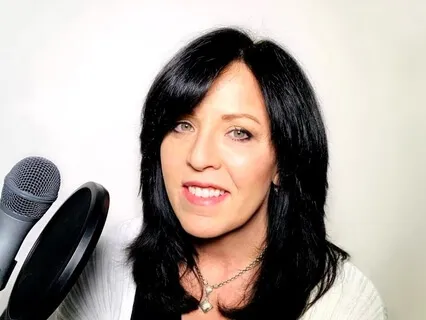
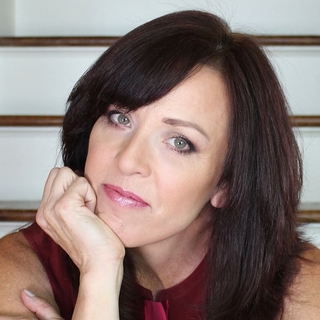
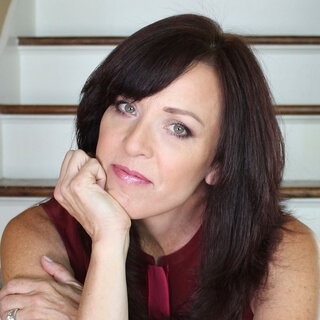
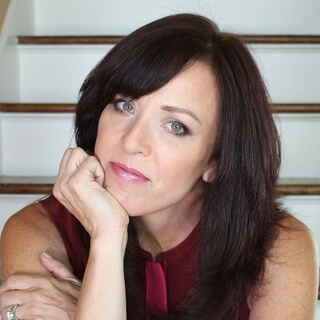
My name is Lisa A.
Romano.
I am a life coach,
Bestselling author,
YouTube vlogger,
Meditation teacher,
And expert in the field of codependency and narcissistic abuse.
I am a believer in the power of an organized mind.
My aim is to help people learn what it means to live above the veil of consciousness rather than living a reactive life.
May your heart feel blessed,
Your mind feel expanded,
And your spirit find hope as you spend time with me here at the Breakdown to Breakthrough podcast.
So today we're talking about emotional detachment.
Now there are people out there who experience emotional detachment on purpose.
I am someone who absolutely used emotional detachment to help me disentangle myself,
If you will,
From the codependent relationships that I had found myself in before I understood that I was suffering from emotional enmeshment,
Before I understood that I had a dependency,
An emotional dependency on people.
My life was hell.
I enmeshed with everyone.
I had very little boundaries,
If any.
I was under the veil of consciousness,
As I like to say,
Living below the veil of consciousness,
Living through subconscious patterns.
I was not aware that I had an identity issue.
Who am I?
What's important to me?
Where do I fit in?
I grew up in a home where I was raised in condition to be seen and not heard.
My home looked perfect from the outside,
But all of us were very enmeshed emotionally,
Even though we rarely had conversations.
There was a lot of yelling.
There was a lot of criticism.
There was a lot of finger pointing.
There was a lot of ridicule and harassment.
My parents had very stoic conversations.
There was a lot of tension in the house,
And although I never saw my parents fight,
Never,
I would see my mother be upset,
But she wouldn't say anything.
And I knew my dad,
Who had a temper.
I knew that she was very much taking care of his feelings.
And so my sister and my brother and I grew up thinking that that's the way to be.
You know,
Tune out to yourself and tune in to everyone else.
I could tell you how my mother felt.
I could tell you how my father felt.
I could tell you what my brother was dealing with and what my sister was dealing with.
I could even tell you how my birds and my dogs were doing,
But I couldn't tell you how I was doing.
So I had no boundary of self that had been a nine-year-old that had been annihilated by being raised by two unrecovered,
Unaware,
Unconscious adult children of alcoholics who had their own trauma from their past,
Who suffered from CPTSD and didn't do it,
And who also struggled with their emotions,
And who were emotionally detached on one level and then extremely emotionally dependent on another level.
Really amazing.
And I am so grateful to have come out the other side of that.
I am so grateful to be someone who,
You know,
And I thank God every day because I look back at where I was.
I was in such a dark,
Dark place.
And if you would have told me 20 years ago,
30 years ago,
Lisa,
It's going to get better.
You're going to be free of whatever this is that causes your panic and your anxiety.
Whatever it is that makes you feel bad about you,
Whatever it is that makes you fear everything and everyone,
I promise you,
It will get better.
I don't think I would have been able at the time to believe that that was possible.
So I am someone who's extremely,
Extremely grateful that I am where I am.
So when I realized,
Or when I was diagnosed with codependency by a very wonderful therapist who also struggled and had come through the other side of codependency,
So it was through his experience,
His experience made him wise,
Not the degrees on his wall.
He knew what codependency was.
He knew what it felt like.
He knew what it was like to struggle with the recovery of it because it is ongoing.
When you are codependent and you have a dependency upon others and you seek your worthiness in the doing for others,
You don't know any other way.
You think this is the way.
And unfortunately,
You also line up with people with high narcissistic traits.
You line up with people who don't care about your feelings while you find yourself in relationships that should be going two ways,
But they only go one way and they don't go your way.
And so we have an identity issue that becomes a behavioral issue that becomes a relationship issue.
That's our life,
Everybody,
Who we think we are,
How we are,
Who we are,
What we think we are with other people.
This becomes our life.
Codependency is that serious.
It's not a word.
I know it's a buzzword and a lot of people are talking about it,
But this is serious.
This is keeping us living below the veil,
Living in fear,
Being afraid of being our best.
It keeps us from taking risks that would enhance our lives.
It keeps us in bad relationships.
I mean,
You name it.
Codependency is rooted in shame,
A lack of identity,
Fear,
And abandonment.
And so we settle for what shows up and we think everything's our fault.
And the reason we think everything is our fault is because we were unable to secure the emotional attachments we needed as children.
And as children,
We were unable to understand what we were doing.
And as children,
We assumed blame.
And that has to stop.
And we need to awaken the neocortex.
We need to awaken the prefrontal lobe.
And we need to start thinking from different areas of our brain.
Because if you're codependent and you are emotionally enmeshed,
You are thinking of the veil of consciousness,
Your amygdala,
Your hippocampus,
Your memory is running your life.
And you may be operating your life just as a little child,
Enmeshing with people,
Thinking that everyone's as nice as you are,
And they're not.
And if you are codependent and you tend to enmesh and you have dependency issues,
And you are someone who is responsible,
You will attract someone who is irresponsible with your money,
With your emotions,
With your children,
With your relationships,
With your family and friends,
With your home,
With your body,
With their body.
There will be irresponsibility just about everywhere.
And you will begin to feel like the broom,
The mop,
The dustpan,
You name it.
And so it's really important that if you're struggling with codependency and dependency that you recognize where in your life you tend to enmesh.
When I was going through codependent recovery,
And you know what?
I'm still going through codependent recovery.
As a mom,
I can see the areas in my life where I am codependent on my children,
Where I struggle when they are unhappy,
Where I tend to jump in.
It is definitely a challenge for me to stay above the waterline.
But at least now as a recovering codependent,
I can see the damn waterline.
And that's really important.
So when I fall off the wagon,
I celebrate because I recognize,
Oh,
There was the wagon where before I didn't even know I was on a wagon.
I didn't even know what was wrong.
And so on my journey,
I've learned to use emotional detachment as a way to save myself from becoming overwhelmed.
I use it as a way to manage my emotions.
I use it as a way to offer me a space where I can find myself.
Now people who struggle with emotional detachment issues,
Who are suffering from depression,
Who are suffering from CPTSD,
Who have experienced trauma,
And who have detached because it's just too painful to attach to people.
And I absolutely believe that when I was a teenager,
I was struggling with emotional detachment as a way to survive,
Where I remember having the thoughts like relationships are too frightening.
I want nothing to do with them.
And then over time,
Again,
Something I'm very grateful for,
I met a group of girls in high school who just wouldn't leave me alone and who never gave up and who kept coming and knocking on my door after school.
And I just kind of began to trust again.
And they're still my friends.
All these years later,
We met when we were 12.
I'm now 55.
And these amazing women are still in my life.
One of our friends actually passed away when we were 37.
And her name was Kathy.
And I think of her often.
And losing her life also taught me to appreciate life and to keep going.
And I was also very grateful that I had the love that I had for her.
And when we lost her,
It did hurt,
But it was a good hurt.
I wasn't emotionally detached from Kathy.
I was all in.
And losing her was devastating.
But loving her was even more powerful.
And today,
We have to recognize if we are someone who emotionally enmeshes,
If we are somebody who uses emotional detachment as a way to distance ourselves from people.
And if you are someone who emotionally detaches,
There's help.
You can learn to trust people again.
But that trust has to start with you.
You have to learn that you have boundaries,
And that you can enforce those boundaries.
And once you learn to trust yourself,
That's where you'll learn to trust other people.
Because if you need to,
You will leave a situation or end a relationship.
And over time,
You'll learn to trust people again,
Because you've learned to trust yourself.
If you are somebody who emotionally enmeshes with people,
And you are on the path to codependent recovery,
Recovering from narcissistic abuse,
Emotional detachment,
Literally choosing to emotionally detach can save you from going down the rabbit hole.
So if you feel overwhelmed,
Learn to tap out.
Learn to give yourself five or 10 minutes or 15 minutes to think about what you want to say,
Rather than just react.
If you need to emotionally detach because you are experiencing too much anxiety by watching the news,
For instance,
Turn it off,
Detach,
Learn to unplug once in a while,
Learn to come back to you.
Thank you so much for being here.
My name is Lisa Arimano,
And I'm the breakthrough life coach and bestselling author and creator of the 12 week breakthrough coaching program that helps people come back to themselves,
Find themselves,
Heal from codependency and narcissistic abuse,
Set boundaries and essentially heal the programs that have been keeping them stuck.
Thank you so much for being here.
Bye for now.