Welcome to the Breakdown to Breakthrough Podcast.
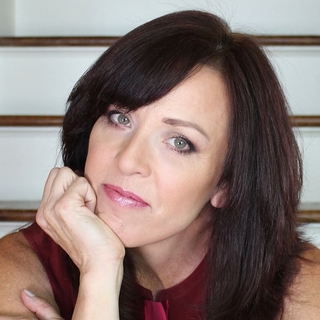
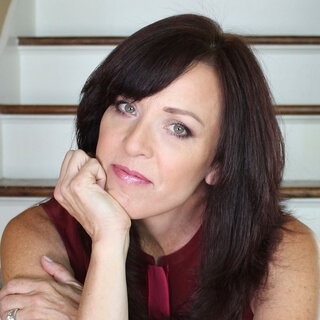
My name is Lisa A.
Romano.
I am a life coach,
Best-selling author,
YouTube vlogger,
Meditation teacher,
And expert in the field of codependency and narcissistic abuse.
I am a believer in the power of an organized mind.
My aim is to help people learn what it means to live above the veil of consciousness rather than living a reactive life.
May your heart feel blessed,
Your mind feel expanded,
And your spirit find hope as you spend time with me here at the Breakdown to Breakthrough Podcast.
So today I'd like to talk about the struggle we have with intimacy and the effect of invisible wounds that we don't always recognize as being the cause of why we struggle with being intimate and open in relationships.
And so this is a really important thing that we need to wrap our mind around if we are ever going to be truly fulfilled as spiritual and emotional cognitive human beings.
The ability to show ourselves and reveal ourselves to other people allows us to experience love in a way that helps us expand and grow.
We know that we're social creatures.
We know that when we are bonded with other people and when we feel loved and accepted and nurtured,
And when we know that we can come to someone that we care about with our boo-boos and they will hold a space for us,
That that is a beautiful feeling.
In the space of love,
We're able to heal in miraculous ways.
In the absence of love,
We experience dis-ease.
Many of my clients come from alcoholic backgrounds,
Emotional neglect,
Dysfunction,
And enmeshment in families.
And many of them,
Although on the outside you would think that they have pretty amazing lives.
They run businesses,
They have families,
They drive nice cars,
They live in beautiful homes.
And yet,
They feel empty inside.
They feel broken.
And they crave connections to other human beings,
But they don't understand what keeps getting in the way.
Unresolved childhood wounds are always going to get in the way,
As long as they stay unresolved.
The good news in that is that as we bring them to the surface,
Or as we find them,
As we unearth them,
So if you imagine childhood wounds are in the basement of your spiritual house,
Your mental house,
And even your physical house,
Your root chakra,
Then this idea of somehow opening up the doorway from the mind and allowing ourselves to step into the subconscious mind without feeling like we need to find the exit door fast and quick,
Without allowing the anxiety or the triggers that will naturally come up to prevent us from really diving within long enough to heal.
It's important that we understand that trauma is really,
The way I look at trauma is an unexperienced experience.
Something happened in my past that I just did not have the ability to process,
And it's stuck.
It's stuck.
I created some false beliefs around it.
This experience made me feel about myself in a negative way,
And I'm running with it subconsciously and I don't know it.
For instance,
In order to experience intimacy and vulnerability,
I can't be living in survival.
This was a huge aha moment for me.
Like what?
In order for me to be intimate and vulnerable,
I have to let go of my fear of abandonment,
The fear of rejection.
And when I say let go,
Another thing that always surprised me on when I was dealing with this in my recovery work was it really wasn't letting go as much as it was accepting and allowing,
Not being jacked up and freaked out over this idea that someone can leave me.
Like being,
Yeah,
Seeing other people as 3D autonomous human beings who have a right to be with me or not.
My codependency,
My fear and my shame,
My loss of self had me stuck.
I had all of these belief systems that were running my ship,
My life,
And I had no idea that they were in operation.
I had no idea that my childhood had programmed me to live in fear.
And the conundrum that I found myself in since I was a little girl was I need to be loved.
I have this intense craving for a close relationship,
But it escapes me.
I don't know what I'm doing wrong.
And so I just thought I was broken.
And so I wanted to talk about a couple of the causes that create this fear of intimacy and our struggle with being vulnerable.
So some of those causes are enmeshed families,
Families in which you weren't allowed to have your own experience.
You weren't allowed to have your own thoughts.
You weren't allowed to have your own private space.
So mom and dad were on you.
You felt judged.
You were afraid of being judged.
The boundaries in your home were unclear.
There was humiliation.
There was embarrassment.
There was rage.
There was unpredictability.
Children who come from homes where there are chemically dependent parents,
Alcoholism,
Drug addiction,
Right?
The rules are unclear.
Everyone's just trying to survive.
The captain is drunk at the wheel.
The boat is like rocking.
And rather than having a sober parent who is emotionally and mentally stable,
Who has their priorities in order,
The captain of your ship,
Your parent,
Kept driving into the rocks and into the icebergs.
And you and your siblings were terrified all the time.
Parents were just train wrecks.
And you were the victim in that family.
And that is not your fault.
Narcissism.
Parents who are narcissistic do not see their children as 3D autonomous human beings.
They are extensions of their parents.
So you may have been scapegoated.
You may have been infused with the sense that you have to be the best,
The best cheerleader,
The best soccer player,
The best football player,
The most beautiful girl in school,
The most handsome boy.
Everything was very superficial.
And you felt judged and like there was nothing that you could do.
You may have been projected upon.
You may have had a parent who turned you into their parent and who suffocated you and you felt engulfed.
So this is not uncommon if you had a narcissistic parent.
You experienced emotional neglect.
Because they feel empty.
Because they don't realize that there is such a thing as being abused by commission as well as omission.
You just weren't seen.
No one really cared about how you were,
What you thought,
What you felt,
What you needed.
You were mocked when you cried.
Come over here.
I'll give you something to cry about.
Who are you?
You sissy boy.
Who are you?
You drama queen.
This is what parents who live below the veil of consciousness,
Who are ignorant,
Who think they may even know something really significant.
You know,
Some of my clients have had PhD parents,
Parents who really think that they know everything or psychologists or psychiatrists or parents or pastors or preachers,
People that they think because of their title,
They know what they're doing.
And this gives them a sense of,
A sense of grandiosity of self that is really unrealistic and it's distorted.
And they don't,
They're so convinced they're right that they're not seeing that they're emotionally neglecting their children.
So when there is great distrust in the family,
And that means you don't trust that people around you,
See you,
Value you,
Love you,
That they'll take care of you.
You have to live in survival as a child.
So you might,
As an adult might be very good in the moment,
You know,
Catastrophe hits dun da da,
You know exactly what to do.
You're good at triage,
But the day to day stuff,
The stuff that requires you to live from soul,
The stuff that requires you to know who I am,
This is what I think.
This is what I feel.
And you're not confused about it.
You know,
You're not loosey goosey about it anymore,
Which many codependents are.
I think I feel this way.
I think I want that.
We don't know.
We don't know.
We've never been allowed to feel like we have a self.
The self that we think we are is negative.
It's not good enough.
Why?
We were never treated as if we were good enough because of various family dynamics.
So now I want to talk about some of the effects that you'll feel if you struggle with intimacy.
So it's important that we understand no matter who you are,
No matter where you come from,
You have to understand the struggle if you want to change it.
So you can say,
Oh,
I struggle with this.
Okay,
So you know that you have a broken leg.
Well,
If you don't know that,
You know,
Hitting the side of your bureau and kicking it causes a broken leg,
You might wake up tomorrow and just,
You know,
Hit the bureau again.
You have to understand the injury in order to avoid continuing on this path.
So understanding it means we take the time to stop doing what we're doing long enough to observe our patterns objectively.
And that can be very difficult because when you were a child who comes from this type of a home,
Shame shuts that door.
It's like the ego says,
No,
No,
No,
Don't go there,
Little one.
Don't go there,
Dear one.
It hurts.
Don't look at that.
Don't look at that.
And so we really are unable to really get to the root of the problem.
And that's why I do what I do because I want to help you.
I want to take you by your hand.
And I want to tell you that it's okay,
Like a big sister.
It's okay.
This is not your fault.
And you are good enough.
And let's go figure out what you're doing wrong or what belief systems are getting in the way of you feeling spiritually whole.
So adult children can easily feel victimized because we have wounds that have not been addressed.
And our ego acts to protect us.
Now if you're an adult child from a dysfunctional home,
You have to know that being intimate and being vulnerable can cause you great anxiety.
And when this is unresolved,
What happens in a relationship,
A friendship,
Even with coworkers and personal relationships with partners,
We are very easily wounded.
So we take things very personally.
And that will interrupt our ability to be intimate with another person.
So this is a symptom that we have to address,
Right?
Wounds from the past that are unresolved can make us feel shame,
Which will hinder our ability to feel worthy and capable and enough.
And so we're,
Again,
What I'm trying to help people understand is that if you feel this way,
If you feel shame,
Understand that shame will make it impossible for you to feel worthy.
And if you don't feel worthy and enough,
Then you're not going to be able to experience true intimacy and vulnerability because you'll always be hiding,
Right?
So if you don't feel worthy,
Then you feel unworthy.
And when you feel unworthy,
You develop codependency.
Or on the opposite end of the spectrum,
You can develop narcissism,
Where you're living in so much fear,
Although subconscious,
That you have become a complete taker,
Where you absolutely will never allow yourself to feel vulnerable.
It is like equivalent to death.
Like feeling vulnerable means that I am completely weak and I can't protect myself,
Right?
Codependents have figured out that if we cater to people,
Then we avoid being abused further.
That if we smile instead of cry,
We experience less neglect.
If we acquiesce and we subjugate,
We kind of escape additional trauma.
And so that's an important distinction.
So if you grew up in a dysfunctional home,
There were no boundaries.
You were shamed.
You were guilted.
Mom and dad were erratic.
They felt stuck in their own relationships.
There could have been a chemical dependency with one of the parents or a mental illness.
No one understands that there should be a hierarchy of responsibility or priorities.
Like there's just nothing.
It's a free-for-all.
It's an emotional free-for-all.
Laundry isn't done.
Meals aren't on time.
There's no predictability.
It's chaotic.
There's fighting.
There's arguing.
There's hiding under the bed or hiding in the closet.
There's a three-year-old feeling responsible for the one-year-old.
It becomes a very chaotic experience.
And yet many of us from those homes can become perfectionistic and goal-driven and focus externally on ideas that we think would help us escape.
And so we came out of the bad neighborhood,
The drug-infested neighborhood.
We're raising children in a nice neighborhood,
But this frightened inner child still exists and our relationships are still a mess.
And so externally,
We've figured out how to avoid what our parents created.
We don't drink.
And we think,
Okay,
I just won't drink or I won't sleep around or I'll tell my kids,
I love you because I never heard I love you.
But yet the inner workings,
The day-to-day stuff,
The fractured relationship we have with the self has yet to be healed.
So if you don't have boundaries in your home,
Then you may still struggle with learning how to set boundaries with yourself as well as other people.
And that's really not your fault.
So another thing that happens is that we didn't learn about handling everyday challenges.
We don't know how to stand up for the self.
We don't know how to put the self first.
And to be intimate,
One must be able to let go of living in survival.
We must learn to trust others and ourselves,
Which is a really tall order if you've always felt like you had a bullseye on your back,
Which it sounds dramatic,
But it is the way children feel in homes where parents are dysfunctional,
Living below the veil of consciousness and are struggling with their own unresolved trauma as well.
And so if our parents are enmeshed,
Then there are no boundaries.
And we think that love is about enmeshment,
Which is very unhealthy because to be intimate,
I have to have a self.
It can't be all about you.
I have to have a self first.
I have to have an intimate relationship with myself first.
So intimacy will require that I reveal myself to you,
But how do I do that if how I feel about myself is not enough and I'm broken?
Many of us have never felt pulled in or nurtured.
We don't know how to do the intimacy thing.
Intimacy scares us.
We want to be loved,
But we fear love at the same time.
And intimacy requires vulnerability,
And vulnerability requires self-love.
We must learn to believe that we're worthy,
Whether someone else loves us or not,
In order to be able to stand in our own true sense of self and to be able to stand in front of another person spiritually naked and face the possibility of rejection.
So we no longer fear rejection when we finally learn to excavate the wounds of the past and we have intimacy with our inner child where we can say,
Yes,
This happened to me and it's not my fault and it's okay and I can learn to do better.
I can learn the life skills that were denied to me because I grew up in a dysfunctional family.
So our ideas of love are based on fantasy,
Right?
So rather than reality.
What I mean by that is that many of us had to rely on television like the Brady Bunch growing up watching various different shows or like I said,
For me it was the Brady Bunch where I was looking for some glimpse of how is a family supposed to be because my family is not like that.
Marsha is loved.
Marsha is told that she's good.
Marsha is hugged.
She's kissed.
Mom and dad say good morning.
Of course that was fantasy,
You know,
But it was what I felt like I was drawn to for some idea of what a family should have been like because I guessed.
Because I felt so alone and so broken and so unloved and so bad.
So shamed because I was shamed and I was told I was bad and I wasn't nurtured.
So I was this,
Just love was absent.
I was just there.
I was supposed to perform.
I was supposed to shut up on cue and not have any needs and when mom got upset and she raged,
She dumped on me and she felt better but yet all that garbage was in me and on some weird level I knew that.
I knew that she would feel better and on some weird inner child level I welcomed her abuse because I felt on some level at least we were connected and that's really,
Really sad.
The adult in me and the mother in me is like,
Oh my God,
Holy Toledo,
Is that so sad?
You know,
And that allows me to be vulnerable with myself,
With my inner child and it allows me to have an intimate relationship with my past that is nonjudgmental and I think that is what's truly shifted my life.
And connecting with my inner child now,
I no longer fear abandonment because I have a self and I know that that self is worthy.
And there are a bunch of things that you have to do,
Life skills that you have to learn but that is cutting to the chase of it,
Right?
So we have to understand that our idea of intimacy is often based on fantasy,
Cinderella,
Snow White.
Who else did we have to teach us about what love is?
If our parents were dysfunctional and we knew that we didn't want a hateful,
Rageful,
Stoic,
And we felt drawn to like love and being nurtured,
Of course,
We relied on fantasy for clues as to what a relationship should be.
And many of us start our relationships off love addicted and codependent without boundaries because we don't have a self.
Here's just this amazing opportunity to show this person that I am worthy of love and of course love will come and that doesn't happen.
When there is a fear of being judged,
This can cause us to hide,
Right?
So if I grew up feeling judged,
Then I'm not going to reveal to you who I am.
I don't think who I am is enough.
The last thing I want to do is show you who I am.
This is why a lot of adult children of alcoholics and a lot of codependents will lie when they don't have to.
We exaggerate.
It's unnecessary.
We don't exaggerate to hurt anybody,
But we exaggerate perhaps who we are because we're ashamed and we exaggerate because we hope that this person will like us.
We exaggerate because we don't feel good enough,
Right?
We might lie and say that we are happy when we're not happy,
You know,
Because we don't know how to acknowledge how we feel.
That's a life skill,
Acknowledging how you feel.
And I would say that's the cornerstone of a truly spiritual life is being able to know how one feels because in order for a spirit to move through you,
We have to be in alignment.
And the fear of what I feel has got to be conquered in order for me to live a spiritually fulfilled life because the true I am is not narcissistic.
The true I am is inclusive because the true I am is I am you and you are me and there is no competition.
There is no demand placed upon you.
I am enough and you are enough and I know that I'm enough and I love you and if you love me and you want to be in my life,
That's a beautiful thing.
But guess what?
If you don't want to be in my life,
That's a beautiful thing too because the I am that I am meant to be with is here on this plane somewhere and I just have to continue to resonate in the I am love and energy that I am in order to manifest that.
But again,
These are life skills that can be taught and they happen over time.
So it's important to understand because we're trying to understand the problem that is intimacy and the fear of vulnerability can be traced back to the fear of being judged.
So intimacy fears can be tied to the fear of being engulfed by another person.
So you may fear being controlled and put upon.
And so if you came from an enmeshed family where it was unfair and your mother had you washing the dishes,
Your sister's dishes or your mother had you taking care of your older brother who had an addiction and rules were unfair and you were not seen as a person,
You were just there to clean up and to put up and you were told what to do and you as a person were not validated,
You may have the fear of being engulfed,
Which will interfere with your ability to be intimate and vulnerable with another person.
So without an organized mind and without creating a proper hierarchy built on the foundation of love for self,
The blueprint for intimacy crumbles.
And so if you lack self love,
Which most of us struggle with,
But getting to the root of it and understanding,
Wow,
Self love is the cornerstone of a spiritually fulfilled life with myself alone,
As well as with another person.
This is important that we understand that self love is not selfish,
It is essential to integration and it is essential to a spiritually,
A spiritual based life.
So we may seek love from the outside and attract partners who mirror our parents energy and discover there is nothing we can do to gain the feeling of love and acceptance we seek.
So now we're talking about the quantum field,
Which is the spiritual field because there is only love.
However,
We need our intellect in order for us to be able to turn the wheels of love in the direction of expansion and growth.
And without an organized mind,
We get stuck.
And so opening up to this idea that,
Wow,
I have to organize my life in a specific hierarchy in order to turn these,
I keep getting an image of gears in my head,
You know,
Almost like,
You know,
If you were on an expedition,
You know,
And you needed to open up all these gears to a door and the next door open up another gear.
Yeah.
It's almost like a video game and you have to get to the next level.
But before you get to the next level,
You have to master this level.
And certainly when we struggle with intimacy,
That's tied to dysfunctional family dynamics,
Whether it's alcoholism or narcissism,
This is the level that we have to get through first in order to unlock all the other doors.
And it's worth it.
It's so important that we realize that it's worth it.
So we attract partners in our adult life because as it is below,
So shall it be above.
What went in comes out.
So I might think that,
You know,
Because I have a great job,
I'm going to of course manifest a great partner.
No,
You could have the great job,
But you can also on the spiritual level,
On the quantum level be so unhealed that you draw into your experience and confuse attraction,
The law of attraction with love.
You get confused because you don't yet,
The hierarchy in your mind has not,
You haven't reached that level where you know,
Oh no,
This is not love.
This person is incapable of empathy.
This person is incapable of telling the truth.
I don't need to judge this person.
I need to observe it,
Recognize it as a pattern,
Namaste it,
And walk away,
Shutty shutty and acknowledge and continue to work on myself and my spiritual growth and my spiritual healing in spite of this,
Because that is just the way it works.
I didn't write the rule.
I study the law and then I share the law with other people in a way that I think is easy to understand.
So whatever is unresolved in childhood will surface in your adulthood,
Not because there's some someone out there to get you,
But because you are meant to clear it,
You're meant to see it,
And you're meant to get to the next level of intellect.
You're here to evolve your consciousness.
This is evolution.
When your consciousness evolves,
You are participating in the evolution of mankind.
We cannot stay salamanders.
We cannot stay ego.
We cannot stay living below the veil of consciousness.
We cannot remain angry,
Resentful,
Frustrated human beings.
That is going against the nature of love,
Which is the spirit and the hub of the universe.
And if we are to evolve consciously,
We must evolve cognitively in order to evolve spiritually.
And so it's important to realize that we will struggle with intimacy as long as we keep attracting into our life or confusing attraction to someone who mirrors our parents' energy as love.
There's work that needs to be done there.
We fear abandonment.
We deny our emotions.
We don't know how we feel.
We don't know what our emotions are.
And so we stay in toxic relationships.
I don't know about you,
But I used to say,
Well,
At least he doesn't hit me.
At least he goes to work every day.
Rationalizing the toxicity of our marriage,
The emptiness,
The inability for closeness,
I would rationalize it.
And of the two,
And I'm not saying this because I believe that one person is better than the other.
I don't.
Some people are more aware than others,
And some people are more unaware than others.
And based on a man's level of awareness or self-awareness will determine his actions.
So rather than judge,
I try to be more aware and objective about it.
And so I can say with full confidence that in my marriage,
I was dysfunctional as was he,
But I was more aware of my own dysfunction where on his part,
There was a refusal of acknowledging dysfunction.
So that's where we differed.
And so I was aware and craved intimacy where he didn't crave intimacy.
He was very,
He was comfortable where we were,
Where sex was robotic.
That was okay for him.
Conversations were superficial and that was okay for him.
And yet I was crying in the fetal position in the bathroom wanting more,
But I didn't know any of the things that I'm sharing with you today.
And so understanding what went wrong saved my life.
And I think this is how we help other people grow too,
Because as we learn,
We share,
Right?
And so I didn't know what I was feeling and I didn't know that my feelings were valid and I didn't know that I was rationalizing the feelings that I didn't know I was feeling.
So I would rationalize the relationship I was in and many of us do that,
Which interferes with our ability to be truly intimate with self and others.
This faulty idea or this belief that we should be rationalizing that's tied to the inability to feel what we feel,
Which is tied to the fear of fearing what we feel,
Which is tied to feeling unworthy of what we feel,
Which is tied to a loss of selfhood,
Which is tied to the fear of abandonment and not feeling good enough.
So what do we do?
We try harder to be good enough.
We try harder,
But we fail no matter what we do.
We can't make this partner who mirrors our parents' energy happy.
And so then what happens?
We feel like we've done something wrong.
We're defective.
We don't understand that the blueprint for love is wrong.
We don't understand that we're living below the veil of consciousness as an adult,
As if we're some sim character in a video game being operated by some program that was downloaded into our brain before we were cognitive.
We didn't even know it was happening.
So we attract partners who mirror our parents' energy and who are incapable of honesty.
And what happens is we feel more and more alone.
So every area of our lives begins to disintegrate our health,
Our mindset,
Our ability to set goals,
Our desire to enjoy sex,
Our desire to want to be intimate with our partners.
Over time,
That erodes.
We stop taking care of ourselves.
We stop taking a shower.
We stop brushing our teeth.
We stop managing our finances.
We stop planting flowers.
We stop dancing.
We stop singing.
We stop meeting our friends.
This erosion in our primary relationships,
Our confusion begins to,
You know,
It's like the blob.
It just begins to spread out into every area of our lives because we are not looking for love where we can find love.
We're looking for love outside of ourselves rather than inside of ourselves.
And our programming,
Our codependent programming has us looking for love outside of ourselves.
So turning this all around.
So how do we do that?
So we must recognize the childhood patterns and the fear of rejection and abandonment or what is really making it difficult for us to be intimate and vulnerable with ourselves and other people.
We have to start asking different questions.
So not how can I be good enough for you?
How can I get my husband to listen to me?
You know,
How can I get my wife to stop cheating on me?
Or how can I get my wife to appreciate me?
Or how can I get my husband to stop drinking?
No.
The questions have to turn inward.
So ask yourself,
Where did my ideas about relationships originate?
You have to go within.
So you have to come out of denial.
You have to learn to see your patterns from a higher state of awareness and might have to become objective about what you see,
Right?
We have to see the confused,
Wounded inner child from a state of parent within,
Healthy parent within,
A non-objective parent.
We have to see the wounded inner child to help us develop truth,
Honesty,
Integrity,
Invulnerability,
And intimacy.
We need support on the outside.
We need to start reaching out to family members that we trust.
We have to find support groups,
Right?
We have to find maybe a therapist or a coach even that understands these dynamics and can mirror back a witness,
A healthy witness.
This helps nurture you.
It's sort of like you plant the seed and now it's up to you to find the water and the sun,
The correct soil.
It's up to you now.
That is within your control.
Once you understand what's wrong,
That's where the control comes from.
You have to know that there's hope.
Many of us just,
You know,
My mother was one of those people that would not look within.
You know,
It was also her generation,
It's not her fault,
But you know,
Both her parents were alcoholics.
I married my father whose father was an alcoholic and his mother,
You know,
Took her own life at the hands of,
You know,
Very chaotic life with him.
My grandmother was addicted to amphetamines to help her lose weight after having four children.
It was just a mess.
And she married my dad who was more narcissistic in the relationship,
Very controlling,
Domineering,
Feared engulfment,
Feared,
You know,
And if you tried to hold my dad accountable for anything,
He brought down the hammer.
He rejected any idea that he should feel guilty about anything.
The lack of self-awareness,
You know,
Was just absolutely incredible.
And the shame that he would throw at you for just telling him how you felt,
It just wasn't worth it.
So we all learned to shut up.
My mother was the worst of it and she died of dementia,
Which I wish that there were studies done,
But in order for there to be studies done,
We'd have to be more honest about relationship dynamics,
Our childhoods,
And people would have to be willing to come out of denial to actually engage in these studies.
That might find a correlation between dementia and strokes and Alzheimer's and living with someone who has high narcissistic traits,
As well as if you are someone who came from a home where there was emotional neglect,
Various types of abuse and alcoholism.
So healthy intimacy,
Dear one,
Has to begin with you.
You have to be honest with yourself about who you are,
About what happened to you,
About who happened to you,
About who your parents are,
And about what you were taught in childhood.
Sharing your story with yourself through journaling or even creating personal videos where you set up your camera and you just talk about what it was like to be you.
Just get it out.
Maybe watch it later on.
I think it's important that if you're struggling with CPTSD,
That you know that there are trauma therapists who are trained in this type of recovery work that you can be open with without fear.
That can help you build trust and learn to teach you to feel more real and to accept what happened from an objective plane.
And bit by bit,
You learn coping strategies that move you to the point where you learn to accept your truth and you learn to see the faulty negative belief systems that are keeping you stuck.
And more importantly,
You learn the life skills that you need to undo the beliefs that have prevented you from being intimate with self and with others.
You are enough.