Swadhisthana Chakra The Sacral Chakra And the word breaks down into two parts.
The first part is Sva,
The S-V-A part,
Sva.
That translates to one's own self.
And the second part of it,
Adhisthana.
Adhisthana translates to a dwelling place,
A seat,
A foundation,
An abode.
So Swadhisthana literally means one's own dwelling place or the seat of the self.
It refers to the place where we begin to inhabit ourselves emotionally.
The root chakra,
Muladhara,
It establishes physical safety.
Swadhisthana,
It establishes our emotional presence.
The question that it asks,
Can I be at home in what I feel?
The location of this chakra,
It's in the lower abdomen,
Around 2 to 3 inches below the navel.
It spreads to the pelvis and hips,
The reproductive organs,
The kidneys and the bladder.
So it covers quite a bit of those important parts.
This chakra governs fluid regulation in our body,
Hormonal balance,
Sexual energy,
Sensory pleasure.
Many of us,
We unconsciously hold tension in the hips and in the lower belly.
And this often reflects emotional holding.
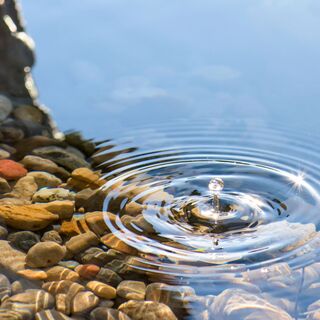
This chakra is represented by the element of water.
Because water represents movement,
Adaptability,
Emotion,
Sensitivity,
Flow.
Water teaches us that rigidity breaks,
Chaos floods and flow regulates.
So healthy swadhisthana,
It feels like emotional range without overwhelm.
It also looks like the ability to move on.
Creative expression,
Healthy pleasure.
Its color is orange and its symbol is a six-petaled lotus with a crescent moon.
The mantra that's associated with the chakra,
And each of these chakras has a mantra associated with it.
The mantra is Vam.
So have you ever had someone ask you,
How are you really doing?
And you pause because honestly,
You weren't sure.
You knew what you had done that day.
You knew what you needed to do tomorrow.
But when it came to what you were actually feeling,
There was a blank space.
This blank space that we sometimes experience,
This is often disconnection.
And that's where swadhisthana comes in.
That's where this chakra comes in.
It's the place where we begin to experience ourselves as feeling beings.
Not thinkers,
Not doers,
But bodies with emotional tides.
If the root chakra asks us,
Am I safe?
Swadhisthana chakra asks us,
Am I allowed to feel what I feel?
In our modern lives,
The way we live nowadays,
Many of us restrict our emotions.
Our standard response to someone asking,
How are you,
Is I'm fine.
Or we say things like,
It doesn't matter,
Even when we are hurting inside.
Or I'll deal with it later.
We put off those important emotions,
Those important feelings that we need to process.
We say,
I'll deal with it later.
And we are able to function well.
We are able to stay composed.
But our joy feels muted.
Our creativity feels blocked.
And our body feels tight.
And when it comes to this chakra,
It's especially in the hips and the lower belly.
That's where the body feels tight.
Some of us may feel everything a little too intensely.
Our moods rise and they fall quickly.
Our boundaries blur.
Our relationships,
They feel like waves.
And both these patterns,
They come from the same place.
It's a disrupted relationship with flow.
Swadhisthana.
This chakra isn't about becoming more emotional.
But rather it's about becoming more fluid.
You can think of it in the sense,
That is the difference between suppressing tears and being swept away by them.
Water teaches us balance.
It says,
Move but don't lose your shape.
Feel but don't drown.
You can think about moments where you felt truly alive.
Where you're laughing without holding back.
Or dancing without being conscious of yourself or who's looking.
Or being completely absorbed in something,
Whether it's writing,
Whether it's cooking,
Building or painting.
And in these moments,
You weren't managing yourself.
You were flowing.
And this is Swadhisthana in balance.
This chakra also governs pleasure.
Pleasure and that word that makes many people uncomfortable.
Not indulgence,
Not excess,
But simple sensory aliveness.
Being able to simply enjoy warmth.
Tasting your food fully.
Feeling water on your skin.
When we disconnect from pleasure,
Life becomes mechanical.
When we reconnect gently,
Life regains texture.
So,
Instead of asking,
How do I control my emotions?
Because that's what we've been taught,
Right?
To control our emotions.
Instead of asking,
How do I control my emotions?
Swadhisthana invites a different question.
Can I let my experience move without gripping it?
Because water doesn't need to be forced.
It only needs space to flow.
Can I let my experience move without gripping it?
Thank you for listening.