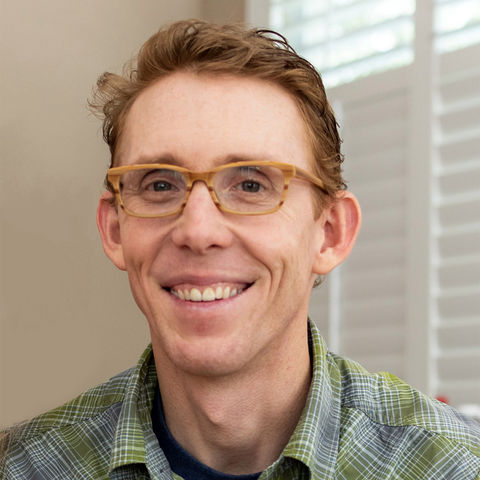
And we're very grateful to have Dan McGann back on the program.
He is a family therapist and works with a number of people,
But especially well known for the work that he's done with running and movement therapy.
And I wanted to have him back on the program in this unique time so that he could share a little bit of his wisdom with us and things that he's continuing to see in this time.
So Dan,
Thanks for joining us.
Hi Mark,
Thanks for having me.
I appreciate it.
So Dan,
I guess I just wanted to start off by saying thanks for the work that you do and I know that you're still seeing lots of patients virtually.
What is the situation like there,
Up there up north in Ontario right now?
And kind of what are you seeing?
Well,
I think Mark,
We're all under the same umbrella of anxiety and tension worldwide.
I think this is kind of a unifying global stress that we're all experiencing right now.
And it looks like the attention is increasing by the day,
By the week,
Of course.
And so I don't think we're seeing anything too different up here than you are down there.
As a clinician,
I'm not sure that I'm seeing anything unique or different in terms of the anxiety,
The depression,
The family conflicts,
The addiction,
But I'm seeing certainly an amplification of all those issues.
I'm seeing more tension in relationship issues and marriages and couples issues,
Family issues where there's been conflict there or if there's been a volatility or tension that that's increasing.
Issues with anxiety,
Of course,
Issues with depression and people who are feeling that self-harm in the past has been their coping strategy.
That's certainly become an issue that I'm seeing a lot of as well.
And of course,
I'm very concerned about those who have been in those severe situations of considering taking their own lives as a solution,
That that becomes,
I'm really worried that that's becoming more of an option and that not only are we going to have a cost in terms of life in regards to the COVID-19,
But the mental health issues are certainly,
I think there's going to be a price we're going to pay there as well at the end of the day.
Yeah,
So I can't speak to that experience personally,
But I know that isolation,
One of the healing solutions to the therapy work that you do is of course connecting others,
Whether that's through a youth group or a running group,
And they lose that obviously when they're stuck at home with just one or two people to connect with.
Yeah,
Exactly.
I have some basic foundational principles that guide my work,
And I'll just tell you a little bit about those that fit very neatly into what we're talking about today.
When you're facing adversity,
When you're facing this COVID virus fear and the self-isolation of families being confined to their own homes,
There's a tendency to feel oppressed,
A lack of control,
A lack of predictability,
And so that stress level is going to increase when those two things are absent,
A sense of control and a sense of predictability.
That's what trauma is all about.
When something happens on a severe and acute level,
Like a car accident,
Like being assaulted in some way,
In that moment,
What causes the trauma is not feeling a sense of control in that moment and not having a sense of predictability.
In other words,
What's going to happen next?
Am I going to live or am I going to die?
I think a lot of families,
Individuals are confronted right now of being home and not feeling a sense of control or predictability about what's going to happen next.
I'm really into getting into action,
Not being passive.
That's the foundation behind my run group,
Is not being passive in the face of adversity or those problems,
But being active.
In other words,
Get out and start doing something,
Creating a structure,
A routine,
Creating some habits,
You being decisive,
Not being passive.
Passivity leads to victimization.
Action leads to mastery.
Wow,
That is great advice.
Intuitively I know that routine is good for me.
Obviously,
My run routine,
My work routine,
And my family life,
And that all got thrown out when we got put into this new way of life for most of us,
Whether that's having to look after kids 24-7 or that sort of thing.
What sort of things are you seeing in your practice that really work for helping people to set those new routines or to feel a sense of predictability?
Well,
I guess what I start with when I talk to my clients is first give them a little bit of insight and understanding that they are the architects,
The Michelangelo's of their own experience.
You don't control the outside world,
But you can control your inside world.
In other words,
How are you going to respond to the challenges in front of you in regards to the COVID virus and home isolation and so on?
I talk to them about three dimensions of doing that and getting that control.
The first dimension,
Of course,
Is your physiology,
Your health.
I talk to them about deciding and creating a structure and a routine like they would if they were at work or if they were at school.
In other words,
Get to bed at your typical time as you would during the work week.
Have a good sleep hygiene,
In other words.
We know that intuitively,
Hey,
Mark,
That when you have a good night's sleep,
You're rested.
You can deal with the day in a much better way.
I really promote that because I'm seeing that especially with a lot of young people,
Teenagers,
And so on.
They're staying up until three,
Four o'clock and then sleeping during the day and not getting their usual routine with their meals or activities.
No surprise,
Their stress levels,
Depressive levels,
Their general mood is worse.
They really struggle a lot more.
Just that one intervention itself,
Mark,
In terms of creating a normal structure and a routine that you would follow generally if you were going to school or work can really help with your sleep,
With having three meals a day,
Healthy meals,
Sitting down with your family and just taking control of what you're doing with your body,
Getting plenty of water and some form of exercise.
Now,
I know that there's some limitations on that in terms of you want to keep at least six feet distance when you're going out for a walk.
You want to do that running as well.
Just watch where you're going and stay clear of groups of people.
Being active in a physical way can really promote how you cope.
That's another thing,
A part of my run group is not just a general overall sense of well-being that you get by activating your body.
I also talk to my clients who struggle with anger,
Addiction,
Family conflict,
Or people who have anxiety,
Social anxiety,
Having to get out there,
Do presentations,
Or do sales meetings where they have to get out in front of a group of business people and make their pitch.
I talk about that really powerful experience that we have psychologically when we engage our body again intentionally,
Not reactively.
I'm intentionally promoting people,
And I do it myself,
To activate your physiology before you have to do something scary or difficult.
You will find that your stress level is much,
Much less when you do that.
Going for a run that day that you have to confront that difficult situation will help you enormously to deal with it in a more effective way.
I often before I have to do a presentation,
I have to do a lot of them.
It's not my favorite activity,
But I will make sure that I go for a run that morning and maybe do some weights,
Maybe 50 push-ups,
50 sit-ups.
And then you know how you feel it in your body when you've engaged?
And so when you get up there,
You're so much more effective.
You're so much more confident.
So that number one variable,
Your physiology,
Taking care of your sleep,
Your diet,
Your exercise,
Drinking plenty of water,
And intentionally engaging your physiology will optimize your ability to deal with the stress of the day.
Now the second factor,
Mark,
That I promote is habits,
Habits in our behavior and habits,
Particularly in what we choose to focus in on our day.
So there's this term in the success literature called the 2080 rule.
So what does that mean?
It means if you look at the research in terms of people who are highly effective in attacking their day and performing optimally,
They generally they will not spend more than 20%,
Not more than 20% attention on the problem.
80% of your attention is on the solution or what works,
What has worked,
Or something called the I call the three G's.
And the three G's comes from,
Again,
A lot of a great body of research that's been done over the years in terms of what effects our mental health.
Again,
It's being intentional about what we do with our focus.
So no more than 20% on the problem,
Acknowledge it,
Don't reside in it,
Don't live in it.
That's what a lot of people do that come to see me in my office.
The ratio was flipped 80% on the problem and 20% on the solution and they wonder why they're stuck.
So I want to flip that ratio and say,
Okay,
Let's not pretend it's not there.
Let's see it for what it is,
But not worse than what it is.
So there's the problem.
Now let's engage on the solution.
When is it better?
What are you doing differently when it's better?
Let's look at what you can do intentionally to create something different instead of being passive to the weather,
Your horoscope,
Or Donald Trump.
You're deciding what you want to do.
So I promote the three G's.
The three G's are one,
Having a reasonable goal of growth,
One small goal of growth.
What are you going to do today that's going to advance you in some way,
Either in terms of your understanding of yourself and your career,
Your schooling,
Your relationships,
Your spirituality,
Your diet,
Whatever.
But by the end of the day,
You can say to yourself,
Hey,
I grew a little today.
That's good.
One small goal.
I like that.
One small goal of growth.
Not 20,
Just one,
Let's be reasonable.
Let's set yourself up for success.
Don't overwhelm yourself because then you get the reverse effect.
Oh,
See,
I'm a lazy poop.
I can't even run.
So I say,
No,
Let's just set something up reasonably in terms of what you can go for today.
And then the second G is also think about how you can give back.
What's one small act of kindness that you can employ that will make a difference for someone in your family,
Maybe reaching out to somebody in your community that might be isolated and need to just hear another voice.
Doing something of that nature has a powerful,
Powerful impact on our sense of well-being.
And that again is well researched in the literature.
There was one quote from one of the studies that said,
The quickest non-pharmacological way to affect your mood in a positive way is to give.
Give back,
Contribute.
To give back.
The quickest non-pharmacological way to feel better is to do something kind for someone else.
That's great.
All right,
So that's the second G.
And if we could just intentionally do that every day,
That's going to make a difference.
And then the third G,
Of course,
Is gratitude.
Just take a short inventory of the things in your life that you're grateful for.
That again is very well supported in the literature and does have a significant impact.
Some of the work,
Recent work by Dr.
Joe Dispenza,
He talks about even the neurochemicals in your brain change when you're focused in on giving and gratitude.
And it's not just the simple gratitude,
Oh,
I'm grateful for my wife,
Or I'm grateful for the weather today.
That's what we call the simple gratitude.
The real work in gratitude is when you think about the difficult things in your life,
The difficult challenges in your life,
And how you can be grateful for those.
That's powerful gratitude.
And just a little bit of a short example of that,
Mark,
That occurs to me from a few weeks ago.
I met with a young man,
He's 20 years old,
And his mom passed away from cancer in December.
And we were going through some of these ideas,
And I asked him about anything that he was grateful for in terms of adversity.
And he said,
You know,
I really miss my mom,
And I'm sad that she's not here anymore.
But I am so grateful that she was in my life.
And I tell you that I almost broke into tears as this guy was talking.
It's just December,
His mom's passed away,
And the fact that even in this short period of time that he can really connect with that gratitude of his mom being in his life that was really quite powerful.
It's amazing.
It is amazing.
You know what I call that?
Mark,
When you practice these 3G's,
We talk about- So those 3G's are really in that 80%.
That's where we should be focusing and lying most of our thoughts in.
Yeah,
Absolutely.
I really promote doing the 3G's on a daily basis and creating that as a habit.
And a habit,
Of course,
Is anything you think or do every day for 60 days.
And so I often call it brain brushing,
You know,
Like we brush your teeth every day.
And it's become natural.
It's automatic,
And you know what you feel like when you don't brush your teeth.
You know what's going to happen?
You got bad breath.
Nobody wants to talk to you.
You get cavities.
So we do that.
We brush our teeth every day.
And my point is to a lot of my clients is why don't we brush our brains?
In other words,
At the beginning of your day,
You get up and you look yourself in the mirror.
And Dave Goggins talks about the accountability,
You know,
Dave Goggins and his routine of taking care of himself and improvement.
That brushing your brain,
In other words,
Being present here now and deciding what am I going to do to grow today?
How am I going to give back?
And what am I grateful for?
And you do that every day for 60 days.
That will transform your experience of your life.
Wow.
That's a great message in this time because there are very few things,
As you said,
That we can control.
And those three G's and just focusing on that 80% goal would be a great habit for the next 60 days.
Of course,
For me,
I do run the gratitude list idea,
And I could always use more help in focusing thoughts and giving back,
That's for sure.
Well,
The issue right now is how do we control that focus and not panic?
You know,
And one of my themes in my practice with my clients,
I do see a lot of young people and I'm a big Star Wars fan and I often reference to Yoda and some of the wisdom of Yoda and that if you want to be a good Jedi and go with the force,
You got to live each day from a place of love and courage,
Love and courage.
If you want to go to the dark side,
You want to panic,
You want to be scared,
You want to be angry,
Then you live from a place of fear and anger.
So you want to be intentional.
This is side three or the third factor in terms of influencing the quality of your day is really think about the internal language.
How do you talk to yourself about what you're going through right now in your family?
With what's going on with the coronavirus and so on.
Do you have a doom and gloom kind of dialogue in your head?
You know,
Recognize that,
Shut it down,
Put it into the 20.
Yeah,
It's okay to understand that the problem 20% but 80% be on,
You know,
What are we doing?
It's encouraging,
That's making this better and you know,
What am I connected to and what am I grateful for and how am I growing?
Really try to change that internal dialogue in your thinking and that takes a bit of what we call mindfulness.
That in other words of really practice being present and noticing those things that are stressing you out either physically or psychologically,
Emotionally and then having an action plan to deal with those things.
Avoid passivity,
Encourage activity.
Avoid passivity,
Encourage activity.
And so that's the third factor and as well when you have a particular fear or anxiety that's overwhelming you,
This is some of the work of Dr.
Byron Katie in the States who wrote a book called Loving What Is.
Oh yeah.
Yeah,
She talks about doing the work.
And the work basically is again being intentional,
Not a victim in the face of adversity but developing mastery that is confronting whatever it is that's chasing you,
That's creating this fear and confront it with logic.
So the four logic questions are basically number one,
Is it true?
I can't deal with this.
My life is going to be over because of these circumstances,
It's forever in a bad place.
You ask that first question,
Is it true?
Is it really true that all those bad stuff is going to happen?
That internal dialogue,
That's one of the four questions you can ask yourself.
Yeah.
And then the second question is where's the evidence that that's really going to happen?
In fact,
Where's the evidence that things are going to be okay?
Where's the evidence that we can actually use this struggle as an opportunity for growth?
What can I learn about myself in dealing with this?
What can I role model for my family in terms of leadership and determination and action here?
You know,
So that's the second question is where's the evidence?
And then the next two questions are motivational questions because this is hard work to do this stuff every day.
So you have to be motivated and motivation comes from the avoidance of pain and access of pleasure.
So the first motivational question is if I continue to do nothing in the face of this adversity,
I remain in a passive position in what I do and just have no structure,
Have no routine,
Don't make any positive decisions to take care of myself and my family.
What is the cost to me,
Family and my relationships?
What is the cost if I continue to do nothing,
Right?
In the next 24 hours,
The next week,
The next month,
The next year and the years to come.
So you really want to build up that as much discomfort as you can connected to the passive position.
Got it.
Right?
And then you move to the,
I think the most powerful question and that is when I start and begin to act today in a powerful way using these three factors,
You know,
How I take care of my body habits and focus,
The kinds of questions and dialogue that I pursue in my mind,
The brain brushing,
What good things will become possible in my life?
It's 24 hours,
The next week,
The next month,
The next year becomes possible and really get in deep with that.
Really imagine what that's going to feel like,
Look like.
The more that you can envision it,
The more your brain will be pulled in that direction.
Interesting.
That has gravity.
Yeah.
I really like that and I,
Of course,
Once again,
You know,
Although it's been a long time since I've read that book,
I'll certainly post links to everything you mentioned.
Just that idea of thinking about what is possible is enough to kind of build hope and get you creative,
Get you moving in a different direction.
Right.
That's,
You know,
That body,
Mind,
Spirit,
Basically all of the things that we've talked about today have kind of connected back to that.
Like how do I motivate or think positively about possible outcomes or about possible change and if that's there,
Then I think the rest will fall in line when you have that balance.
Absolutely.
It's fitting that you finished those three keys with motivation because we're going to dive a little bit more into motivation today with a motivational cognitive psychologist who I invited to share as well.
But before we finish up,
Dan,
I just wanted to ask you,
You know,
Kind of rounding out all this great advice and information that you've shared with us.
Is there anything specifically for the running community or for people getting into walk running that,
You know,
That you would share that would be especially helpful in starting to do that during this time or if people have friends or family that are kind of starting to do that as a new routine?
Yeah.
I think it's certainly a really important factor as I referenced earlier about the three variables that impact a sense of wellbeing.
It becomes a bit complex,
I guess,
With,
You know,
This ever changing atmosphere and what our local governments are sort of putting restrictions on.
And I don't know about down there,
But even up here now,
They're even talking about they're closing the parks.
Yeah,
Same here.
Yeah.
And they're even talking about,
You know,
Pretty hefty fines of people being out in groups and unnecessarily exposing themselves.
So it's becoming more and more complex.
So you really have to think about how you can engage in some positive exercise like short walks,
Maybe not as long,
You know,
And playing your route in a way that you know you're going to have less exposure maybe earlier in the morning or later in the day.
Going out for short walks with your family and just always respecting that social distancing.
My wife and I,
We will,
You know,
If we see some people coming down the street and we're coming in their direction,
We'll actually go out in the road if it's not a busy road or we'll go to the other side just so we're not putting anybody at risk,
Including ourselves.
So it's such an important factor to keep active because I'm,
You know,
It is something another indirect,
What do they call that,
Collateral damage that may be something we'll recognize down the road when this coronavirus has sort of subsided a bit that I think we're going to see a price that we've paid overall in terms of our mental health and our physical health.
Sure.
And I've heard a few people,
You know,
That maybe don't have someone in their home that engages like some of us do,
That they make a commitment with a friend or a running partner or a walking partner to call them,
You know,
Every day at a certain time and they go together.
Right.
You know,
Something like that,
More creative solution.
Obviously,
You're doing all of your,
You know,
Therapy online.
Maybe we can do a little partner therapy in our run walking.
And maybe if people are looking for inspiration,
Those of you that haven't listened to the episode,
Dan has also put together a wonderful film about Team Unbreakable and about RunRx that is available,
I believe,
On Amazon.
Amazon Prime,
Yep.
All right.
Great.
I'll definitely share out to that as well.
And of course,
Anyone who hasn't heard the episode dedicated to Unbreakable and the concept and what work they do,
You can go back and listen to that as well.
Yeah.
That's great.
Thank you.
Thank you,
Mark.
Thanks.
Thanks so much,
Dan,
For your time and happy running.
Yeah.
Thank you.
Best of your family.
You too.