Hey guys,
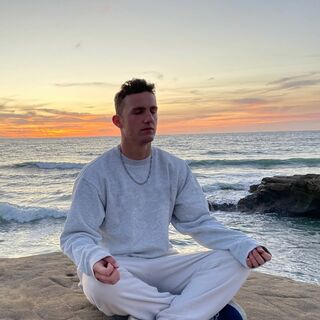
I'm Kyle,
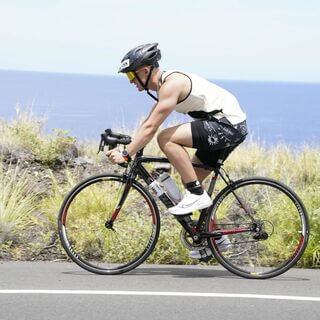
Mindfulness instructor and triathlete.
And what we're going to do is we're going to talk about swim anxiety.
We're going to explore how to work with that if and when it comes up.
And also we're going to spend some time practicing some actual skills and a tool that we can use during our swims if we ever happen to experience some swim anxiety.
So this can be used for triathletes,
It can be used for open water swimmers,
Or really just any swimming in general.
So what we're going to do is we're going to start off by just exploring a couple different ideas regarding the perspective about swim anxiety.
The first thing is that we actually don't want to see it as a problem.
You see,
The more that we resist,
The more that it persists.
So the more of a problem that we make it,
The more of a problem it's going to be.
So if you're someone who experiences swim anxiety,
Hey,
That's perfectly okay.
The antidote is seeing if we can work with it and accept it rather than trying to wrestle against it.
So if you've had this experience,
We can remind ourselves that,
Hey,
It's happened before,
We survived,
It's going to be okay.
So this continuous practice of acceptance is a really important skill when it comes to working with swim anxiety.
The second thing is right along those lines,
Hey,
It's perfectly normal to get jitters.
We're getting prepared for a race or a tough workout,
And we're challenging ourself in a challenging environment.
So the mind is going to do what the mind does,
And that's perfectly okay.
What it wants to do is it wants to get us prepared,
And it wants to protect us.
So if we are getting some swim anxiety,
Hey,
In the best light possible,
That's just the mind trying to do what it does and trying to help support us.
Now it doesn't always mean that it's the most supportive and helpful thing,
So we can acknowledge that,
But we can also acknowledge that,
Hey,
Best light possible,
It is on our side.
So we can thank ourselves for having the experience,
But also just normalizing that,
Hey,
This is a perfectly normal thing,
It's feeding me some adrenaline,
It's okay to feel like this.
And the last part with this,
You may have heard this before,
Is that we want to turn those butterflies into excitement.
You see,
Everybody,
The top triathletes,
The top performers in the world,
Everybody experiences some sort of anxiety or butterflies of some form.
The difference is that nervousness and excitement are both experienced very similar in the body,
But it is the way that we perceive it and are in our dialogue,
The story that we make of it,
That's what's going to shift us from that feeling like,
Hey,
We're not in charge,
This is a bad thing,
And fear,
To a place of excitement.
So even though they experience the same,
We want to be mindful of how we talk about and relate to this experience,
Which is what we're going to do right now.
So in just a second,
We are going to practice a skill that we can use maybe before or during a race or some of our swims,
And we're just going to experiment with this and then see what resonates,
What sticks,
And what you want to keep and possibly apply moving forward.
So take the pressure off yourself to be perfect or figure out the world or your triathlon world,
If you will,
And just allow yourself to be present with this practice.
So when you're ready,
Begin to settle in.
You can lay down or sit in a position that feels comfortable and make any adjustments that you need for this practice,
And if it feels comfortable,
Closing the eyes and taking a few deeper than normal deep breaths and letting go on the exhale and allowing the breath to just be normal now.
This skill that we use is going to be the acronym ACT,
A-C-T.
It's going to stand for accept,
Connect,
And talk.
So what that looks like is we are going to accept the present moment experience,
Whatever that may bring.
We will then see,
Connect,
And in this case,
Connecting to our breath or the body in some form,
And then T is for talk.
We are going to talk,
Referring to our inner dialogue,
Our self-talk,
And we are going to be fantastic at that skill.
So if you are currently listening to this in preparation for a race,
Awesome.
If not,
If you are just visualizing,
You can call to mind what it may feel like to experience the moments just before you go into the water.
The first part is A,
Accept,
Seeing what it would be like right now to open up and accept our entire experience just as it is,
Feeling what it may be like to open up and just allow whatever it is to be here without pushing it away,
Rolling with whatever arises.
Remember we don't need to be perfectly clear or free from anxiety.
We just need to be able to work with it.
The phrase is that we can't always stop the waves,
But we can learn how to surf.
So feeling what it's like to accept,
Open up,
And roll with whatever arises.
You may even do a practice called noting where you just simply,
Without judgment,
Notice and label the experience that you are having.
For example,
You may call out,
I'm noticing rapid heartbeat.
I'm noticing my jaw getting tight.
I'm noticing clenched shoulders.
Again,
Being with whatever our current experience is and giving ourself grace for not needing to do this perfectly.
We'll move on to our C,
Which is connect.
So after we accept,
We can connect with the body and we can do this in a couple of different ways.
So I'm going to provide a couple of different ideas.
Feel free to experiment with a couple of different ones as well and see what resonates for you.
So we'll begin by connecting with the breath.
You have two options here.
We can connect with the breath by just simply noticing what's going on with our breathing.
We can also connect with our breath by intentionally practicing some sort of breathing technique.
And I'll have two for you to choose from.
One is a six second inhale and a seven second exhale.
So we want to make the exhale longer than the inhale.
Or we can do box breathing,
Which is four seconds all the way around.
So four second inhale,
Four second pause,
Four second exhale,
Four second pause and hold again,
And then repeating the cycle.
So take a second to experiment with either just simply focusing and being with the breath or intentionally doing a breathing practice such as a six second inhale,
Seven second exhale,
Or that box breathing,
Which is four,
Four,
Four,
And four.
Other ways that we can connect with our body during or before a race or a swim is we can focus our attention on feeling our feet in the ground or in the sand before we get into the water.
We can feel and focus on our hand,
Our fingers gliding through the water.
We can focus on our wetsuit and the way that it feels against our skin.
So the idea with all this is to get grounded by dropping into the body in some way.
You may also find a part of your body that feels safe and focus your attention there.
For example,
There may be even the toes,
The ankle may feel like a place that's neutral or safe.
If everything else is too intense,
You may place your attention in some of those areas.
You may even exaggerate slowing down your movement as you're on the beach or slowing down your talk or even slowing down and exaggerating the exhales to a further extent.
These are all ways to ground ourself and to connect with the body.
The final part of our ACT acronym,
T,
Is talk.
With this,
This is referring to our inner dialogue and our self-talk.
So once we accept,
Connect to the body,
We are going to implement self-talk throughout the entire part of this series.
So before we get in the water,
During,
And even after in transition.
And what we can do is we can experiment finding a mantra that resonates with you.
So if you have a mantra when you're swimming,
Feel free to call upon this now.
Or if you're still trying to figure that out,
Hey,
Perfect,
Okay,
That's why we're here.
Go ahead,
Try some things on,
Plant the seeds,
See what resonates.
And if nothing comes up,
Hey,
Spend some time a little bit later this week exploring that.
And I'm also going to suggest a couple mantras right now that you can try on and see if it fits.
So for this talk,
You may say to yourself,
Settling in.
You may say,
Smooth and strong.
So some sort of actual performance cue.
You may say,
This is hard,
But I can do hard things.
You may say,
Hey,
I trust the emergence of my capabilities.
Maybe it's the little simple,
Playful,
Just keep on swimming,
Just keep swimming.
Maybe it's,
I'm choosing to be here and there's no where I'd rather be.
So the T again is our talk,
And it's that inner dialogue that we use before,
During,
And even after we are in the water.
And taking a second to just be with stillness,
And giving yourself some gratitude for showing up and practicing today.
My invitation is to consider what might you pull from this practice?
What is maybe an insight or a takeaway that you want to remember moving forward so that way you can integrate it?
And again,
Invitation is to always journal some of these ideas out and see what comes up.
And when you're ready,
Begin to wiggle the fingers,
Wiggle the toes,
Make any slight movements you need to adjust yourself back to the room.
And when you're ready,
Just opening the eyes and returning to the room with the same presence as you entered this practice with.
Again,
Thanks for practicing,
Give yourself some love,
Go out there and have some fun in the water.
Thanks.