Have you ever agreed to something the second before you felt yourself agree to it?
You know,
Like your mouth said yes.
Before your body even could evolve.
Or worse,
You actually said yes,
But every part of you wanted to say no.
Maybe you smile when you don't feel like smiling.
Or you say that,
Yeah,
It's totally fine,
When it's not fine.
You apologize for things that were never your fault,
A bump in the hallway,
A question you asked.
Taking up a seat on the train.
And afterward,
When you're alone,
Something in you deflates,
A little quiet,
Tired.
Like you just finished a shift you didn't clock into.
Now,
If that's familiar,
I want to offer you something today that might just change how you see it completely.
Because it's not a personality flaw.
It isn't people-pleasing in the way we usually talk about it.
You know,
Like it's a bad habit that you should just break.
What you're describing is.
.
.
One of your nervous systems for survival responses.
And it is in its own strange way.
A form of genius.
And by the end of this video,
You'll know exactly what's happening in your body and why I'm saying what I'm saying.
Also what happens when this pattern fires and where it most likely came from,
And more importantly,
You'll have a way to start meeting it differently.
Not fixing it,
But just meeting it.
Hey,
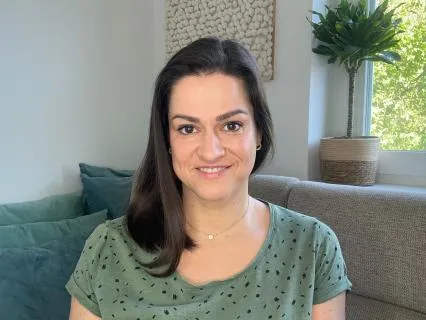
My name is Kinga.
I'm a somatic and trauma release practitioner.
And this is the work I live inside of every single day with my own nervous system included.
So let's get into it.
Fight.
Flight,
Freeze!
And the one nobody talks about.
Most people have heard of,
Flight,
Flight.
And some know about freeze,
But there's a fourth response.
And I believe it's the quietest one.
Which is exactly why it hides so well.
Even from the person living inside it.
It's called fawn.
You know,
Like fight pushes against a threat and flight runs from it.
Freeze goes still and waits it out.
And Fond does something different.
It actually moves toward the threat and tries to make it like you.
It appeases,
It's smooth.
It shrinks itself down to a size that feels safe to be around.
From the outside,
The phone actually looks like this.
Kindness and flexibility and being easy or sort of low maintenance.
People love being around someone in form.
Right up until that someone quietly resents everyone they've spent years accommodating.
And doesn't understand why.
So underneath it.
There's a nervous system that made a very old,
Very intelligent calculation saying,
If I make myself agreeable enough,
Or needless enough or small enough.
Nothing bad will happen to me.
This pattern is rarely learned in one big.
.
.
Dramatic moment.
More often it's just built slowly,
You know,
In a hundred small steps.
For example,
A household where love felt conditional on being easy.
Where a parent's mood set the temperature of the whole house,
And you learned to read the temperature before you even understood what reading was.
Where your own needs seemed to cost something,
So you got very good at not having any.
And obviously none of this was a decision that you made.
You didn't choose it any more than you,
I don't know,
Chose your eye color.
But you have to understand that some younger part of you,
That small,
Dependent,
Without any other option,
Figure out how to stay connected to the people around you who kept you alive.
And it worked.
Is the port.
Worth honoring here.
It worked.
The problem isn't that it worked.
The problem is that it never got the memo that you grew up with.
And what makes phones so sneaky is that it doesn't feel like fear in the moment.
It feels like and looks like generosity,
Like being a good friend,
A good partner,
A good employee.
So you rarely catch it while it's actually happening.
Probably just catch it after in the exhaustion,
In the resentment that seems to come from like out of nowhere,
In realizing at,
I don't know,
35 or 40 or 50 that you can list everyone else's preferences by heart.
Almost have no idea what your own.
.
.
Needs and preferences actually are.
And you don't just undo a survival pattern by getting angry at it.
Or trying to force it or muscle through it with power.
Willpower,
You know,
That just adds another layer of pressure onto you.
A nervous system that's already working overtime.
So what starts to loosen,
Fawn?
Is much smaller than that.
It's just one quiet question.
Asked in the exact moment the urge to appease shows up.
So the next time you feel that pull,
You know,
To agree,
To smooth it over,
To say.
.
.
No,
Really,
It's fine.
Just try pausing for one breath.
Just one.
And ask yourself silently.
What do I actually feel right now?
Not what would make it easier,
But And also not what the other person needs to hear,
Just what's actually here.
What's actually here in me underneath the automatic yes in my body.
You don't have to act on the answer,
You don't have to say it out loud or change your response.
Because the shift isn't in what you do next.
It's actually in the fact that you asked at all.
Because asking what you feel already assumes something radical for a nervous system built on phone.
That you matter enough to check in with.
So what do I actually feel?
What do I actually feel right now?
That's the question.
And let's do that together right now for a moment.
So wherever you are.
Just let your shoulders drop.
Place a hand on your chest if that feels okay.
Just notice.
Not to fix or to judge,
Just notice what's actually here in your body in this exact moment.
That's the whole practice.
Quiet and repeatable.
And maybe you need to hear this.
You are not too much or too accommodating or too big.
Anything.
You built a beautifully effective way to stay safe in a world that once needed you to be small.
And that's skill.
Kept you connected when.
.
.
Connection mattered most,
You know,
When you were little and dependent and had no other option.
So you get to keep the kindness part.
You just don't have to keep the.
Disappearing,
The.
.
.
Giving up yourself part.
So choose yourself today.
Spend a few minutes.
Or even just a few seconds.
Checking in with your body.
What it's holding.
What it wants.
What's actually happening in there.
Underneath the automatic yeses.
And this is how somatic awareness gets built.
Again,
It's not in one big breakthrough,
But in these tiny little check-ins repeatedly,
Over and over.
Until noticing your body stops being this practice that you have to remember and just becomes how you move naturally through your day and just show up in real everyday situations.
And that somatic awareness,
It's a very important skill.
Because I believe it's the opening,
So once you can actually feel what's happening inside you.
.
.
You can finally start to meet it instead of overriding it the way you always have.
So I really want you to spend a few seconds or minutes today,
If you can.
And just try to build that somatic awareness.
I'll see you soon.