I used to think that discipline was a character trait,
Like height or eye color.
And some people had it,
And I didn't.
I could see it in other people.
The guy at the gym who shows up at 6am every morning,
Same time,
Same routine.
There I was,
Lying in bed,
Negotiating with my alarm.
The friend who said she'd write every day,
And then,
Wow,
She actually did write every day,
For years.
While I'd start a journal,
Miss two days,
And quietly abandon it.
Like journaling had never existed,
And I'd never wanted to do it in the first place.
And the story I told myself was,
They're just wired differently.
I'm just not a disciplined kind of person.
That story,
Obviously,
Is quite comfortable in some ways,
But it's also rubbish.
The Stoics knew something about discipline that most modern self-help writers still haven't caught up with.
They didn't treat it like a personality type.
They didn't treat it as if it was some sort of divine calling for willpower.
Some finite fuel tank you drain through the day until you're running on fumes by 9pm.
They treated discipline more like a skill,
A trainable skill,
A set of specific,
Practicable moves that get stronger with repetition,
And then weaker if you neglect them.
And today I want to walk through five of those moves,
Using some of the best lines the Stoics ever wrote on the subject.
Not as a quote roundup,
You can read those anywhere,
But as an argument for a completely different way about thinking,
About discipline.
Let's start with where the day starts.
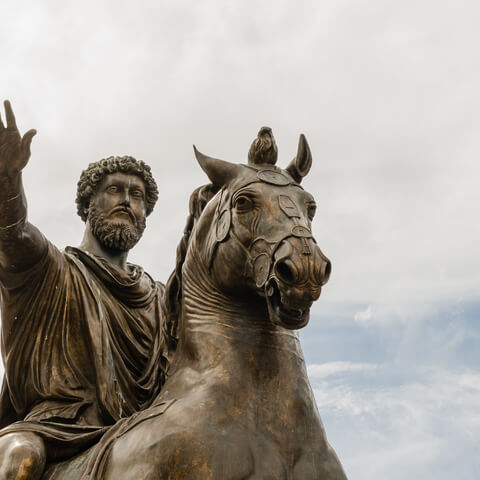
Marcus Aurelius,
Emperor of Rome,
Philosopher,
A man with every reason to stay in bed and every luxury to make you comfortable.
He wrote in his own private journal,
Quote,
In the morning,
When you rise unwillingly,
Remember you rise to do the work of a human.
I love that line because of how honest it is.
He doesn't say spring out of bed with gratitude.
He says when you rise unwillingly.
He's naming the resistance.
He felt it just like we feel it.
The most powerful man in the ancient world did not want to get out of bed.
But here's the move.
He doesn't overcome the resistance with willpower.
He reframes it.
He asks,
What am I here for?
And the answer is to do the work of a human.
It isn't motivational.
It's true.
You're not getting up because you feel like getting up.
You're getting up because there's something to do and you're the one who has to do it.
This is the first discipline skill,
Deciding before the moment arrives.
I've started doing something embarrassingly simple with this.
When my alarm goes off before I even begin to negotiate,
Before the voice starts with five more minutes,
Or you're tired,
Or you were up late last night,
I say one sentence,
Out loud if I need to,
Work of a human,
And then I stand up.
I don't do this because I want to,
Because I've pre-decided.
That's it.
No cold plunge.
No affirmations.
Just one sentence that reframes what getting up means,
And a body that follows the decision before the feelings can override it.
Marcus also wrote,
And this is in Meditations 2.
1,
That you should begin each morning by expecting difficulty.
Expect that people you meet will be ungrateful,
Meddling,
Arrogant,
Not to make yourself cynical,
But so that when friction arrives,
As it almost certainly will,
You've already rehearsed your response.
And this is what the Stoics called premeditatio malorum,
The premeditation of adversity.
And it's a discipline tool,
Not a pessimism tool.
You're not predicting the worst,
You're preparing for the likely,
So it doesn't knock you sideways and surprise you when it comes.
Here's a pattern I recognize in myself,
And maybe you do too.
I decide I'm going to do something,
Like start meditating,
Or write more,
Eat better,
And the first thing I do is tell someone about it.
I mention it in a conversation,
I post about it,
I buy the equipment,
I research the optimal method,
And then somewhere in all that,
Announcing,
The energy that was supposed to go into doing the thing gets spent on talking.
The plan feels so real in my head that the execution starts to feel optional.
Maybe I even won't do that thing,
Because I feel so good about talking about it.
And Epictetus saw this 2,
000 years ago,
And he said,
Quote,
Never call yourself a philosopher,
Show it through your actions.
He's not being harsh,
He's just being precise.
The label is a trap.
The moment you call yourself something,
Disciplined,
Committed,
A morning person,
You've created an identity that exists independent of your actual behavior.
And identity without action is just a storyline,
It's just a story that you're telling yourself.
The disciplined skill here is,
Do the thing before you discuss the thing.
Don't tell all your friends that you're starting this new habit.
Log the first five minutes.
Don't announce your writing practice,
Write the first paragraph.
Let the evidence accumulate quietly,
And let other people notice,
Or not.
The Stoics didn't care about being seen to be virtuous.
They cared about actually being virtuous,
When nobody was even watching.
There's actually a psychology study,
Peter Golowitz's work on identity goals,
And they found that telling people about your intentions can actually reduce your likelihood of following through.
The announcement creates what he called a premature sense of completeness.
You feel like you've already done something,
Because you've committed publicly,
So the motivational pressure drops.
Epictetus didn't have this research,
He just had his observations.
But he came to the same conclusion.
Shut the hell up,
And train.
Another really important concept is that of guarding your attention.
This one is from Seneca,
And it hits harder now than it did when he wrote it.
He said,
To be everywhere is to be nowhere.
Two thousand years ago,
Before the smartphone,
Seneca diagnosed the core discipline problem of the 21st century,
Scattered attention.
We have more tools for focus than any generation in history.
Noise-cancelling headphones,
Focus apps,
Pomodoro timers,
Task managers,
Do-not-disturb modes,
And we're worse at focusing than ever before.
Because the problem was never the tools,
The problem is that we've built an environment designed to fragment attention.
And then we're surprised when our attention fragments.
The Stoics would say,
Discipline isn't just what you do,
It's also what you let in.
Marcus has this line in Meditations Book 5.
The soul is dyed by the thoughts.
Your mind is a dye vat.
Whatever you pour in,
That's the color it becomes.
If you feed it outrage content for two hours a day,
And your default emotional state shifts towards outrage.
Feed it shallow takes and hot takes and takes about takes,
And your capacity for depth will naturally erode.
The discipline skill here is curation.
Not consumption,
But curation.
And here's what this looks like in practice.
This week,
I want you to try something,
Okay?
Pick one input channel.
One app,
One feed,
One notification stream.
And just strip it back,
Mute five accounts,
Delete one app,
Turn off one notification,
Not all of them,
Just one signal-to-noise improvement.
Do that every week for a month,
And your information environment looks completely different.
Seneca was writing about books.
He warned against reading widely,
But shallowly,
Sampling everything and absorbing nothing.
The medium has changed,
But the principle is exactly the same.
A fourth tool is to train in small frictions.
And this is the part that most people skip,
And it's the part the Stoics cared about the most,
Actually.
Musonius Rufus,
Who was Epictetus' teacher,
And possibly the most underrated philosopher in the tradition,
Insisted that virtue requires what the Greeks called ascasis,
Habitual training.
Not just knowing the right thing,
But conditioning yourself to do it reflexively.
He recommended deliberate,
Voluntary hardship,
Not extreme,
Not performative,
Just regular encounters with discomfort that you choose rather than avoid.
Cold water at the end of a shower,
The plainer meal when the richer one is available,
Stairs instead of the lift,
Carrying your own bags when you could ask for help.
Of course,
This sounds trivial,
And individually each one of them is,
But that's kind of the point.
You're not training for the cold water.
You're training the faculty of choice.
Every time you voluntarily choose the harder option when the easier one is available,
You're strengthening the muscle that matters,
The ability to act from decision rather than to be pulled along by comfort,
And Epictetus puts it directly.
He says,
Quote,
Begin from little things,
Say,
This is the price of tranquility,
Nothing is free,
End quote.
I think about that line when I don't want to do the evening review,
When I'd rather scroll than write,
When the reps feel pointless,
Nothing is free.
Tranquility costs something,
Discipline costs something,
And the currency is these tiny invisible choices that nobody sees and nobody applauds.
And there's a useful parallel here with how athletes train.
You don't become good at tennis by only playing matches.
You hit thousands of forehands in practice,
In controlled conditions,
Where nothing is on the line.
The match tests what practice builds.
Musonius would say the same thing about life.
The crisis tests what your daily discipline built.
And if you haven't been training in the small things,
The big things will overwhelm you.
And now the last discipline skill is the one I reach for the most.
Seneca in his essay on anger writes,
The greatest remedy for anger is delay.
Six words,
And I'd argue that they are the most practically useful six words in all of Stoic philosophy.
Because the thing that destroys discipline isn't weakness,
It's speed.
The impulsive reply,
The reactive decision,
The angry text,
The craving you follow before you've even registered it as a craving.
Seneca's remedy isn't suppression,
It isn't don't feel angry,
It's just don't act yet.
Wait.
Let the first wave pass.
Because the action you take in the grip of an emotion is almost never the action you'd take five minutes later.
And I've tested this in embarrassingly mundane ways.
Before I reply to an email that annoyed me,
Two minutes.
Before I post something I'm not sure about,
Two minutes.
Before I eat something I didn't plan to eat,
Ten minutes.
So we've covered this already in depth in a craving episode.
Happily,
This is five-step method from the Enchiridion 34,
But the principle underneath it is Seneca's delay is discipline.
Not the preparation for discipline,
Not the warm-up.
The delay itself is the skill.
If you can insert a gap between stimulus and response,
You've already won most of the battle.
So here's what the Stoics are actually saying about discipline.
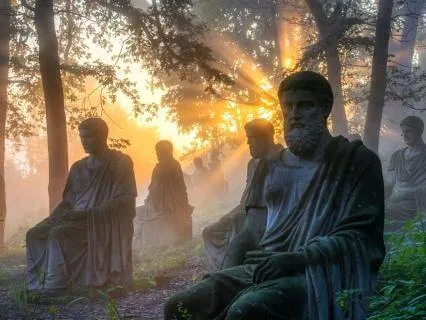
If you strip away the marble busts and the latin,
They say that it's not a trait,
It's not willpower,
It's five skills.
Decide before the moment arrives,
Marcus getting out of bed before the negotiation starts.
Do before you discuss,
Epictetus letting action be the only announcement.
Guard what you let in,
Seneca curating your attention like your character depends on it,
Because it does.
Train in small frictions,
Musonius and Epictetus building the muscle of choice through voluntary discomfort.
Pause before you react,
Seneca using delay as a circuit breaker for every emotion-driven decision.
None of these require a personality transplant.
None of them require you to be someone you're not.
Each one is a move you can practice,
Starting tonight,
And get measurably better at over the weeks and months.
So if you take one thing from this episode,
Make it this.
Stop telling yourself you're not a disciplined person.
That story is doing more damage than any bad habit.
You're a person who hasn't trained discipline as a skill yet,
Perhaps,
And the training starts small,
Absurdly small.
One sentence when the alarm goes off.
One action before one announcement.
One notification turned off.
One cold minute at the end of a shower.
One two-minute pause before a reply.
A thousand tiny rehearsal.
That's how it's built.