Hi there,
Jesse here.
Welcome back to this exploration of incorporating mindfulness into concussion care and this part four of a five-part series on coming to our senses.
Today we're going to explore the sense of smell.
And as I begin,
I really love this reaching out to you across the world,
Wherever you are.
Maybe you're in Dawson or Dubrovnik or Dublin or Denver.
Wherever it is that you are,
You're welcome here.
And I'm thinking of you.
So to start,
I suggest that you wander about to try to find the best place that will give you an opportunity to try out a few different smells in this guided practice.
And if you're in your home,
You might go to your kitchen or there's the spice rack and the fridge,
Lots of different smells in there,
Or maybe your bathroom where there might be creams and whatnot that you could turn to.
Or perhaps you're outside and that's a lovely way with a lot of natural sense to explore.
And I'll say,
As you're finding your way to some scenty objects,
That I find with the sense of smell that the first time that I sniff in intentionally,
Really allowing my attention to land on my nostrils,
In my nose,
In my sense of smell is the first time that's most intense.
And then the second time it's like the body gets used to the scent and it's not as intense.
So I try to almost kind of plug my nose as I go in so that then that initial smell is most intense and focused.
So I'm going to guess that maybe by now you found yourself a few scenty objects in front of you to try out with.
And you know,
Some people have a stronger sense of smell than others.
And that's okay too.
As always to start,
I invite you to just invite in a sense of relaxation,
A letting go,
An unclenching in the places that you over time begin to recognize as though places where you hold tension.
For me,
I notice it in the kind of in the temples,
Like right in the mind.
Not surprising with the brain injury and eyes and the jaw,
My chest and shoulders and my stomach.
But for you,
Maybe other places that are more noticeable and we're on this journey of a big experiment where your body's the beaker.
At each practice you learn about yourself and what might help you cultivate calm clarity in the middle of your concussion storms.
Letting go and inviting in that letting go throughout the practice as well as throughout your life.
And now choosing which object you'd like to start with.
You might have to take off a lid or bring it closer.
But as I said,
See if you can sort of like not smell until you now bring the first object right up close to your nostrils and allow the attention to land on your sense of smell and breathe in.
And breathe in again when you're ready.
Was it less the first second time for you?
Maybe not.
And just take a little few moments enjoying this particular object in the scent.
And I use that term enjoy purposefully.
It's like a it's like the enjoyment of it is your anchor.
A lot of my business really very focused on just noticing sensation and I find it helpful when it is a pleasant sensation and we're not always noticing pleasant sensations and that's part of the practice as well.
But in those opportunities when they are pleasant,
I really like to bring in a sense of enjoyment of it,
Like a little quarter smile.
Rick Hansen,
One of my favorite teachers talks about taking in the good,
Really being here for it,
Letting it land.
Now putting that object aside,
Taking a moment or two of more neutral scent,
Perhaps feeling into how that experience was for you.
And whatever showed up,
It's just right,
Just perfect,
Could be something positive or something negative or whatever you're feeling is just right.
It's just a moment to reflect.
And you're ready,
Picking up a different object,
If you have more than one sent the object to explore.
And repeating the same,
Letting go a little bit,
Bringing it close to your nose and breathing in.
Meaning if you can let all of your attention go right to the scent of smell.
If your mind wanders,
Just remember it's completely normal.
If we practice berating ourselves or rather if we just keep berating ourselves every time we get lost in thought,
It's not going to be a lot of incentive to practice.
But if we remember that the action of getting lost in thought,
That moment where we realize we're lost in thought,
That is awakeness.
You know,
We're awake in that moment.
It's part of the practice.
It's not separate from it.
And letting that object go,
If you haven't already.
And now seeing if this is right,
If what you have in front of you is going to work or if you want to move within your space to find another object a little bit further afield,
That you think,
Oh,
This other one might be interesting to explore.
And repeating.
And I'll just be quiet for a moment while you have your own process of exploring the scent,
The sense of smell.
And now letting the practice go.
And I wanted to share with you that,
Well,
Something you already know.
So often with brain injury,
We have strong emotions,
Stronger than we used to.
Our reaction to stressors in life is so often more intense than it used to be.
It's kind of shocking.
It's a lot less intense for me now,
These years later,
And now that I have a deep mindfulness practice.
But certainly in the early days,
It was just so confusing in a way to suddenly have really intense and strong emotions of either anxiety or fear,
Anger in kind of a hyper aroused state or else going to a deep state of hypoarousal of my nervous system where I would just be kind of spacey and down or just foggy brained from too much stimulation.
Because I do experience both of those still,
But I can tell you that with a deep practice,
I've really dramatically reduced frequency,
Intensity,
And duration of those emotional ups and downs.
But I learned recently from my therapist that the sense of smell can be a real touchstone in those moments.
I haven't done it yet,
But I want to share it with you because she recommended actually turning to something to smell when we get in those states can be a real way to pop back into presence.
And I find the trick,
And it's not easy,
Is in those moments is to remember that it won't last forever.
You know,
Even with the chronic condition,
It changes.
It's not always in the most difficult moments of it,
Right?
And in those moments,
Sometimes it's hard to remember that.
And we can also turn to the sense of smell in sweet moments.
And again,
It's about remembering.
Last year,
I took a beautiful five-month course called Awakening Joy by the teacher James Barras.
And I can remember the sound of his voice in my ear saying,
Don't miss it.
Don't miss the joy.
You know,
Even with the difficulties that we face with a brain injury,
There is so much joy around us that we can experience at the same time as we are maybe not feeling fantastic.
And we don't have to wait till,
You know,
Everything's perfect to enjoy the joy that comes along.
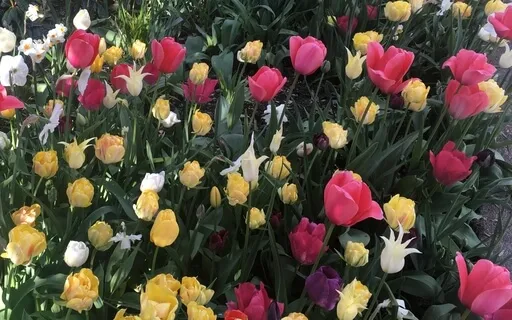
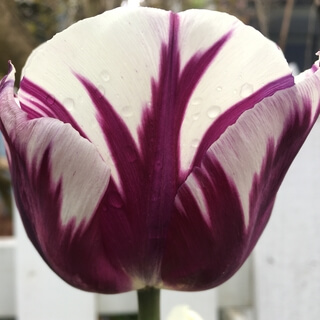
So I invite you in your daily life to take advantage of moments to literally and figuratively smell the roses,
You know?
Okay,
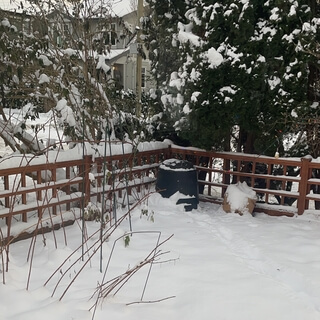
It's January right now where I'm at here in Vancouver,
And it's not a lot of flowers to smell,
But they're coming.
And there are other nice scents to enjoy throughout the day.
And sometimes non-enjoyable aromas arise.
And what can be helpful is to remember,
Oh,
That smell and my reaction to it,
You know,
It can be kind of like a pulling back from it.
That's my body keeping me safe,
Right?
If something smells bad,
It's a bell saying,
Stay away from me.
So it's good.
It's good that we have a sense of smell for that.
I've mentioned before,
My daughter doesn't have a sense of smell.
And it's hard.
She got some food poisoning recently because she couldn't smell,
But the food was off.
So we can be thankful for bad smells too.
May you be well.