We're going to be doing a simple breath awareness meditation,
And this is designed to help bring you focus to the subtle sensations of the process of inhaling and exhaling.
You want to simply attend to the breath as it is,
Whether that's shallow,
Deep,
Long,
Short,
Fast,
Slow.
You don't have to change your breath's rhythm or depth in any way.
This is an awareness practice and not an exercise in breathing.
We're going to be meditating for about 10 minutes,
And I'll keep track of the time for you.
Ideally,
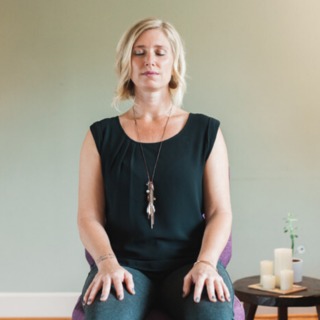
You'll sit relatively still in an alert posture.
You can keep your eyes closed or capped.
And by capped,
I mean simply just looking down and blinking as needed.
And it's okay to open your eyes and close them again throughout the practice.
If you feel you need to shift positions at any time,
Just do so mindfully and with awareness.
And before we start,
Please shut off your cell phone.
Let go of any expectations.
Be kind to yourself and see if you can commit to the entire practice period.
So let's begin.
Give yourself three long,
Slow,
Deep breaths through your nose,
Letting your breath return to its natural rhythm and depth,
Noticing any sounds you hear in the environment and welcome them.
Noise is not a barrier to this practice.
There's no right or wrong way to breathe while doing this practice.
The key is to simply notice how the breath actually is and feels right now.
Simply let the breath breathe itself,
Receiving it with your awareness.
Bring your attention to the movement and sensations of each breath.
Notice it moving in and out of your body,
Through your mouth or through your nose.
And as the breath enters and leaves your nostrils,
Notice the cool air on the inhale and the warmer air on the exhale.
Just simply notice.
Feeling your chest and back rise and fall on the inhalation and exhalation.
Feel your belly expand and contract.
There's no need to imagine or control your breath.
Simply feel its natural sensations.
And whenever you notice your attention has drifted away from your breath to a noise,
A thought or some other distraction,
Gently refocus back to the breath.
Distractions are natural.
Now this is a practice.
Don't judge the wandering mind.
Simply bear witness.
Be kind to yourself without concern for how many times you drift off into thoughts.
Remember that you are enhancing your ability to become mindful and present,
Training your brain to repeatedly,
Non-judgmentally return its attention to this moment,
The moment that you are breathing.
Now let your attention rest on the natural pause between the exhale and the inhale.
Notice where in your body you feel the breath most distinctly.
Wherever the breath is most clearly felt,
Allow that area to be the center of your attention.
You may find your breathing spontaneously gets faster or slower,
Deeper or shallower.
It may even pause for a moment.
Observe any changes without controlling,
Resisting,
Anticipating or expecting anything.
Feel it as it is.
Let it come and go in its own natural pattern.
There is nothing special that is supposed to happen.
If you get distracted by a physical sensation,
Recognize it,
But don't attempt to figure out why it's happening or go into a story about it.
Just notice and come back to the breath.
Rest your attention on the breath and its sensations.
It doesn't matter how many times you have to return to the breath.
Anytime that you notice yourself caught in thought with a non-judgmental awareness,
You simply bring it back to your anchor,
The breath.
Now as this meditation period comes to an end,
I want you to continue for a moment to sit in the stillness,
Keeping your eyes closed for a few more moments,
Noticing how you feel.
Is there a difference from when you started this meditation to how you're feeling now?
Begin to take some deeper breaths and stretch into the space around you.
This is called the integration period.
After a few moments,
You can slowly open your eyes and take your time moving back into activity.
Thank you for trying this meditation and I hope you continue to practice and notice the changes it can make in your own life.