Lesson 1
The Simple Art Of Breathing - Introduction
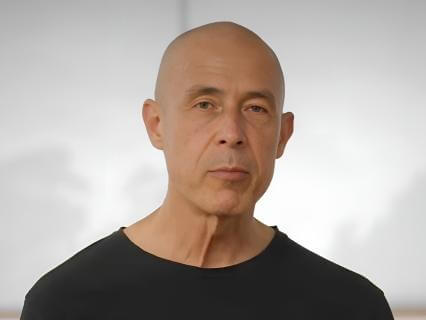
This short lesson welcomes you to the simple Art of Breathing course. In it, Riley explains how to use the breathing lessons, when to do them, and how often, and, most importantly, he answers the question: why do them at all?
read more
Lesson 2
Preparation
Nearly everything we do or learn to do, we do better and learn faster with at least some preparation. Learning to breathe as an 'art' is no different. This short video helps us prepare for the exercises, for example, by explaining simply how to sit.
read more
Lesson 3
Breath Awareness
Learn how to begin to pay attention to how you breathe. Becoming aware of your breath within your body is the first step to optimal breathing. Take a break from your constant activity. Pause a moment! Slow down!
read more
Lesson 4
The Invocation Breath
Though not explicitly called 'the Invocation Breath' in this lesson, the exercise is referred to by some yogic practices by this name. Many spiritual practices have a version of the Invocation Breath. Sit in a chair. Lean forward, elbows on knees. Support your chin with your open hands. Once you can do this exercise as explained in the lesson, add your own 'invocation'. What is your essence? What do you value most?
read more
Lesson 5
Rotation With The Breath
Optimal breathing implies breathing with one's entire body and mind. It is important to pay attention to, as well as 'warm up', parts of the body that particularly contribute to the act of breathing. The shoulders are as much a part of breathing as the lungs are.
read more
Lesson 6
Breathe With Body Twist
This is another 'warm-up' breathing exercise. Twisting the body and spine is extremely beneficial on so many levels. Doing so while actively paying attention to and controlling one's breath takes this simple exercise to another level. RELAX!!
read more
Lesson 7
Raise Arms - Hold - Pound Chest
Though there are almost an infinite number of breathing warm-ups, this is the final 'warming-up-while-breathing' exercise in this course. Always remember, the better you warm up your body and your breath, the more aware you become. Breath awareness is the goal!
read more
Lesson 8
Blow Out Everything
This rather strenuous exercise helps us exhale as much air as possible. It's Spring Cleaning Time for our lungs!
In addition to exchanging old, stale air with fresh air, this exercise does wonders to strengthen our exhalation muscles. Sit down for this one, and lean forward.
read more
Lesson 9
Thoughts On Our Breath
After the very demanding 'Blow Out Everything' exercise, you need to pause a moment. While giving yourself a break, I'll remind you in this lesson why breath awareness is so important to our well-being and why these specific exercises work so well.
read more
Lesson 10
Deep Panting Breath
Try to inhale and exhale as much as possible. Sit up to inhale, lean forward, and exhale with your entire body! Speed isn't as important as the volume of air you can get into and out of your body. This exercise uses all of your lungs and works all of your inhalation and exhalation muscles. You should feel dizzy afterwards, because if you do this exercise correctly, you will definitely be hyperventilating, though only briefly.
read more
Lesson 11
Shallow Panting Breath
As the name implies, this is exactly the opposite of the previous exercise. No strength needed, just control. And the faster, the better. Relax! This can be done seated, standing, or even walking around. It is almost as effective as that marvellous medicine, Laughter, in changing immediately one's negative emotion into a positive one. The more you relax, the faster you can pant.
read more
Lesson 12
The Gentle Breath
The Gentle Breath works on our exhalation. As with all breathing exercises that slow down our outward breath, the Gentle Breath calms us without us trying to do so or even thinking about it. When we are completely absorbed in feeling the air stream move gently through our lips, we automatically start to feel, all is well!
read more
Lesson 13
The Sizzle Or 'C' Breath
This exercise is like the Gentle Breath with the added component of sound. It is also more demanding than the Gentle Breath. When doing the Sizzle Breath, we try to prolong our exhalation with each repetition. This allows us to become aware of our self-imposed and therefore non-existent limitations. We focus on the sound we make by 'sizzling' through our teeth. This lets us intuitively control both our inhalation and our exhalation muscles better.
read more
Lesson 14
The Vigorous Breath
This exercise is definitely a strengthening one. It's an inhalation and exhalation, just like we did with the Deep Panting Breath, except only one at a time. Take a huge breath and then lean forward while exhaling with your whole being. The more effort, the better. Pretend it's your birthday and you have a cake covered in candles that need blowing out. ...and that you are a very healthy 100-year-old!
read more
Lesson 15
15 Strong Exhalation With Pumping
This is the last lesson involving sustained effort. And in this exercise, we will increase our effort even more. It is like HIT (high-intensity training) for the exhalation muscles. It is similar to the 'blow out everything' exercise in Lesson 7, but with the added element of pumping. This sort of training has been shown to strengthen the muscles being used dramatically. Take it easy if you feel like it.
read more
Lesson 16
The Held Breath On The Inhalation
This exercise is basically doing what most people, especially children, do when told, "Hold your breath!" The difference is in the way that we inhale before we hold our breath. In this exercise, we practice inhaling with our complete attention and awareness of what we are doing. We become totally involved in the simple pleasure of inhaling a lungful of glorious air! And only then do we hold our breath.
read more
Lesson 17
The Held Breath On The Exhalation
I said that Lesson 15 was the last exercise requiring 'sustained effort'. Surprise! It wasn't.
This is one of the relatively rare times when the expression, 'no pain, no gain,' is true, at least up to a point. Holding one's breath on the exhalation can be a virtually intolerable psychological battle between your conscious willpower and your unconscious and ultimately uncontrollable urge to breathe. However counterintuitive it may feel, doing this exercise has major health benefits. For example, it helps open up one's bronchial and nasal passages. One can also benefit psychologically, especially in reducing the severity of panic attacks.
read more
Lesson 18
Sustained Held Breath On The Exhalation
In contrast to the previous exercise, this exercise is not as much about finding the limits of your ability to endure the intolerable, but rather about the limit of your patience, by toying around with the sensation of discomfort over several minutes. The objective is to empty your lungs and then breathe in and out as infrequently and as shallow as possible. This exercise both strengthens your breathing muscles and increases your control of them. It also increases your endurance threshold, as well as opening up your lungs and bronchial tubes.
read more
Lesson 19
The Simple Art Of Breathing 19 Lift The Rock; Scoop The Stream
Many of you will recognise this exercise. It is my take on a very common tai chi exercise, with particular focus on the breath. The exercise is fairly long-winded (pun intended), but it doesn't require the sustained 'discomfort' or even effort of some of the previous exercises. I suggest you repeat the exercise at least five times in a row. Lift the Rock; Scoop the Stream is a great one to recharge yourself, for example, during a break from the desk, or during a long drive.
read more
Lesson 20
The Silk Thread Breath
This exercise requires creative visual imagination. Physically, it should feel pleasantly relaxing. Four parts: 1) lean back 'imperceptibly' while inhaling through your nose — and all the way down to your feet; 2) imagine a sunrise on the pause after the inhalation; 3) lean forward 'imperceptibly' while feeling and 'seeing' the 'silk thread' of your exhalation, the longest part of the exercise; and 4) imagine a sunset on the pause after the exhalation.
read more
Lesson 21
The Complete Breath
The Complete Breath is one of the most universally taught and practiced breaths. It is simply controlling all four parts of the breath (inhale, pause, exhale, pause) by giving each part an arbitrary number of 'beats'. Recently, a variation of this breath has become very popular. Called the Box Breath, each part is given the same number of beats. Personally, I've never found the Box Breath to be as effective (whatever that word means) or feel as natural as making the inhalation short, the exhalation long, and the two pauses about equal. But that's just my opinion. Try things for yourself. Experiment!
read more
Lesson 22
Watching Our Breath
Watch your breath while doing 'seated meditation'. Sounds simple, yes?
Count the inhalations or the exhalations. Or don't count anything, DO NOT control your breath.
If your inhalations, exhalations, and pauses are always the same, you are controlling your breath.
Very long pauses after the exhalations are common. Yawn or sigh if you feel like it.
The paradox is that once you watch your breath, you can't help but control it, but that's another story.
For now, just try to relax and focus, but try not to control your breath. Sighs and yawns are almost mandatory!
This exercise really should be done without watching or listening to this lesson.
read more
Lesson 23
The Listening Breath
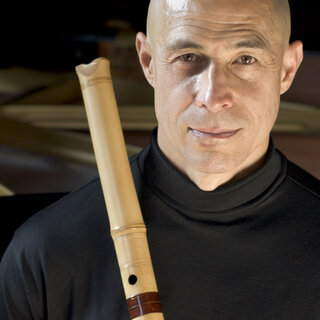
This lesson involves listening. This is one exercise that you might be better off without the video, at least after watching it once. Close your eyes. Listen more carefully, or to put it in a Zen Buddhist way, "see with your ears". Don't listen as one does at a concert or for pleasure. This is an exercise. Work at it! While listening, try to imagine that you are playing the music with me. There is no failing here, unless you don't even try. Concentrated awareness!
read more
Lesson 24
Conclusion: Thank you!
Congratulations. You have completed the course. The breathing exercises in this course benefit you mentally and physically. They do so immediately, even if you only do them once. But for lasting results and for bigger changes or improvement, you have to make them part of your "Practice", a part of the things that you do every day to make you the best 'you', however you define that to be. The best breathing exercises are the ones that you do regularly.
read more