Wholeness and Welcome,
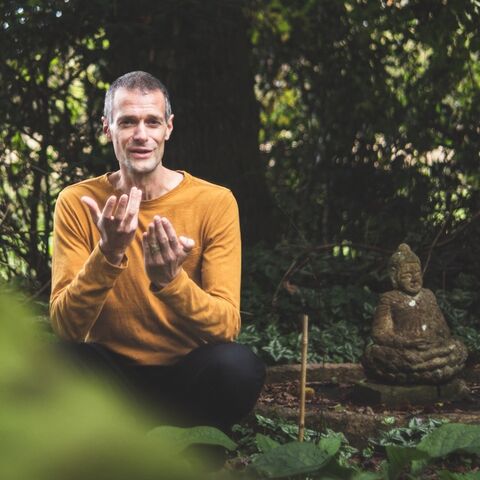
This is Josh Tepel of IntegratingPresence.
Com.
Today's event I've entitled,
Travel and Moving to Expand Perception and Awareness.
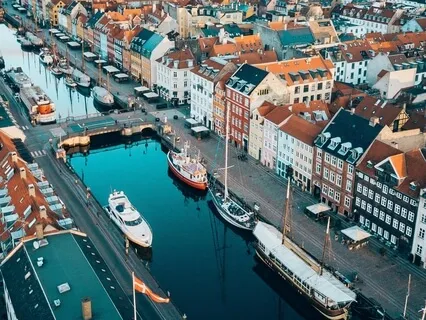
I invite participants and expats to share travel wisdom while I share what I've noticed about Denmark so far,
Comparing and contrasting with the United States where I've lived my whole life.
And using all this to explore how to leverage such external noticings to meditation practice.
Just a few disclaimers here.
Notice while I'm in the Danish countryside here,
There's a field there.
You can hear the crows.
It's kind of a gray,
Misty day today.
I think they're talking about maybe having some of the after effects of the cyclone.
Is it Cyclone Gabriel or some other one,
Maybe kicking up sand in the Sahara?
But it looks like it didn't happen today.
I've only been here a month,
So obviously this isn't comprehensive or anything like that.
And I've only just been in Copenhagen to leave the airport basically,
So I'm about an hour outside of Copenhagen.
I'm going to be going into little details that I've noticed before,
So far,
And this is not representative of the whole,
Obviously,
Without me even knowing the language yet,
And just being here a month or so,
Or a little under a month.
And I welcome corrections as well to any of this.
And some of these little things will seem bigger in the beginning,
And then they become more commonplace as time goes on.
Just as like we move to any place or travel any place,
At first it's all kind of novel and exciting,
And then it just becomes more every day.
I guess we've got to start somewhere.
So the roads in Denmark,
Well,
Just know that I also have only been to Iceland as far as Europe goes,
So I haven't been to kind of any other parts of Europe other than Iceland and here in Denmark.
So again,
This stuff might seem all kind of routine,
You know,
And commonplace to some people who are already very familiar with Europe,
Right?
But the roads here,
Some of the main roads,
They don't have a middle line like in the States,
Right?
So this is a paved road,
And they kind of share the road.
So it's only like one way,
Both ways,
But then when we meet another car coming,
Then,
You know,
They kind of,
One goes over to the right,
The other goes over to the right,
And people will drive on the right side of the road like in the States here.
And I've noticed that there's a kind of a combination of a bike lane and a sidewalk on the right side,
Or just one side of the road,
So it's all compressed.
I was walking on an interstate the other day,
And I was noticing how in the States,
They probably wouldn't allow to drive so fast next to pedestrians,
Right?
But it's all kind of crammed in here.
You have to really be mindful to walk,
Because the bikers on that one,
The lanes are even shorter to squeeze the most kind of,
I guess it's cost effective to squeeze stuff so tight.
And since it's a smaller country,
There's not as much space to work with overall,
It would be my guess.
Now the dividing sidewalk I found was really interesting here.
So on the,
Just the main city streets in the neighborhood I'm at,
It has the sidewalk,
They'll sometimes be on the left and right,
But in the middle of the sidewalk,
It's like two sidewalks on one side,
There's brickwork.
So you get a nice dividing area.
So I don't know,
In the States sometimes if I see somebody walking on the street and they have to share the same sidewalk,
I immediately kind of,
You know,
Well how much room am I going to give them?
How much room are they going to give me?
That's kind of clearly marked in high quality stone dividing those two sidewalks.
And then,
You know,
In some areas of the States,
The curb is mostly concrete,
But there's a few ones that have a more higher quality stone and a lot of the,
It's a regular stone like granite on the curbs here in the neighborhood.
And they also have this,
The same little square bricks that divide the sidewalks and driveways.
They'll be like rays of the sun or rainbows,
Various ones in patterns that overlap each other.
So it's really,
It's really kind of cool,
But it's not really flashy or anything like that.
It's just kind of built in and uniform.
So now how this relates to meditation is,
You know,
There's various types,
Styles and techniques and practices and approaches to meditations,
Right?
So just because the United States does it one way,
Doesn't obviously mean that other parts of the world do it that way.
And even within the States themselves,
There's little variations between each state.
So that what makes this unique about all the different practices,
Styles,
Techniques,
And meditation to choose from.
Hi Lisa.
Lisa just joined.
Did I move there?
Well,
That's the thing.
So it's easier just to be here three months and then leave for three months and come back to three months.
So my girlfriend wants me to come back after I've left.
I think in April I plan on leaving and then maybe coming back depending on all lots of kinds of circumstances.
And I might do retreat in Europe or Asia while I'm gone for three months before I can come back or I might go back to the States.
That's kind of up in the air as of now,
Depending on various things.
So I guess the plan right now is to move there long term though.
And we'll see.
I'll get into more,
A little bit more detail about that later.
Okay.
So the land itself here,
What I've noticed,
There's a big public private mixing of land.
Let's just put it that way.
I know in the States there's plenty of public and private land amongst each other,
But there's an example when I was going to a park,
Part of the trail came out on somebody's private drive.
And so this private paved drive shared a section of the entrance and exits points to a public nature park.
And I just don't remember too many examples of that in the United States having,
Usually it's very separate,
Right?
There's lots,
There's three huge nature parks here that are lots of cool trails.
And the terrain,
As you can see here,
It looks,
This little section looks more like Eastern woodlands,
But there's also sections of just like birch.
So there's a bunch of birch and Aspen.
It reminds me of the birch and Aspen parts of the West,
Like in Colorado,
These type areas,
But they also have like a forest too.
So evergreen forest here,
Which reminded me of the kind of Pacific Northwest and overall sections of the Northern United States I've heard of like Wisconsin,
Minnesota has all three of these types of wooded areas too,
Which if going on the theory that,
You know,
My ancestors that came from Germany,
Where they settled in Southeast Missouri reminded them of the landscape of where they came from.
And if that's anything,
Maybe there's a big Scandinavian,
Bigger Scandinavian population in like Minnesota,
Wisconsin,
These type of things.
Lots of farm ground here too.
So I was just walking and noticing how many regular housing and suburbs are right next to plowed farm ground.
You know,
In the States,
There's a lot of no plow farming with GMO practices and whatnot.
I don't want to try to get too political here,
But it is very nice here to be able to have more GMOs,
Just non-GMO stuff,
Just as default.
Okay.
So now how does this relate to meditation practice?
I would say this,
This public private mixing,
This is like when we meditate solo,
Right?
And then we can also meditate with groups.
I got a kind of instruction or a practice suggestion from a female Buddhist monastic that kind of,
You know,
Flipping this up.
So if you're practicing by yourself,
Almost kind of imagine that you're practicing with a group.
And then if you're practicing with group,
Imagine that you're practicing solo as a kind of way to mix this up.
Or if you're inside,
Imagine you're practicing outside.
If you're outside,
Imagine you're practicing inside just to kind of get the contrast and a comparison reference point to these types of things.
Also the land internally,
Right?
What is our,
What is the internal landscape like during meditation?
You know,
All these things,
These different things come up.
Emotions can come up,
Memories,
Lots of memories,
Planning,
Just the even more subtle like textures of the breath or the meditation object,
New aspects and dimensions of what we're meditating on.
Maybe new breakthroughs in consciousness,
More access and longer durations of awareness,
These type of things.
Okay,
Adeen,
I think that's right.
She says,
Coming from Europe,
Crossing the road in Hanoi was interesting.
At first I was terrified and had to hold my daughter's hand.
Eventually I realized that no one was out to hit me.
They would all avoid me if I just trusted,
Like a river streaming around rocks.
Isn't that wild?
Yeah,
So I haven't been to Asia.
Hanoi is,
Is that in Vietnam?
I'm sorry,
This is my ignorant US lack of knowledge for geography.
Okay,
So it is Vietnam.
Yes,
And I've seen,
Of course,
These,
These images and videos of just how chaotic it does look in traffic in some parts of the East,
Right?
And I'll go into the kind of the trust thing here in a little bit when I get to the culture aspect.
Now,
The language,
It's here in Denmark,
It's way too soon for me to comment much like this.
Girlfriend and I were joking how some people just think it sounds like the Swedish chef.
So she was actually laughing when I was doing my interpretation of the Swedish chef from the Muffets.
So it's kind of a mix when I listened to it.
It sounds a little bit Swedish,
Maybe a little bit German.
I know there's,
Vilkommen is one of the,
So there's,
There's similarities.
And then there's plenty of English words too that are the same from what I've seen in Danish.
And then I'm lucky though,
Most everybody speaks English here from what I'm told there.
People are required to learn it very early on,
Maybe like the fourth grade equivalent of the States,
Something like that.
I have encountered some signs that are only in Danish here in the nature park.
So I'm like,
Oh,
Okay.
I'll eventually get to learning that,
Right?
So this,
How does this relate to meditation?
Well,
There's certain Pali Sanskrit and Tibetan practice words.
So actually the few Pali words I know are more related to practice.
So that way I can talk with other meditation teachers and friends about practice as well.
You know,
Like Vedana,
Kaya or Rupa for form,
Vedana for feeling tone or hedonic tone,
Perception Sanya and Sankara,
Which some people consider formations,
Mental formations,
Or even volitional formations and consciousness as it,
Now I'm blanking on that because there's Manos,
Vinyana,
Is it Vinyana and Chitta for the three types.
But of course I referenced the five aggregates,
What we commonly cling to is this notion of I,
Me,
Mine,
I'm made up of this.
So yeah,
So that's what,
I mean,
I don't think it's entirely required to learn,
You know,
These ancient languages,
But a few words are really interesting because especially that are really kind of core to what it is to be human and do meditation practice because people can translate them all kinds of different ways.
But if we go to the root or more towards the root of what we're pointing at,
Then people can kind of have a general understanding in a different type of way than if it's just using one translation in one language.
And this is also a labeling practice.
I don't know if there's any meditators here who do a labeling practice just to briefly label what arises in experience.
So thought,
Thinking,
Image,
Language,
Memory,
Feeling,
Sensation,
Emotion,
These type of things that come up during meditation and then just let them go just to kind of recognize that they're there so we don't get lost in them and then returning to the meditation object.
I don't do that,
Practice that often,
But it can be very helpful.
There's also the counting,
Doing Samatha practice.
Okay,
So the weather here is pretty consistent.
It's kind of very wet and damp.
It's got a low elevation,
But also,
You know,
It's more stable than where I come from in the middle of the states,
Midwest and Missouri,
Where one day can be like 50 degrees or 60 degrees Fahrenheit and the next day it can be like zero or within the next couple of days.
So it's pretty erratic as far as temperature goes.
But here,
You know,
Right now it's,
Let's see what the temperature is,
42 degrees Fahrenheit.
And of course,
Yeah,
That's the other thing,
Learning Celsius,
Right?
So again,
As far as meditation goes,
This is like our conditions,
Right?
What's required as far as conditions go and what's more of a clinging to one's preferences.
So I know when I first started meditating,
It was like I had to have everything completely silent,
Not had to have it,
But it was like get really upset.
It was more hypersensitive to or not knowing how to deal with hypersensitivity that meditation can bring.
So meditation heightens the senses and we're able to sense more.
And at the same time,
That can also bring challenges by how much more sense data is being flooded,
Can be flooded into.
But at the same time,
We can gain wisdom on how to best go about that and how to address that.
So it's not as upsetting,
Right?
Can be fascinating and allowing and part of the practice too.
So yeah,
But on the other hand,
It's very helpful to have at least some basic conditions in place in order to meditate,
Right?
It's hard to just sit in a place where it's all,
There's a lot of activity,
People are yelling and shouting at each other.
There's a lot of busyness,
People knocking on the door,
Maybe pets getting in the way if we're not practicing heart-based qualities or heart-based practices,
Right?
Okay,
Now the people so far what I've noticed,
And I haven't had too many interactions,
But they seem really kind,
Reserved,
Polite,
Quiet,
And there's kind of a low population density here too.
I'm meaning that somehow,
Even though it's a small country,
There doesn't seem to be a bunch of people.
Although again,
I haven't been,
Spent a lot of time at Copenhagen,
So it could be a little bit different.
And my brother,
I was talking to him about this the other day and he was kind of flabbergasted how Europe is fairly small and at the same time doesn't seem to be overly populated in a lot of areas.
Although,
I mean,
I could be wrong.
Like I said,
I haven't been to a lot of other places in Europe.
Okay,
So how does this relate to meditation?
Well,
Of course,
I've mentioned this before and I'll link to it,
My notes on how to find meditation teachers and then friends,
Because friendship,
It's said,
Is the entirety of the spiritual life.
So then there's also these meditative stereotypes,
Right?
We see all these jokes of people,
You know,
Making mudras and just kind of overdoing it.
But then there's also the people that are just kind of,
You know,
Going along to get along or think it's trendy.
But there's also really sincere practitioners that are benefiting and it's changed their lives significantly.
So you know,
How do we view those stereotypes?
What do we do about them?
What do we don't do about them?
How do we behave?
There is also this notion of boldness versus conformity in practice,
Right?
How bold do we need to be in our practice,
Mainly internally,
And how much,
You know,
To kind of go the other way,
To experiment with things,
And how much do we just need to fall in line and just do the practice that we're being given and stick with it over and over again with consistency and see,
You know,
If it's helpful or not.
And then,
You know,
When do we experiment with boldness?
And this is within our own practice,
When we're practicing in groups,
And even in relationships too between our spiritual friends and meditation teachers.
And also,
Well,
We'll get to broader relationships in everyday life too.
So the grocery store,
The first one I went into by myself,
It was an interesting experience.
So it's smaller than a lot of the huge supermarkets in the States,
Right?
There was Euro Club music on,
And I didn't even know until later what these huge baskets were.
You know,
At Trader Joe's,
I get my hand basket,
Right?
Or a lot of stores.
But these,
It's a basket,
But it's like way bigger.
I'm like,
Well,
What is this thing?
How do I carry it around?
It's only got one latch on it.
And then my girlfriend,
Oh,
You put that on the floor.
It has rollers on it.
And you just take the thing.
It's like,
Wow,
That's ingenious.
It's genius to see that.
And I'll talk about Scandinavian design here a little bit too.
But also noticed a lot of coffee.
It's a big coffee culture supposedly,
But a lot of the different types of coffee seem,
I guess,
Are fairly similar as far as roast goes.
And it doesn't say what part of the world,
For the most part,
They come from.
You know,
It doesn't say the country.
I'm used to kind of a lot of coffee snobbery in the States,
Right?
Where it's not necessarily snobbery,
But it says exactly where it comes from,
What country.
Now,
The food preference types,
It's interesting to see kind of the diet and the things that people eat in general here.
Muesli,
I didn't know.
It's basically like quick cook oats,
But you can just pour milk or milk substitute on top of them with,
You know,
I do that a lot with it's similar to granola,
But it hasn't been baked.
I'm going to add fruits and nuts and all kinds of toppings on it.
I've been eating quite a bit of that.
It's really delicious.
But as far as all the different,
You know,
Breakfast cereals that the States have,
There's not as many of that,
Which is,
I find very helpful.
I don't spend a lot of time,
You know,
Wading through a bunch of different choices that aren't really good for me to begin with.
And again,
Like I said,
There's lots of non-GMO food here and organic options.
So it cuts down my time having to look for that in the States,
Going through aisle after aisle.
They don't have the health food aisles in the States as like they used to.
Things all mixed together,
But food shares just kind of save that a lot of time on that too in the Midwest.
There's also a 25% tax built into the prices here.
Yes,
It's a little bit steeper taxes,
But I would say the tax money is well,
Way more well spent here,
At least in compared to Missouri where I used to live.
And so it makes things easier.
So not having to figure out the price for taxes,
If you're kind of keeping a running total.
But they do tell you after you buy it,
How much percentage of each thing,
I guess,
Or overall goes to the tax.
You know,
It does the math for you afterwards,
Instead of adding on,
Figuring out the tax for you,
Then adding that on to the subtotal,
Like in the States.
So the correlation to a meditation practice is the four nutriments,
You know.
So the four nutriments is a thing in Buddhism.
It's not just the food we take in,
But it's the sense impressions we take in,
Right?
If we're watching crap on TV and listening to crap,
Well,
Of course,
That's going to affect us negatively compared to if we're watching really beneficial,
More wholesome and skillful things that have a major educational benefit or,
You know,
Maybe more psychological content we're learning from,
Not just disposable entertainment.
Also,
What's needed from and what's available and how to go about it via communication behavior.
So if I'm going into a store,
And luckily everybody speaks English too,
Right?
If I'm going into a store in a foreign country and I have certain needs and then there's only so much available,
Well,
Then I need to adjust to that.
And so,
And then how do I go about it?
How do I communicate what I need or what I want to find?
And then how do I behave that fits in with the kind of customs and not be like this self-demanding American,
Right?
So within meditation practice,
You know,
I wonder a lot of these fancy practices,
If they're needed,
You know,
What's the kind of bare essentials in meditation that we can get by on?
Like a Samatha practice,
It's just the same object over and over and over again.
Then there's times where we just need to do a self-inquiry practice.
You know,
What do I actually need internally?
Are my needs being met,
You know,
Emotionally,
Mentally,
Psychically,
Bodily,
This type of thing and do an investigation.
And how do we treat ourselves when we're doing these practices and how do we communicate to ourselves and to teachers and friends about them?
So Laura says,
Hi,
Is it really cold there?
It's chilly.
You know,
It's probably,
I wonder what,
In St.
Louis I need to look.
Right now it's 42 degrees Fahrenheit.
I want to say it might even be colder in the States than that right now in Missouri where I came from,
But I don't know.
So I have my coat off now just because.
Okay,
So recycling culture is big here.
Recycling is built into the culture.
There's all these different types of bins for recycling.
It's kind of like they used to do years ago in the States,
But now I guess people are too lazy to recycle in the States.
That's my guess.
They're not getting too much into that.
So they have single stream recycling.
So it's not as much burden on the consumer.
They put all this different recycling in one bin,
Which is,
It's more convenient to do that.
And then I guess they have to spend more money sorting it out.
But here,
There's all these,
You know,
There's things for drink cartons,
Paper,
Maybe even cardboard if I'm getting this right,
Glass,
Metal,
Plastic.
And then the big thing though is the food waste.
So they have a bin for food waste and they burn it to heat the country.
So they actually burn it to boil water and then the heating is done by radiators throughout the country.
I'm not sure if it's everywhere,
But at least around in Copenhagen it is.
And I think they actually used to burn other types of trash for this.
So what's the parallel to meditation?
Well,
This,
What about byproducts,
Right?
These byproducts of our waste,
Can we use these?
What do we do with our waste products,
So to speak?
So in meditation,
After years,
Does one consider becoming a teacher,
You know,
With all this knowledge or just kind of keep it to oneself or what?
What about containment?
A lot of times we run into really challenging areas in our lives or things are surfacing during meditation that kind of need to be contained in order to keep it from harming other people perhaps.
And that's one good thing just about meditation itself is there's less likelihood to act on the things that we're feeling and experiencing if we're sitting still by ourselves,
Right?
You can kind of feel murderous rage sitting by myself and with no intention whatsoever of acting out on it.
So it gives the opportunity to actually feel and experience that instead of bottling it up and having it come out at other times that aren't appropriate.
Now,
Yeah,
There's little nuances to add to that and if anybody has any questions they can ask about that.
Right sharing,
So things that come up in meditation,
What do we share and with whom and when?
Some things are appropriate to share with certain people and some things probably not so much.
What's left for us to heal in meditation and what does and doesn't need to be brought up again?
Because some things it's helpful to bring them up again,
Sometimes we just keep,
Or I know I will have revisited certain things over and over again when it probably doesn't need to be brought up.
Just kind of say,
Oh,
That's the same thing happening again.
Is there any really new ground to cover there or heal from that?
Okay,
Design.
So totally impressed with the Scandinavian design here.
It's like almost living in an Ikea store sometimes inside,
Just some examples.
Now this might be specific to the sink,
But the sinks in the States usually drain,
I think in a counterclockwise,
I know the toilet does.
First thing I noticed was the toilet was all contained on the background and the back.
I can't just lift up the lid,
Right,
And see what's going on in there.
The sink drained in a kind of a cordioid,
Which is a mic mapping position,
But basically means like a heart shape or a torus.
A torus means it kind of opens and closes from the middle to the ends and sucks back in on itself.
So I don't know if that's normal.
The door handles on one of the screen doors,
It points down,
All the way down when you lock it and close it instead of parallel to the ground like in the States.
The locking on the main door was you have to hold it up and then lock the key.
Otherwise if you don't hold the handle up,
It won't lock or unlock.
At least using the key,
Let me get this right.
Yeah,
So I'm leaving,
I have to turn the handle up and lock it like that.
Otherwise it won't lock.
These jars,
It's just simple little things.
Metal jars has a glass lid and then a rubber gasket for a seal and then two metal clasps that hold it on there.
The fridge shuts off when it's open.
I don't know if some of the fridges in the United States do this now or not.
I still can't,
I don't get that.
So you don't waste too much energy to know that it's open?
I forget exactly.
I haven't thought too much about it.
The oven has a removable tray.
So most of my,
All my ovens that I remember in the States have had racks on there.
You can slide out the rack and you put it,
But they're all the same.
Well,
The first one here has holes in it,
Like it almost like an,
I don't know if it's air frying,
But allows tons.
It's like a,
If you were putting the stuff on the grill with a,
You know,
With an extra tray,
It has holes in it.
So more,
I guess,
Air gets through it.
That's pretty cool.
And then the two trays below that actually have the oven trays built into it.
So instead of getting an extra oven tray and putting it on the rack of the oven,
It's you slide out the whole thing and that's all it is,
Is the tray itself.
For meditation practice,
This goes into form and function.
So basically fitting one's needs and addressing things depending on the conditions,
Right?
So depending on the conditions and things around,
What practice do we want to do,
Right?
So if we're,
If someone's really suffering really close to us,
Do we just want to go into a Samatha practice,
Which basically means ignoring everything and coming back to the meditation object over and over again?
Well,
Maybe not.
Maybe in that sense,
We might need to do more compassion practice,
But conditions are really well.
I mean,
We can still do compassion practice,
But if there's a real calm stillness around,
It might just make more sense to do a Samatha practice where you just have the opportunity to keep building that concentrative,
Unifying,
Gathering,
Stilling and quieting of the mind by just using the one meditation object.
Okay.
So the architecture,
Again,
This is assessments premature because I've just done some walks around the neighborhood that I'm in here.
They have these old,
Very old eco-friendly roofs where plants are actually growing on top of them,
But apparently I guess in 17,
1800s,
They've had those.
Then on there,
These old,
Old houses,
Very Scandinavian.
I know it's similar to Iceland when I went,
But it's still distinctly different,
Right?
Iceland has its own distinct Scandinavian style of architecture,
While Denmark has its own similar but different.
There's a large plain church that I went to,
Huge church,
But it's very not ornate like a lot of the Western churches.
It's more natural and the gravestones there,
They're not cut like in the States.
In the States,
It's very,
The stones are,
You know,
They've been machined and they're flat and they stick up right.
Here,
The graveyard I saw has these bigger stones,
Just more natural,
And then they just engrave on top of that.
There's like these hedges surrounding them in the churchyard.
It's almost like a little shrine for each graveyard there,
Or each grave there.
This could go,
In meditation,
How we classify and group together practices.
There's just like Scandinavian architecture,
There's maybe post-modern American architecture,
There's,
What else is known for its architecture,
Like Asian type architecture.
So in meditation,
We can classify things like the six-fold mindfulness of the body,
Right,
In the Satipatthana Sutta.
Breath,
Four main postures,
The way the limbs are moving in everyday space and being mindful of just body placement,
Then there's the 32 parts of the body,
The body as the four elements,
And then the graveyard or charnel ground,
Death contemplations.
So that's just for the body,
Right?
And then there's big groupings like Samatha and Vipassana.
I mean,
We have people do different Samatha practices.
Vipassana practices,
There's different styles,
Mahasi style,
Vipassana,
Pak,
Sayadaw,
Types of Vipassana practices,
These type of things,
Right?
Vipassana,
Vipassana,
Pandita.
All right,
So now the culture,
Here,
These are kind of little tidbits,
The bikes.
So there's bikes,
Bigger on bike culture,
But more so what got me is there's no locks.
People don't really lock up their bikes when they're parked out in public.
The train station that I've been to a few times,
There's special racks like we have in the States,
But there's even covered areas just for bikes,
But nobody locks them.
They just put them right next to each other.
It's so great to see that.
It warms my heart.
So of course,
In the meditative type practices,
This is safety and trust and ease.
So many people are on a spiritual path and they don't realize that they're just after safety like everybody is,
Right?
It's really hard to do anything else if we're in fear,
Although we can look at how we can work with fear too,
Instead of trying to get away from it or deliberately go about safety all the time.
Although there's something to be said about this sense of safety internally and externally and trust,
Trusting folks and our fellow humans and trust in the goodness of humankind too and having ease.
How many people get into spiritual practices to de-stress,
Right?
It's very important.
You know,
Ease is a very good thing to do.
Relaxation.
I know in the West a lot of people are overworked.
There's the opposite of that too,
Or not necessarily overworked,
But overstressed,
I should say,
About work.
There doesn't seem to be much of a consumer culture here either,
Which I think is,
I love.
I mean,
I've never been a huge consumer myself.
You know,
There's very few strip malls,
Advertisements.
I know in the Midwest there's billboard after billboard,
Well in Missouri anyway,
On the roads.
There's not as many convenience stores here.
It just seems like there's convenience stores everywhere in the States,
Right?
So to me,
In meditation,
This means less distraction,
Right?
Less things to distract us from our meditation object and our practice.
The movies and products here,
I was told that before the internet came along,
You know,
There was fewer movies released in Denmark.
It wasn't like all this huge amount of entertainment that was available in the States,
Even in the 80s and 90s even comparably,
There was,
I guess,
A few movies that were approved every year.
And then the products too,
Until the internet came along,
A lot of the stores didn't just carry the products,
But now they have to kind of cater to the Netflix age and Amazonification or the easy access of the internet.
So a lot of the,
I guess there's more media available now and more products available in regular stores now compared to,
I don't know,
20,
30 years ago,
I've been told.
Again in meditation,
This is like,
It's just more opportunity to stick to the meditation object instead of getting distracted.
So if there's less,
So if there's less movies available back then,
Right,
Then there would be,
You would have a few favorite movies you would maybe watch again and again.
I know a lot of people still do that in the States,
But instead of having to do the next show,
The next show,
The next show.
So again,
Revisiting the meditation object over and over again,
You know,
Putting in the work,
Even though it doesn't seem to be the most exciting thing in the world,
We can see,
Especially gradually,
How it does pay off all the benefits.
So another little tidbit,
Laundry Day,
The word in Danish for Saturday includes the word for laundry.
So apparently it used to be,
So in the whole culture or most of the culture did laundry,
Or at least the females and the males would go,
I don't know,
Maybe to meet up and do different governmental things or hanging out.
I don't know exactly.
Somebody can jump in here and tell me about that.
And then,
Dean,
Can you translate that word for me?
Because I,
Is that the one that means cozy?
Because I'll just jump ahead to that.
Well,
No,
I'll come back to that.
But the Laundry Day,
To me,
For meditation,
That means learning specialized original terminology before the translations,
Like I was talking earlier,
Right?
These special terms that are applicable just to meditation.
So we're kind of on the same page and gives us a common language and a better understanding of something.
Yes.
And the coziness that Dean talks about,
I didn't know this at first,
But my guess would it be,
It would be due to colder weather and damper conditions and maybe even to distinguish themselves from Germany.
I don't know.
The hardworking of Germany,
That there's a big emphasis on being cozy,
And it is quite nice.
So the thing with meditation with this is,
Yes,
It's time to capitalize on these conducive conditions and not get lazy and put it off,
Right?
All the external conditions inside,
Because people value coziness and warmth and comfort.
This is perfect conditions for meditation.
So don't waste time.
You can get to it here,
Right?
Then the spouse visa is the other thing.
It was interesting to see how these different countries deal with this,
But you have to prove that you've been together for 18 months,
I guess with documentation of receipts and whatnot.
I'm not sure.
It's a legal requirement.
So I think it was originally designed that if a Danish male were to bring someone,
A bride from these other countries and whatnot,
Outside countries,
They'd have to prove that they can take care of her and not be a burden on the state,
I guess.
Is that how it ought to be put?
But in this case,
My girlfriend's got to keep a certain amount of money for a certain amount of years.
And as far as I know,
It can't be touched during that time in a bank account.
So I get it.
And the pros of this are they want to make sure that people aren't coming in and mooching off the system because they have really good take care of everything,
Free education,
Free healthcare,
All this stuff,
Even the tax rates higher.
So I get it on that end,
Right?
You want to make sure that you're serious about moving here and getting a visa and maybe getting citizenship.
So in that sense,
It makes sense.
But then to have that money locked up without,
You know,
It'll probably lose money due to inflation perhaps.
So I'm wondering if it could get put into a CD to at least draw interest,
Why it's tied up in a bank account,
Untouchable for,
Forget the amount of years that it needs to be.
And so as far as this goes to meditation,
This is our relationship to the meditation object,
You know,
Spouse,
Visas.
So how are we treating the meditation object?
Is it like we're slogging through,
Are we really absorbed in it and have no distinction between the meditation object or just our regular practice too?
Is it,
Oh,
I don't want to do this.
I don't feel like doing this today.
Or yes,
I really want to do this.
I want to go on retreat.
I want to go on retreat after retreat.
And then what is,
You know,
All of life is relationship anyway,
Right?
How are we relating to our thoughts,
Our words,
Our behaviors,
Those of others,
Our friends,
Our families,
Our significant other,
You know,
Cultures,
Landscapes.
What is our relationship to all these experiences and phenomena in our life?
Well,
Guys,
I think that's about it.
I wanted to read really quick the crux of,
Speaking of farming and stuff,
There's one of my favorite suttas here.
I'll just read the little nuts and bolts point of it.
And it involves some outdated farming things with the plow,
But still.
And I should give the backstory,
But I'm not going to,
Because I've done so much here.
This is from the Kasi Bharadava Sutta to the plowing,
The guy's name,
I can't pronounce it.
I don't know enough Pali to pronounce it,
But basically,
You know,
The Buddha's out there getting,
I guess,
Food,
If I'm getting this right.
He's trying to get food from the farming community or something,
A farmer.
And he tells a Brahmin,
He too plows,
And the Brahmin says,
I don't see your thing.
I don't see your plow set up.
And then here's what the Buddha replies.
Faith is the seed,
Practice the rain,
And wisdom is my yoke and plow.
Modesty,
The pole,
Mind,
The strap.
Mindfulness,
My plow share and goad.
Body and speech are guarded well,
And food and drink have been restrained.
Truthfulness,
I use for weeding,
And gentleness urges me on.
Effort is my beast of burden,
Pulling me onward to safety.
On it goes without returning.
Where,
Having gone,
One does not grieve.
This is how I plow my plowing.
The crop it yields is deathlessness,
And when one has plowed this plowing,
One is released from all suffering.
And in the blog post I might include various translations of this.
Maybe I should combine translations of my own,
Because I just,
Growing up in rural area in Missouri,
I don't know,
This just for some reason spoke to my heart,
Kind of thing.
Because people are like,
Wow,
What are you doing?
Is that really a real job,
Profession?
And how the Buddha was a master at addressing all types of life and speaking their language,
Right?
Okay,
Well Laura says,
A complete fluke,
I landed on your live,
You're exploding my brain.
I haven't been able to afford to travel and have been kind of angry about that,
So I've put people down as elitist.
Oh my goodness,
Well,
You know,
I kind of lucked out here.
I'm splitting costs with my girlfriend here,
So I'm actually paying less than before.
And a little personal note here,
My parents gifted me a round trip ticket to anywhere in the United States.
I mean,
I'm sorry,
Anywhere in the world,
Jeez,
Easy for me to say here.
And that was on my 21st birthday,
Now I'm in my early to mid 40s,
Let's say,
And then I finally,
I saved it all that time.
So actually it's been very inexpensive for me.
But Laura,
Thank you so much for donating,
Even after doing that,
I just can tell you have a generous heart there.
So wishing you,
You get to go do the best traveling that's going to help you and others and everybody,
And hopefully you'll get to do that soon.
So may all your generosity come back to you.
And thanks everybody else for joining.
Hope you've gotten some use out of this,
Some skillfulness,
Plan to maybe release this as a podcast or as a blog post on my site,
Integratingpresence.
Com,
Later point.
And Laura,
Do you mean all over Denmark or do you mean all over the United States?
But either way,
It's cool.
Yes,
Traveling can definitely expand consciousness,
I feel for a lot of people.
Some people it doesn't really seem to do much.
But yeah,
It's interesting to see all these details at the same time knowing we don't have to get bogged down.
The details we can just kind of be in it and feel it all without having to be able to see details and talk about it.
And sometimes getting bogged down in details can actually be a detriment.
I just happen to have a little training and skill and act more like a maybe an obsession or an interest with this.
So it's also good to know to drop all the details at times and see the bigger picture the bigger hole.
Oh,
No,
Laura.
So I kind of figure it because yeah,
The driving from one end of Denmark to another is like just driving one state.
So it's not a very big country compared to the United States.
And I have been at very many places in the United States,
The lower 48 and Alaska too.
So well,
Talk about delayed gratification,
20 years to spend a gift.
I know,
Right?
But I was thinking,
No,
I don't want to go to Europe early on because it's so much like America.
I want to go someplace exotic like in Asia or something,
But I just decided to use that ticket.
Now,
Again,
Thank you all for joining.
May be blessed with all your most ideal and optimal travels,
Expansions and meditation practices.
Bye and be well.