Good morning,
Good afternoon,
Good evening.
It's another end of the month,
And at the last Tuesday of the month,
Another episode of the AUA,
Ask Us Anything.
So again,
It's the yin and yang of the Bodhidharma,
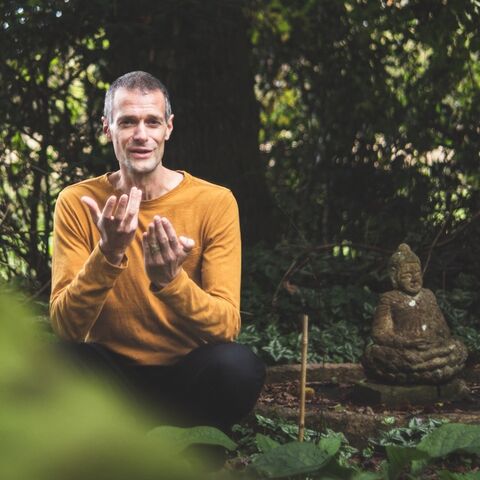
And my co-conspirator Josh,
Who's sitting either on my left or my right,
Depending on which platform you're looking at.
Good morning,
Josh,
How are you?
Good morning,
Denny,
Yes.
Co-conspire means to breathe together,
Aspire,
Respiration,
Right?
So breathing in things that we need,
And breathing out even more benefit,
Or something like that.
Yeah,
Yeah,
So it's been an interesting journey for us.
Do you remember when we actually did the first AUA?
Yes.
Off the top,
Yeah.
It's quite different,
And I apologize.
You know,
Or maybe,
Of course,
When I start moving my mouth,
There's someone outside that's talking now,
So maybe you can't hear them,
But that's okay.
But yeah,
Denny,
Remember this?
And we had a few guests on,
We were kind of exploring.
You know,
I think if I remember right,
The topic was,
You know,
Why do we meditate?
Yeah,
Yeah,
It was a lot more about meditation,
And it's a life journal,
Actually.
It just kind of documents where you and I,
You know,
What kind of air we're breathing together.
So we had originally scheduled a different content for today,
And Samantha then would have been a great guest,
And she would have been talking about something that she did about 15 years ago,
Which had to do with caregiving,
Taking care of her mother,
And the right way to do that.
But we'll still have her,
We would still like to have her come back in the next one,
Only because she's moving,
And where she is now,
She really doesn't have good internet connection.
So I pulled out from my stack of dusty paper,
And I came up with this talk,
Which is something that we did earlier.
It's really based on a question that was asked during one of the class,
Which is,
What is this chi,
This energy?
Does this energy have to do with real quote-unquote organs?
And I wrote a draft on that,
Posted on our Patreon channel,
And I promised to follow up with a video,
So here we are.
So the title of today's talk,
Josh,
If I may start.
Please,
Take it away,
Denny.
Okay,
Hang on just one second.
For some reason,
I'm not showing you up.
Oh,
There you go.
All right,
So we've got both of us now.
Okay,
So the title of today's talk,
And I like to think of it as the part one of,
At least a two-part talk.
Not sure when the second part's gonna come,
But at least,
Really dialed in and talked about exactly what is chi,
And so the title of the talk is Chi and Astrology.
Now that can't get you clicks.
So I'm gonna just go,
Okay,
Josh?
Please.
Okay,
So I'd like to bring us back to my favorite scientist,
Galileo,
Only because my son went to a high school in San Francisco named after Galileo.
He's actually one of the first scientists,
Probably the most famous scientist in modern science,
And the second one would be Isaac Newton.
And Galileo was very,
Very ahead of his time,
And one of the things that he did was he invented a telescope,
And he started to observe the stars,
And so of course he observed the moon,
And then Jupiter,
Which was the biggest planet,
As you know,
In our solar system.
And he came up with something that essentially landed him in house arrest with the church.
It was something so controversial that the church,
Actually the Catholic church actually went out the way that warned him to not to continue his study,
And when he violated his quote unquote restraining order,
They put him on house arrest,
And he actually died during that time.
So what is it about what he did that was so controversial?
It was something called heliocentrism.
Helio is the name of the god,
It's a sun god.
So the idea is that he believed that it is the sun that is the center of the quote solar system,
And then all the planets including Earth rotate around them,
Around the sun,
And of course the way he proved that is by his observation of the tie,
How the tie is influenced by the sun,
And the moon,
And the Jupiter.
And there was a theory that was actually put out probably 100 years before his time by another scientist,
Or another thinker anyway.
Interestingly he never published his work.
He never published his work,
And it was finally published on the year that he died,
So he never had to deal with the church,
And it became kind of a underground kind of movement to say hey,
It is the sun that we all evolve around,
And then why is that so hard for the church?
Well because if you go back to the Bible,
You go back to the Old Testament,
Go back to where it talks about God created the universe,
He created the Earth first.
He parted the water,
Revealed the Earth,
Revealed the water,
And revealed the air,
And then then on he invented,
He constructed the sun and the moon.
So as far as the church concerned,
We,
The universe evolved around Earth,
Not the other way around.
So that was bad.
And so he was put at rest.
And so now it turns out that today people realize that that kind of thinking,
That idea,
Actually was quite old.
It's actually about 200 years before Christ that some other scientists had thought about it,
But it's not any clearer what the connection saw.
So those could be kind of independent of it.
Now it turns out that the Chinese understood that.
The Chinese actually understood that probably 4,
000 or 5,
000 years ago,
I mean before Galilee's time.
Yes,
Josh.
Okay,
So yeah,
So before we dive into that,
If you want to back up one maybe.
And speaking of the Catholic Church,
Of course,
I live in a neighborhood where there's a Catholic Church.
Church bells are going now.
They go at the top of every hour.
And at noon to six,
They play more bells.
So I thought that was fitting.
I'm always fascinated by these figures in scientific throughout our history.
You know,
What are their associations with other people in their kind of the societies,
Both public and private,
And unknown about maybe that we don't know about,
And how that influenced maybe how they came up with these,
Or who are their supporters,
And then who benefited from their theories.
And like Denny mentioned,
Supposedly didn't benefit from their theories.
You know,
All kinds of things like are people,
What kind of,
Are they pretending,
Are they acting in certain ways for certain reasons?
You know,
There's just so much things we don't hear about that can go deeper with the story.
But as far as their relevance,
I don't know.
Now I know the heliocentric model,
It's interesting,
And Denny mentioned the Old Testament,
That there is the very first thing,
The division of light and darkness.
So I think that,
I don't know how that plays in exactly to this,
But with the sun bringing light,
And then in the creation story in the Old Testament about,
You know,
Creating day and night.
So I just thought those were some things to point out.
So hopefully I didn't disrupt the flow too much.
Yeah,
The answer lies in the history development of different societies.
So the Western culture had this history of the Dark Ages,
And then it has the history of the,
In between the Dark Ages and the Renaissance,
There was a period of time,
A very long time,
Where the entire continent was under the control of the church,
And the reason why the church becomes so powerful is that they basically validated the emperor.
So it's kind of interesting to think about the helio.
Helio is the worship of the god of the sun,
Right?
And so you would first think that that's contradiction to the worship of God,
Right?
So God always supersedes the sun,
Because the sun was,
After all,
Is his creation.
And yet,
When it was formalized into Catholicism,
At least the Roman branch of that,
They moved the day of celebration from Saturday,
Which is Sabbath,
Means the resting day,
Is the day that God have already created the universe,
And he's taking a day off.
And so that was,
Sabbath is Saturday,
Is really the day of celebration.
But yet,
They decided to move to Sunday,
Because it was just market positioning.
It had to be the way to really accommodate as big of a customer base as possible.
And so there's a lot of stuff going on,
And in fact,
If you remember the Christians,
The Christians were crucified by the Romans,
Right?
Because it was considered an outlaw religion,
And it was only later on that they decided that,
Hey,
If you have one god,
Then you can have one emperor.
That's not such a bad thing.
And so it kind of,
And so this is how the Western society evolved,
And so the church has so much power,
Because the emperor has so much power,
And the emperor relies on the church to legitimize his control.
Now,
The same thing has happened for thousands of years in China in the East,
Except that in this case,
The emperor in the East is the son of the heaven.
So he,
In that case,
He elevated himself to be the son of heaven.
He is part of the heaven.
In fact,
Even today in Japan,
The emperor of Japan is a direct descendant of the Kami,
K-A-M-I,
The god,
Right?
And so this whole idea of studying astrology is interesting,
Because in the West,
Astrology was not studied until Galileo came along,
Which is 400 years ago,
Whereas the study of astrology started 4,
000 years,
Maybe even more.
They actually have excavated lots of artifacts that says that,
Yeah,
They were studying,
And the reason they were studying that is because they were empowered by the emperor,
Who after all is the son of heaven,
And so it's part of his apparatus for controlling the people,
Just to actually have a group of scientists,
Astrologists,
You know,
To support him.
So I find that quite interesting.
I find that quite interesting.
It definitely is,
And you know,
I was always fascinated by history,
But I don't know how well I did it,
Because maybe in the back of my mind,
It was like,
Okay,
Well,
We're only really told the version of history that comes from the people power,
And you know,
Everybody's- It hasn't stopped.
Right,
What's that?
It has not stopped.
It's still continuing.
So you know,
We do hear a portion of the history,
But you know,
It usually comes from the people who either won wars or who are in power,
And obviously there's an agenda behind that,
Because they're saying certain things from history in a certain way that helps promote their agenda and their continuation of power.
Yeah,
Yeah,
I mean,
Yeah.
I mean,
That's one of the perks for being in power is that you get to rewrite the history.
Yeah,
And like you said,
Some of it is just outright rewritten,
You know?
It's more accurate representation.
Correct.
So the point that I'm trying to make is the strategy,
The study of the strategy in the West is it started late,
And even when it started,
It was totally suppressed by those who are in power,
Whereas the study of strategy was encouraged.
In fact,
It was considered part of the apparatus for maintaining control,
And it started many,
Many years ago.
So the idea that the tie on planet Earth is associated with the sun,
The moon,
And the Jupiter,
That's a 4,
000 year knowledge,
And the Chinese understood that long ago,
Understood it so much that they understand that it takes 12 years.
It takes 12 years for the Jupiter to go around the sun.
Yes.
I just wanted to make one more brief distinction between astrology and astronomy,
Right?
Astronomy is more like the study of the actual stars in the heavenly bodies,
And astrology is more of how they affect our everyday life,
Our environments,
And patterns,
And things like that.
So there are very closely interrelated,
But there's a distinction there.
So I think- Yeah,
Correct,
Correct.
So I would,
Thank you for that,
Josh.
So I would definitely agree with that,
And I would go as far as saying that Galileo was an astronomer,
Where as the Chinese who studied the planets were astrologists,
Because they weren't all that interested in studying the planet as much as they wanted to understand the effect of the planets have on the people,
And having that knowledge gave them the unfair advantage,
So to speak,
Of being able to then say,
Hey,
This is what the stars are saying,
This is how we're gonna affect,
And so be forewarned that this is what's gonna happen,
Right?
I'll just make one other brief comment,
Because of Western astrology,
Which I have very,
Very little knowledge of.
I will say one thing that I learned recently that I think is a relevant point to make,
Since we're sidestepping Western astrology,
Which is definitely good for this,
What we're doing here today.
The one thing is it doesn't seem to align exactly with the reality,
Because it's divided into 12 sections,
But sometimes the actual star placement is briefly different from the way it's classified in Western astrology,
So when some people say the moon is in,
I don't know,
Virgo,
Well sometimes it might actually be in the next sign over in reality if you look exactly where it is,
So I don't know,
I feel that's kind of- Well,
The universe is geometrical,
Just not mathematical.
The two are very close,
But they're not exact.
So I mean,
I remember one time I was,
Back in the States when I was in graduate school,
We were just before the show talking about how I entered graduate school and became the lone experimentalist,
And so I was filling up my lab,
And I had to actually build a little card that plugs into IBM PC back in the days,
And I had to build a little clock chip,
And it turns out that you can't do that mathematically.
Turns out that,
You think that every four years the leap year,
Except that it's not every four years forever.
Anyway,
So that's right.
So they decided that they understood that.
They understood that it takes 12,
Just by looking,
Observing the Jupiter,
They understood that it takes 12 years for Jupiter to return to its original configurations,
And so they actually came up with the 12 deities,
Which one represents one configuration,
One constellation,
And then eventually that evolved into the 12 zodiac signs.
So for example,
I'm a monkey,
And so I was born in 1956,
So therefore I'm a monkey.
Now very quickly they realized that just like you said,
It's good,
But not good enough,
And they realized then that it's not just the Jupiter that affects us,
There are other planets that affect us,
And Jupiter happened to be the big one,
It's not the closest one,
But it definitely had a huge effect on us,
But then the one that's closer to us are the Mercury,
The Venus,
The Mars,
And the Saturn,
Of course they can't see further than that,
And so they actually understood that there are at least five planets in addition,
I mean including the Jupiter that has an effect on us,
And then they actually named them after,
Now this is where it's interesting to think about the translation,
So some people call these the five elements,
And some people call this the five materials,
And some people call this the five phases,
Like in different phase,
And so let me just explain what those are.
So water,
Metal,
Fire,
Wood,
Now wood is actually tree,
So everything has a life to it,
And then earth in this case is actually more like dirt,
And it's not the basic elements like what you would find in a periodic table,
And it's not even the basic element that we talk about from the Buddhist standpoint,
Where you talk about the earth,
The wind,
The fire,
And the water,
Those are much more the basic elements,
So it's actually inaccurate to use,
To translate as five elements,
Especially if you were to look at the Chinese character,
So this is five,
And this one actually again,
A single character have no meaning,
It's just how you conjugate with something else,
So if you conjugate with something that,
It could mean action,
It can mean movement,
It can mean behavior,
It can mean,
In fact if you put that together with this guy,
Then that's really the true word for a planet,
Is the star that is moving,
That's a planet,
And so just,
I wouldn't recommend that as an official translation,
But let me just say that it has life to it,
It's a five liveliness,
It's just how they interact with each other,
How they interact with their world,
And so for example,
Water would be the source of life,
So let me just keep pounding on the word life,
Salt water would be the source of life,
Tree is where life begins,
And the dirt is what supports life,
And then the fire perhaps would be one that actually regulates life,
And the metal is another one,
So the importance is not how they name the star,
The importance is that that becomes the basis of a 4,
000 year old culture,
Which is to explain everything in terms of these five core elements,
Five materials,
Five phase,
Five movements,
Five I would call life,
So it's very interesting,
It's really very interesting for them to really look at that,
So Josh?
Yeah.
Yeah,
We were talking about this before the show too,
About it's not really just a noun,
It's a verb,
Right,
It shows a process,
You know,
It being in an element form with a name as a noun,
It just kind of gives it a handy reference to refer to as an object when you're systematizing this for various means,
Right,
So like Jen was saying in actuality,
Nothing's really static,
It's like a process,
There's forces involved,
For instance,
Water,
It can go,
It can solidify,
It can liquefy,
And it can be in a vapor state,
Earth has various forms of density,
More solid than other,
Wood,
I mean,
It can be burnt into ash,
There's sap in wood,
There's liquid elements,
There's,
You know,
There's all kinds of different variations and metal too,
It's the same way,
It can be melted down and solidified,
And water,
I mean,
And of course,
Fire has different levels of intensity and absence too,
I would say briefly that I've even found the theory of,
I've heard of Jupiter because it's so humongous and it has big moons that it was once a sun and the moons were actually planets and it's kind of maybe lost energy or for whatever reason has been turned into a planet,
I just found that was an interesting theory that I don't hear about too often.
Yeah,
Well,
We'll talk about harmony towards the end of today's presentation,
But I just wanna mention harmony because the culture,
The Eastern culture,
Whether it's Chinese or Indian,
The Eastern culture is really based on harmony and it reflects in the language.
So the language is not as precise as you like because the ambiguity is the basis for our existence and so you need to have some room.
So one of the things that I wanted to say is that when this idea of the yin and the yang comes to the West and we kind of just think that,
Well,
That's black and white,
You know,
That's right or wrong,
That's,
You know.
So this picture,
This picture that looks like a pentagon with a five pole,
Five circles,
That's yin and yang.
It's really yin and yang is not just you versus me.
It's not like if you're not for us,
Then you're against us.
It doesn't work like that.
When we say yin and yang,
It's really the relationship between each one of these circle.
So now this one is translated as generating.
So this would be yang,
You know,
And this one is translated as overcoming and I would call that yin and because yang is like the sun and yin is the absence of the sun.
I would rather than translate it again,
Be as it just kind of expand our horizon of thinking,
I would just translate it as supporting,
Okay?
It's just something supportive.
So for example,
I mean it when I say that Josh and I are the yin and yang,
Because when we say yang is how we support each other,
Okay?
And when we say yin is how we kind of pull each other back.
Okay,
So this idea that these five materials have both the yin and yang,
So let me explain that.
So for example,
Water,
If you think about water as the source of life,
Then the wood,
Which is really the tree,
It's a live wood,
Okay?
So everything has a life to it.
So the water always supports the tree,
Supports the wood.
Now the wood supports the fire,
That makes sense.
Now the fire actually supports the dirt,
Supports the earth and the earth support what is called the metal and ultimately the metal supports the water.
So you can get very precise,
But you know,
It's best to leave it as ambiguous.
Idea is that for example,
You would say,
How does the metal support the water?
Well,
Think about condensation,
You know,
Think about a metal as a container,
You know,
Just leave it at that.
And then you would say,
How does the earth support the metal?
Well,
You know,
The metal or the iron ore comes from the earth,
You know,
Just leave it at that.
And so the idea is that there's these five things that each one has a supportive role to each other.
The water supports the tree,
The tree supports the fire,
The fire supports the dirt,
The dirt supports the metal,
The metal supports the water and so forth.
At the same time,
Each one has,
So this is how Josh and I would just like brainstorm and,
You know,
One plus one is equal to more than two.
Whereas they also have this yang relationship,
The yin relationship,
Which where they're kind of regulating,
They're pulling it back.
So for example,
Water has a regulating effect of fire.
That's obvious.
Fire has a regulating effect of metal because it can melt metal and metal has a regulating effect to the tree because I suppose you can hunt up,
Bring down the tree.
But the tree has a support,
A regulating effect to earth.
Okay,
And the earth has a regulating effect of water.
So the point I'm trying to make is that this is a,
It's a,
I wouldn't go far saying precise and I wouldn't go over it so I say ambiguous.
It's somewhere in between.
It has very definite meaning,
But don't take it too far.
The important part is that this really is the yin and yang.
It's not just black and white.
It's really coexistence of all the materials on earth and all the ramification of life.
Yeah,
Denny,
And I would,
Very good.
And the other comment I would make about yin and yang,
Perhaps we mentioned the obvious,
Masculine and feminine principles,
The complementary and correspondence effects of it and then also polarity too.
They're not separate.
They're just kind of one end of the spectrum and the other possibly.
So yeah.
Yeah,
I think that's a good idea.
I mean,
This is a good way to talk about it that if you say masculinity versus similarity and you necessarily equate that to male and female,
That's too rigid.
That's rigid because a mother can be both,
Can be very nurturing and can be very disciplinary.
I mean,
You and I know that.
Yes,
And all of us have certain aspects of Yes,
Yes.
Femininity within us.
Yeah.
You know,
And now going to,
You know,
With Denny said about these,
Maybe I'll just fill in the gaps with some examples,
How water is limited by earth or,
You think about the riverbanks,
Right?
Riverbanks will hold in water.
What was the other one that Denny did not give an example on?
Help me remember here,
Denny.
Water.
Some of the water and earth,
This one right here.
Which ones you didn't give examples for,
Either way.
Well,
No,
You do it.
You do this.
Oh,
Okay.
Yeah,
Go ahead.
Well,
I'm trying to remember if you've given examples or not,
But which ones you've already given,
But.
Well,
For example,
The fire melts the metal.
I think I said that.
Fire restricts,
Or it overcomes.
Yeah,
So you think about a blacksmith,
Right?
You heat up.
Yeah.
You heat up metal to do what you do.
To bend it into shape,
Yes.
Mm-hmm.
To tell metal and wood,
Denny mentioned the acts.
And,
You know,
Another thing is that if you,
Now I've heard of this,
I can't verify,
If you just will spray micro particles of metal by trees,
Well,
Then when they try to uptake nutrients from the earth,
Sometimes it gets clogged,
And then it stops nutrients from reuptaking in the tree,
And so the tree could eventually die.
Yeah.
Yes,
Let's see,
What's another example?
Wood restricting earth.
Well,
That's what I just said,
Right?
That the wood will take nutrients from the earth,
Certain nutrients in the ground out of the earth for its own benefit.
Yeah,
Or you build a barrier,
You know,
When you want to prevent mudslide.
Oh,
That's right,
Yeah.
And you use wood to build the barrier.
I mean,
There's so many examples.
There's so many examples that,
I mean,
If you want to make it work,
You can go,
You know.
Yes,
Exactly,
You can look for examples.
And I was just gonna mention,
Might as well just mention here briefly now,
You know,
The system we're talking about today,
We can just use it on the surface to apply it to our everyday lives without very many questionings.
And eventually,
Maybe if you're interested,
You can take it a deeper level and look into it as your own experience and how it verifies in your own experience in your reality of how it actually applies in actuality.
And then maybe one step further that's probably not really relevant is maybe looking into the origins of how this system was actually discovered,
You know,
And why they put it this way and how they actually figured this stuff out.
Right,
Right.
Well,
I would definitely try to answer that.
And especially when it has to do with chi,
Okay?
Definitely,
And that's the whole point of today's presentation is really like,
How did they discover chi and what is chi and how does the chi lines tie to the organs?
Are they the real organs?
That was the question,
That was the original question,
Okay?
So this idea of the five material is everywhere.
It's everywhere in the Chinese cultures.
And I just listed a few.
So the five has to do with the organs.
The five has to do with the emotions.
The five has to do with the taste.
The five has to do with the season.
So in the old days,
The Chinese believed that there are five seasons.
They actually take the summer and break it into two.
It kind of like the Indian summer that we have in the West Coast,
You know,
It's not at the deep summer.
And so it even break into food.
And so Josh posted an article on our circle,
On our Inside Timer circle,
And got some response from some of the students about what kind of food,
How do you eat food that would be consistent with your blood type?
And so the food is a very important part.
The color of the food,
The color in general,
The positions,
It's just like,
It's everywhere.
It's everywhere.
It's feng shui,
It's how do you decorate the house?
How do you build the house?
Where does the window go?
Where does the door go?
It's everywhere.
Now of course today,
I'm not really here to talk about the five as much as I'm here to talk about chi and so I wanna focus on the organs.
And so for example,
In this chart,
It says that kidney,
And again,
I wanna,
I will keep talking about kidney because the kidney is associated with water and water is the source of life.
And in fact,
The Chinese traditional medicines talk a great deal about the water being the foundation of life.
Everything comes from the kidney.
Everything comes from the kidney.
The kidney,
And then,
Now what's interesting is that the water supports wood and so liver is considered wood and so this is where life begins.
And so the essence that comes from the kidney is provided to the liver,
Which is the one that actually manufacture blood,
Okay?
Now then the liver is being very constructive to the heart,
Which is considered fire and so forth and then back.
And then at the same time,
The kidney is the one that regulates the heart and the spleen is regulating the kidney,
Okay?
Now,
I don't wanna get too much into this except that you notice that there's only five organs here,
Okay,
And we know that we have more.
And so that's because the Chinese actually separate the organs into two kinds of organ.
This one,
This word right here,
The half of the word on the right hand side is the same word that we use for Tibet.
So Tibet is actually the treasure in the West.
That's what the word means.
So this is the word that means treasure.
And so now we also have the bodhisattva,
What we call the earth store,
Bodhisattva,
The dejang.
And so that's the same word.
And so it's always about treasure,
Where you store something.
So the Chinese believe that these five organs are the treasure organs because the Chinese believe that we start with essence.
So when we were born,
We were given some building blocks,
Essence.
And if we abuse these essence or we don't use them properly,
They're gone.
And that would be the end of life.
And so the kidney is really the one that has the essence for marrow,
Okay?
So the essence comes from the kidney,
The kidney goes,
The marrow is manufactured in the spiral core,
And they even believe that the brain matter is an extension of that.
Now,
This is an interesting point.
So when we talk about the two exercise routine that was passed down by buddhidhamma,
And we'll talk about buddhidhamma in a minute.
But for those of us,
So those who've been following Josh and I,
You know that we have this practice called the yi jing jing,
Which means exchanging tendon.
That's how it's translated.
And there's another half,
And sometimes it's not clear which is which,
But in our morning practice,
I combined the two.
And I always talk about the other half being the renewal marrow.
So how do you,
You know,
So if you look at the exercise that we do,
Energizing,
You know,
Energy point,
Doing stretching,
You say,
How does that renew marrow?
I don't get it.
Actually,
Marrow means kidney.
It's not the renewal of marrow,
It's the renewing of your adrenal.
That's interesting,
Okay.
So point is that the Chinese believe that these five organs,
And they are the yin organs,
Okay?
Now I'll come back to that in a minute.
What does that mean?
They are the treasure organs.
Each one of them contains essence.
So that's one of the thing is that in the Western culture,
We put a lot of value on sweat.
You know,
We think that we like to sweat a lot.
That's good for you,
Right?
Now in the yi,
The opposite.
The sweat is the essence of the heart.
And so sweating is okay,
But don't do it too much.
Don't overdo it because that's,
You know,
If you sweat,
That's all the sweat you got.
What's interesting is that the opposite of the treasure organs is this word.
Now again,
The left half is the same,
The right half.
This one means mention.
You know,
I mentioned a big house.
Or it actually means the place where it's like the government building is also that way.
So I translate into something else.
So these are my translation.
I translate into vessel.
It's an empty vessel.
It's something that is empty,
Meant to contain something else,
Okay?
And so for example,
Bladder contains urine,
Gallbladder.
Small intestines,
Large intestine,
Obviously contain food at different stages.
Stomach contains food.
So these are called the vessel organs.
And it's one-to-one correspondence.
So I'll talk about this in a minute.
But it's important to break it into half.
So for example,
As much as kidney is considered water,
So is bladder.
As much as liver is considered wood,
So is gallbladder.
They come in a pair,
Okay?
All right,
So this is,
So the question is,
Okay,
With that understanding,
Where does chi come from?
Where does chi come from?
So the next slide.
Well,
Daniel,
Let me,
Before we go on.
Sorry,
Go ahead,
Go ahead.
Thank you.
Yeah,
I just wanted to point out that it's interesting that the translations between these,
That you use for the arrows,
That I mentioned this previously,
How,
Let's see,
This one nourishes and suppresses.
And go back one slide.
And then here the translation is generating and overcoming.
And the article,
Let's see,
It's used as inhibiting and let's see,
Supportive,
I think.
Is that right?
Yeah,
So these are all great translations.
And it seems like,
Depending on the context,
Which one is more accurate to help our understanding and relevance too.
So I like the ambiguity that Denny was talking about and how it leaves open room for interpretation,
Which can be very helpful at times.
The other thing I noticed- Well,
There's also something else that are even more important than that,
Which is you have to gauge the teacher,
Who's doing the teaching.
And so I used this example before where,
I was a professor for nine years and there's a big difference between teaching the undergraduate versus the teaching the graduate school.
The undergraduate,
We teach from the book.
Everybody gets a book.
So it's exactly the same as mine.
I'll teach it from the book and you learn it from the book.
In fact,
After a while,
I don't even prepare class anymore.
I just opened the book like an hour before class and I just know what the.
.
.
Now,
When you go to graduate school,
You don't teach from the book anymore.
The book is not written yet,
Has not been written yet.
In fact,
The only guy who's really.
.
.
The guy who's gonna write the book is you.
That's why you're teaching the material.
So then you're not teaching from the book,
You're teaching from experience.
You're teaching from what you know.
And so for example,
I always use that,
Use Master Jiru as an example of someone who teach from his own first person experience as opposed to teaching from the book.
He never teach from the book.
Every once in a while,
He teach from the book,
But only because he's looking for something.
So he would.
.
.
There's some idea that he wants to express and he realized that there's a book somewhere.
And so he go to the book and what you realize is that his interpretation is completely different from what other people use.
And the best example of that was in the counting of breath.
So we talk about the Anapanasate as a counting the breath because that's how it's translated.
And then he was the one said,
No,
That's not how you translate it.
You never count because when you can't use a brick brain and the last thing you wanna do is use your brick brain.
So you don't count,
Make it count.
I said,
Wow.
And so what you will find then is these interpretations,
Sometimes they're book translation and sometimes they're experience translation.
That's right.
And then the other fascinating distinction of,
You know,
What are the similarities and differences between teachers teaching kind of the same material?
And a lot of times it just comes down to what resonates with me.
How is this really hitting a chord and helping me understand it more?
Is it helping me understand it less?
So yeah,
And before we move on to,
I just wanted to maybe be a little silly and,
Well,
Of course,
Somebody's running a chainsaw out there now,
So there's our tree element.
And here's metal,
Well,
The periodic element set.
And I was just gonna show three types of metal real quick.
Obviously,
It's not,
This is not literal,
But there is association.
Scandium,
And yeah,
If you're listening to this,
This is no good.
It's at the Imagine or look it up on Wikipedia.
Hafnium,
Metal that we don't hear about every day.
And yttrium,
Let's see,
When camera leaves a lot to be desired.
But anyway,
Yeah,
The earth,
This earth is a fascinating place.
Okay,
All right,
Back on track here.
So I have to ask this question.
Are these metal radioactive?
No,
Actually,
The ones that are.
Because if they are,
That would explain a lot of things.
The ones that are missing are in red,
And those are the unstable elements.
Some of them can only last for a few microseconds.
Other ones are radioactive.
So yeah,
But I considered that too.
Okay,
So let's bring that home.
Let's bring home the idea of the five materials,
Bring home the idea of the astrology back to what we are mostly interested,
Which is the chi.
And of course,
We all understand that the chi is really a Taoist concept,
More than it is a Buddhist concept.
And so one of the things that we practice is the idea of the microcosmic orbit.
Now this diagram is actually very famous.
They would take 10 lifetime to study it.
And what's interesting is that this is actually your spine.
This is your spine,
This is your brain.
And then now the danten is actually symbolizes the feel.
Okay,
So this is the oxen pulling the cart.
This is the feel,
Okay?
So the danten is the feel,
The tan is the feel.
And so this is really where your adrenaline is,
And there's fire.
I mean,
As I said,
You can spend a whole lifetime studying this chart,
And it has everything you need to practice microcosmic orbit.
Now there's some controversial as to where this chart came from,
And some people would say,
Oh,
It's 4,
000 years old.
Some people say,
Well,
Maybe not so.
I'm not gonna argue that except that I know for a fact that there's a very famous Taoist.
He's actually considered to be the Patreon of Tao.
And they actually did the excavation not too long ago of his hometown,
And they found some document that is very similar,
Very,
Very close to this chart.
So there's some idea that maybe he was the one that kind of integrate all the knowledge and put it together.
And now I didn't bother to translate the writing.
And so the Chinese writing here means eight mortal crossing the sea.
So he was one of the eight mortals,
If you are familiar with the Chinese culture.
Now,
When we were talking about practicing in the desire realm,
And I remember we talked about the difference between a Taoist,
The Taoist versus the yogi versus the Buddhist.
And I remember talking about the yogis are the ones that want to escape the desire realm,
Practicing in the form,
In the formless,
The rupa and the arupa.
Whereas the Buddhist,
Buddha himself was a yogi,
And he had reached a very upper layer of that,
And he wants to go beyond that.
So he wanted to escape the three realms,
And that's his definition of liberation.
Whereas the Taoists were really more focused on the desire realm and just escaping the human realm to be in the immortal realm,
If you will.
And so the story about the eight immortals crossing the sea to return back to the human realm is a very,
Very interesting story.
And out of that,
One is,
It might be more,
But this one actually started to study both the Taoist and the Buddhist.
And in fact,
More than anybody else,
He was the one that integrate the three,
Which is the Taoist,
The Buddhist,
And the Confucianism.
And that becomes really the Chinese culture,
Okay?
And he actually written a poem,
And I didn't want to bring it out because I didn't want to bother to translate it.
Where the last two verses I like a lot,
Where he's talking about Tao,
He's trying to explain what Tao,
Tao.
And he says,
If you understand how the Dan Tan is the treasure,
Then you understand Tao.
That's really amazing.
And then immediately after that,
He says,
If you understand Zen,
And use the word Zen,
Okay?
And use the word Zen,
If you understand Zen,
It's,
Now I'll paraphrase a bit.
It's really about understanding the difference between pain and suffering,
The difference between sensation versus perception.
It's understanding how not to use your brick brain and use your spiral core.
I paraphrase,
But my point is that at that one poet poem,
He talks about the meaning of Tao and the meaning of Zen.
So where does Zen come from?
Zen come from Buddhidharma.
And Buddhidharma actually predated Lu by almost 200 years.
And so the thing that I wanted to say is that the Chinese,
The Tao,
The word Tan,
This word here,
Tan,
Is actually the word for alchemy.
Tan means rat,
Rat means the pill.
So for many thousands years,
The Taoists were alchemists.
And so when they were talking about practicing the Tao,
They were actually manufacturing the Tan,
Manufacturing a pill of heavy metal that they can swallow that will give them longevity and all kinds of things.
And it was really Buddhidharma who changed that.
And then it became internal Tan versus external Tan.
And the internal Tan,
Even though they still carry the word alchemy,
It has nothing to do with alchemy anymore,
It really has to do with the energy field within you that you guide and entice.
Remember the word Tao Yan is guide and entice.
So once they do that,
Then they start to really,
They can then go into deep meditation state and they can start to really understand the body.
And they understand that the body actually has a rhythm,
Has a rhythm.
And Josh,
Go ahead.
Sure,
Yeah,
Briefly back to the other slide.
And the internal alchemy,
Well,
Yeah,
The microcosmic orbit is pretty profound practice and technique understanding.
And we still,
I don't think Denny's ever even mentioned much about the macrocosmic orbit,
Which is even more involved and complex from what I gather if I'm getting that right.
And yeah,
So I just,
Yeah,
Very,
Very interesting stuff.
And then the internal alchemy,
Which from what I hear,
Some kind of like popular or pop Western alchemy teachings,
Today it is more internal alchemy.
They,
From what I can gather,
If I'm getting this right,
Where you're not trying to change base metals into gold externally,
You're trying to do certain different practices and techniques and learnings and whatnot to change our internal state from kind of a lower base reality,
Like physical pleasures and sensuality into higher states of mind being and consciousness and energy is involved the entire whatsoever.
Yeah,
Yeah,
Correct.
Now,
The reason why I never even mentioned macrocosmic orbit is because I was never taught.
Microcosmic orbit was taught by Master Jirui one time when we were in China,
And only because he was surrounded by monks who were Shaolin monks who practiced the microcosmic orbit.
So he was sharing with them.
And he actually was the one that says that the microcosmic orbit is the meditation of the four elements.
So it's not just the Taoists who practiced that.
The Buddhists had practiced that too.
And then that was it.
He never taught,
He never taught the other one.
Now,
You know,
That's the way Master Jirui is.
And so I remember one time he taught the,
What is it called,
The nine states of abiding your mind,
Something like that.
And he only taught that one time in English.
And he only went into detail the first three steps.
And he actually said,
And beyond that,
I might as well be a standup comedian because you guys would never understood that.
That's right,
Audience is key,
Right?
Yeah,
Anyway,
So there's a reason for that.
And so I just want to clarify why,
You know,
I have not been as comprehensive as you might imagine.
So real briefly to be,
My timing's off again for completion sake and accuracy.
This actually says uranium on there.
And I was looking this up.
So it supposedly,
Hopefully,
It's totally completely depleted.
So it's been absolutely nothing.
Okay,
Turn off your light and see how I can see.
That's right,
Am I starting to glow?
Am I,
Will I glow in the dark?
But no,
That's what they say.
It is,
It has to be completely depleted forever.
Yeah,
So anyway.
Okay,
All right.
If you see me glowing,
Let me know.
Yeah,
Okay,
So once they become meditators and they really go into,
They're able to go into these deep states of meditations,
They're able to live beyond the limitation of the physical body and they start to understand that the body actually has a clock.
And so back to the old days,
When Buddha talks about time,
Back in the days,
In North Indians,
A day is only four hours,
Six hours.
Each hours would be correspond to four of our current date.
So there was six time zones,
Just six.
And so if you look at this chart,
There are six.
There are six going from the morning to,
Turning from the morning to midnight,
Okay?
And what the Chinese discovered is that out of the six,
There is actually the yin and the yang.
And so for example,
And this is the one I like,
Is that I go to sleep at 11 o'clock.
I try to go to sleep before 11 o'clock because the gallbladder liver pair is active during that time.
So this is when you start to detox and start to make new blood.
And then the other thing that I do is in addition to going to sleep at 11 is that I try to wake up before seven before seven and because at seven o'clock is the stomach splint pair that is active and the stomach is a yang line.
And so that's when you have the most yang energy.
And if you lie down,
You're not gonna be able to benefit from the generating yang,
Your body generating yang energy.
But essentially,
The Chinese actually took the old six time zone region and refined it into 12.
And then the 12 corresponds to 12 energy lines.
Now,
Before I talk about energy lines,
If I were to go back to the idea of the yin and the yang,
And the yang means the sun.
I mean,
That's the word that we use for the sun.
And the yin is the word that we use for the shadow.
And so the idea is the yang is when you're influenced by the sun and the yin is when you are influenced by the absence of the sun,
Okay?
Now,
If you were to take a body part that would be the most influenced by the sun,
It would have to be the top of your head.
And that's where all the yang energy meet.
That's why we call this the hundred meet,
Everywhere all the positive energy meet.
And if you have to pick a spot in your body that is least influenced by the sun,
It would have to be at your crotch.
It would have to be between your reproductive organ and opening your bowel.
And that's why there's an energy point there called the yin meet.
It's the opposite of the yang meet,
Okay?
And so first of all,
All of these energies that comes into six pairs break down into the yin and the yang,
And all the yang energy goes to the top of the head.
And all the yin energy goes to the bottom of the upper torso.
And then eventually they go into the fingers.
And so since you have six energy lines,
So 12 energy lines,
Six of them would start at the fingertips,
These are extremities.
And then six of them would start at the toes,
Again extremities,
And there's yin and yang.
And so if you kind of go to here,
There's actually not accurate to say there's 12,
There's actually 12 plus two.
And so let's just go down to 12.
And so you have the,
Just look at the fingers.
This starts at the fingers are the heart and the small intestine,
The triple warmer and the pericardian,
And then the large intestine and the lung.
Now you might,
Again,
Trying to answer the question,
So are these real organs?
Well,
They're real energy lines that name after organ.
So let's just focus on the energy lines as opposed to the organ.
Because unfortunately,
By the time we translate into English,
We're now comparing a 4,
000-year-old culture with a 200-year-old culture.
And so the Western concept of these organs are very limiting,
Very precise but very limiting.
And then whereas the definition of these organs in the Chinese are much more ambiguous and much more encompassing,
Okay?
So I will only say,
If I were to again try to answer the question,
Are the energy line corresponds to real organs?
Well,
What is the definition of organ,
Right?
So I would just say rather than pointing to a physical component of your body,
Point to the function.
And the function could be one or two organs working together because it has to be all five of them working together.
And so that's where the energy line comes from.
And the most important is that they not discover through a dead body,
Right?
The Western culture takes a cadaver,
And dissected cadaver,
And revealed the organ,
Cut away the connective tissue.
Whereas the Chinese way of exploring the body,
They do it through a live body because they do it through meditation with the connective tissue intact.
And so when we talk about chi,
It has a lot to do with the connective tissue.
That is really the channel for both electricities and magnetism.
And it's that one single organs that contains everything.
That's why we have these two,
This energy line here called the triple warmer.
The triple warmer is like the joint chief of staff.
You can separate the Marines from the Navy and the Navy from the Army and Army from the Air Force.
But as far as the joint chiefs are concerned is that you all work for me.
You're all together here,
Right?
And so the triple warmer is quite interesting.
Now again,
You can translate that as warm,
Warmer.
Translate that as heater.
I prefer to translate as focus.
Is that the body is separate into these three region.
What's above the diaphragm,
What's below the belly buttons,
And what's between the diaphragm and the belly buttons.
And again,
I mentioned this before is that there's descriptions on these three regions.
They say that the upper burner or the upper focus of the upper warmer is like the fog.
The fog is water.
Water is the one that actually irrigates the earth.
It's the one that actually brings life to earth.
And so this is where the heart and the lung located.
They're the responsible for bringing in the essence from external to a body and distribute it to our bodies.
That's why the upper burner is like the fog.
The middle burner is like the foam.
And so when you make alcohol,
When you make beer,
When you make soy sauce,
You get foam because they ferment.
And so this half here is all about fermentation.
It's not about digestion,
It's about fermentation.
And this is where you extract nutrient from the food that you consume,
From the air that you breathe.
And then finally,
The lower burner is like the gutter.
But again,
The definition for gutter here is a little deeper is it's not just that you throw things away,
But you reclaim the valuables from the gutter before you throw it away.
So this is really like the kidney and the bladder has a very important function.
They're not just managing the waste.
They actually,
Kidney is the one that brings back all the minerals.
You know that.
And so this is how they discovered the chi is through the body,
Through the meditation.
And then they divide it into the five element.
Now of course you say,
Well,
How does six treasure,
How does 12 divided into five?
Because in this case,
The heart actually represent two.
The heart is both the heart and the pericardium.
The pericardium is the Western concept with the heart,
Is all the muscles,
It's the one that pumps blood.
Whereas the heart,
Again,
Josh and I did a talk many,
Many months ago where it's interesting how the Westerners hear the word mind,
It points to his brain.
And whereas the Asians,
When they hear the same word,
In Chinese they point to the heart.
So the heart,
The Chinese believe the heart actually represents not just the mechanical part,
But all the emotional part.
And so when Beth talks about how the mind,
And how,
I remember I asked the question,
What's the differentiating the mind to bring in the heart?
And she talked about how the mind actually is also located in the heart.
I find that fascinating.
I haven't had time to really dig into it.
Danny,
There's so much put out here,
I love it.
Plenty of comments on,
I don't know.
Go ahead,
Go ahead,
Josh.
I don't even know most where to start.
You know,
The comment I had about the masculine and the feminine again,
About the thousand point meat,
Right?
And that seems to be,
Maybe it's an unfair stereotype,
But it seems like the masculine more in general is kind of has a proclivity and naturally has a more cognitive thing or thinking,
And that can be both good,
You know,
Beneficial and not beneficial.
While the feminine side tends to do more body wisdom,
Like it seems more natural knowing and understanding the body.
It's like we have to work on it.
Well,
Yeah,
I mean,
We can go,
I mean,
For example,
Back in the days when we used to live in the cave,
The male is the one that sees the sun,
Right?
Because that's where the danger,
You know,
Once you escape,
Once you leave the cave,
Then there's danger.
And so only the male get to leave the cave to go hunt.
And the mother,
The female,
You know,
They're the force with the absence of sun.
That's right.
So that's another way you can think of it.
That's right,
There's so many different associations that can be made.
Yeah,
Yeah.
And going back to what we talked about previously,
It's a shameless plug here that Denny and I have done shows on Bodhidharma and Zen,
And we've done a few already on Qi.
So yeah,
You can check those out as well.
And what was I gonna say?
Oh,
Now the Western medicine concept that Denny talks about,
How Western medicine is kind of isolated parts of the body.
And it focuses on basically a lot of pharmaceuticals to address certain organs or systems in the body.
And the thing is though,
What's not usually studied is to my knowledge is the interactions of multiple medicines and not only that,
Each one is usually studied in isolation.
And then the side effects are noticed,
But then when you start adding more medications to that,
It doesn't seem like there's a lot of studies on,
Okay,
Well,
How does one side effect from one drug that might be of a low percentage or a high percentage interact with maybe a side effect of another one that could possibly either cancel it out or could make it worse or actually start a even new side effect because of the combination of these two drugs.
So now this is where I think maybe their solution is going more towards collecting a ton of data,
Massive data collection.
We hear about data mining and big data,
Right?
And so maybe they're thinking about running this through AI to analyze all this stuff,
Which then brings up more things of like,
Well,
How valuable every time we give out information or health records,
How valuable is that?
Granted,
It could potentially help a lot of people,
But well,
How much should money and profit be involved in this and at what expense?
So it opens up a huge door of a lot of questions that I don't really know how to respond to at this point.
And it's just interesting to notice how that seems to be kind of where Western medicine is going and maybe more towards personalized where we take it back to this Eastern system that it is more of a holistic with a W like Denny talks about that it includes the entire body,
Not only just substances,
But different techniques like acupuncture,
Acupressure.
It brings into effect time of days like Denny was saying and contexts and conditions and causes and astrological alignments and synergy to end this on and on and on and on.
It's very in-depth and complex,
Not that Western medicine isn't,
But it just seems to include more and consider more things as well.
Well,
Everyone,
We have a little bit of technical difficulty and so I have to record this last two slides on my own without Josh,
In any case,
So we talk about the way that the chi came about is really through the meditation,
Understanding the body,
Understanding the energy field,
And then also start to associate the energy field to yin and yang with the five materials or the five elements.
And now it's really,
I wanna just kind of close this presentation by saying what exactly is chi?
I think there is sort of understanding that maybe chi is this mystical force,
This Jedi force,
Which it could be,
Which it could be,
But actually the word chi just means air.
So it can mean something as simple as breathing or it can mean circulation.
So it's actually very reviewing to look at the way that the word,
The Chinese word chi is written.
So it's written in two forms.
So over here,
This is the more modern form.
It's written in two parts.
The middle is rice,
The outside is air.
And so in this case,
Chi just means consumption of from the external world,
Both the oxygen and food and the nutrient,
Whereas the older method of writing the same word chi also is in two parts.
The one on top means no,
None.
And then the bottom with the three or the four points means fire.
So it actually means no fire.
And so chi is something very simple.
It's just on one hand,
It means circulation.
Circulation is really coming back to the kidney.
The kidney is a water element that's a source of life.
And the kidney is working with the heart and the lung together in this symbiotic triangle.
And that's your circulation,
Your circulation of oxygen in your bloodstream,
Your circulations of your nutrient.
And if you have bad circulation,
You have bad chi.
Now the other way is really another symbiotic triangle,
Again,
Going back to the kidney.
And this time it's between the kidney and the liver and the splint.
And this now is more about your metabolic harmony,
Right?
And how once you consume the food,
You store it in your kidney.
And then now the kidney works with the liver.
And when you have metabolic disorder,
Most of the time it's because you have too much stress in your body,
It creates stress hormone.
Cortisoid goes into the bloodstream,
Goes in the liver,
And then it affects everything else.
So when we talk about chi at the very basic form,
It's really just about circulation and your metabolic health.
So that's really the end of today's presentation is where does chi come from?
What is chi?
What was the history of the discovery of chi?
And that sets up for the,
Perhaps sometime in the future,
Another talk,
Because what does it mean to have lack of chi or blockage of chi?
It's chi is really about harmony.
It's about harmony living with the universe.
And it's about harmony living with yourself.
All the different elements have to work together like a symphony.
They're not just a collection of mechanical parts.
You don't fix them one at a time,
But you want to make sure that they all work together.
And of course,
Today we talk about how,
What happens when they don't work together.
And so we use the word metabolic disorder,
Metabolic symptom.
I want to simplify it and say metabolic disorder is just lifestyle disorder.
It's when you eat the wrong kind of food,
Eat the wrong quantity of food,
Eat the wrong quality of food,
Eating too much of it or eating,
Not eating food at all.
Many times we're just basically eating packaged calories,
Eating too often,
Not fasting,
Not,
Or water.
Water has a way of really destroying,
Helping with your kidney.
We don't drink enough water and even drink all kinds,
Coffee,
Tea.
I drink coffee and wine.
I drink all kinds of things.
I hardly ever drink water.
That's not good.
We don't rest enough or the quality of our rest is very poor.
We don't exercise enough.
Or when we do exercise,
We actually prolong the fight or flight,
Which puts even more stress on the kidney.
We don't meditate.
We hardly ever teach our body to go into the rest and digest anymore.
So in any case,
That's sort of a setup for the future.
Fortunately,
Unfortunately we had a technical breakdown.
We,
It's a platform that we use.
Fortunately,
We are down to the last slide.
So again,
I want to thank Josh for being a part of the conspiracy talking about today's Qi and astrology.
Keep making all the good comments,
Giving me both the yang energy,
Which is the encouraging energy,
And the yin energy,
Which is the regulating energy.
Okay,
With that,
I bid you goodbye.
See you next month.
Again,
The last Tuesday of the month.
Holiness,
Josh,
As Denny mentioned,
Or Ask Us Anything got dropped unexpectedly.
We don't know what really happened.
But yes,
There's a few other points that I'd like to make here and get a chance to mention.
The first was on the variation on the theories of astrologers,
Going back to the beginning of the Ask Us Anything,
How some of these theories correlate and build on each other and how some of these theories oppose each other between various astrologers and systems,
And also how they evolve and or devolve over time.
Another observation or question that I've asked Denny before is,
Why is the air element missing from this five-element system?
Looking at the pentagram and pentagon diagram between the different relationships,
Supporting and opposing relationships between the elements,
It's noticeable that when the arrows or the flow reverses,
Then also the interacting relationships between them changes too.
Question I had about the time on the chart with the different various organs is,
Do the different time zones and locations on Earth make a significant difference for what like optimal time periods correspond with the various body parts and organs and meridian functions?
So basically,
Does it make a difference where you're at,
What time zone you're in on the different times that certain organs are more predominant and what's most optimal during certain hours of the day?
And then why or why not would this matter and how?
And I thought it was interesting that China only has one time zone and I didn't even realize that until someone pointed that out like a year or so ago.
I'm also fond of Denny's translation of triple focus for what's normally translated as triple burner,
Perhaps possible similarities in the distillation,
Fermentation,
And calcination stages of the seven stages in Western alchemy relating to fog of the upper burner,
Foam of the middle burner,
And gutter of the lower burner respectively.
Two kind of overarching points possibly is noticing the benefits for ourselves and others from using this five element system.
And then also when we might be clinging to it though.
So are we also,
Are we ignoring or rejecting something that seems to run contrary to this five element system just because it doesn't seem to fit in or it's a different view on that?
Or maybe we're only categorizing experiences and phenomenon in terms of the five elements as a replacement for not investigating our experience in different phenomenon for ourselves.
And then finally,
How does using disorder as in where Denny ended with metabolic disorder and lifestyle disorder,
How much does using that word disorder help wake one up to motivate healthy and beneficial changes in our lives,
In the lives of others,
And how much does it actually promote unnecessary psychological shame,
Blame,
And guilt that influences and impacts the physiology maybe in a negative way.
So kind of exploring that inquiry for ourselves when it might be helpful to use the word disorder and when it might not be so helpful.
All right,
With that,
I echo Denny's sentiment about complimenting each other and invoking yin and yang energies,
Supporting and the encouraging and the drawing back,
The regulating masculine and feminine energies and whatnot.
All right,
Thank you guys for listening,
Watching,
And maybe you'll join us next month in the month to come.
Thank you.