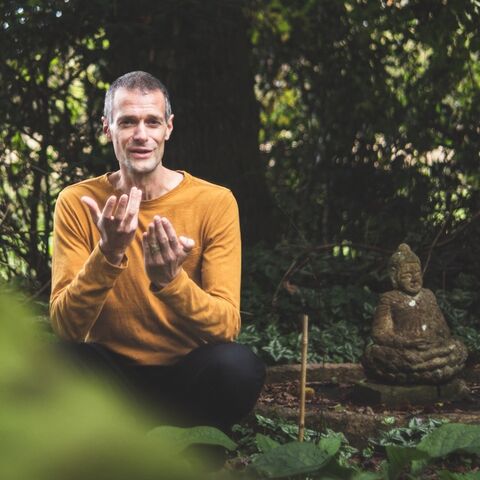
Again,
Once again,
Wendy Nash.
Wendy,
How are you?
I'm good.
I'm in Gabi Gabi country in Queensland in Caboolture and I have a range of fans around me because I need to.
I also have,
I got some of those bales of sugarcane mulch and lucerne mulch and everything and they're actually creating insulation because it gets so hot in this room.
It's got all the heat coming in on that one.
So that's what I'm doing there.
So tell me about the sugarcane mulch.
What do you mean?
I don't know what that is because we don't have sugar in the Midwest.
I know what sugarcane is,
But what is the mulch?
What are you doing with that?
What is that?
You know,
Obviously when you've got the end at the end of the sugarcane after the sugar has been done,
Then you've got the sugarcane and you just cut it down and that gets turned into mulch.
It's like inside.
So you're going to plant things inside with it or why is it inside?
No,
No,
No.
It's like this huge packets of lucerne just to create,
You know,
So imagine you had a straw bale house,
But you don't actually,
You just,
You have the bits of plastic wrapped bales,
Which a bale is too big word.
It's a pack.
It's a plastic packet really.
And just pushed up against the wall just to kind of cut.
Insulation,
Sure.
Yeah,
It's just insulation.
So that's better than fiberglass.
I remember I would get so itchy with that fiberglass insulation.
And I just wanted to,
I wanted a quick hack because it gets so hot here.
So I just wanted something cheap and quick and all the rest.
I'll read our description.
So yeah,
Welcome everyone to our 39th meditation Q and a,
And this one's on Hurian Otapa.
I also say,
I also pronounce Otapa.
I've heard it pronounced that way too,
But I think Otapa is probably better.
So bear with me if I pronounce it both ways and I'll get into what that is in a second here.
And I have this written in our,
In this 39th installment of the ongoing life series with Wendy Nash inquiring into meditation practice on and off the cushion.
We plan to delve into Hurian Otapa.
Hurian is often translated as moral shame and conscience.
Otapa is moral fear,
Fear of wrongdoing,
Moral dread,
Compunction,
Respect.
Together they are the bright guardians of the world.
Wendy and I welcome all to engage with progressing towards clarifying and understanding Hurian Otapa from various teachings and from our own lives,
Serving as foundational support for meditation practice and wellbeing.
And in turn,
How our meditation practice helps strengthen Hurian Otapa.
We may or may not also explore some further importances of Hurian Otapa from our own experiences and beyond like the ups and downs involved,
Challenges,
A related dream I recently had,
Successes,
Progress,
Lack of progress,
Inversions,
Reversals,
Balancing out new age misunderstandings and dismissals,
Hypocrisy,
Taboos,
Accountability,
Getting support,
And how Hurian Otapa relate to the five precepts.
And actually I'm going to put in contemplation in there too and maybe we'll talk about how that is involved.
You might have had a dream but I had a really good insight which was all about being good.
Okay let's hear it.
The desire to hear,
Okay so it was just an insight that I had on Sunday morning.
So today it's Thursday evening and basically what I realized is that it's me who desires to see myself as good and that it's actually my own desire to see myself as good that is triggering the whole conversation about am I a good person because I'm just always wanting to see myself as good and then I'm going oh yeah but I'm not good I'm not good I'm not good but it's actually only me who is seeing that as that.
So what I then realized is that it's a kind of a lie that I was telling myself you can only be lied to if you have an unconscious desire to believe the lie.
You cannot be lied to once you've seen through the lie.
Once you've seen it you know you can't be lied to so you have to be complicit in the lie.
And then what I realized is that underneath that desire so a couple of things about that one is if it's me who seeks who would wants to see myself as good then I what I saw is that actually being good is nothing to do with the behaviors you do.
So for instance I went down just now before I came on so to water the garden and I can water the garden at the end of the day and the consequence of doing that is that the plants feel healthier.
It's got nothing to do with whether I'm a good person or a bad person that is irrelevant to whether the water whether the garden gets watered.
So that was very interesting to just go oh this is straight cause and effect everything is just cause and effect but actually to see that and to go oh the whole being good thing well that's just a load of rubbish it's got nothing to do with anything it and it solves that question about when does a good person who does bad things become a bad person because it's all about the consequences.
So it's about cause and effect anyway and so I'm almost done and then underneath that is actually hurt.
I feel hurt and then the other side of that because I feel hurt I actually want to hurt somebody back.
Now I haven't fully fully unpacked it but I thought that was a really cool one for Hiri and Otapa because what I noticed in reading the notes is that I had the outer awareness of consequences the knowing if I do this harm will follow for me or for others.
It includes regard for others for cause and effect for the web you're part of again not a not fear-based guilt but sober clarity.
Otapa is pausing because you see where this leads so that was 100% the insight that I had whereas Hiri which is moral conscience which is an inner sense of integrity that that one was nowhere to be seen.
So it really made me think you have to be good-hearted or you know kind kind-hearted or you know to think actually I don't want to shaft people.
So that's the end of my little drama and insight so there you go.
No this is great I'd like to jump into this and not picking on Wendy but just kind of use this as a general thing and you know what what what struck me is this notion of selfing in this but like if there's just kind of goodness or you know acting out of goodness instead of like whatever but once there's an I I want to be seen as then there's like conceit involved right but as soon as we remove kind of the I mean mine you know then then there's just kind of the verb right there's just kind of action from the heart is what I got but like yeah let's unpack this a little bit.
Do you see the selfing involved in this?
It looks you know what once there's kind of like a less of a selfless nature but then you know I have to say well there can also be kind of quote-unquote evil that's selfless too that people are just acting on you know probably unskillful unwholesome and this is also I like this you know when we say good and bad that means a lot of different things to a lot of different people right so I would say if we it seems if we reframe it as to okay what is skillful that's going to bring about the consequences that are going to be a benefit for me and those around me and you know instead of I'm a good boy or I'm a bad boy kind of thing you know what I mean yeah.
One thing so M Reid our super fan she's online she says hi Josh hi Wendy so lovely to have you here just wanted to drop that in and then I want to pull apart the errors in your thinking there so well hi M Reid it's good to see you again or have you here with us again so yes please yeah help me understand.
Okay so the notion of good or bad is the selfing so it is the self that arises so what I saw was tanha the craving for self it was all about the craving for self and how the craving creates self and self wants to see itself as good so the whole notion of whether somebody is good or bad is neither here nor there like it's not even it's not about goodness or badness like you can just drop that there's no causation between if somebody is good and what they do it is only correlation everything is cause and effect.
Yes yes so that intent that intention the the intention drives the action right and then that's where I think here here the moral conscience that that I think you it's here which is there it's not that's not intention it's the inner sense of integrity and I think that's different from intention because when we say but I didn't intend to do that bad thing or hurtful thing that that then has a different thing but here is a different thing altogether that's saying no I'm going to feel uncomfortable if I do that so the feeling this isn't aligned with who I want to be it arises from self-respect dignity and care for one's own mind.
It's kind of like a where I think intention is more kind of active and here he is kind of more protective like a defensive a preventative right these guardians they act more of a preventative where intention seems to be more of an impetus to act I guess in a way.
I'm just going intention you can just chuck that out with good and bad because okay so I guess what what drives our actions you know what drives our speech what drives our actions you know where do they come from why are we compelled to to be interested and say one thing or do one thing you know and why aren't we so I guess that we just that basic question of what drives us to do what we do.
I guess I'm talking in the in the context of hiriyan otapa so as guardians they are saying what is the conduct that you are behaving in and one one is going oh that just doesn't align with me and so I'm not going to do it and the other one which I think is closer to intention and the other one is okay if I do that then I know what the consequence is going to be and I'm not going to do it because actually I have this in sense of integrity that it's going to do about doing the sort of the the thing which is a lot you know dignified dignified yeah yeah yeah it's I don't know well I guess I'm going to step back here a little bit and look at I know we were trying to stick more on meditation Q&A however I just want to say that sila samadhi panya these three areas so sila is ethics and that's what we're into now right that's what we're talking about now and samadhi is the cultivation of mind and that's the meditation practice and then we have panya which is wisdom and wisdom is kind of maybe the the result of that but also what's needed to see the value I guess in ethics and meditation so they all kind of blend together and support each other and they're they're kind of hard to separate out or take it so this is kind of like my my disclaimer here that where we go so these guardians the world they act as a support for our meditation practice because there's a hindrance called restlessness and remorse so sometimes when we sit down and there's been a lot of kind of unskillful actions and thoughts in life then those tend to take precedence when I go inside close my eyes and look inside those things are at least I found in my experience that those things will come up first than trying to stay with my breath so when there's a strong let's just say ethical foundation a lot of that stuff isn't coming in the way anymore I know I dealt with that stuff for years in my practice because I just didn't really any so I and then wisdom I guess is to to be able to kind of see and know all this and make decent decisions and to know from one's own experience well I mean we've talked about wisdom before but I am I want to go back to Wendy's thing here and her insight and yeah it was it's just this notion of me that I want to be a good person so this is it this it can be a trap around this right and you know I found myself falling into this trap too I will say if it to use the conventional phrasing lesser of evils I would say this is a lesser of evils of I just don't care I'm just going to do whatever I want you know engage in heedlessness it doesn't matter nothing has consequences anything like that of course it's it's better than that right I feel somewhat but at a certain sense like when Wendy says it's it's this it's kind of unless we see it like when he says it's it's operating under the surface and then it just turns to me it's to me it's like a conceit oh how good can I be how can I do this it's all about me and my actions and what I can do and yeah I fall into that quite a bit I mean at the at the core I think it's it's it's it a lot of it's helpful but then this notion of me doing it because I'm better than or you know or I feel guilty because I should do do this and that right and so this is where these guardians this moral shame and moral guilt right this is and this is where I want to dive into too because we're not talking about the really unhealthy guilt right that's the one where oh my god I'm such a horrible person you know I shouldn't do this yeah I could never do anything right why did I and just it's it's like it's a ruminating thing over and over and over and over where it's almost debilitating now that's not the type I'm talking about and then we have the other kind of like new age distortion that says oh you should never feel guilty about anything there's no shame in my game right no shame in my so either that could mean that saying no shame in my game could mean oh I've I could do whatever I want and I don't feel bad about it right or it could mean that I'm a squeaky clean but yeah so we're talking about the healthy shame that says okay that will disgrace me and my the people I care about right so yeah if you have anything to say here about shame Wendy.
Yeah but first up Emery has said I really like this topic but I'll have to listen in the replay gotta go but nice to see you both again in these videos.
I appreciate you joining just checking in Miss Reed I really appreciate it thank you.
Very nice so the the thing that was really clear for me was actually this that it's your own pull so it's not the focus is not on whether you are good or bad the focus is it's about the pull that you can feel yourself lean into and be pulled by to see yourself as a good person so that's the tanha the craving for it so it's got nothing to do with whether you actually like yeah it's really hard to explain this I've had I've had a couple of goes with people no it's okay this is really hard but basically focus on the craving for it yeah that's the part so what you've been describing is whether you're good or bad and I want you to go back earlier into that so as you I'm gonna lead you down that path and so if you bring to mind some insignificant chatter you've got on about whether you're good or bad we can even use this conversation here if you want oh so what was the prompting I missed it so so I want you to tell me some some like little inner inner conversation you've got going about whatever it could be you know you burnt the toast this morning I don't care something really tiny whatever well I mean just not inner conversations is something I was woken up maybe it I don't know and nothing but somebody on the street was yelling outside the the window here at the Airbnb and I didn't know what was going on and then I thought first I thought oh that's kind of annoying you know he's he might be waking people up he woke me up but then I felt wow could can I imagine that uh me being on like that like in in that state it's in it's um then I thought well what am I comparing myself do I think of myself better but then I thought um no if I put myself in his shoes then I thought I wouldn't want to be out there uh yelling at people because I mean how would I feel to to do that so then my heart kind of twinged a little bit to um you know um okay this there's some suffering involved you know here it seems at least for for me because yeah I don't know I don't know where I'm going with this but uh yeah I don't know if that's the relevant to this conversation or to this topic or not but let's see if we can go there it's easier when you've when it's actually a conversation that is just internal I shouldn't have burnt the toast this morning one of those oh okay here's here's one here's one okay so I was um getting my coffee the other day um yesterday at a place I really love in London that has pour over coffees and uh yeah so so it's hard to find in Europe to find pour overs I think because everything's espresso right so I get this really good um Costa Rican coffee and uh I sit down and it's cold out but and then I kick the table accidentally and I go god you know dang it but I didn't say dang it and the guy sitting next to me what he I don't know because I was fairly calm throughout so he's like why is this calm guy yelling a curse word in the morning and so he kind of got up and left not too long after I don't know if it was related or not but regardless I said oh no I mean this is uh this is not good behavior I mean I sure I allow myself to do that from time to time but that's not who I want to be known as or seen as and being reactive like that I'm supposed to be a good meditator you know it's supposed to be responsive and take it in stride and stuff and here I'm still I still uttered a curse word in public nonetheless you know and so so then I was like um that's yeah yeah great great example okay so in that conversation where you're kind of he said she said she said he said and then I did this and then they did that kind of thing can you just feel your own desire you want to see yourself as a good person you know what actually I I I don't know if that's there as much as I want it to be actually what I thought well no what I what I didn't I um I I didn't want to be seen in a you know what I mean that's it that's it that's it that's it that's it yeah but you can see there's a desire there a real wish to be seen as a good person not a bad person yeah yeah you're right yeah and it that it shouldn't have anything to do with me it should don't worry don't worry about that don't worry about that don't go too far too far too far so then then just kind of go so um just notice the pull and notice that it's you creating your own desire to be a good person to see yourself it's you seeing yourself as a good person like the guy has gone off and he's gone off and you know whatever he's got a whole new galaxy that he is dealing with so it's just you having a conversation with yourself about how you should be a good person now I don't know I'm not saying I disagree with that what I'm saying is okay if that's the case what what do I um what role should I play in actually correcting that you know so I just want you to notice the pull the pull to see yourself as a good person so not the fact of being a good person just the pull the desire just that that you want to see yourself as a good person the whole thing is circular I guess yeah and I need to contemplate that more Wendy what I'm wondering now though is like okay how do we train for um ethics right non-harming then if I don't because I'm not at the point really where I have that um really deep inside of non-self right and um and I do have conceit right so and at the same time I realize how important non-harming in ethical behavior is right the five precepts right how much they've helped me in my own life and how much they benefit those around me so with with where I am now how then do I train that and incorrect certain types of um certain types of behaviors certain types of speech that I know are not helpful that that I know um have um consequences that that aren't going to be befitting of me and others and yeah the cherry on top would be to to also see um the conceit involved like oh this is my uh craving to see myself as a good person so yeah that would be great if that was gone too but like a triage here you know what's more important yeah so um you can train your behaviors by training your behaviors whether you are a good or a bad person is neither here nor there exactly and I guess I didn't look at it that's the point that is is the kind of like why would you even bother doing that because it's sort of not there it's not it's irrelevant yeah you're right I mean that's uh you're you're pointing to I think a deeper aspect too I think that was I was not being seen by me so but the conflict I have here is okay um yeah to me like step one would be to have that kind of delusional thing for a little bit in order to have the brakes on but then eventually we want to get rid of that I need to be a good person kind of thing there just needs to be skillful behavior skillful words skillful behavior right Josh you are like as you go around as you go around your day you are always trying to do the trying to do something you know that's skillful and help be helpful and all the rest and you you swore and you went oh that's not who I want to see myself so that's hearing sure but um you know but that's kind of like that's not aligned with who I want to be I don't want to be that person who's aggressive and gets caught up with all sorts of things and uses swear words and all the rest unlike me who swears like a trooper and has absolutely no compunction about that at all well do you scare people away from you by doing it I don't know probably some people don't like me you know whatever they just actually I was in the shops recently and I was talking with a woman and I swore and she laughed and I said why did you laugh and she said well I just didn't think she was a young woman you know like 20 or something and she said I just didn't think a professional lady like you would swear I just went oh I swear like a trooper me huh so um yes it made her laugh yeah well let's talk about that because I I just don't get any kind of ill will in your heart when you swear maybe I don't know you well enough but like I'm thinking about someone I know that's that's close that I could it just feels hateful and harmful when they like there's a lot of pain involved and it's just kind of like a purging of that and not caring who they spew it over or what kind of is in their wake now a really well-placed curse word can give a lot of emphasis you know it can relieve tension it can bring humorous I think too so it's all to me it's all about what's in the heart with it and what yeah why it's being said and then what kind of impact it has to and then having that impact inform you know and of course we're not perfect right we're all going to make mistakes here and there but for me I feel you don't have that such a degree of ill will in your heart as someone I'm looking at as a different reference point when it comes to just cursing so in a way you're right the the curse word doesn't have anything really to do with it but then other people might say no these words at least in America there are certain words you can't say over the air TV you know I think we've talked about this before which is really bizarre in some sense but sometimes sometimes depend on who says it how they say in what context it has a certain weight to it compared to other words for whatever reason it's really mysterious I was on a doing a course a mindfulness course actually and then I swore because you know I'm from Caboolture so I swear and Australians swear a lot we're just like oh you know effing and blinding all the time and we just swear I'm thinking my generation we just swear a and and she was so offended by my salty language and I just thought oh good lord get over yourself so so that's how I see it it's like really what is your issue you know but she clearly had a big thing about it and I do notice that Americans do get a bit more upset about it compared to other people like people my age like somebody my age you know somebody older I wouldn't swear in front of it really depends who the person is what the context is you know yeah yeah and having my dad be a sailor you know I'm used to it so yeah okay exactly yeah all right let's get back to hearing in meditation so because we we had a bit of a detour there on my insight and kind of going how does good and bad fit into I think that's it's a really good thing I think it's a really good way to lead into it though because these things do run side by side with the five precepts I feel you know these are preventative measures for for breaking the precepts I feel you know yeah so we were talking I was talking about shame and then and then but the other one otapa is a moral fear like it's reflecting on the consequences of our actions and what they might lead to and then that acts as a preventative to certain actions and this to me is really easy when I've done a certain behavior or said a certain thing over and over again and then if I reflect on that I say oh no I know where that leads why do I want to do that again it's like that that story you know first I walk down the street I fall in a hole second time I walk down the street I see a hole but I still fall into it then the third time I walk down the street I see a hole but then I walk around it fourth time I choose a different street so yeah so from our own experience that we can learn how certain things have consequences like you said so I was on retreat and I had had a funny interaction with somebody and they had done something which was really quite hurtful whatever and I was in my meditation and I actually decided I would incite because I find it quite handy to kind of incite myself to really build it up and build it up and as if I was gonna say something so I got to the point of the thing and I went I know I would say you are despicable in my seat I was just thinking you are despicable and I went I'm never gonna say that that's like a ludicrous thing to say but it was just so funny because by taking it to its sort of extreme yes I'm going to say it to them and I'm gonna and then just go yeah I'm never gonna do that that's like nuts that that can be quite handy and to me that's a sort of an otter part response I love that um that that's my sense of humor too is just doing kind of the bizarre and pushing things to the extreme and that's where it does seem so kind of ludicrous like it just it's a great exercise just if if we follow on something okay where would that lead where can I push that to the most I could possibly push it and then some then it becomes really apparent right it's no longer subtle anymore and so yeah it uh it brings a lot of things to the forefront yeah I really like um his sense of and it's for a sense of humor too it really works for sense of humor as well so yeah could you imagine write that on it because you can't talk in return some of the retreats you can't talk so you imagine writing that person a note saying you're despicable right they'd probably think what it was just really um it wasn't on retreat it was in my private life I see yeah and but it was really and what it did is it completely broke the spell yeah I had all this rage and anger against this person and it just completely broke the spell and I just went yeah I'm never gonna say anything it's not you know but I now know what I think and you know there you go and that's something to work with from a moral perspective um you know what does it mean to think someone's despicable but it was just you know and it's really good to do that too because a lot of times we just kind of have this background or I don't know I can speak for myself I just have this kind of background feeling until I can put words to it a lot of times once I can label it sometimes right and then just really put the the mind aspect to what I'm feeling it can be really helpful in some sense but I can also fuel the same thing and keep it going but yeah it's it to me it's about creating a sense of distance a little bit and then having a different perspective and a pause on it and then actually feeling it all the way through too that helps me a lot of times too and not acting on it yes it will for me it'll be unpleasant but if I take that pause and actually just feel it that moment is going to be the initial moment it's going to be really unpleasant but it will prevent me from fueling it and perpetuating a lot of times then I will it will come and it will be seen and met it kind of passed through me and instead of just not being aware of it and continually perpetuating and so that's sometimes how I like to deal with it it's hard but there needs to be like a modicum of being able to catch to begin with in order to put the brakes on to begin with otherwise my habit pattern is just to keep engaging with it and fueling it so there has to be some wisdom to take the foot the the foot off the gas pedal and then just feel and that's where meditation comes in is where can be okay with sitting in that temporarily sharp unpleasantness with the delayed gratification so to speak of if I take the impact of this now for a little bit it will prevent the prolongation of it happening in the future does this does this make sense do you know what I mean here because when I get in if I get in a spur with somebody that the tendency is just to continue the same energy but if I withdraw and say and just not respond and and just pull back and just oh this is this feels bad right this feels unpleasant but at least I'm stopping my mouth and continue engaging and then it dissipates and then I have some time to have a different perspective a different response a different energy come with a different energy to what I need to respond to instead of just being entangled in cycling with another person in a certain thing or whatever yeah.
So what I saw on the so on Sunday morning it was great because all that internal chatter just stopped and then on Monday what I saw is that underneath that chitter chatter of the self the selfing is actually hurt it's social hurt they did that to me and I feel hurt so it's a misattribution of of the events and sort of ascribing my own moral system or ethical value system on to them as if they are going to follow the same system as if you know whatever but what was really interesting is that actually it's the hurt so selfing comes out of feeling hurt the social hurt and if you can just allow yourself to feel this social hurt then the hatred doesn't arise.
Yeah that's really beautiful and you know some people might say well it's my right to hate it's my right to get angry you know that's going to help protect me but I don't know I mean I think maybe in a really severe abusive situation that might be helpful or if maybe if you've never expressed anger in your life and kept it all bottled up and been like a little mouse in the corner your entire life yeah then maybe you can explore that some way but to me I just find that it's not a helpful response because me getting angry with someone else it's they're not gonna like it they're not gonna take well to it usually right they're not gonna say oh that's that's just so great I'm so glad you're just angry and hateful towards me oh I just love that no they're probably not gonna say that and if I feel into when I'm angry yeah it just yes I'm hurt but it's not really it's not really doing anything to address that hurt right in any in some sense it's just it can reinforce it it's saying oh yeah this feels so good to be angry and then but it I mean it feels so justified but if you really feel into it that that anger is is not it is it doesn't feel good right and like you're saying that hurt it's that it's already happened so just to see it through and feel it now this doesn't mean that I'm a doormat and then I'm just gonna take and let people hurt me that's not what I'm saying here you know there's there's a way to set and enforce boundaries very strongly but it doesn't have to be hateful right it can be okay I'm I'm just not gonna take I don't have my options here so the quote of the Buddha here hopefully this is not too parroting but someone came to him with um you know just really even the Buddha got I mean just accusations and anger and and then he then he responded by saying hey you know have you ever had guests and the guy says yeah I'm paraphrasing here obviously and he says well have they ever brought you a gift and he said yeah but what what who would the gift belong to if if you wouldn't accept it if they give you a gift and you wouldn't accept who would the gift then belong to and he said well it would belong to them the the giver and he says in the same way this anger and hatred you have towards me I don't accept it so yeah it's only like yeah it's only like if I identify with a me that the other person's talking about like oh yeah this is real you know so yeah we don't we don't have to let it we don't have to take pick it up or accept it and let it kind of pass through or like water off a duck's back now however another caveat here because every nothing's really that simple ever you a lot of times there's there's some it doesn't really happen randomly of course yeah we can walk out on the street and it can seem random right if we have some crazy street person just do something ridiculous in front of us I think maybe with our wisdom we could yeah who knows what action or said we would have said in the past that could have been a condition for this to be fruiting now but I'm not but that that's seemingly too random but like if somebody's angry with us it's probably not on random right so I think also we need to reflect okay what are the causes and conditions maybe around this that that this is happening you know where's the role here and it doesn't it's not to blame myself that I'm a bad person it's saying okay what am I missing here what's my part of this you know or so to speak like okay what needs to be said and acted upon or not that's going to be you know the best thing here for for everybody involved you know and it's a practice too yeah so I used to have a foul temper I used to be a really cranky person I have trained myself to be less cranky I'm still cranky but I am less cranky and it takes a lot for me to kind of blow up like that but it used to be like drop of a hat look I didn't even worry about the hat dropping I just went for it you know and then I realized you know and I had that argument that it was going to make me safe and then I just went so if I actually think about how many times it makes me safe and how many times it makes me more unsafe I went when I get angry it makes me feel more unsafe so that's a really bad strategy for feeling more safe because I'm going yeah that's definitely not going to make me safe because what I'm doing is I am eliciting that you know I'm going somebody's going to be really unhappy with me and they're just going to get angry with me and then so that was a good one and I asked somebody a couple of people about that who had very again these very volatile reactive personalities and they went oh yeah now that you say it it actually is really not a helpful way of doing it but at some point somebody they learned you know that it that it was helpful the other thing that I was thinking there is well let me just comment on this yeah that's okay let me comment on the safety yeah and I don't really put it together I like that a lot but just when we're angry we kind of make ourselves a target right if we want to be safe if I'm angry how much bad attention does that get like that's like a a game animal walking out in the open amongst hunters right it just draws unwanted unneeded attention that yeah if I'm angry I mean who's gonna just want to flock to me to to be you know buddy buddy kind with me right and just make sure that I'm safe and feel pleasant and taken care of probably not so much you know either people will run away now that's what people probably might hope will protect me by dispersing you know but other people aren't like that they might be confrontational they might want to confront and harm us if we're angry you know so yeah and to just think about people that want to get in fights you know they don't like go up and try to make friends and be kind no they're they're usually being provocative and angry and don't really care of the consequences right so I have to I have to actually just tell you a bit of Queensland legislation so a friend of mine had this guy he was riding his bike and a driver was behind him and then sort of tried to take him over sort of going left and he's going I had right of way when actually it's a bit more it's actually very complicated in legislation to know who has right of way because it depends on where you are anyway and and so on the the he reported to the police the guy who was hit and the police officer said look I'm really sorry about this question but I have to just ask him ask you did you ask him to hit you he's going no and I was going and I heard it and I said I know what's happened there's somebody been going go on hit me hit me hit me go on I dare you I dare you give it and so they've got this question it's like did you ask to be hit yeah I asked me okay well there you go so now they've got this it's in the Queensland police form about physical violence well you got what you asked for right I mean yeah I mean gosh yeah this is uh this just shows yeah well and we have are they both happier that well well yeah we have got a little but but still no this is um this okay this is that these are guardians of the world we're talking about the examples that aren't guarding the world right we're talking about um behavior that's the opposite so in a way it's very relative by contrast yeah so yeah let me see what else was on my list here of things to to mention um we've talked about challenges go ahead no it says here hiri keeps the heart upright otapa keeps behavior careful one is inward facing the other is outward facing together they replace both moral rigidity and moral collapse collapse in the early texts the says that when hiri and otapa decline society unravels not because people become evil but because they become these two subtle forms of care they lose these two subtle forms of care so they are not guilt they are not self-judgment they don't require a solid self to defend or condemn they function best when selfing is light clear seeing natural restraint and ease there you are yeah that's that's beautiful these these are kind of um yeah more subtle things too so why don't i talk about that the the dream i have so hopefully people won't go to sleep i'll make it uh because usually when people say oh i have a dream that they oh god this is gonna be boring um a lot of times but no it was just really i mean i was in a room with a really respected teacher that i admire a buddhist teacher right and kind of this awe and reverence and uh this very fortunate sense and then all of a sudden i find myself in this my old one of my old high school friends that i'm kind of embarrassed about the behavior that i did and we we engaged in you know as is young adults and stuff and having it just kind of put things in place right because because thinking maybe i'm more pious now and i'm this completely different person and that i just kind of forgot all about my past in a sense and then here we are in the same room and it's just this clash right of um of different ways of being in the world things that are valued or not valued and okay how do i hold both of those at the same time there's just this kind of maybe inner conflict but it's kind of like an embarrassment for my own past and my my friend in a way uh and that i don't want to kind of subject that to what i value now and like how do i reconcile how do i hold that what do i do with that you know um so in it to me it kind of puts like okay what's appropriate when you know i guess that's what i had to work with then and now i have this but there is some kind of connection still between the two right so what and then what do i do with that so i can't remember the details of it but then i kind of woke up in a sense um you know actually it kind of had to do with mudita too because back then i really had a really good time a lot of times but it was not so skillful behavior you know and it led to things but i i felt you know kind of happy and joyful but in a kind of a bad or a distorted unhelpful way um but it was kind of like a relief but now the the amount of rejoicing and happiness that can i can rejoice in kind of a happiness and skillfulness that just feels like wholesome through and through compared to yeah the things we were doing for kicks back then but not to really yeah just kind of look at its growth right i would just maybe look at it as growth perhaps i don't know how would you see it wendy so i've you know as somebody who experiences a lot of shame and i've been thinking obviously a lot about it this week after my insight but but i had already come to this idea that um it's the idea that you want to um you want to see yourself as a good person and then you realize that your behavior was bad so it was a mismatch between how you see yourself and then your behavior i think and i think that's the otapa that the thing that we're talking about there and i in this week i've been more thinking about it is tied in with being a good i want to see myself as good which is neither here nor there about the behaviors because you look back at them and you go yeah that was pretty bad behavior actually and being good is not relevant to the behaviors that you do so the consequences of those it's not it's not relevant the other part of it which um i'm maybe i i missed maybe i'm not speaking to but i i suddenly thought about um hurt that the idea of hurt is that what matters to me doesn't matter to you and if you hurt me then what matters to you doesn't matter to me yeah so i feel like there's something about do they care about me i haven't got further than that but if they were a good person they would care about me it's probably there would be my guess this is and yeah that the care you that's that's the point here and it's a tough one you know one of the ones that really strikes me is uh when i see litter you know and i just think uh somebody just doesn't care i mean they they don't care they want to live in in crap right and so they must not care about themselves or me their neighborhood or people but then i then i reflect i think uh and i don't know what's going on but my sense is that the person is probably really in pain like a lot of hurt they have so much stuff going on with their life that that's the very least of their concerns the stuff they're going through right so it's not to it's not to condone that or say that behavior is okay you know um so but i don't know what to do with that i see that is like a sign of unconsciousness and uncaring and i don't know really what what i usually do is then go over and pick it up when i can't at least when i had a place of my own um because i i'm not going to nobody else is going to do i mean maybe they could right maybe i could make big a big fuss and go do it that's not going to be helpful for harmony so it's just easy for me to do it myself so the thing with that though is it just seems like that's never ending like it just i seem to be attracted to these places where i can feel better if i take uh proaction and pick it up so i i really don't know what to do here um what this is what's what's going on with this but it did really resonate with me what you're saying about this hurt and care because for whatever reason i'm taking this personally enough and i'm feeling hurt by this you know um and yeah and with that there is that relationship with hurt and care it seems you know it's it's a really interesting relationship so that i guess then what do we do about it what and we feel hurt we think the other person doesn't care or then we don't care so where should the care lie and i think that um this is why the brahma vihara practices are so great i don't have you know i can care about everybody all beings everywhere in a certain sense you know in in a general sense and that helps i think strengthen and uplift my heart to meet these challenging day-to-day things in a more skillful way maybe you know uh yeah so but i have to be like number one because i'm probably the one hurting the most right and then uh knowing that i can't affect other i can't change other people like i can't control other people either right i i just can't do it that's that's um that's a losing uh game of madness to think that i can control other people yeah so so a lot of people they're in trucks and then they just check out their um fast food bag out the window they check their can of soft drink they check their whatever it is alcohol yeah alcohol you know rubbish candy whatever it is everything and um and i just go oh well there you go really um and i just pick it up so there is something in there what you say which is that a good person doesn't do that bad thing you think so i i don't know yeah maybe that is in there um but uh yeah yeah i guess solid it's pretty solid there whereas you know i don't i just go oh well they just they they they grew up with different values from me i would never do that but they grew up with different values for me and so i go okay well they just that's what they're doing and they're young guys a bit like when you were a young guy and you just spoke about you know things that you did and it's and i see they're just young people who do that when when you're older you don't do that anymore so i think it's just like it is whatever well it could be well i don't yeah no well yeah it's a good point i i need you would catch them but there is a sense well i mean my mouth has spewed trash lots of trash before you know so i don't even consider that a lot of times i just think okay well this they're like um infringing so if it ends up to where i'm living it's like get off my yard kids but like okay so if they throw it out and then it's also a subtle mind thing so it's like like attracts like the broken window theory you know so it just kind of shows this general sense of um uncaring and disregard for um for i guess an environment that's conducive to well-being you know what i mean because how do i feel when i look at trash and rub all over the place i don't it doesn't like my heart doesn't leap up of like oh i want to go um you know yeah it just it just kind of brings me down if i if i really reflect on it compared to a beautiful scene or whatever too so um but yeah that's right so the anyway i um there's something i need to work on here and find i still haven't resolved this right and still going through this and how to view this and what to do about it um but yeah so yeah it's like my husband he has the whole thing about diesel and he'll hear these diesel trucks go up and down and he just goes nuts like you uh going there and then i get really irritated because people drive these big pickup trucks and suvs and i go nuts because i'm like if you only knew what you actually the impact that you had on people and if you have bull bars on top then you're really high pedestrian kill rate so i i've got this kind of i've learned all those facts and figures and i know about diesel and it's heinous for the environment but so is tire dust tire dust is even more noxious than than diesel even and diesel's been banned in europe but um yeah it's all these things are sort of like we are outraged and i think it comes from this sense of feeling hurt that the other person doesn't care but we are ascribing a moral value to them that is our own moral value like when you were a young guy and you were a bit of a toss pot for lack of a better word and and you didn't have any kind of sense of what anybody else cared about and you were exactly the same and so get off your hobby horse there josh no it really it really is so i mean i think the answer to all this is education but they're also before that there has to be a willingness for education too and this is our how it's done right because some people will look that's just ridiculous pretentious this isn't real i mean look at these people you know so it needs yeah it's it needs to be a skillful means for for where people are at meeting them where they're at and if there's a willingness and yeah so i think that's definitely one way out well wendy usually say it but we're we're mostly out of time here we got a couple more minutes is there anything else that we kind of left out i mean i think we just kind of scratched the surface on this but i think we also covered it good enough and i really like how we um we used uh our own experiences here and i think the point of this for meditation too again like i said earlier is that when we come with less regrets and we um we come with these being protected by these guardians into our meditation practice um uh it's we're less likely to have a lot of these things ruminate over and over because oh i did this or oh they did that or oh i should respond this way or they responded that way um and i couldn't so there's there's a lot less to work out so when we sit down i sit down that the mind is likely to go into more calm instead of having to work all these things out on the cushion yeah yeah well you probably don't have any so many interactions and the hurt that goes on is sort of more deeper and deeper and deeper exactly but it's good to ask yourself you know where where is the desire to see yourself as good like to really pull on that yes and i like this um this this behavior and this this care is not just for me you know it's for everybody i come into contact with and all of us you know so that is one way um to be less uh me oriented you know so but it's not me josh it's all about me it's not to shrug off responsibility but yeah get like use wendy's call as to go deeper into this notion of what is the self what is this me thing i keep referring to you know what is what the heck is that anyway why do we have this construct it's crazy there's so many it's like me myself and i and we're all doing everything is it me who talks or is it me who's listening or is it me who's rambling or is it me who's thinking or is it me who goes and get in the food queue or is it me who thinks that you know whatever the world but don't let that turn into self-loathing self-hatred to try to get out of it either right because that's the other kind of extreme uh yeah of unworthiness uh is anything i do valid you know this type of thing so yeah this is a great exploration for our practice for sure we're up we're at time josh all right okay may you all be protected well and may you protect yourselves well and each other.
Bye,
Everybody.