Easiest way Well,
This is welcome.
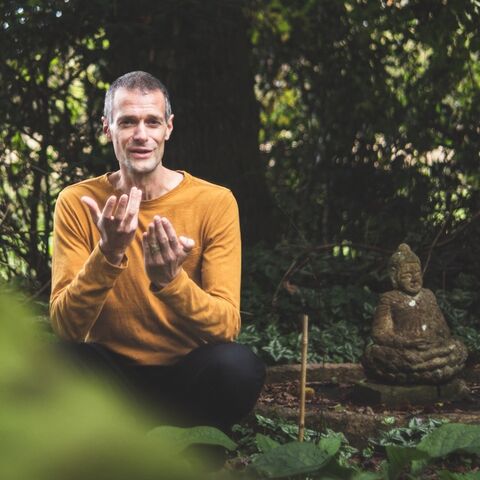
This is Josh Stippold of integratingpresence.
Com and today I have with me me,
Danny De Novo.
Is that how you say your name?
Danny De Novo.
That's right.
Yep.
How's it going?
Danny?
Is it okay for you,
Danny too?
Oh,
Absolutely.
Sure.
It's going great.
I'm having a great day.
How about you?
Cool.
It's it's,
It's a lovely here.
I've got to walk out on the Katie trail.
It's this big old railroad trail.
They've turned into a recreation trail along the Missouri river today.
So I walked to a few things today.
Other appointments I have,
It's a lovely day here.
Yes.
Sounds really nice.
And I've just literally talked to you for like probably under five minutes now,
Even though I've checked out some of your work online.
So I'm going to toss it back to you.
Who are you and what do you do?
I'm Danny De Novo.
I'm a lawyer turned happiness coach and now TV happiness expert.
And my story is a little unusual in that I had a couple bouts with,
I'd say unhappiness.
I was definitely the experts in unhappiness for a long time before being the expert in happiness.
So I had,
You know,
Some issues with depression growing up.
It probably started around the age of 14.
And,
Um,
I thought there was something wrong medically because I just wasn't interested in the things that I had been interested in and didn't really feel like it achieving the way that I used to.
I thought it was sick.
And so I begged my parents to take me to the doctor and they kind of,
You know,
Didn't see anything wrong.
So they waited and then I finally went,
Of course,
All the tests came back fine.
And somebody finally said after about a year,
Why don't you sit down with somebody?
And so I sat down in an office with this woman and I told her what was going on.
And she just kind of paused and looked at me and she said,
Honey,
You're depressed.
And I said,
I,
I don't even know what that word means.
I don't know how I could be depressed.
I was 16 years old.
I went to a good school.
I lived in a nice neighborhood.
I grew up riding horses,
You know,
I had a good life and I knew that much.
I knew I had a lot to be grateful for.
I said,
You know,
I,
I don't,
I don't think you understand.
I don't have anything to be depressed about.
And she just looked at me again and said,
Honey,
You're depressed.
And I said,
Okay,
Well,
Maybe this is something I need to look at.
And the next thing I know,
I was on all kinds of medication and trying to find my way through high school.
Finally graduated,
Went to leave for college,
Did okay the first year and then went back for my second year and just totally crashed.
I was suicidal,
Couldn't function,
Couldn't get out of bed and ended up checking myself into a mental institution for the first time.
And you know,
That was a very eye-opening experience.
I was 19 years old and I'm sitting in a room in group therapy with these women who were going through divorce and who had lost children.
And I really had nothing to contribute to the conversation other than I just knew I didn't want to live anymore.
Went through my two weeks,
Got out,
Nothing had really changed,
Made it through the holidays for the sake of my family and tanked again and knew that,
You know,
This was it.
I knew that if I didn't come back out with other options that I wasn't going to make it.
And so I went to the head psychiatrist and I said,
Look,
This medication is not working.
We've tried everything.
I need a different option because I'm,
You know,
I'm not going to make it.
I won't be back again.
And,
You know,
I really don't want to do that to my family.
And they said,
Well,
The only other option that we have for you is electroshock therapy.
And I said,
Okay.
I mean,
What did I know again?
There was no one there advocating for me.
I didn't understand what was going on.
I just knew that I wanted to get better.
I didn't want to be the young girl in the psych ward,
You know,
And I wanted to get on with my life if I wasn't going to end my life.
So I said,
Okay.
And the next thing I know,
They're willing me into the secret parts of the mental institution.
And it's,
You know,
Like the bat cave and you go through these crazy big doors and then inside it's like Frankenstein's laboratory with all these dials and gadgets going off.
And there was one woman,
She handed me this medicine cup and there were two pills in it.
She said,
Here,
Take this without any water.
And I was like,
I'm so done with medication.
I really just don't want to play this game anymore.
She said,
No,
No,
No,
It's Tylenol.
Trust me.
You'll be glad you took it later.
And there was just something that's hold of her voice.
I said,
Okay.
So I took the pills and they strapped me down to this table.
And as my head went back and they strapped my head down,
I saw this really tall man coming from behind me with these two giant probes.
And then everything went black.
And when I woke up,
I just had this headache.
I felt like I'd been hit in the head of the sledgehammer and I knew what the Tylenol was for.
So I went through these treatments repetitively for a number of weeks.
And then one day I was sitting at dinner and my brother who was younger than me started telling a story.
And it was a story about he and I growing up together,
Riding our horses.
And it was obviously something very important to him.
And it was a big deal.
And he's going through the story with all of this detail and he can see this blank look on my face.
I just can't remember anything he's talking about.
And he started to get upset because it was obviously very important to him and he couldn't understand how I couldn't remember any part of it.
And so I saw the fear in his face and I just started faking it.
I was like,
Oh yeah.
And we did this and then that.
And he was like,
Yeah,
Now you remember.
Right.
And I said,
Oh yeah,
Sure.
But then I went downstairs and I started crying because I realized as I started to think about it,
I had no recollection of my childhood.
I couldn't remember any sort of detail.
It was just a race.
And that's when I got really scared.
And so I went back for my next treatment.
I said,
You know what?
I think it's working.
I'm okay.
I don't need to do this anymore.
And they said,
Okay,
We'll prove it.
You know,
Do the things that you need to do.
So I got back into school and I got a job and I did all this other stuff.
And I started faking,
Not being depressed because physically I couldn't take it anymore.
Emotionally,
I couldn't take it anymore.
I just needed room to breathe and figure out what was going on.
And so I did what I was supposed to do.
I went back to school.
I graduated.
I ended up going to law school,
Graduated that,
Passed the bar exam.
And I was like,
Okay,
I guess I'm just going to be like everyone else.
I bought a house and I got married and I was functioning.
I was paying the bills and going to work every day and doing the things I needed to do and cleaning the house,
But I was miserable.
And I didn't realize the extent of that misery until my daughter was born.
And I was,
Luckily I really loved being a mom.
One day I was making dinner and I was stirring a pot on the stove and she's sitting on the floor and she's got her little play bowls and spoons.
And she looks up at me with her big brown eyes and she starts mimicking me.
And,
You know,
She was my first child.
I'd never seen anything like that before.
I thought it was the coolest thing.
Yeah,
You're like a little human.
And I said,
Yeah,
Just like mommy.
And then I almost threw up and fainted on top of her because I realized she was copying everything that I was doing.
And I was teaching her how to live a very lonely and depressed and unfulfilled life.
So I made the decision right then and there,
That was it.
I was going to learn everything there was about happiness because I was going to teach my daughter how to be happy no matter what.
I didn't think I could be happy because I just didn't think I was wired that way,
But she was not going to go through what I went through.
Right.
So I started reading philosophy and studying with gurus and personal development people and spirituality,
Everything I could get my hands on.
I started compiling all of this information.
And then when I started implementing it,
My life changed very rapidly and I figured out I could be happy.
And if I could be happy,
Then I was like,
Okay,
Maybe I can teach other people how to do this too,
Because I see a lot of people out there suffering and we don't need to be doing that needlessly.
So that's how I became the happiness coach.
And it's a beautiful title and thanks for sharing your story.
It's so it's inspiring as well.
So I guess the next thing that comes to mind here obviously is what have you learned about happiness?
You know,
This is a big inspiration thing for me too,
Because I follow even though I wouldn't consider myself a Buddhist,
I've studied Buddhist teachings and I do Buddhist practices as well.
And you know,
One of the things is peace is the highest happiness.
The whole practice and path is for our long-term well-being and happiness and the long-term well-being and happiness of others.
So yeah,
That's a huge part of it.
So I would just,
If we could just jump in here and what do you,
Maybe what do you feel is kind of the most overarching thing to mention about happiness?
I guess that applies to the most people,
If that's an entry point here,
You know,
Or just in general some things that you feel are really important on this topic.
I think when it comes to happiness,
You have to learn to be really honest with yourself.
Honest,
You know,
Pushing the limits of honesty with yourself always going internally,
Redirecting that honesty,
Really looking at things from different viewpoints within yourself,
Right?
Because if things aren't jiving in your life,
It's probably because you're lying to yourself or not allowing yourself to see something that you need to see.
And so the better you get at sort of critiquing yourself without,
You know,
Being harshly judgmental in any way,
Right?
Because it's not about tearing yourself down.
It's just about admitting maybe I am misperceiving this or my perception of this is,
You know,
Counterintuitive to what I really want out of life or the way that I want to feel about life.
And so when you can be that honest about yourself and really pay attention to those inner voices that are telling you the truth,
Then happiness becomes a lot easier.
It's not always easy to hear those answers and it's very hard to be brave enough to act upon them at times,
But as you do it,
You get better at it.
It becomes like a muscle that you can flex.
It's just easier because you're used to doing it.
And the more you do it,
You have more confidence in yourself and the more confidence you have,
The braver you get.
And so it takes on this own momentum,
But if you're not really allowing yourself to be honest about what you want,
The way that you're going about getting it,
Or,
You know,
How you're feeling in any given moment,
Then it's going to be very difficult to sustain any sort of happiness over time.
Big time,
Hugely important.
And you know what I started doing this,
I love you practice,
Where you just put your hand on your heart and say,
I love you.
But it's just,
It just felt sappy,
You know,
It didn't feel natural and it's just felt kind of cheesy and corny.
And just admitting that is honest.
And that's a form of self-love in itself.
You know,
It takes time to get over these things because,
You know,
Number one,
You're not used to it.
It feels like you're lying to yourself at times,
Right?
A lot of people who start affirmations or start doing self-image work,
Right?
I'm I feel like I'm lying to myself.
Yeah,
You do at the beginning and that's being honest too,
But it's about the repetition of putting that into your system over and over again until again,
Those little moments of confidence start to pop in and you start believing what you're seeing,
Right?
If you're repetitively telling yourself negative,
Then you're going to keep getting the negative.
But if you start doing the repetitiveness of positivity that will add up over time,
But you've got to be patient with it.
You've got to allow it to occur.
It's consistency.
That's the key.
Yeah.
And the way I look at affirmations is,
Okay,
Well,
This is where I'm aiming towards.
This is an aspiration,
You know,
It's,
It might not be here now and I'm not going to fool myself that,
You know,
It might not be that way.
However,
I can see where the benefit is of once I apply my mind and energy to this,
Because what we pay attention to,
We give energy,
Right?
And so that way I kind of address that paradox of,
Oh,
Well,
Is it,
Am I being honest with myself?
And,
But also,
Yeah,
Aiming towards that.
And that repetition is really important too.
And the self-talk,
You know,
When folks are,
Because we,
And tell people,
You know,
A big part of my path is meditation.
And that's what a lot of people,
One of the first things they notice when they sit down and meditate,
How out of control crazy the mind is,
You know,
And all the things that we kind of say to ourselves and say about other people all day long,
Without even really realizing it much.
Right.
Right.
Well,
That's repetitive in and of itself,
Right.
Because it's constantly going and it's on autopilot,
Which is even more damaging because you don't realize how many hits your heart and your subconscious are taking throughout the day.
Right.
One of the people I studied with was Bob Proctor.
And when I started working with Bob,
I couldn't tell that story that I told you at the beginning,
I was so ashamed of everything that had happened to me.
I wanted to sweep it under the rug and pretend like it never happened.
And I remember going up to him and saying,
Bob,
How do you get rid of the shame?
And he just held both sides of my face and looked at me and he said,
Honey,
You just do.
And I just sort of,
I just shook my head and I like in agreement,
Like I knew there was something there and what he was saying,
But I didn't get it.
Right.
And so I just shook my head and I turned to leave and he kind of redirected me back.
And he's like,
Look,
That's not what you want to hear right now.
Right.
He was like,
You want a quick fix for this,
But there isn't,
He was like,
It took you a long time to develop this belief about yourself.
And so now you've got to change that belief.
And he had,
Yeah,
Yeah.
He had me sit down and he had me write out a hundred times a day exactly what he wanted me to say to myself.
And I committed to it because it was Bob.
So I said,
Yes.
And he said,
For 90 days,
This is what you're doing.
Right.
And I felt like I was lying to myself.
I couldn't tell you.
And then I remember it clear as day.
I still have the notebook day 66.
I sat down to write it and it felt different.
It didn't feel like I was lying to myself anymore.
I didn't necessarily totally believe it,
But it wasn't something that I couldn't grasp as part of my being anymore.
And it's amazing how,
When you are consistent with yourself with those messages,
I mean,
66 days is not a long period of time considering,
You know,
A lifetime of everything you're doing yourself.
Well,
It is.
And it's,
Um,
There's a technique of repeat after me that Matt Kahn uses,
And I probably mentioned him too much,
But this,
Like the unconscious mind really can't tell the difference if someone else is saying it,
Or if we're saying it.
So he,
His intuitive skills,
He'll have repeat after me.
And then you're saying the same thing as a long,
And it rewrites the subconscious mind,
The unconscious mind.
And it is,
It's a type of,
Um,
Uh,
Kind of unlearning and then a reprogramming.
Right.
Yes.
And it's,
Um,
That the shame,
Blame and guilt is huge in our society.
Okay.
So I,
I see the,
There is,
Um,
The way I see it is part of that is there as a protector to,
Um,
To,
To not make the same mistakes and not hurt ourselves again and hurt other people when it gets to be an issue is when we don't see that and we take it on personally and that we can,
You know,
We can't heal from it and we take it on and as an identity.
And for me,
It's been really helpful.
I did talk on this too about forgiveness,
Right?
Three ways of forgiveness.
Uh,
And first off,
The first starting point is allowing ourselves not to forgive.
Uh,
I think that starting there to be,
To,
To allow that,
And some people are already there,
Right?
They won't consider forgiving for a long,
Long time.
Okay.
So they're already there.
Some other people do it out of more shame and blame and get,
Oh,
I should forgive.
I should do that.
You know?
Right.
So allowing that,
And then,
Um,
Being maybe just starting where I,
Uh,
Maybe sometime in the future,
When I'm ready,
I might start considering,
Uh,
Entertaining the possibility of forgiveness and three ways to,
Um,
You ask for forgiveness from the other person,
Although that obviously doesn't have to be done because,
Um,
You know,
Sometimes that's just not a practical,
Uh,
Way to be in that situation,
Right.
Or to do that.
Or sometimes we,
We,
We don't want to do that for other reasons.
So it's not an overarching statement,
But then,
So ask the other person to forgive me and then I will forgive them for anything I've done.
And this is both knowingly and unknowingly.
And then of course,
Self-forgiveness I came up in a Christian tradition and we weren't really taught about self-forgiveness at least that way.
Right.
But so that was such a profound revelation.
When I heard that I could forgive myself,
I was like,
Wow.
And for me,
It's not really about the other person.
It's like carrying around the scrudge,
This burden that doesn't need to be carried around anymore.
For some reason,
It's like,
Um,
The analogy given often is like picking up a hot coal and wanting to throw it at the other person.
Yeah.
So it's like sitting down that burden that no longer needs to be carried.
Um,
So I guess,
How do you feel about forgiveness?
Cause I know people have a varying teachings and opinions about this.
Uh,
It hasn't been helpful on your journey.
Um,
How do you approach that or not approach that?
I guess.
I think forgiveness is huge.
I mean,
The way to happiness and everything you want in life is through vulnerability,
Right?
Honesty is one of those things.
Forgiveness is another.
And I think people get caught up in this whole idea of forgiveness is having to feel sorry,
Or,
Or there's some being some aspect of that along with it.
But when you look at forgiveness as just letting go,
It's just putting something down that you no longer want to carry with you.
Then it doesn't really carry the weight that it used to.
It becomes much simpler.
It's just,
You know what?
I don't want this with me anymore.
So I'm going to put it over here and I'm going to leave it there.
Kind of a thing.
That's all you have to do with it.
And forgiveness too,
When you're,
When you're carrying around the grudge energy or that shame,
Or even that guilt,
Uh,
From things that have happened throughout life,
Right?
It's,
It's very stagnant energy.
When you,
You know,
When you think of forgiveness,
Everyone wants to touch their heart and that's because that's where it kind of where it sort of resides,
Right?
It sort of hangs around like a cloud in that area.
And the more that we do that,
It becomes a thicker layer and a thicker layer when you're,
When you're happy,
When you're in this sustainable state of peace and happiness,
Which is how I kind of define happiness anyway,
Right?
It's the sustainable,
Joyous,
It's not up and down.
It's just kind of here,
Right?
I just feel good all the time.
When you're there,
You're able to process emotion,
Right?
And it's,
The good comes in and it's great and you live in the moment and,
But then you come back here and then when the bad happens,
The same thing comes.
It's about getting back here as quickly as possible.
When it comes to,
For things that have happened to us,
Where we feel like we have to forgive,
We sort of shut down that flow of energy.
We stop it and then it gets stuck in this,
In this process of,
Of processing of emotion can't happen anymore.
And it just builds upon itself and builds upon itself until you bottleneck so tightly that you can't really allow anything in and out of your heart.
And then,
You know,
That's when you're saying mean things to yourself and others.
That's when you're second guessing all of your decision.
That's when you live in fear and anxiety,
Because,
You know,
You can't get rid of the extraneous stuff that's no longer serving you.
It's all just sitting here,
Sitting here,
Stagnant.
Very important too.
I know early on in my journey,
It was just a lot of clearing work,
You know,
Sitting down in meditation and just weeping,
You know,
Now I'm not afraid to admit that because it's just letting those tears water the heart,
All these things I had put off and didn't address.
And then they were coming up naturally.
They were surfacing to be seen,
Sure,
Felt and released.
Right.
And then this important point you make about vulnerability,
It seems counterintuitive,
Especially starting off,
Right?
If we're vulnerable,
Then we can get hurt.
And then how can we love if we get hurt?
Right.
But it's kind of the opposite that we can't really connect on deeper and deeper levels with anyone or even ourselves if we don't have some degree of vulnerability.
Right.
And it's not to say that we still can't have boundaries or,
You know,
Have street smart spirituality,
But continually putting this armor on,
Right,
This armoring ourselves for,
You know,
Life or whatever.
It's just you can't really connect with anybody beyond a really superficial surface level.
And one more other thing I've learned that people can only meet us as deeply as they've met themselves.
So when I go in and kind of had this expectation that someone's going to be able to,
You know,
Certain people are going to be able to meet me deeply where I'm at,
It's not necessarily the case.
It's people can only meet us as deeply as they've met themselves.
So that's helped me.
No,
I'd like to hear how your take on vulnerability and how you approach this and your clients too and your coaching work.
And maybe you can give us some if you'd like to,
I don't know if it would work in with this example,
But if you just maybe like to talk about how you work with folks or what someone might need to know if they take you on as a happiness coach.
Yeah.
So the coaching aspect I think is a little bit different.
Typically,
People go into coaches and they kind of have a syllabus in front of them,
Or they have an idea of the steps that they're going to go through.
I like to take everything on as sort of a one-off,
Right?
I want to come in with a discovery session,
If you will.
And I kind of hate that term because everyone uses it,
But it's more of just a sit down and let me hear what you want to tell me,
Right?
And every time I go into that session,
I kind of go back to that story that I told you about the first time I sat down with a woman who was like,
Honey,
You're depressed,
Right?
She heard my story.
She heard everything that was going on,
But she was reading the subtext.
She was reading between the lines and that's kind of how she formulated her opinion of things.
And that's kind of where I think I come in.
You come in,
You tell me what's going on,
What you want out of life,
Why you think you're not getting it.
And then I typically see something else that you don't see as an outsider,
Someone who does this a lot,
Right?
I kind of see that where those barriers are,
Right?
You tell me a lot about who you are and who you aren't by telling me your story.
And where are the vulnerabilities and where have you closed off?
And typically where you've closed off is where the issues are arising.
So I find a lot often with men,
They'll come and they'll think there's something missing.
They've achieved all these things that they wanted to achieve.
They have the family,
They have what they thought life was all about,
But they feel like there's something missing and they can't really put their finger on it.
Typically there's some sort of spiritual connection that's been lost.
And getting your typical American male to open up about a spirituality practice is difficult.
But when you can phrase it in a different way and sort of make it less about vulnerability and more about them being honest with themselves,
Which is the way that I like to go about it.
And typically we can get to the heart of the matter pretty quickly,
Right?
So when you're coaching with me,
It's really about where I see things being bottlenecked and trying to open up those doors.
And so I typically am met with a lot of resistance when I start coaching someone because I want to get there quickly for you.
I want you to get the results that you need.
And unfortunately it requires a little bit of faith in me and you being a little bit brave to kind of knock down some of those doors right at the beginning.
And it's certainly not easy,
Right?
I try to make it as easy as it can be.
But when you want those huge breakthroughs,
You've got to be willing to understand that there's going to be some pain involved as you start to release these ideas and these beliefs that you've held and this past trauma that you don't want to put down and forgiving yourself and all of that good stuff,
Right?
So the coaching is,
You know,
I'm kind of all over the place.
Again,
I spent a lot of time studying this stuff.
I studied philosophy.
I studied religion.
I studied the neuroscience behind things.
And so I have this huge arsenal of stuff and we just keep trying things to see what will work for you,
Right?
It was the same thing for me because there's a million people out there saying the same thing,
Right?
Everyone,
There's only so much information really when you come to it.
There's only so many ways to say it,
But everyone has a new spin or a way of explaining it.
And so this person says it and you're like,
Yeah,
I just don't get it.
But then this person says it but then this person says it and you're like,
Oh my goodness,
That makes so much sense.
That's exactly how I'm going to do it,
Right?
I like to do that.
I like to keep feeling you out and finding ways to make it click for you so that,
Yeah,
Number one,
It does click.
And number two,
You can use it practically after you're leaving me in your life to continue to grow and see benefit from it.
You know,
There's so many important things here.
That's my approach too.
You know,
It's like you meet people where they're at.
And that was the mastery of the historical Buddha is he knew all these different walks of life and he could go into their world and use metaphors and analogies and examples of where they were at and what they did.
He knew their level,
Where they were at and can give them the highest level that they could handle at the time,
Right?
And tailored specifically to their thing.
So that's being,
Having an intuitive skills in this line of work,
I find it very helpful too.
One of the big questions I like on this is let's say you had all the money and all the resources in the world,
Never had to do another thing.
You know,
It was everything that would be no issue.
What would you do then,
Right?
What would you love to do?
What would you spend your time doing?
And then,
You know,
A lot of people will have,
They'll know right away.
And then the next question is,
Well,
Why don't you do that right now?
What's in the way of making that happen right now?
And so then going from there,
Right?
And as far as the getting guys to open up about spiritual practices and things like that,
This is interesting too.
I've thought of different approaches and it depends on like where I refer to people depending on kind of their temperament and their outlook and where they're at and stuff.
But one of the ones is just,
You know,
Especially maybe for tough guys,
I was thinking about this earlier,
Just sitting down in complete silence,
You think you can achieve all this stuff,
Well,
Just sit in a room by yourself in complete silence and try not,
I mean,
I don't know if I would ever suggest this,
But I just feel compelled to say this,
And sit still for two hours in silence and try not to move and see what happens,
See what kind of pain comes up.
And this is not to be not compassionate too.
I'm not,
Don't expect anybody to,
You know,
Completely do this,
Although some people might be able to.
And it's facing that pain too,
Looking at straight in the face and coming face to face with it instead of bargaining or all these other tactics we use to try to escape the pain.
And,
You know,
There's so many different ways to address it,
But that's one of the ways so many people are doing so many different coping mechanisms just because they're not,
They're not they don't want to face pain.
And I get it,
You know,
Things can be so overwhelming sometimes that it can become too much.
So we need to have other tactics and things to divert from that.
But for me and my path,
Being facing that pain,
You know,
Looking at straight in the eye and doing it with kindness and compassion that you're able to and feeling and healing through it.
Yeah.
Yeah.
I mean,
When you when you are escaping it,
You're just making it worse for yourself,
Right?
That's what we do.
We we put it away for later,
But then we don't go back to it.
And so it just builds upon itself.
And then that's where the wall and the armor come from.
It's really hard to sit in that discomfort in that pain,
Right?
Really difficult.
But if you allow yourself to do it,
What you'll find is it doesn't last as long as you think it might.
It lasts longer than you think it might.
It lasts almost a lifetime if you keep pushing it away and having it retriggered and everything else.
But if you can sit with it,
You know,
A few minutes later,
You're going to kind of feel a little bit better.
And then maybe 10 minutes later,
It will sort of dissipate if you allow it to just kind of come through.
But if you're going to stash it somewhere or ignore it or redirect it or whatever you're going to do with it,
Then every time something triggers it,
It's going to come back and then you're going to add to it the next time you're hurt or more pain comes onto it.
It just becomes this monster instead of just allowing yourself to be uncomfortable at that period of time.
Face it,
Let it come through,
You know,
Again,
Don't judge it.
You don't even have to think about it.
You don't have to figure out where it's coming from.
You don't have to figure out why it's there.
You just have to acknowledge that it's there and let it pass.
That's all you have to do with it.
Feel it to heal it.
That's right.
And yeah,
We're not feeling it because we're,
You know,
Into getting off on pain or anything,
But it's to feel it to heal it.
And you said it beautifully,
You know,
And so many people are like crying out for their pain to be acknowledged.
So many people because they don't know how to do it themselves.
Right.
And,
You know,
The other thing is,
You know,
I think we're maybe ahead of the game,
So to speak in this,
Because you,
All these people with tons and tons of money,
Wonderful people,
You know,
Some of them do so much good,
But eventually they're going to come to a place,
Whether in this lifetime or others,
If you're into that kind of thing where,
You know,
They've achieved everything,
They have everything they society told them they would be to be happy.
And there's just so only so much satisfaction that can bring until they bring them to a spiritual journey,
Right.
To,
To address things beyond this,
This superficial level,
No matter how luxurious or satisfying it can be on the material level,
Right.
It cannot satisfy the way this higher happiness that we're talking about can.
It doesn't.
And those people tend to be the ones who sort of punish themselves too.
If you watch,
They won't let themselves have certain things in life that would make them happy.
They,
They put up walls to that.
They create their own barriers to it,
Right.
There's,
They feel like that,
That somehow that needs to be in place.
This idea of,
You know,
We have to be suffering if,
If we're going to be human kind of a thing.
And yeah,
So yeah,
They're lacking that spirituality,
But they're at the same time,
They're doing stuff to themselves to,
To keep that pain alive because you start to identify with it.
It becomes part of who you are.
And I think that's part of the forgiveness is putting that down,
Right.
I don't have to be this way.
Everything can be wonderful in my lifetime and I am allowed to enjoy it at the same time.
Yeah.
The devil,
You know,
Right.
Is better than the devil.
You don't know,
As they say.
So yeah,
It's in using that,
The,
The,
And then the suffering is the psychological thing on top of the pain.
So all of us will experience pain in life.
It's just when we think we shouldn't experience it,
Ever.
Right.
As when,
When it gets the psych,
Like the second arrow getting hit with the second arrow and that's right.
And so we can learn from that in order to end it because,
You know,
It's,
That's,
It's kind of a regressed inverted inversion to think what you were talking about of,
Continuing like a self-inflicted pain type of thing.
Right.
Right.
That's where the honesty comes in too,
Because you have to pay attention.
If you're resisting anything,
You have to,
If you're resisting anything,
Then it's not flowing,
Right.
You're stopping it.
You're not accepting.
And that's when things around you in life shut down.
And if you resist hard enough,
Everything will shut down.
Right.
So the resistance is,
You know,
It comes in a lot of different forms.
That's where you've got to be really cognizant of that self talk.
What are you saying every day that is in somehow resistance?
If you're saying it shouldn't be this way,
That is resisting,
Right?
Well,
It is this way.
So process it how and then let's work towards whatever we need to do to change it for you.
Yeah,
That's,
It's beautifully put,
You know,
It's,
It's,
It is like this because it's happening right now,
You know that's the way it is.
It's like this right now,
Of course.
Well,
Danny,
I think this might be a good place to start wrapping it up.
If you want to leave people with whatever you'd like to leave a message or whatever,
And also tell people about any events you have coming up.
We talked about your coaching courses you offer social media,
Website,
Podcast,
Whatever you'd like.
Sure.
You can find everything about me at Danny de novo.
Com.
So I do one-on-one coaching.
I do group coaching.
I do some corporate stuff,
But I also have some online programs that you can check out that are easy.
You can do on your own time.
Whenever you feel the need to get a little extra boost in that happiness journey of yours,
My books are there,
But you can also find them on amazon.
Com on social media.
I'm at Danny de novo,
Everywhere that you want to look,
Feel free to message me and reach out.
I'd love to hear your thoughts on this or just in happiness in general.
And you'll see me a lot on TV.
I have all my clips up on YouTube as well as on my site.
So what I will leave you with,
I think is just that,
You know,
Again,
As I said,
There was a time in my life when I really didn't believe that I could be happy.
I didn't think I was wired for it,
But we're all wired for it and we all are deserving of it.
And so if there's one strategy or one path that you're taking that just doesn't seem to be working for you,
Don't get discouraged.
There is a way.
Keep seeking out this information.
Something will click.
It will lead you to the next place.
Have a little bit of faith in yourself and in the journey.
And I promise you that you'll get there.
Beautifully said.
Yes.
And you deserve more love,
Not less,
Right?
We deserve more happiness,
Not less.
So with that,
Thanks for joining me today.
And may all beings everywhere be blessed with safety,
Health,
Happiness,
Ease,
And may all beings realize awaken and be awaken.
May all beings everywhere realize awakening and be free.