Hey Wholeness,
Welcome.
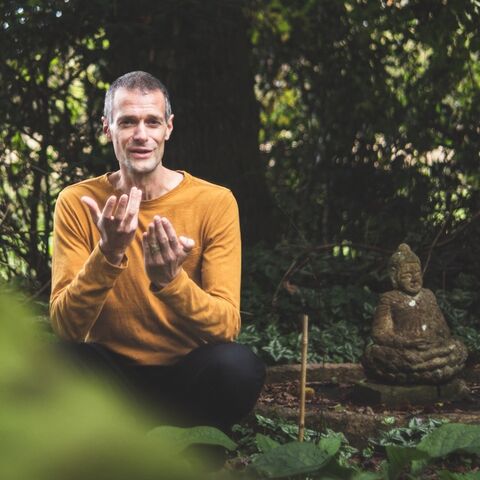
This is Josh of Integrating Presence and today I'm not yet joined by Wendy Nash.
This one is called the five ethical precepts.
I'll just go ahead and read the description I have here.
In this 42nd installment on the ongoing series,
Live series with Wendy Nash,
We continue our inquiry into meditation practice,
Both on and off the cushion,
Turning attention to our ethical foundation of the five precepts,
Training to refrain from harming,
Dishonesty,
Untruthfulness,
Taking,
Receiving what's not given,
Thieving,
Sexual energy,
Misconduct,
And intoxicants.
In our last Q&A,
Wendy mentioned that a few years ago,
I was really earnest.
I've always been a bit of a goody-two-shoes type of person.
I can get pretty earnest and pretty serious about being good,
Like,
We've got to be good,
Folks.
We can't just be out having fun.
We've got to be good.
Wendy's statement kind of raised an eyebrow for me.
In this Q&A on the five precepts and ethics,
We plan to unpack this comment of Wendy's,
Along with exploring directly seeing and knowing the purpose and benefits of precepts.
And here's Wendy.
Hey,
You're on.
So and we had a time so different so i'm very sorry about that sorry everybody for being a little bit late it's okay and like i i just got done saying first we've we changed the original time and then i made a mistake in the in the description putting it at 8 30 instead of 8 central european so no big deal so i was right in the middle of reading the the intro and uh i'll just back up just a little bit and and won't reread the five precepts i'm assuming most people are familiar with those,
But we can maybe get into,
We'll get into each individual one.
Anyway,
So I said in our last,
Oh,
By the way,
The standard formalities here,
Sorry.
Wendy,
What's going on and how's it going where you're at today?
Oh,
M.
Reid is on the call.
Great to see you here.
Likewise.
You're always fantastic to have.
It means so much,
Isn't it?
When somebody,
You know,
Regularly joins us now,
Even though we're late,
We deserve anything.
So it's always just such a joy to have M.
Reid here with us.
What's going on?
Well,
I spoke at a parliamentary inquiry yesterday.
And so as a witness,
You know,
It's like,
I don't know what you call it in maybe the US,
But you have some legislation and then you write a submission and then you might get called back if the committee decides to be a witness,
But I was a witness and so there's like the left wing and the right wing on the political spectrum and they're playing tit for tat through me it was just like oh wow this is really awful interesting from a Dharma perspective.
How do you navigate that space,
How do you remain loving and kind and you know I've started to really think about how people are really trapped in their minds and this is where we're going wrong it's like and we're all trapped in our minds because I was like whoa and I was you know on my way home I was just going talk to me about happy chickens to my friend I just need something peace and love something and Yeah,
Because I needed to feel like human beings were around me and I just happened to have been to a very,
Very senior politician as I walked out of the building.
And I thought,
I do not like this man.
I know a lot of politicians,
So they're not all like that.
But it's just like,
Ah.
It's hard to to not hate them or really dislike them and see them as human.
You know,
This is the dilemma.
This is what we're working with.
So that's what's going on for me,
Josh.
Perhaps you want it.
It's it reminds me of that old Ram Dass,
The spiritual guru is no longer with us.
Before he died because of all the the president in America,
He had a picture of him on his altar because there was so much hate.
And he said he loved everything,
Everybody.
I mean,
That was his path.
It's a little bit.
We don't have time to go into that now.
But I know what you mean with this the policy.
It's almost like some of them feed on that hatred,
You know It's more to get attention and power Even it doesn't matter if it's bad,
You know Just to get all those eyeballs and attention and energy on them,
You know And this will fit perfectly into ethical precepts to you know,
So I think that's that's great.
And yes And I would just say the the political process a little bit different No parliament,
And it's interesting how you were so personally involved in this process.
Usually in America,
It's not like that.
In the Congress,
As far as I know.
But maybe for another time,
We'll see.
Well,
Cool.
Okay,
I'll jump back into this.
In our last Q&A,
Reading here again,
In our last Q&A,
Wendy mentioned that a few years ago,
I was really earnest.
I've always been a bit of a goody-two-shoes type of person.
I can get pretty earnest and pretty serious about being good.
We've got to be good folks.
He's gone.
Sorry about that everybody.
I don't know where he's gone.
I'm hoping he'll come back.
So have you ever found yourself being earnest?
And do you know what the word means?
So by the word earnest I see it as um that i'm i have this really strong need and desire to be good and so um i look at this phone because josh is gone i'm wondering if it's me who's gone so can anybody say something so that i Emery,
Can you just say something?
Here we are.
There we are.
Okay.
Was it me who went or you who went?
Oh,
That's the other thing.
I don't know.
But my connection on this island has been dropping off.
If it happens again,
Just well,
It will come back.
We just have to be patient.
It just takes a few seconds to come back on.
So Okay.
Keep going.
Okay.
Okay.
All right.
Uh,
And then how belonging self-deception and trust or self-confidence factor in and exploring unconscious distortions around views.
Like only this is what's best for me.
And,
Um,
This and this,
This and this,
And this needs to happen first for me to be okay,
Or things need to be a certain way and things,
Um,
Uh,
For things to be okay.
And of course,
How all this relates to meditation.
So that was a big mouthful there.
There's so much to explore.
We could probably dedicate an entire show to each one of these,
These five precepts of non-harming,
Refrain from dishonesty and untruthfulness,
Refrain from taking what's not given,
Not misusing sexual energy or sexual misconduct,
And refraining from intoxicants.
And I will just say,
Wendy,
You're,
I don't know if there's Your sound is okay,
But there was something you did last time that made even more crystal clear.
So I was just wondering about that.
Let me change my microphone.
Oh,
Is that what it is?
Okay.
That's probably what it is,
Because I was running late and I was like,
Quick,
Jump on.
That's okay.
So let me just check my settings.
Sure.
And while Wendy does that,
I will just say,
Start off by saying when it comes to precepts,
From my own personal experience.
I did not see the value of these before I it was too late basically and This is a training.
This is not like a thou shalt not This is a gradual training.
So it's really all based on Non-harming,
But we'll go into that because I have some friends that you know they're they're still hunters or you know that people are involved in and Warring now,
I guess and so throw it back to windy here Well,
Can you hear me?
Does the sound sound any different?
Because I can't see my microphone.
Let's just see.
Is that any different?
No,
But that's good enough,
Wendy.
I'll leave and I'll come back.
We're just here,
Like winging it.
Yes,
We are.
This is live in real time.
So Wendy will come back,
And with non-harming,
I'm okay.
Okay.
All right.
I don't think it's made any difference.
I don't know what it is.
It's like your software isn't picking it up.
Yeah,
It sounds a little bit better.
So I think this is definitely adequate.
The post-production usually fixes a lot of,
Or makes it even clearer.
So,
All right.
I apologize for the technical difficulty or the,
You know,
I guess maybe it's my perfectionism.
I don't know,
But this is,
This is,
This is sufficient.
The only one.
Oh,
No,
There it is.
Okay.
It's called something else.
My thing.
That's why I couldn't find it.
We got there.
We got there.
It's super.
All right.
Okay.
Sorry about that.
Sorry about that.
So I think,
You know,
We're talking about being earnest.
That's the fundamental thing rather than the precepts because I think if we get caught in the precepts,
I think that's actually where the problem is.
If I can be so bold.
Well,
Tell me what you mean by earnest to let's let's give a definition of this.
I think for me,
It's really serious about being good.
Yeah,
Yeah,
Yeah.
That to me is what it is.
I mean,
In Oscar Wilde's time,
The importance of being earnest was actually a reference.
So today we would use the term gay,
Which means homosexual.
So that's that shift.
It's exactly that same language shift.
So instead of saying homosexual,
We say gay.
Um So what with earnest is,
So what would be the,
So I don't.
The importance of being earnest,
That's what that was about.
So that's what that,
The importance of being earnest back in Oscar Wilde's day,
That's what it meant.
And then.
Oh yeah,
I guess.
Yeah.
So that's what that meant.
Yeah.
And,
But,
But today,
Well,
The way I use earnest is that I sort of had,
I didn't have a sense of humor.
I sort of felt like I had to live tightly within some ethical guideline,
What was good.
And I was always having this argument in my mind on always kind of feeling like hemmed in by the need to be really good to ensure that I was a good Buddhist or a good whatever.
But I think it depends on how joyful you are.
So joy is very,
Very,
What do you call it?
Antidotally,
In It antidotes earnestness.
And I just think so.
What would be.
.
.
It's like there's some element of fun.
You forget to have fun and it's all about being serious to have fun.
Like you can't laugh at yourself or you can't,
I don't know.
Emery,
You are here on the call.
How would you describe that as well?
I know I'd like to hear yours.
Yes,
Please.
Let me read this definition of earnest though.
Earnest is a meaning as an adjective.
It says,
When used as a descriptive word,
Earnest implies that someone is showing deep and sincere conviction.
Resulting from a sincere and intense conviction,
Not light,
Playful,
Or trivial,
She made an earnest effort to complete the project.
I think that's right,
But I think that there is the It's this element of intensity.
Doing something seriously or with full force.
Yes,
Yes.
And I think if you feel like you're always living within ethical guidelines.
So I thought it was very interesting that you went and you talked about the precepts because I wasn't talking about the precepts at all when I talked about it.
Yeah,
Yeah,
Yeah,
Yeah.
It just reminded me of that.
Yeah,
But that's right.
And I think that's the mistake.
And I think that would be,
If I may dare to put it forward on the counter,
Just,
You know,
As a flavor,
Could it be that you are very earnest because you immediately put the two together,
Whereas I go,
They're actually very different.
And it might be just because I'm Australian and whatever.
But to me,
OK,
How do you describe earnest?
You know,
Like I said,
I had to look it up.
I don't even know the seriousness.
Okay.
So my teacher mentions that we shouldn't take our suffering so seriously in a sense.
And what that means is that there's nothing super special about the way I suffer,
Right?
That there's millions of others that have suffered in the exact same way because a lot of times we want to cling on to,
Oh,
But this is my suffering.
You know,
This is my suffering.
Of how bad I've got it kind of thing,
You know what I mean?
But as far as I think taking our practice seriously,
We have to take something seriously,
Not ourselves.
I mean,
Yeah.
Now this is,
I think this righteousness,
You know,
Being overly righteous about something is maybe not the way to go,
You know,
But I think the danger is if we don't take anything seriously,
Then it turns into maybe a type of solipsism.
And then there's no really incentive to really think anything has any consequences.
I wonder about the slippery soap.
And the reason I come from this is because of the past way that I used to be in the world.
So I would imagine if I wasn't the kind of the way I was and the trouble I got into and the crash and burn style,
That maybe I wouldn't come out with a little more force towards in the situation that We seem like with the Epstein things,
You know with with that and all the corruption and things in the world Yeah,
But I do and at the on the other hand I see your your point of taking it too seriously and not being light-hearted and and Playful,
I think playfulness is great,
You know,
And I will I will agree I'm a little bit kind of stodgy,
You know I've got like this dramatic American background and I was raised Lutheran and we sat in church and we didn't Make a peep and you never expressed yourself like individually and then living in Denmark.
It's kind of,
You know,
Kind of the same thing where,
Um,
You know,
It,
It,
To me,
It's refreshing it from America though,
Where everybody's trying to stand out and get attention and have all the eyeballs on them.
But yeah.
So yeah,
We can,
We can explore this a little bit.
So if we want to go more in that direction,
Instead of the actual precepts themselves,
My D I just don't want the danger to be that we're not that they're disregarding that the value and importance of precepts either as a practice.
I mean,
It's just a way of relating and being in the world that's for my benefit and happiness.
And I noticed that since I've started doing these with a little bit more,
Um,
Just as a practice that it just seems so obvious to me now.
But yeah,
I also don't want to be like on a soapbox preaching to people,
You know,
I would like to see what people do here.
Um,
So I'll throw it back to you before I launch into something else here.
So what is it that I am describing?
I think often when we're in the Dharma centers and we come in and we start,
What energy would you call that?
Well,
There's so much right there are the people that are this strict Okay,
But this ties back to what you started about to begin with that a lot of our experience I find the most is a story about reality the narrative of what's happening instead of what's actually happening,
Right?
There's a story about what's happening and if the narrative is there so people have their own way of framing things in the story they tell about the way things are in the way things and should be,
You know?
And yeah,
So I think that's one big element.
And a lot of the work is just actually communicating with people to find out what that is,
Where they're at,
Where I'm at,
Where we're at,
And what we're doing here,
And how we go about it.
Know maybe.
So you know I guess I sort of thought about it because I came to Buddhism like a lot of people and meditation like a lot of people I was having a bad time in life somebody told me I should take it up so I did and I loved it And then I was trying to fit me and kind of who I was into this new persona.
I think there's something in that there.
And I,
So Emery has said,
Know thyself and be real,
True,
Full,
Authentic,
Full authenticity,
Living,
No emotional attachments of desire,
Et cetera,
Of being right,
Et cetera.
Seeing things as they are allows for what's needed,
Et cetera,
Not filling in narratives.
I think that fills in that.
But there is this trying to fit myself into it and I.
.
.
I sort of was very,
I guess a bit self-righteous in there.
And a bit good.
And bit try hard.
And they're sort of like a little bit intense and it's like a little bit frozen in the mind.
And so I found myself feeling like I had to be good in order to feel that I was okay.
And I dropped out a little bit here.
All right,
Okay,
You're on,
You're still here.
Oh,
He's gone.
So,
M.
Reid,
It's just you and me.
So just to continue with that,
So I went into the meditation centers 20 odd years ago and I tried to fit myself in and then I found myself being very serious about what it meant to fit in.
And I tried to do all the rules.
And I just realized that I didn't have a sense of humor anymore.
It didn't feel like life was light.
I just felt there was a certain heaviness and I've seen.
.
.
A lot of people and you know this is obviously joy is one of the big it's the four awakening factors and the Dalai Lama and Desmond Tutu They are both really big into joy.
Because I think.
Being earnest in the way that I imagine it.
Has this kind of this is the right way to be and it's demure and it's self-effacing in a kind of stultifying kind of way.
So that's what I meant.
Yeah.
And I get that.
And by the way,
It dropped out again for about 10,
15 seconds.
So I got most of it though.
And yeah,
That's,
This is a good thing.
So then I would ask Wendy,
Well,
What's,
What's the alternative then?
And,
Um,
Why,
I guess,
Why did you feel so like the,
The,
The rules?
Because yes,
When you're,
When you're actually in a meditation setting,
You know,
Or a monastery setting there,
There are rules just like everywhere in life.
Right.
I mean,
Some,
A little bit less rules and things like this.
But so yes,
And I will agree,
Obviously,
That they do seem way more confining than what we're used to in daily life.
And I think one of the reasons,
Not to necessarily defend,
It's so that everybody there can do an internal practice,
Because then that's more of what it's like instead of an outward facing practice where we're interacting So then we're kind of it's it's a container so we can go inward and do do inner work now However,
I would say at a monastery and depending on which one it is There's a little bit more challenging because people are not doing as much meditation and they're at they're interacting with each other and they're doing Tasks and lots of different other activities going on and meditation is only a small part of it So that's where it's it's real different.
And yes,
And I will agree I've seen the same things when he was talking about and I've felt that in myself as well.
So the,
I guess the way I,
Um,
The way I address that is,
Um,
Okay,
How,
Maybe how much of this is for the external,
Um,
And how much is it for internal,
Um,
How much of this is a temporary container for training and,
Um,
Will that in the long run lead to more welfare and happiness and,
And,
And wellbeing and,
And we can just say fun,
Right?
And how much is it going to detract from that?
So these are all questions.
So to take on a temporary more constraint and stodginess,
Maybe,
Or seriousness in order to then in the long run,
Then once released from this.
So these are all kind of really complicated things.
Or how much will that condition me to then continue that way where it actually contributes to what We don't want you know,
So yeah,
And how are we holding it all?
You know,
Are we are we taking?
The rules are there But do we have to take them up so seriously and so earnestly like you're saying or can we hold those lightly too and say okay?
Now it makes sense to adhere to this rule Hold it tightly or this this one.
Okay,
This rule doesn't even apply right now So I don't even need to be bothered with it.
So I don't know there's it's such a rich complex dynamic when we talk about these things.
And this is part of the training too.
I mean,
How could,
I think we can still have fun and not be too serious if we're non-harming,
You know,
We're not stealing.
I mean,
These are kind of basic things that I don't think interfere with,
That we don't have to take so seriously because some of them are really second nature for all of us,
You know,
And thieving and then also,
You know,
Alcohol intoxication.
That's that's a tough one.
That's the one I had the hardest one with our sexual energy and that's a kind of a gray area for a lot of people to you know,
What does that even mean but Yeah,
So I threw up plenty of stuff out there I,
You know,
One of the,
I don't know if I said before,
But totally being playful is good.
I think it's the playfulness that I think is really important.
You know,
It doesn't have to be so intense or something.
But with regards to addiction,
So Josh has popped off there.
Um.
.
.
It's been a while since I've gone to a monastery or a meditation center.
But what I've started to see is that instead of talking about giving up alcohol,
Cigarettes,
Drugs for the fifth precept,
But instead to talk about phone addiction and device addiction and app addiction.
So and that one,
I would have to say,
Is much harder because unlike alcohol,
Cigarettes,
Drugs,
You can put them down and still get on in society.
Whereas actually our phones and devices,
You cannot function very well without that.
Like it's a big thing and our seniors are very challenged by the fact because none of them are online.
It is,
And again,
Wendy,
I'm gonna switch over to speaking of devices,
I'm gonna switch over to a hotspot now because it dropped off.
So I missed your transition from what I said into devices.
So I missed that whole thing.
Precepts and addiction.
So I was just going,
I was winging it.
No,
No,
No,
It's great,
It's great.
No,
This is actually more important.
Yeah,
So I think this is it.
Yeah,
So I think this is it.
When you're really earnest,
It's like,
It's gotta work really perfectly.
And when you're more agile and more confident in your dharma,
Then I think then you can just kind of wing it.
And Mem Read says,
Is it a trap being earnest?
The point is,
I think it is a trap.
And I think you can think that you're very Buddhist.
And be a good Buddhist.
And I think that that's not being a Buddhist because it's about spontaneity.
You know,
I find the Dalai Lama tremendously inspiring.
Yeah,
So you said,
What were you saying right before Imri's comment?
It was about addiction to the devices and how we can't actually live in our worlds with our families and friends and people without a device.
We can't go anywhere.
It is,
But there was something between that and Imri's comment.
I'll come back here,
But yeah,
Start talking about this because this is what,
Oh,
No,
You talked about,
Well,
Authenticity and,
But talk about the devices.
Yeah,
What kind of advice do you have?
Oh,
No,
Well,
Hang on.
Now I got- I used to give advice about devices,
But I have long since given up because I'm an addict.
And I would like not to be.
But I think I have such a desperate love to be,
It's a desperate yearning to be loved that I'm like,
Somebody might like me and I get a full on dopamine hit.
And I think that's,
That's it.
You know,
At its base,
Addiction is not feeling confident that who I am is,
Is okay.
You know,
It's full ego experience.
And But we do want to feel loved and we want to feel safe and we want to feel like we don't have to carry everything and we want to feel like we're able to do things and act on the things that are important to us.
Yes.
And to me,
This is again,
This is where going inside.
I mean,
It's easier said than realized.
But if the reason I'm looking a lot of times for dopamine hits is because I think that I'm not worthy enough or that I'm not likable and that I need to get that kind of verification,
Something from outside myself.
Now,
It does seem like maybe a consolation prize that I go inside and say,
No,
There is inherent worth and worthiness and likeability.
And it's not dependent on anyone,
Anything from outside to get that,
You know,
That's easier said than done.
And it does feel like if I if that's only coming from within,
Then that's some kind of consolation.
But I really feel that bring it builds up a foundation and a reservoir.
So where I'm not so depleted and I'm looking outside of it for my for myself,
You know,
Of the things I found too with this device thing is actually going into retreat when getting that one of the hardest things I ever did was giving all electronic devices away for a month.
I mean absolutely insane how much I was dependent that I realized that I'm dependent on these for my sense of reality even you know it's really eye-opening and yeah it's a rude awakening really and but it was a really good really good challenging experience that that is very worthwhile because you see the depth of it do we don't really And until that kind of absence is totally there,
A hundred percent,
Don't really see the depths of how dependent we are on these things now.
Yeah.
Well,
We're made to feel that we are dependent.
I mean,
Humans have lived for millennia without devices.
I think Josh is about to drop off.
You hear,
Josh?
So I think we are,
You know,
Anyway,
Maybe the answer here isn't to talk about addiction and the five precepts.
The purpose is to talk about,
Let's not go into addiction,
Josh.
Yes,
Let's not.
Let's talk about Well,
Whatever we were supposed to be talking about.
Yes.
To go back to what you mentioned here,
And now I've got it.
We did talk about self-belonging,
Right?
How self-belonging and then self-confidence and trust factor in,
And how we can deceive ourselves too.
And this notion that I have to have this to be okay,
Basically.
This way before I can be okay.
Right?
And,
Um,
I have to have things in a certain way before they can be okay.
And this is,
This is the thing that can happen sometime for sure.
You're right.
Like I have to have it this way or it's not okay.
Yeah,
Actually,
It's very interesting because a friend of mine was talking about,
You know,
She's got this kind of on again,
Off again thing happening in a relationship.
And as you say that,
I'm going,
Oh,
She needs this relationship to feel good about herself.
And I keep trying to bring in other ideas and dharma and like not overtly but you know how to think about the mind and she's so stock.
In the way that,
No,
But this is how it is and this is what I need to do for me and that doesn't work for me and this sort of stuff.
And sorry,
But I'm a bit orange here with my light.
I actually got like a whole lot of orange paint.
I'm a little bit red.
We had a program called the Partridge Family in the 70s.
Yeah,
I remember.
And Susan Day,
One time she actually ate so many carrots that she turned orange and they couldn't get her rid of it.
So all the other actors in that episode had to make up all their orange.
Wow.
I didn't know that was a thing.
There you go.
So,
But it does,
I think there is this kind of,
At what point do we ask ourselves,
You know,
What do I need to feel whole?
Because I,
Before I met my partner,
I tried to be single and I was actually really miserable and I tried to not be attacked.
And that was when I was very earnest.
And I think.
I found I think there is something about as a good Buddhist I'm not supposed to yearn for connection and it was also to do with my own family history.
So it was like I actually got my family history of what it is to be a good person and shoehorn that into being Buddhist.
I shouldn't depend on anyone.
I should be able to do it on my own.
I should be independent as if we're not you know dependent arising doesn't exist and we're not all completely embedded in our relationships,
Completely nuts.
But actually I was just deeply hurt by my solitude and loneliness and I couldn't get out of that because I was sort of frozen.
And I think.
.
.
And so I think we can take on this Buddhist identity.
And the good meditator and we can go through spiritual bypassing and last week I had an insight where you know where you see yourself?
You see yourself outside yourself and you see yourself.
And I went to a work function in the evening and I was,
I'm going to let you know Josh,
I was a bit of a bitch because what happened is that my ego took over the sense of um sort of some sort of spirituality clarity thing and i was obnoxious and i gave some poor woman a bit of hell um but it was because actually i was really hurt by something that she had done and she and her friends had done so i was using this mind state for some kind of crazy wisdom excuse.
And I think that when you use your ego,
Through spirituality,
I think you can be like that.
And I think that that's the same with being this serious,
Earnest kind of Buddhist-y person.
So that's all I was wanting to say.
Wow,
It's so fascinating.
I would say I'm coming from a different place where my upbringing,
There was no kind of,
OK,
This is how you do it to be a good person.
I was constantly in trouble acting out.
I didn't have any role models.
The role models I had were not good to learn any kind.
I laughed at ethics.
I thought this is completely ridiculous.
Why should I be bothered with that?
That's for squares.
And that's not anything.
So it came from a more kind of self-destructive place of being to then crashing and burning and say,
Oh,
Wait a second.
This is not stupid.
This is how most people actually are when they're OK.
Actually leads to some well being,
You know,
And I didn't see it before I had no idea that that did actually you cause and effect basically,
Right,
The things I was doing,
Well,
No wonder.
So that's where I'm coming from.
So it's a little bit different.
And then now you go into the crazy wisdom thing.
And that's right.
And I think this is why it's so important for the four Brahma Viharas,
The four,
Like best ways for relate relating to everything basically.
And I think those are a great counterbalance to maybe some dryness and roughness of precept training,
You know,
Like being kind to ourselves that we fell down and we got it wrong again,
That we,
We harmed and we didn't mean to,
But,
Um,
So not beating ourselves up or then saying,
Okay,
I'm done with all this.
So I don't,
I don't care.
I'll just do whatever I want because it's too hard or it's ridiculous.
It's,
It's too much earnest.
Or whatever.
So this is where I think the Brahma Viharas come in here for relating to ourselves.
And I know what you mean.
We talked about this several times now about this hurt,
You know,
And there is a kind of a self-justification when it comes to hurt,
Because that is the kind of hardest thing to do,
You know?
And again,
When I can remember to do so when I'm hurt,
The Brahma Viharas,
You know,
Compassion,
Self-compassion right there,
You know,
And it's for me because didn't.
Oh,
Josh is about to drop off.
So before,
As Josh is going to drop off any second now,
I've actually been thinking about Dukkha and that another way of translating Dukkha is feeling hurt or feeling an ache.
And I think that when we feel hurt and we don't want to own it because we are distanced from it.
I think it can come,
I think we experience it as a kind of a,
I think it's where bypassing happens when we really are actually just incredibly hurt and we don't want to own that hurt.
And so,
And the other one is ache.
You know,
We have heartache.
And I think that that can also be just another word for dukkha.
I think it's a more embodied way of thinking about dukkha rather than as this abstract idea.
So that would be that.
And M Reid,
I would love your thoughts on this.
And I don't know if I said it last time we spoke,
But there you go.
I'm hoping Josh is going to be back.
Otherwise,
It's just you and me,
Babe,
Until the end of the session.
So,
Ah,
Here's Josh.
I'm back again.
Fantastic.
He's back.
We're almost,
Sorry about this,
Yeah.
What you missed,
What you missed is that,
And I don't know if I talked about it last time,
But I was talking about hurt and how I've sort of started substituting the word dukkha with the word hurt and ache because both of those have this kind of emotional,
Physical aspect to it.
So instead of using the word dukkha,
And I think if we use dukkha,
It becomes another bypass-y kind of thing.
I don't,
That's dukkha,
I don't do that.
But if we,
I found it really helpful when I start being like I was the other day with those,
That woman,
And I was a bit of a bitch,
And it was actually because I was hurt,
And I didn't want to acknowledge that,
And I had some crazy wisdom thing going on as well.
So I think we can get really caught about our idea of what it means to be enlightened because it was one of those enlightening experiences and the other thing about that experience is that I thought You know you can have any level of clarity you like but if you don't have compassion with it,
If you don't have the love and joy and spaciousness around it,
It's not worth anything.
It really isn't worth anything.
I don't care how much.
Okay,
That only dropped for a second.
Me too.
I was like,
And M.
Reid has gone too.
Oh no.
So you're so right,
Wendy.
This is really important.
And there's Lempore Semedo,
Ajahn Semedo.
It was a famous time when he said,
I don't want a bunch of bloody Buddhists,
Is what he said.
So I think this is not a problem,
But it points to a potential challenge like you've been going on.
About in a good way that I don't consider myself a Buddhist per se.
I study and practice this,
But it's been turned into a religion by the West and ism.
But if you look at it from what I understand,
It's just,
Here's someone that was,
This is what they did and they shared what they did.
And they said,
Check it out for yourself.
If it's helpful,
Look into it.
This is what I found.
You have to verify it for yourself and you have to Find your own way,
You know?
So that's what it's about.
And it's the best way of going about that.
Best meaning the optimal way.
And that includes the heart too.
So I think that is,
It can.
People that are really hardline Buddhists,
They can fall into the traps,
Wendy,
You're talking about.
So again,
Holding it lightly.
And eventually all that has to be let go of anyway,
Right?
The raft of Dhamma,
Once you've crossed the further shore,
You don't carry around that raft that took you there.
You put it down.
Eventually that will be what happens anyway.
So,
You take up what's helpful,
But don't hold it too tightly,
But also don't let go of it right in the middle of when you need it to keep from drowning either.
Now,
You also go into relationships too,
And yes,
This is where it's not so cut and dry,
Right?
Are you,
Yeah,
You're still there.
Okay,
You're here.
Yeah,
I'm here,
I'm here.
The attachment,
Right?
In Buddhism,
It's not like this attachment,
But then psychology has co-opted this and say,
You have to have healthy attachment styles,
You know?
So it's like,
Okay,
Yeah,
Whatever.
I just want to talk about healthy attachment styles.
That is not the same as attachment in Buddhism.
Exactly.
And this is where that language is.
It's very important.
You're right.
Yes,
Absolutely.
That's what I'm getting to.
One Tibetan called it stickiness and attachment is this like it's stuck.
And I'm like,
You know,
You've got that bit of sticky tape that's stuck to your foot or a gum or something.
And I think stickiness is kind of like clinging,
You know,
It doesn't work for me either.
But I think stickiness is like entanglement.
Entanglement.
Yes.
Stuck.
Exactly.
Attachment starts from a psychological sense is to do with the carer and the child.
I'm going to say mum and bub.
And what that means is you build this relationship of trust that when the bub wants something,
There is a sense that the mother will respond.
And just attends to the child.
So the bids for attention are attended to.
And when that is reliable enough the child gets a sense that,
Oh,
I can actually be safe.
And as the bub then turns into a toddler,
Then the toddler can wander off,
Go and explore,
Come back.
And that's a secure attachment.
So I just wanted to clarify that that is a completely different thing.
Absolutely.
It's so important because people start about getting questions in Buddha circles about attachment.
And it seems to be a lot of confusion between the psychological version of health healthy attachment,
That language,
And then,
You know,
Don't having attachments in Buddhism,
Which confuses a lot of people because of the similar language,
But it's not anywhere close to the same thing we're talking about.
However,
Now when we go back to relationships about,
And this ties into needs,
Right?
So in relationships,
There's needs,
Right?
So this is,
You know,
This is lots of fertile ground for work because what one might perceive as a need might,
Another might perceive as,
You know,
I don't know,
A demand or being to this and that and that,
Right?
That,
Okay,
So where,
Where,
You know,
Where do we,
How do we help each other meet each other's needs in relationship,
But also don't come along with all the other things like it being either a demand or like thinking that if I just get this,
This certain way that I want it and have to have it,
Then everything's going to be okay,
Which isn't a long-term thing for success either,
Because eventually there'll be situations where we won't get it how we want it.
And then how much is a want and how much is a need?
How much are we willing to compromise?
How much are we not?
Relationships are so rich for practice and experience.
How much similarity and harmony is there and how much is not?
How much is that as helpful and how much is not?
Yeah.
So when we when we talk about relationships,
It comes,
You know,
It comes to needs,
I think,
In compromising.
And then,
Of course,
It always comes back to right view.
You know,
What is the right view in this situation?
Is this going to lead towards more ache,
Pain or what did you call it?
Hurt.
Hurt?
We did talk about it because you completed pain and hurt last time.
I just remember it.
Yes,
You're right.
Thank you.
Yeah.
It's a key distinction.
That's right.
How much is this going to lead towards hurt and how much is is going to lead away from hurt.
So just about that,
About needs and wants,
Demands.
And I've thought about that for a long time because I was raised with that.
There's a difference between need and want.
So,
You could never want anything.
You had to have need.
No,
Sure you can.
Sure,
You can want.
No,
No,
No.
You couldn't have anything if you wanted it.
That's just greedy.
You can't possibly,
You know,
This is this very English kind of,
We can't.
And my parents,
My mother was born before,
Both my parents were born before.
And you know,
I was in England and there was a lot of deprivation in that time.
You just couldn't,
Do you need it or do you want it?
That's an important distinction back in those days.
Oh big time,
Oh yeah.
And so I grew up and I think this is where that where I have inculcated and shoehorned my own childhood need,
Which is I mustn't want anything.
And I kind of became this very good person who didn't want anything and who wouldn't would be very cautious about buying anything because,
Well,
It was a want.
It wasn't a need.
And if I bought a pretty skirt,
Well,
I was vain and all this sort of stuff.
And so I think there can be It was very interesting a couple of years ago,
I really got it,
Where I felt like I was denying myself.
And I realized that I I had actually,
Yeah,
Become full of denial.
Because I was actually really hurt.
And I think denial,
And it can be very hard and be very subtle.
Now,
M Reid has said,
Ernest,
What is it that you're looking,
Searching for,
Etc.
Best to drop the trap completely and know your why questions,
Etc.
And I personally,
Sorry Amrit,
I'm going to disagree with you on this one.
I personally dislike why questions because I think it doesn't lead us anything like that.
What?
Am I wearing a black jumper?
Why is the sky blue?
Like,
We can talk about it.
But I think it's better to ask what or how or where,
Something where you can give a sort of a proper answer.
So with regards to the denial question and want and need and what is sort of a bid for a connection with one person feels like a demand for the other,
For another.
Is I think a process of mindful enquiry of learning from mistakes.
So that woman that I met the other day at the professional event,
I just went,
Wow,
I was a bitch.
I cannot do that again.
That is,
I cannot do that.
I'll go,
You can do it once,
But you can't do it twice.
If I bump into her,
I would have to say,
Which I might do on Friday morning,
By the way,
Which I think today's Thursday.
I might see her tomorrow morning and I might have to say,
Whoa,
I was pretty unpleasant.
I'm sorry about that.
Like,
I owe you a big apology.
Oh,
Is it mean of me?
I think,
And then you end up in a repair and then you start to build these relationships,
But I think it's sort of,
Oh he's gone,
But I think there is something about how we can deny our own hurts shift that into a language of non-attachment.
And we don't even realize it,
Which is,
I think,
When you get further on,
I think it becomes more and more subtle,
The forms of attachment and hurt.
And I have yet to come across anyone personally in my circle that I can see close enough or teach or something,
Where I go,
Yeah,
They have no attachment.
Yeah,
So I would certainly love to hear you,
Emreed.
You know,
Whether you have any questions about that.
I would love to know that.
So what else can I share before Josh comes back?
Oh,
It's just me again.
I guess What it highlights that there's this dynamic question,
He's back.
Fantastic.
You missed all that.
It's okay.
I didn't on the replay.
And yeah,
I so apologize for this connection.
It's ridiculous.
This has been happening for the last month,
But the next show would be back in the United States.
So this is,
It won't be like this.
Apologize.
So I don't know what you want to say here,
But I want to,
While I'm back on and interrupting,
Intruding here,
Like they do in England,
Right?
Well,
You mustn't,
You know.
What are you doing Drew?
So what I think Wendy was,
I mean,
Wendy,
What Imri was getting at is that the intentionality.
So that's what,
Why,
So what is the intent behind the action?
You know,
What is the intent that was driving?
And you,
You mentioned it,
Right?
Why you said what you said to,
To her.
Although a lot of times we're not fully,
It's coming as a,
At least it seems sometimes it's,
It's a,
It's a lashing out at being hurt,
Right?
It's,
It's a,
It's a,
It's a reaction to being hurt.
So we don't think,
Or at least in my experience,
I know that I don't,
When I react,
I don't think,
I don't,
I'm not cognizant or aware of what's driving my,
It's a reaction because I'm hurt.
You know,
They hurt me,
I'm hurting them.
You know,
That's,
It's just kind of a,
Almost a inbuilt unconscious self-defense mechanism.
And this comes,
Go ahead.
Sure.
Sorry,
Just about that.
So this woman and what happened,
And it was not intentional,
On her part to hurt me.
So she arrived and she's in her,
I don't know,
Mid-twenties or something,
Maybe late twenties.
And she sat with her friends,
Not talking to anybody else in the room.
And when I was a child,
I was like,
You have to go,
I wanted to hide as well,
But no,
You had to go forward and you had to go and talk to everybody and you had to make sure that you knew who was there and that's called having good manners and social grace.
So I was kind of.
.
.
In this space and I use that just as an example to kind of go I had no idea that it had touched this deep,
Deep nerve that I had never even noticed that I even had before.
So that's all I wanted to say,
Josh.
For about ourselves and our upbringing and our conditioning.
And this again,
This is why the heart practices are so helpful with that because it is painful to have to see that and know that.
However,
In the long run,
It's better because then we have a chance.
Did it freeze again?
I'm here.
I'm here.
So just Josh is obviously going to drop off in about a nanosecond.
So I was just thinking about that,
You know,
I often think with meditation and this these insights that what it gives today.
No,
Drugs,
What they give today,
They take tomorrow.
And you can say that with anger,
What it gives today,
It takes tomorrow.
Or like my friend who's going back to this relationship,
It gives her a sense of fulfillment,
But it's going to take tomorrow.
Whereas with meditation,
I think,
Oh,
It's really awful a lot of the time.
I used to think,
Oh,
My friend who I was helping for a while,
And I was meeting her every day because she was having a really,
Really tough time.
And she's going,
Oh,
Okay,
I'm here.
And it's only recently she told me she hated all of it.
But she did it because that thing is like,
Well,
It is getting better.
But it was just so unpleasant to own and acknowledge and just go.
She just went,
I am such a something,
Something,
Something,
Something bitch.
I was going,
Yeah,
I know.
You're a bit mean with your husband there.
You're a bit awful with him.
Gosh,
You know,
I would have walked out on you.
No uncertain terms.
I wouldn't have put up with any of that rubbish,
Let me tell you.
But a husband,
You know,
And he has these guts,
He's a challenge too,
But he's very loyal.
And given they have two small children,
I think kind of admirable.
In that regard,
Not entirely,
Many,
Many quirks.
We're all different,
You know,
It's not like we're any one thing.
And it's always changing,
No self or something.
I believe there's a teaching on it.
Yes,
And I think given the horrible connectivity issues today on my part here,
We should probably start wrapping up.
And I think,
Yeah,
It really speaks to tie it all back to meditation.
This is the container where it happens to have a laboratory to look at this stuff and to face whatever we're facing in a socially acceptable way,
In a healing way.
And then,
Yes,
Even when the times are really challenging,
When we come out of it and how we feel,
Forward is way better than if we just pretended it wasn't there,
Ignored it,
Denied it,
And it's gonna catch up with us anyway,
You know.
So yeah,
Have friends on the path,
Have those we can confide in and practice with,
And teachers,
And also do,
Like you're saying,
The joy practices too,
Whenever that's available.
So those are really supportive,
And it does,
Yeah,
There's those to feed and And the pleasantness in order to give the incentive to stay with,
In my opinion,
This is what it's all about.
Yeah,
I don't know.
I don't need to preach to the choir here.
But yeah,
This is this is this is our work.
And it doesn't have to it doesn't have always have to slog through and be horrible either.
You know,
There's lots of joy on the path to and there's lots of aha moments and epiphanies and and and kind of just spontaneous well-being.
And it's gradual for a lot of people,
Too.
Right.
Yeah.
I think gradual is better than the spontaneous.
Insight,
Because I think it's more grounded,
You get better at it.
Because I think the only other part that I would add,
And we're at time here,
Is that It is about noticing kind of how you experience what it is that you're doing so that you can learn from it.
So you can do it once,
But not twice.
On that note,
I'm going to say sayonara.
And thank you very much,
Everybody.
Have a great time until we are here back online again.
Thanks,
Everyone.
But I think we did it well and show some realness on our parts,
I guess.
Whatever.
If that's the worst thing that we have to worry about,
Let me tell you,
We don't have anything to worry about.
Exactly.
Worry is the worst kind of fantasy anyway.
Oh no.
All right.
Let's see if you're on.
Happy new year.
And yeah,
How about that for irony of India?
I think we're still live.
We're still live.
Yeah,
That's for irony.
So we have to really end it.