Omni-wholeness,
Welcome.
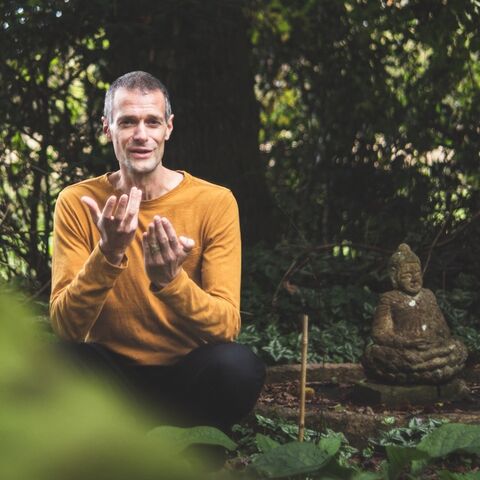
This is Josh Dippold and today's event is called cultivate mindfulness in challenging situations.
The description I have here is we all recognize the vital importance of mindfulness and how it seems easier in certain places and situations than others.
But what about when you need it most?
Wouldn't it be grand if mindfulness could be cultivated in even the most dire of circumstances?
For around 30 minutes,
I'll guide participants with a contemplation reflection to better discover and get the most out of the everyday mindfulness already poised for development while aiming to strengthen weaknesses in blind spots,
Regardless of the scenario.
Okay,
So while you guys are all grabbing a comfortable position,
If you lie down,
There's no need going to sleep unless that's what you need,
Right?
But if that's comfortable,
Do that.
Otherwise,
Just sit upright and you can close your eyes if that's comfortable.
I wanted to give a couple of disclaimers here before we start.
Obviously,
This is not the natural background,
Right?
I don't normally do things like this,
But it's good enough for the situation I'm in and it's adequate.
So don't let that distract you,
Especially if you're having your eyes closed most of the time,
It won't be that big a deal.
Mostly this came as a download.
So I haven't really done this contemplation myself.
So I'm looking forward to actually doing the contemplation.
I just asked the question about how can mindfulness be developed in challenging situations?
And these are the things that came to me.
So this is mostly a script.
And so don't let that distract you if you're thinking,
Because I know I listened in sometimes,
I'm like,
Is that scripted or not?
So I'm kind of distracted.
Yes,
A lot of this is written down.
So don't let that.
So you know that now.
And depending on how long this takes,
We can maybe take questions and share at the end.
But if it takes longer than I expect,
Then we might not take as many of those and that's okay.
But if you're compelled to share something and it's distracting from the rest of it,
Just type it out or whatever.
If that happens to be the case,
There's no need missing out because we want to try to remember something that we find important to say.
And yeah,
Again,
I don't embody this.
I don't exemplify the end results of these things.
So I'm far from this already too.
And I don't have all the answers to these contemplations.
So we'll be discovering this together.
And maybe I'll share some of what comes up for me and maybe I won't.
But yeah,
We're doing this together and I still practice very much a mindfulness practitioner all the time that I remember to be so right.
And it's really important.
And I'm a far,
Far,
Far,
Far from being at the level of mindfulness that of course I feel is masterful that we can never have enough mindfulness anyway.
So that's one good thing about it.
And I will say one last thing here about the disclaimer.
So just by engaging in this practice,
You're ready to have more awareness.
It's likely you already have more awareness than most people maintain.
So,
Or potentially.
So let's aim to keep this within skillful social norms,
Meaning that we're not going to use this for becoming a thief or a better thief or you know,
Me winning arguments or getting an upper hand in performance and things like that.
There's all maybe a time and place for certain things like this.
We're talking about right mindfulness where the point of this is to lead towards less lead away from stress and towards less stress lead towards more wholesomeness and skillful and wise states and good states of the heart and cultivate more benefit for ourselves than others,
Especially in the long term.
So,
So this is right mindfulness,
Right?
You want to do this right?
Mindfulness,
Not so it would become more skillful at doing things that aren't helpful.
Okay.
So when you're ready,
You can take your position and you can close your eyes and let's just take a couple of breaths here being mindful and present for every moment of the in-breath,
The pause,
Every moment of the out-breath,
The pause.
I think one thing as we breathe mindfully here is what is even mindfulness?
So this is by no means an exhaustive definition,
But these,
But,
And they could be off too,
But for now I'm kind of working with the notion that mindfulness is being present and aware for things as they actually are right here and right now,
Simply knowing,
Seeing,
Observing,
Noticing what's happening as it happens in the moment.
And that's it.
If there's any judgments or feelings or thoughts,
Inclinations,
All this extra stuff is just more material to be mindful of.
So just bear awareness of what's happening as it happens.
Another definition for mindfulness I like is the ability to bear something in mind can kind of hold something in awareness in mind and just have it there over and over again,
A continuous bearing in mind of a topic or subject,
Something like this.
So when I be mindful of our feelings or be mindful of behavior,
We can take a particular topic,
Object,
Subject,
And bear it in mind for some time continuously and see what the results of that are and knowing that as well.
So this is in context to contemplation too.
So it's kind of a mix between mindfulness and contemplation.
Okay,
Here we go.
So the first question for contemplation is,
This is a perspective on approach.
What if you viewed situational mindfulness as akin to being awake in a dream?
How would this change the way you act and interact with others?
So again,
Imagine yourself dreaming and then all of a sudden you awaken in a dream.
So this implies that you know you're dreaming and,
But now you have complete and utter and total control seemingly over everything that happens.
Whatever you think about or can want to do,
You immediately start experiencing this in your dream world,
Right?
This is called lucid dreaming.
So you completely lucid,
You have absolute basically control.
There's different degrees of this,
But you can do anything you want and be any way you want.
You know,
Start flying,
Doing impossible things,
Meeting the most incredible,
Amazing people,
Having all the experiences that you want instantaneously,
Just the way you want.
So imagine this is a possibility and how would this change the way you act and interact with others?
You know,
What difference would this make?
So let's just be honest with ourselves here and consider this,
You know,
Kind of what would be the first thing or how would we act and interact with others if this,
If we have this ability or can do this in a lucid dream or actually in their everyday life?
Let's just spend a few moments considering how we might act differently or some of the things we might do might be the same.
I'll just give a few moments of silence here to imagine this and contemplate this.
It's entirely okay if you don't know how things would be different or what you would do.
The point of this question is to know that now you're,
If you're not bound by all the things we think we're bound by,
Right?
Would we behave better?
Would we interact differently?
Would we take advantage of that and do things we normally wouldn't do or would it be the opposite?
And we would immediately be able to do all of our achievements and the amazing things we aspire to do.
So it's kind of a shift in a framing for what can possibly,
What can be possible in our daily lives actually.
So,
Okay,
Now onto more self-reflection.
Now this is more rooted and grounded in reflecting back on the past.
And how are you when you're mindful versus when you're not?
What does each state feel like?
So maybe we'll recall a time,
Maybe not the most challenging time in our lives,
But just spend a moment trying to recall a time when we weren't mindful and then we'll compare it with a time when we were mindful and just notice how that feels.
So again,
Recall a time when we noticed mindfulness was lacking,
A situation or a scene or scenario,
And then a time when we were mindful and how that feels.
And for me,
This one,
It's easier to notice how I feel when I'm mindful,
Of course,
Because the point of not being mindfulness,
Of not being mindful,
A lot of times I'm completely oblivious to anything.
It's almost like oblivion in a way.
And I only get to notice how I feel when it's reflected back to me or I come into interaction with another.
And then I realize,
Oh,
The consequences of me not being mindful.
And now I can experience that,
Oh,
I was not being mindful there.
So I've experienced a consequence and now I'm feeling the effects of that.
And then,
Are there noticeable patterns in your behavior or thinking that emerged depending on your level of mindfulness?
So are there noticeable patterns in your behavior or thinking that emerged depending on your level of mindfulness?
So reflect on a time when you're being extremely mindful and what patterns and behavior or thinking are there and levels when maybe there's no mindfulness or very little mindfulness.
And is there any habits or patterns in behavior or thinking that happen to be there?
So let's spend a few moments noticing past events,
Levels of mindfulness and behavior and thinking patterns.
So how is thinking and behavior and low mindfulness patterns and how is thinking and behavior and habit patterns when there's high levels of mindfulness?
So this one for me,
Without the level of appropriate mindfulness and wise attention,
Just seem to be operating on habit patterns.
And then when there is mindfulness,
For me,
There seems to be more choice and how I relate to things and how I choose to speak and behave.
Okay.
Situational challenges.
Here's the big obvious one that alluded to in the description.
When is mindfulness most needed?
So let's just,
This might be very obvious to some people,
Or it might,
There might be several areas,
A small places.
Let's just spend a few time or just a moment reflecting when is mindfulness most needed?
And this can be generalities or it can be very specific things,
Very specific situations.
Okay.
Maybe I'll offer some suggestions here.
Of course,
The most obvious is when there's not mindfulness,
That's when it's most needed.
It seems a little bit too obvious even to mention,
But of course we're relational beings.
And so there's,
Of course,
Our relationships will probably be,
I would think for most folks that when there's certain challenging relations or relational activity,
Well,
Then that's where mindfulness can be needed most.
Of course,
There can be major life events too.
There can be things that happen that catch us off guard or defy our expectations.
And so then of course,
Mindfulness is needed,
Seems needed there too,
But please don't limit yourself to these areas.
And then when is it most challenging to maintain mindfulness?
And when is it least challenging to maintain?
So basically when's it easy to keep being mindful and then when is it challenging to maintain mindfulness?
Of course,
These should be fairly obvious situations of the more extreme stress,
The more overwhelmed,
The more distracted.
These are times of course.
And then when it's least challenging,
If you have a formal meditation practice,
Even though it can be challenging sometimes there,
Maybe you're really supported by people around you that are practicing mindfulness and doing it,
Being thoughtful and considerate and see payoff.
Okay.
So consider difficult situations,
Situations where there's stress,
Overwhelm,
Bewildering social dynamics,
Meaning you're in the social situation and you really can't figure out the things that you think you need to figure out or what's actually kind of going on or your place in it.
You don't seem like you fit in.
You don't understand what your role in place is and what you should be doing,
How long you should be there,
How to get out of it or how to get into it.
So another difficult situation is emotional appeals,
Meaning are you as someone using emotions to try to get you to be a certain way,
Do a certain thing that you maybe don't want to do or you don't,
You'd rather not be that way.
Or maybe I'm giving an emotional appeal,
Trying to get someone to do something and they're not doing it.
How's my level of mindfulness there?
And then also complex environments,
You know,
Something you're in the middle of Times Square.
How is mindfulness there compared to a spa or a meditation retreat or a massage or being relaxed?
So notice the difference in mindfulness in these various dynamic situations.
So we'll spend a few moments in this.
So just ones that are stressful or overwhelming,
Bewildering socially and complex environments with various degrees of emotion.
And then notice an environment where kind of all these dynamics aren't there.
It's simple,
Better,
More useful.
So yes,
In one sense,
When these challenging situations are there,
Oftentimes mindfulness is lacking.
However,
There's a great incentive to be mindful.
And conversely,
When we're in very conducive environments,
Sometimes mindfulness may not be so important,
Right?
We can let our guard down,
Not have to be practicing mindfulness.
So the incentive is not as great,
But it is still an opportunity to be mindful.
And we can even enjoy the situation more with more mindfulness too.
Okay,
How does mindfulness play out in daily routines?
And we'll go one by one.
So just imagine yourself in these situations in everyday life,
And just reflect on how mindfulness plays out.
So shopping,
Let's,
Especially for those in consumer heavy environments like the US,
A,
I would say parts of England for sure.
South Korea,
Very kind of heavily commercial areas,
Seoul,
Big cities with a lot of commerce.
And then you're shopping,
You go and shop for whatever,
Right?
Supermarket.
I know we all have experience with that or pick your retail poison of choice or pleasure of choice.
And yeah,
How does mindfulness play out in shopping?
There'll be more context on this later,
Especially with getting our attention and things like this,
Where we can really see the money and time and effort going into getting our attention when we shop in the physical world,
Not to mention online.
But yeah,
Let's talk about that next,
Because a lot of times it can be similar online activity.
So putting aside ideas and feelings about online activity,
Just imagine yourself kind of the most common task you do online.
When you go online,
Just imagine yourself and focus on the amount of mindfulness,
Either present or absence in these online activities,
Email,
Social media,
Communicating,
Maybe doing work tasks,
Writing,
Watching videos,
On and on and on.
So I guess just start with the kind of the one that takes the most time and notice mindfulness and just go on to some others.
This is a big one.
So let's take a few extra moments on this one.
Mindfulness of online activities.
How is it playing out?
How is mindfulness playing out in online activity?
For me,
This one,
When I'm not interacting,
Physically touching and moving a mouse or keyboard,
It's easier for me to stay mindful.
But when I,
As soon as I start to touch the keyboard,
Mouse and moving my eyes,
Going from one thing for another,
Mindfulness is very challenging to maintain for me.
Okay.
When eating,
Notice the degree of mindfulness when eating,
Either alone or with others.
Now when talking,
How does mindfulness play out when talking with another?
And just pick up a couple people,
Have to go through all of our friends and acquaintances and family members.
And then commuting,
If any of us commute,
If we're walking or taking any kind of vehicle to and from wherever,
How does mindfulness play out in these situations?
Exercising and moving about.
So if we go deliberately to go work out or walk,
Do physical activity,
Moving about,
How does mindfulness play out?
Okay.
Now we go on to the importance here.
Why mindfulness?
Why do you personally want or need mindfulness in different situations?
So this is the value of it.
So we'll reflect now on why do you personally want or need mindfulness in different situations?
And I'll just suggest some things here.
You know,
Is it coming from a place of,
I suck,
I should do better.
I fail at this.
I'm not a mindful person,
Or is it the extreme opposite of that?
I am the most mindful person.
I've got degrees and awards and accolades and I teach mindfulness and I can just bestow mindfulness on everyone and the most mindful person that's ever.
So of course,
This is ridiculous exaggerations here to make a point.
Of course,
Most of us fall in the middle of this.
I would say,
What about caring,
Right?
Because there's mindfulness,
Then I'm better able to meet the world.
I'm better able to be of service and help to others.
At the very least,
I can cause less problems and distortions in the world and have more resources available,
Inner resources available to respond in helpful and appropriate ways.
I'm able to make better decisions and enjoy life when it needs enjoying a better resource to face challenging,
Difficult times when they're needed and not pretend otherwise and better able to set aspirational goals that are helpful for me and everyone else.
So,
But these are,
Don't limit yourself to what I said,
Of course.
So why do you,
What do you want or need mindfulness in different situations?
And then you can,
Maybe it varies from situation to situation.
It's dynamic depending on where it's needed or wherever you're at,
Whatever you're doing.
Maybe one reason is more important in a situation than another.
And how does mindfulness serve practical,
Emotional,
And cognitive benefits in these circumstances?
So let's focus on the practical.
How is mindfulness actually practical in some of these situations that we've been reflecting on today that have been coming up?
What is the practical application?
Maybe it does lead to more efficiency,
Which then allows time for more things important.
Maybe it leads to health benefits,
Greater wisdom,
You know,
That can be more practical to know how to move and respond wisely in the world to get things done in a way that's a benefit.
Now emotional,
What mindfulness,
You know,
How does mindfulness serve emotional benefits in certain circumstances?
How helpful is it to just notice that something is pleasant or unpleasant and what that can lead to?
Notice that I'm being,
That the certain emotion I'm having is there,
Or notice that I'm trying to suppress an emotion or pretend it's not important.
I'm trying to override it and not deal with it in a conducive way.
Or maybe I'm celebrating a certain emotion and really reveling in its value.
Or maybe I'm being,
Or maybe the type of emotion I'm having,
It's not why it's not wrong.
It's if left unchecked,
It can fuel something else that's not as helpful.
And vice versa.
And then the cognitive benefits,
This is what we hear most about.
What kind of cognitive benefits will mindfulness have?
And are we,
Are these in service just to only to ourselves?
Or are we using these cognitive benefits to be of,
You know,
Have a ripple effect onto others?
Okay.
External influence and attention economy.
This is the one that was going above with kind of our online activity and shopping.
So this is the one that's really a hot topic these days.
So,
So let's spend a few moments just reflecting on the vast amount of time and money spent by industries to capture your attention.
This should be really,
Really obvious,
Especially in the United States where there's advertisements everywhere.
There's huge marketing budgets,
You know,
The whole kind of economy runs on consumerism,
Not the entire economy.
Even in service and service industries and nonprofits,
Even there's even not that it's necessarily wrong.
It's just,
There's a lot of people,
You know,
Once,
Once this,
They want your time and attention for sure.
And the notion that everyone kind of that we see on social media to online,
That whatever they see is there's a kind of underlying current that this is the most important thing.
You should pay attention to this.
This is important.
Spend time with this.
And we're bombarded by this time and again,
Not all the time,
But this is an underlying thing to put a huge emotional charge and amount of energy into one's message to,
For a certain reason.
And we can see this on social media and in the real world space to around commerce,
Especially it's not necessarily good or bad.
It's just that we want to see these things.
So we know that,
Okay,
Maybe,
Maybe not,
But what about the attention itself?
What about my attention itself and how valuable and precious that is?
And what should I be doing with this attention of mine?
What is the best use of the time and attention that I have?
And then what impact does not being mindful have on your decision-making and overall mental wellbeing?
We'll spend a moment.
What impact does not being mindful have on your decision-making and overall mental wellbeing?
So we can maybe think of times when we weren't being as mindful as we maybe could have been or should have been,
Or maybe we've been neglecting cultivating mindfulness or thinking it's not important.
And then maybe it could have a correlation with the decisions we've made and vice versa.
Maybe we've been practicing mindfulness and putting an importance on it.
And then we've seen the benefits in our decisions.
Maybe we've seen choices we didn't think we had,
Or we've made decent choices to be celebrated and acknowledged,
Or maybe vice versa.
Maybe we actually have been mindful and we still made bad choices and vice versa from that.
And then overall mental wellbeing and this being mindful and not being mindful.
And I think this is a fairly easy one to feel into and notice as an energetic experience,
How much relief it can provide and how much benefit just being mindful.
We can see doesn't take much digging to find out the benefit of this really.
Have you noticed moments where you were sucked in by distractions?
How did this play out in your experiences?
So notice when recall times when we really get distracted or really any time of distractions and getting sucked into those distractions when we lose mindfulness,
How did this play out in your experience?
So this is a really good one to investigate in meditation when things are more subtle.
And then we say,
We're going to stick to our breath,
Right?
And then we hear a sound,
We see an image,
An image arises internally,
A thought,
A memory,
Notions of planning,
You know,
Or a pain in the body,
All these different phenomena that can,
That will inevitably happen when we sit down to meditate.
And then we can get into a fight with if they're distracting us or not,
You know,
If it's a distraction.
So yeah,
How are we,
How did these play out when we get distracted,
Even not in meditation?
So we'll just spend a few times noticing distractions,
What happens with mindfulness,
And then maybe how we are afterwards and how we relate to that.
I noticed early on in my practice,
Distractions could be quite troubling,
Can get quite upset with myself for being distracted and having to start over,
You know,
And as we work with our relationship with distractions and work with them more and more and have more experience and are kind to ourselves,
And just keep training this attentional muscle more and more,
Then the distractions that when they do happen,
We're more skilled and better able to relate to them in more helpful and better ways.
At least I know I was when,
If I reflect back on my practice,
And,
You know,
There's always going to be bombarded,
Unless we're on like retreat or go through,
Not only from the external,
People trying to get our time and attention,
And maybe rightfully so and helpfully so.
And then there's things that are going to happen internally that will arise,
Whether we want to them to or not,
And things that will happen.
And so we'll get drawn off our original intent with what we want to be doing.
And then we'll have to come back to that.
So what is our relationship to that?
And how do we best deal with that?
And view that.
Okay,
So tactics for maintaining mindfulness.
So these primary distractions,
Like I was saying,
Sights and sounds tend to be the most common culprits.
There is a lot of oomph and energy and like staying power of images.
Images are very powerful,
Right?
So if you notice,
Like if you watch TV news,
For those of us who still do that,
I'm not one of them,
If I can help it.
But these images are very,
Very powerful.
They tend to either stick in the mind and memory and evoke feelings,
Emotions and things that if we were to read about the same thing,
Maybe not quite so much.
So,
And sounds,
You know,
One of the kind of inbuilt fears we have that's not conditioned or learned is a really loud sound,
At least for most of us,
Right?
It's startling to hear a really loud sound.
So these can be very powerful things.
We just look at types of music that we really love,
Types of music that we just hate almost,
You know,
And how that can really take our attention away from what we would otherwise want to do before those came into play,
Right?
Also sights and sounds can help us become more mindful as well,
Depending on what they are.
So what about emotional and intellectual appeals that usually serve as hooks?
How can you disengage from those?
Meaning for those familiar with marketing and sales,
You know,
There's an emotional appeal.
You're going to feel this way with this product and service.
You're going to feel so amazing.
It's going to solve all your problems.
Yeah.
For me,
Right?
Mindfulness is all you need.
It will solve all your life.
Of course,
I'm being facetious here.
That's all you need.
It's going to be the best thing and you should just do mindfulness and do it the way I tell you to do it because that will your life will be amazing and just instant.
Of course,
It's not that way,
Right?
I'm being ridiculous and I shouldn't actually say that because even though you all know I'm joking,
Right?
But it's to kind of paint a caricature of these emotional appeals for things.
So not necessarily saying that it can be really wholesome and helpful emotional appeals if what's on the other end of that is going to be for the best interest of you and others,
Especially in the long term.
But unfortunately,
There's people that don't have that intent in mind,
Right?
Same with intellect,
Right?
You can appeal to your intellect.
If you do this product,
You're going to be so super smart and successful.
You're going to impress a bunch of people.
You're going to be able to do this and that and all this other stuff and just be so amazingly smart and part of the illiterati and the intellectual elite and you will just be smashing it all in no time and do anything that you want whenever you want and it'll be so amazing.
Now,
Again,
I'm being silly here.
So notice these hooks in our lives and the ones that we kind of,
Well,
Anything,
Even if you want to do it,
Just notice how you can disengage.
So how can we disengage from this?
And then if we then find that it is helpful to engage,
Then we can re-engage.
But how do we disentangle,
Disconnect,
Unhook and disengage from these appeals to our intellect and appeals to our emotions?
So this is a skill to have and then we can be in charge or seemingly have more agency and choice on then which to engage in.
So there needs to be,
I think,
At least the skill to be able to distance temporarily from these and then go back to it.
If we're enmeshed and entangled all the time,
There's really no option to do anything other than enmeshment and entanglement.
So a few moments of silence here,
Noticing these intellectual and emotional hooks and we can even give them to ourselves,
Right?
We can convince ourselves intellectually,
We can convince ourselves emotionally.
What if it was possible to temporarily disengage,
Distance or disentangle,
Be non-attached to these things temporarily to gain perspective?
So notice where we get hooked,
Notice where you get hooked,
How it's possible to unhook.
Kind of getting this image here of magnetism,
Right?
Getting within proximity of something and then a strong magnet,
You just suck me right in.
There's a notion of having a thread and then doing a lot of activity with the thread or cord and then inevitably getting tangled.
And then on to strategies here.
So what methods help you manage distractions effectively?
So think of when we're distracted in our lives or when you're distracted,
I keep using this royal we here.
So,
Because I get distracted too,
Obviously we all do.
I would think unless if you never get distracted anymore,
Please immediately share that and how you did it.
Seriously.
So those of us getting the distractions,
Notice some of the big time distractions we get and then what kind of methods do you use or could you use to manage distractions?
Turntable way that I've heard is,
What if it actually,
What we're perceiving as a distraction isn't even a distraction to begin with?
That it's kind of part of the practice.
I don't know how to put this,
But an opportunity to maybe transform or transmute whatever's being perceived as a distraction into a distraction.
Into a support for more awareness and mindfulness.
The kicker there though is,
Well,
You have to recognize it's a distraction to begin with because the thing about distractions are usually they happen and then we notice that we're being distracted later.
How much energy and habit is being put into what we want to pay attention to and attention,
You know?
Because the more,
The deeper the groove is there on that,
The more noticeable it is when it gets out of the groove.
And then when it goes back into the groove from distractions,
Could be as simple as the environment,
Right?
Spending more time to a conducive environment,
Noticing right away what the environment is and the likelihood of distractions and what the options and choices are.
And then of course,
How we're relating to all this.
I think the more negatively and self-defeating I relate to distractions,
Actually the more chance it could have to reinforce them.
It could also be a motivation to practice more wise attention too.
So how we're relating to it.
How do you navigate situations designed to draw you into unconscious action?
So,
You know,
Marketers and people online and at stores sometimes,
It's a lot of them that are unethical.
They want you to be unconscious,
Right?
So that way you can make choices not being conscious.
You'll just make the choice they want you to make without being conscious of it.
So how do you navigate situations like that when you kind of know from the get-go there's an incentive to keep you unconscious about your actions?
I know when I go into a store in the United States and there's the music playing and the ambiance and the beautiful setup and the whole kind of thing is to sell you a very nice,
Pleasant dream and relieve you of all your money and time,
Right?
Not all,
But right.
And there's nothing wrong with that on the surface of it,
But just realizing that this is a strategy.
This is what they do.
But do I need to go in there and burst that dreamer bubble and pretend that I have the upper hand?
I'm so awake and conscious of what they're doing here.
I don't know if that's really helpful either.
So yeah,
How do we view these things and how do we deal with these notions?
I think one of the things being awake in a dream is a really interesting way to go about these things.
So we don't necessarily have to fight against some kind of dream,
Just realizing it is a dream and then I can act accordingly,
Perhaps.
Dream-like,
I should say,
Not that it is a dream,
But literally.
And then how do you use reflection,
Decision-making frameworks,
And intentional pauses?
So we'll do this one at a time.
How can we use reflection?
How do you use reflection as a tactic for maintaining mindfulness?
And this goes along,
I'll tie this in with the intentional pause.
So notice when there is no pauses and then when there is just a moment of pause and how there can be a moment of mindfulness and reflection and how that can actually make a big difference,
Especially cumulatively.
And then decision-making frameworks.
So do you have a way that you make decisions?
Yeah.
So we'll spend a moment on how do we usually make decisions?
Is it based on habit?
Do we appeal to authority,
Go to authorities?
The big one are reviews these days,
Really reading the reviews.
Testimonials are big now,
Testimonials from people.
Lifestyle.
Is it a brand that reflects who you are?
Do you stick to certain brands and ideologies of making decisions?
Do you do what your friends do and your families do?
Do you just want the quickest way to do something?
Do you want the cheapest way or the the most luxurious,
Expensive way?
Do you mix some of these depending on what it is in the situation?
So none of these are really qualitatively good or bad,
I would say,
But we notice that these are a lot of times preferences,
Even our strategies or preferences.
And yeah.
Now,
How can those decision-making frameworks,
How could you incorporate staying mindful within those decision-making frameworks?
All right.
Now,
Personalizing mindfulness.
How does using your own words and imagery,
Either self-created or adopted,
Support your mindfulness practice?
So how can you use words and images to support your mindfulness practice?
One of the biggest things is just rote repetition.
It doesn't seem as sexy and,
You know,
Cutting edge or genius.
And then,
Of course,
It's just a constant repetition.
Be mindful.
Remember to be mindful.
Remember to be mindful.
So putting this as a value up front and just reminding ourselves throughout the day over and over again,
Without any kind of,
Oh,
I'm failing.
I'm not being mindful enough.
I need to be more mindful.
I can never be mindful enough.
So no,
Just whenever we can remember,
There's a Zen saying,
The most important thing is to remember the most important thing.
So this notion of remembering is also another definition of mindfulness.
But what about imagery?
You know,
Kind of images are mindful,
Invoke mindfulness.
Of course,
Spiritual figure is illicit mindfulness.
It's one that comes to mind.
Do certain metaphors,
Symbols,
Or internal narratives help you maintain awareness?
Metaphors,
Symbols,
And narratives help maintain mindfulness.
I'm going to spend a few extra moments here because this is actually how we can remember to be more mindful,
Right?
To use these tools to be mindful.
So metaphors,
Symbols,
Are there certain symbols that evoke mindfulness?
And narratives,
What kind of stories can help with mindfulness or do help you already with mindfulness?
Okay.
Then memory triggers for mindfulness.
What are the best ways to remember to be mindful?
I think there's this old cliche in old movies and cartoons or something where people would put,
Tie a string on one of their fingers to remember a specific thing,
Right?
I've already mentioned just constantly reminding ourselves to be mindful,
Be mindful.
This is where I would ask for you guys' feedback,
This notion of how to remember to be mindful.
I know some set intermittent timers that will just set a timer and remind them to be mindful,
See where their mind is at a certain moment.
Of course,
Just setting a daily meditation practice to cultivate this formally will then carry over into daily life.
What cues or habits can be implemented to bring you back to present awareness?
What cues or habits can be implemented to bring you back to present awareness?
One of the ways I've heard too,
Is you have a certain location to be mindful.
So consider an intention to walk through a doorway.
So every time you walk through a doorway,
You make it a special point,
I'm going to be mindful going through this doorway.
And one of the reasons I like this is because sometimes there's a significant shift in a lot of different things,
Going from one environment to another,
One room to another,
Away from something and towards something,
Away from one person towards another,
Entering,
Exiting,
Inside,
Outside.
Of course,
When we touch something,
When our feet,
So one of the other things is being mindful of hands and feet.
So that way we don't need to be,
Of course,
It's more ideal to be mindful of the entire body in space.
So hands and feet,
Though,
When we're moving around,
And when we're at stillness,
The breath,
The movement of the breath.
The other thing is having about 50% of the attention with the body,
50% with the external environment in a good situation.
Sometimes that's not available.
And so just any amount of awareness is okay.
Sometimes,
At least I put way too much attention on the external and forget the body,
And then it's just like a head on wheels.
I guess the opposite is possible too.
When people aren't paying enough attention to the external environment,
They're just only paying attention to themselves and they make it,
I don't know,
Run into things or seem like they don't care or something like this.
So that's another good habit I feel.
When mindfulness seems unavailable,
What can be done when mindfulness appears unattainable?
Let's spend a few moments here.
When mindfulness seems unattainable,
What can we do?
I think one of the psychological things is realizing that there's,
Yeah,
It's obvious that there's going to be lots,
Plenty of times when it's unattainable.
And how are we treating ourselves when it's like that?
Beat ourselves up or we look at it as a challenge.
Okay,
I can do this.
This is inevitable.
And now it's just helping me strengthen a weakness or even if it is a weakness.
And then how can you work with moments where awareness seems diminished?
You know,
There's a little bit of awareness there and mindfulness there,
But it's not much,
Right?
So if it's diminished,
How can we increase it?
How can we bring more states and more energy into when it's there?
How can we brighten that,
That dim light?
And so we can get through this.
We're almost,
We're coming up to the end,
But I'll,
I'll leave these,
My comments here.
And then actually,
I think this is the last question we have here.
What patterns have you noticed in past experiences where mindfulness was difficult?
And how can these inform your approach moving forward?
So again,
This is like a similar question.
Let's look at patterns in our past experience where mindfulness was difficult.
Basically,
Am I doing the same thing again and again,
When there's times when mindfulness is not there?
And how can this inform my approach for moving forward?
So let's spend another moment or two recalling what tends to play out.
What do we notice about the patterns that we're doing when we're not mindful?
And how can we,
And how can these inform us going forward?
So this kind of ties it all together again.
So instead of getting down on ourselves for when we're not mindful,
Recognize the patterns,
And then we can set an aspiration and a determination and resolve to cultivate mindfulness.
Use it as an opportunity to practice mindfulness,
To cultivate more mindfulness.
And seeing that these patterns themselves are often due to lack of mindfulness.
And as soon as there's mindfulness,
We can have more resources available to identify in more depth and completeness what these patterns are,
And then how to change,
Go about changing or implementing strategies and attempts and actions and views to lessen these patterns or change these patterns into things that are more helpful,
All the while increasing mindfulness.
So these patterns can be like emotions that result or actions that continue,
Yeah,
Behaviors that result,
And then they can be replaced or done otherwise with things that are more skillful and helpful.
Okay.
And then by reflecting on these questions and strategies,
Mindfulness can become a dynamic,
Adaptable skill that meets each situation with clarity and awareness.
So thank you all for being here.
I know some of this overlapped and hopefully some of this was helpful though,
And wow,
It went twice as long as I thought it would,
But I'm glad we did this.
And this will really help,
I think,
Boost our levels of mindfulness and realize the importance of it.
And for those that have stayed the entire time,
You really went in depth here on really looking into our lives in more detail and more comprehension and a wider scope.
And then hopefully a lot of things came up where it will strengthen mindfulness and be for your benefit and the benefit of others.
I'll just open this up for sharing here.
Thank you for all the hearts.
And if anyone wants to share anything,
Have questions,
Anything at all,
Please feel free to share it.
I'm also told by Insight Timer that we're supposed to welcome donations.
I do welcome donations.
And I appreciate your donating your time to be here and the time you've given to yourself to look at these things more deeply.
And may you all benefit from it.
May everyone you come in contact benefit from it and may you all realize awakening and be free.
Bye now.
Oh,
We got a thank you.
Yeah.
Jenny says this was really an interesting approach to mindfulness.
Well,
I appreciate that,
Jenny.
Yeah.
Yeah.
I was actually kind of surprised by some of these questions that came in because when I ask for this information from the universe or whatever,
From within,
And yeah,
These were questions I hadn't,
A lot of these I hadn't heard anywhere else,
You know?
So I'm glad that they did come through.
I was able to offer something that's not just the same kind of thing.
I'm sure some of it was,
But yeah.
Well,
I'm glad you found it interesting,
Jenny.
Okay.
May you all be well.
Bye now.