Very good.
So welcome to today's meditation class.
I think there's a couple more people still going to be coming in.
So if you could take your seat and get comfortable.
For those of you who come into the introduction,
You're getting my talk over there.
So all of those of you who are in the introduction to meditation class,
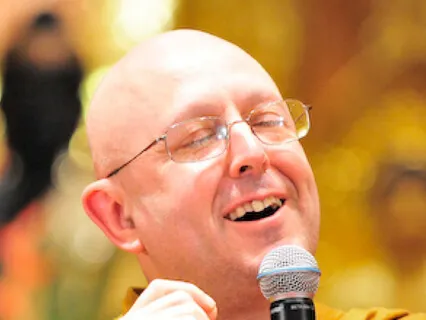
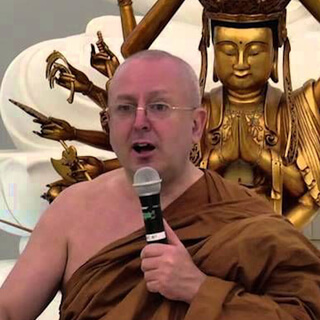
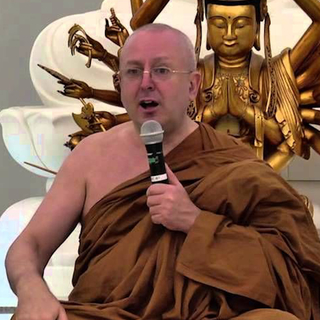
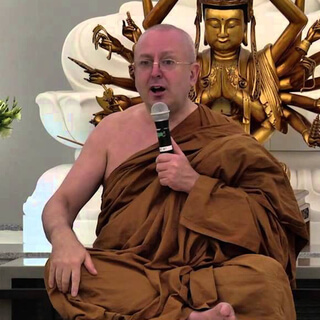
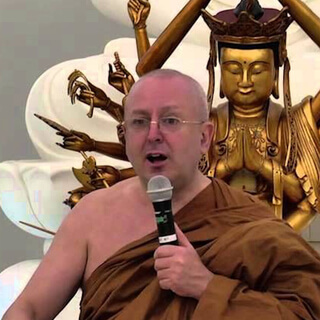
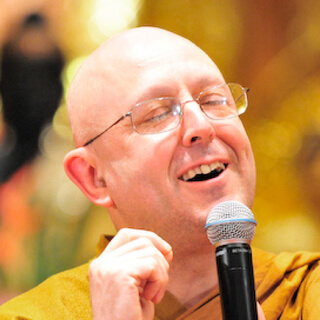
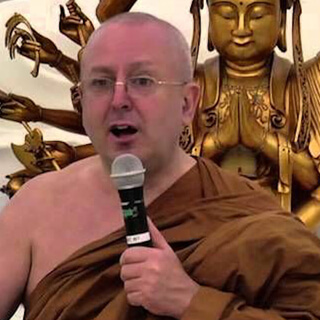
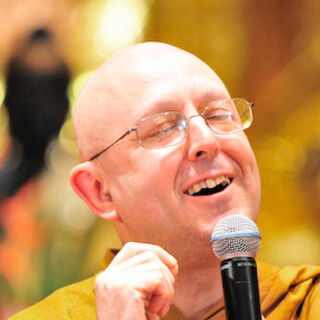
This is Ajahn Brahm.
You have a wonderful teacher today who's now going to cut me off.
Sometimes what happens,
The PA system here goes to next door.
But that wasn't as interesting as some years ago when we were teaching a meditation retreat.
We used to use the Redemptorist Monastery retreat centre in North Perth off Vincent Street.
And there one Sunday morning when I was teaching the retreat,
We had like a wireless microphone.
And so I started my talk on meditation,
On Dharma,
And then right next door was their church.
And the priest came running in,
Turn it off,
Turn it off!
Because the frequency of my microphone was actually going into the church during his sermon.
That was really funny.
So he had to turn off change of frequencies.
But anyway,
So welcome everybody for this ongoing meditation class.
And so that if you come for the first time,
The introduction to meditation class,
That is in the room to my right.
This is the ongoing class.
And because it's an ongoing class,
You can go a little bit deeper into what happens in meditation.
You know a lot of times the meditation needs a lot of patience.
Not to disturb the process,
Just to let it happen.
And sometimes for people we always want to see something happen quickly.
We want results because otherwise we lose our confidence and then we usually try something else which means that we disturb the whole process.
Remember the whole process of meditation is based on being still.
Stillness.
Stillness of body and then eventually stillness of mind.
Just imagine what stillness is.
It takes a while for like a train which has left the station.
Or like one of these big road trains on the highways.
You know which is so much weight on it,
Going so fast.
You put the brakes on,
It takes a while before it comes to a halt.
You cannot stop immediately.
And that was a simile which I used a long time ago.
When you first come to a meditation class or you do meditation at home,
When you first come here,
Depends upon the momentum,
How fast you've been going during the day,
Which is just past.
Which means that when you come here and you put on the brakes as it were,
You stop sitting here,
It does take a while for you to slow down gradually.
You can't just halt,
You just slow down gradually,
Go slow and slow and slow until the body can be at rest and the mind can be still as well.
It does take a while.
So that's why we have to give these things patience for them to be able to develop.
And sometimes in patience is where we get some of the problems.
Which is why that some years ago I developed the two types of patience.
Just to make it more interesting,
Why is it that people say,
Oh but I was patient and nothing ever happened?
And it was usually the second type of patience people were practicing,
Which I call waiting in the future.
Waiting for something to happen.
Waiting for the mind to become peaceful,
Waiting for some joy to come up,
Waiting to be able to see the whole breath,
Whatever stage of meditation you are looking at.
Waiting in the future.
Which is one of the reasons why when people come along and say,
Well I've been meditating,
Nothing's happening.
Exactly,
That's what is supposed to occur.
Nothing happening,
Stillness.
But what they really mean is I wanted something,
I expected something,
I was hoping something would happen and it never did.
And obviously you put it in the right language,
It's quite obvious what was going on,
You were waiting in the future.
Now waiting in the future is obviously the opposite of being in this present moment,
Just being here.
And seeing what's happening right now in this moment,
Being here.
So instead of waiting in the future,
Waiting for something to happen and getting disappointment when your expectations don't come to fruition,
Instead we wait on the present moment.
Very much like if you go to a good restaurant and you have a waiter,
The waiter is looking at you to make sure that when you finish one course they can take it away,
Not too fast,
Not too slowly,
And give you the next course.
They can look over in the present moment,
Not rushing you,
Not lingering,
But being aware of what's happening right now,
Waiting on the present moment.
See what it needs and being here when the action happens.
And another simile of waiting on the present moment was a simile of like being a host at a party,
When you're a host at a party and you're welcoming your guests as they come in to your house.
What you do is you shake their hands,
But you haven't got time to have a conversation with them about who's winning the football or about the economy or about the political situation in Syria,
Because there's another guest coming right behind.
So all you can do is say welcome and then go to the next guest.
And the next guest,
You cannot linger.
You have to be right here.
And that's like the procession of guests,
The present moments,
Lining up as it were to come and be with you.
So you can only be with one present moment at a time and not linger with this moment.
Let it go because the next one is coming,
Like a procession of present moments.
Look at the past,
Look at the future,
And you miss the moment which is right in front of you right now.
So this is learning how to,
Instead of waiting for something to happen,
Expectations,
Even the word expect,
Now expect is the C,
X means the C outside of this moment,
Inspect instead,
Inspect what's happening now in this moment.
So we don't wait for anything to happen,
We wait on this present moment.
Greet it,
Be with it,
Be kind to it,
Welcome this moment like you do at a party.
Because sometimes you don't know who's coming into the party.
There was a story,
Apparently it was one of those true stories,
I kept all these weird stories,
I don't know why the real stories are the boring ones,
Which may be more important,
But I did read an article years and years ago when President George Bush,
The first George Bush,
Became President in his first visit to London.
And of course he was in a big reception,
And then his reception actually happened.
This lady came up to him and said,
Oh I am then the President of the some society,
And said to President George Bush,
The first one,
Said,
Who are you?
And he said,
I'm George Bush,
The President of the United States.
Ah yeah,
Come and pull the other one,
I'm the Queen of England.
Now who are you really?
And apparently he was George Bush the President.
I need to do a bit more PR work for him.
But sometimes you're with somebody and just to relate to them.
You're with this moment,
Relate to it,
Inspect it,
Don't expect it,
Don't go outside.
We call that waiting on this moment,
Not waiting for something to happen.
And if you do the right type of patience,
Patiently being here,
Waiting on this moment,
And also the word patient.
You know we have a patient in the hospital,
A patient in the hospital is supposed to just lay there and people do the tests on you.
Maybe that's not quite right,
So please apologise to any doctors or nurses here,
They work really,
Really hard.
But the idea of being a patient is not being an actor,
Being a patient,
Even in like language.
You just sit there,
Be passive,
And just let these things happen.
And that's also like being in this moment,
Being patient,
Not being an actor,
Not being sort of a person who does stuff,
But a receiver of life,
Not a giver in this particular time.
Just in grammar,
If anyone of you knows grammar,
Because we do a lot of party studies as monks to understand what the Buddha really taught,
See it in its original language.
Have all this grammar,
The nominative and the accusative.
One is the patient,
The other one is the active,
The subject of the sentence,
The doer,
And the other one is the receiver.
That receiver,
Being the patient,
It's been just observing,
Receiving,
But not responding,
Not reacting,
Not deciding how you're going to respond,
React to what you're experiencing.
Just be totally patient.
That is also a lovely part of the idea of being patient.
For those of you who know your Pali texts or something,
You know,
Kāṇṭi Paramaṃṃta Poṭiṭṭika,
It's very common.
Patience is one of the highest of the spiritual practices.
It doesn't mean sitting here and enjoying what happens,
It means just being here,
Being here and just not expecting anything but inspecting it,
Not trying to cure things but care for things,
Caring for this moment.
Because curing it means you have some idea,
Some place you'd rather be,
A different state of affairs,
A different state of mind,
A better body,
A more pleasant abiding,
Whatever it is,
That's looking off into the future.
Instead like being where you are,
Being with what you have,
Not going anywhere but being patient,
Receiving,
Being but not reacting,
Being passive.
There's time to be active but when we meditate,
Be passive.
The car,
The truck slows down and it gets slower and slower and slower and doesn't move.
And people say,
But we're not getting anywhere,
Precisely,
Because people spend all their life getting somewhere.
And what happens when you stop,
When the truck slows down and it's not moving?
It's getting,
As they say,
Nowhere.
And you know what nowhere means?
Because on Saturday mornings I have an indulgence,
I read the comics and also do the cryptic crossword and I was telling Venmo Samangala today,
One of those clues was the word nowhere.
You know what it means if you split it up?
Now,
Here,
Is one of the clues a couple of weeks ago.
So what happens when you're now and here and put it together?
It means you're nowhere,
Emptiness,
Vanishing,
Stillness.
So see if you can be nowhere,
Because in the nowhere that means you're now and here.
So you're not expecting anything.
You're not having these ideas of goals and getting somewhere.
You spend all your life getting somewhere.
And where are you really getting to anyway?
I don't know.
I spend so much of my time going to funeral services,
Going to Fremantle Cemetery last week,
Going to Caracatta,
Pinaru and sometimes,
Sometimes when you get very tired and getting very old,
After the service,
I think,
Well,
I'm feeling really old and tired now at Temple.
I might as well know much point going home.
So you're a joke.
Anyway,
That's where we're all getting to.
So anyway,
Now,
Here,
Enjoy it.
And this is what happens when you stop doing things,
You're patient.
Not waiting for something to happen,
Not trying to get somewhere,
But being here.
Then,
Surprisingly,
When you don't make something happen,
When you don't look for something happening,
That's when things really develop.
This is the power of stillness.
You go deeper and deeper and deeper into the stillness.
And the deeper you go into the stillness,
The more joy,
The more bliss,
The more peace,
The more wisdom just comes to you.
We all run off here and off there looking for wisdom and satisfaction in life.
We could only just stop,
Be still.
And the wisdom is right inside.
You don't need to wait for it to happen.
You just go inside right now.
N.
O.
W.
Now,
In the centre of that is zero,
Nothing,
Love.
Like in tennis,
Love,
Zero.
And in the centre of that ring is emptiness,
Peace,
Bliss,
Perfection.
So that's what we do from now into the centre of now,
Zero,
Love,
Beautiful ring.
And in the centre of the ring,
Nothing,
Freedom,
Emptiness,
Unbounded by any lines.
So that's what happens,
Really good fun.
So let's see if something happens.
If you do see something happening,
If you're waiting for something to happen,
You're never going to get anywhere.
But if you wait on this moment,
Then who knows?
So here we go.
So if you like to get yourself in meditation posture,
Again,
Cross your legs this way,
Cross your legs that way,
Whatever makes the body comfortable.
If you want to lean against the walls,
You're most welcome to.
You know who's leaning against the walls?
I'm in the back,
Some of them are.
Great.
You are,
Fine.
And you close your eyes.
With your eyes closed,
You can be more aware of your body.
This is just basic preparation.
But it also helps to slow down the big heavy road train of your life before it comes to a real wonderful stop and can become very deeply peaceful.
First of all,
We've got to make sure that we are prepared.
So,
Sitting down,
Closing your eyes.
With your eyes closed,
You can become much more sensitive,
Much more aware of how you feel.
Physically,
That is.
Aches and pains,
Comforts.
Are your legs comfortable?
Actually,
Mine are not,
So I'm going to move.
You get yourselves as comfortable as possible.
And by that,
The nice skillful means,
A method,
An exercise,
Is to ask yourself,
Or rather ask your legs,
Hey legs,
How are you going down there?
How are you?
And take it seriously when you ask a question of your own body,
Because after you ask the question,
You'll be able to intuit and answer that your legs are relaxed or they're comfortable or they're aching.
If they're aching,
Just see if you can massage them,
Scratch them,
Adjust them.
Because in meditation,
It's not about enduring pain,
It's about being here in peace and comfort.
So I observe my legs,
Adjust them,
Keep on asking,
Is that enough legs?
Do you need a bit more adjustment?
When the answer comes back,
This is about as good as I'm going to get.
Then I move on,
In this case,
Move upwards to my butt,
Making sure it's well positioned on top of my cushion.
Sometimes people's legs,
They say go to sleep,
They're the pins and needles because they put their body in a position which cut off some of the,
Whatever it was which caused that problem.
So get your butt well balanced on top of the chair.
And I ask my butt,
Is that okay?
I seriously do this,
Because if I don't do it,
I know there'll be aches and pains later.
Move up to my back,
You really get to know my back.
I ask my back,
How are you?
Sometimes I don't have the opportunity to care and ask.
When I do,
I ask and care about my own back,
The spine,
The muscles,
How it's curved or how it's slumped,
Whether it's leaning back or leaning forward.
I don't have any dogma about this,
What is the best position?
I feel it every time.
When I ask,
Do you need any adjustment?
Of course,
What I usually do is give it a stretch,
Stretch is always good fun.
I stretch,
Feels good.
And then when my back is pretty good,
Check my hands,
How they're positioned.
Look at all these different positions of your fingers and your thumbs and on your knees and your lap or whatever,
Just come on.
You are,
Don't ask the experts,
You just ask your hands.
Are you comfortable,
Is that the best I can do for you?
Using your own wisdom.
And then become aware of your shoulders,
Relaxing them.
You know one other way to do this,
As you say,
Just imagine that there are bundles of strings pulled tight at both ends.
You know another way which works is you deliberately go in the opposite direction,
Almost like a reverse psychology,
This is reverse physiology.
Stretch,
Scrunch your shoulders as much as you can,
Really scrunch them to the max and then let go.
And sometimes once you let them go,
Release the scrunching,
The stretching,
Then actually they go to a place which was more relaxed than when you started.
They really are much more relaxed.
But after a while you learn to be aware enough of your shoulder muscles,
You can let them go,
Both shall be let them relax.
And I feel,
I can feel my shoulder blades now,
Really loosening the tension,
Relaxing.
One of the incentives,
It always feels good when your body relaxes.
It's a pleasure,
A delight of relaxation.
When I tap into that,
It makes the meditation fun,
Delightful,
But I also know it creates a lot of good health.
Then just go up to my neck.
Still got some irritation,
Some allergy.
My father used to have asthma,
So there's some sort of allergy there,
But it's not really that much.
But I feel an itchy throat.
What I do,
I'm just aware of it,
Focus on it.
I know how to ease it,
To relax it,
To bring it to a state of peace.
Not totally,
But I know what makes it more irritating.
I know what makes it ease off,
Trial and error.
Kindness,
Letting go,
Not being afraid,
Being in this moment.
All those things make my throat more easy.
Then up to the head,
Make sure it's nicely balanced.
Not too far forward,
Not too far back,
It's all about posture,
But you can feel your posture.
Passes around the eyes,
Nicely relaxed too.
Just focus on those muscles,
I know them very well.
I know when they really scrunch because you're stressed or working too hard.
And when you can just loosen them all.
You find that trigger to loosen everything.
And also part of the posture,
Please put a little smile on your lips.
Just turn the corners of your mouth up slightly,
It actually feels good.
Be aware of your whole body,
Just not as parts but as a unified organism.
You've been attaining to it part by part,
Now look at it as a whole.
Relax,
At ease,
Nothing being held tight.
Hopefully you can feel your body relaxing to the max.
It feels delightful.
Tingling,
Delightful little feeling on the body.
Comfortable,
Cosy,
At ease.
Tiredness beginning to vanish,
Aches beginning to dissipate,
Injuries,
Healing.
And then you move.
Move to your mind,
Your emotional world.
And for those who haven't meditated much,
I've just developed the thing called the peace-o-meter.
How peaceful are you or how agitated?
Don't take it as a personal attainment or failure,
Just be honest.
How disturbed or how calm are you?
That's usually created by causes outside of yourself which you can't do much about at first.
At least you know,
Give it a number from 1 to 10.
1 is really peaceful.
10 is quite disturbed,
Agitated.
1 to 10,
What number is it?
All that is,
Is focusing on your peace-o-meter.
It's like a meter on your dashboard of your car with a needle.
Shows you what number it is.
Now,
See what you are required to do,
The attitude,
To turn that needle closer to 1.
What makes your mind more peaceful,
More calm?
Learn.
Be willing to experiment,
Trial and error.
What makes you agitated?
You are aware of that part of your mind called peace-o-meter.
And you are learning how to be peaceful.
What causes peace?
What disturbs you emotionally?
You may discover that you've let go most of the past.
You're not in the future because this present moment is just too interesting,
Too vital.
If you go to the past or the future,
Your needle of your peace-o-meter goes up again.
You're disturbing things.
If you let things be in this moment,
You finally become peaceful.
If you react,
React to the sound of my voice,
Hot,
Cold,
Sounds of traffic outside,
When you react,
Your needle of your peace-o-meter goes up again.
Don't allow things to echo in your mind.
Stay in this moment.
You don't want things to happen,
Just happy being here.
This is good enough.
Again,
The needle of the peace-o-meter goes down.
More and more peaceful.
Okay.
Okay.
Okay.
Okay.
Okay.
Okay.
Okay.
Okay.
Okay.
Okay.
Okay.
Okay.
Some people like to watch their breathing.
If the breath comes to you,
Fine.
Just be with the breath.
See if it can take you deeper and deeper.
Always be waiting on the present.
Wait for something to happen.
Be now passive.
Be a manager,
Not a driver.
Okay.
Okay.
Okay.
Okay.
Okay.
Okay.
Okay.
Okay.
Okay.
Okay.
Okay.
Okay.
Okay.
Okay.
Okay.
Okay.
Okay.
Okay.
Okay.
Okay.
Okay.
Okay.
Okay.
Okay.
Okay.
Okay.
Okay.
Okay.
Okay.
Okay.
Okay.
Okay.
Okay.
Okay.
Okay.
Okay.
Okay.
Okay.
Okay.
Okay.
Okay.
Okay.
Okay.
Okay.
Okay.
Okay.
Okay.
Okay.
Okay.
Okay.
Okay.
Just getting close to the end of your meditation.
How do you feel?
What does your body,
What does your mind feel like?
Just to enjoy the deep physical relaxation and the joy of peace.
Understand how these things are developed,
Not through force or concentration,
But by letting go,
By kindness,
By being patient.
And now,
I'm going to ring the gong three times.
Please wait until the last sound of the gong vanishes and then come out from your meditation.
Okay.
There we go.
Cool.
So,
First of all,
Are there any questions or comments from the participants in this hall before we go to questions from overseas?
Okay,
Let's see what's on the little tablet.
I know people do tune in,
This is always live stream,
Some places don't have the opportunity to have a meditation centre.
First of all,
From Malaysia,
Then from Poland and from Wales.
First of all,
From Malaysia,
Can I learn and practice meditation from books and online without a real,
Alive teacher?
Yes,
Of course you can,
Because there's so many resources online.
And whoever has asked this question from Malaysia,
You've just been learning meditation from me.
So I hope it does work for you.
Sometimes you get into some,
A lot of times there's so much information out there,
So if you get into really deep meditation,
Sometimes people want to have a bit more understanding of what's going on,
But frankly it's all there in,
Even some of the books which I've written,
Like Mindfulness,
Bliss and Beyond,
It goes all the whole way.
And here was a textbook which,
When it was translated into Vietnamese,
Is now just required reading in the training of all monks in Vietnam.
It's like a textbook.
So,
Obviously it's in English and many other languages as well,
So you can learn from books and online,
But always keep in mind that if somebody is charging for it,
That's always a little bit dubious,
Because sometimes if the next lesson costs more than the first,
It can be just drawing you in.
I know sometimes that people just ask,
How much does it cost to learn meditation in this center here in Nollamara?
In the old days we used to say nothing,
And they used to reply,
Well you can't be any good then,
Thinking that to be worth anything you have to charge.
But there's something which I learnt all this for free,
And so these days we don't ever say it's for free,
We say it's priceless,
In other words,
Just to give it value but without demeaning it by charging money.
So,
Yeah you can learn it from books and online,
You know that I wasn't,
As many of you know,
I wasn't the first abbot of this center about 25 years ago now,
25 years ago or something,
The first abbot Ajahn Jakra,
And he used to always tell me,
Whenever to get anything for the monastery,
Always get the cheapest and the best.
And always try and make sure that these teachings which are available here are the same,
The cheapest and the best,
In other words great value for money.
So you can,
Any little problem,
Say you trust yourself,
You know that somebody's exploiting you or it doesn't feel that this is meditation,
Then just come back to the real source of things.
You can check it out all on here.
In the Buddhist Society of West Australia,
We've been around a long time and it's wonderful that not just myself,
The other nuns and monks,
Good meditation and good advice.
And from Poland,
Last week during guided meditation,
All my muscles became tense and my mind strained,
It felt like someone was putting my chin from above.
Am I doing something wrong?
No,
Just whatever the body wants to do,
Just let it do it in meditation.
Ah,
This is something often mentioned.
Meditation retreat many years ago,
That's in the North Perth Centre as well,
Before we had our own place in Jhana Grove,
That just at the end of the meditation,
Somebody just,
Actually I think they disturbed me during the meditation,
They said please have a look at that woman over there.
And it was a worry because she was all twisted around,
Really just distorted.
And you know it was so weird,
I was concerned that,
If I demonstrated exactly what I saw,
You'd have to take me to hospital because it was so contorted.
So I waited for her with the other lady until she came out of meditation,
Just asked her to come aside a little bit.
And I said,
Do you know how you were sitting?
I'd never seen a posture like that at all before,
It was twisted so badly.
She said,
I never knew that.
And I said,
Just stupid action problem,
I started,
Hey hang on,
I know what's going on here.
And I said to her,
How do you feel?
She said,
I feel wonderful,
So relaxed.
And then I said,
When did you have your car accident?
And she never told me that before.
She thought it was like psychic powers.
It's not psychic powers breathing mind,
It was just cause and effect.
She had a very,
Very bad car accident.
She was very lucky to come out alive,
Had to spend a lot of time in hospitals,
Operation after operation.
And she was twisted around,
Involuntary,
She didn't know what was going on,
But she felt so good afterwards.
It was her body's way of healing.
And I've seen that so often since that time.
People twisting around,
Arms going up or whatever,
Doing it naturally,
Not forced automatically.
And a lot of time they don't know what's going on there,
Deep inside their meditation.
And they feel wonderful afterwards.
It is a healing.
So if that's the case,
Meditation,
All your muscles became tense,
Your spine's training,
You feel like someone's putting my chin from above.
Just let it happen.
See what happens afterwards.
A lot of the time,
It's just the body knows much better than you what it needs.
If you feel really good afterwards,
If you're really relaxed,
Not when it's happening,
Because a lot of time,
This particular case,
You probably just interrupted it with fear.
What's going on?
This is something wrong.
I'm going to get possessed.
But it's nothing like that.
All it really is,
Is just the body just doing its thing.
I trust my body these days.
Just whatever it wants to do,
It knows better than I do.
I don't interfere in it.
So if you feel like you're twisting around,
Just let it happen.
And a lot of time after,
You feel really nice afterwards.
Why?
The body knows.
And from Wales,
The schools in Wales are introducing meditation and mindfulness into the morning routine before classes start.
How cool is that?
Yeah,
Exactly,
This is just so wonderful that this is at last.
Must have been about 30 years ago that when I used to teach down in the Armidale Meditation Group,
Anyone who lived south of the river on Tuesday evenings,
The Armidale Meditation Group,
And there was a girl there,
She used to,
One of the original ones early,
She used to be Year 6 teacher in,
I don't mind saying this,
Because it was a while ago now,
Rolystone Primary School.
And so she invited me to the school to teach and it was a very strict Christian school there because Rolystone Primary School,
Because Rolystone was a very upmarket area in the hills at the time and the headmaster was a staunch Christian.
When they found out that this lady,
The Year 6 teacher,
Was teaching meditation to the kids,
This was about 30 years ago,
That they started complaining.
But when I went there,
The headmaster had a cup of tea together,
The principal,
He said,
Look,
I'm not a Buddhist,
I don't know what's going on,
But it works.
And I've seen that particular class,
They thrive,
They have social cohesion,
Sensitivity,
And their academic performance goes up.
He said,
I've seen this.
I don't know how it works,
But you've got our full support,
Keep carrying on.
With teaching meditation,
What she used to do was just to give it another name,
Like in Wales,
They probably called it mindfulness,
And here she used to call it quiet time.
Started off,
This is Year 6,
It's quiet time,
Five minutes,
And then during the year,
That would increase to about 15 minutes by the end of the year.
But what was really wonderful is just the unexpected use of this,
Which was originated,
Started by the children themselves.
Whenever there was about a fight to happen in the classroom,
Or in the people,
The Year 6's,
About to get a bit sort of upset at one another,
Someone put up their hand and said,
Can we have quiet time now,
Miss?
And the whole class would stop,
And they would just meditate five or ten minutes,
And just diffuse all the upset,
The anger,
The jealousy,
Whatever was happening in the classroom.
And to see the kids would just become so much more sensitive to one another,
And they loved it.
So,
You know,
It does actually work.
So it's wonderful,
It is very cool,
Sometimes you say about time.
Wonderful.
Okay,
But you know when,
What year was this?
When,
This would have been 1973.
I remember I was a school teacher,
Because I was a school teacher,
This was in,
This was a grammar school,
Like a high school,
From years,
11 year olds to 18 year olds.
And in those schools in those days,
You had to teach assembly.
And so every now and again a teacher had to take the assembly.
And the principal was cool enough to say,
When I say,
Well I'm a Buddhist,
You know,
If I'm going to teach assembly,
I'm going to teach meditation.
He said,
Yeah,
Give it a try.
So I had 650 kids,
Okay.
This was just not a government school,
It was a government school,
Not a private school,
Mostly farmers,
Farmer communities and stuff.
So in Devon,
Rural Devon,
We had 650 kids,
From 11 year olds to 17,
18 year olds.
And then I sort of got up on the stage and said,
Okay,
For assembly this morning,
I'm going to teach you to meditate.
And I'll never forget this,
I said,
Okay,
Now sit down cross-legged,
Close your eyes,
Back straight,
And 650 kids all straight in their backs.
You know,
This was just a simple meditation,
I knew it in those days.
Right hand over the left hand,
Tucking your chin and watch your breathing.
And all these 650 children were absolutely quiet.
And the teachers,
The staff,
They couldn't believe it.
And afterwards,
I remember one of them asked me,
He said,
What would you have done if one child had started to giggle?
Because I knew that if one kid out of 650 started to giggle,
It had broken the whole spell and everyone would be started to giggle.
And I never thought that possible at the time,
But afterwards,
I literally broke into a cold sweat.
When I realised,
Oh my goodness,
I never thought about that.
And that would have just really destroyed your reputation.
And be like,
Looked as an idiot.
But afterwards,
They all were peaceful for five minutes.
And the other thing,
You've got to say this,
It happened.
Afterwards,
The only time I ever saw this happening in that school,
After five minutes of meditation,
Only five minutes,
They all clapped.
And there's 650.
Now totally,
Just spontaneous.
I always remember that.
And I repeated it for another four days,
Monday,
Tuesday,
Wednesday,
Thursday,
Friday.
And a long time later,
When I was in my car,
I was visiting England,
And the Amawati group of monasteries had a monastery down there in the west country,
Not far away from where the school was.
And of course,
This guy comes along and says,
Do you remember me?
And of course,
I don't remember,
I have to be honest.
I upset people sometimes,
But you know,
Just,
You know,
I have to be honest.
I said,
No.
He said,
I was one of those students.
That changed my life,
Thank you.
It's wonderful when those things happen.
A little thing like a 22 year old,
I think it was at the time,
22,
23,
And it could have been much in 22,
Teaching the simple things which I knew,
Which wasn't much.
And it worked for somebody.
So it's the same if any of you ever feel,
Oh,
Do I need to be accredited?
Do I need to be enlightened or at least have experience of Jhana before I can teach?
Oh,
Go for it.
Teach.
You don't know how many people you can touch,
Just with a bit of peace and calm,
Quiet.
So yeah,
So the schools in Wales,
That was the school in Devon in 1973,
Too.
So it's about time.
So thank you for introducing meditation and mindfulness into the morning routine.
It works.
Any comments or questions before I go?
Reminiscing,
That's what you do when you get to my age,
You start reminiscing.
When I was a young monk,
Oh.
Any other questions?
Okay,
So let's go into the paper specs.
So just use your bow three times and then whatever you need to do now is your nice free time.
Okay.
Good.
Hello.